
Partner @McKinsey. PhD engineer. Passionate about #healthcare and #DiversityandInclusion. @WEF Young Global Leader @YGLvoices. Views are mine. she/her
Joined March 2011
- Tweets 1,655
- Following 969
- Followers 561
- Likes 1,558
130 Photos and videos










19 Jan 2025
Together we can close the gender gap and create a future where everyone can thrive. Equality isn’t just a dream—it’s a decision.
Join me Monday at 3pm CET in @femalequotient #EqualityLounge @ #WEF25, the place for conscious leaders: lnkd.in/ehK_wmnX
1
64
Dr. Megan Ann Greenfield retweeted

3 Dec 2024
In honor of #GivingTuesday, my wife & I are matching donations (up to $20K) to the ASFOP Teega Wende Orphanage in 🇧🇫Burkina Faso🇧🇫, which supports over 200 orphans and we have supported for over a decade.
US donations accepted here: support.oneworldchildrensfun… 1/2
1
5
13
1,380
25 Oct 2024
Thrilled to publish this report on the disparities in women’s health!
8 Oct 2024

Women often do not receive gender-specific health care, leading to disparities in treatment—@magreenfield & Lucy Perez from @McKinsey explore reasons behind the global women's health gap and propose steps to bridge this divide #ALISocialImpactReview sir.advancedleadership.harva…
1
96
Dr. Megan Ann Greenfield retweeted

15 Oct 2024
If there’s one thing you read today, I hope it’s this column.
Our new Managing Editor @lesliejz talks about why women’s health remains so hard and there’s been so few successes, even as she remains its biggest advocate. It’s not any problem related to founders’ passion or effort; it’s the structural problems that we rarely talk about — lack of reimbursement chief among them.
It’s our top story on secondopinion.media
secondopinion.media/p/why-is…
6
9
44
12,147
Dr. Megan Ann Greenfield retweeted

Closing the women's heart health gap could add 1.6M years of quality life & boost the US economy by $28B annually by 2040, according to report co-authored by @magreenfield and Lucy Pérez. We're launching a $75M venture fund to address this critical issue. newsroom.heart.org/news/gend…
1
3
163

Dr. Megan Ann Greenfield retweeted

16 May 2024
How will the end of third-party 🍪's impact digital marketing? From privacy boosts to industry shifts, tune in to the #TechatWork podcast to hear @BUQuestrom's @garjoh_canuck discuss the future of online advertising and publishing. @HarvardBiz spr.ly/6015dRfyU
3
7
630
Dr. Megan Ann Greenfield retweeted
20 Mar 2024
Register for this public talk on #PrivacySandbox next month. I'm presenting new research on how the online ad industry is adopting privacy-centric alternatives to browser cookies.
web.cvent.com/event/b27a24d7…

1
7
22
2,231
Dr. Megan Ann Greenfield retweeted

19 Mar 2024
This article co-authored by @magreenfield Megan Greenfield says "closing the women’s health gap could generate nearly $295 billion in the U.S. in annual, incremental GDP by 2040." Echoing back to our conversation with Megan in "Women in the Workplace." spr.ly/6015kSlRZ
2
5
652
19 Mar 2024
Building on Biden's exec order to channel $12Bn to women's health Lucy Perez and I wrote an oped on 3 myths that need to be busted to move the needle. #ClosetheWomensHealthGap
thehill.com/opinion/healthca…
1
5
950
Dr. Megan Ann Greenfield retweeted

8 Mar 2024
Soooooo this is happening right now!!!!! Amanda is the personal guest of Senator @SenDuckworth to help support IVF access!!!Sooooooooooooooo proud of my wife, Amanda!
7 Mar 2024

Welcome to Washington, D.C., Dr. Adeleye! 👋
Dr. Adeleye is an Illinois reproductive infertility specialist—and I’m proud to have her join me as my guest to President Biden’s State of the Union tonight.
1
2
28
1,770
Dr. Megan Ann Greenfield retweeted

8 Mar 2024
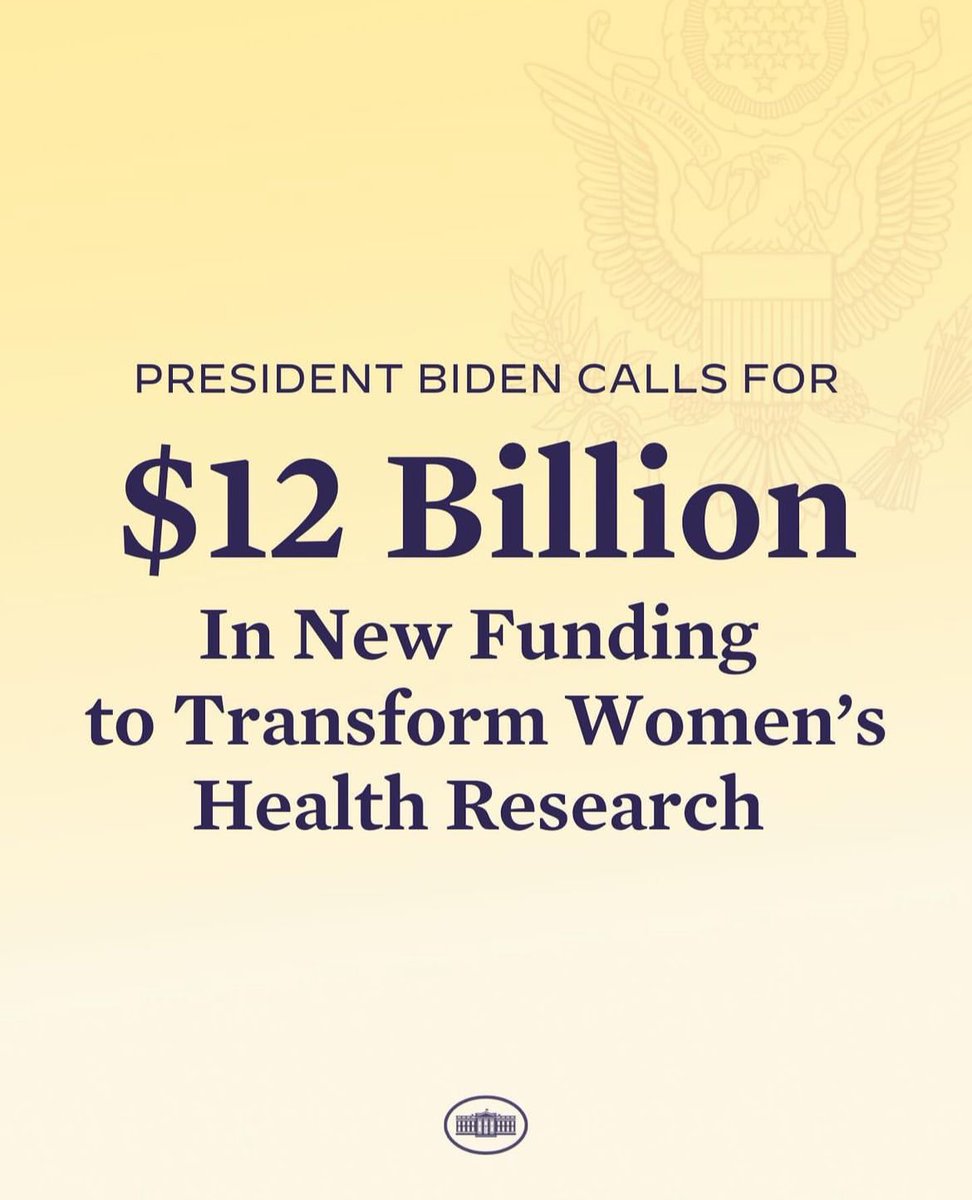
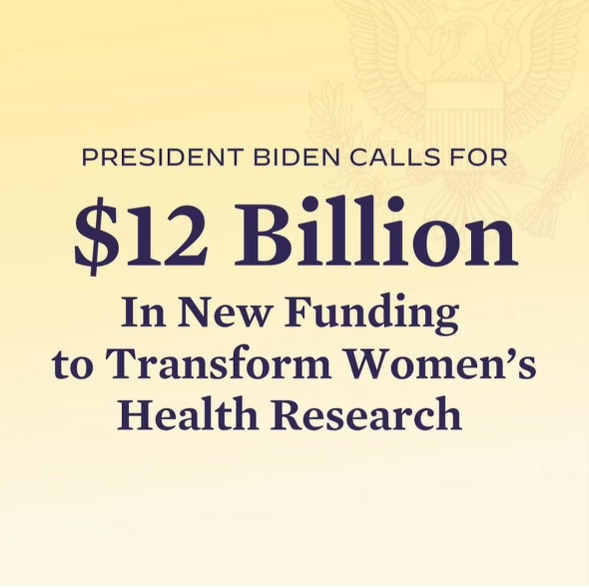
As part of the White House Initiative on Women’s Health Research, Joe is calling on Congress to make bold, transformational investments in women’s health research.
Together, we will build a health care system where women aren’t just an after-thought, but an inspiration to build a future where we leave our doctors’ offices with more answers than questions, where medicine meets the needs of everyone, and where no woman or girl has to hear that “it’s all in your head,” ever again.
5,111
2,631
13,269
1,354,311
Dr. Megan Ann Greenfield retweeted

8 Mar 2024
Women are more than half of our population, but as I’ve often asked, why don’t we research women’s health? Why don’t we have answers on women’s health issues such as breast cancer, menopause, Alzheimer’s, and so much more. That’s why I’ve been honored to work with @FLOTUS on the first-ever White House Initiative on Women’s Health Research. And as @POTUS announced tonight, he is calling for a $12 Billion plan to transform women’s health research and benefit millions of lives across America! Click here to learn more about this initiative and how you can get involved. #StateOfTheUnion
whitehouse.gov/white-house-i…
90
451
3,256
117,449
Dr. Megan Ann Greenfield retweeted

19 Jan 2024
As a long-standing contributor to the McKinsey Health Institute @McKinsey consultation process and studies, I was thrilled that the @wellbeingafrica Foundation Delegation to the World Economic Forum @wef joined in launching "Closing the Women's Health Gap: A $1 Trillion Opportunity to Improve Lives and Economies," a report featuring forthcoming research by #MHI and #WEF, with leaders across the public, private, social, and philanthropic sectors in an action-oriented convening to explore the latest data powering the effort to draw awareness to the women's health gap.
The report emphasises that investments addressing the women’s health gap would add years to life and life to years, while potentially boosting the global economy by $1 trillion annually by 2040. When discussing the challenges in women’s health, a common rejoinder is that women, on average, live longer than men, but this neglects the fact that women spend 25% more of their lives in debilitating health.
Through a focus on Science, Data, Care Delivery, and Investment, while taking action in investing in women-centric research, strengthening the collection of sex-and gender-specific data, increasing access to women-specific care, creating incentives for investment in women's health innovation, and implementing policies supporting women's health, together, we would reduce the time women spend in poor health by almost two-thirds, adding an average of seven days of healthy living for each woman annually.
Throughout this week at #Davos the #WBFA #WEF24 delegation is focused amplifying the #WellbeingEconomy, catalysing transformative change around empowering women's health for global prosperity through private-public sector partnerships, recognising its profound impact on individuals, communities, and economies, and the need for health equity through research and a data revolution for informed action, dismantling barriers to healthcare, reducing delays, and promoting optimal care.
#WEFDavos54
4
21
69
4,901
Dr. Megan Ann Greenfield retweeted

17 Jan 2024
According to the World Economic Forum and McKinsey Health Institute, women will spend an average of 9 years in poor health, which negatively impacts their productivity at home, in the workforce, in the community, & earning potential. #wef24 #health
@wef @McKinsey @YGLvoices @WHO
2
5
7
668
Dr. Megan Ann Greenfield retweeted

13 Jan 2024
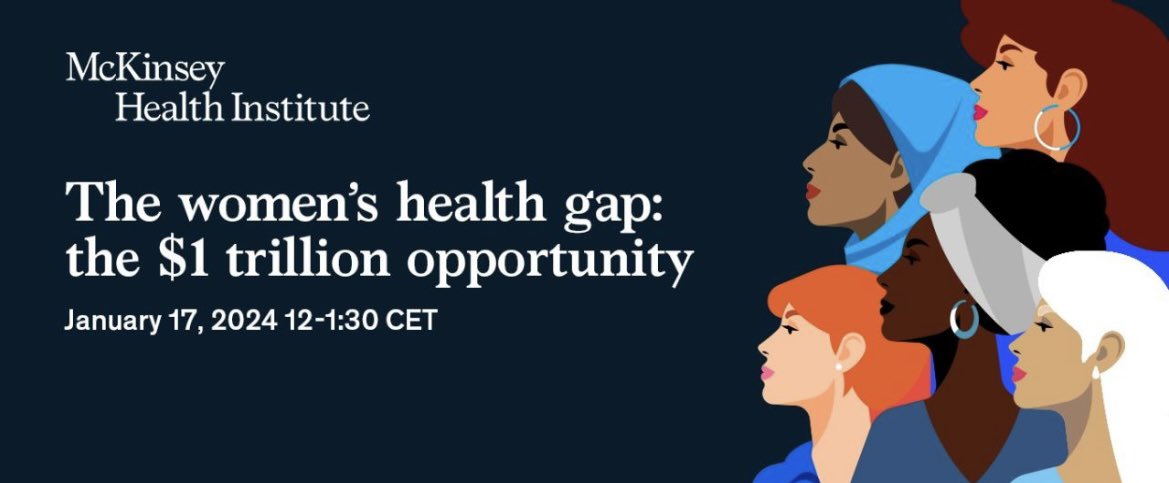
Make sure you join the 🌐 conversation on women's health gap at @wef in Davos where McKinsey Health Institute & WEF will launch report uncovering a $1 trillion opportunity to bridge the hlth gap for 3.9 billion women. #WEF24
📆 Jan 17, 12:00-1:30 PM CET
lnkd.in/dyGYsqip
3
9
522

🚨JUST RELEASED! The @WEF’s latest report in collaboration with the @McKinsey Health Institute explores the investments and actions needed to close the women's health gap.
Learn more: 👇
pmnch.who.int/resources/publ…
1
4
7
806
Dr. Megan Ann Greenfield retweeted

17 Jan 2024
It’s time to close women’s health gap! 🏥
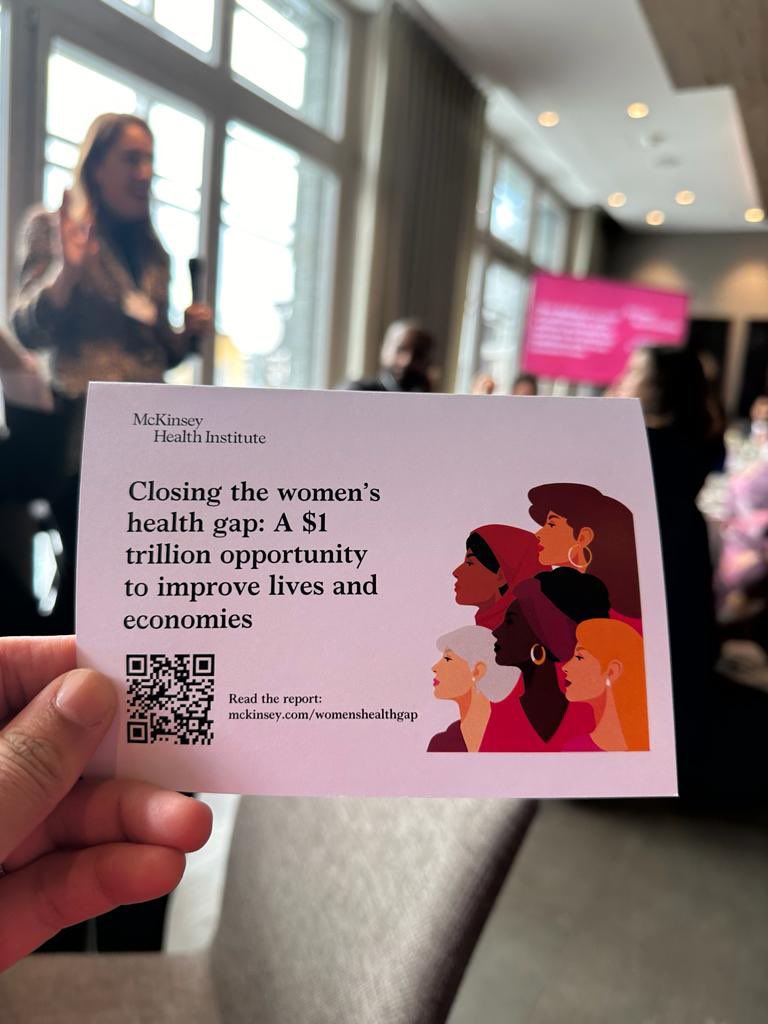
The @wef and @McKinsey Health Institute report launch today at @Davos, marking that improving women's health could boost the global economy by at least $1 trillion annually by 2040.
Our ED Dr. @RoopaDhatt brought #WomenInGH perspective to the discussion table 🌍
1
9
32
1,054
Dr. Megan Ann Greenfield retweeted

17 Jan 2024
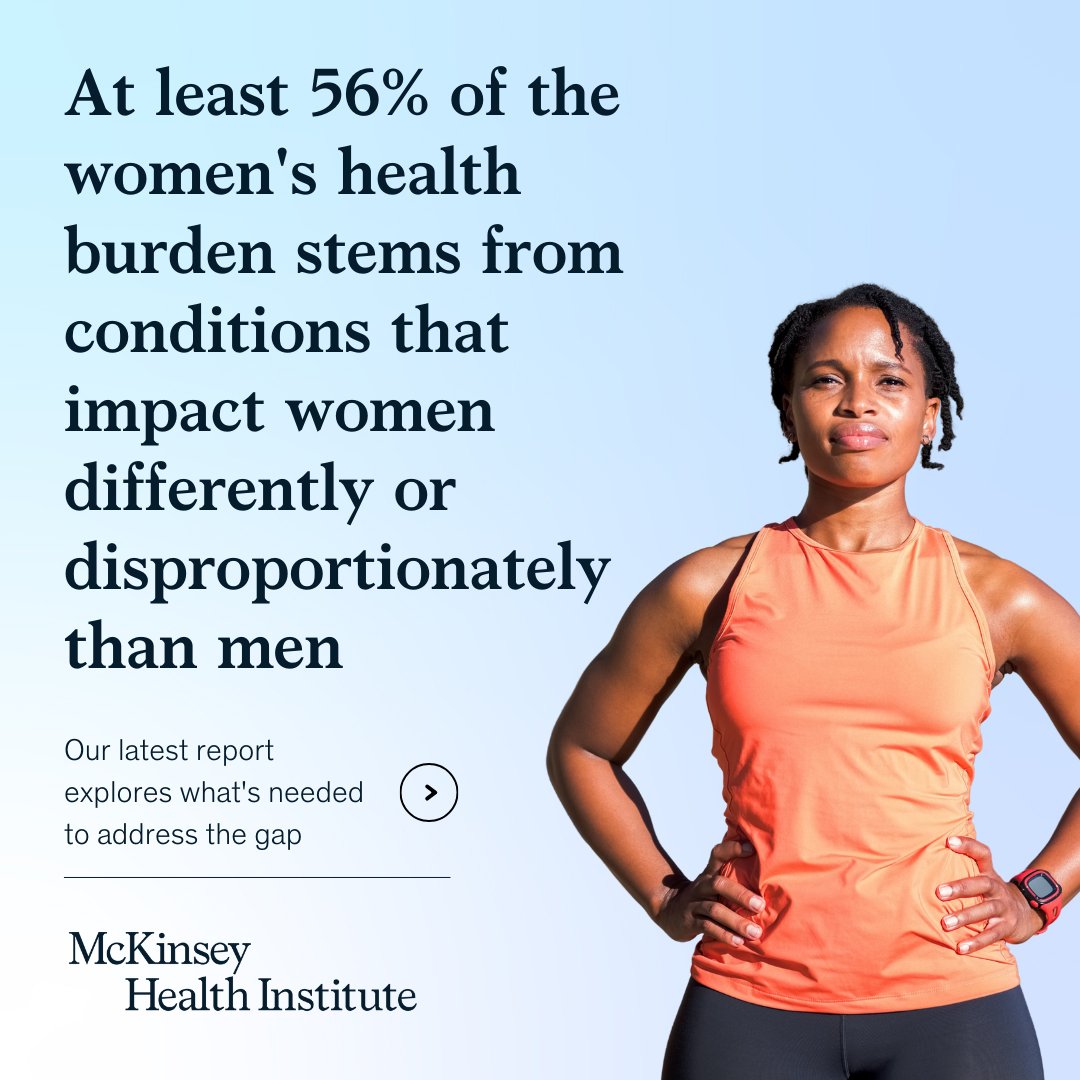
The women's health gap is cutting short the potential, and lives, of women worldwide.
PATH is part of a coalition of organizations working with @wef to #CloseTheWomensHealthGap.
Read the new report from the WEF and @McKinsey Health Institute: bit.ly/3vMGIXi
#wef24
1
7
20
1,544