Joined March 2014
- Tweets 3,696
- Following 920
- Followers 285
- Likes 10,329
183 Photos and videos


Pinned Tweet

Apr 28
Hello new followers! Quick intro: elder millennial woman with Aspergers/ADHD. I like to talk about the nosology of autism, try to follow the emerging science, and upset everyone because I can't be reduced to a specific kind of guy. Heterodox as an orientation, not as a shibboleth
3
1
28
2,203
Jun 16
It frustrates me that she stops before the most interestingmclarifying question which is "why? what changed?"
The uncomfortable answer is we've dismantled all the slack in the system that let mostly functional people live meaningful non-precarious lives, for shareholder value
Jun 16

This aversion to agency is not unique to fibromyalgia, ME/CFS, or Long COVID. It reflects a much broader shift in the culture of diagnosis itself.
Increasingly, we prefer explanations that place the cause outside the person and therefore absolve the person from responsibility for change. Trauma is preferred to personality. Burnout becomes more acceptable than depression, because burnout says the workplace broke me, while depression raises questions about how you live. Neurodevelopmental disorders such as ADHD and autism are preferred to questions about adjustment and socialization; they locate the problem in the brain’s wiring.
Notice the pattern. The preferred diagnoses are increasingly those that externalize blame, minimize agency, and transform suffering into something that happened to you. We are becoming increasingly uncomfortable with stories that ask people to change and increasingly attracted to stories that say the person cannot in any way change it themselves.
1
1
31
3,091
Jun 16
This is a materialist argument, yes, but it's also just natural consequences. Optimize the system for throughput enough and the marginal parts, in this case people, break.
You have no agency to change the system, so instead you find a way to have no agency to change yourself.
1
11
247
Jun 16
The system, capitalism, algorithms, whatever you want to call it, sees you, a person, as just a widget. It does not optimise for human flourishing. It optimizes to extract profit.
People are reacting accordingly and choosing (consciously and unconsciously) ways to opt out.
1
11
237
Jun 14
The thing about Chesterton's fences is you absolutely can take them down, but you have to know the why of why they were constructed in the first place.
Not treat jumping them like you're going for a world record in Olympic equestrian sport.
Caveat emptor.
Jun 14

I find this framing of "hiding weird parts of themselves" very offputting, and is a good example of the disconnect I'm talking about
Normal people understand there are trade-offs in living one way or another and choose accordingly to achieve the kind of life they want
1
82
Jun 12
Help my special interest is shifting back to nail polish and I already purged 90% of my stash from the last round 10 years ago.
(though that was mostly quirky indie polish full of glitter and confetti I would never wear today)
92
Jun 12
I'm pretty sure there's another condition or two that already explains this kind of "(perceived) rejection = identity threat" response, and they're not ADHD...
(though the comorbidity between them is interesting!)

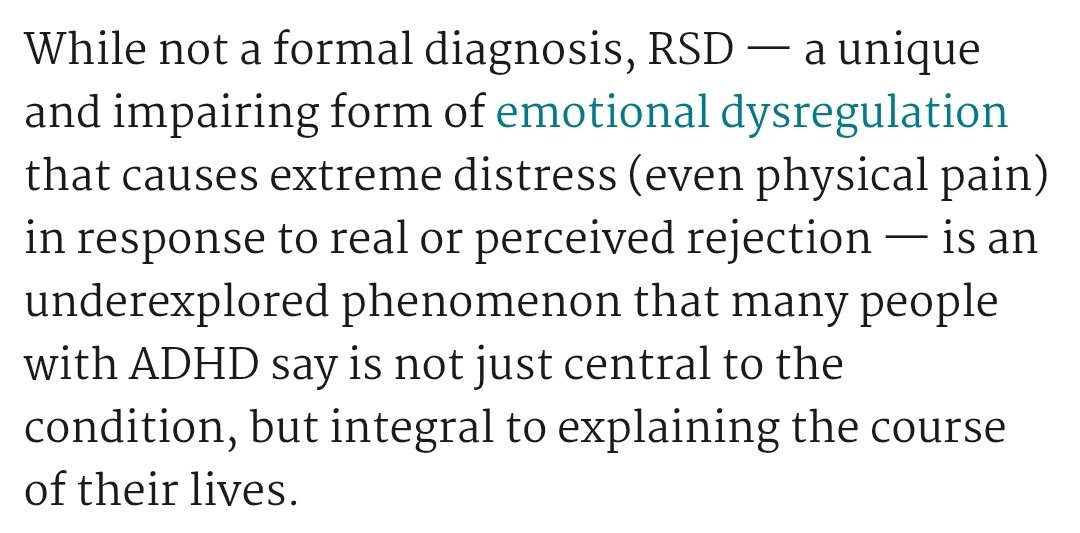
"RSD is real. It’s embodied. It’s deeply impairing. We know this anecdotally, even if formal science is catching up" additudemag.com/rejection-se… Another 'even if formal science is catching up' piece. Translation: it's a made up diagnosis more applicable to other psychiatric disorders
3
2
14
922
Jun 11
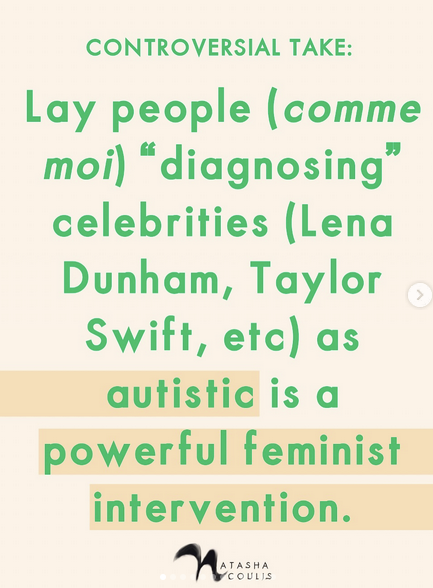
What makes me despair most about this kind of vibes autism slop (besides, well, everything) is it kind of terrifies me how many fellow Millennials have not updated their priors or their way of engaging online since 2016. This has Hillary 2016 energy written all over it.

7
232
Jun 11
The vast majority of humans who live through difficult but not apocalyptic circumstances do not become traumatized. A good clinician with experience can easily distinguish between the two.
Jun 11

we can't distinguish autistic behaviour from trauma because our current society produces no un-traumatised autistic people.
3
4
23
1,527
Olive Garten retweeted

Around 2/3 of the adult autistic population got suprise diagnosed. The other 1/3 was some combination of diagnosis by family and friends/self discovery before professional diagnosis. Not mentioned here is the number of self diagnosed people who don't have autism, which has grown over the years.
Self-dx used to be a lot more reliable in the past but I'm afraid that ship has been sailing away for a while.
3
1
48
1,099
Jun 10
A significant chunk of the adult dx population was referred by professionals after other therapies failed, or by concerned loved ones, or by their kid's doctor after they didn't believe their kids dx bc "I was like that as a kid". My entire psychoed group was the first scenario

No one complaining about the alleged “wave” of “invalid” autism self diagnoses has an answer to this. Self dx always precedes official dx, out of simple logical necessity.
4
1
22
2,243
Jun 10
I was referred via incomplete (ICD) CPTSD remission after ACT EMDR, another friend was in addiction treatment before being referred, a third friend developed a circadian rhythm disorder on top of DSM PTSD and got a full neuropsych battery. Surprise autism dxes are very common!
1
1
6
207
Haha I unchecked the button and it still posted anyway! Guess I can't take it down now
64
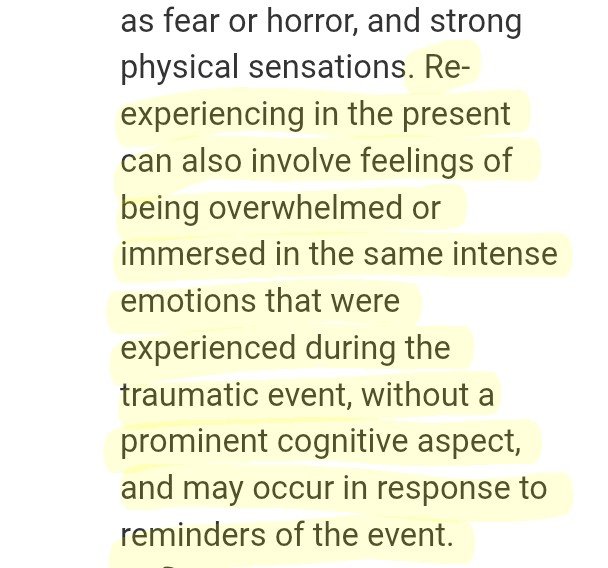
Chronic stress doesn't come close to qualifying for PTSD-DSO (the DSM's version of CPTSD) or even ICD-11 CPTSD. You have to meet the requirements of vanilla PTSD to have CPTSD!*
*(ICD CPTSD can cover the effects of severe long term bullying/mobbing, but not general mistreatment)

I have a theory about autism and cPTSD...
I think unmet autistic needs cause cPTSD over time. As in, things like...
Long term unaddressed sensory anxiety...
Long term anxiety from social misunderstandings...
5
2
12
1,712
Even in the ICD criteria, flashbacks are a requirement. No flashbacks? No CPTSD. Ruminating about it and feeling bad about whatever happened doesn't count. Not everything is a disorder, not everything is capital T trauma.
2
2
9
206
May 31
This is actually a massive problem with basically anything in the DSM. It's a perverse inversion of the euphemism treadmill. The meaning becomes so diluted that people lose the ability to describe their experiences, because a different cohort has essentially stolen their words.
May 31

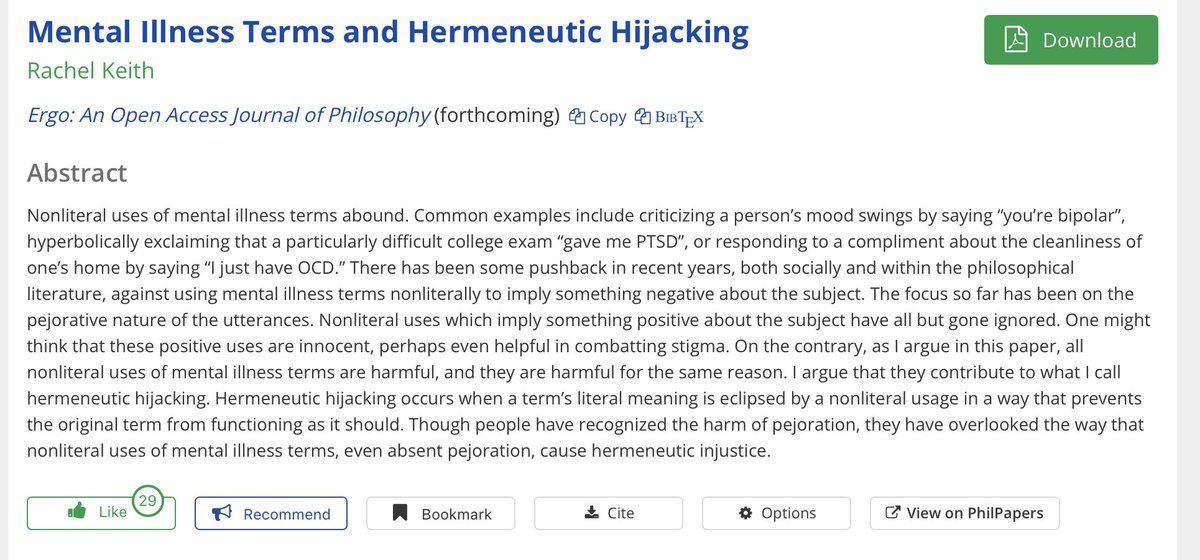
Philosophers discover new form of hermeneutical crime.
"Hermeneutic hijacking occurs when a term’s literal meaning is eclipsed by a nonliteral usage in a way that prevents the original term from functioning as it should."
16
88
3,838
May 31
As A Jew, it is fucking hilarious to me that my therapy meta goal is to become _more_ neurotic. Thank you for the laughs, Dr. Kernberg. They help!
4
178
Olive Garten retweeted

May 31
This is also why ppl yapping on about “well actually mental disorders are just understandable reactions to social problems” betray their own ignorance of and an indifference towards the rich phenomenological literature on psychopathology.
May 31

This reminds me of the phenomenological line of thinking… in a healthy psychological state, our mental faculties have a “transparent” quality and they are the invisible lens through which we engage with the world. In psychopathology, the psyche loses its transparency, and becomes opaque, heavy, rigid, alien, forcing itself into conscious awareness and inviting obsessive introspection.
9
18
137
11,299
May 30
A lot of people give garbage, condescending advice to disabled people... but so many of you communicate about your impairments on here in the most obnoxious performative smol bean Leftbook/Tumblr 2018 language that it's no surprise you're getting pep talks meant for mopey teens
1
3
36
817
May 31
I'm not saying you have to justify yourself or give the gory, private details to anyone who asks. But you need to understand that part of the reaction some people are getting is because of the tone, not the content.
1
1
25
559
May 31
A not insignificant amount of people giving what you feel is tone deaf advice on this website are autists who genuinely think they are helping by sharing what worked for them. They are not trying to be condescending. They are actually trying to give you a shortcut.
4
3
34
2,497