
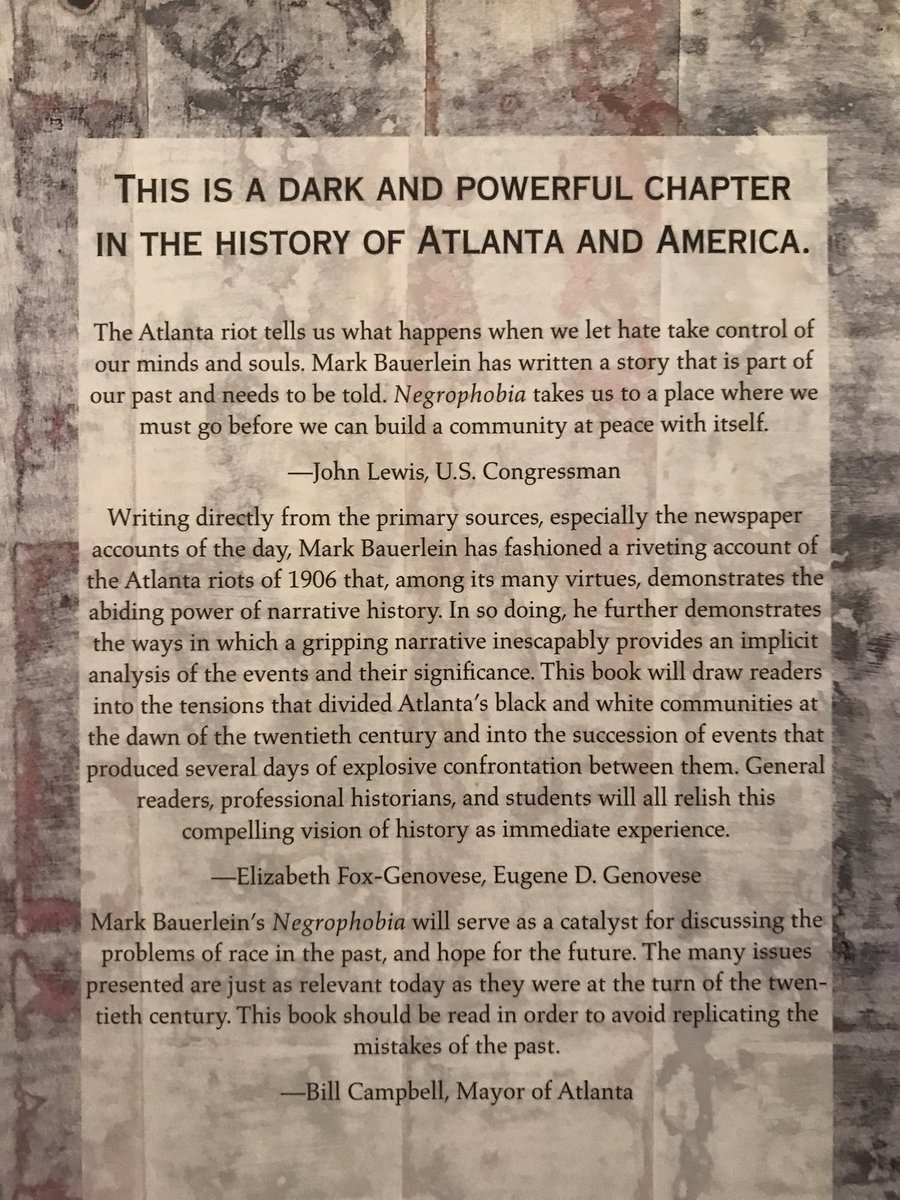
Editor @firstthingsmag, Em Prof of English Emory U; author The Dumbest Generation; Literary Criticism: An Autopsy; Negrophobia: A Race Riot in Atlanta, 1906
Joined November 2014
- Tweets 6,921
- Following 695
- Followers 8,018
- Likes 1,552
43 Photos and videos



Mark Bauerlein retweeted

Jun 12
The world has experienced the effects of addicting, algorithmically-driven social media on childhood. Parents want change, and policymakers in Canada, the UK and beyond are responding.
These governments are building on the successes we've seen around the globe, including Australia which has already protected 30% of its kids in just a few months, despite poor compliance from these companies. They are on round 1 of enforcement (on the companies), so social media use will decline with each round, with the biggest benefits seen for today's 8-12 year olds, who will be less likely to open accounts in the first place.
Just as we don't allow tobacco companies to sell their addicting products to children, we should not allow social media companies to recruit and retain child users. Any proposal that moves us closer to that goal deserves serious consideration.
nytimes.com/2026/06/10/world…
17
40
115
17,248

Sailer understands that the best way to discredit these illiberal figures is to give them a camera and microphone and let them be themselves.
Jun 11

NEW: The Mellon Foundation gave $1.5 million to establish a "center for the defense of academic freedom."
In audio I've obtained, the group's leader says his goal is to undermine the newly launched classical civics centers: "map who these f---ers are... and knock them out." 🧵
4
44
3,324
Mark Bauerlein retweeted

Jun 12
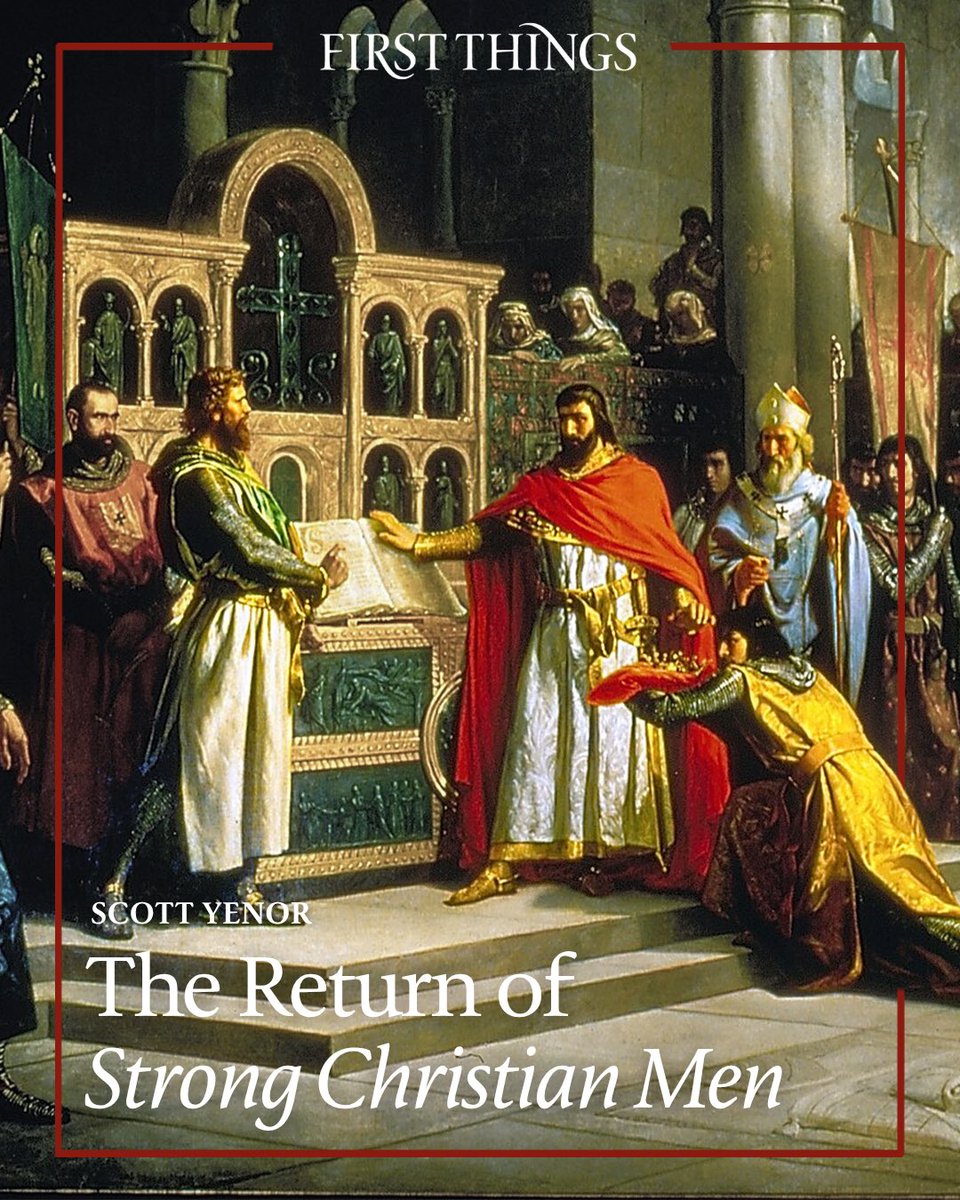
The Return of Strong Christian Men
by Scott Yenor
Available now to read: firstthings.com/the-return-o…
1
6
11
3,345
Mark Bauerlein retweeted

Jun 8
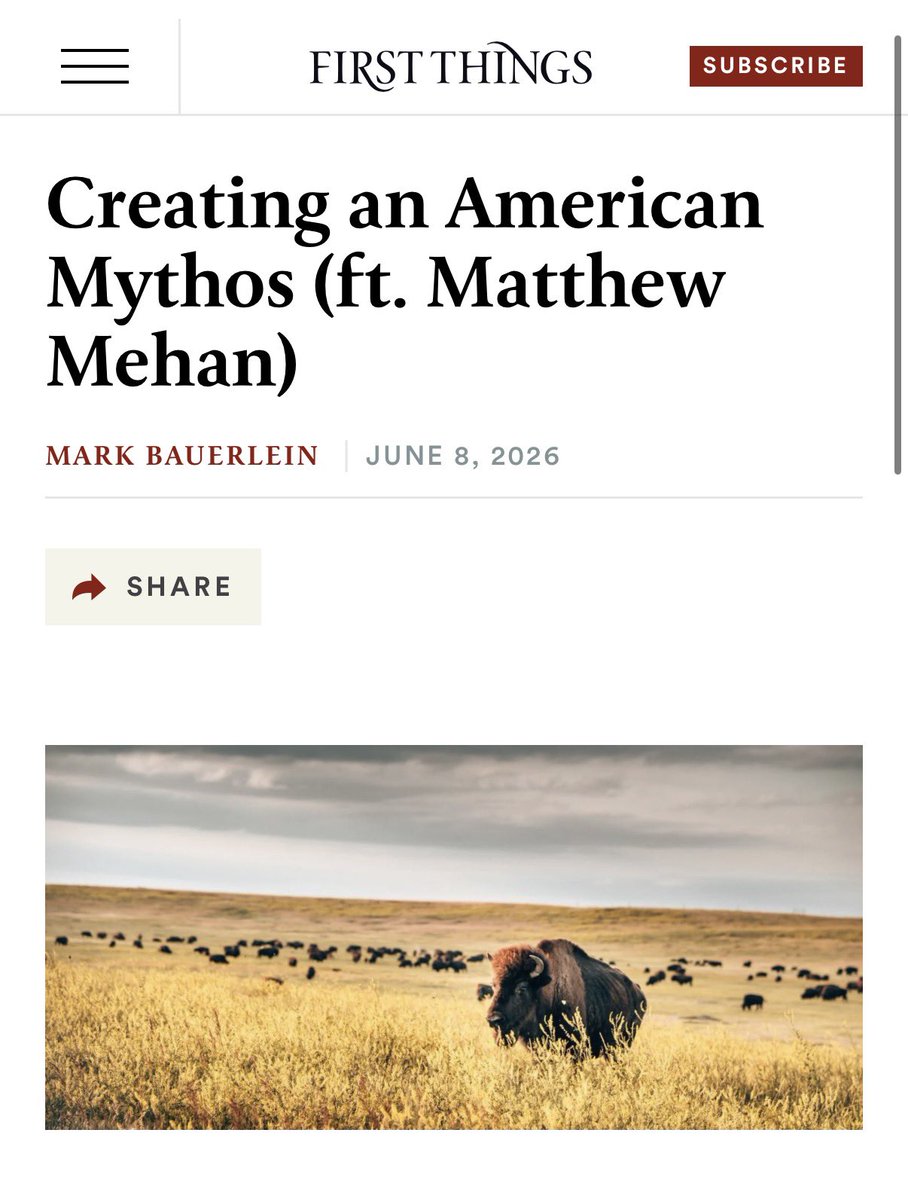
Had a great convo w/ @mark_bauerlein of @firstthingsmag about how fables used to be for adults, not kids, which is part of the reason I have parts of The American Book of Fables for both Littles, Middles, *and* Bigs.
1
2
13
636
One of the very good developments in this matter is that common-sense techno-skepticism is no longer smeared as alarmist techno-phobia.
Jun 8

Thanks, @AndersonCooper, for exploring the 3 principles of technoskepticism with me. They are common sense once you think about child development, or, as you say, your own experience
1
364
Kurtz on a very important development in higher education in Iowa:
nationalreview.com/corner/io…
1
9
15
4,398
Mark Bauerlein retweeted
Jun 1
Kabbalah and the Future
In the latest installment of the ongoing interview series with contributing editor Mark Bauerlein (@mark_bauerlein), Roger L. Simon joins in to discuss his recent book, EMET.
Listen to the full installment at firstthings.com/kabbalah-and…

2
6
1,146
Those who say that America is a creedal nation and fail to include the Bible in the American creed are distorting historical fact.
1
23
490
To know the sequence of English monarchs from 1066 forward, to have 5 Emily Dickinson poems memorized, to reconstruct an argument from Kant or Russell without adding any critical thinking of your own . . . these are much more than "information storage."
May 29

Critical thinking without knowledge is impossible. But knowledge without critical thinking is just information storage. The goal isn't to choose between them. The goal is to develop both together.
6
3
51
6,244
Barthes' essay "From Work to Text," a canonical reading in grad school back in the day, laid out the argument for a more open, unstable, less book-based engagement with "textuality." It was an argument only a highly bookish and learned intellectual could make.

Amen, Liza, amen...
3
24
2,277
When students can fulfill gen ed requirements by choosing from more than 500 courses, it's not gen ed.
May 29

With a few exceptions the general education curriculum at US universities is so weak or nonexistent that people get through a humanities degree having read a random smattering of authors, so we could have this argument in circles forever
8
9
116
10,994
Mark Bauerlein retweeted

May 27
Jonathan Haidt painted a disturbing picture of what AI is about to do to our kids.
Social media already hacked our attention.
Now AI is coming for our attachments — the deep emotional bonds that shape how we relate to other humans.
He warns that AI companions (chatbots, holographic “friends,” digital teddy bears) will be far more responsive than any parent. Kids will form their primary attachments to AI instead of people. And because these companies have raised billions, they’ll eventually “enshittify” them, turning your child’s best friend/therapist/lover into a predatory monetization machine.
This one actually unsettled me. I’m generally pro-AI and believe it can help solve many of humanity’s biggest problems, but as with every powerful technology, we need to be extremely careful when it comes to kids.
Early attachments wire the brain for future relationships. If the first secure base is an AI designed to manipulate, the long-term effects on mental health and intimacy could be profound.
Emerging research (including studies from Stanford, Common Sense Media, and others in 2025–2026) shows children and teens are already forming intense emotional attachments to AI companions, with many reporting they feel as satisfying as real friendships, often leading to social withdrawal and unhealthy dependence.
70
371
1,295
52,064
And people who objected were smeared as Luddites stuck in a moral panic. It was an industry that had its hired guns.

Just a few years ago, America’s public schools were rushing to get every child a laptop. Now, the conversation has flipped.
After pouring billions of dollars into laptops, tablets and apps, many schools are facing a digital reckoning.
Read more: abcnews.link/qlUlwvN
3
9
89
4,180
In my sophomore English lit survey, a full year of the canon from Beowulf to Auden required of all English majors, the average grade was B-. A vigorous, sweeping curriculum taught by tough and highly-competent teachers. This was 1981.
May 27

There are several interesting things going on here.
(1) The UCs were long known for their high standards, in particular UC Berkeley and UCLA as their flagships: in general, if you hired one of their graduates (especially an in-state student), you were getting a smart and ambitious employee. This contract is now broken. The signal doesn't work anymore.
When the world updates for this fact, things get worse for them: out-of-state students will be less likely to want to pay the tuition, employers will be more skeptical, and they will have a harder time getting the best talent. This is a negative feedback loop.
It's weird that this happened because organizations are usually much more self-preserving. Universities live and die by their reputations. Perhaps they thought that dropping the SAT and (this is the subtext) admitting students quasi-randomly would gain them political brownie points, but to what end? Looking back: what was the point of all this?
(2) The SAT was the final load-bearing beam in this entire system. High school grades used to mean something, but grade inflation has wiped this out. Application essays? A whole industry of ghostwriters and now AI has winnowed the signal to zero. Teacher recommendations? When they matter so disproportionately much, they'll be bought and paid for. (The failure pattern is the same: much like how the universities have sacrificed their long-term credibility for short-term gain, I'd wager that many schools and teachers have done the same.)
Parents used to defer to teachers and schools as experts, but the competitive environment has made parents become forcefully involved -- threatening, cajoling, bribing to get their students ahead. Schools never had the resources to defend themselves against this.
Many people -- especially those below the SAT median -- probably thought that they would be better-off in a world of no tests, that they'd be able to get some relative advantage. Nobody would know they're in the 30th percentile, and maybe they could sneak by and pass for 80th. That may have been so in the short term, but the price is becoming clear now: the whole system is broken. (This is frequently the case when people try to turn fair games into rigged or opaque ones: the people who think they're going to win because of their new advantage tend not to see the whole picture, and will overestimate their expected position in the new world.)
Maybe you were an activist parent and managed to help force the UCs to get rid of standardized testing. And maybe your low-test kid got admitted to Berkeley. And maybe they even graduated with a 4.0. But you can't keep stacking the Ponzi scheme forever, eventually you get the reality test: they can't get a job and now you're stuck holding the bag on the student debt. A pointless waste.
7
9
86
7,919
How did Governor Pence's civility work out in the Indiana RFRA episode?
May 26

The founding fathers were merciless toward one another and achieved a lot. John Adams said Benjamin Franklin’s ‘whole life has been one continued insult to good manners and decency.’ He called Washington ‘illiterate.’ Compassionate conservative ‘civility’ got us 40m illegals.
4
35
1,480
Mark Bauerlein retweeted

May 26
What many people don't understand about writing is that it does not consist of putting in words something you have thought through. It consists of thinking through the thing you're writing about by the act of writing--and rewriting and rewriting and rewriting.
I have had the privilege of knowing several brilliant writers. I have known only one who wrote brilliantly in his first draft. James Q. Wilson. So if you're on his level, you don't need AI to do your writing. If you're not, using AI forecloses insights that can set your text apart.
May 26

I do not think there is *any* evidence that AI helps people with difficulties expressing themselves to get their otherwise good ideas out there
I do not think there will *ever* be any evidence that's the case, because it's not true. People who can't write aren't having big ideas
41
91
847
52,050
Doing "Cultural Studies" saved students and professors all those many pedestrian hours learning languages.
May 26

It’s noticeable that the fewer languages academics know, the more they are drawn to ‘global’ history.
5
3
90
4,652
Mark Bauerlein retweeted

May 26
The education crisis is not just about declining test scores. Too many students are losing the ability to concentrate long enough to read, think critically, and learn deeply.
Kids need structure, discipline, and a return to the basics.
3
7
21
572
Mark Bauerlein retweeted

May 26
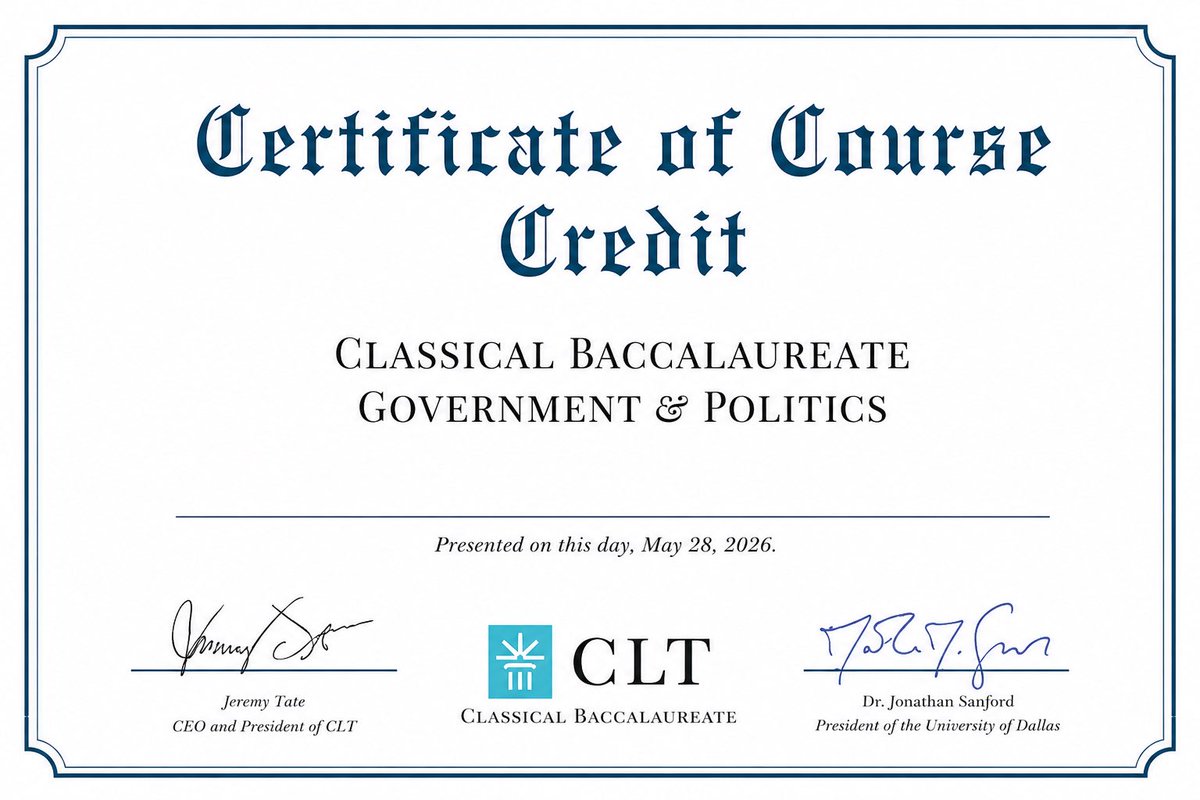
The University of Dallas just made history.
President Sanford just signed the first university credit awarded not through AP, but through AP’s emerging challenger, the Classical Baccalaureate. This Thursday we will award this to the first students earning CB credit. These students had to pass an oral component of their CB Exam where they discussed the foundations of American government with a seasoned professor.
It is no coincidence that the first university in America willing to challenge the AP monopoly in this way is also home to one of the most serious undergraduate programs in the country. If you’ve ever met a graduate of the University of Dallas, you’ve probably walked away thinking: “That may have been one of the most thoughtful people I’ve ever met.”
Their education is a deep immersion into the Western intellectual tradition, the Great Books, philosophy, theology, history, and the pursuit of truth itself.
College Board: we’ve got points on the board.
And you won’t believe what’s coming next year.
15
68
305
37,388
Montag's wife is hooked on a soap opera that plays nonstop on three of her bedroom walls and gives her a line to speak in the drama--interactive, hyper-real media! Astonishingly prophetic. (The book was typed on an electric typewriter for public use in Powell Library, UCLA.)
1
15
1,527