
Master of Engineering | web3 enthusiast | dev | blockchain | AI | cyber security | cloud | computing | caffeineAI & ICP evangelist
Joined March 2024
- Tweets 6,756
- Following 608
- Followers 1,978
- Likes 42,887
848 Photos and videos






Jun 11
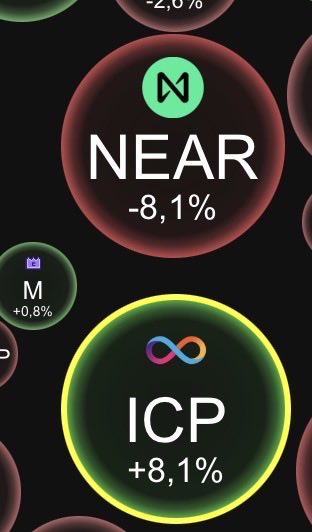
🔥 Claude Fable 5 (Mythos-class) dropped and jailbreaks hit fast — Pliny and others already bypassing classifiers for stack overflows, reverse shells & exploit code.
Meanwhile on $ICP: decentralized infrastructure that’s tamperproof by design. Apps run inside the protocol — no traditional servers for hackers to target, even with AI uplift. Fault-tolerant sovereign = immune to the infrastructure hacks these models could enable. Get ready for the news and hacks in the upcoming weeks
cybersecuritynews.com/anthro…
3
4
31
854
Jun 3
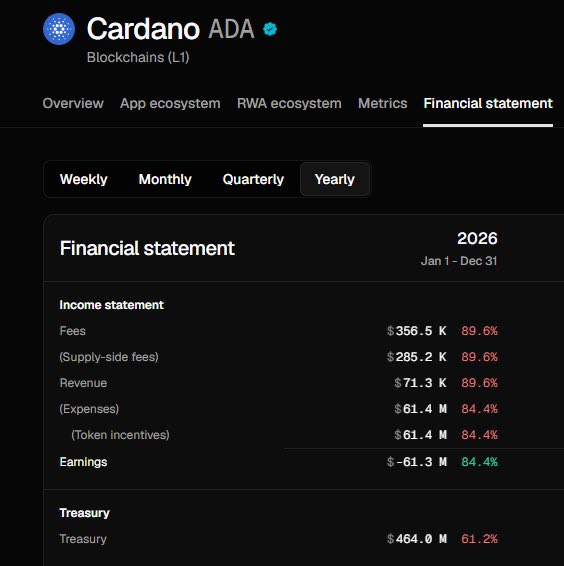
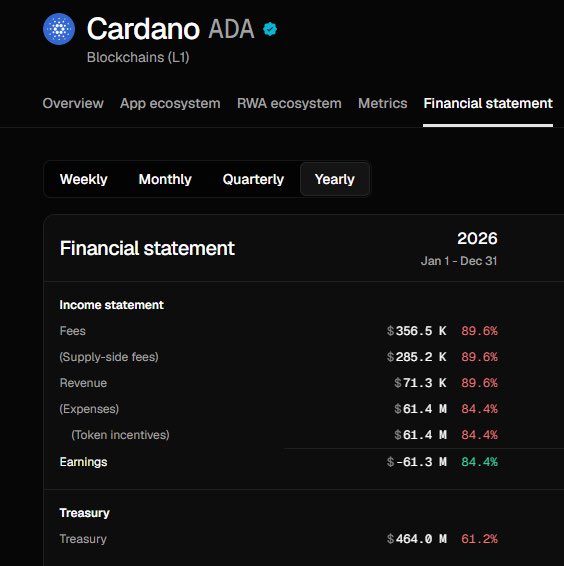
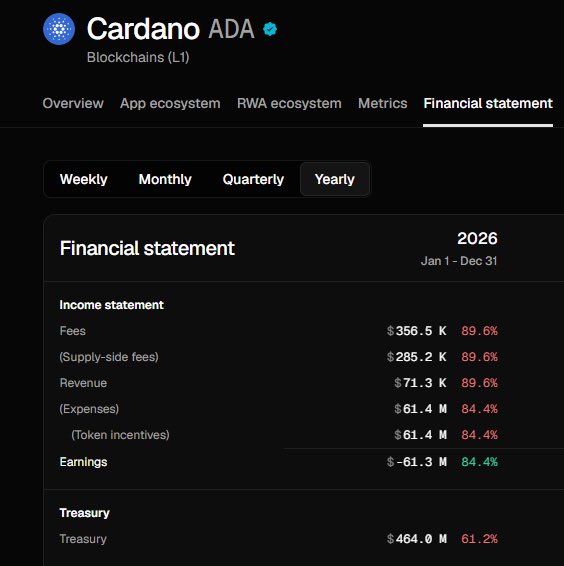
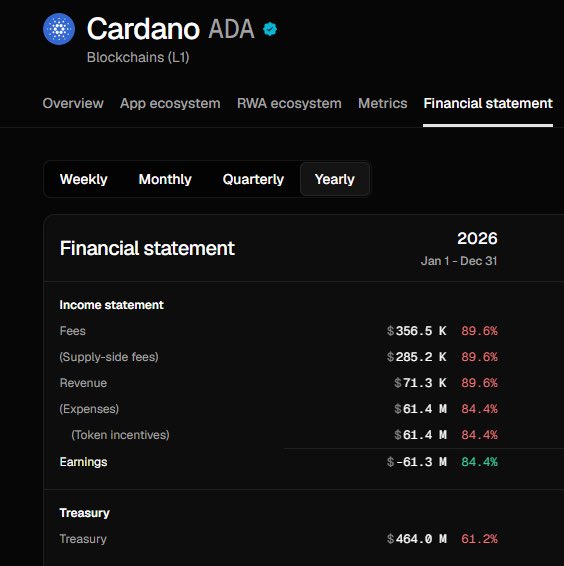
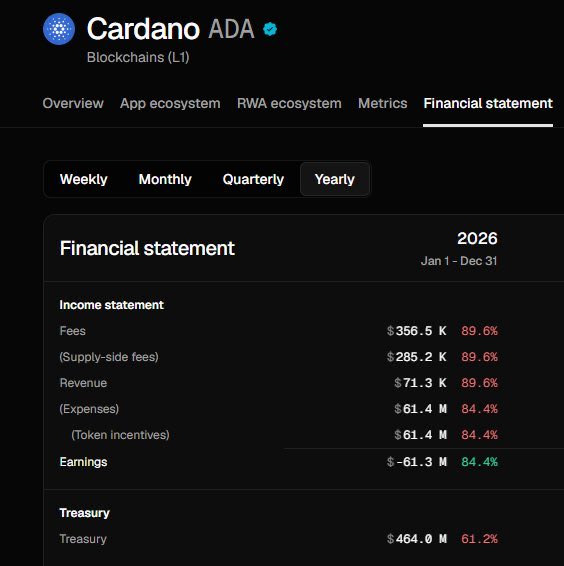
In May, $SOL did only generate 6X more Revenue than $ICP at a 25X higher Market Capitalization.
SOL did also generate 35X more Expenses than ICP.
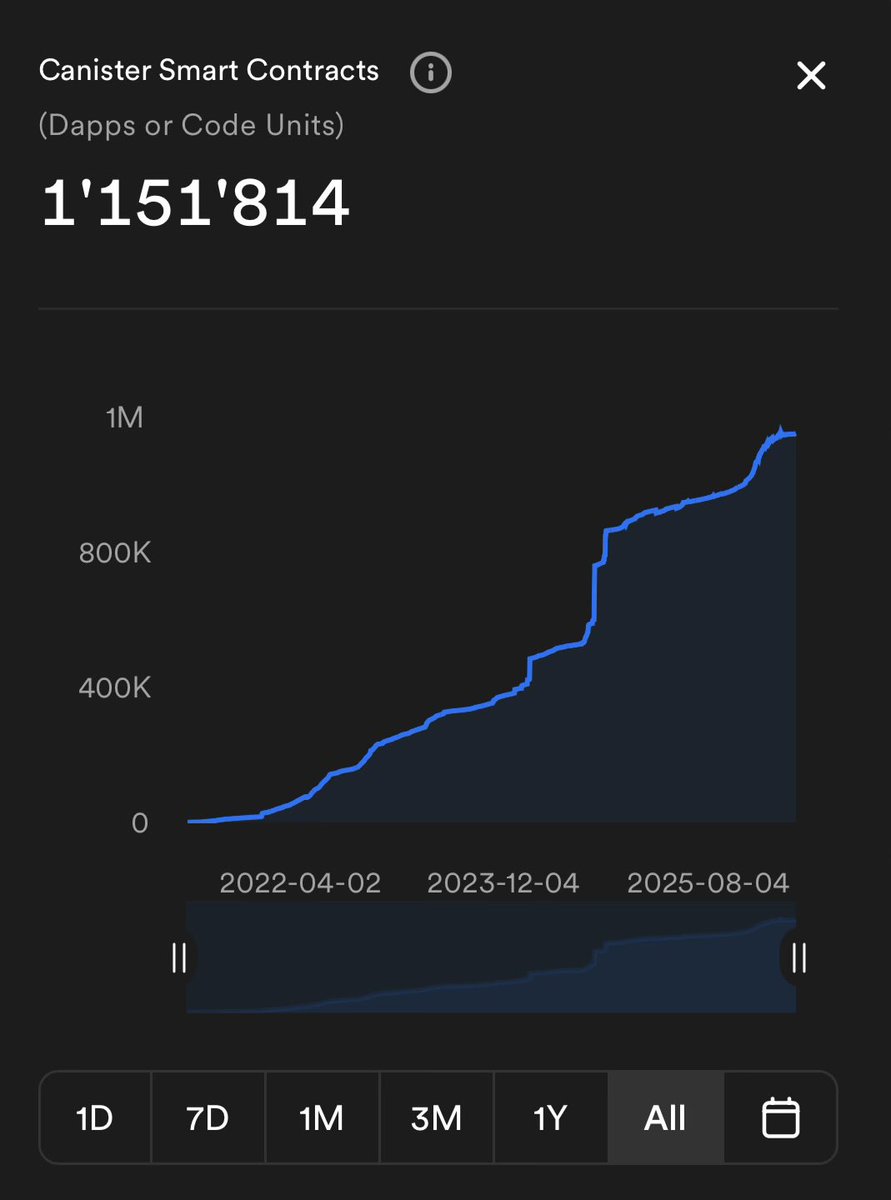
ICP is currently much more sustainable. When Cloud Engines will be fully deployed to the Public, it is game over for other Blockchains. These Blockchains rely too much on DEFI.
Yesterday, we have witnessed the meltdown of @IOHK_Charles . The situation with $ADA is even worse.
Make it make sense. Thanks to @Zero2HeroZombie for those metrics from token terminal. 🙏
1
5
57
1,078
Jun 3
🤔 What’s happening in the crypto space right now…
Stock indices and many Tech/AI stocks are trading near all-time highs.
Bitcoin corrected. 99% of altcoins got crushed. Only a handful of crypto projects are still holding up.
Why are stocks making new highs while most crypto projects continue to bleed?
Simple: the market is slowly realizing that utility matters.
Tech stocks are rising because there are real companies behind them generating strong revenue, growing profits, and delivering products people use every day.
When you look at the revenue of most blockchain networks, many are still operating in negative territory with limited economic activity. The gap between narrative and actual business performance is becoming harder to ignore.
There are thousands of crypto projects building essentially the same thing: another token, another DeFi protocol, another RWA narrative.
$ICP is different.
@CaffeineAI enables anyone to build fully decentralized applications without worrying about infrastructure.
Cloud Engine makes it possible to deploy and run private or public networks across independent operators, reducing reliance on traditional cloud providers.
At the same time, ICP’s revenue is growing strongly, showing increasing real-world usage and demand for the network.
The market won’t reward narratives forever. Eventually, it rewards products, adoption, revenue, and technology that solve real problems.
Utility wins.
4
10
56
1,101
Jun 2
🇺🇸 JUST IN: President Trump signs executive order on AI innovation and security. Guess what…
When it comes to AI and security, there’s no way around $ICP

6
61
350
7,347
Jun 2
🤫 The irony is hard to miss.
A $SUI founder publicly asks, “Who the heck is building on ICP?” while $ICP continues to ship, attract builders, productize its unique technical capabilities, and operate without a single network-wide downtime since genesis in 2021.
Meanwhile, $SUI has faced multiple network disruptions and outages, and its price action has significantly underperformed while ICP remains resilient despite recent market weakness and BTC pullbacks.
Respectful competition pushes the industry forward. Dismissing other ecosystems with cheap shots doesn’t.
Builders and @dfinity are building on ICP because reliability, decentralization, and long-term vision matter.
They’re building Cloud Engines. They’re building @caffeineai . They’re building fully on-chain applications that aren’t possible anywhere else. They’re securing partnerships with organizations such as @UNDPtech and government initiatives in Pakistan. They’re pushing the boundaries of what blockchain technology can actually do.
The market eventually separates hype from fundamentals.
The real question isn’t “Who the heck is building on ICP?”
The real question is why some people feel the need to pretend they aren’t.
Hope everybody — including the $SUI community — recognizes what’s really being played here. Stay safe 🙏
16 Oct 2025

P.S. who the heck is building on ICP???
2
16
84
2,498
Jun 1
Soon you’ll be able to add a full AI directly into any $ICP app or service — with literally zero extra code from the developer. 🔥
The AI gets native realtime access to the canister’s persistent memory and understands all data in its original Motoko structures and internal graph (not flattened or serialized).
This is huge because:
• Every existing or new app instantly becomes intelligent and agentic
• No RAG, no vector DBs, no custom APIs or data pipelines needed
• Only possible on ICP thanks to orthogonal persistence — the clean bridge between code and data that no other platform has.
It turns ICP into the natural home for truly agentic applications.
Looking forward to the demo. This feels like a big differentiator. 🔥
Jun 1

Soon I will demonstrate how AI can be "inside" an arbitrary ICP app, service or website built using the latest Motoko, understanding all its data, analysing it any way you want, and taking actions, without need for one special line of code. Insane and groundbreaking.
2
18
126
2,213
May 29
Very looking forward to these new features on the $ICP cloud engine roadmap - will be massive 🔥
1
8
65
1,232

May 10
$ICP 🚀
May 10
Dear ICP community, the Internet Computer has now been running strong for 5 years 👏👏👏
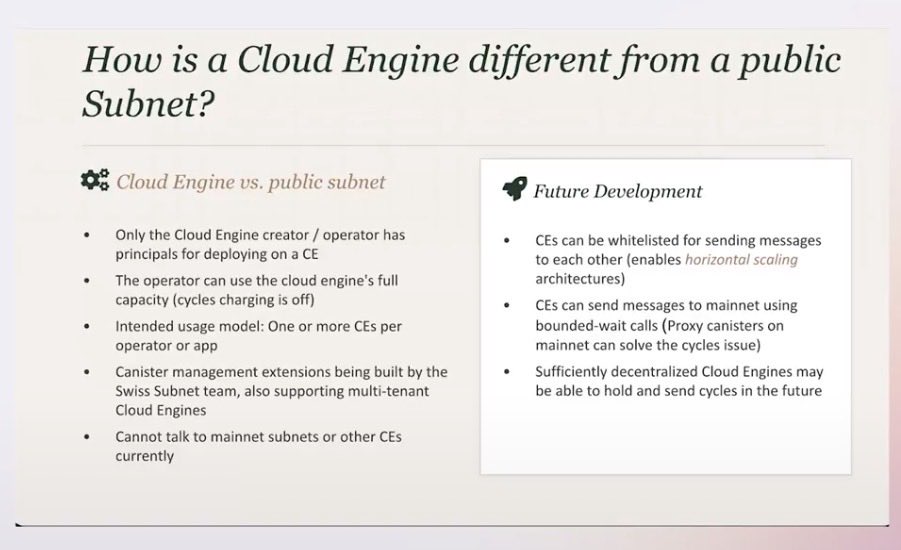
Here is a celebratory preview of ICP "cloud engines," the sovereign frontier cloud technology the network shall soon provide from opencloud.org.
Main points:
— Cloud engines enable anyone to spin up their own sovereign frontier cloud. The technology involves an extraordinary inventive step, in which cloud is created from a mathematically secure network of nodes. The nodes run as part of the Internet Computer network (internetcomputer.org) but are selected and configured by the cloud engine's owner.
— The frontier cloud provided by engines is strongly focused on enabling AI agents to build and update online applications and services for us. The world is changing fast, and nearly all new online apps and services are already being built with the help of AI, and thus cloud engines target the future of cloud.
— Software hosted on cloud engines is tamperproof, which means that it is immune to infrastructure hacks, because it runs inside a mathematically secure network protocol, rather than on computers directly. This means that AI agents, and those building with them, don't need to have a security team in the loop, or to trust someone else's security team. This is crucial, because in the future, non technical people will demand the freedom to build with full automation — where they just need to issue instructions to AI about what to build, and don't need to worry about anything or anyone else. Of course, apps and services running on engines are also vastly safer from the new breed of hacker being enabled by frontier AI.
(The cloud engines themselves are also "tamperproof." Even if a hacker gains physical access to some portion of a cloud engine's nodes, and can make arbitrary changes, the computations and data of the hosted apps and services cannot be corrupted or interrupted so long as the network's fault bounds aren't exceeded. The recent hack of Vercel, a major cloud platform, which gave hackers access to the apps it hosted, provides additional perspective on the importance of this advantage.)
— Software hosted on cloud engines is guaranteed to run, so long as a sufficient number of the engine's nodes are running. This means that AI can build applications and services without the need to have a human systems admin team constantly tinkering with the underlying platform to keep it running, which is again crucial, because in the future, non technical people will expect the freedom to use AI to build without the support of others.
— New frontier programming language technology, in the form of the Motoko language developed by Caffeine Labs, leverages seminal "orthogonal persistence" technology that unifies program logic and data to deliver further unlocks for AI (Motoko is the first computer language being developed that targets agents that are writing software rather than humans engineers per se). Nowadays, AI can build and update production apps at a prodigious rate, even at the speed of conversation. But it can also make mistakes, and there's a risk that an update it creates might be "lossy" in the sense it causes some transformed data to be lost. Again, in this new world, it's both undesirable and impractical for everyone to have to have a systems admin team on-hand to detect lossy updates and roll them back, but Motoko provides a solution: it can detect new software updates are lossy before they are applied, reducing potentially catastrophic errors by AI to harmless coding retries.
— Software hosted on cloud engines is "serverless" but unlike traditional serverless software, directly it directly incorporates data through "orthogonal persistence." Another key purpose is simplify backend software logic and fuel the modeling power of AI by increasing abstraction (sorry for the technical language!!!). Put simply, this enables AI to produce more sophisticated backends, faster, and at dramatically lower costs, as measured by the number AI API tokens consumed during coding. (Tip for the technical: orthogonal persistence is a new paradigm where "the program is the database," and data lives inside program variables, which is possible because it's as if hosted software runs forever in persistent memory).
— An expanding database of skills at skills.internetcomputer.org shall make it possible to develop and directly deploy apps and services to your cloud engines directly from Claude Code, Perplexity, Codex and other AI platforms. Further, your account on caffeine.ai can be connected, so that new apps and updates created through conversation automatically appear hosted from your cloud engine. In the future, R&D is going to be very seamless. You converse with AI, and your secure and unstoppable apps or services are created or updated. Cloud engines are designed to directly support this "self-writing cloud" future where we can work hands-free.
— Tech sovereignty is becoming a huge issue worldwide, with governments and corporations seeking to create sovereign tech stacks owing to geopolitical tensions. Increasingly, people are realizing that tech provided by foreign nations can come with hidden backdoors and kills switches, from the base platform, right up through hosted apps and services. ICP technology is open source, and those building on ICP using AI own their own source code. When you have the source code, you can verify that there are no backdoors, and when you own the source code thanks to AI, you can update it at will, freeing you from vendor lock-in. But cloud engines take sovereignty much further...
— You create a cloud engine by selecting the nodes that will be combined. You can choose the class of nodes used, and their number, but more importantly, you can choose who operates the nodes, and where they are located. Almost any configuration is possible, because the Internet Computer scales the security privileges afforded to hosted software within the network according to configuration (software hosted on cloud engines can directly interoperate with software on other engines and traditional subnets, but base restrictions are applied according to security rules). A cloud engine can be created within a region such as Europe, to comply with regs such as GDPR, or completely within a sovereign state like Switzerland or Pakistan. But cloud engines go further still...
— Sovereignty is also about freedom from vendor lock-in. Cloud engines are essentially ICP (Internet Computer Protocol) network configurations, and this means the underlying compute nodes they combine can be swapped out without interrupting their hosted apps and services. This is a big deal. In addition, cloud engines now support nodes that are instances running on Big Tech's clouds, in addition to nodes that are dedicated specialized hardware, as per the Gen I and Gen II nodes that dominate the Internet Computer today. For example, it is possible to have an engine running across different AWS data centers, say, and then reconfigure the engine to run across a mixture of AWS, Google, Azure and Hetzner for even more resilience, without the users of hosted apps and services noticing a thing. That's true freedom.
— Sovereign AI is becoming increasingly important too, and cloud engines allow special "AI nodes" to be added to them, so that hosted software can perform inference on hardware provisioned by the owner from a location the owner has selected. Even though the AI nodes are only accessible within the cloud engine, they can still benefit from the forthcoming Internet Intelligence Gateway (IG), which will make it possible to validate inference performed on key frontier open weights LLMs, even when the inference is performed on completely independent AI clouds. When the results of inference are received, this technology can verify that neither the prompt context (input) nor the inference result (output) have been modified, and that the results were produced by the precise LLM expected. This ensures that AI clouds don't cheat by running inference on cheaper models than are being paid for, and bad actors aren't modifying the inputs or outputs to surreptitiously insert advertising into results, say, or change facts, or insert malware when code is being generated. What's super cool about this technology is the cost of the verification is scalable. A very valuable additional security can be achieved with only 1-2% of extra cost.
— Scaling apps and services when they hit capacity limits is another thorny problem that cloud engines help the world address. Engines make scaling possible without rewriting or reconfiguring software. The query workload capacity of hosted software can be horizontally scaled simply by adding new nodes to an engine, and nodes can also be added in geographical proximity to demand. Meanwhile, update workload capacity can first be scaled-up by swapping an engine's nodes out for the next class up, and then when no larger class of node is available, horizontally scaled-out by "splitting" the engine into two, which doubles available capacity. (Technical tip: horizontally scaling update capacity by splitting engines requires multi-canister architectures).
— For those who have been following how Caffeine builds apps that can efficiently store large numbers of files, I should mention that apps built on cloud engines will also support the new ICP Blob Storage cloud network (since cloud engines currently have up to about 3 TB of memory, which apps storing large amounts of files can easily exceed). We are also working on allowing blob storage nodes to be added to cloud engines, to enable sovereign mass blob storage within an engine, similarly to how AI nodes can be added currently.
— Lastly, but certainly not least, I should mention that cloud engines are multi-blockchain capable, and ready for digital assets, thanks to the clever math at their core. For example, an e-commerce service built on a cloud engine can securely accept and custody stablecoin payments, or a multi-chain DEX could be hosted. Further, engines can support software autonomy (software orchestrated and controlled by other autonomous software, in a decentralized way) and can themselves be orchestrated by SNS technology, and thus run autonomously too.
Today, though, the focus is on *mainstream* cloud. This year, the cloud industry will generate approximately one trillion dollars in revenue. That number is already huge, but is expected to grow to two trillion dollars by 2030.
After years of continuous development, which have seen more than $500m spent on R&D, the Internet Computer network is now tacking directly toward this mainstream cloud market with cloud engine technology.
In their first version, cloud engines are not meant to be a cloud panacea. For example, currently they are not ideal for working with big data. You should use something like DataBricks for that.
Cloud engines are carefully targeted at enabling AI to produce traditional online applications and services, including SaaS, in a safer and more productive way, which represents a new market segment with tremendous potential. Of course, DFINITY will continue to work relentlessly to push forward ICP's capabilities, so expect further developments.
It's worth mentioning that this cloud segment isn't just about creating new apps and services using AI, it's also about replacing legacy systems and apps built on super expensive SaaS services. Caffeine Labs is working to produce technology (Caffeine Snorkel) that can study an enterprise's legacy systems and app built on SaaS, create replacement systems and apps, and migrate the data, while supporting key stakeholders through the process over email and chat, with full automation. Thus the legacy systems and SaaS markets shall also be addressed by cloud engines.
Zooming out, and reasoning in a more metaphysical way, we believe, as we always have, that there is room for a new kind of cloud created by mathematical networks, that provides seminal advances in the fields of security and resilience, as well as true sovereignty and freedom from lock-in. That this same technology, with the help of additional technologies like orthogonal persistence and Motoko, enables AI to build for us without the need for so much oversight, and to create more backend sophistication while consuming fewer AI API tokens, enables ICP to bring game-changing advances to the world.
Cloud engines will work synergistically with the Intelligence Gateway, which will enable apps and services running on engines to seamlessly leverage AI, wherever that AI is running, while providing verifiability at extremely low cost for open weights frontier models.
We believe that cloud engines represent an inflection point in the storied history of the Internet Computer project, and I'm very proud to be sharing the details with you on the network's fifth birthday 💪
I'll be back with more news soon!!
1
30
590

May 9
Many more countries an institutions will follow $ICP 🤫

Pakistan’s digital future is entering a new era. 🇵🇰 Join us for a live PDA TownHall discussing the #ICP Cloud Engine going live in Pakistan and what it means for digital infrastructure, sovereign technology, AI, frontier cloud and the future of innovation.
🔗x.com/digitalauthpk/status/2…
Hosted by: @AhmadManzoor1 , Principal Blockchain Engineer, Pakistan Digital Authority
Guests: Dr @sohailmunir ,Chairperson, Pakistan Digital Authority & @PierreSamaties , Chief Business Officer,
@dfinity
📅 10 May 2026
🕑 2PM PST
📍@digitalauthpk
#Pakistan #PDA #DFINITY #frontiercloud #AI #DigitalnationPakistan #DigitalTransformation #CloudInfrastructure

9
54
1,032

May 6
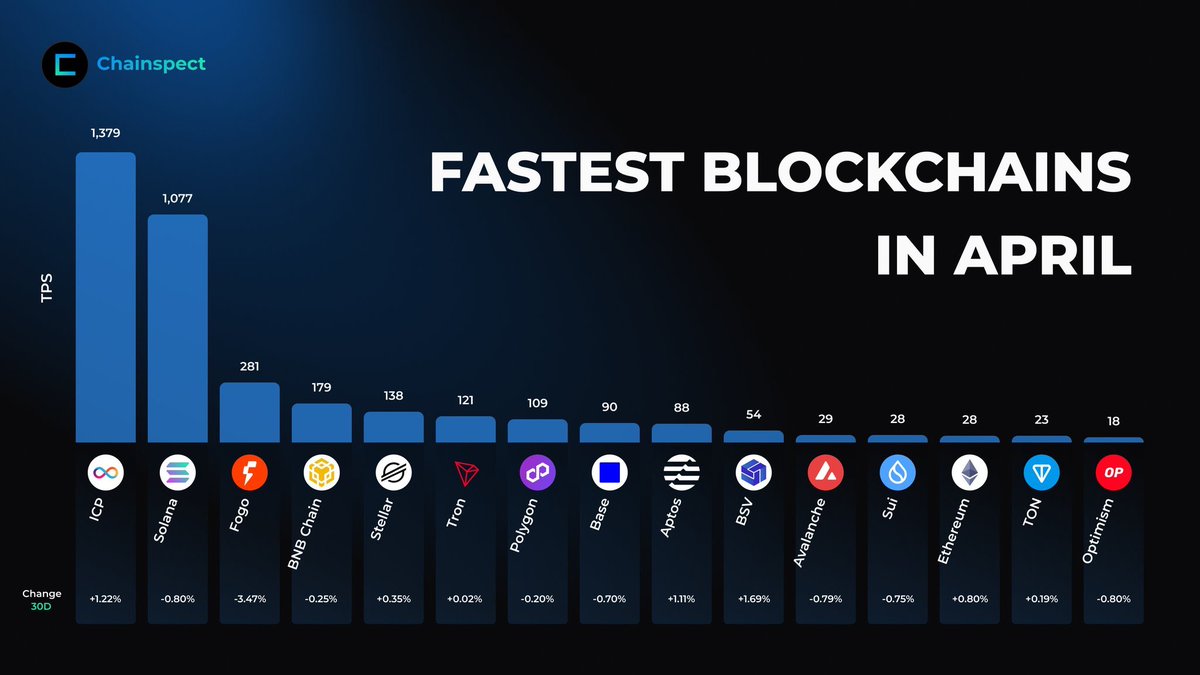
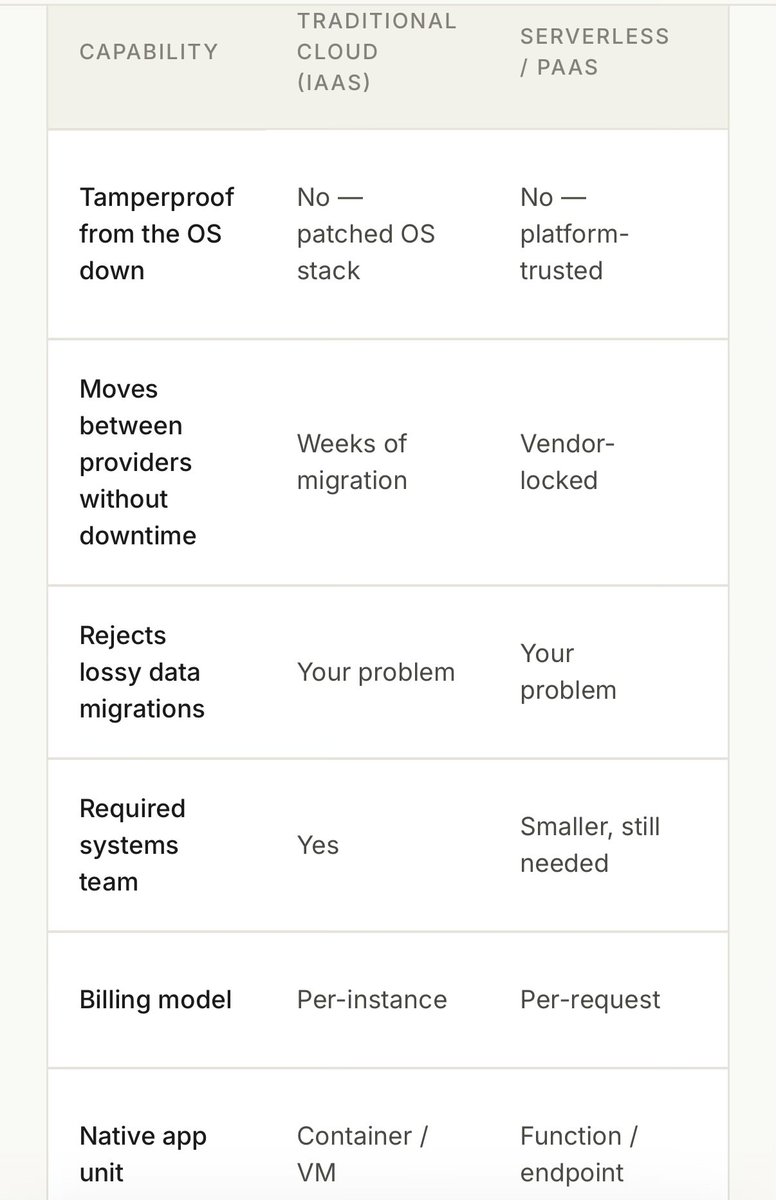
The new generation of cloud for AI is here. Cloud Engines on $ICP 🤫
How those cloud engines stand apart:
2
50
1,001
markus.ai.∞ retweeted

Apr 10
@dominic_w has been calling this out for years.
Ask any serious AI engineer to explain TAO with a straight face.
Yet VCs kept funding massive marketing campaigns to convince retail that TAO was “the future of AI”.
And just one week before the rug, X was suddenly flooded with TAO shill headlines. Coincidence?

Apr 10

'It is decentralization theatre': Covenant AI exits Bittensor, TAO drops 15% theblock.co/post/396959/cove…
20
85
320
16,302