
🇨🇦
Joined January 2023
- Tweets 58,618
- Following 4,496
- Followers 4,603
- Likes 104,139
964 Photos and videos













m33 🀄️ retweeted

Jun 13
In consumer technology, being first doesn't guarantee victory.
In settlement infrastructure, being first can create an advantage that compounds for decades.
That's why @zksync's institutional momentum deserves attention.
A thread 🧵👇👇👇
1. Infrastructure markets behave differently from application markets.
A social app can be replaced overnight.
A settlement network cannot.
Once institutions integrate deeply, the cost of switching grows every year.
2. Financial infrastructure creates lock-in through three layers:
• Operations
• Regulation
• Counterparties
The technical layer is often the smallest part of the equation.
3. Imagine a bank launches tokenized deposits on a specific settlement architecture.
Years later, migration requires:
• Rebuilding integrations
• Re-auditing systems
• Re-certifying compliance
• Coordinating counterparties
At that point, inertia becomes a competitive moat.
4. This is why live deployments matter more than announcements.
The institutions already building and operating on a network shape the decisions of the next institutions entering the market.
Adoption attracts adoption.
5. ZKsync has already established meaningful institutional traction.
Examples include:
• Deutsche Bank's Memento platform
• ADI Chain participants including First Abu Dhabi Bank and the Central Bank of the UAE ecosystem
• Cari Network onboarding major U.S. regional banks
6. What's interesting isn't any single deployment.
It's the pattern.
Each deployment adds another participant to an emerging institutional network.
And network value compounds non-linearly.
7. A settlement network with 10 institutions offers 45 possible corridors.
At 100 institutions, that number rises to nearly 5,000.
Every participant increases connectivity for everyone already inside the network.
8. Network effects alone are not enough.
Institutions also need infrastructure that satisfies regulatory and operational requirements.
This is where architecture becomes critical.
9. ZKsync's institutional approach focuses on four properties:
• Privacy
• Institutional control
• Cryptographic finality
• Cross-chain interoperability
These are not optional features for regulated finance.
They're requirements.
10. The most important thing about a first-mover lead is that it changes future decisions.
Every institution that joins a network increases the incentive for the next institution to join the same network.
The lead compounds.
11. The institutional race isn't about who gets attention today.
It's about who becomes the default choice tomorrow.
In settlement infrastructure, defaults often last for decades.
That's why 2026 may prove far more important than most people realize.

Jun 13

Most people talk about institutional adoption like it's a race for attention.
I think that's the wrong mental model.
This is not a marketing competition.
It's an infrastructure compounding game.
And that changes everything.
@zksync 🧵👇👇👇
1. In consumer tech, switching costs are low.
You uninstall one app and install another.
In settlement infrastructure, switching costs are structural.
They involve operations, regulation, and counterparties not just software.
2. That means early deployments matter more than they first appear.
Because once a regulated institution integrates a settlement layer into real workflows, it becomes part of how money actually moves.
And that is not easily undone.
3. This is why live systems matter more than narratives.
We are already seeing regulated activity move onchain:
• Deutsche Bank’s tokenized fund platform (Memento) on ZK infrastructure
• ADI Chain involving major institutional participants
• Cari Network onboarding U.S. regional banks with large deposit bases
These are operational systems, not theoretical ones.
4. A useful way to think about this is a logistics network.
The first shipping ports don’t win because they are the biggest.
They win because routes, customs processes, and infrastructure begin forming around them.
Once that happens, trade naturally aggregates there.
Settlement networks behave the same way.
5. The key point is this:
Every live institution is not just a user of the network.
It becomes part of the network’s topology.
That topology then influences where the next institution chooses to build.
This is where compounding begins.
6. The math is simple but powerful:
10 institutions create 45 possible settlement corridors.
100 institutions create nearly 5,000.
Each new participant increases connectivity for everyone already inside the system.
7. This is why settlement networks don’t scale linearly.
They scale as systems of relationships, not isolated integrations.
And relationships especially regulated ones are expensive to rebuild elsewhere.
8.There’s also a second layer most people miss:
Counterparty alignment.
A bank doesn’t just choose infrastructure.
It chooses compatibility with the institutions it expects to transact with in the future.
That makes early clustering extremely influential.
9. This is where @zksync’s positioning becomes relevant.
Not as a standalone chain, but as an integrated settlement environment with:
• Privacy by design for institutional constraints
• Institution-controlled deployment models
• Cryptographic finality on Ethereum
• Cross-chain interoperability for connected systems
These properties matter because they reduce friction for regulated participation.
10.The analogy I keep coming back to is rail networks.
A new rail line isn’t valuable because it exists.
It’s valuable because it connects existing economic centers.
But once multiple centers connect through the same rail system, rerouting becomes economically inefficient.
11. My conclusion is simple:
In settlement infrastructure, the first meaningful deployments don’t just demonstrate viability.
They begin shaping the future standard.
And once that shaping starts, compounding not competition becomes the dominant force.
That’s the real significance of 2026.

9
121
122
5,531
m33 🀄️ retweeted

Jun 12
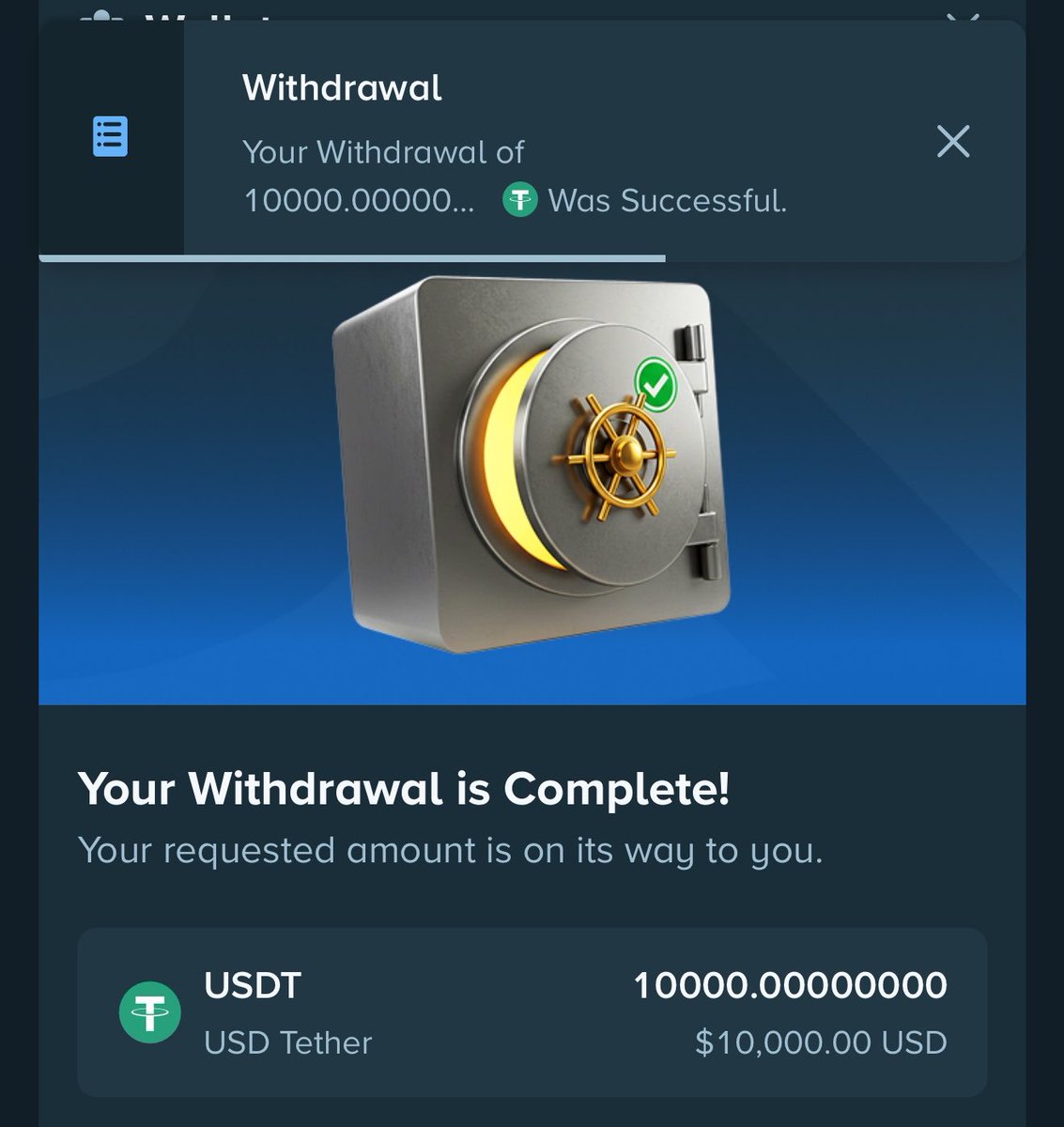
Withdraw some money, use am do weekend.
874
265
3,487
110,140
m33 🀄️ retweeted

Jun 12
Agree 100% → quip.network/use-cases
Jun 12

Optimization is one of the biggest opportunities in quantum computing. BCG projects quantum computing could create up to $850B in economic value by 2040. Optimization alone is estimated at $100B–$220B, comparable to the global cybersecurity or semiconductor equipment markets. D-Wave’s Advantage2 annealing quantum computer has 4,400 qubits and, with hybrid solvers, can support problems with up to 2M variables. Our roadmap moves toward Advantage3 systems with 20,000 and ultimately 100,000 qubits, expanding the size and complexity of optimization problems customers can tackle. The market is large. The use cases are real. And our customers are already seeing value. $QBTS #quantumcomputing
272
226
468
43,891

Jun 12
RT @Ericfox36: I Did Not Know I Was Leaving Money on the Table Until I Saw the Table.
My filter in crypto is simple: if a platform is loud…
13





When I arrived at my son’s wedding, he stepped in front of the church entrance and told me, “You weren’t invited, Mom. The family agreed you’re not part of us anymore.”
I looked at him quietly, tightened my grip on my purse, and answered softly, “That’s alright, son… but you should probably check your phone.”
What nobody inside realized was that the truth had already started moving toward them hours earlier………
32
136
166
20,773
m33 🀄️ retweeted

Jun 12
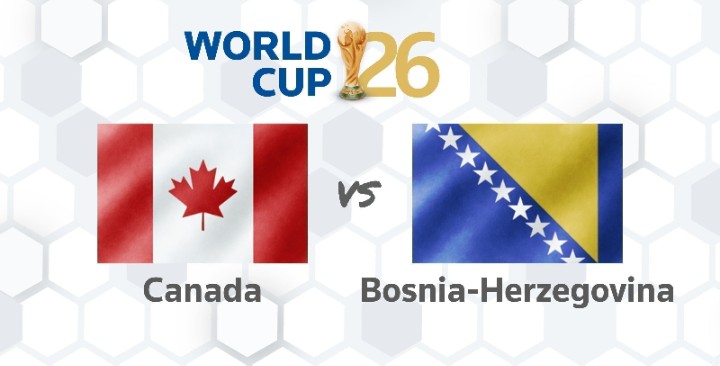
🇨🇦 CANADA vs BiH 🇧🇦
🕗 20:00 Today
Canada’s first-ever World Cup match on home soil in Toronto!
🍁 History is about to be made.
Who wins this Group B opener? Drop your score prediction below 👇
102
223
362
3,763
m33 🀄️ retweeted

Jun 12
It took me a good 45 seconds to figure out what was going on in this picture

116
244
419
12,506
m33 🀄️ retweeted

Jun 12
My name is Marissa. I was 38 when our family shattered forever.
My husband Eric (39), our son Mark (18), and daughter Bella (9).
Mark was quiet, studious, always in his room. The perfect big brother.
Bella was a cheerful storm of energy.
I never saw any warning signs… until that family dinner.
“Mommy… my brother Mark touches me here.” She pointed to her private parts. Calm as if talking about the weather.
The room went silent. My world collapsed.
I believed her instantly.
99
178
268
36,879
m33 🀄️ retweeted

Jun 12
Why did the White Walker Spare Sam? 🤯
Despite locking eyes with Samwell
Tarly, he just kept riding 🥶
32
219
316
19,826
m33 🀄️ retweeted

Jun 12
⚽ Probability of winning the World Cup
🇲🇦 Morocco ~ 1%
🇪🇸 Spain ~ 8%
🇺🇸 USA ~ 2%
🇵🇹 Portugal ~ 6%
🇳🇱 Netherlands ~ 7%
🇲🇽 Mexico ~ 10%
🇬🇧 England ~ 12%…. see thread

9
186
191
2,427
m33 🀄️ retweeted

Jun 12
My daughter texted me at 11:48 PM.
Just three words.
“Are you awake?”
That was unusual.
She had moved to another city almost a year earlier for her first job after university. We talked occasionally, short calls, random updates, photos of meals she cooked badly and pretended were gourmet. But she never texted late unless something was wrong.
54
308
343
8,702
m33 🀄️ retweeted

I think agent harris liked tony
The Sopranos
49
193
1,357
193,354


m33 🀄️ retweeted

Jun 12
This woman was suffering from annoying sinus pain, so she decided to confide in her friends about her discomfort.
But to her surprise, her friends gave her a very strange piece of advice! They told her to use a balloon, insert it into her nose, and then pull it out of her mouth 😳
Intrigued, she decided to try it without hesitation… But what happened in the end was shocking and completely unexpected!
183
575
2,164
1,991,384
m33 🀄️ retweeted

Jun 11
Would you blame her for not saving the woman?
What would you have done differently if it were you?
55
287
1,136
34,325

m33 🀄️ retweeted

Jun 12
I never intended to expose him.
In fact, if things had gone differently, I probably would have defended him.
That’s how much everyone trusted him.
He was the kind of colleague every office has.
Always smiling.
Always helpful.
The first person to contribute when someone was sick.
The first person to organize a farewell party.
The first person management called whenever responsibility was needed.
If someone had asked me to name the last person capable of stealing from the company, his name would have been at the very bottom of the list.
57
276
314
3,527