
@AEF_Program 24 Alumni Fellow • @MoMath1 • #PAEMST @NCTM • @MAAnow
Joined April 2015
- Tweets 77,511
- Following 3,036
- Followers 4,508
- Likes 85,242
7,831 Photos and videos




Pinned Tweet

13 May 2016
Oh the Places You'll Go! Random Walk on Wall Street @profkeithdevlin @JohnAllenPaulos @timchartier @stevenstrogatz
16
98
267
Danger danger!
The C3 Framework focuses on inquiry skills and key
concepts.
Content is critically important to the disciplines within social studies, and individual state leadership will be required to select appropriate and relevant content.
Jun 12

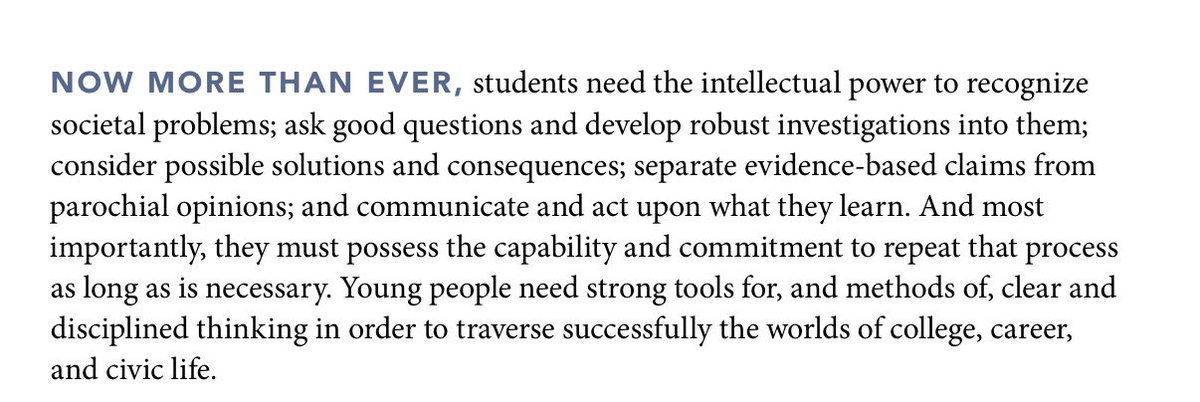
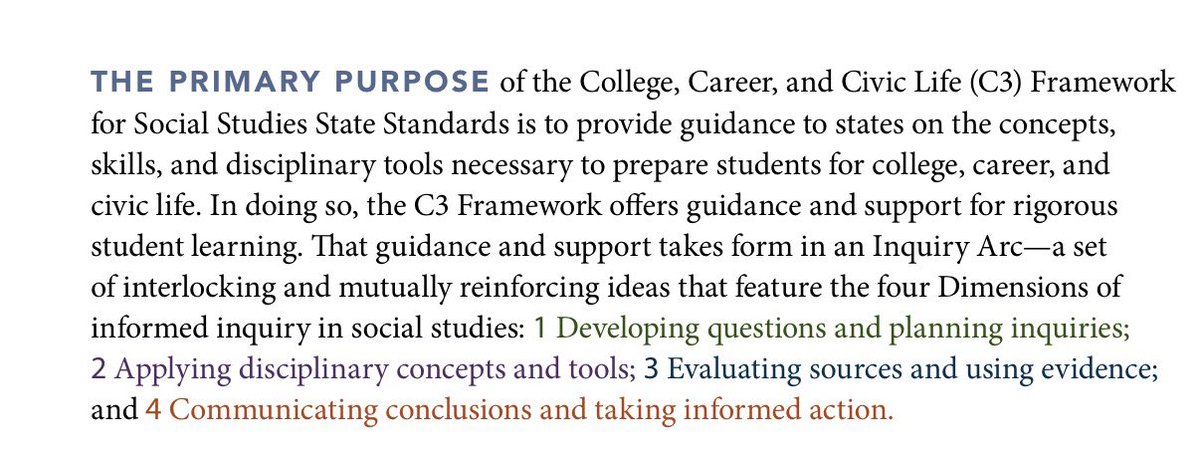
Pictured is the basically the explicitly stated preamble and purpose of the National Council for the Social Studies’ C3 Inquiry Framework—a document that has had an enormous influence on state social studies standards and local curriculum development over the past decade.
Notice what is emphasized: asking questions, conducting investigations, evaluating evidence, communicating conclusions, taking informed action, solving problems, and developing the habits of inquiry.
Now notice what is missing.
Among all the things students are expected to develop, acquire, and demonstrate, one word is conspicuously absent from both the preamble and the stated purpose of the framework: knowledge.
The framework repeatedly highlights the processes of inquiry and thinking, but says remarkably little about the substantive knowledge students must possess in order to ask good questions, evaluate evidence, recognize significance, or think critically in the first place.
After all, critical thinking is not something that floats freely. It operates on knowledge. You cannot investigate what you do not understand, evaluate evidence about topics you know nothing about, or separate strong claims from weak ones without a foundation of domain-specific knowledge.
The omission is revealing because what educational frameworks emphasize often shapes what curriculum writers, standards developers, and school systems prioritize. The emphasis of the framework is clear: inquiry is foregrounded, while knowledge remains in the background. And when frameworks signal what matters most, curriculum, instruction, and assessment often follow.
1
1
61
A staple of constructivist thinking about learning

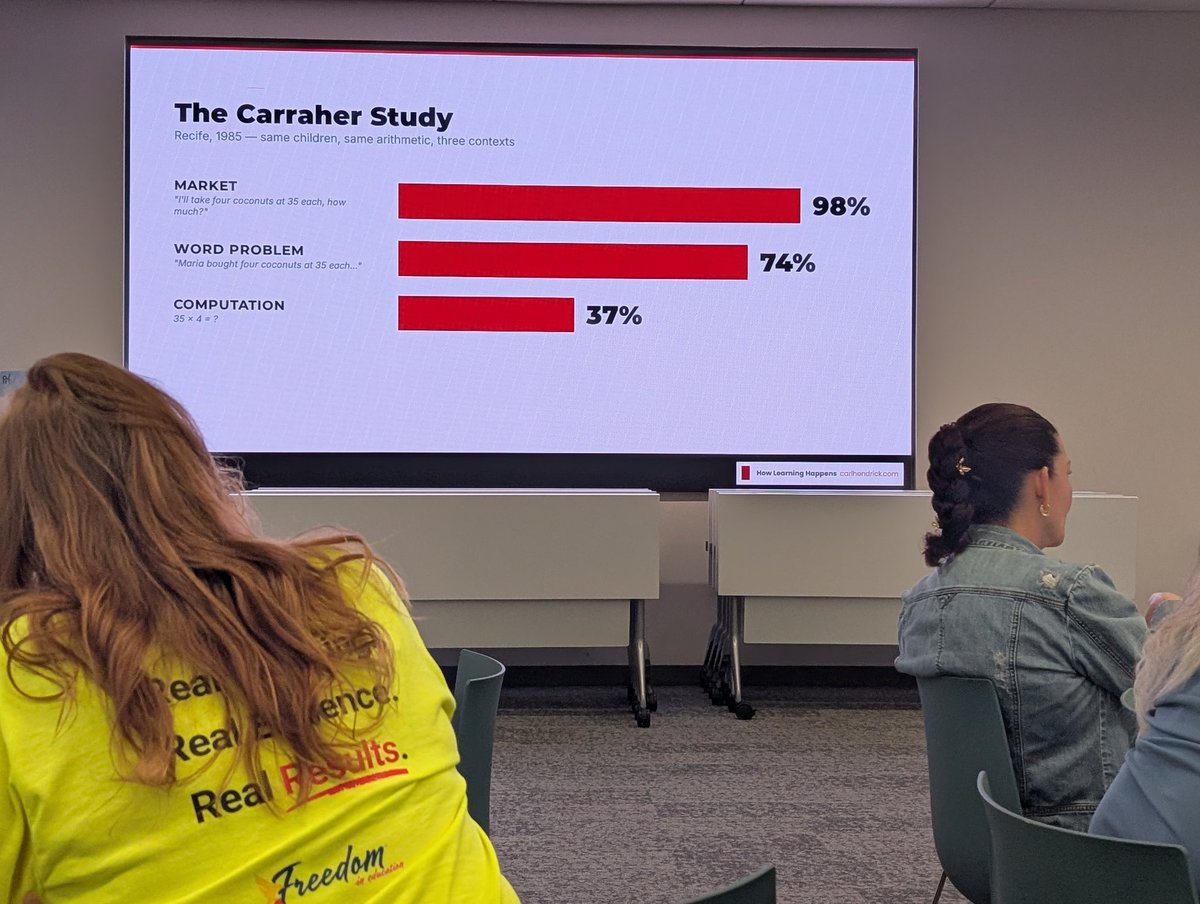
This study shared by @C_Hendrick that looked at the math abilities of children whose families were street vendors. They were whizzes at math but it didn't tend to translate to math success at school. You need to be intentional about how it's presented. Fascinating.
33
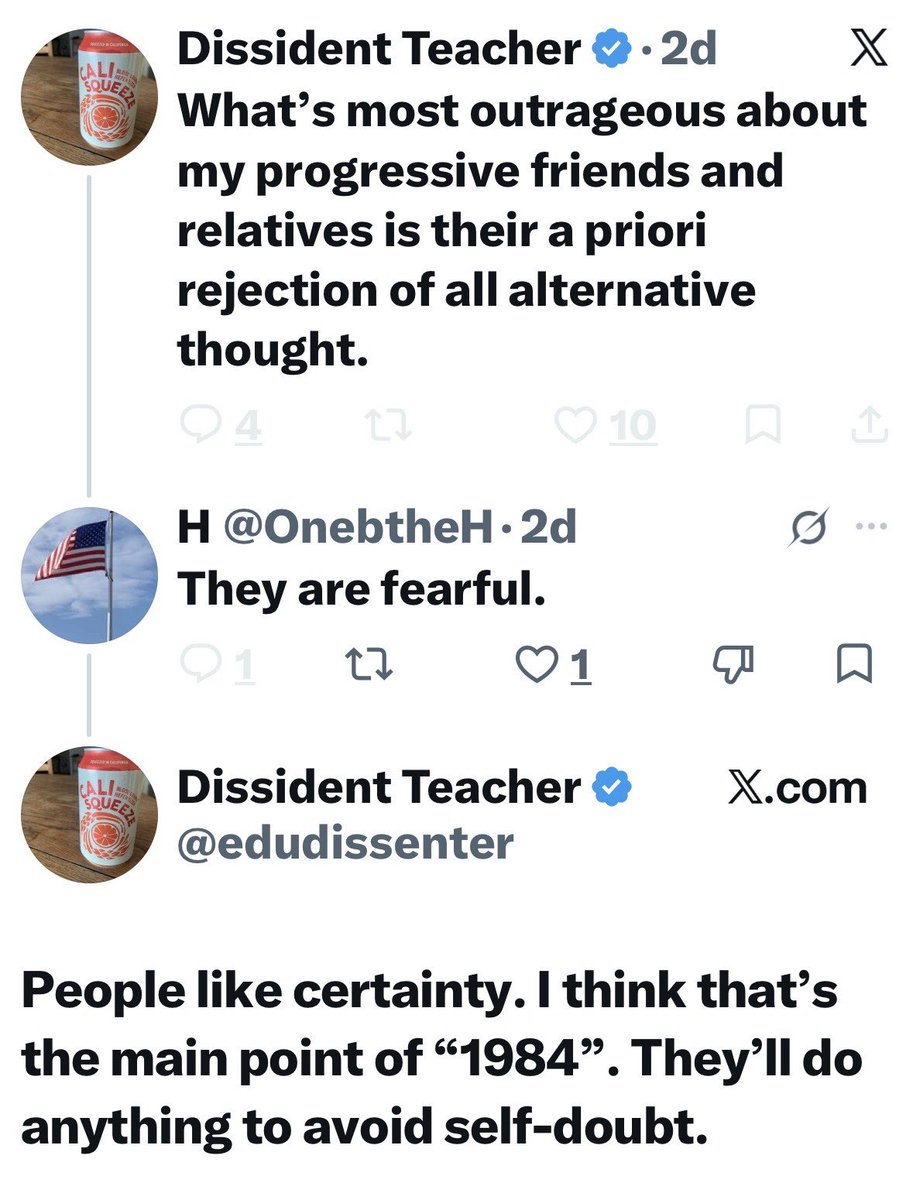
Every statement like this from the “right” is a confession.
“They'll do anything to avoid self-doubt.”
ALT What's most outrageous about my progressive friends and relatives is their a priori rejection of all alternative thought. H@OnebtheH• 2d They are fearful. 01 Dissident Teacher O @edudissenter 贝 X.com People like certainty. I think that's the main point of "1984". They'll do anything to avoid self-doubt.
46
Ralph Pantozzi retweeted
Jun 12
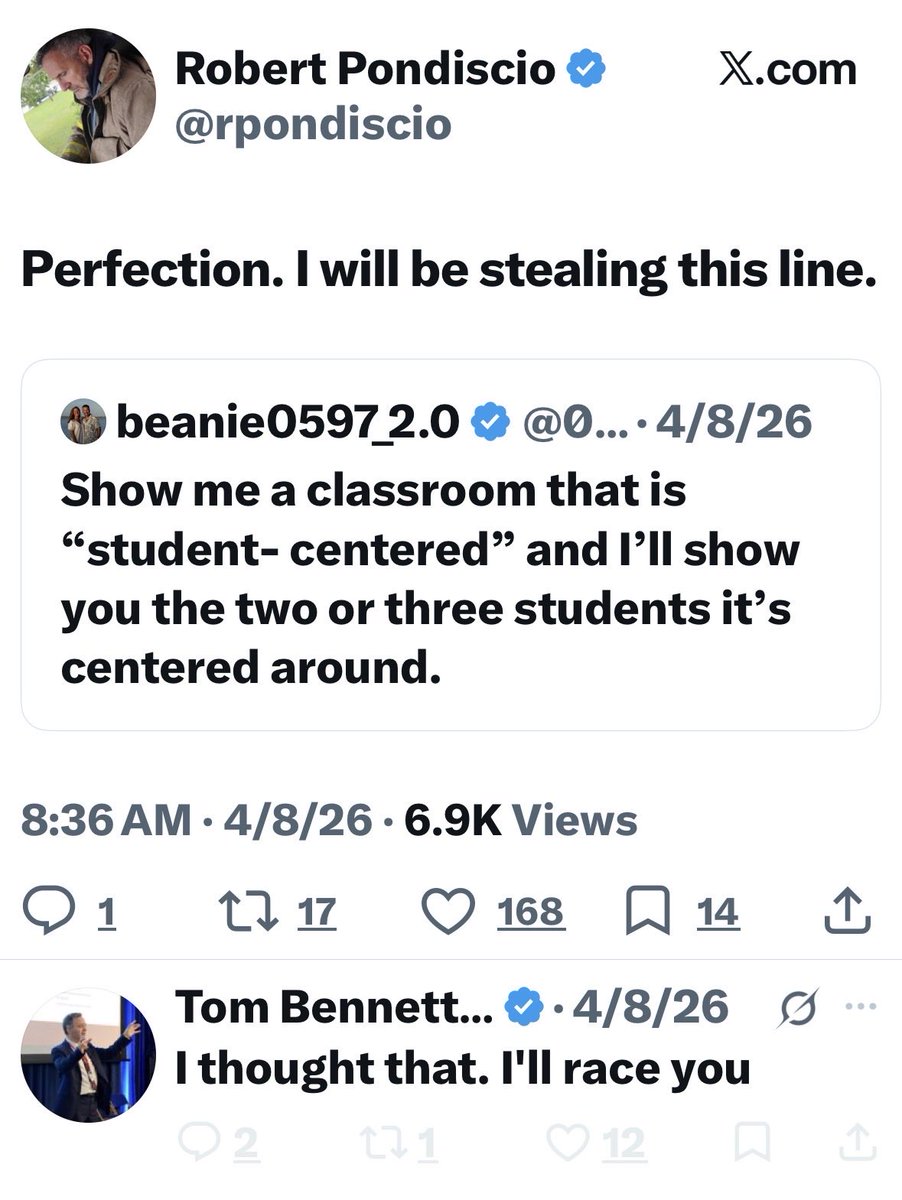
A quote that typifies a certain set of pundits’ substitution of snarky sweeping generalizations for honest engagement with the evidence.

Show me a classroom that is “student- centered” and I’ll show you the two or three students it’s centered around.
1
1
2
822
Ralph Pantozzi retweeted

Worth noting: only 60% of Americans own stocks. And the top 10% owns 90% of them.
A booming stock market just magnifies inequality. The rich make out like bandits, the middle benefit a little bit, and the working class gets left behind as usual.
153
14
142
37,483
RT @lunwi75: Remember when Musk challenged the World Food Program to explain how he could solve world hunger with just $6 billion, they did…
29,562
Part and parcel of the history of educational racism

Every parent in a “diverse” public school knows the only way to assure the best classroom experience is to have your child identified as gifted and hopefully segregated from students who can’t adapt to classroom expectations.
2
7
941
The Manhattan Transfers
16h

just to clarify, what are the NFL teams that play there?
75
Can't calculate change from a dollar? #iTeachMath
Of course, calculators are to blame!
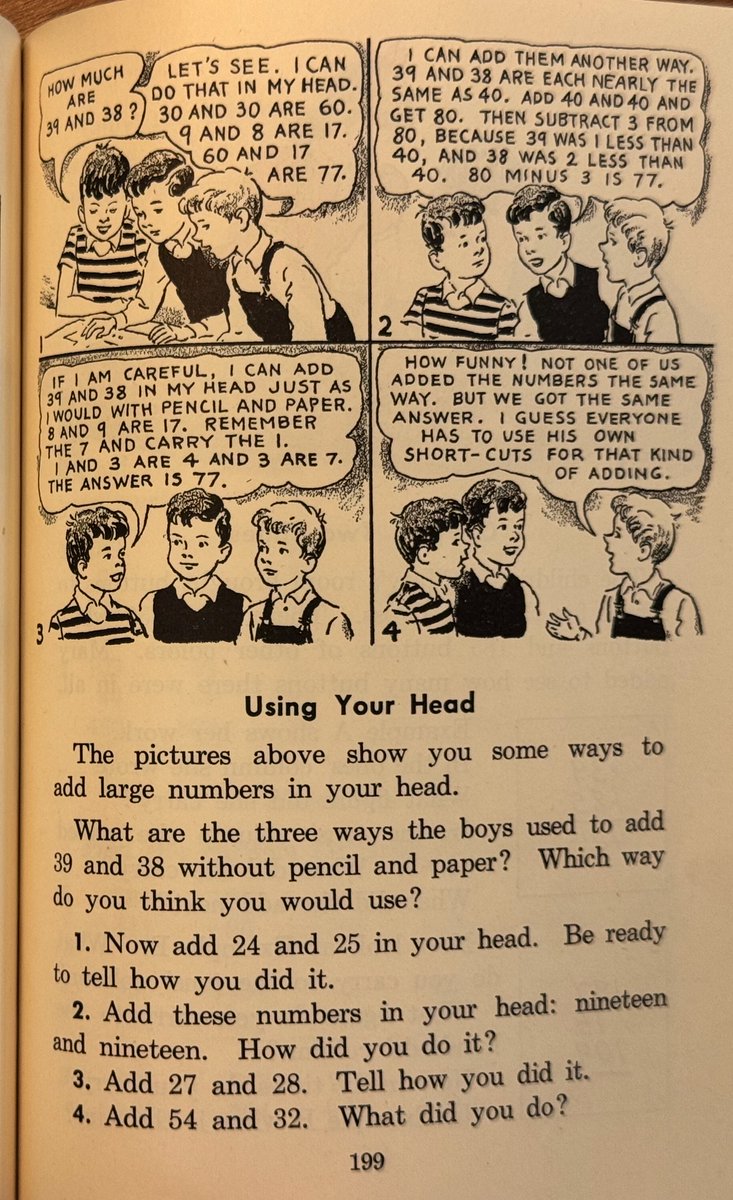
Or perhaps it's progressive education, famously and mythically rampant in schools across the entire 20th century.
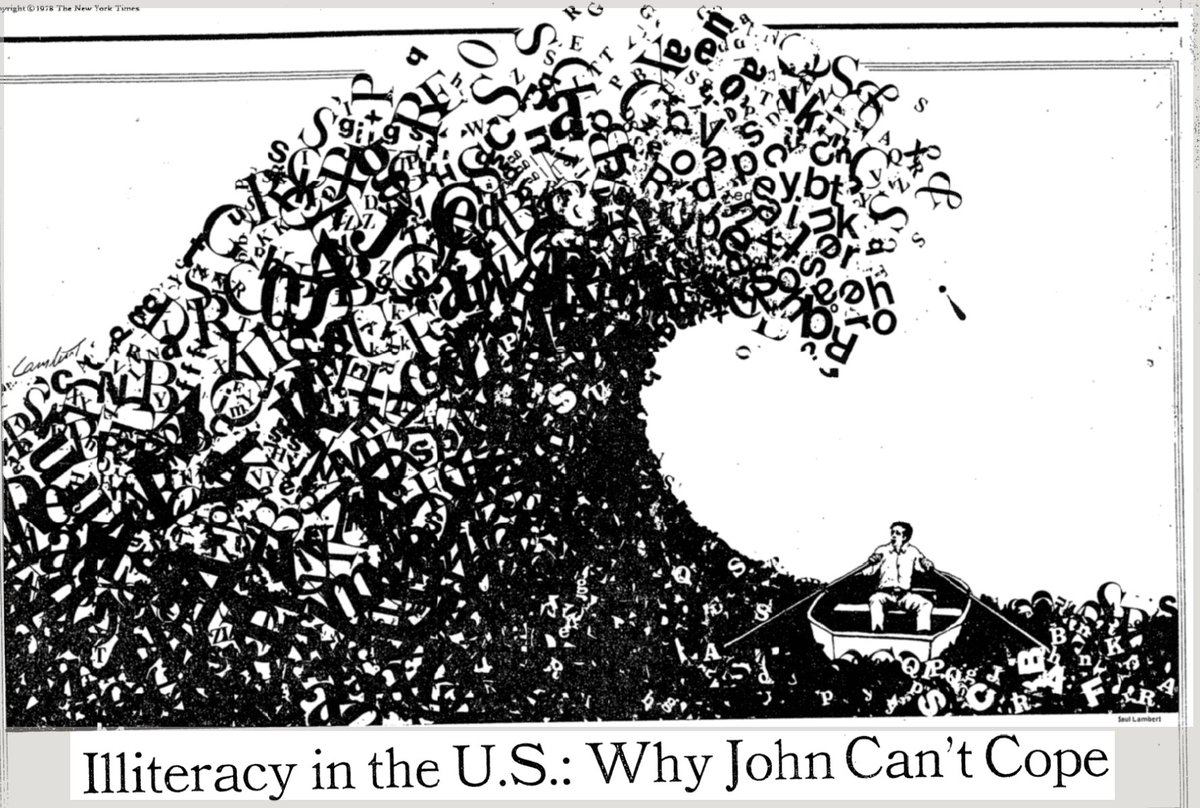
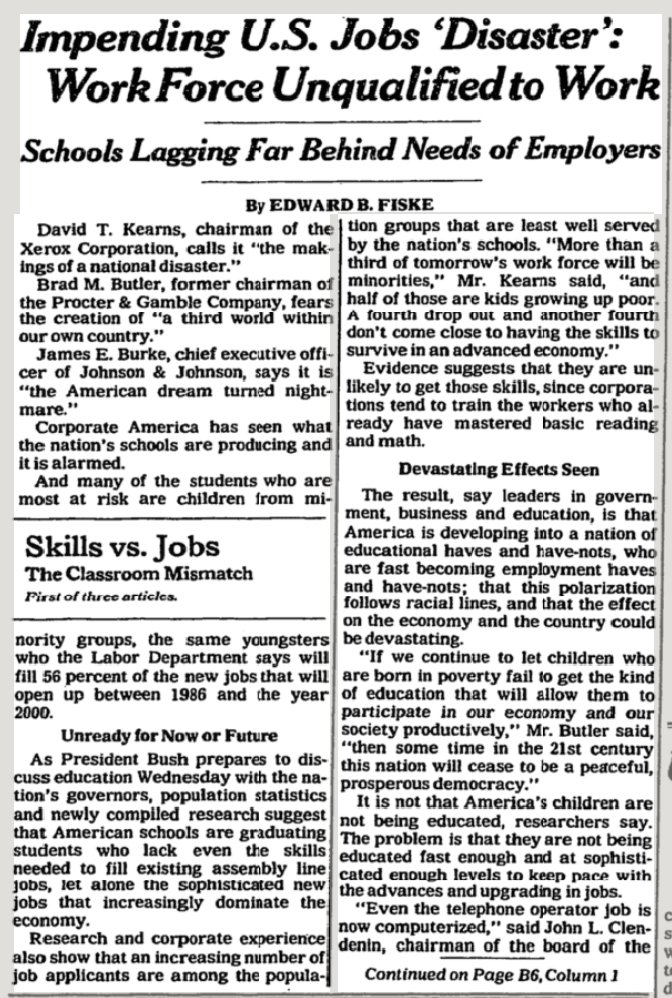
News from 1978:

A nation that has split the atom and sent spacecraft to Jupiter has not yet figured out how to teach all of its adults to fill out a job application or calculate change at a checkout counter.
1
1
193
1978 NAEP illiteracy Panic: Television, 📺Phone Calls 📞 blamed.
Sound familiar? Read on!🧵
1
79
"Special books geared to junior-high school students are written for reading levels of the second to fourth grade." Didn't I read something like this yesterday?
1
36