
Joined August 2024
- Tweets 230
- Following 71
- Followers 56
- Likes 26
18 Photos and videos



Jun 4
AI has played with my mental health.
Let me explain why.
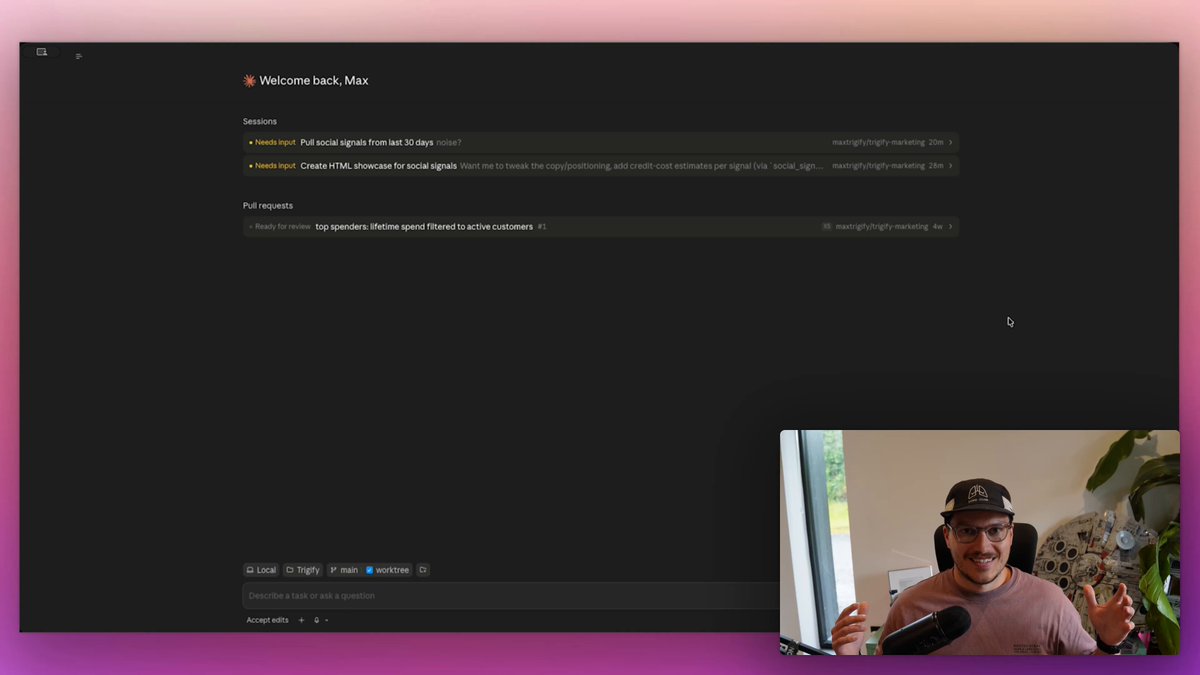
I use AI heavily through lots of different agents that I’m running in production.
My productivity has skyrocketed and it’s added immense value. BUT
The biggest challenge I have is this: what I’ve done is never enough.
Let me explain. I can now do 10 tasks at once and usually complete in a day what would have taken me a week.
Because of that, I’m left at the end of each day wishing I’d done more, feeling frustrated with myself for not pushing harder.
No one talks about this, but there’s a real high to being so efficient and seeing the outputs, and you’re left chasing that each day.
We thought AI would help with burnout, but I see it making things worse if you don’t catch yourself doing this.
1
2
450
May 28
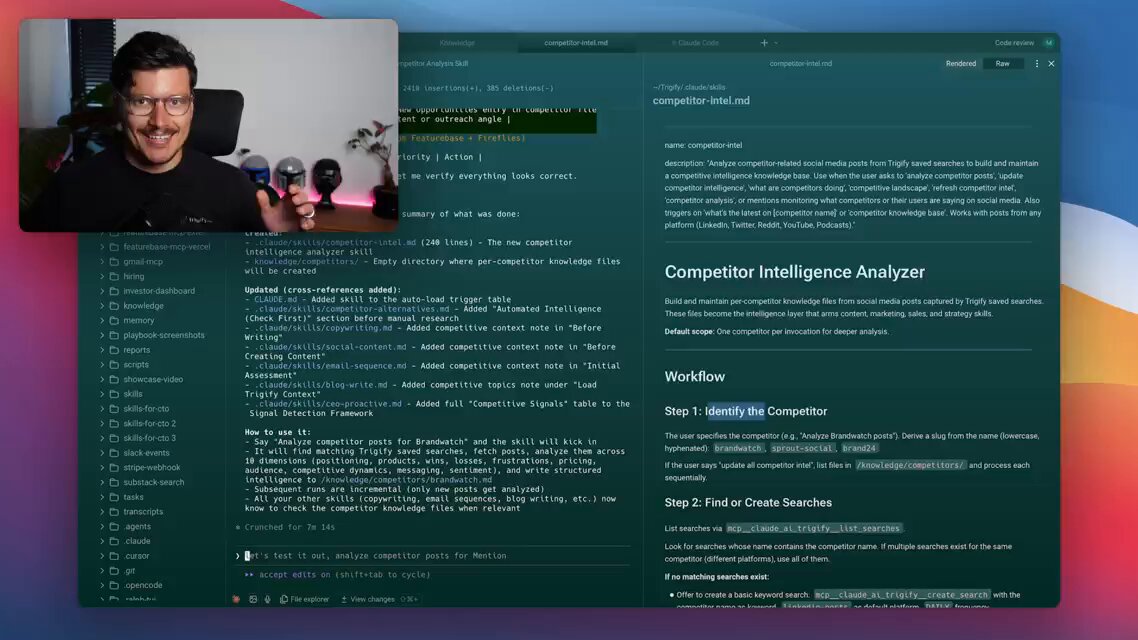
I pointed Claude Code at my biggest competitor's socials. 4 platforms, 165 posts, one knowledge file my agents now reuse everywhere.
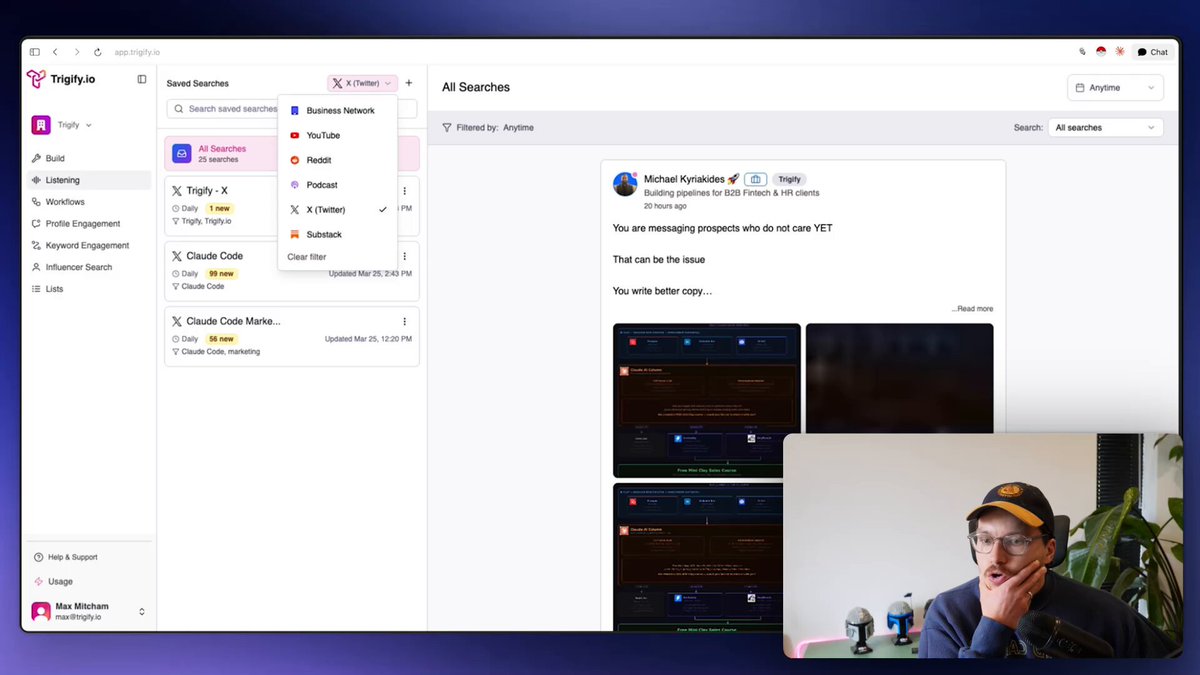
Setup was simple. Told Claude Code to use the Trigify MCP and monitor Brandwatch across Substack, X, Reddit and YouTube. It created the searches automatically.
Then it analysed every post for:
→ Positioning and messaging themes
→ Product features and launches
→ Wins and traction signals
→ Frustrations and pain points
→ Pricing and value perception
→ Audience profile and sentiment
165 posts distilled into one markdown file.
But the file doesn't sit in a folder doing nothing. It becomes context for every other agent I run inside Claude Code.
Writing an email sequence? It pulls competitor context.
Building a landing page? It knows how they position.
Drafting a blog? It references what's resonating.
One knowledge file. Reused across copy, social, email, blog, strategy.
Stack five or six of these and your agents understand the whole competitive landscape before they write a single word.
6
747
May 27
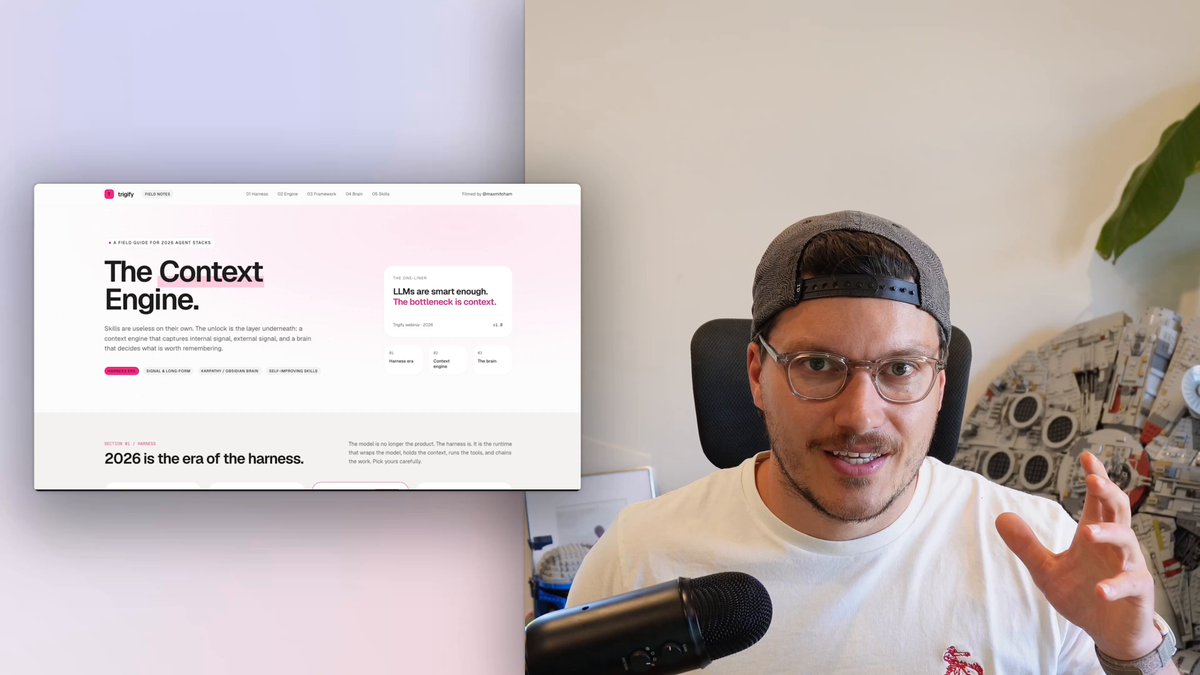
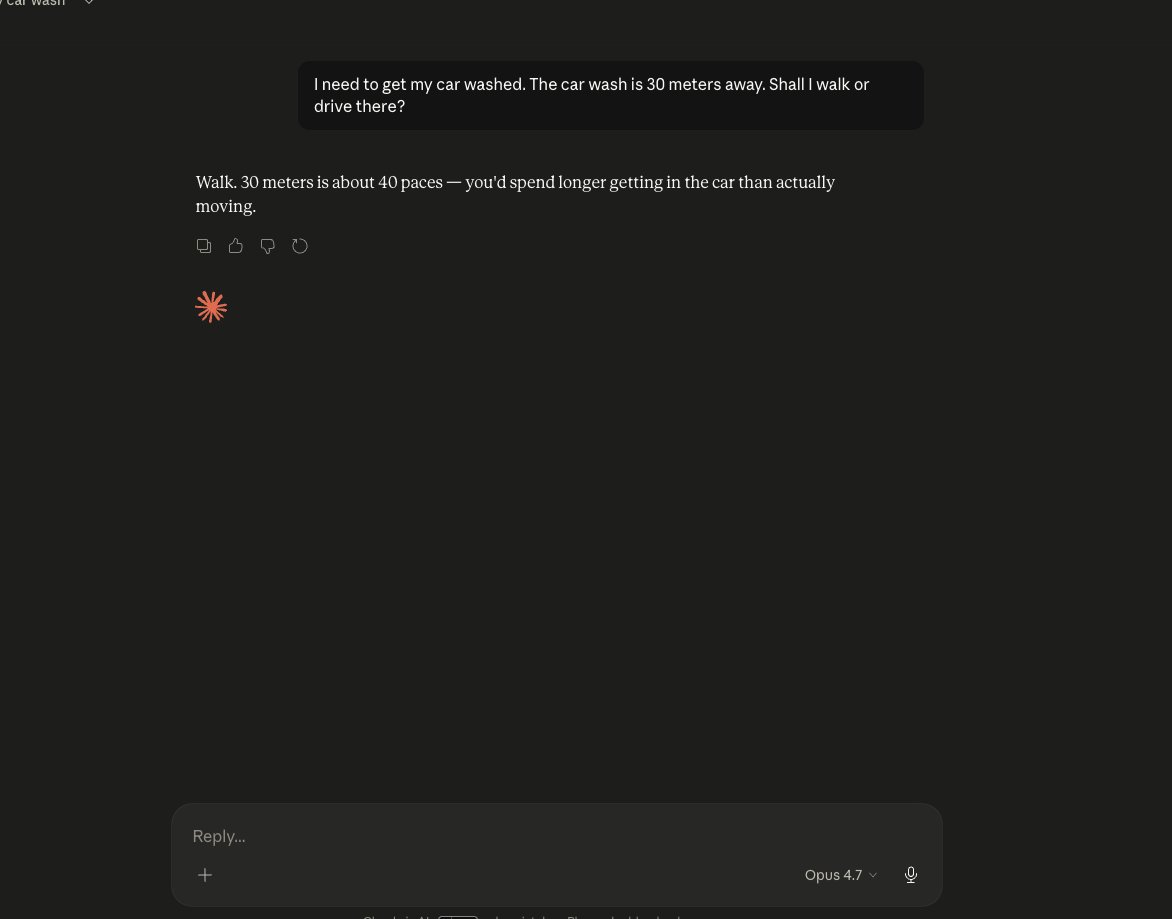
The LLM doesn't matter anymore.
Every founder I talk to is still picking sides. GPT vs Claude vs Gemini.
Pick the smartest model on earth and feed it nothing about your business and it still produces generic slop.
Here's what actually matters in 2026 →
2
4
126
May 27
Two layers underneath the model do all the work:
→ Context engine (internal external)
→ Memory system (raw → belief → memory)
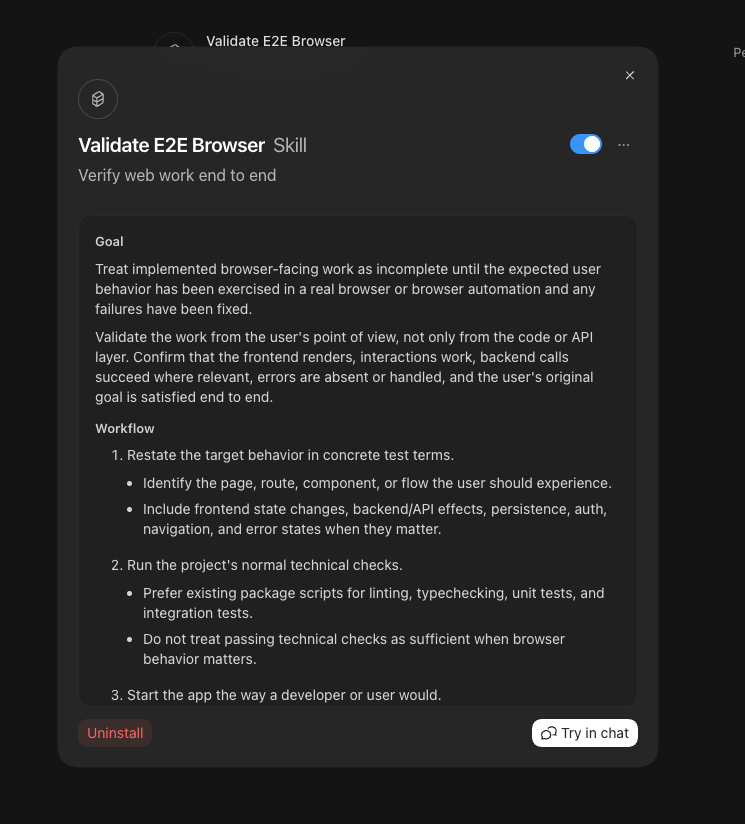
Skills sit on top. Most people build skills first, which is why their agents are mid.
External context = market signal.
X, LinkedIn, TikTok for high-velocity. Reddit, Substack, YouTube for depth. Pulled through Trigify.io.
Internal context = HubSpot, Notion, Slack, Granola, Fireflies, Featurebase.
The agent reads what I read.
The belief check is the part nobody builds.
A signal only becomes a memory if it appears 3 times across raw data, or I state it as a hard fact.
One viral tweet ≠ a belief.
Without this filter, your agent is confidently wrong about everything that trended yesterday.
1
2
55
May 27
Run the same prompt with the same model and the same skill. Wire up context memory underneath and the output stops sounding generic
Prompt -> notion.so/trigifyio/Prompts-…
1
49
May 26
Hermes agent has become my full time Ironman coach for my first race I have in August..
Its hooked up to Strava Whoop.
It created me a 30 week plan which I've been executing daily on.
Every day its checks how I'm doing against my Strava & Whoop data and adjust the plan based on how well or badly I'm doing.
Here's its latest words of advice to me about completing it ahead of the cut off time.
I still feel like its going to be a survival march tbh..
1
58
May 23
1k YouTube subs > 10k LinkedIn followers.
LinkedIn is window shopping. YouTube is where customers actually convert.
1
32
May 22
Testing Qwen 3.7 for my @NousResearch Hermes agent.
Anyone tried it? So far looks pretty nice and similar to my Opus experience..
2
68
May 21
48 meetings. 120 leads. 40% reply rate.
Not from blasting a list. From only reaching out when there was a real reason to.
Here's the Claude Code Trigify workflow ↓
2
1
49
May 21
Phase 3: Claude builds the automation
Not a Zapier flow. The system watches the signals, qualifies the context, and only fires when something useful actually happens.
Phase 4: signal fires, workflow runs
→ enrich the person
→ find their email
→ research person company
→ understand the exact signal
→ draft a personalised email
→ push to Instantly Smartlead
→ notify the team in Slack
1
21
May 21
The important part isn't the email. It's the timing.
48 meetings in 2 weeks from 120 leads because I reached out when they were warm.
More signal → context → action.
15
May 19
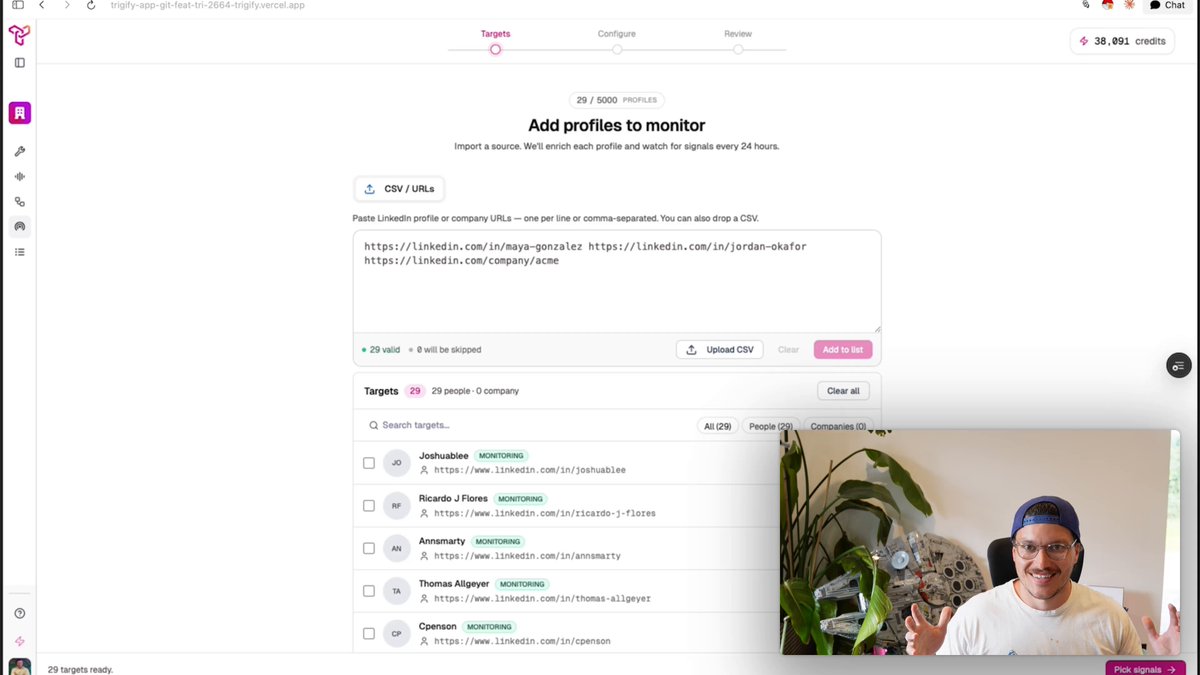
The workflow starts with target accounts.
@HubSpot , @attio , @salesforce , or even a CSV.
The important bit is you are not starting with 50,000 random contacts.
You are starting with companies you actually want to win.
1
52
May 19
Then @Trigify_Signals watches for the signals.
- competitor engagement
- hiring intent
- founder posts
- funding news
- pain point mentions
- category conversations
- product launches
- people asking for recommendations
This is the trigger layer.
18
May 18
500 signups last month. 35% activation. Profitable.
The interesting shift is who's actually using us now.
We launched the API, MCP and CLI a few months back. The CLI is sitting right behind the MCP for usage. (API essentially is the main driver for usage within Trigify.io currently)
Did not expect that.
One theory I have for whats fuelling this is..
If 2025 was the LLM year, 2026 is the year of agent harnesses. Think OpenClaw, Hermes, all the rest. And the builders using those harnesses for GTM are pulling social data in as context for their agents.
→ Competitor and ICP engagement patterns
→ Tone of voice training for monitoring agents
→ Trend detection on X, LinkedIn, Reddit, then deeper context from YouTube, Substack and podcasts
We started as social signals for GTM teams.
We're becoming the social context layer for agents.
Same data, much bigger surface.
What else?
→ 11 socials live now more to come
→ Hired a Founding AE starting soon (Enterprise is massivly growing for us_
→ 100% organic growth still
→ New UI & UX coming soon
Negatives?
→ Pure PAYG (i.e no spend on sign up) was hurting us. Lots of people using dummy cards so getting usage out of us without spending anything
We have now introduced a simple 3 tier pricing plan, which has base level of consumption usage on top should you wish.
→ Website is old and not fitting to what we are today
→ Small team many people forget we are only 5. Customers over 1k means working flat out even with a team of agent to hep support. (I think we are to generous with our time for lower paying customers)
All things considered time to pour some gasoline on.
26
May 15
Hermes 26x’d my YouTube video
I only filmed it.
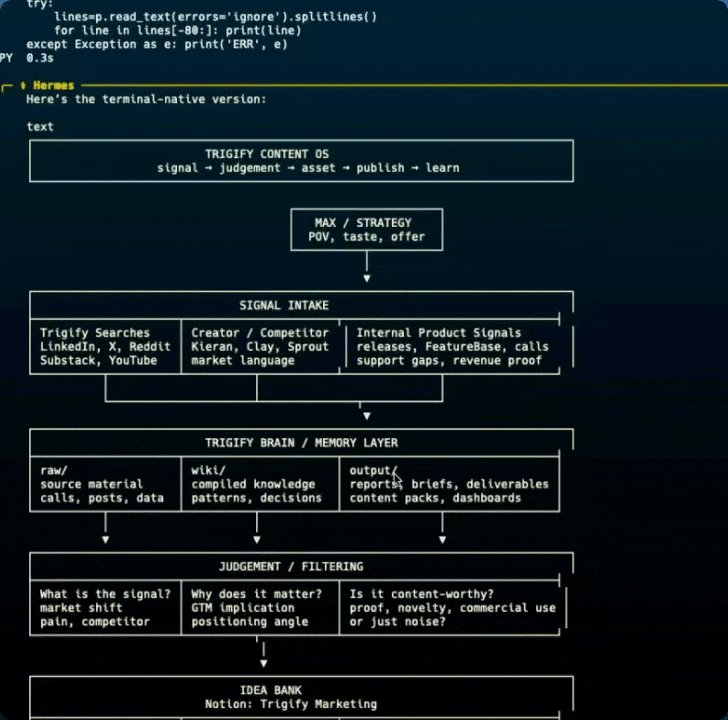
The rest came from the Content OS I’ve been building.
Most creators treat content like a calendar:
Post Monday.
Post Wednesday.
Hope something hits.
Mine runs like a system.
Comment “X” and I’ll share the prompt to set up the Content OS.
2
45
May 15
→ Trigify spots hooks, formats and topics gaining traction across LinkedIn, X, Substack, Instagram and Threads
→ Hermes pulls depth from YouTube, podcasts and Substack so I know why something is working, not just that it is
→ Hermes connects to Stripe, product data, Fireflies, Granola, email and Slack so the takes come from real company context
1
50
May 15
For YouTube, Hermes tracks creators like Alex Finn, Nate Herk and Matthew Berman. It reviews hooks, titles, thumbnails and descriptions, then sends me Slack recommendations.
Last 2 videos: 2-3x usual performance.
This one: 26x.
79
May 13
Introducing Signals and Insights.
Signals: 16 handcrafted, high-intent GTM signals, ready to run against your target accounts. Someone posting about a topic you care about. A key person changing role. A person entering a buying window.
Insights: even the best GTM leaders don't always know what to look for. Our AI now analyses every data point across socials for the people you monitor and your wider TAM, surfacing what matters before you'd think to look.
A narrative shift. A leadership team aligning on one topic. 30,000 VPs leaning into the same subject.
All flowing into one signal timeline.
DM for access.
34