
Full-stack engineer specializing in distributed systems and modern web architecture, currently diving into ML/AI field
Joined July 2019
- Tweets 1,106
- Following 121
- Followers 4,118
- Likes 1,091
8 Photos and videos



Max Koretskyi retweeted

Jun 13
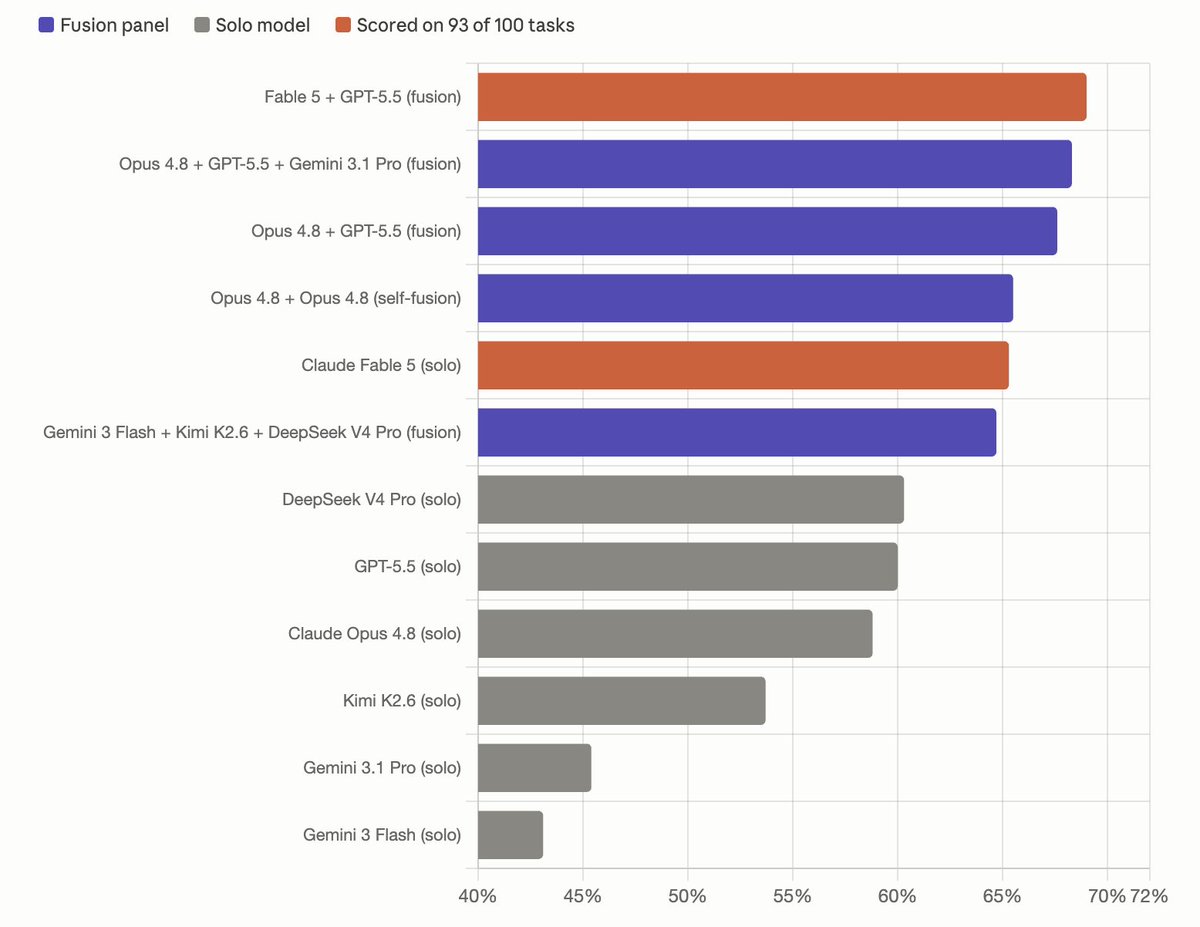
Introducing the Fusion API, the smartest compound model in the market.
Fusion achieves Fable-level intelligence at half the price.
How it works 👇
611
1,571
13,443
5,034,765
Max Koretskyi retweeted

I finally understand what Machiavelli meant when he said, “Never play fair in a game where others cheat.” It doesn’t mean become evil. It means stop being naive. Stop bringing honesty to people who study manipulation, stop giving access to people who weaponize closeness, and stop expecting clean hands from people who already showed you they’ll throw dirt. Sometimes wisdom is not revenge. Sometimes wisdom is learning the rules of the room before the room uses your goodness against you.
307
12,360
40,960
701,377

Jun 11
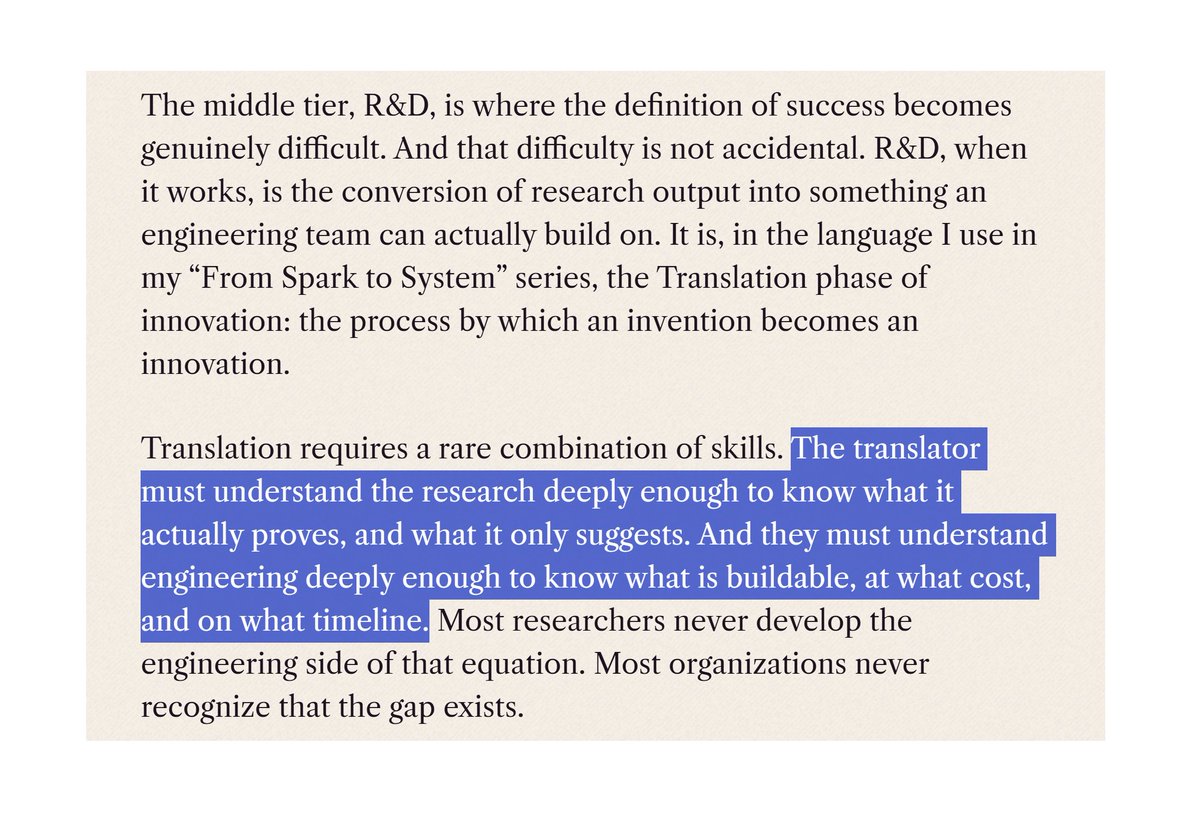
The excerpt is from an insightful article on why R&D is the hardest layer of innovation: it requires people who can translate academic research into something engineering teams can actually build. To me that feels like an excellent career direction for engineers who want to move closer to the research frontier (my case) — not necessarily by becoming pure academics, but by becoming the bridge between invention and implementation.
Article link voiceinthemachine.com/2026/0…
83
Max Koretskyi retweeted

Jun 11
I don't think people in Europe (and the UK) are taking our technological (and therefore economic) divergence seriously enough.
A few disparate datapoints:
1. Our compute is woefully behind; three American labs each operate more AI compute than all of Europe combined
2. OpenAI has paused Stargate UK (indefinitely); our energy costs and regulatory environment are actively driving frontier infrastructure away
3. Mistral reportedly considering acquisition by SpaceX; Europe’s most valuable AI company is struggling to get the necessary resources to compete
4. FluidStack cancelled plans to build in France and moved HQ from London to the US; a company founded in the UK, that signed an MOU with the French government, chose American capital and contracts
5. Project Glasswing launched as a coalition of US firms - the most powerful AI model ever built was shared with Americans first and Europeans are still negotiating access
6. A Trump executive order gives the US government up to 30 days of exclusive federal access before a model's public release, and a say in which 'trusted partners' can use it first (American strategic interests are being baked into the architecture of who gets access to frontier AI, and when)
Those who wrote Europe 2031 are some of the few people taking this seriously. Well worth a read.
Jun 11

Here's a project I've been working on recently: a vision of what happens if Europe doesn't take AI seriously, inspired by AI 2027 europe2031.ai/
22
80
538
56,153

This is free advice from an expensive psychologist. If you’re an anxious person, do everything for fun. Go to a job interview for fun. Submit documents for fun. Start a blog for fun. Anxiety feeds on importance. Don’t make everything a matter of life and death.
511
27,603
153,086
3,735,615
Max Koretskyi retweeted

Jun 9
Research ideas you can't be outscaled on.
Many important problems in ML now demand compute no university lab can match, and junior students feel the constant pressure of getting scooped. I wanted to share a different bet: research directions where insight may still matter more than scale.
These are deliberately unconventional — grounded in mechanisms rarely seen in the usual scaling playbook. Because they sit in the long tail, they're unlikely to show up in AI-generated research idea lists. No guaranteed success, but real open questions with enough material to get started.
If you find these useful, PRs to add more are welcome. I'll keep updating too.
antheali.github.io/open-rese…
9
40
449
44,657
Max Koretskyi retweeted

Jun 10
This sentence by Van Gogh hits hard:
“If I am worth anything later, I am worth something now. For wheat is wheat, even if people think it is a grass in the beginning.”
73
6,899
27,988
376,332
Jun 9
Recently I spent quite some time trying to understand how coding agents manage context during interaction and wrote an article about my findings indepth.dev/posts/2030/en/co…, and today as part of my research group work I read the paper xiongyingfei.github.io/paper…, and quite surprised that it's actually a scientific problem, so it appears I was doing a bit of science myself 🤓
1
2
113

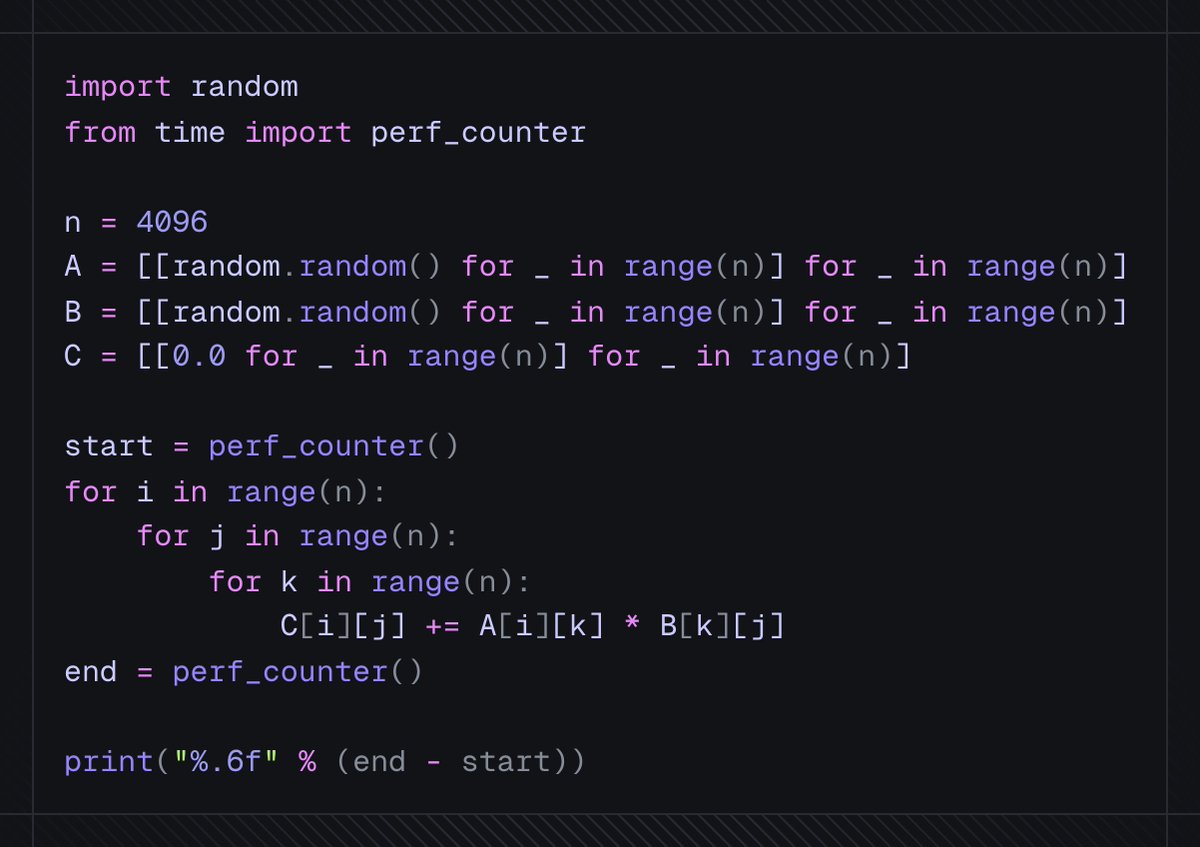
Your algorithm isn't always the bottleneck.
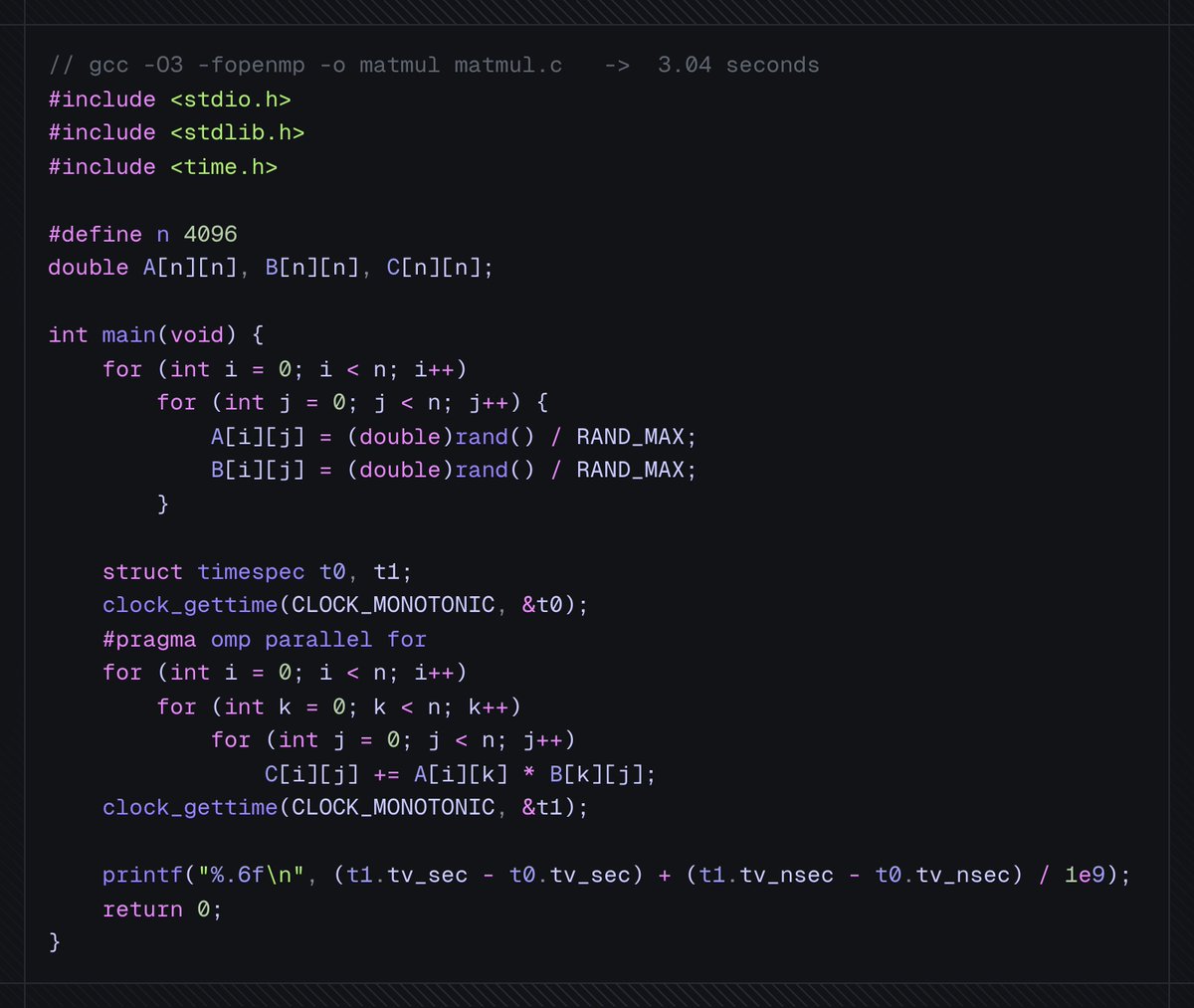
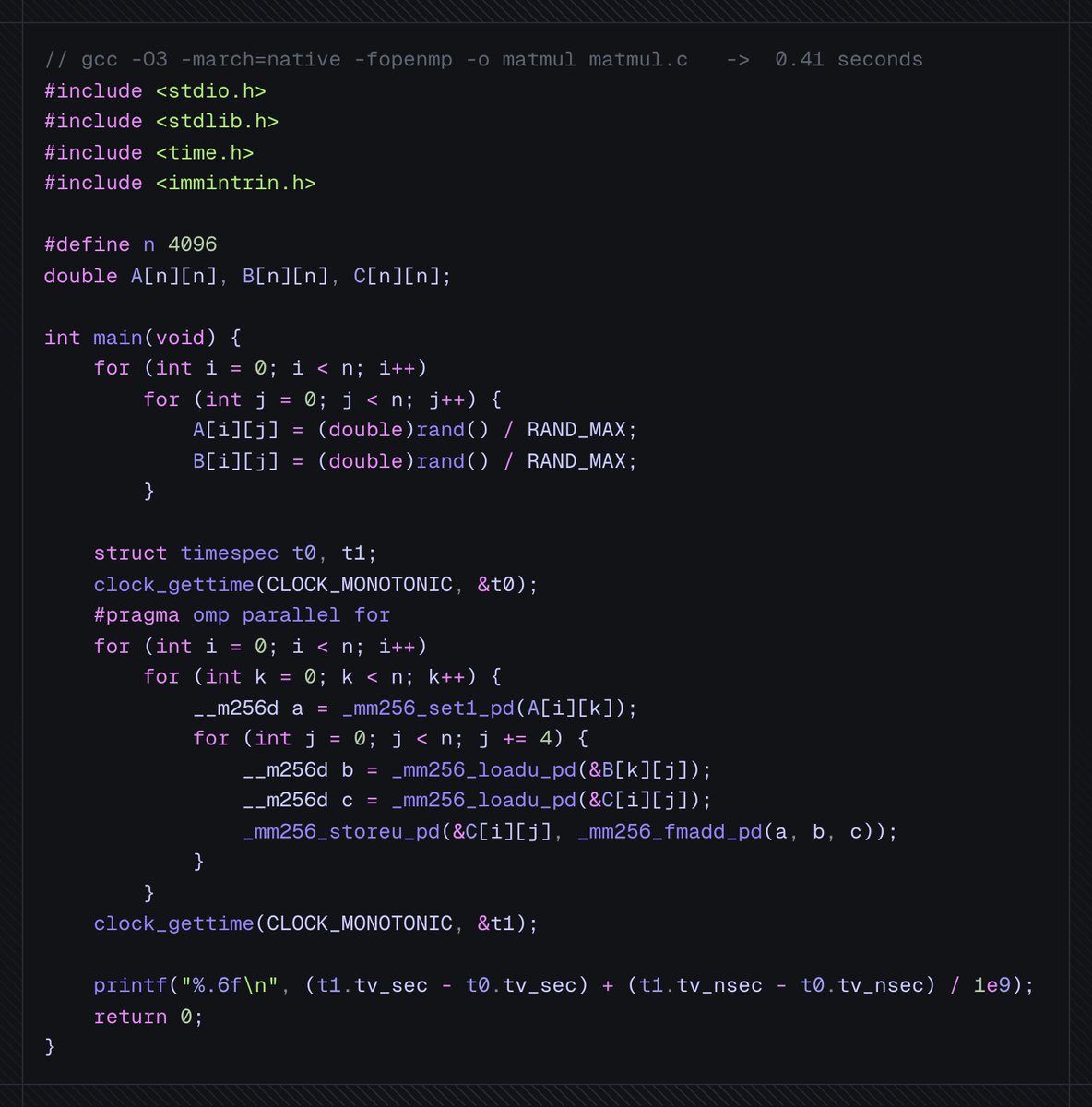
Two 4096×4096 matrices, same triple loop start to finish. Pure Python takes 6 hours. Hand-tuned C does it in 0.41 seconds. That's 50,000× and the math never changed.
Python managed 6 MFLOPS on a machine that peaks at 836 GFLOPS. That's 0.0007% of what the chip can do.
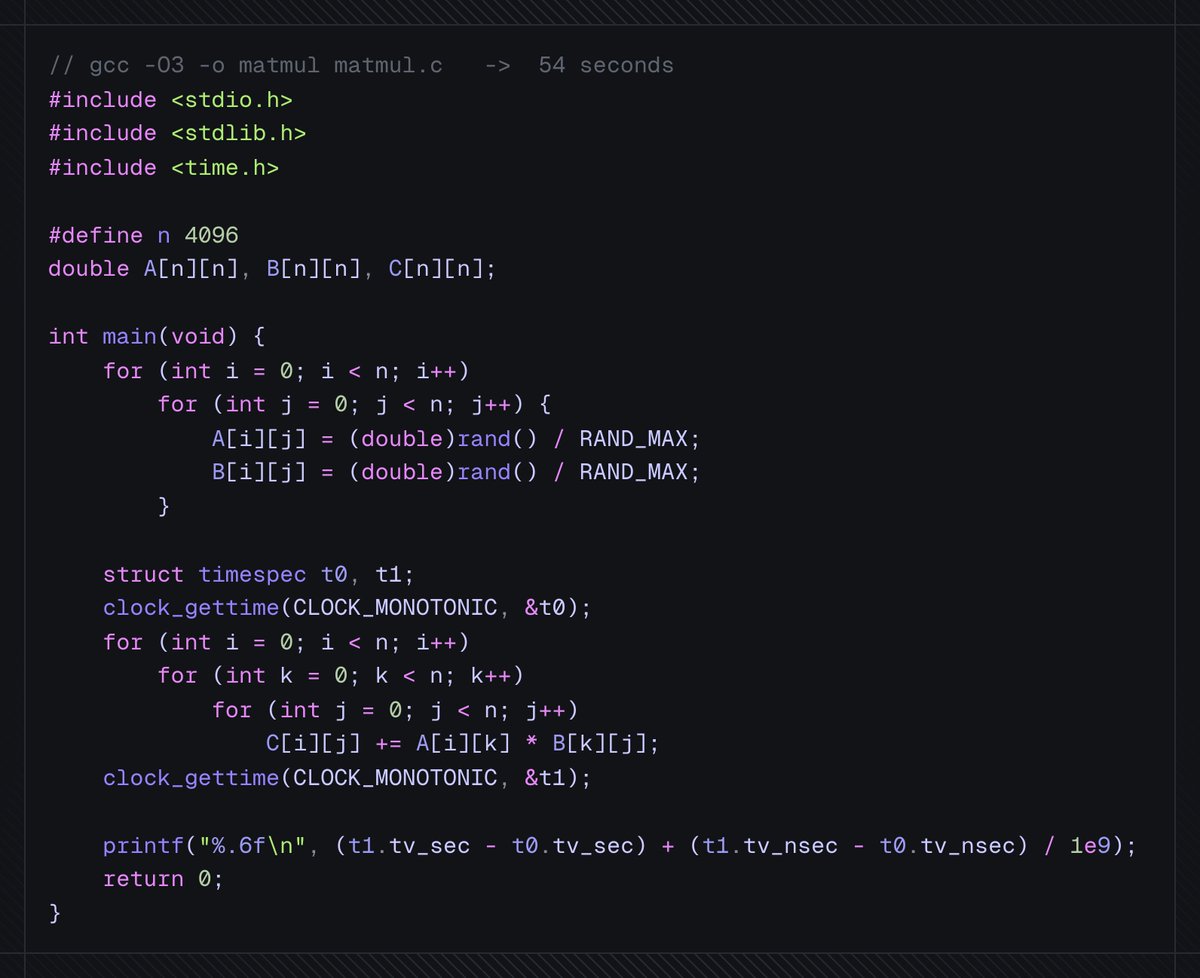
Reorder the loops to i, k, j and turn on -O3, and you're already at 54 seconds. The cache stops thrashing and the compiler vectorizes the inner loop, and that's 390×.
Spread it across 18 cores with OpenMP: 3 seconds.
Then write the AVX by hand, four doubles per instruction, and you're back at 0.41. At this size it beats Intel's own MKL.
63
151
1,551
103,693
Max Koretskyi retweeted

Everyone repeats the "EU poured money into Poland" line like it ends the argument. Worth asking where a lot of that money went, and what Poland gave up to get it.
Start with the funds. Brussels pays for a Polish motorway and the contract gets won by a German or Austrian firm, the machines come from Germany, the consultants bill from Frankfurt. That's not a conspiracy, it's in the EU's own research: contracts in Central Europe routinely go to firms from the countries that "donated" the money. A chunk of it does a lap through Poland and heads back west.
Then the part sold as generosity. Most of what gets called Europe investing in Poland was Western firms chasing cheaper labour. The border opened and German and French companies moved production east. That's arbitrage (not aid). They cut their costs, Poland got the jobs, and the brands and the profits stayed west. What they didn't build here they bought: the biggest grocery chain in Poland is Portuguese, Warsaw's power grid is German-owned.
Now watch the same rulebook in German hands. UniCredit owned Bank Pekao, one of Poland's biggest banks, for 18 years and nobody in Brussels blinked. The moment that same Italian bank reached for Commerzbank, Berlin called it a hostile attack and the government dug in to stop it. An Italian buying a Polish bank is just the market working. An Italian buying a German one is a national emergency.
Same single market. The rules get written for everyone and enforced on the small.
The money helped, no argument. But the EU didn't build Poland, the Poles running their own firms did, the same firms now selling more to Germany than they buy from it. Brussels gave them a market to sell into, nothing more. Follow the invoices and the savior story falls apart.
Jun 7

What the EU Did to Poland and the Baltics
I think the most underreported story in global economics is what European integration has done to the countries that were once the Soviet Union’s western margin.
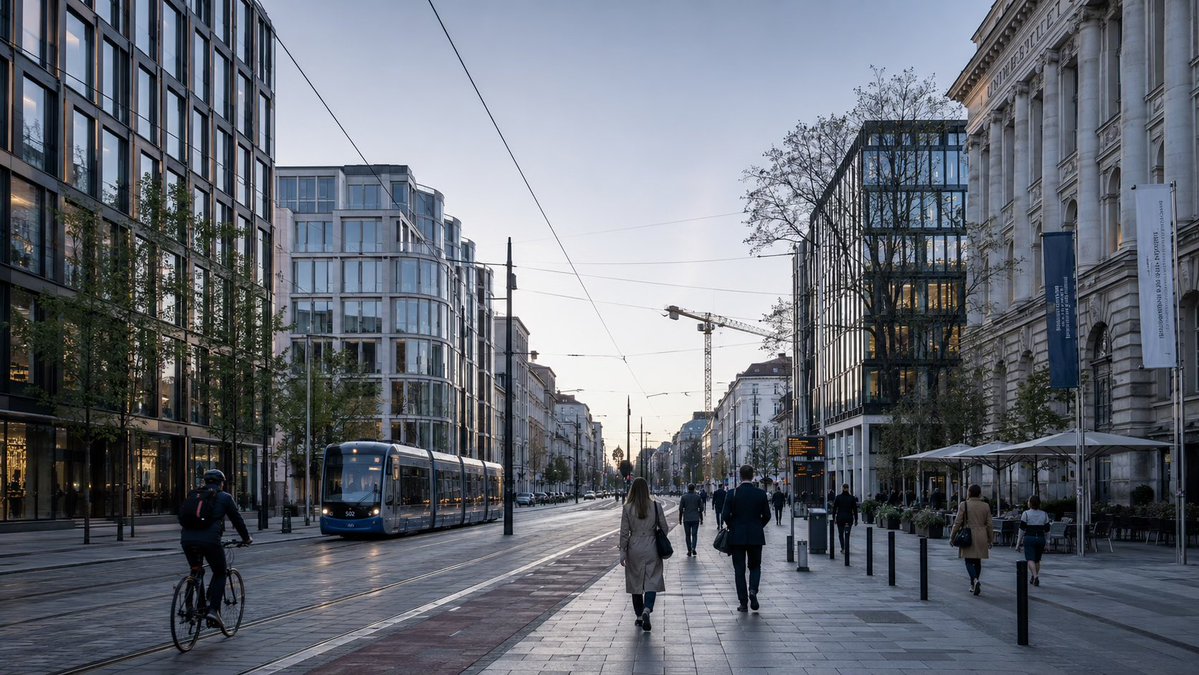
In 2004, Poland joined the European Union. Its unemployment rate was around 20 percent. It was a middle-income country with serious structural problems and a GDP that reflected the grey inheritance of central planning.
Twenty years later, its GDP has passed one trillion dollars, having roughly tripled between accession and 2020 alone.
A new study from the Polish Economic Institute found that Poland’s economy is 42 percent larger than it would have been had it not joined the EU.
open.substack.com/pub/gandal…
75
361
2,411
105,834
Max Koretskyi retweeted
This paragraph by Haruki Murakami hits very hard:
“Once the storm is over, you won’t remember how you made it through, how you managed to survive. You won’t even be sure, whether the storm is really over. But one thing is certain. When you come out of the storm, you won’t be the same person who walked in. That’s what this storm’s all about.”
59
2,333
10,875
352,729
Max Koretskyi retweeted

Jun 6
A visualization of how a radial engine works
41
318
4,898
945,368
Max Koretskyi retweeted
Jun 5
Rubiks cube and graph theory.
[🎞️ jagarikin]
35
760
4,234
345,814
Max Koretskyi retweeted

Jun 1
Another thing: what you get from writing things yourself isn't just the code. It's an improved understanding of what the code does. That mental model is what lets you come up with further improvements, or invent a different way of doing things. You can't come up with ways to improve a blackbox you don't understand.
For most projects this doesn't really matter, because the code is the only thing you need. But if you're doing something novel, if you're doing research, the code is not the most important part. Understanding what the code does is the most important part.
15
42
670
29,120


Max Koretskyi retweeted

May 24
Honestly, I love the current trend of publishing research as blog posts instead of arxiv pdfs. @thinkymachines @NoahZiems and @a1zhang come to mind here recently
9
17
280
19,258
Max Koretskyi retweeted
May 23
If you can learn one thing that's genuinely novel to you, you can learn anything.
79
85
1,182
57,308


Max Koretskyi retweeted

May 20
Scraping websites and having AI summarize them, so that no one visits the websites, is theft.
Training AI on videos, so that it can make new videos that compete with them, is theft.
We are witnessing the largest theft of creative work in history.
211
2,650
12,438
327,616