
Design Director at @Instagram. I use behavioral science to help companies create successful teams, systems, and products.
Joined June 2009
- Tweets 26,572
- Following 673
- Followers 4,799
- Likes 33,631
688 Photos and videos





Max Wendkos retweeted

5 Mar 2024
We need more design managers that can execute and have taste:
"Design management needs to [...] get off the bench and take on a little more of that old Creative Director energy: get in the details, push our teams to take one more pass at things" - @cap
capwatkins.com/blog/the-reba…
4
6
68
10,343

23 Feb 2024
If you're a product designer and would be interested in joining Meta (including Instagram, Facebook, Messenger, WhatsApp, Reality Labs, Gen AI, etc.), here's your chance 👇
24
51
289
116,519
23 Feb 2024
It's going to take time to go through all these messages, but I'll read every one!
If you want to increase your chances of a response, please make sure that a) you meet all the criteria I listed above and b) you include the three things I asked for 😎
1
4
4,261
27 Feb 2024
Alright, I've made it through every message. Our hiring team will be reaching out to 16 of you!
5
789
13 Dec 2023
Looking for holiday gifts for designers that are between $50-100. Things that are beautiful and well-made.
Any suggestions?
22
26
6,105
5 Dec 2023
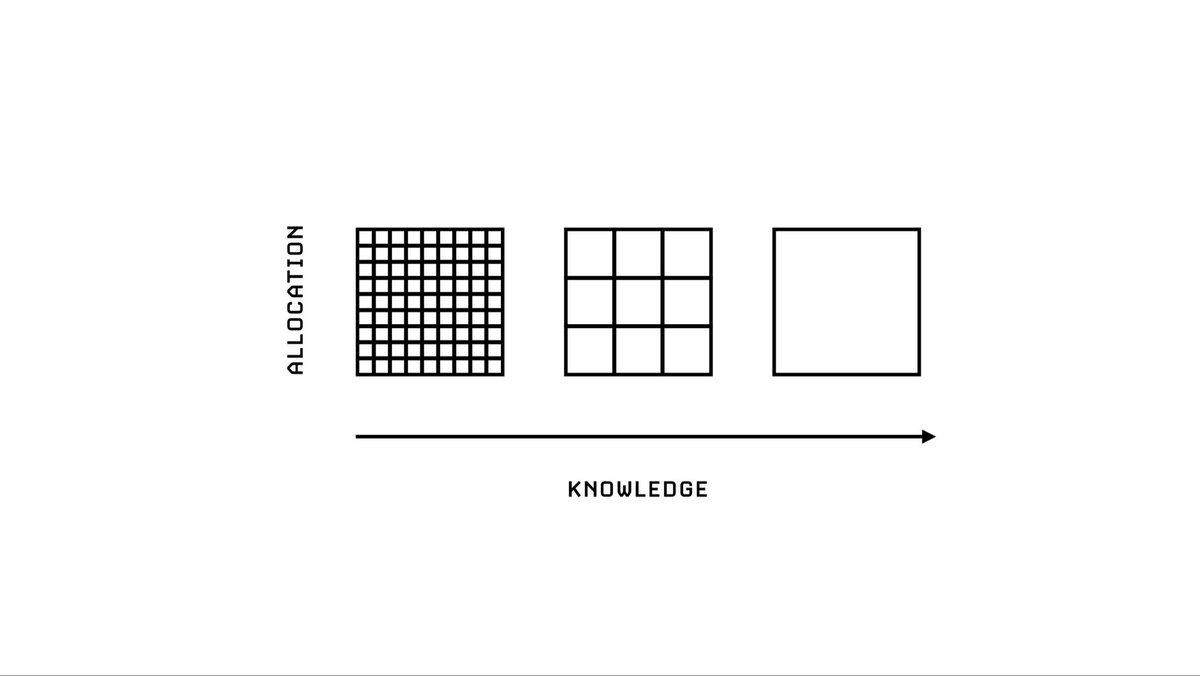
"The more you know, the less you diversify."
This Naval quote is a valuable guiding principle for product development. Most product teams fail to recognize how much can be known upfront and over-diversify to compensate for their lack of foresight, which caps their upside.
11
1,243
30 Nov 2023
Just realized I've been paying Dropbox $200 per year, which seems insanely high. What cloud storage providers are other people using?
3
5
1,562
26 Nov 2023
About to take off on a road trip and need a few podcasts to queue up. What are the most informative and eye-opening podcast episodes about AI?
5
1
3
1,831
22 Nov 2023
This is so refreshing.
I really look forward to seeing the details of Block's new performance review process.
(Also, this might be the first time I've ever seen a company include designers alongside engineers when talking about builders. Strange to me that this isn't the norm.)
22 Nov 2023

Full text from Jack Dorsey to Block employees via Insider:
I want us to build a culture of excellence.
Excellence in service to our customers, excellence in our craft, excellence in our respective disciplines, and excellence to each other.
We want to help everyone achieve excellence here at Block. And if that's not possible for any one person, we want to acknowledge that, and part ways without delay (which is a perfectly fine and honorable outcome.)
Our current "performance management" practices do not help us achieve this. In fact, they are holding us back. Some have described them as a "denial of service attack on managers" given the time commitment versus the benefit to our people. There's also a perception that we allow people to "rest and vest" throughout the company, including poor managers who oversee great and promising individual
As we kick off our "annual performance review cycle," we're going to make some changes.
First, this is the last "annual performance review cycle" we'll have. It's way too heavy for everyone involved and it doesn't actually help us get better. Performance should be continuously evaluated, and feedback should not be queued up for later. There are natural and asynchronous milestones that are specific to individuals and teams, like launches or product completions, that will force our leads to be more specific and personalized with feedback, promotions (which need to be dramatically simplified!), compensation, or whether to part ways immediately (instead of letting things linger). Of course, there are things like calibration across disciplines that require a synchronous action, but everything else should default to asynchronous and personalized to the individual. We're working through how this will work in practice. The People team will follow up with more details before the end of this year.
Second, we're going to introduce performance ratings that will be visible to each individual employee. Everyone deserves to know where they stand and how to improve. This will help both the individual and manager have a conversation, and gives us more insight into how well the manager leads their people. We're going to start with 3 ratings which will replace the compensation designations we've used in the past. The clearest and fairest way I think about these is through expectations: I meet, exceed, or fall below the expectations set with my lead (exceeds, meets, below). That ensures we can have a fair two-way conversation holding each of us accountable to always raising the bar.
Third, as we have a clearer and continuous understanding of where each of us are, we're going to end Performance Improvement Plans (PIPs) in the US. We haven't seen these plans actually work consistently, as they often feel too late and don't push the manager to give feedback in a timely manner. It's a lazy and often surprising approach that we can avoid with direct and consistent feedback.
Fourth, we build things. Specifically, we build technology things. Therefore, we will invest disproportionately into design and engineering disciplines. I just want to set that expectation going forward. And we'll need more focused help to do so, which is why we're going to create a new role at the company, one that's responsible for our overall engineering excellence, technical strategy, and who will oversee our shared technology platforms across business units. Many companies call this a "CTO." Titles don't matter...responsibilities do.
I've asked Dhanji Prasanna (cc'd...sorry Dhanji!) to join my direct team and take on these responsibilities for Block. Dhanji is technically excellent, has served since 2011 in Square, Cash App, and TBD...and most importantly is an excellent human who's a "show, don't tell" type of leader. Dhanji won't have all of engineering reporting to him, but will instead focus on our engineering culture and practices, our development tools and increasing productivity and velocity, and our overall strategic direction inclusive of AI and shared services like Fe and InfoSec. We'll organize a Block-wide engineering all-hands soon to introduce/reintroduce Dhanji to all of you and discuss the problems we're trying to solve.
Finally, an most importantly, we're only as good as our leads and that's where we're going to focus a majority of our attention as we evaluate our performance and push to drive excellence. Leading is a privilege with immense responsibility. If we don't have the right leaders and can't evaluate them against an ever-increasing bar, everything suffers. We will not tolerate mediocrity or low performance from our leads. You have my commitment that we will hold a very high bar to all of them, and act extremely fast if things are clearly not working out.
And of course...that includes me. As I do every year, I'm sharing my annual performance review with you all (attached). Read if you wish. I'd focus more on the direct feedback quotes than the narrative (which sounds way too positive to me. Summary: folks want me to work on 3 things this year; driving results, decision making, and being more inclusive across business unit lines. I have a lot more to do, but I believe the actions we've taken over the past 2 months have hit on all these three themes. I know it feels like a lot of change at once, but I believe this urgency will help us and our customers dramatically.
Thank you all, jack
1
1,226
15 Nov 2023
"The problem I’ve seen in companies is that this MVP thinking promotes taking constant shortcuts and shipping shitty things in the name of the MVP."
14 Nov 2023

I took a while to respond to this because Eric’s answers were very good, and logical so it’s hard to refute. I also do respect Eric Ries a lot, he has lot of experience with different companies and his book Lean Startup was really influential to me when it first came out.
But… something bothers me about this whole MVP discussion. Is this all just a distraction?
Eric’s answer was basically “MVP can be anything you need to validate an idea or the customer demand in the market”. Later in the discussion Eric mentions that a brochure can be an MVP. I agree. Sometimes sales material is a good way to validate demand, but I’d say it’s not an MVP. There is no product for anyone to use.
What bothers me is that if anything can be MVP, it’s trying to bucket all kinds of activities and outputs into this one term, it kind of loses in meaning and becomes more confusing than it’s helpful. Anything you do to validate an idea or build a product is essentially MVPs.
If MVP is just a way to test or validate something, then why not say, “I’m validating the product demand by using a sales brochure”. Or if I’m showing an initial product to potential users, why not just call it that. Why do I need to talk about MVPs? People also like to argue what truly is or not is an MVP, which I find just a waste of time.
In my experience, people generally mean MVP is some kind of baseline or beta version of a feature or product. It’s functional and hopefully solves user needs but doesn’t have all the polish and features. It’s a state in the product development lifecycle. Almost every product probably starts as some kind of “baseline” product where the baseline is defined by the expectations of the users. Which is fine, you have to start from somewhere.
The problem I’ve seen in companies is that this MVP thinking promotes taking constant shortcuts and shipping shitty things in the name of the MVP. These often get abandoned or not fixed afterwards because the project is technically done and the team moved over. Then the whole product becomes half-assed and disjointed because it’s just a string of MVPs.
Now someone might argue, well you are doing it wrong. MVPs doesn’t mean you shouldn’t finish it. Yes but in practice how often it happens and is this whole method just encouraging the wrong things or distracting from what are actually doing?
The MVPs & Lean Startups remind me of agile/scrum where you create these terms for a show or doing some mental gymnastics for basic activities. Then when someone argues it’s a waste of time the answer is often “you’re doing it wrong” or “you just don’t get it”. Maybe so, but maybe there isn’t anything to get?
My way of thinking around product building is not about experiments or MVPs, it’s about how to make the product successful.
As a startup you often just have to build something that people want. Providing a great experience is a great way to do that. Purposefully building and launching half-assed things to me is just a waste of time.
It’s like you operate a restaurant and instead of fully cooking the food, you purposefully leave it raw and let users tell you it’s inedible and makes them sick. Anyone who has eaten or cooked food knows that. Next time you cook it fully, and behold, the consumer now can eat the food but they still don't like it. Experiment and MVP of fully cooking the food was validated. Yay! We can now move to the next variable...
Obviously, chefs don't operate this way. They have their skills and experience and they use that make a dish and people would enjoy. Sometimes they are wrong and sometimes they make something really great.
Sometimes you know more about the market or the problem, sometimes you know less. You should try to think about what you do know, and what you don’t know, and how critical that information is. To know more you can talk to users and customers, knowing that they can’t ever give you the vision of what to build, only input to that vision. The ultimate test is to have a product out there, and see if people buy it. I’d say you should have vision, not just throw random stuff at people and see what they say.
This is also not about fear of launching a product early. We launch early and get feedback early, but still care about the quality of the experience. We got our first few users for @linear about 1 month after we announced the company. But by that time we already had a product that was 10x faster than anything else there, and had a design people liked. And yes it was scoped down and didn't have all the features (common sense). We never considered it as a MVP or an experiment, it was a product stage and we wanted to get user feedback.
My problem with trying to make the product building into some kind of science which most of the time is not necessarily and likely just a distraction, especially for startups. Your only focus should be how do I make a product that is 10x better than anything else in the market. The fact is that if you enter any category that only has solid incumbents or existing products, then your product needs to be very different and higher quality than those products. You don’t need an experiment to know that.
If your product has no traction then it either is the wrong product or the execution is not good enough. You can try to validate the product idea with research but until you make the execution good then you never know for sure. Users won't tell you that, they just leave or don't use it.
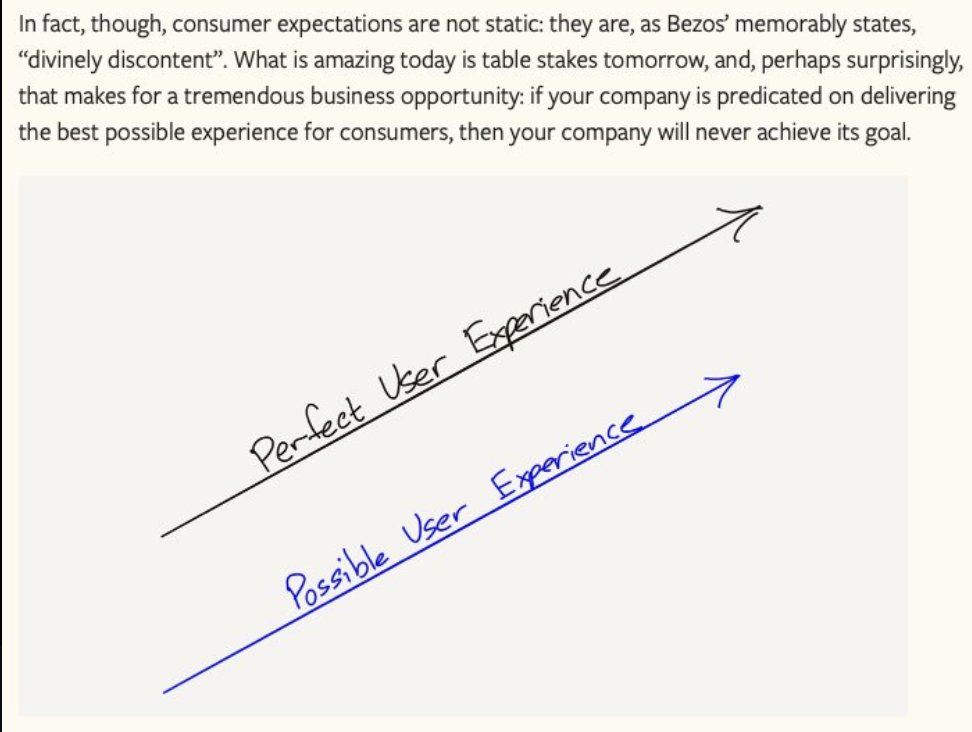
My point with this question was that today the user and customer expectations are high in many areas, and there are very few new novel markets like AI (crypto before that) that can be more of the wild west. But as those markets mature, you are again fighting against higher quality bars. As Bezos stated this, consumer expectations are ever increasing or “divinely discontent”,
So my advice would be to focus more on how you deliver a product that exceeds those expectations.
Don't spend your energy on running great experiments instead what would make the experience great.
Sidenote: On the iOS apps vs backup battery system also I disagree. Battery backup system buyers can have very high standards, but they are also rational buyers knowing what they want. Many consumer iOS apps only succeed in more irrational ways. There is no spec sheet for social apps you can pull out from teenagers. You can try to understand them and build something, but if it doesn’t engage them your app fails. These apps are not needed, they are wanted. Most products are some kind of mix of rational and irrational needs. Logic and emotion.
2
8
2,087
6 Nov 2023
Guess Elon's decided to fill our notifications with spam to get us back into the product. His terrible product decisions continue to pressure test the power of Twitter's switching costs.
1
1,114
6 Nov 2023
Twitter is clearly much worse than it was before Elon took over and all signs are that the decline is going to continue.
There are two things keeping people here:
1) Top creators don't want to give up the huge audiences they've built.
2) Community network effects are strong.
356
Max Wendkos retweeted

20 Oct 2023
when it comes to nailing product-market fit, empathy > passion. too many builders are motivated by vision as opposed to understanding what their customers are actually struggling with (often nuanced, psychological, and surprising).
passion is the red herring of product - often yielding results many degrees off.
24
62
658
207,328
15 Oct 2023
If you're a junior designer and you're not working alongside great designers, the most impactful thing you can do for your career is seek out great designers, convince them that you're worth their time, and get them to rip apart your work.
8
11
134
40,260