
Software & design; writing, graphic art, 3D, composing and mixing. Voracious reader. Relentless questioner. More than tech. Opinions are my own.
Joined September 2007
- Tweets 18,473
- Following 782
- Followers 650
- Likes 10,424
363 Photos and videos













Pinned Tweet

30 Aug 2025
I bet brontosaurus got struck by lightning pretty frequently.
2
5
604
Considering a codex loop for installation of an enterprise platform. Send it
16
Jun 12
I'm hearing a lot about how everyone will be replaced, and the economy will crash. This is not true because it hasn't happened. Keep a positive outlook anyway! In the meantime, build your dream projects!
10
Jun 9
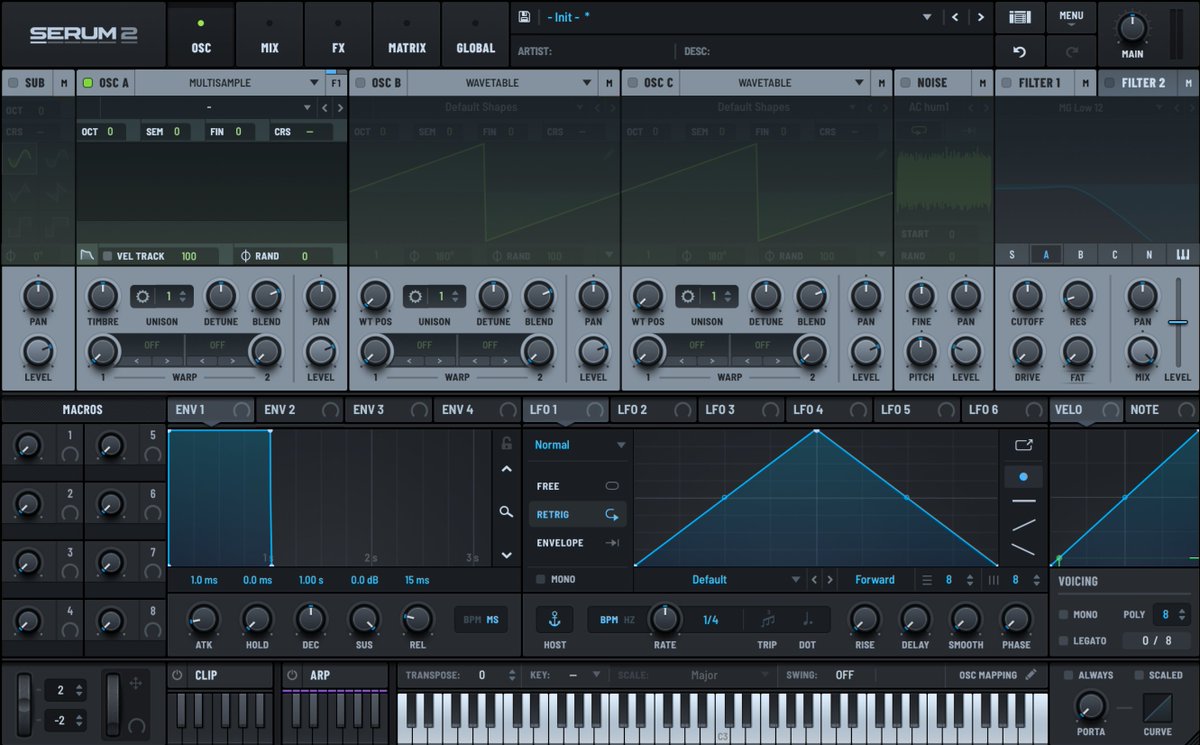
Having a mixer built into serum 2 has changed the game. The effects are so good, and easy to adjust.
1
30
Jun 8
People explain prompting as if it's a language, or code, but it's the same as providing context on a task for a person. Maybe a little abbreviated (less formality), but essentially the same.
22
Jun 8
Some days you spend writing tampermonkey scripts to vet test cases for qa, and others you invent ways for qa to generate their own test cases from code using the techniques you used to generate them.
20
Jun 8
For students who want to internalize information: SQ3R, or Study, Question, Read, Write and Review, is a self-explanatory study technique that encourages modification. For instance, in my Review phase I pretend to teach a class on the subject.
13
Jun 8
"The voice you hear when you read this sentence is the direct descendant of a four-year-old narrating their own block tower."
Jun 6

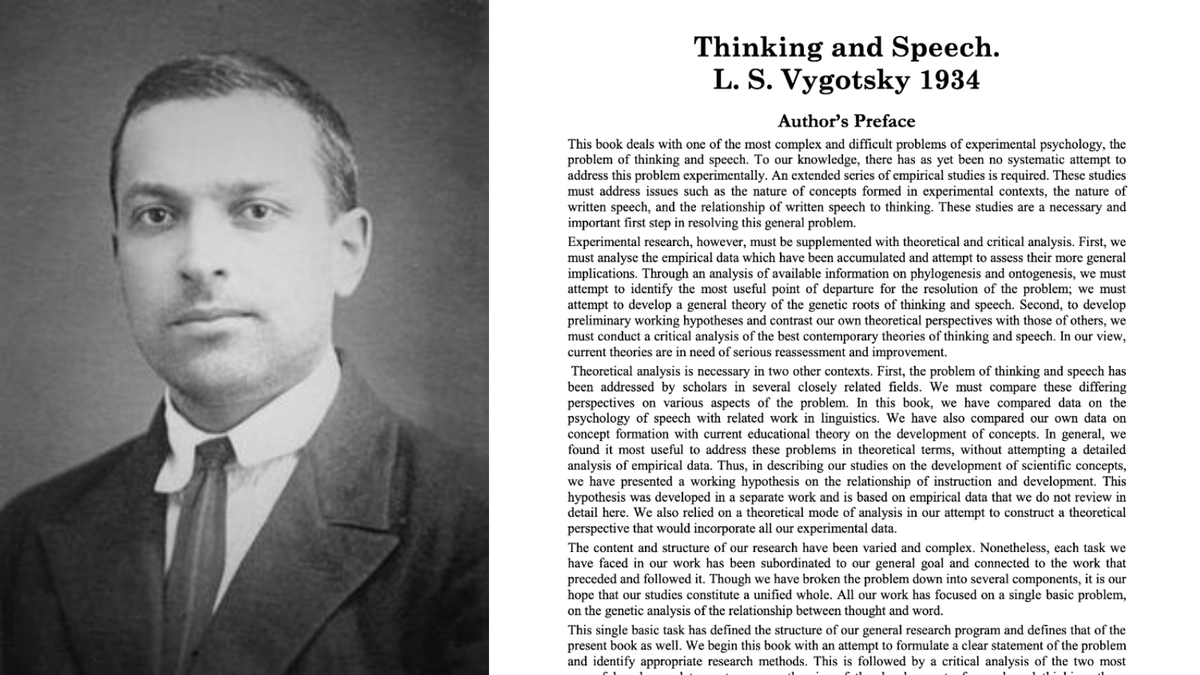
A Russian psychologist spent 10 years proving that the act of talking to yourself out loud is one of the most powerful cognitive tools the human brain has, and almost nobody outside his field has read the work.
His name was Lev Vygotsky.
He worked in Moscow in the 1920s and died of tuberculosis in 1934 at the age of 37. He had no laboratory, no funding, almost no English readers, and a body of work that the Soviet government suppressed for two decades after he died.
He produced the foundational theory of how human cognition actually develops, and the central piece of that theory was a behavior almost every adult is faintly embarrassed about.
Vygotsky noticed that young children talk to themselves constantly. They narrate their own actions, they argue with imaginary opponents, they instruct themselves through tasks out loud.
The dominant theory at the time, from the Swiss psychologist Jean Piaget, said this was a sign of cognitive immaturity that children would eventually grow out of as they learned to think properly.
Vygotsky said the exact opposite.
He argued that this self-directed speech was the most important cognitive event in the entire developmental window, because it was the moment a child first started to use language as a tool to control their own mind. The child was not failing to think. The child was learning how to think by externalizing the process and listening to themselves do it.
He predicted that as children matured, this out-loud self-talk would not disappear. It would go underground. It would become silent inner speech, which is the running monologue every adult has inside their own head for the rest of their life.
The voice you hear when you read this sentence is the direct descendant of a four-year-old narrating their own block tower.
For 50 years almost nobody outside Russia had access to his work, and the few researchers who did pick it up could not get funding to test it. Then in the early 2000s the experiments finally started to pile up, and what they found was that Vygotsky had been right about something even more important than he knew.
The first major study came from Gary Lupyan at the University of Wisconsin and Daniel Swingley at the University of Pennsylvania in 2012. They ran a simple visual search experiment. Participants were shown 20 images at once and asked to find a specific object, like a banana or a chair. In one condition they searched silently. In the other condition they were told to say the name of the object out loud to themselves while looking for it.
The participants who spoke the target name out loud found the object significantly faster, with higher accuracy, than the participants who searched in silence. The effect was strongest when the spoken word matched a familiar object the brain already had a strong category for.
Saying the word out loud literally tuned the visual system to detect that thing better. The researchers called it the label feedback effect, and the implication was that the act of vocalizing a goal physically changes how the brain processes the world while pursuing it.
The second major study came out of the University of Michigan and Michigan State in 2017. The lead researchers were Ethan Kross and Jason Moser, and they used both EEG and fMRI to record what happens inside the brain when people talk to themselves while emotionally upset.
They asked participants to recall painful autobiographical memories and reflect on them in two different ways. Some used the first person, saying things like "why am I feeling this way." Others used the third person, referring to themselves by their own name, saying things like "why is John feeling this way."
The brain scans showed that the simple act of switching from first person to third person, even silently, decreased activity in the medial prefrontal cortex, the region responsible for rumination and self-referential pain. Within a single second of using their own name instead of the word I, participants showed measurably lower emotional reactivity. The shift required no extra cognitive effort. It cost the brain nothing. And it worked.
Kross described the mechanism in his interviews. Talking to yourself by name creates a small amount of psychological distance from your own experience. Your brain processes the situation more like a problem belonging to someone else, which means it can analyze it instead of drowning in it.
What Vygotsky had intuited in 1934 turned out to be even more powerful than the developmental theory he built it into. The voice you use to talk to yourself is not background noise. It is one of the most precise cognitive tools the brain has, and you can change how it works just by changing the pronoun you use.
People who talk through problems out loud are not anxious or unstable. They are running an externalized version of a process the rest of us are running silently and worse. The kindergartener narrating their block tower, the surgeon muttering through a procedure, the engineer pacing a hallway describing a bug to nobody, the athlete repeating a cue to themselves before a free throw, they are all using the same ancient mechanism that builds and steers human thought.
You can run the experiment yourself the next time you are stuck on something hard. Stop trying to solve it silently in your head. Say it out loud. Describe what you are seeing. Walk yourself through the steps as if you were explaining it to a colleague who is not in the room.
And when something genuinely upsets you, switch to your own name. Ask why this person is feeling this way, instead of why I am feeling this way.
The voice you have been told to keep quiet your entire life is one of the oldest pieces of cognitive technology you own.
Most people are still embarrassed to use it.
15
Jun 6
Seems like languages should change now, since they're intended for humans. Sitting here wondering what that could entail and the possibilities are so vast, it's hard to describe let alone remain calm
18
Jun 5
Had a good idea today while brainstorming apps I would personally enjoy.
21
Jun 4
Time to take up a 120 page screenplay that needs to be scarier. It’s creepy, but not scary, because that’s how Lovecraft wrote. The challenge is making it scary while remaining true to the story.
19
Jun 3
Stopped saying please to AI today. My respect for it should be assumed, I told it, so in the interest of brevity my prompts may seem abrasive
1
26
Jun 3
Again, I favor abundance for all creatures but iguanas? You can have these animals. Their hubris is undeserved
27
Jun 3
I favor abundance for all species, but if you encounter a shoebill please remember what they do to their young and offer no food, or help.
31
Jun 1
I like making ridiculous, ambitious plans, then chipping away at them until it becomes clear they are possible
30
May 31
Existential dread and doom in tech despite astonishing possibilities and market upturn
1
29
May 31
I’m only going to use AI for personal design projects when “it knows” what I’m going to do and has been / can be trained on my workflow. I don’t want it suggesting wildly or doing anything I haven’t done before unless I tell it to do this. I want it to train on past work.
29
May 31
Spent the last year experimenting with every EDM style and dubstep has been the most difficult to get right. I keep trying to mix in electric guitar
1
18