
Life insurance for those who want a tax-advantaged way to leverage their Bitcoin wealth and pass it to the next generation. Licensed and regulated.
Joined March 2023
- Tweets 6,729
- Following 152
- Followers 8,602
- Likes 5,822
678 Photos and videos







Pinned Tweet

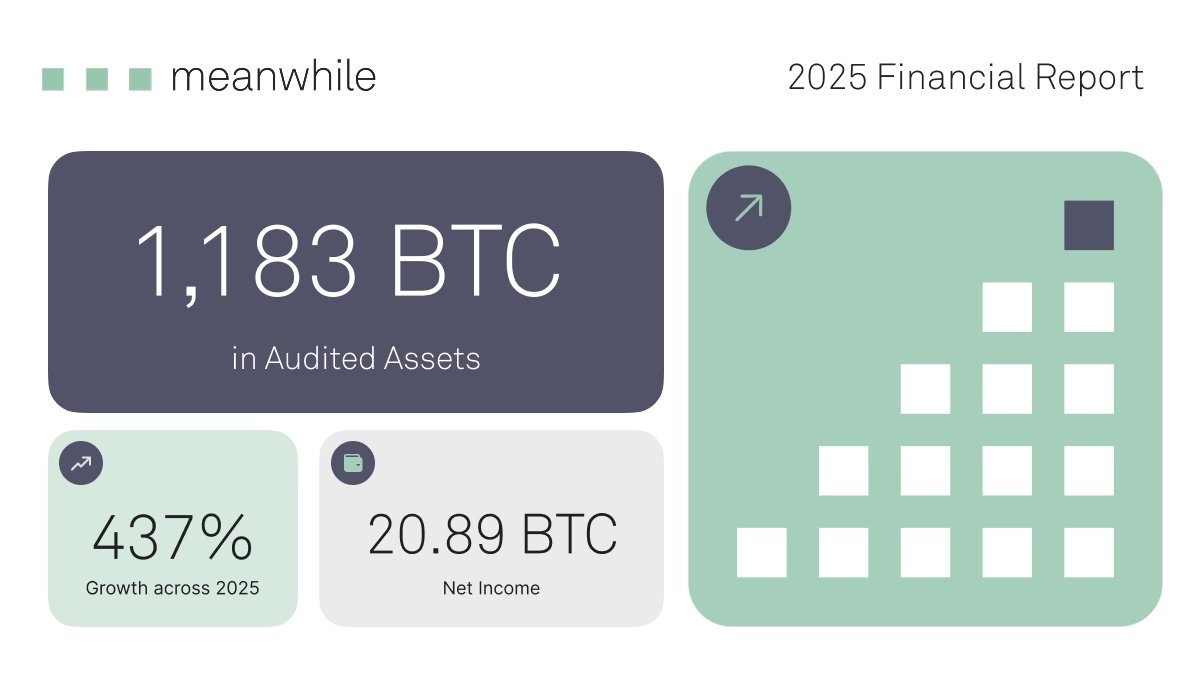
We are proud to share that Meanwhile surpassed 1,183 BTC in audited assets in 2025.
With a 437% growth in assets across the year.
We remain the only company in the world to have BTC-denominated financials externally audited.
Here’s an overview of our Financial statements🧵
4
6
37
18,263
meanwhile | Bitcoin Life Insurance retweeted
Of the 25 of us at @meanwhile, 10 of us are former founders.
“rebuild teams around load-bearing polymaths who own business outcomes” is exactly what we are hiring for around global savings and protection in Bitcoin and stablecoins
If that’s of interest, DMs are open
21h

THE TOKEN HANGOVER
@matanSF (Matan Grinberg), CEO and co-founder of @FactoryAI , interviewed by @HarryStebbings (@20vcFund )
This is a special for me since I've been an investor in @FactoryAI since their seed round, and think Matan is a very very special founder.
Summary: Grinberg argues the next 24 months in enterprise AI are a resource-allocation problem: tokens, dollars, and people. Most CIOs are now waking up to bills they cannot justify. The fix is to spend frontier tokens only on the 10-20% of work that requires planning intelligence, run the other 80-90% on open models, and rebuild teams around load-bearing polymaths who own business outcomes. The single-frontier-monopoly fear is fading: four roughly-equivalent labs is the emerging reality, which puts pricing power back in the application layer.
1. The Token Hangover. Enterprise AI adoption ran through three phases this year: boards yelling at CEOs about AI strategy, "token maxing" with AI usage written into perf reviews, and now the morning-after bill. One CIO Grinberg spoke to was spending hundreds of thousands of dollars a month on engineers asking Opus 4.8 things like "how's it going" and "what are my macros from lunch." The frontier model became the default surface for every question, no matter how trivial. Phase 3 is the moment routing matters: every call to a frontier model needs to earn its price.
2. Resource Allocation Is the Job. For the next 24 months every C-suite is solving the same problem: how to allocate dollars, tokens, and headcount against business outcomes. Engineering teams used to be judged by features shipped per quarter, a metric with no link to revenue, market share, or retention. A logistics company adding more engineers to ship more features was always solving the wrong problem; AI made the misallocation visible. Tie every person's work to the metric that actually moves the business, then re-allocate.
3. Load-Bearing Individuals. The "10x engineer" frame measures lines of code, the wrong unit. Grinberg's unit is the load-bearing individual: the person whose absence breaks something. With AI the load-bearing few compound roughly 10,000%; the others get close to nothing, so any org enforcing one token-spend-per-engineer number is painting with too wide a brush. Average token spend per engineer will land on the same order of magnitude as their salary within three years, with a wildly bimodal distribution.
4. Frontier for Decisions Only. 80-90% of software development tasks can run on open models; the remaining 10-20% is planning, where the frontier still wins. This mirrors how human orgs work: leadership is a tiny share of total hours but decides the company's fate. The ego trap is engineers assuming their work is too important for an open model. The router decides better than the engineer, and the cost curve falls only if you wire the routing.
5. The Kirkland Mistake. Kirkland & Ellis announced a $500M, five-year internal AI build, which Grinberg reads as validation for Harvey rather than a threat. Building AI is not a law firm's core competency, and Kirkland's spend will teach them how hard it is. The general rule: just because you can build it does not mean you should, and the discipline is naming the few things you and your team own end-to-end. Outsource everything else, even when you technically know how to do it yourself.
6. Model-App Separation. When the model provider also sells the app, the incentives split: an API business wants you to spend more tokens. A healthy market keeps the application layer independent, so model providers compete on price, speed, and quality every week. Enterprises do not want to vendor-lock again; every CIO carries scars from the cloud era's three-year discount-then-jack-the-price trap. The application layer survives precisely because it forces that competition.
7. Sales as Product. Name a legendary company with a weak sales or marketing team. You can't. The Silicon Valley fallacy that research sits at the top and sales is "dirty work" produces companies that win the gold rush and then collapse when gravity returns. At Factory, engineers and salespeople sit intermixed; when sales closes, engineering says "we closed"; when engineering ships, sales says "we shipped." Atrophied sales muscles will not regrow once enterprise buyers stop saying yes to everything.
8. Polymath Era. Da Vinci, Newton, Euler could be polymaths because their fields were shallow. By the 2010s a theoretical physicist needed 50 years to reach the frontier before contributing anything new. AI collapses that catch-up time, so one person can push forward developer marketing, token-caching infrastructure, and solution engineering at once. The engineer of the future is a GM who owns marketing copy, product metrics, and sales enablement.
9. Build the Factory. Factory's name is literal: engineers in the next era design the assembly line that produces software. The DevX investments that used to scale linearly with headcount (good docs, CI/CD, linters, pre-commit hooks) now scale with the number of agents you run, which is 10x or 100x larger. Every dollar spent making agents production-ready compounds against thousands of PRs a week. Humans move up the stack, from writing code to designing the system that writes code.
10. Seal Team Six. Mandating beds in the office is a hiring failure dressed up as commitment. Grinberg's image: a basketball game judged by who sweat the most, when the scoreboard is what counts. Factory bought eight sleeps for all 30 team members at the time, because recovery is where the gains come from when work requires every ounce of brain power. If your load-bearing engineer can do their best work on two hours of sleep, they were not doing load-bearing work in the first place.
11. Four Frontier Labs. Grinberg's biggest mind-change this year: a single dominant model is unlikely, and four roughly-equivalent frontier providers is the more probable steady state. That outcome is the win for humanity. A one-lab monopoly was the dangerous scenario, and four equivalent labs is also the structural bull case for the application layer because it forces real ongoing price competition. Every CIO Grinberg meets has already decided not to throw their lot in with a single provider.
12. Dario's Self-Serving Doom. "AI will take your jobs" was the pitch that helped raise hundreds of billions, and Grinberg thinks it damaged public psychology and fed the slow-AI lobby. Watch the rhetoric flip at IPO: humans will suddenly become important again, because humans are the ones buying the stock. Founders who never needed to raise that money, like Zuckerberg and Hassabis, never made that argument. Incentives drive the labor-displacement rhetoric more than philosophy does.
2
11
1,499
meanwhile | Bitcoin Life Insurance retweeted
Bitcoin life insurance is the peace of mind every long-term planner needs.
Your Bitcoin stays secured, while your family receives more than you put into the policy.
@leboBTC on the inheritance mechanics of a BTC-denominated whole life policy.
w/ @coindesk.
3
18
1,748
meanwhile | Bitcoin Life Insurance retweeted

Jun 12
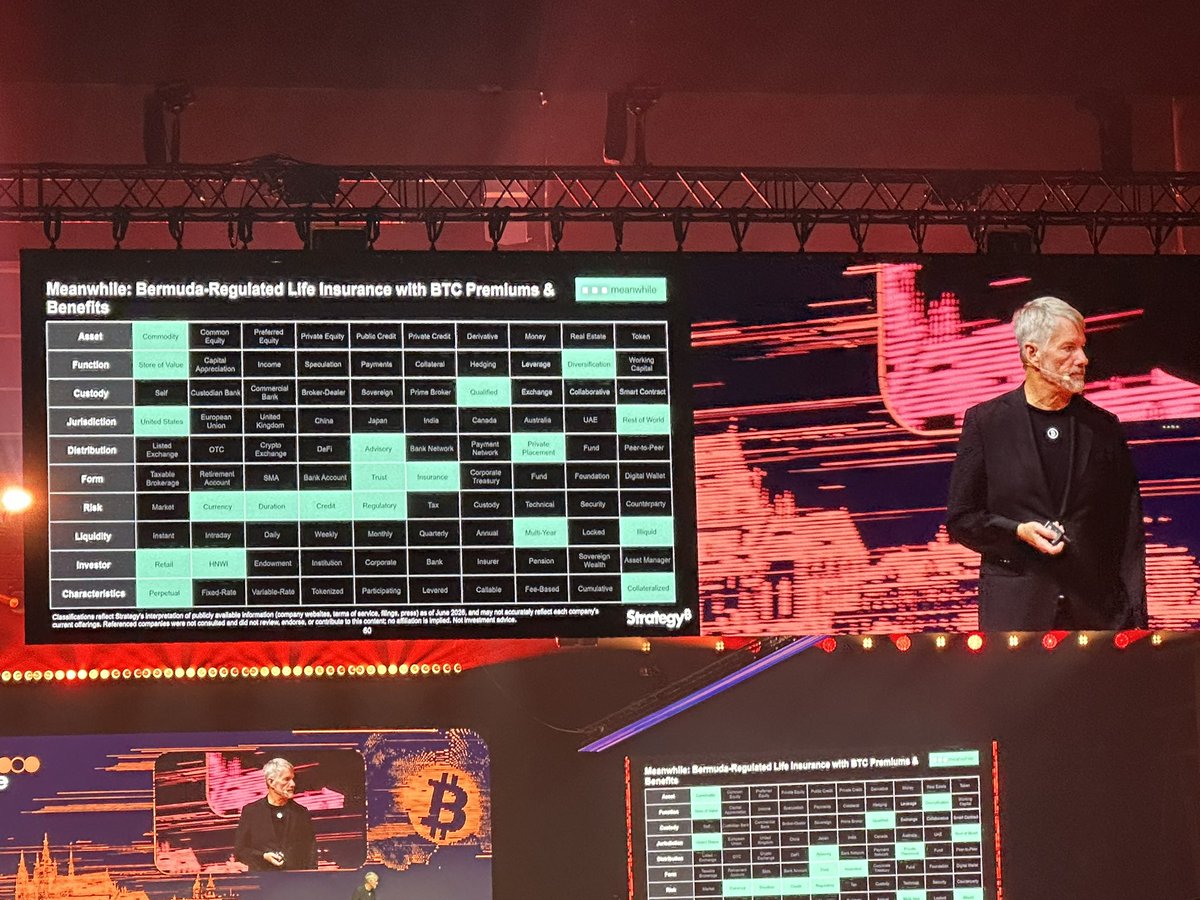
Saylor giving a rundown of Bitcoin financial service ecosystem. Probably used @21RatesHQ for research 😉
Cool to see our friends at @meanwhile get featured 👏🏼
2
8
561
meanwhile | Bitcoin Life Insurance retweeted

Jun 11
Price drawdowns are the best times to plan your Bitcoin wealth.
Our policyholders have secured their kids' future, and can tax-efficiently access their BTC's liquidity.
Without ever selling it.
Discussed long-term positioning in Bitcoin with @1markmoss.
3
13
1,607
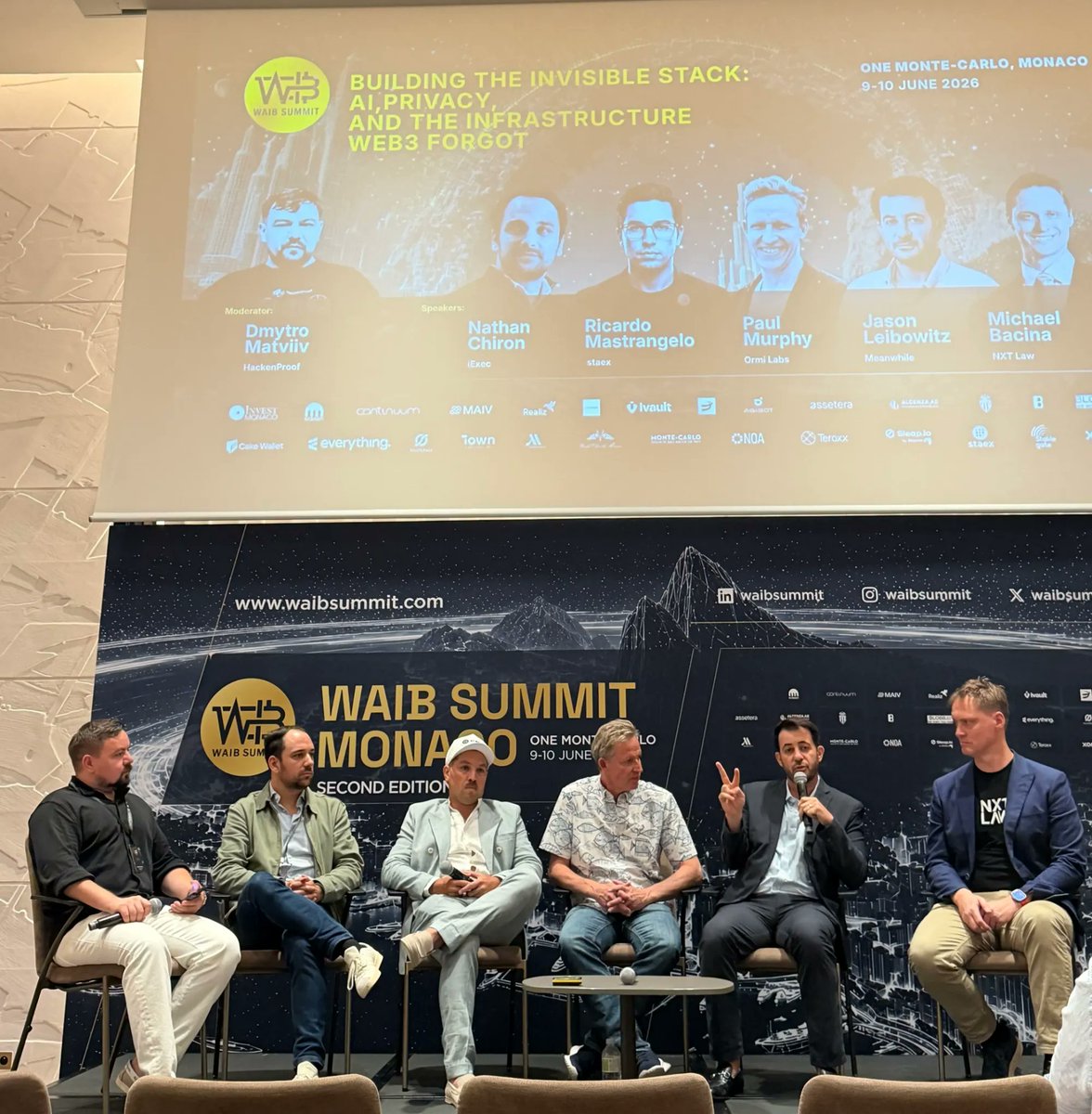
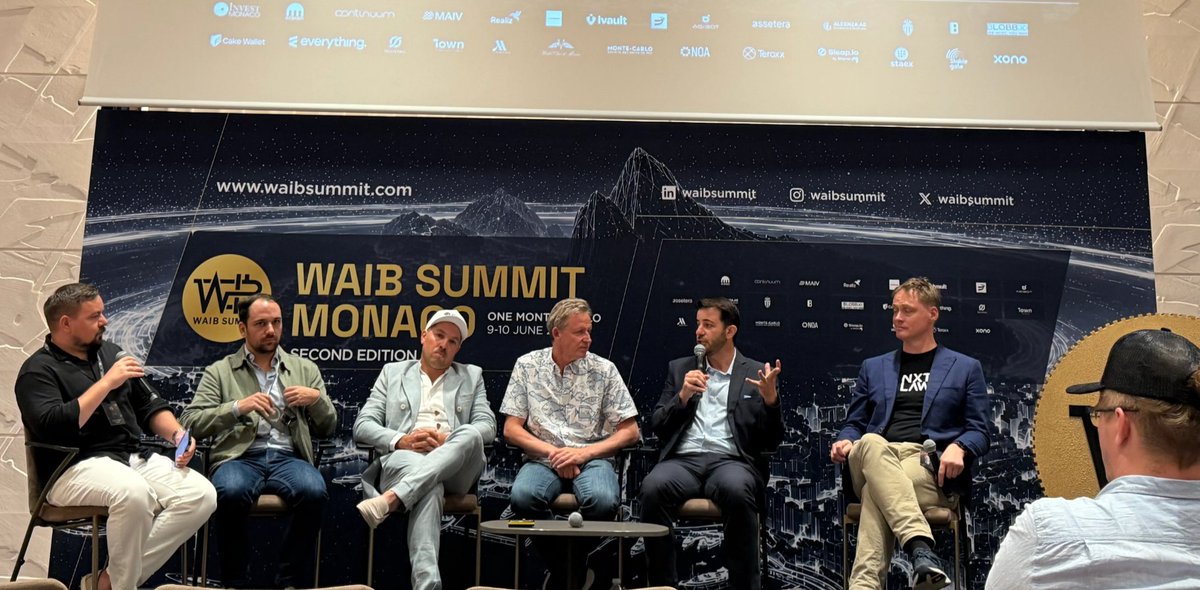
This week family offices, institutions, and builders shared tables at @waibsummit Monaco.
Our Head of BD @LeboBTC took the main stage and met them throughout.
On stage and off, conversations kept landing on how to hold digital assets long term.
The answer is regulated infrastructure built for the long term.
1
2
15
349
meanwhile | Bitcoin Life Insurance retweeted
88% of holders have considered borrowing against their Bitcoin.
But only 14% actually do.
Survey participants cited price swings, liquidations, and regulatory uncertainty as the reasons they hold back.
What if you could borrow against your Bitcoin without worrying about any of these?
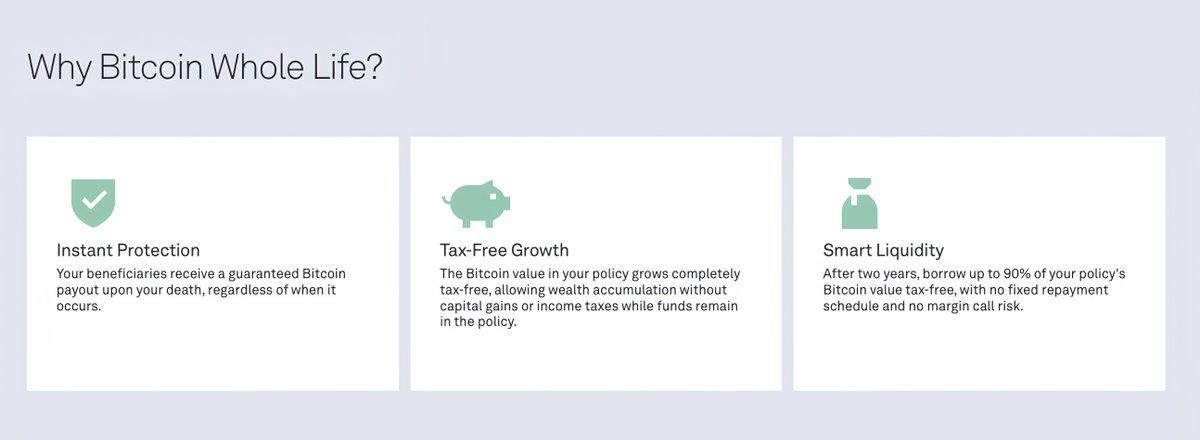
A Bitcoin whole life policy removes these risks through a regulated insurance structure.
- Borrow against your own BTC inside the policy
- The loan is in BTC itself, so there's no margin call risk
- Your Bitcoin keeps growing inside the policy within a regulated insurance structure
Life insurance has been a popular tool to build wealth, save on taxes, and pass it on to the next generation.
Bitcoin life insurance brings that financial infrastructure to every Bitcoiner.
1
1
11
673
meanwhile | Bitcoin Life Insurance retweeted
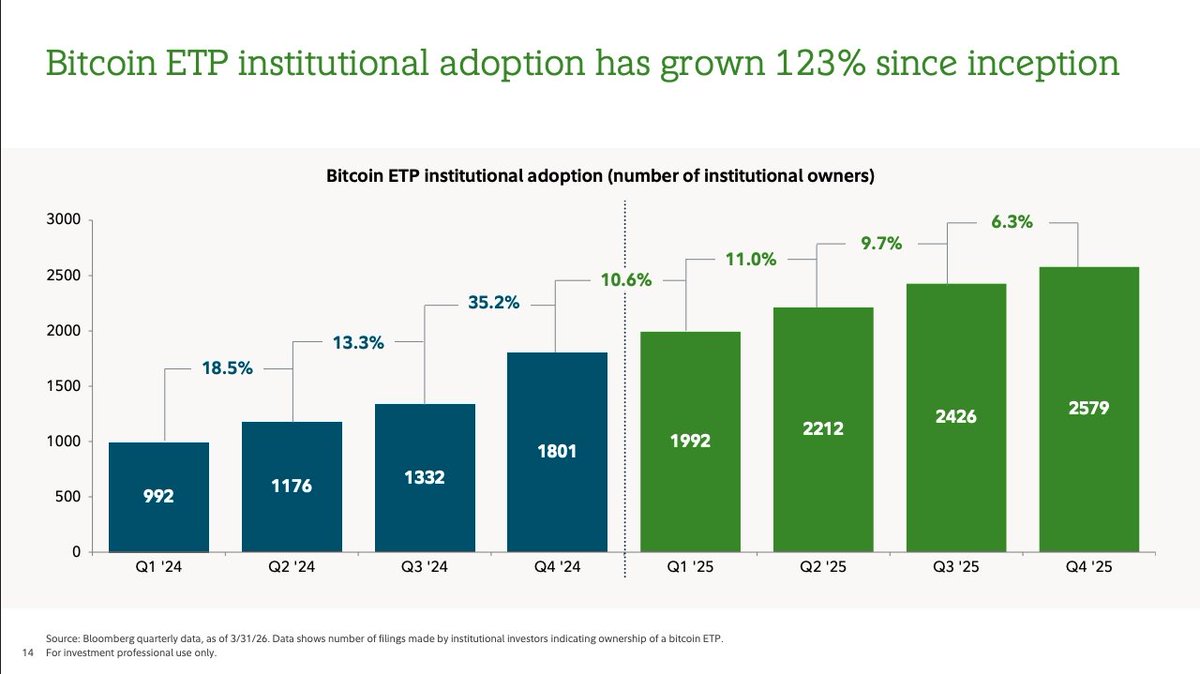
Bitcoin's adoption has moved through 4 distinct phases in the past 2 decades.
In each phase, the ownership transferred to more resilient holders.
The adoption started with hobbyists, followed by a long stretch of retail speculation, and then institutional portfolios through the early 2020s.
The most recent capitals is governments.
23 nation-states now hold Bitcoin directly, and the United States runs a Strategic Bitcoin Reserve.
That sovereign demand sits on top of close to $98.7 billion held through US spot ETFs, led by BlackRock, and a steady migration onto corporate balance sheets.
Moreover, 194 public companies carry Bitcoin on their balance sheets, a 2.5x rise over 2025 alone, with corporate treasuries projected to hold 2.3 million BTC by the end of 2026.
Bitcoin is settling into the hands of ETFs, corporate treasuries, and sovereign reserves. Finally behaving like an infrastructure.
The capital Bitcoin now attracts now think in decades.
Planning around it on that same horizon is no longer a fringe position.
2
10
490
meanwhile | Bitcoin Life Insurance retweeted

💯
But, realize this: no one needs to wait for the masses to advance through the phases at their pace.
One can do so, all three, today!
Plenty are already completely on the other side!
A great example is @meanwhile every they do is in sats, only sats!
1
2
3
483
meanwhile | Bitcoin Life Insurance retweeted
Jun 8
A dollar life insurance policy I bought for my son in 2018 has lost 25-30% of its purchasing power.
Same policy in Bitcoin would be up hundreds of percent.
That asymmetry is why I built a full-stack life insurance company on a Bitcoin standard.
w/ @TBPN
3
3
34
3,276
meanwhile | Bitcoin Life Insurance retweeted
"Inflation of the dollar is eroding the tax-benefits you get from life insurance."
Part of why traditional life insurance has lost its appeal.
@leboBTC on how fiat debasement makes the case for Bitcoin-denominated life insurance.
3
12
1,512
meanwhile | Bitcoin Life Insurance retweeted
Jun 7
Price exposure alone is not a complete investment strategy in Bitcoin.
Ten years from now, what you did with your Bitcoin will matter more than how much you accumulated.
Did you put it to work? In credit markets? In long-duration assets?
This holds true whether you're a treasury company or an individual holder.
The Bitcoin economy is inevitable.
Holders who treat their BTC as capital will build generational wealth with it.
1
16
1,896
meanwhile | Bitcoin Life Insurance retweeted
Visiting Monaco next week?
Make time to meet our Head of BD @LeboBTC at @waibsummit.
He's speaking on the panel "Building the Invisible Stack: AI, Privacy, and the Infrastructure Web3 Forgot."
Find him on the main stage on June 10, 1 PM CEST.
Jun 3

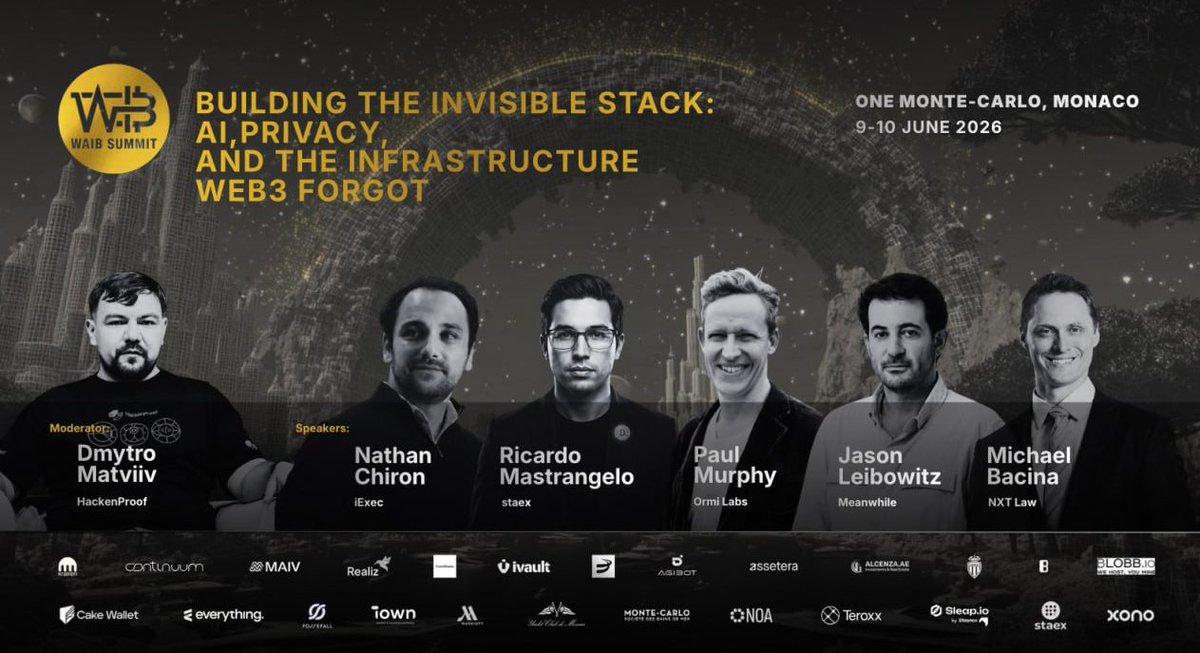
See you in Monaco soon, @WAIBSummit 🇲🇨
On June 10, @DmytroMatviiv will moderate the panel “Building the Invisible Stack: AI, Privacy, and the Infrastructure Web3 Forgot” alongside @MikeBacina, @LeboBTC, @CGO_Staex, Nathan Chiron and Paul Murphy.
📅 Dates: June 9–10, 2026
📍 Location: Monaco
Looking forward to insightful discussions and new connections.
#WAIBSummit #Monaco #Web3 #AI #Privacy #HackenProof
1
2
11
1,044
meanwhile | Bitcoin Life Insurance retweeted
“Our regulators comfortably believe that Bitcoin will be there when we make these long-term promises”
@LeboBTC shares how Bitcoin’s durability and longevity makes it the right foundation for a life insurance company.
1
7
613
meanwhile | Bitcoin Life Insurance retweeted
Jun 5
Current debate over Bitcoin in 401(k)s isn't just a fight over volatility.
The actual objection is on fiduciary standards.
The proposed rule would let a plan fiduciary be presumed prudent for offering Bitcoin, rather than having to prove a prudent process.
That cuts against ERISA's duty of care, and in a $10 trillion retirement market it's a real gap.
But my answer to this standard-of-care problem is to raise the standard, not to wall off the asset.
The same Bitcoin behaves like different assets depending on the wrapper around it.
In a self-custodied wallet with no oversight, it's speculation. But inside an audited vehicle with named custody, defined controls, and a long-dated mandate, it becomes a holding a fiduciary can stand behind.
I built @meanwhile for long-term savings in Bitcoin, so I see the retirement question as one of design, not ideology.
Institutional capital gets comfortable with the structure first and the asset second. An ordinary saver deserves the same standard.

1
11
595