
@AgentflareAI | Evolving from community workshops to autonomous agents. Founder of a makerspace | Startup survivor | Designing human-AI collaborative systems.
Joined September 2019
- Tweets 1,495
- Following 276
- Followers 157
- Likes 4,010
240 Photos and videos











Jun 12
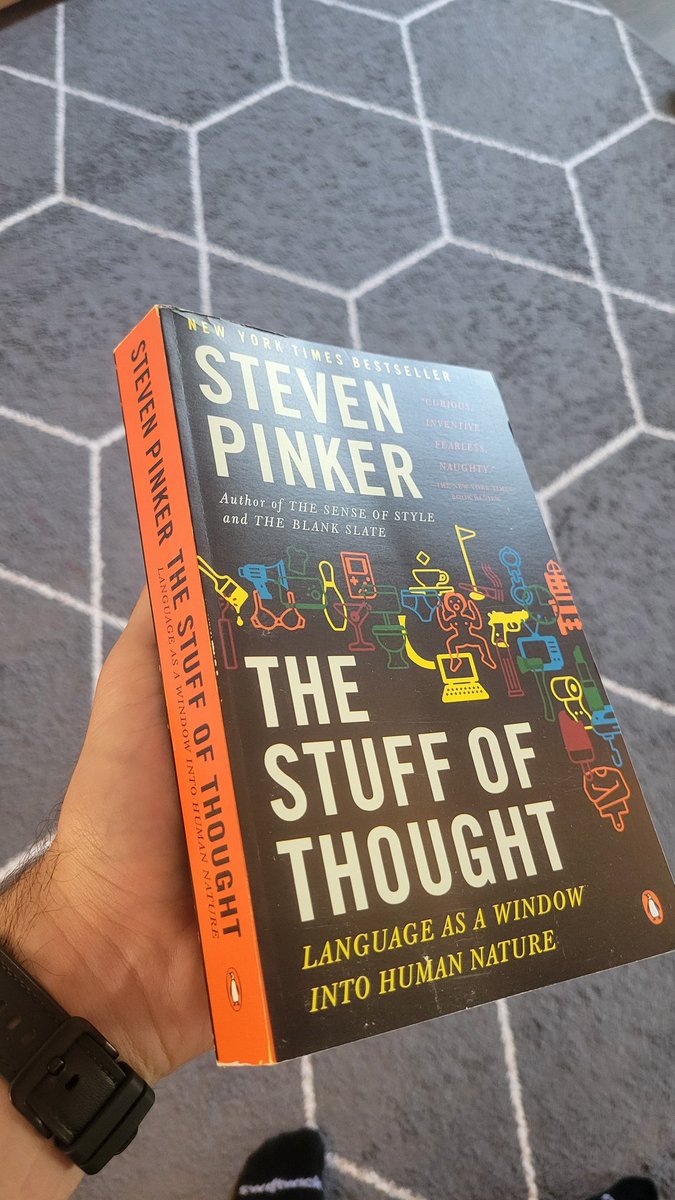
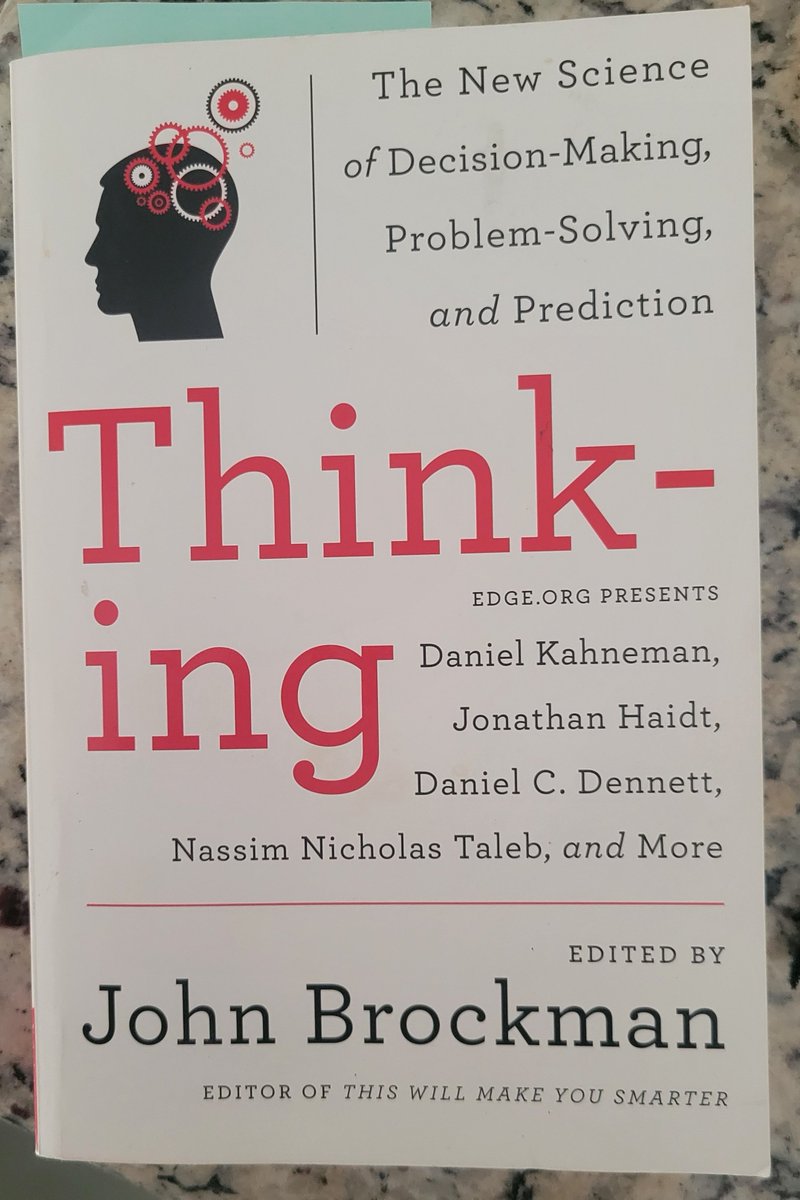
lol accurate
Jun 11

Joining a “rocketship” company usually goes like this:
> you joined one month after they raise a big round
> you think you have finally found your best job ever
> they hire 500 clones of you doing the same job
> you realize things are extremely inefficient here
> you tell yourself you will make the things efficient and become “Head of” the things
> you don’t become “Head of” the things
> they hire “Head of” the things externally
> that guy is the most insufferable jerk you’ve ever seen, fresh out of a divorce, addicted to posting on LinkedIn
> you’ve been here only seven months so it’s too early to go look for a new job
> none of your dreams come true at this company and you tell yourself “ let me finish two years here”
> you throw in the towel at 16 months because you fully hate yourself
40

.@pmarca: "The person who writes down the thing has tremendous power."
@david_perell

29
110
1,292
266,004
Jun 8
We see "input -> output"
We say "output <- input"
- The outputs are the result of the inputs.
1
12


Justin Merrell retweeted

Supabase has raised $500M at a $10B valuation
In this round we are giving @supabase employees the opportunity to cash out 25% of their vested options. We have done this in every round since inception.
We do it as a “cashless transaction” so that employees don’t need to front any cash to exercise their options. This is the friendliest way we could design it until we can offer RSUs.
On top of that, we give employees a 10 year exercise window: whether they stay or leave the company. The typical/default window is 3 months. IMO, equity is earned and employees shouldn't be penalized because they don't have the cash to exercise within 3 months of leaving a job (often that's the time they need the cash/certainty the most).

277
169
3,451
332,291
May 24
The same creative passion that goes into making movies and shows that invoke feelings should be applied to generation of software.
16
Justin Merrell retweeted

May 21
Every founder eventually learns this.
Conviction isn't a feeling you have at the start and keep forever. It drains. Weekly. Sometimes daily. The founders who last are the ones who found a way to refill it.
Phil Knight ran Nike for years while his father told him he was wasting his time. His bank called his loans. His supplier dropped him. He was personally guaranteeing debt on a company that had, at one point, no confirmed future. He wrote about this in Shoe Dog. He described it not as passion but as a compulsion. He couldn't stop. The problem felt too real.
That's a different thing from motivation. Motivation responds to external signals. Conviction doesn't wait for any external thing. It’s something inside.
Howard Schultz was rejected by 217 investors before he raised the money to buy Starbucks. 217!!. Most people treat 2-3 rejections as data about the quality of the idea. Schultz treated it as a filter for who was worth having around the table.
He said in his memoir, "In times of adversity and change, we really discover who we are and what we're made of."
The pattern in all of these is the same. The market was not ready. The feedback was negative. The external environment was not supportive. And the founder kept going anyway, because their conviction about the problem was stronger than their need for validation.
The article below gets into this in detail. What Year 2 actually feels like. The role of the ego. How conviction and stubbornness are different things and why that distinction matters.
The founders who survive long enough to be right almost always had conviction before the market gave them any reason to have it:

26
42
581
118,228
Justin Merrell retweeted

May 22
Be honest,
Why is every software engineer’s backup plan always farming?


1,071
669
9,002
1,244,383
Justin Merrell retweeted

May 22
We built everything enterprise-ready into @daytonaio from day one.
On-prem, multicloud, observability, audit logs, and the whole stack.
We didn't even want enterprise customers at the time. But we had learned from the pre-pivot product that adding those things later is brutal.
We knew we'd need them eventually, so we built them in right at the very beginning.
5
4
116
75,630

Justin Merrell retweeted

May 20
Airbnb stuck their entire customer journey up on their office walls.
Drawn by a Pixar animator, pinned where everyone walks past them daily.
30 frames.
15 for hosts.
15 for guests.
They call it "Snow White."
Chesky stole the idea from a Walt Disney biography in 2011.
Every new product idea has to answer:
→ "Which frame does this serve?"
If it fits a frame, that determines the owner, who prioritises it against their KPIs.
If it doesn’t fit a frame, it doesn’t serve the customer, and doesn’t get shipped.
45
136
2,197
242,752
Justin Merrell retweeted

Programming has nothing much to do with math. It is primarily about communication. It's about us communicating with customers and us communicating with the machine. Programming is a language skill, not a mathematical one.
Consequently, I get tired of people claiming that programming has anything to do with math. Beyond a little set theory and statistics, I've never used any real math in my decades of programming work. Logic is a subdiscipline of rhetoric, not mathematics. Analytical thinking (and problem solving) is part of almost every human activity, from carpentry to oil painting. Math and programming both use those skills, but so do a million other disciplines.
Some programs implement problems in mathematical domains, but in those cases, the math is part of the domain, not the programming process. Some programs involve dating profiles, but that doesn't mean that dating profiles are an integral part of the programming process.
I think this false equivalence dates back to the very early days of computing, when computers were used almost entirely to solve mathematical problems. In the present, mathematical problems are only a tiny fraction of the problems we solve.
Of course, computer science, which is that branch of mathematics concerned with the analysis of computer programs and algorithms, uses some math. (Though I never used the required 1.5 years of calculus and differential equations in a single CS class.) I'm talking about programming, not computer science, however.
So, returning to my original claim, if you want to be a good programmer, focus on developing communication skills. Math is irrelevant to the vast majority of us.
51
37
288
31,791
May 20
Discover and create, or support those who do.

20
Justin Merrell retweeted

May 20
Director Christopher Nolan brought 60 Minutes to Fotokem in Burbank, California, to watch their artists assemble and color correct final release prints of “The Odyssey.” It's the only motion picture film lab in the world that still produces 70 millimeter prints.
Nolan told Scott Pelley, “It’s a really marvelous thing to see… in this age of digitization, AI, all the rest, this is a human process. An analog process.”
150
395
3,963
377,123
Justin Merrell retweeted

Apr 25
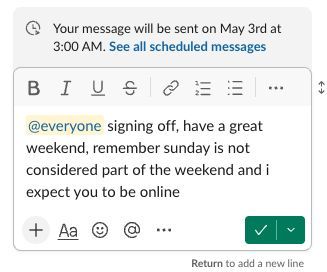
it costs $0 to prove you're a wartime CEO by randomly scheduling Slack messages on the weekend
7
2
157
13,324
Justin Merrell retweeted

Apr 25
Speed without structure doesn’t scale. I mean, what works for a team of five breaks at fifty without clear ownership and boundaries, and fast decisions turn into inconsistent ones. The challenge is building systems that remain coherent as you grow.
6
5
38
2,157