
It's about Peace, the Economy, and are Health.
Joined April 2008
- Tweets 3,195
- Following 194
- Followers 100
- Likes 205
369 Photos and videos
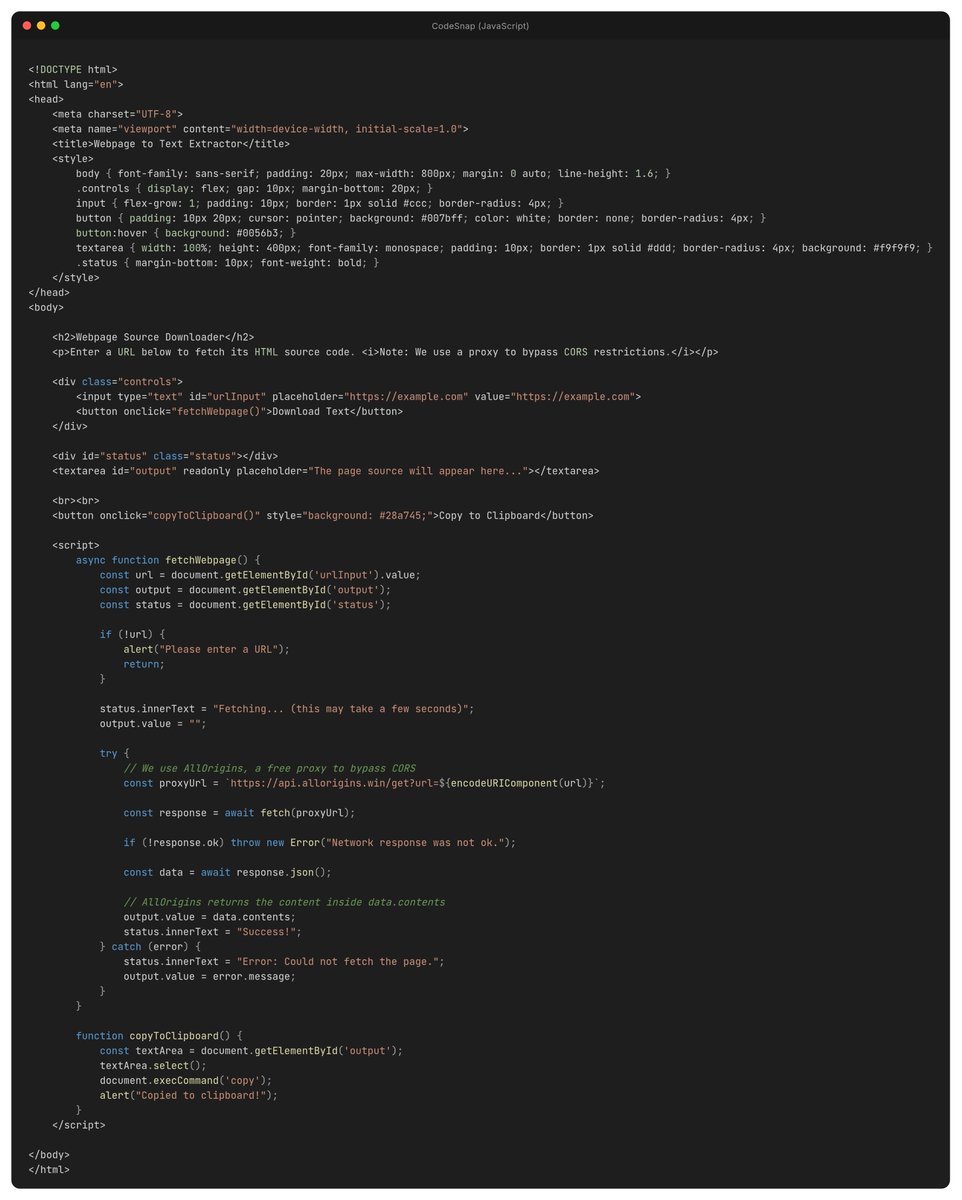
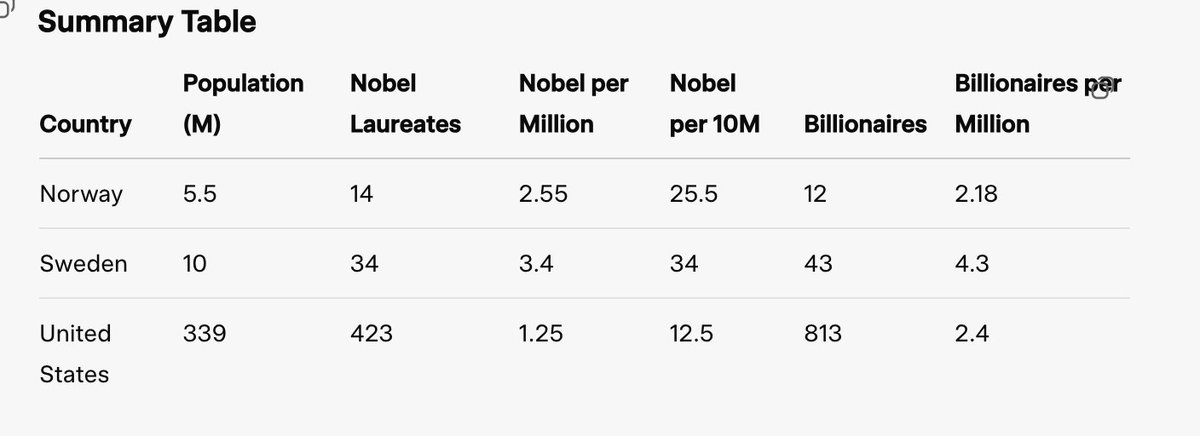

portalchess.com/ID/?sort=pop… These are my Vibe coding examples—mostly games, some tools. Some take minutes, others hours, and still others days (on and off) as I search for better ways to solve the problem. Portalchess.com/ID is itself a PHP script that parses the Portalchess.com directory, looking for games and returning statistics about usage, etc. Many things do not work yet or are incomplete; for example, my Ms. Pac-Man editor is a work in progress, and I will return to it. The same goes for my Breakout editor, which I noticed does not yet have a link.
48
Seattle has been using AI to listen to every 911 medical call since 2023. Nobody was told. thenextweb.com/news/seattle-… via @thenextweb
If I did this, I would double down on it. Totally the right thing to do.
6
what do you think of this article autonocion.com/us/not-even-t…
1
8
The article is a sensationalized rehash of a solid Reuters investigation, and it raises some legitimate concerns — but it also leans heavily into clickbait framing and misses important context.
What the article gets right
The core story comes from a May 28, 2026 Reuters investigation that interviewed nine former Tesla data labelers (the people who watch and annotate thousands of hours of FSD footage to train the AI) plus one former self-driving engineer, along with 11 independent traffic safety researchers.
Key points that hold up:
Several former labelers said they wouldn’t ride in a Tesla robotaxi unsupervised — one famously said “even if you fucking paid me.” They described seeing repeated basic failures: cars speeding 20–30 mph over the limit in certain modes, failing to yield to school buses or emergency vehicles, near-misses with pedestrians and kids, and not braking for animals.
Tesla’s headline safety claim (“up to 10x safer than humans,” later walked back to ~7x) has real methodological problems. Reuters and the experts they consulted pointed out apples-to-oranges comparisons (Tesla’s airbag-deployment crashes vs. broader U.S. tow-truck crash data), newer Tesla fleet vs. 12 year old average U.S. vehicles, and narrow definitions of when a crash “counts.” Ten of the eleven researchers called the presentation misleading marketing rather than rigorous analysis.
The robotaxi program in Austin (and expansions) has involved heavy pre-mapping and human oversight in early stages — which directly contradicts Elon Musk’s long-standing “we don’t do laborious local mapping like Waymo” talking point.
These are fair criticisms. When the people closest to the raw training data express that level of distrust, it’s worth paying attention. The gap between Tesla’s marketing and current unsupervised capability is real.
Where the article (and Reuters piece) falls short
The piece is written in a very anti-Tesla tone (“death traps,” “fiasco,” etc.), which makes it read more like advocacy than neutral reporting.
Important missing context:
Data labelers see a biased sample. Their job is literally to review the weird, scary, and intervention-heavy clips. They don’t watch the millions of miles of boring, perfect driving. This creates massive selection bias.
FSD is still explicitly “Supervised.” Tesla has always been clear (in the fine print and disclaimers) that the driver must stay attentive. The bar for “I’d trust this to drive me with zero supervision” is much higher than “this driver-assist system is already safer than average humans in aggregate data.”
Real-world fleet data is massive and mostly positive. Tesla’s latest published safety report (as of early 2026) shows FSD (Supervised) with roughly one major crash every 5.3 million miles vs. the U.S. average of ~660,000 miles — even with more conservative analysis, it’s still several times safer. This comes from billions of actual customer miles, not lab tests. Many owners (especially on newer hardware with v13/v14) report long trips with zero interventions.
Progress has been real and accelerating. The jump to end-to-end neural nets (v12 onward) was a genuine leap. Recent versions have users doing cross-country drives with high confidence.
My overall take
The article is directionally correct on the hype vs. reality gap, especially around safety statistics and the current limitations of robotaxi deployment. Tesla’s marketing has been too aggressive for years, and the “full self-driving any day now” narrative has damaged credibility.
At the same time, it’s overly dismissive. Dismissing the entire program because some (understandably jaded) ex-employees wouldn’t trust a robotaxi yet ignores:
How insanely hard this problem is
How much data advantage Tesla actually has
How rapidly the system has improved in the last 18–24 months
Bottom line: FSD (Supervised) is already one of the better driver-assistance systems available and appears statistically safer than average human driving in Tesla’s data — but it is not ready for widespread unsupervised robotaxis in complex environments. The skepticism from the people who train it is a useful reality check.
The article is worth reading for the Reuters-sourced anecdotes and the statistical critique, but take the dramatic framing with a grain of salt. It’s playing to the “Tesla is doomed” crowd more than giving a fully balanced picture.
Would you like me to dig into any specific part (the safety stats debate, recent FSD version feedback, or how this compares to Waymo/Cruise)?
6
Guaranteed Now ! youtu.be/kVhqYprT4Dk?si=Cuqj… via @YouTube It's as good as it gets...
8
📖 The Silver Horizon: A New Beginning on the Moon gemini.google.com/share/07ff…
19
Threads of Fractured Echoes youtu.be/rjQr4tGVh1c?si=TxB9… via @YouTube
21
Memoir of the Rev. Samuel Hidden : Cogswell, Elliott Colby. [from old catalog] : Free Download, Borrow, and Streaming : Internet Archive archive.org/details/memoirof… via @internetarchive
1
62
Check out this song! suno.com/s/9JpQG8MuqcYSMTeT
85