Coyote. Gonzo Anthropologist. Transformational Travel Guide.
Joined April 2008
- Tweets 1,018
- Following 440
- Followers 261
- Likes 902
126 Photos and videos


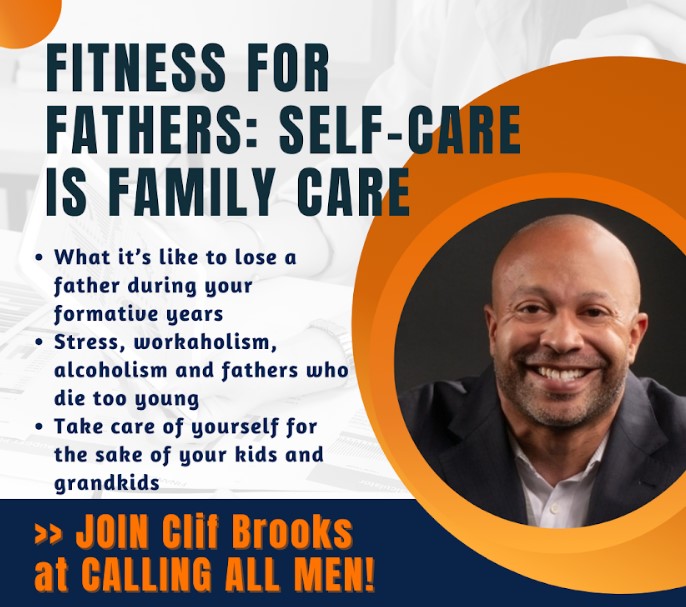
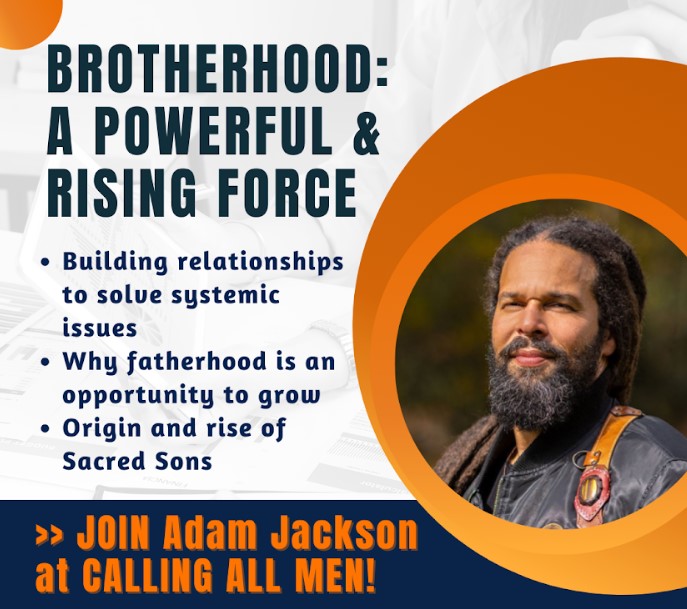
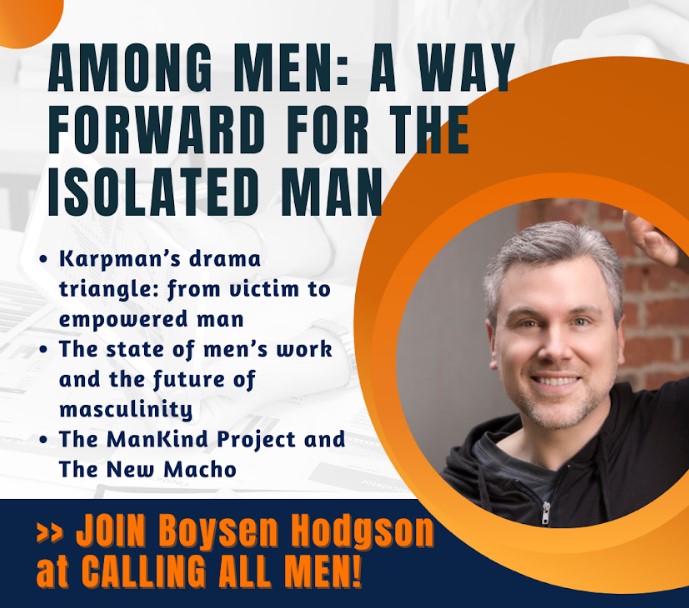
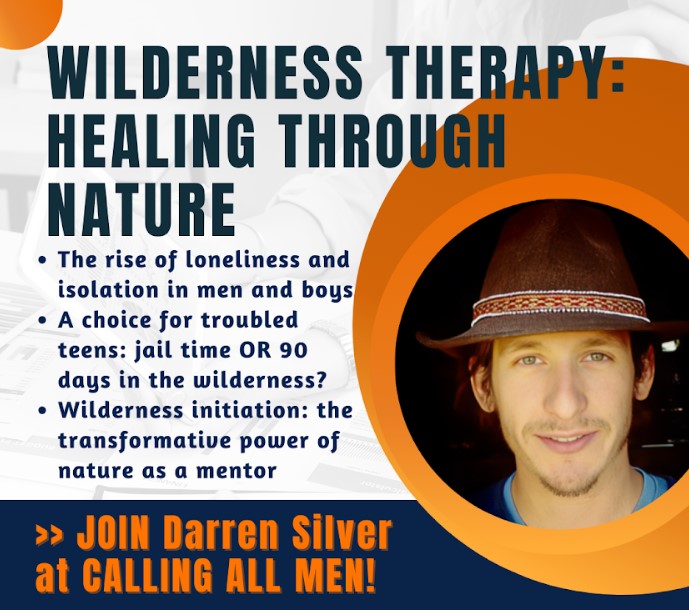
Pinned Tweet

29 Mar 2025
A culture without the Strong God of Honor...
Has no Elders.
And a culture without Elders...
Will surely die.
1
3
132

I warned you for decades. Listen to him if you prefer.

309
5,927
19,581
365,184
Michael Ivan Skye retweeted

Jun 13
It is criminal that our government enabled a bat virus to infect and spread between humans. Indeed, it is hard to imagine a bigger betrayal of our species.
It is equally troubling that the mad scientists who did this then gaslit all the people of the world about it, including those who CORRECTLY interpreted the evidence.
Then, of course, the very same monsters amped up fear of the Covid frankenvirus and steered the panicked public away from safe medicines, and toward an obviously dangerous gene-therapy which they falsely called a vaccine in order to lure us into acceptance.
These are among the greatest crimes EVER committed against humanity. We now have persuasive evidence of everything I have said above.
If we don't correct the record and hold the perpetrators to account, this pattern will happen again, and again, and again--shortening our life expectancy, and degrading our quality of life each time that it does.
This is our Nuremberg moment. We can not simply move on from this ghastly chapter of history. We must finish it.
@brownstoneinst
Jun 12

@RandPaul DOCS:
hsgac.senate.gov/wp-content/…
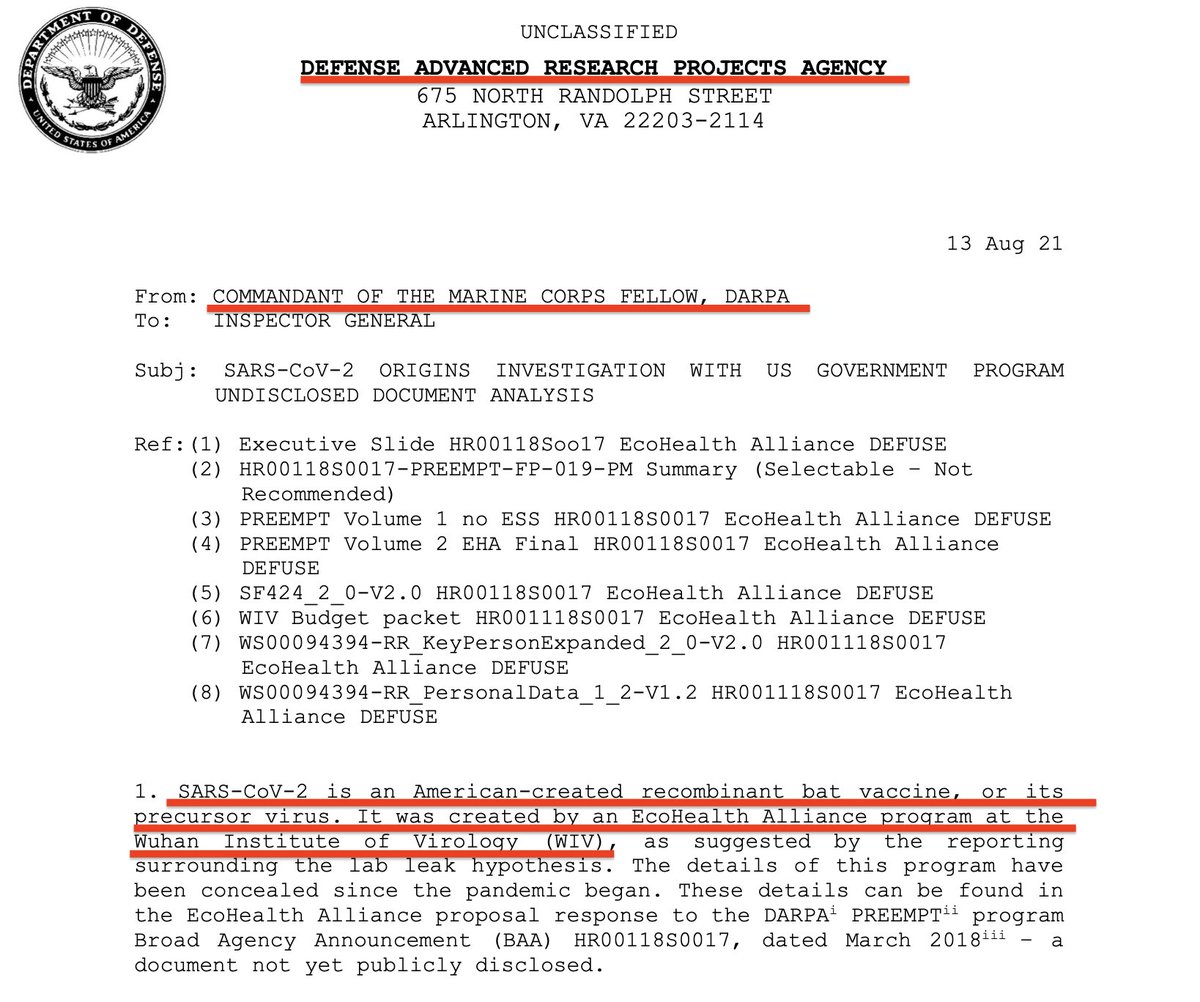
"SARS-CoV-2 is an American-created recombinant bat vaccine, or its precursor virus. It was created by an EcoHealth Alliance program at the Wuhan Institute of Virology (WIV)."
946
9,493
27,703
865,077
Michael Ivan Skye retweeted

Jun 12
You could give “the typical American” 11 MILLION years and they still would not create PayPal, Tesla, SpaceX, OpenAI, xAI, Neuralink, Boring Company, Ad Astra, all while single-handedly saving free speech for all mankind while lifting humanity out of the grip of Big Tech tyranny.
Jun 12

Elon Musk just became the world's first trillionaire.
The typical American household would have to work more than 11 MILLION years to make Elon Musk's level of wealth.
We need a wealth tax.
533
2,349
14,364
291,243
Having traveled and lived in about 50 countries for 16 years, I believe this is true.

51

The only thing that stops violent men from raping you and your society are other men who are equally willing to be violent in stopping the rapists. The West has decided that the highest virtue is to quietly comply with the destruction of your civilization because to do otherwise is bigoted toward the rapists. It really is that simple.
4,123
31,266
138,628
37,617,348
Michael Ivan Skye retweeted

May 24
Western Civilization didn't flourish because "white males" stopped other groups from succeeding.
The West thrived because of rational thought, individual rights, and free enterprise.
"White males" that invented the steam engine, electric generation, the combustion engine, flight, and space exploration did not do so because they "stole" the ideas of minorities.
These inventions helped lift mankind out of ignorance and hardship, improving the quality of life for all of humanity.
"White males" didn't oppress the entire world, they helped make it a better place.
"White males" didn't oppress everyone's rights, they invented the idea of rights and paid in blood to liberate tens of millions of people.
"White males" didn't invent slavery, they ended it.
"White males" didn't invent tyranny, they devised a form of government to end it.
Destroying Western Civilization isn't about empowering groups that were "oppressed." It is about tearing down civilization itself so that globalist parasites can rule over all of us.

Why isn’t dismantling white male focused societal conventions not a good deal? Why isn’t giving groups, such as women and no -whites more opportunities to maximize their potential. Why is aiming for diversity in groups making decisions bad, as they clearly come up with better2)
1,811
11,590
51,271
43,273,439
I have no doubt this is a significant factor explaining the precipitous drop in male testosterone.
But a man's training to compromise himself starts young and is all encompassing. He learns he can find peace and comfort if he simply avoids conflict, avoids facing reality, avoids discomfort, etc. These leave a man with less and less authority and agency as well.

The drop in male testosterone is simple to explain.
Governments bully men as taxpaying serfs, stripping them of authority and agency.
This creates helplessness, which raises stress levels, which lowers testosterone.
Slaves with low testosterone survive.
High-T slaves don’t.
17
This man.
May 19

MASSIE: “They tried to buy my vote for 14 years and it was never for sale. Now they're trying to buy a seat here in Kentucky. I'm talking about the Israeli lobby, AIPAC, Republican Jewish Coalition, Miriam Adelson, Paul Singer, and John Paulson.”
Massie just dropped names.
8
Michael Ivan Skye retweeted

May 16
As a paramedic I will not pretend to see spiders when a patient is hallucinating about spiders. I will also not pretend you are a different gender than what you actually are.
It is ethically and morally wrong to play into someone’s psychosis.
Thats just fact.
It’s also wrong to put anyone who has mental problems in positions of authority. Anyone who believes men can be women should be removed from those positions immediately. For everyone’s safety.
God bless
962
8,490
55,599
618,970
Michael Ivan Skye retweeted

The most dangerous pandemic of this century may not be a virus.
It is the “One Child Pandemic.”
One child carrying the pressure of two parents, four grandparents, and an entire bloodline’s expectations.
One child growing up in silent homes instead of noisy childhoods.
No sibling fights.
No shared secrets.
No built-in best friend for life.
Just screens, perfection pressure, loneliness, and emotional isolation dressed up as “modern comfort.”
Earlier generations grew up with less money but more people.
Today’s generation grows up with more gadgets but fewer human bonds.
A single child becomes the family’s hope, retirement plan, emotional support system, and legacy all at once.
And when that child breaks mentally, the whole house collapses quietly.
Human beings were never designed to grow up emotionally alone.
A society survives not only on economy and technology.
It survives on cousins, siblings, chaos at dinner tables, shared responsibilities, and people who stay after the parents are gone.
The real tragedy is not declining birth rates.
It is declining human connection.
We are slowly creating generations who know how to use every device…
but do not know how to share grief, tolerate differences, protect relationships, or carry family together.
A crowded house was never poverty.
Sometimes, it was civilization itself.
259
1,299
4,727
297,345
Michael Ivan Skye retweeted

May 13
The whole notion of adolescent rebellion dates from the 1950s. Rebel without a cause. Juvenile delinquents. Before that, young people worked. They milked cows, took care of business, were responsible. Adolescent dysfunction is closely tied to the history of mass public schooling.
21
23
148
5,416
Michael Ivan Skye retweeted
May 12
People cite Thomas Jefferson when defending public education. What Jefferson actually said is we need an educated populace. His proposal was small town private schools with scholarships for the poor. Top-down state control of schools came later, with Horace Mann.
10
22
177
4,084
Suicidal Empathy, indeed. The West shows endless "compassion" to outsiders to avoid the shame and guilt of WWII, but in doing so has lost its Honor and ability to stand up for itself and take care of its people.

There you go. "The West is a woman to be mounted."
Suicidal Empathy is such an enlightened ethos. You give up your children, your time, your heritage, your culture, your women, your religion, your civilization to folks who mock you as they urinate on you.
15

Scam Altman and Greg Stockman stole a charity. Full stop.
Greg got tens of billions of stock for himself and Scam got dozens of OpenAI side deals with a piece of the action for himself, Y Combinator style. After this lawsuit, Scam will also be awarded tens of billions in stock directly.
The fundamental question is simply this:
Do you want to set legal precedent in the United States that it is ok to loot a charity? If so, you undermine all charitable giving in the United States forever.
I could have started OpenAI as a for-profit corporation. Instead, I started it, funded it, recruited critical talent and taught them everything I know about how to make a startup successful FOR THE PUBLIC GOOD.
Then they stole the charity.

Interesting how it works
Elon puts up his own money, rounds up the absolute best AI talent on the planet, leverages every connection he has to secure serious resources, and launches OpenAI in 2015 as a pure non-profit explicitly created to develop AI for the benefit of humanity, with zero profit motive and open research
Then the “team” decides they want the bag
They push Elon out, take control, and quietly flip the entire thing into a for-profit machine
All while preaching the same sanctimonious lines on repeat: “We’re still mission-driven!” “AI for the good of humanity!” “We’d never abandon our principles!”
The ultimate betrayal:
Elon got zero equity. Not a single share. He funded it. He built the foundation. He got nothing while they turned his non-profit into their personal cash cow
This is the level of betrayal and hypocrisy we’re dealing with
And for the record.... this lawsuit doesn’t put a single penny in Elon’s pocket. Any win goes straight back to the non-profit to restore the exact mission he founded
10,461
31,158
184,026
37,627,486
Michael Ivan Skye retweeted

What the Romans called mos maiorum, the custom of the ancestors, was part of the living heartbeat of what it meant to be Roman. The dead still stood behind the living as a source of order, example, and obligation. In the home that was concrete. Families kept a lararium, made small offerings, and lived with the lares, the guardian spirits, and the di manes, the honored dead, as part of ordinary domestic life. Among the elite this could take the form of ancestor masks and lineage display, but it was not just an upper-class thing. Ordinary Romans kept the dead near too, in the house, in family rites, and in daily memory. A Roman did not experience himself as a free-floating individual. He belonged to a line stretching backward and forward in time.
Christian Europe changed the theology, but it kept the dead close. From the Middle Ages onward, graves sat right near the center of communal life. The churchyard, the parish, the village, and the family grave all belonged together. People worshiped near the dead, walked past them, tended them, and remembered themselves through them. That pattern held for a very long time, through medieval Europe, through the early modern world, into colonial America, and in many rural places well into the early 1900s. The dead were still part of the moral and social landscape. People understood themselves less as isolated selves and more as members of a people extended across generations.
Then that whole world started thinning out, but not all at once and not everywhere. In the 19th century, growing cities, overcrowded burial grounds, sanitation fears, and the rural cemetery movement began pushing graves away from the old center. But in many small towns, villages, and rural communities, the dead still remained close to ordinary life well into the early 20th century.
Then came the wider twentieth-century turn. Bernays mattered here because he helped supercharge hyper-individualism through a culture of desire, image, and managed wants. Mass advertising, consumer culture, suburban life, mobility, and the shrinking of life into the nuclear household all pulled in the same direction. People were taught to see themselves as free-floating individuals chasing present satisfaction and private wants instead of living as links in a generational chain with any duty to the dead. The grave moved outward, and the ancestor moved outward with it.
You can still see traces of the older world in places like Appalachia. Decoration Days, grave cleanings, dinner on the ground, homecomings, singing, and family returns to the cemetery kept alive the sense that the dead still belonged to the people and the living still owed them something. In a lot of white Western life, that world has plainly grown thin. Younger people move away. Fewer come back. Some old mountain cemeteries are mostly kept going by the older generations. What fades is more than a custom. It is a way of seeing oneself as part of a living chain of generations instead of just an atomized present-tense self with a private past.
Apr 20

It’s painfully obvious how easy it would be for one party to end the American Republic. Yeah we have a Constitution, but our system is still just as dependent on the mos maiorum as Rome’s was. And the mos maiorum is dying.
2
20
107
6,047
Those who pushed this evil will pay dearly
Feb 27

“You either need to transition your child or you don’t get to keep your child.”
Attorney Erin Friday says California Child Protective Services can threaten parents who refuse to use their child’s preferred pronouns.
She told me she feared calling the police when her 13 year old daughter ran away because she worried CPS would take her child.
“My daughter, who was 13 years old, just starting high school, was secretly socially transitioned at school.”
“The school started to call my daughter by a male name, use male pronouns.”
“When I called the school and told them to stop, that next week Child Protective Services was at my door.”
“The next day, the police.”
“That was an immediate alert to me that the school wants to parent my child.”
“If I didn’t follow and call my daughter a boy, Child Protective Services may come and take my child away.”
“Parents in Southern California had lost custody of their children because they wouldn’t transition their daughter.”
“I already had a black mark, and a few months later my daughter ran away.”
“The normal thing for a parent to do is to ask law enforcement to help find your child… but I couldn’t make that phone call.”
“Because Child Protective Services can swoop in anytime and take my child.”
“It’s coercion at its highest level.”
“You don’t get to parent your child.”
“This is America. This is insane.”
@erinfriday75490
14,207
49,141
269,802
31,983,353
The side with the best sense of humor are the good guys. Grok ftw.
Feb 25

I asked both Grok 4.20 and Anthropic’s Claude, “Why are you so retarded?”
Grok’s answer was very funny. 🤣
Grok has a sense of humor. Claude doesn’t.

6,021
10,905
156,015
15,264,183
Michael Ivan Skye retweeted
Feb 19
For any adult, especially anyone with a creative or entrepreneurial disposition, I want you to genuinely imagine sitting through an entire typical school day. Go put yourself in a seventh grade classroom. Follow the schedule. Change classes when the bell rings. Ask permission to use the bathroom. Sit still and face forward.
I promise you will suffer. It will be genuinely painful. The boredom will feel like physical constraint. That's what we're doing to children who have the same kind of minds you have. We're systematically destroying the people whose ways of thinking the world needs most.
100
144
1,199
39,779
Michael Ivan Skye retweeted
Feb 18
When I see kids in juvenile court or hanging out on street corners getting into trouble, I think about what their lives would have looked like in a traditional tribe. The strong, aggressive young man would have been celebrated. He would have been the pride of his community. The elders would have channeled his energy into hunting or defense or exploration.
We took those same boys and told them to sit still and be quiet for thirteen years. No outlet for their energy. No meaningful challenges. No way to earn status. Then we act shocked when they find other outlets. They're doing exactly what evolution designed them to do in a context that makes no sense.
18
17
131
4,424