
Mom to my 🐶 Hendrix, aunt, 👩🏫, 🌲lover, compassion, empathy, and ✊🏽👇Amazon List & cash app: $midstar01
Joined August 2013
- Tweets 12,069
- Following 1,826
- Followers 1,453
- Likes 33,962
1,885 Photos and videos













Jessica Petote Doyle👩🏫🐾🍎 retweeted

Jun 2
Your child's school has an assistant superintendent for curriculum, an assistant superintendent for instruction, a director of teaching and learning, and a coordinator of academic services. Your child's teacher has thirty-two kids and no copy paper. This is not a funding problem. It is a priority problem.
254
924
6,482
226,041
Jessica Petote Doyle👩🏫🐾🍎 retweeted
May 23
You want to fix education?
Stop treating teachers like they're the problem. They're the ones who showed up every day, documented everything, and told you the truth all year. Start there.
103
87
811
14,635
Jessica Petote Doyle👩🏫🐾🍎 retweeted

Apr 24
More days in school doesn’t mean more learning.
And this isn’t opinion.
The data backs it up.
The OECD has reported that simply increasing instructional time does not improve student outcomes.
Pew Research shows there’s a wide range of instructional hours across countries, with no consistent link to performance.
If time alone worked…
the countries with the most hours would dominate.
They don’t.
In fact, students in the United States already spend more time in school than many countries.
By the end of lower secondary school, students in Finland receive about 6,300 hours of instruction.
In the United States, it’s more like 9,000 hours.
That’s a huge difference.
And yet… more time hasn’t translated into better outcomes.
So it’s not a time problem.
It’s how we use the time.
High-performing countries don’t cut arts, PE, and music to make room for more academics.
They protect them.
Because they understand these actually help improve student learning.
Movement improves focus.
Arts build creativity and thinking.
Music strengthens cognitive development.
So while we’re trying to cram more academics into more time…
They’re building better learners.
That’s why they can do less time and still get strong results.
But we keep going back to the same thinking,
if a little is good, more must be better.
That logic doesn’t hold up anywhere else.
No coach is doubling practice time thinking it will double performance.
That’s not better training… that’s overtraining.
And overtraining doesn’t build athletes, it breaks them down.
The brain works the same way.
There’s a limit to how much it can take in before more actually starts working against you.
You don’t get better learning—you get fatigue, disengagement, and burnout.
Especially with kids.
So when we add more days without changing the experience, nothing really improves.
We’re just stretching out the same problem over a longer period of time.
We don’t need more time.
We need to use time the way kids actually learn,
not the way it gets designed by people who aren’t in the room.
3
56
225
12,842
Jessica Petote Doyle👩🏫🐾🍎 retweeted

Apr 7
I'm partnering with Scholastic to give $200k to teachers ($200 to 1,000 teachers)!
The link to enter is here: bit.ly/4sVnXK0 . The website for entries will close the last day of Teacher Appreciation Week: 5/8/26.
What are you waiting for? Go enter!
41
127
365
32,051
Jessica Petote Doyle👩🏫🐾🍎 retweeted

Apr 3
I saw a woman on TikTok say she was a "good girl" her whole life. Did everything the "right" way. Followed the rules. Kept the peace. Put everyone else first. Now she's in her 40s and said all she feels like she has to show for it is grief and a lot of built-up anger. And honestly, as a woman, I felt that deeply. Because nobody really talks about how being the "good girl" often benefits everyone around you except the actual good girl. Everyone else gets the patience, the understanding, the sacrifice. And she's the one left realizing she spent years shrinking herself just to keep everyone else comfortable.
230
2,159
11,567
483,259
Jessica Petote Doyle👩🏫🐾🍎 retweeted

Trump would rather pay for foreign wars instead of pay for American day care. This is where we are at.
Watch more Pod Save America on YouTube!
22
90
352
37,257
Jessica Petote Doyle👩🏫🐾🍎 retweeted

Apr 2
Never ask again how Hitler happened
392
11,582
81,053
1,021,567
Jessica Petote Doyle👩🏫🐾🍎 retweeted

I miss having a kind human as a president‼️
229
1,648
10,333
108,622
Jessica Petote Doyle👩🏫🐾🍎 retweeted

Apr 3
And generally applicants are less advantaged than final users of the voucher—regardless of how approval priority tiers work.
The reason is basic: private schools—not parents or the state—get to choose which voucher-approved students actually get to enroll in their schools.
Apr 3

Most Texas voucher applicants were white and already in private or home-school.
Final data shows that of the nearly 275,000 students who applied, 45% are white and 75% attended a private school or were home-schooled during the 2024–25 school year. texastribune.org/2026/04/01/…
4
29
55
2,981
Jessica Petote Doyle👩🏫🐾🍎 retweeted

Mr. President: I have a better idea. Instead of spending over a trillion dollars on never-ending wars abroad while plunging the working class into poverty here at home, let’s invest in universal childcare, Medicare for All and affordable housing.
America first!
Apr 1

Trump: We can't take care of daycare. We're a big country. We're fighting wars. It's not possible for us to take care of daycare, Medicaid, Medicare, all these things.
4,785
6,255
27,847
804,691
Jessica Petote Doyle👩🏫🐾🍎 retweeted

WATCH: The White House took down this video, but we still have it.
Trump: We can't take care of daycare. We're a big country. We're fighting wars. It's not possible for us to take care of daycare, Medicaid, Medicare, all these things.
1,873
29,391
61,331
1,568,875
Jessica Petote Doyle👩🏫🐾🍎 retweeted

The Arizona Department of Education and ESA advocates have relentlessly attacked @CraigHarrisNews for reporting 20% of parents misspent millions in the state’s voucher program. An ADE supervisor now confirms the findings were accurate.

EXCLUSIVE. ADE official: 12News was accurate in reporting that 20 percent of parents had misspent $10 million in the education voucher program 12news.com/article/news/inve… 12news.com/article/news/inve…
20
74
202
9,683
Jessica Petote Doyle👩🏫🐾🍎 retweeted
Trump's DOJ has been quietly removing Epstein files from the DOJ website since the attack in Iran ; CBS reports.
This is a coverup.
974
25,996
80,965
1,215,074
Jessica Petote Doyle👩🏫🐾🍎 retweeted
Feb 25
What % of the current TN voucher users were already in private school?
@TNedu has the number. Why won’t they release it?
Feb 25

Thank you, @EDSecMcMahon, for standing with parents to double Education Freedom Scholarships across Tennessee.
1
10
29
1,577
Jessica Petote Doyle👩🏫🐾🍎 retweeted

Jan 25
194
4,963
32,067
751,594
Jessica Petote Doyle👩🏫🐾🍎 retweeted
Trump is building an army loyal to him alone, and paying them up to $250k/year. If you can’t see ICE for what it is yet, then you’re not going to until it’s too late.
794
7,451
28,068
456,194
Jessica Petote Doyle👩🏫🐾🍎 retweeted
The equation is simple: you can’t afford healthcare anymore because ICE agents are making 6-figure salaries and $50k signing bonuses. The money is not marked for life, liberty or happiness. It is set aside for state suppression.
627
3,154
9,993
131,706


Jessica Petote Doyle👩🏫🐾🍎 retweeted

Jan 20
We’re about 1,882,963 straws past the last straw but if something could finally be the lastest straw, that’d be great.
70
1,497
14,507
123,683
Jessica Petote Doyle👩🏫🐾🍎 retweeted
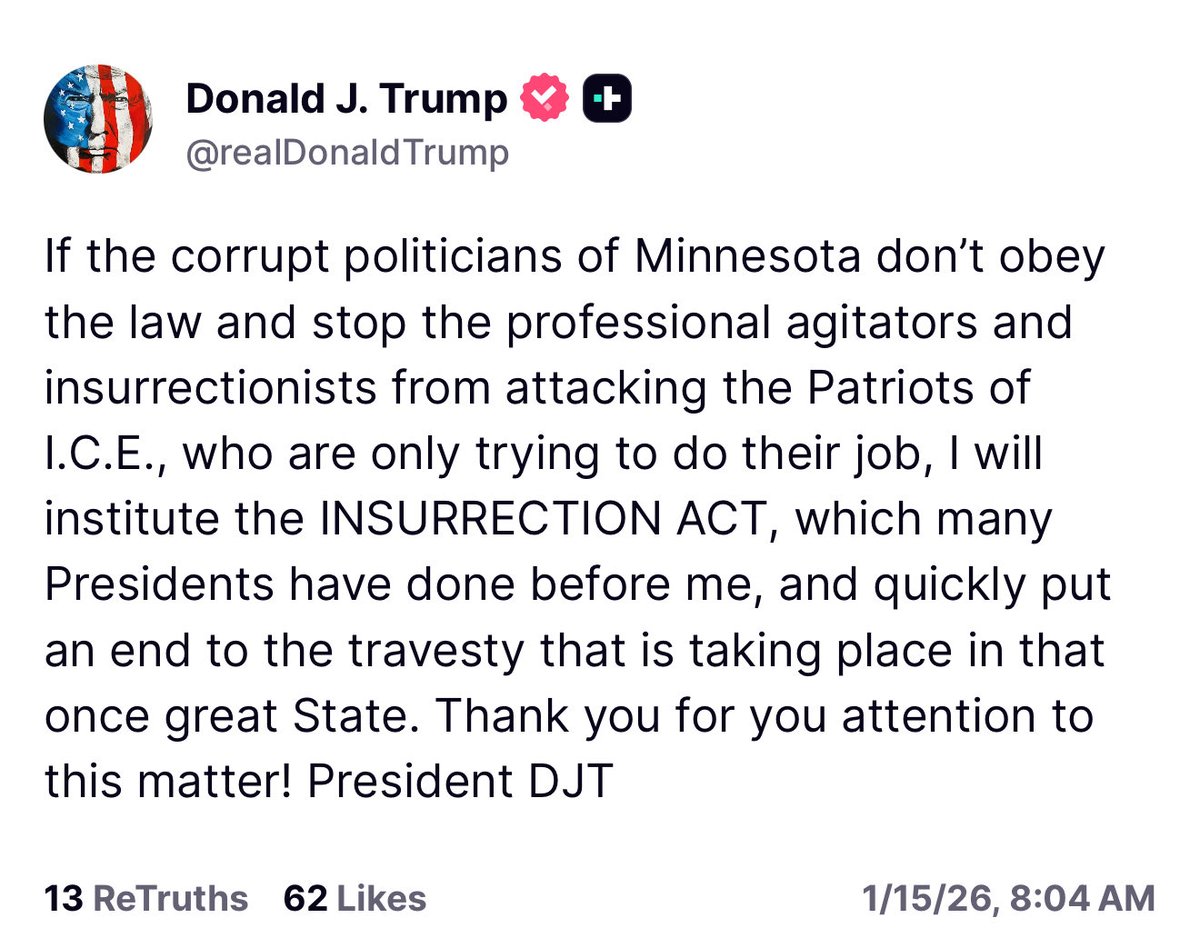
This has been the plan all along.
- Foment violence and chaos in the streets of MN
- Implement the Insurrection Act
- Declare Martial Law
- Suspend elections
2,748
12,853
37,910
1,250,120