
CEO & Co-Founder @pillarwallet @etherspot
Joined July 2009
- Tweets 1,037
- Following 271
- Followers 528
- Likes 1,338
29 Photos and videos


michael.pillar.eth retweeted

Apr 17
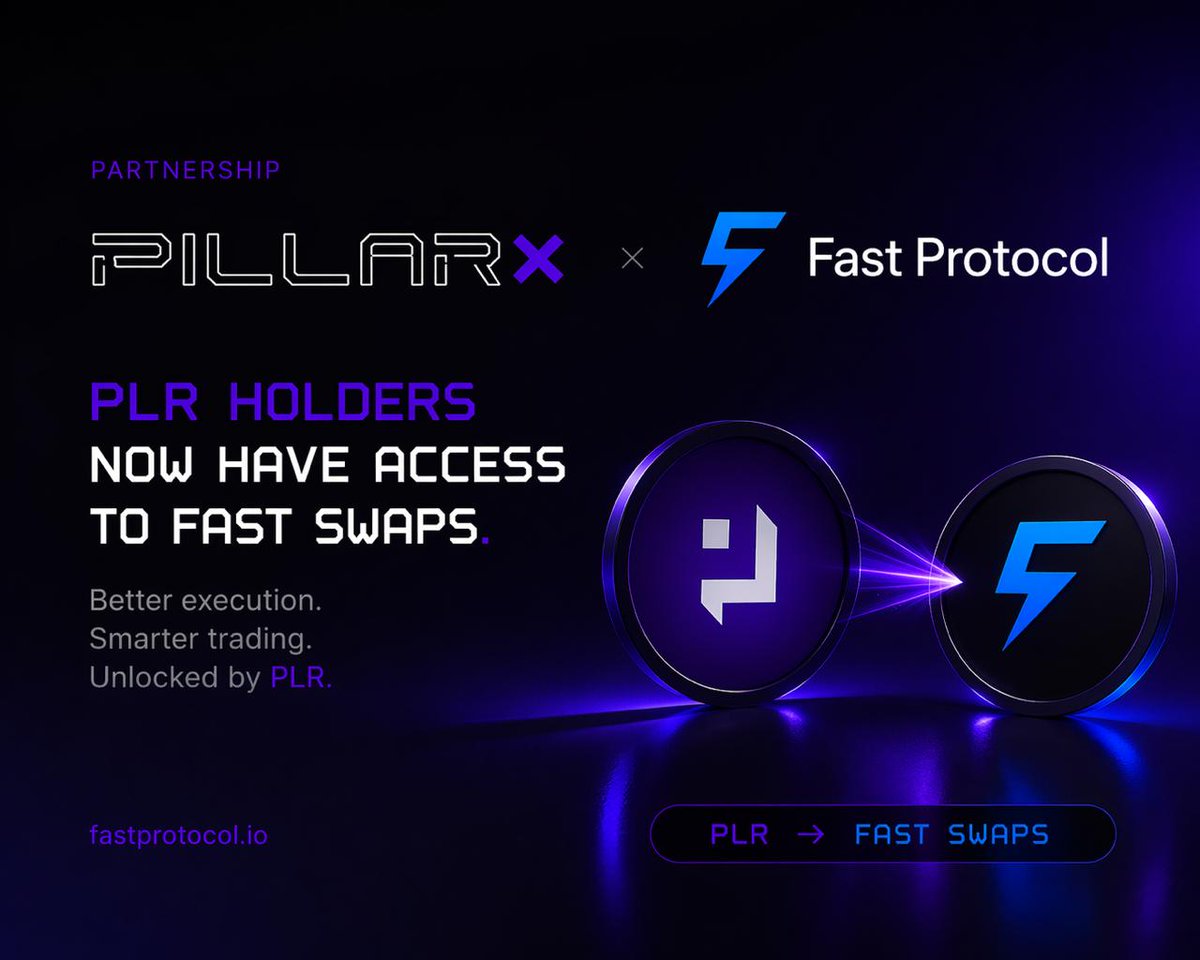
📢 @PX_Web3 users now tap into Fast execution by default.
If you hold $PLR, you’re now eligible.
No extra steps—just better swaps.
Swap faster. Capture more. Earn Miles.
⚡ fastprotocol.io/
151
37
241
2,267
michael.pillar.eth retweeted

Mar 16
🧵 THREAD: I found a coordinated supply chain attack campaign targeting developers on GitHub.
Three fake "demo" repos. All confirmed malicious. All actively stealing credentials and running remote code on developer machines.
Please RT to warn others. 👇
6
10
17
1,021
michael.pillar.eth retweeted

22 Dec 2025
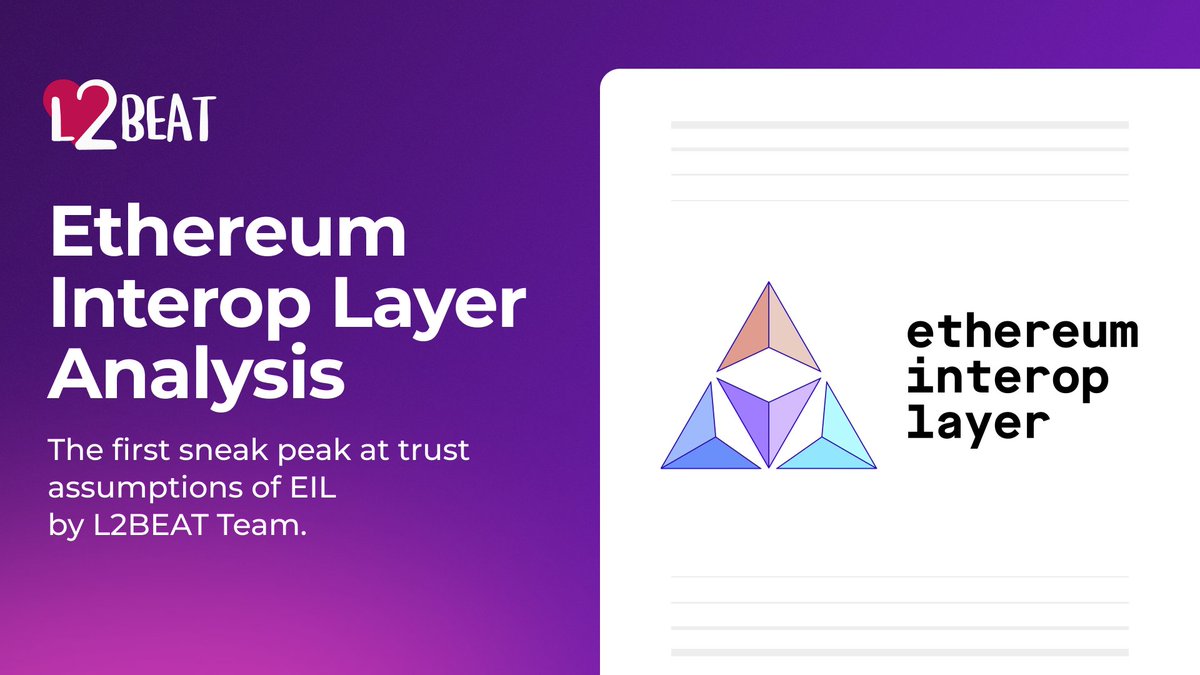
This is exactly the direction Ethereum needs.
EIL is the only the trustless interop solution that removes assumptions, not adds new ones.

At DevConnect Buenos Aires, the details of EIL @ethinteroplayer - Ethereum Interoperability Layer were unveiled.
We’ve been deep-diving interop protocols for months and our initial assessment of EIL contracts (deployed on testnets already) is following 🧵👇
3
9
20
1,150
michael.pillar.eth retweeted
22 Dec 2025
- Trustless Ethereum interoperability is possible
- UX and security don’t have to be tradeoffs
- AA cryptoeconomics can replace trusted intermediaries
At DevConnect Buenos Aires, the details of EIL @ethinteroplayer - Ethereum Interoperability Layer were unveiled.
We’ve been deep-diving interop protocols for months and our initial assessment of EIL contracts (deployed on testnets already) is following 🧵👇
3
7
23
848
michael.pillar.eth retweeted
12 Dec 2025
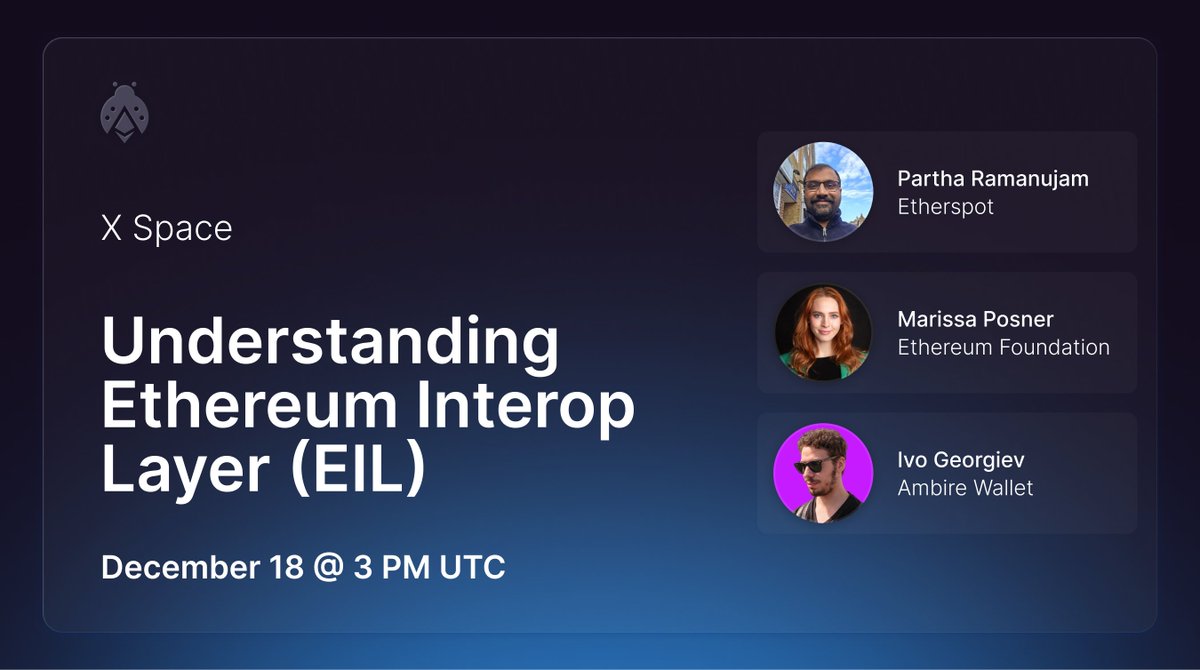
We’re hosting a Space on the Ethereum Interop Layer (EIL) next week.
Join us to unpack EIL and its role in the intent-centric future.
We’ll also break down how EOAs and EIP-7702 fit into this new landscape.
📆 Dec 18, 3 PM UTC
🔗 x.com/i/spaces/1ypKdqOjQwVGW…
3
13
30
2,318
michael.pillar.eth retweeted
9 Dec 2025
The biggest concerns with implementing EIP-7702 at the wallet level fall into four buckets:
1. Phishing and wallet drains
Most “7702 drain” fears are actually about something older and simpler: private key compromise.
If an attacker already has the EOA’s key, they can sign any transaction type. That includes a plain ETH transfer, a token transfer, or a 7702 transaction that changes the delegation.
The root failure is the same in all cases: the key was leaked or entered into a malicious app.
So, at a protocol level, 7702 does not introduce a new way to steal funds from a compromised key. It only changes what a *single* malicious transaction could do once the key is gone.
2. Vulnerabilities in delegates
This is the main 7702-specific risk.
With 7702, an EOA forwards all calls through a “delegate” (implementation contract). If that delegate has bugs or bad upgrade logic, every EOA that points to it inherits those issues.
Concrete risk areas:
> Incorrect validation logic in the delegate (for example, missing checks around who can trigger certain paths).
> Upgradeable proxies with weak admin controls, where a single compromised key can push a malicious implementation for all users.
> No safe way to revert to basic EOA behavior if a delegate is bricked.
Addressing this concern is mostly a contract-engineering problem:
> Keep delegates small and focused.
> Use strict access control and timelocks on upgrades.
> Pin implementations by address and publish bytecode so wallets can verify they are talking to the expected code.
> Expose a straightforward “reset 7702 delegation” path so users can go back to plain EOA behavior if something looks wrong.
If the delegate contracts are robust and well-controlled, 7702 does not introduce a fundamentally new kind of risk beyond what we already face with upgradeable smart wallets.
It just routes execution through code you must treat as critical.
3. Hard to set up your own infra
On its own, 7702 is “just” a transaction type and delegation mechanism.
In practice, most wallets that adopt 7702 for smart wallet UX will also want:
> 4337-style validation flows
> Batching and session logic
> Sponsored gas via paymasters
That implies running or integrating with:
> One or more bundlers per chain
> Paymaster services
> RPC and mempool infrastructure tuned for account abstraction traffic
Rolling all of this from scratch is a significant engineering and ops burden. For many teams, this is the actual blocker to shipping good 7702 UX, not the proposal itself.
This is the piece Etherspot is designed to cover:
> Ready smart account implementations compatible with 4337 and future 7702 usage
> Production bundler infrastructure
> Paymaster rails for sponsored and token-based gas
So the “hard to set up infra” concern is real, but it is not unsolved.
4. Blind delegation to third-party implementations
A separate risk is letting any 7702 delegation target be set by any dapp.
If a wallet allowed arbitrary delegation:
> A phishing site could ask the user to delegate their EOA to a malicious implementation contract.
> One wallet could try to route users into another wallet’s implementation with different assumptions and upgrade policies.
> Users could end up delegated to code their wallet does not understand or monitor.
Most serious wallet implementations avoid this by design:
> They only let users delegate to a small, audited set of implementations that the wallet ships or explicitly supports.
> They keep 7702 delegation changes inside the wallet UI, instead of exposing a generic “set delegate” flow to random dapps.
So the concern is “blind, open-ended delegation to unknown implementations.”
The mitigation is to treat delegation as a wallet-controlled operation with a restricted target set, not as something every website can request on demand.
5. Lack of educational awareness
A lot of current anxiety around 7702 comes from confusion, not from concrete failures.
Common gaps:
> Mixing early “ephemeral contract” ideas with the finalized design, which actually uses persistent delegation code on the EOA.
> Not understanding that the delegation stub is just a forwarder, and the actual logic lives in a separate contract.
> Not having clear mental models for “how do I reset this” or “what exactly does this delegate allow”.
Because there are few clear resources and even fewer production implementations, most people only see fragments from research threads, talks, or half-correct summaries.
That leads to vague worry instead of a precise risk model.
Addressing this is mainly a documentation and UX job:
> Precise technical docs for implementers aligned with the latest spec.
> Example flows showing how an EOA enters and exits delegated mode.
> UI copy that explains 7702 in simple terms (“you are updating how this address behaves; here is how to revert”).
Once those exist, most of the “7702 is dangerous” discussion can shift to the concrete points above: delegate quality and infra, rather than vague concerns about the proposal itself.
We have addressed 2 out of three above concerns.
The docs: docs.erc4337.io/userops/quic…
Example flow of 7702: youtube.com/watch?v=mCW_yT2C…
1
6
15
2,091

Algorithmic Insights are now live on PillarX 📈
Receive algorithmic event data including indicative entry, stop, and profit thresholds, all tracked automatically.
Try the full experience with a 7-day free trial!
Learn more: go.pillarx.app/p1FFYcN

4
3
17
3,033

8 Dec 2025
Let's go!
8 Dec 2025

Delighted to see @RewardyWalletKR has unveiled a EIP 7702 based Account Abstraction wallet built on top of @erc4337's open source infra powered by @etherspot. We have been working closely with the Rewardy team and happy to see this product come to life. cointelegraph.com/press-rele…
2
96
michael.pillar.eth retweeted
28 Nov 2025
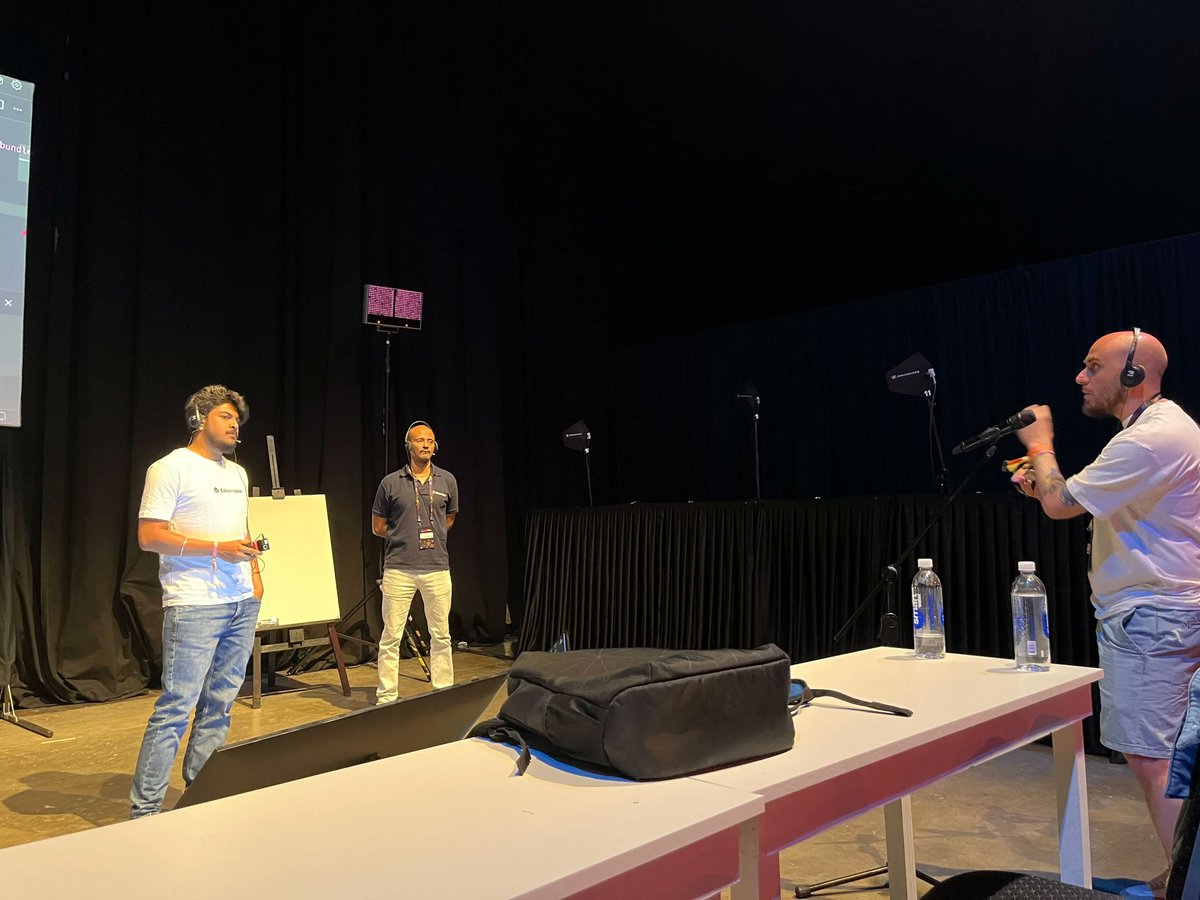
The @EFDevcon / Ethereum World’s Fair was a good checkpoint for where Account Abstraction really is today.
The event moved past “wallets and DeFi only” into consumer apps that can sit next to tradfi products in daily life, and AA showed up as a default part of that conversation instead of a side topic.
For us, it was also a stress test of AA appetite: we hosted three AA workshops, all of them had full attendance.
Key takeaways:
> The “World’s Fair” name fit. The floor was full of consumer facing apps, not just financial primitives.
> Privacy was one of the strongest themes. Agentic payments and zk based approaches came up repeatedly in talks and side events, sitting next to AA in most forward looking conversations.
> x402 and EIL were already being treated as future anchor topics. Many people framed them as two of the main areas to watch for 2026 when talking about AA, intents and cross L2 flows.
> Participants came in with context and wanted to go straight into concrete plan of actions, instead of basic explainers.
> In the DeFi and Wallet districts, projects were running real flows all week. @joinpeanut had steady queues, with people customising merch, and had a delightful payment experience, while the @aave corner stayed busy most of the week.
>In the Hardware and Wallet district, @useburner handing out physical burner cards was one of those small things people kept pulling out of their pockets to show others.
> Most teams did not ask “what is AA” any more. They asked how to connect AA to products they already have, and how to bring better UX to existing EOAs.
> @erc4337 and EIP-7702 were a central topic in those discussions. The focus was on using 7702 style infra to give EOAs smart wallet level behaviour while keeping addresses stable, and on how to roll that out safely.
> There was broad agreement that the Ethereum Foundation has listened to feedback. The work from the Founder Success team ( @binji_x and @KhanAbbas201) and the EF After Hours event were examples of higher quality support and networking.
What’s next from the Etherspot:
The practical demand is for solid 7702 infrastructure, clear paths to upgrade existing EOAs, and integration support rather than new slogans.
Our focus after Buenos Aires is to keep turning those AA pieces into dependable rails that consumer apps can plug into, so users get better UX without having to think about “Account Abstraction” at all.
Till then, adios, see you next year in Mumbai 🫡

3
3
11
655
20 Nov 2025
Our final rerun of the workshop
20 Nov 2025
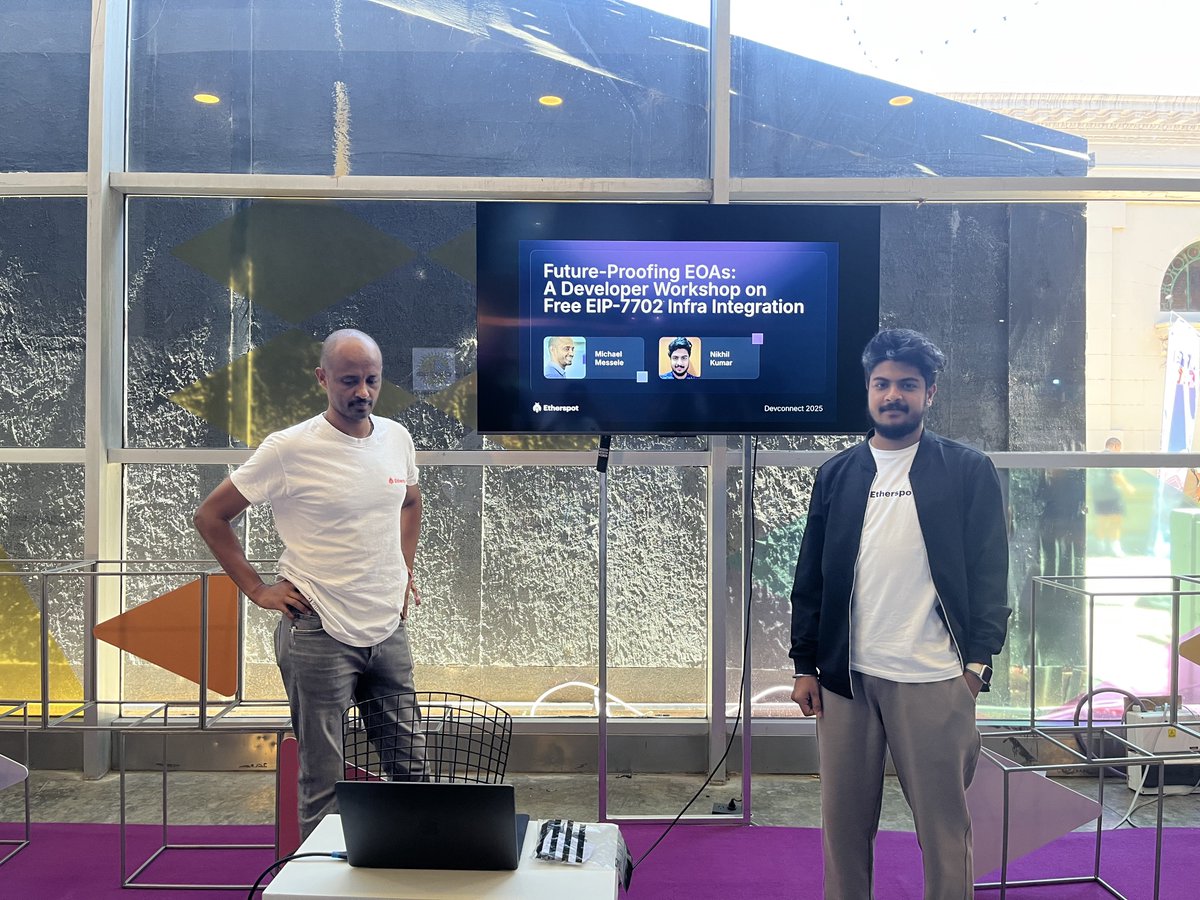
Come around to the @erc4337 AA Hub in the green pavilion of @EFDevcon at 11am. Learn more about EIP 7702 from the @etherspot team and future proof your wallets.
3
105
michael.pillar.eth retweeted

17 Nov 2025
mempool --> censorship resistance --> trustlessness
@etherspot has been at the forefront of advancing the UserOp mempool.
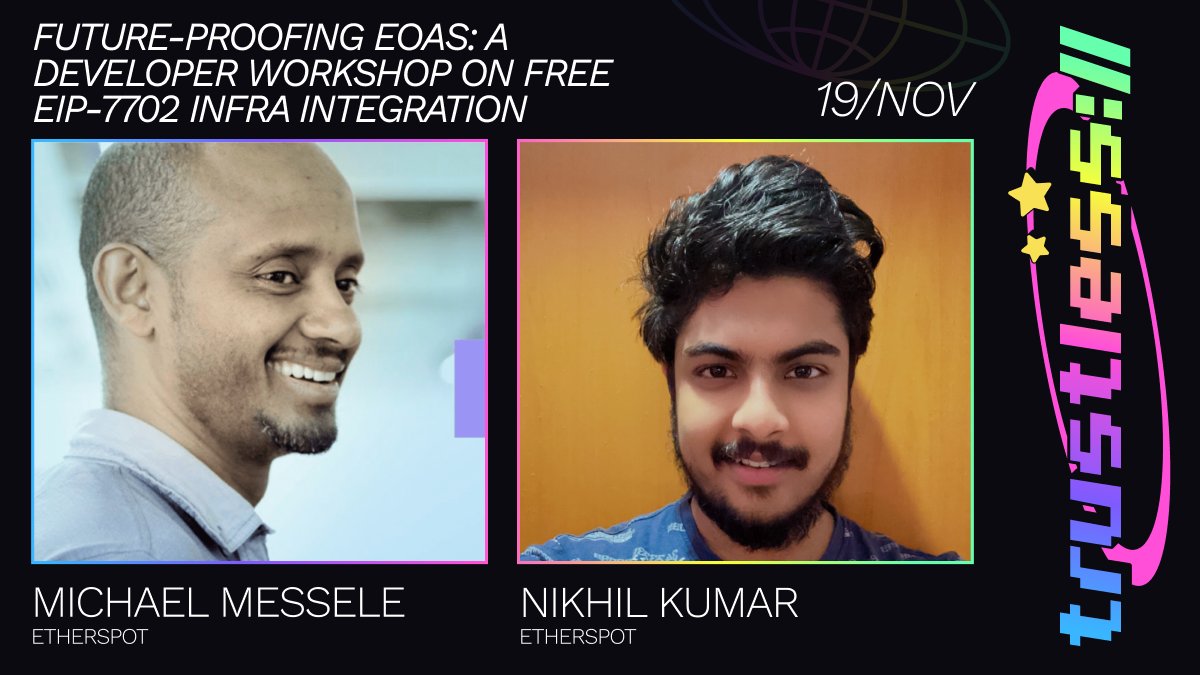
@mm319 & @Nikhil_1612 will guide you through integrating the censorship-resistant and free EIP-7702 infrastructure SDK, created with a grant from @EF_ESP
1
3
5
648
PillarX 🤝 @Coinbase Onramp
Start in fiat, get onchain in the same app.
Buying crypto shouldn’t mean multiple tabs and redirects.
With Coinbase Onramp in PillarX, you can purchase crypto directly inside the app using your preferred payment method.
This means support for 60 fiat currencies and 100 crypto assets, so new users can get started in a few steps.
This makes onboarding smoother (and faster):
> Buy crypto instantly inside PillarX
> Funds land in PillarX, then swap across chains in one action
> Fewer steps from first buy to first action
Try it now: go.pillarx.app/onramp
2
1
15
6,400
12 Nov 2025
7702 offers a great opportunity for an improved EOA user experience, but it makes total sense to do it while avoiding centralisation risk, please attend the worksop and we will go through some of the details!
12 Nov 2025

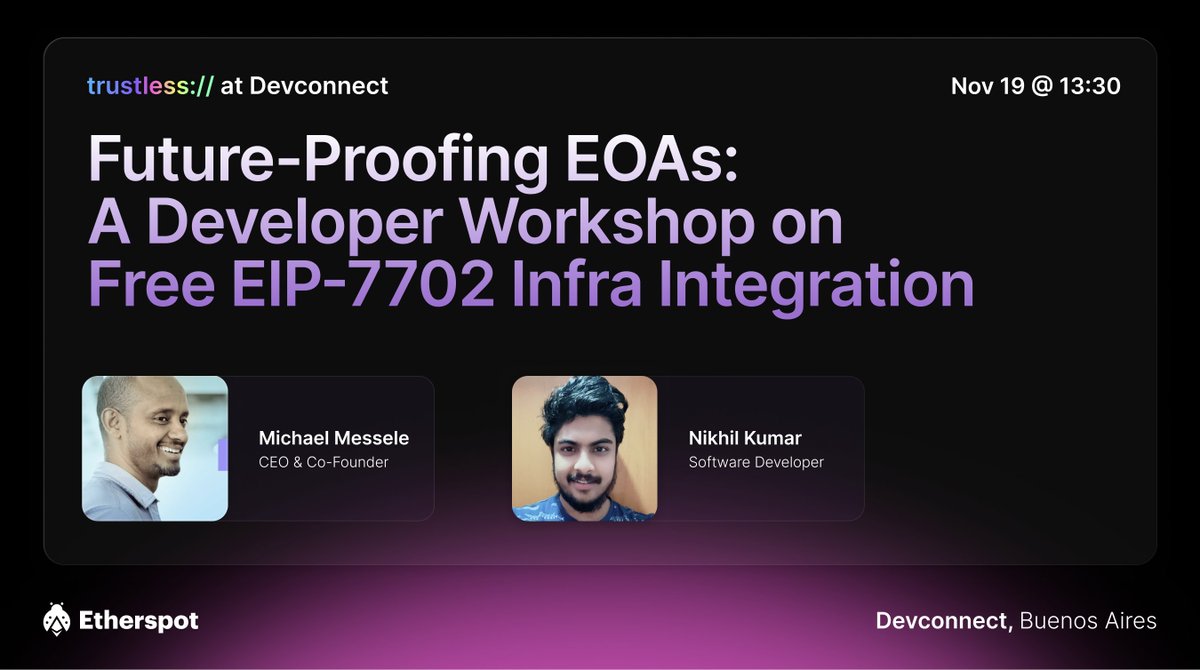
We’ll be at @trustlessconf during @EFDevconnect running a hands-on session on integrating EIP-7702 infra.
Learn how to integrate the open, censorship-resistant infra and unlock Account Abstraction for EOAs.
📆 19th Nov, 13:30
🎫 Free ticket: trustlessconference.com
1
88
michael.pillar.eth retweeted
6 Nov 2025
EIP-7702 ERC-4337 = Magic
Account Abstraction has always promised a better wallet experience on Ethereum.
Instead of dealing with seed phrases, gas, or failed approvals, users could have wallets that act more like apps: flexible, programmable, and simple to use.
Two standards make this vision possible: ERC-4337 and EIP-7702.
Each solves a different part of the problem, but together they make Account Abstraction usable for everyone.
ERC-4337 introduced the foundation.
It made it possible for wallets to exist as smart contracts rather than fixed key pairs.
These smart wallets can define their own logic, bundle multiple actions into one step, and even pay gas in tokens or have it sponsored by the app.
ERC-4337 added new roles to the system.
Bundlers collect user operations and submit them to the EntryPoint contract, which verifies and executes them.
Paymasters cover gas or handle token payments.
The result is a programmable wallet model that gives developers more control over user experience.
But it came with one big limitation: users had to switch from EOAs, the regular wallets controlled by a single private key, to new smart contract wallets.
That is where EIP-7702 comes in.
It upgrades EOAs so they can temporarily behave like smart contract wallets during a transaction.
After the transaction, they revert to normal.
Users keep their same address and private key, but can now access features like batching and token-based gas without creating a new account.
Together, ERC-4337 and EIP-7702 bridge the old and new worlds of Ethereum accounts.
ERC-4337 provides the infrastructure: the EntryPoint contract, bundlers, and paymasters, while EIP-7702 extends that logic to EOAs.
Developers can build one flow that works for both types of accounts.
Apps can bring Account Abstraction features to millions of existing wallets.
Users get smoother transactions without worrying about migrations or compatibility.
EIP-7702 and ERC-4337 are not competing approaches.
They complete each other: one defines the system, the other extends it to everyone already using Ethereum today.
4
10
1,458
3 Nov 2025
Unfortunate this compromise happened, although not caused by EIP-7702 delegation, it still remains that we have a lot to educate the public and wallet implementors on how avoid attack vectors. We will run a workshop @EFDevconnect in showcasing the free 7702 infra offered by @erc4337 & @ethereumfndn, delivered by @etherspot, join us.

Sorry this happened Tobi.
For the rest of us,
Remember, using a smart sccount (EIP 7702) with your valuable assets is not a good idea.
If you end up connecting said smart wallet to a drainer website using Pectra logic (EIP 7702 released here), you can literally get one shot for all your holdings.
Explainer from May below:
1
6
231
31 Oct 2025
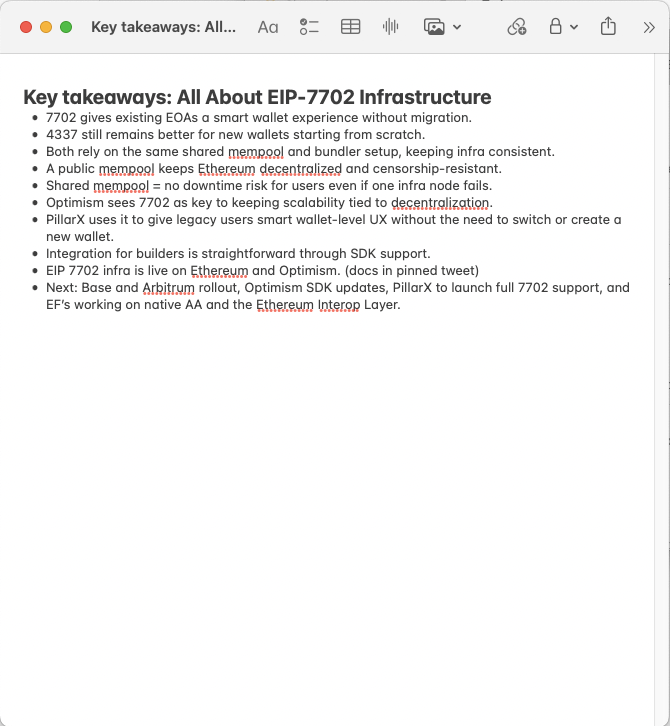
Very good insight on how EOAs can leverage most of the advantages of Smart Accounts via EIP-7702 in just a few steps!
2
51
28 Oct 2025
Redunduncy of service achieved through the use of the @erc4337 shared mempool! A UserOp is shared among many bundlers hence eliminating a single point of failure. Very useful in today's servie demands of 99.9% uptime. Obviously Censorship Resistance is achieved too!
28 Oct 2025
EIP-7702 Infrastructure is now live 🫡
Built to support Account Abstraction @erc4337 for EOAs: open, free, and censorship-resistant by using the UserOp mempool.
Live on @Ethereum and @Optimism.
Learn more and check out the dev docs👇
go.etherspot.io/mzgJmjl
3
59
25 Oct 2025
Essential to maintain a decentralised ecosystem!!
24 Oct 2025

@mm319 was telling me about this. they’ve been quietly cooking
2
166
michael.pillar.eth retweeted
24 Oct 2025
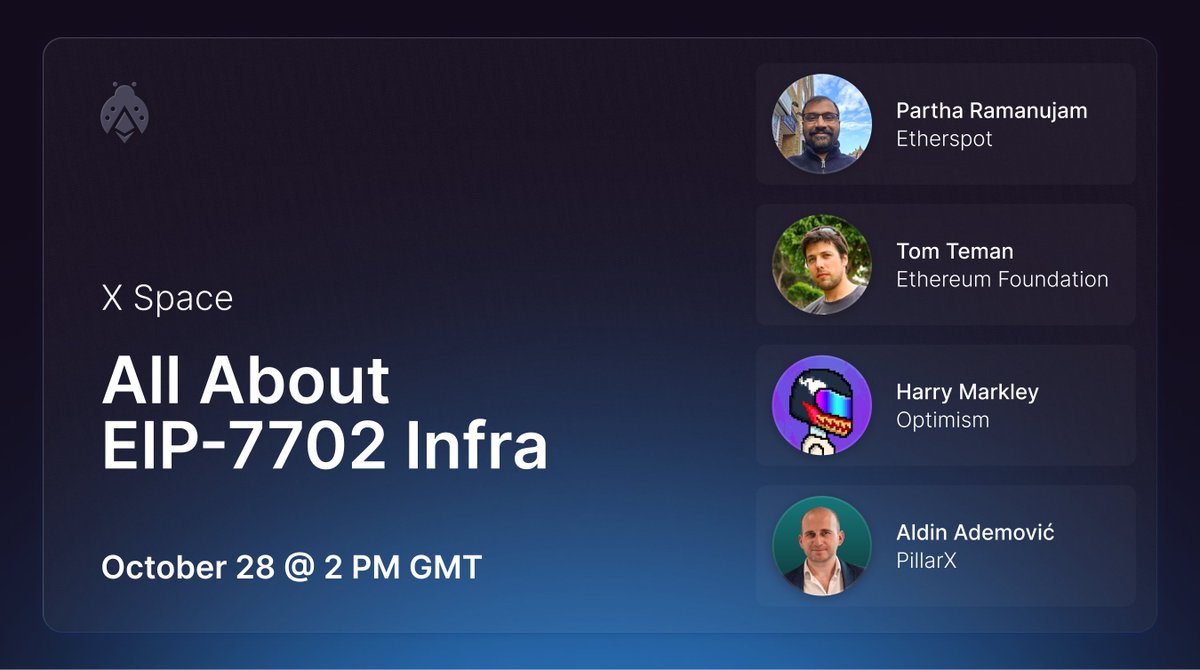
EIP-7702 is opening new opportunities for EOAs.
Join us as we dive into what the infra enables, how it works, and where it fits in the bigger Account Abstraction picture.
👉 Set a reminder now: x.com/i/spaces/1nAJEEDDWVRJL
3
10
41
38,232
22 Oct 2025
I loved the panel in that our experiences covered a large chunk of the ecosystem and offered interesting varied takes on the ecosystem at times.
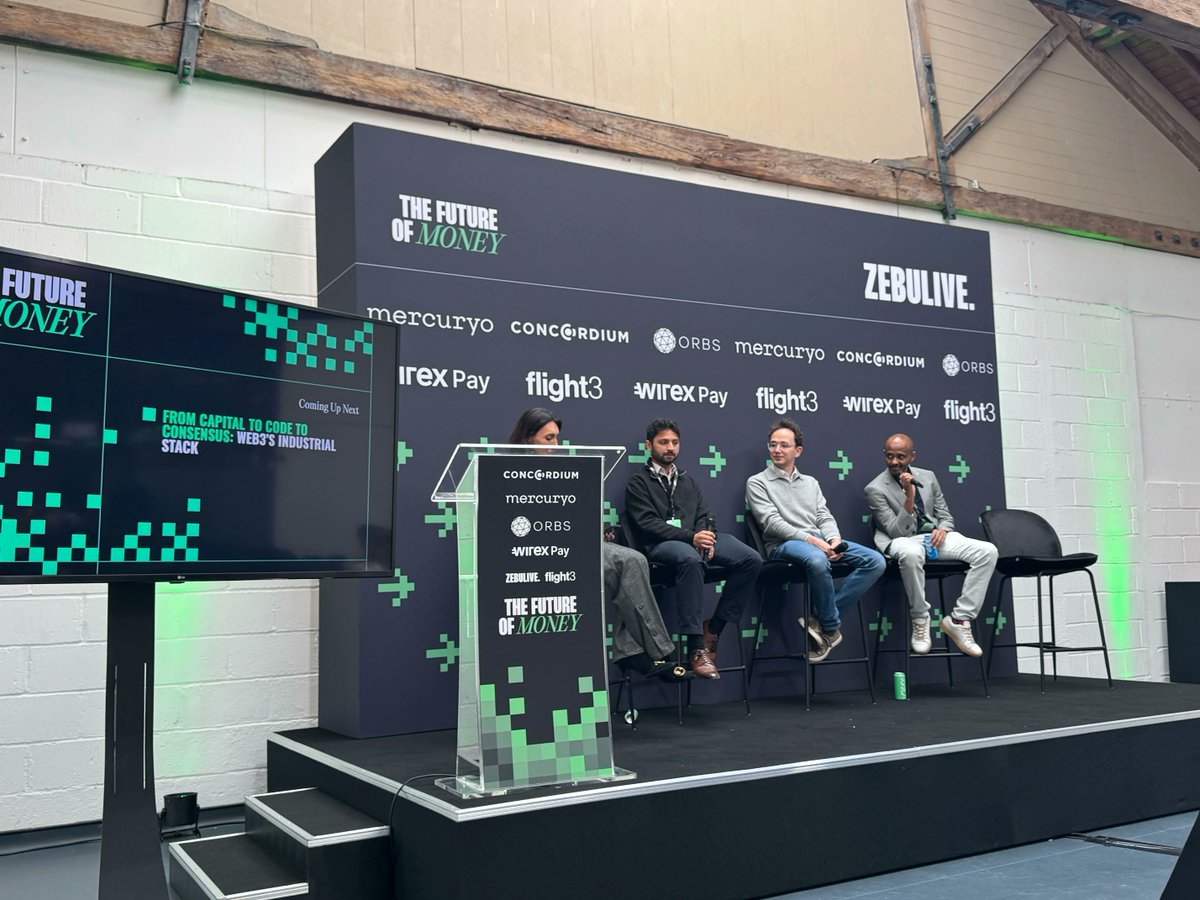
3
59