
I plant seeds of thought to be cultivated and harvested later, when you least expect 🌱🚜🍓 / sense-make / keep the dunbar # low / watching modernity recede
Joined October 2020
- Tweets 23,380
- Following 1,214
- Followers 820
- Likes 60,883
1,676 Photos and videos

Pinned Tweet

4 Mar 2024
“the line to be loved wraps around the corner
the line to love and be attentive is ready for you to show up” -pvk
26 Feb 2024

@PaulVanderKlay so much in this Chad and Neal
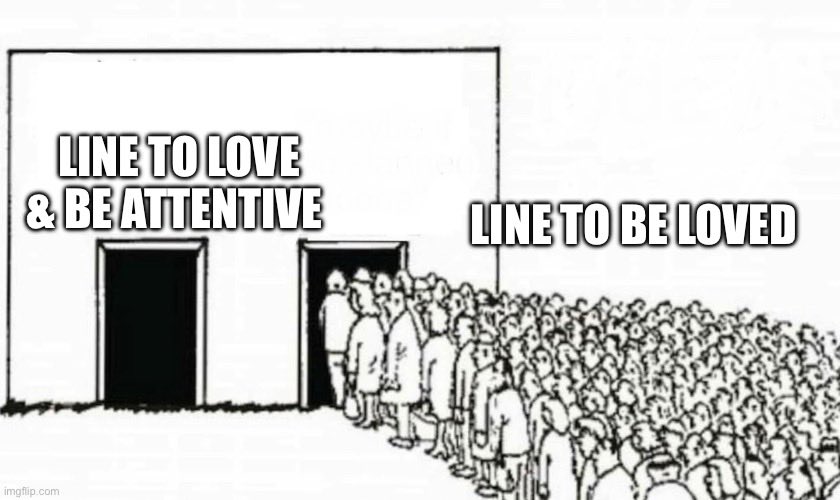
ALT The line to be loved wraps around the corner. The line to love and be attentive is waiting for you
5
5
42
5,460
MNW retweeted

May 7
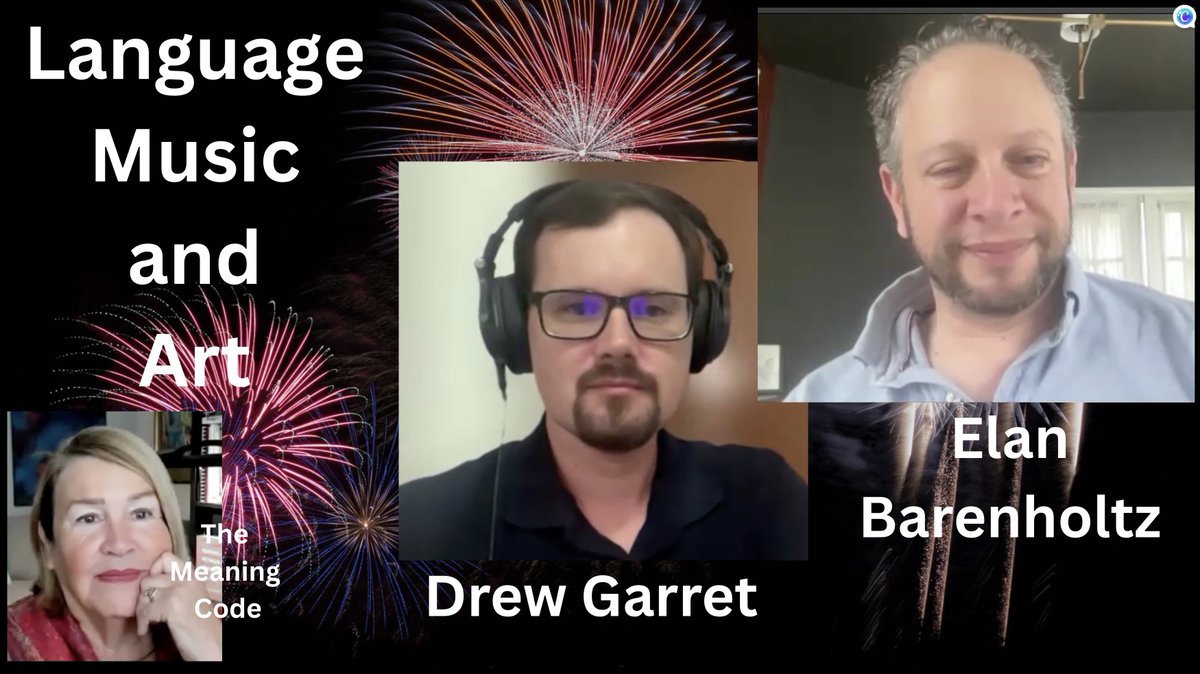
Help me get this to a wider audience. This is the first in a series of episodes with Elan Barenholtz @ebarenholtz re LLM's and Language. The second one will be with Matt Segall @ThouArtThat in June. Drew @MusicaApologia joins for this one to bring in the music perspective. youtu.be/LYDA3QCVs6Q
2
12
23
1,413
MNW retweeted

May 5
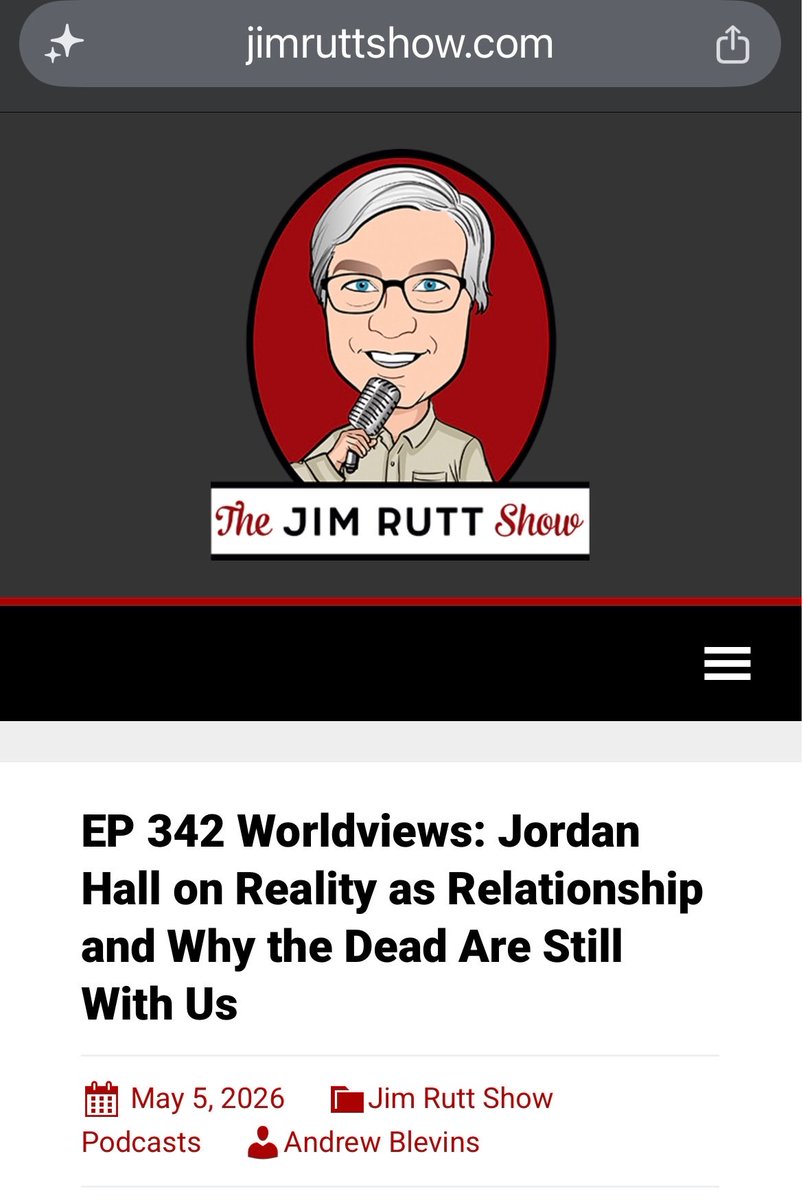
My most personal conversation and in many ways the most meaningful.
8
8
87
8,345
MNW retweeted

Apr 28
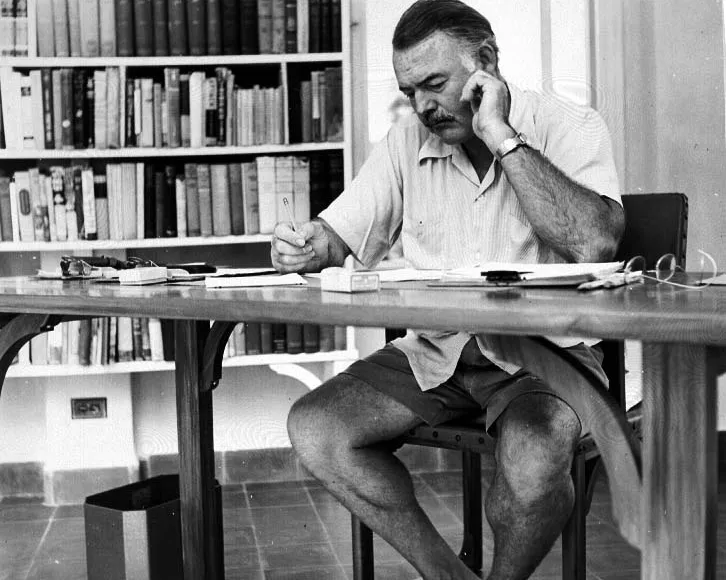
There's a phenomenon mentioned by @dwpasulka, an oral tradition amongst top-level scientists working on sensitive domains in which important information is not written down. She says they call it "pencil's up". Rather than share it indiscriminately through papers or coded journals, it is instead held in the person, or embodied.
Living traditions possess information that is participatory, where info is transferred primarily through experience. A person to person transfer.
Many such cases.
In our over-reliance on "the written record" we are often blind to whole swathes of knowledge & wisdom.
5
3
28
1,549
MNW retweeted

Mar 1
I have seen another two families/friends get torn apart by the discourse of the past 36 hours alone. The toll that the past 10 years has inflicted has been enormous, accentuated and accelerated by Covid. It's hard to watch this Satanic mechanism just continue to chew people and relationships up and spit them out.
Whatever you think of what's going on: for the love of God, don't let it split apart your family; don't allow it to ruin a relationship with a long-time friend; don't let it rupture your company.
Stay vigilant, and learn how to spot a bad actor.
9
18
220
31,571
MNW retweeted

Mar 1
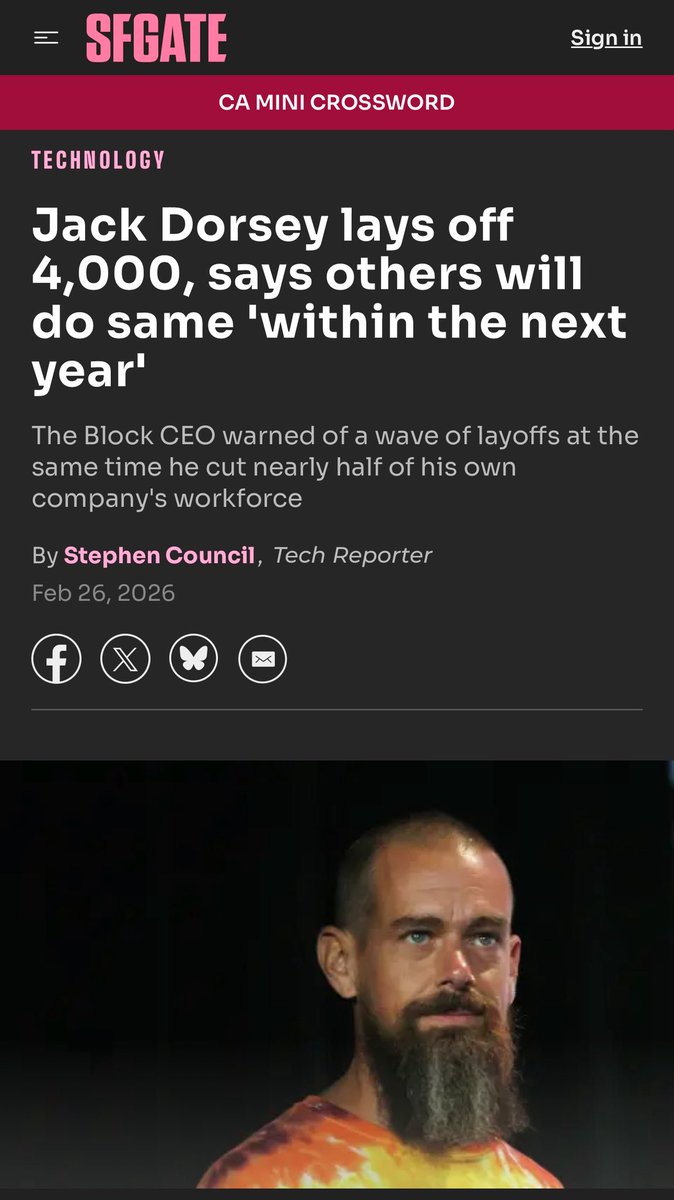
I just finished a Symposium for 18 former Block employees. It was a private session I did for $0 as a request by a good friend that was laid off at the company.
It was a very emotional event as I had each person. Give a 5 minutes of fear they feel they now face.
I presented the materials from my 5000 Days Series (ReadMultiplex.com) of which they all read and new articles I have not yet published.
The theme is this was a liberation and they have an early start to build a life that will fit the AI and Robotics world we have in the 5000 days Interregnum.
This single reframe was enough to help improve the plans they will make, but we dove into becoming a leader and of service to some of the other 4000 who are now jobless.
What started out as a very emotional event ended as a transcendent moment that is momentum to a new life. They are free and they know it.
It is my goal to perhaps do this more and perhaps hold an X Spaces to address this. Especially for the recently “downsized” by AI folks.
I will gauge interest and hope I can be of service.
We all face this future and no job will be spared. None.
Feb 27

You folks know I have been perhaps the only one that is preparing you for the 5000 Days Of The End Of Work at ReadMultiplex.com.
YOU knew before others this was coming and you took the steps to be mentally prepared FIRST.
Last night I counseled 5 former Block employees laid off. I will hold a symposium for a cohort of some of the 4000 this weekend. They will contact folks that have the right mindset to hear what I have to say and I will help them form guilds. They have a great exit package and I recommend NONE of them go into “tech” or work for any large company, perhaps maybe SpaceX.
It is my hope to record this and offer it for all to hear.
More soon.
53
55
468
58,589
Jan 30
Consider @Phlebas_
Jan 30
How a 1987 book just may be the blueprint for the future.
Consider Phlebas by Iain M. Banks stands apart: it's the Culture at its most vulnerable, viewed through hostility cast in to the future were abundance is unbounded.
Let's see the possible future:
readmultiplex.com/2026/01/30…
1
2
958
MNW retweeted

Jan 30
The online trend of young men reading classic works of literature and posting about it continues.
@ChrisKindaReads was the first I saw do it, but it is spreading.
Don’t blackpill on the next generation.
1,030
5,219
44,381
1,763,263
Jan 16
one day vna will be someone else but really GG

66
MNW retweeted

8 Dec 2023
THIS 2007 blog, Naval Ravikant says, contains the most valuable writing advice in the world...
The Day You Became A Better Writer by Scott Adams (@ScottAdamsSays):
I went from being a bad writer to a good writer after taking a one-day course in “business writing.” I couldn’t believe how simple it was. I’ll tell you the main tricks here so you don’t have to waste a day in class.
Business writing is about clarity and persuasion. The main technique is keeping things simple. Simple writing is persuasive. A good argument in five sentences will sway more people than a brilliant argument in a hundred sentences. Don’t fight it.
Simple means getting rid of extra words. Don’t write, “He was very happy” when you can write “He was happy.” You think the word “very” adds something. It doesn’t. Prune your sentences.
Humor writing is a lot like business writing. It needs to be simple. The main difference is in the choice of words. For humor, don’t say “drink” when you can say “swill.”
Your first sentence needs to grab the reader. Go back and read my first sentence to this post. I rewrote it a dozen times. It makes you curious. That’s the key.
Write short sentences. Avoid putting multiple thoughts in one sentence. Readers aren’t as smart as you’d think.
Learn how brains organize ideas. Readers comprehend “the boy hit the ball” quicker than “the ball was hit by the boy.” Both sentences mean the same, but it’s easier to imagine the object (the boy) before the action (the hitting). All brains work that way. (Notice I didn’t say, “That is the way all brains work”?)
That’s it. You just learned 80% of the rules of good writing. You’re welcome.
12
84
6,515
MNW retweeted

7 Oct 2025
Why do we build such ugly stuff these days?
Look around: buildings, benches, and doors increasingly feel rushed and disposable. Somewhere along the way, we traded beauty for efficiency and craft for convenience.
And so, I've produced the film below.
To make it, I’ve partnered with Sheehan Quirke (@culturaltutor). He’s the host. I’m the producer. This is our shared vision.
The series is called "The Modern World." In each episode, we’re going to look at the past to better understand who we are today, what we value, and what we believe about the good life. You can think of the series as a mix between Kenneth Clark’s Civilization series, which aired on the BBC in 1969, and Anthony Bourdain’s Parts Unknown.
People love to celebrate the progress of modernity, and indeed there are things to celebrate, but the decline in our built environment is a grave exception. A few months ago, I was looking for an apartment in New York when a real estate agent told me: “If you want a place with character, you should only look at places built before World War II.” The more I looked, the more I saw how all the new builds look like a hospital waiting room. Gone are the bricks, the cornices, and the rounded windows that make the older neighborhoods in New York so charming (and desired).
The word “beautiful” gets thrown around a lot these days, but this isn’t just about the decline in beauty. It’s about the decline in charm, character, and interestingness — the very things that raise our spirits and splash us with delight in a world that can be cruel and unforgiving.
There are exceptions, of course, but the general trend is clear: our aesthetic decline shows up all over the place — cars, signage, train stations, train tickets, benches, bollards, and lamp posts have all lost their luster.
Is this really the world we want to live in?
Aesthetics are a window into the soul of a culture. If you want to understand a society, don’t listen to what it says about itself. Look at what it creates. To walk around a city is to see a series of competing worldviews with contrasting beliefs about how we should live and what a good life looks like.
For this pilot episode, we traveled to London to compare the modern world to the Victorian period of 19th century England. The differences were obvious. For the Victorian-era English, ornamentation was a way to show off technological progress. For us, progress looks sleek and minimal and efficient.
The difference in values is exemplified by Crossness Pumping Station, a sewage facility built in the 19th century to process humanity’s least glamorous export. And yet, it’s prettier than most of the churches we build today. It’s prettier because the Victorians believed that ordinary objects could (and should) be beautiful.
Right next to Crossness Pumping Station is the modern sewage facility that was built to replace it, which reflects a different set of values: convenience and efficiency. These days, we want things to do their job. Functionality is the priority. Charm and delight are generally afterthoughts.
Our world could be much more delightful, if only we wanted it that way.
My point isn’t that everything needs to look like Versailles or that we should put chandeliers in Dunkin’ Donuts. That’d be ridiculous. But beauty, charm, and interestingness are worth pursuing. Sure, it’s not the cheapest or fastest way to do things, but I submit that the material costs aren’t what's holding us back. After all, we have the wealthiest society the world has ever seen, and things are still getting uglier.
Why did this happen? What should we do about it? What do these changes reveal about our modern world? That’s what this series is all about.
(And you can watch the pilot episode below).
7 Oct 2025

I’ve made a short film.
Look at the things around you: doors, bins, staircases, furniture, railings, doorhandles, windows.
Do you like how they look, or not?
Modern design has become boring, but it doesn’t have to be this way.
The word “beautiful” is overused. We don’t need “beautiful” lamps, bus stops, and water fountains – we just need lamps, bus stops, and water fountains that are interesting, that actually mean something.
Or, at the very least, not boring.
Because the aesthetics of architecture and urban design aren’t just a bonus; they totally change how we think, feel, and behave.
Boring environments make us more stressed and less productive; they erode our sense of community; they make us sadder, less trusting, and lonelier.
A boring world is one where we spend even more time online and where our addictions are even harder to battle.
The Problem
There is global, widespread dissatisfaction with how the world looks. In this film, and the series it will lead to, we want to investigate that feeling and give it a voice.
The point isn’t that we should return to the past or get rid of modernism. It’s about learning from the past in order to improve the present, and about giving the public what they very clearly want, which isn’t the eradication of modernism but the co-existence of modernism AND traditionalism.
Just look where tourists go, where they take their photos, and that tells you everything you need to know about what most people find interesting or beautiful.
And look at where people go on holiday. It’s always to cities filled with old architecture and design, with churches and mosques and palaces, with charming little alleyways and stone staircases and wrought-iron railings.
Of the world’s fifty most visited buildings, only four were made in the 20th century, and they’re all museums or memorials.
There’s a reason why posts about this go viral online all the time. Regardless of why the change happened, it is clearly the case that we no longer make things how we used to.
People are rightly confused by the fact that old lamp posts (to take the example we focus on in the film) are usually so pretty, while modern ones are usually so boring.
Some people say this is just an example of survivorship bias… and they’re mostly correct. But that’s the whole point!
Saying old buildings are usually prettier than modern buildings is not to say that architecture used to be better, or that the past was better.
It is simply to say that certain kinds of buildings, because they have been preserved, are good examples of what people like most.
In which case... shouldn't we try to design at least some buildings in a way that we know people like?
A Unifying Cause
Everybody, from all sides of the political spectrum and all backgrounds, stands to benefit from a world that is designed more thoughtfully and imaginatively. The world could be such a colourful, meaningful, and thrilling place!
So this isn’t about left versus right or conservatism versus progressivism; it’s about making our world a more interesting and meaningful place to live in. This should be a unifying cause, because everybody loses out when our homes and cities are badly designed.
I want this film to unite people who think they’re on opposite sides, and to create a consensus that we need to change our approach to how we design our buildings and the objects – benches, bus stops, bins, lamp posts, aircon units – that fill our cities.
The Importance of Details
We are incredibly rich and have a sprawling choice of shows to stream, phones to buy, or shoes to wear… but everything feels more and more generic all the time.
If you want to understand a society, don’t listen to what it says about itself – look at what it creates. You can learn everything about the Victorians – the good and the bad – just by looking at their lamp posts.
And what do the ordinary details of the modern world say about us?
That we are technologically advanced, very efficient… and care more about making money, about making things as quickly and cheaply as possible, than making our world an enjoyable place to actually live in.
It’s important to learn about why and how things have changed, but that’s for another time. The first step is establishing that the public aren’t happy with modern architecture and design, and that something needs to be done.
But what we need isn’t a total revival of so-called ‘traditionalism’; the truth is that traditionalism and modernism can (and should) co-exist.
The trouble right now is that we only have one, and that people are tired of it.
The Power of Noticing
But this film (and the series it will, all being well, lead to) is about more than the specific argument it presents. Above all it’s about a way of seeing the world around us, a way of noticing and thinking.
“How you do anything is how you do everything.” That is probably true, and it also applies to whole societies, not just individuals; a single doorbell implies everything else about the whole socio-economic and political system that gave rise to its creation.
And, beyond being merely “useful”, the ability to notice details makes the world a richer place to live in, and life a richer thing to lead. This is what the film is about, more than anything: the power and joy of noticing.
A Bigger Project
This short film is just the beginning. We want to make a full series about the history of art and architecture, both for their own sake and also to see what we can learn about life in the twenty-first century and how to improve it. To keep updated you can join our email list over at our website, linked in the reply below.
Final Words
You can watch the film here on X, or over on YouTube, also linked in the reply below.
So… this is where the dream begins, the dream of a new series and the dream of a more charming, more interesting, more meaningful modern world.
Spread the word.
66
101
998
334,421
24 Sep 2025
Virtually not alone. Any flotilla members want to break through
24 Sep 2025

New Real America tonight at 7pm ET/6pm CT. We are discussing FAITH.
2
274
24 Sep 2025
mama Peterson hosts genz chat in the modern day set, cell etc
@PaulVanderKlay @kalezelden @chrbaxter_yt @StrangeTheology
23 Sep 2025

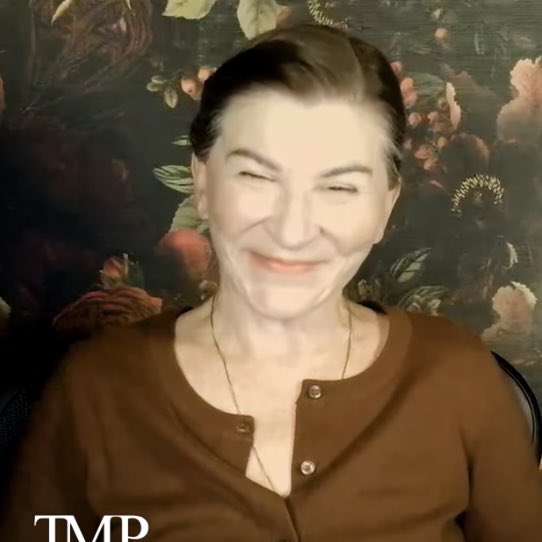
so grateful for my discussion with @Tammy1Peterson! i reflected on what it was like to adopt social media as a child, why gen z feminists are at war with each other, the loss of songs and movies about love, and much, much more.

2
214
23 Sep 2025
metagelical moment that no one could’ve crafted
singular revival event, part of asynch response to a decision to end life
people need embodied irl to follow up on surge of interest
small church pastor slowly (not) built up distributed online flotilla for 8 yr @PaulVanderKlay
22 Sep 2025

I don’t think people understand that this was just another Tuesday for Big Eva and @TPUSA as far as event planning goes, as well as how this is evangelical liturgy - instead of 4 songs and a Ted Talk, is was 20 songs and 10 Ted Talks. They are very very good at this. Passion conferences did 60,000 college students in a three day conference in 2012 in downtown Atlanta.
1
5
458
15 Sep 2025
7M YT creator shares his LDS history. Have not watched the first two parts youtu.be/23owsv-R0fs?si=bHYj… @PaulVanderKlay
120
15 Sep 2025
🎂
15 Sep 2025

I was on the road
Today's my birthday :)
5
329
15 Sep 2025
Estuary idea via today’s Scott Adams
14 Sep 2025

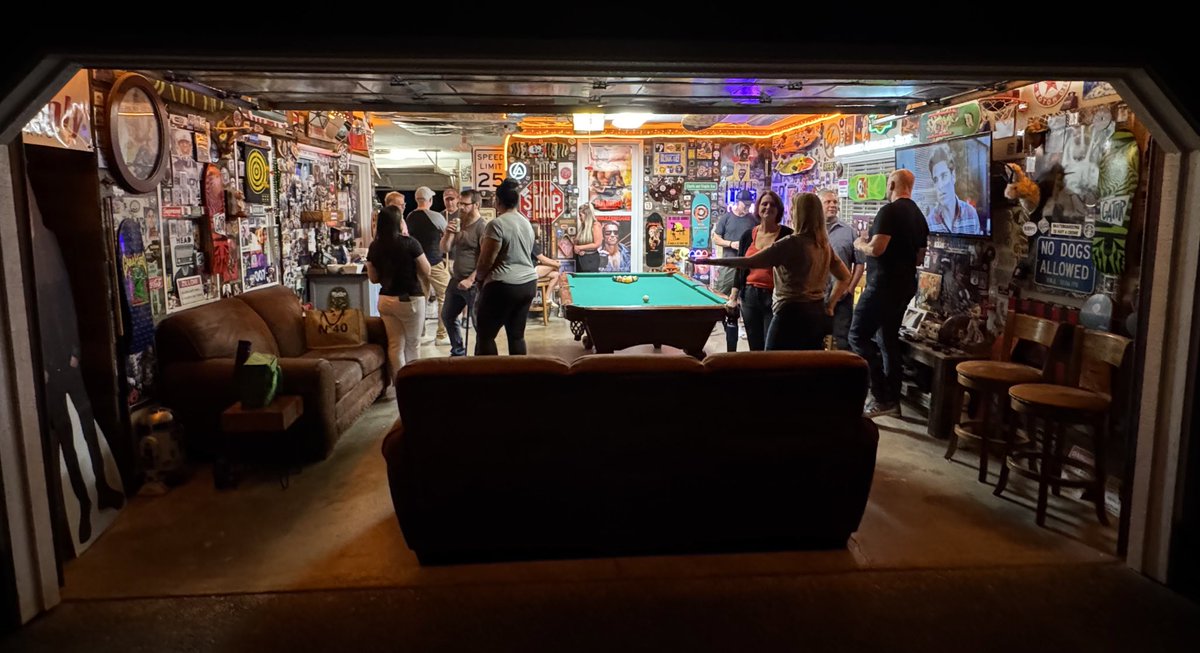
Had some people over last night to play pool in my garage. One of the best things I ever did was create a space that’s easy to invite people to. I’ve been really intentional these past few years on building relationships. I want to find more people who say yes to hanging out.
2
156
15 Sep 2025
We are live @PaulVanderKlay
15 Sep 2025
Going live in thirty minutes with this crew, head to YouTube for the VNA
Link below

110
15 Sep 2025
How does this map to the corner / estuary
14 Sep 2025

128
14 Sep 2025
The crews previous chats and embodied relationships were preparing for this moment @chrbaxter_yt @AphraelP @PresidentFoxman @Landbeorht
2
4
449
14 Sep 2025
you are not alone in this virtual journey, having embodied impact
13 Sep 2025

Experiment with dialogue in mass. This is a cultural shift many are not prepared for.
cc.
@PaulVanderKlay @ThePersonPod
1
135