
Cofounder & CTO @ Lekondo - a16z SR005
Joined August 2021
- Tweets 45
- Following 94
- Followers 90
- Likes 186
13 Photos and videos

Mitchell Overfield retweeted

Jun 10
Patent systems are first-to-file. It's produced a quiet two-tier system: well-funded companies file in 48 hours. Everyone else waits weeks.
Today we're announcing @fearn_ai's $5.5M seed to end that gap. 🧵
45
28
211
1,347,864

May 29
Angela is solving cutting edge AI problems, can’t recommend this team enough!!

we are hiring!
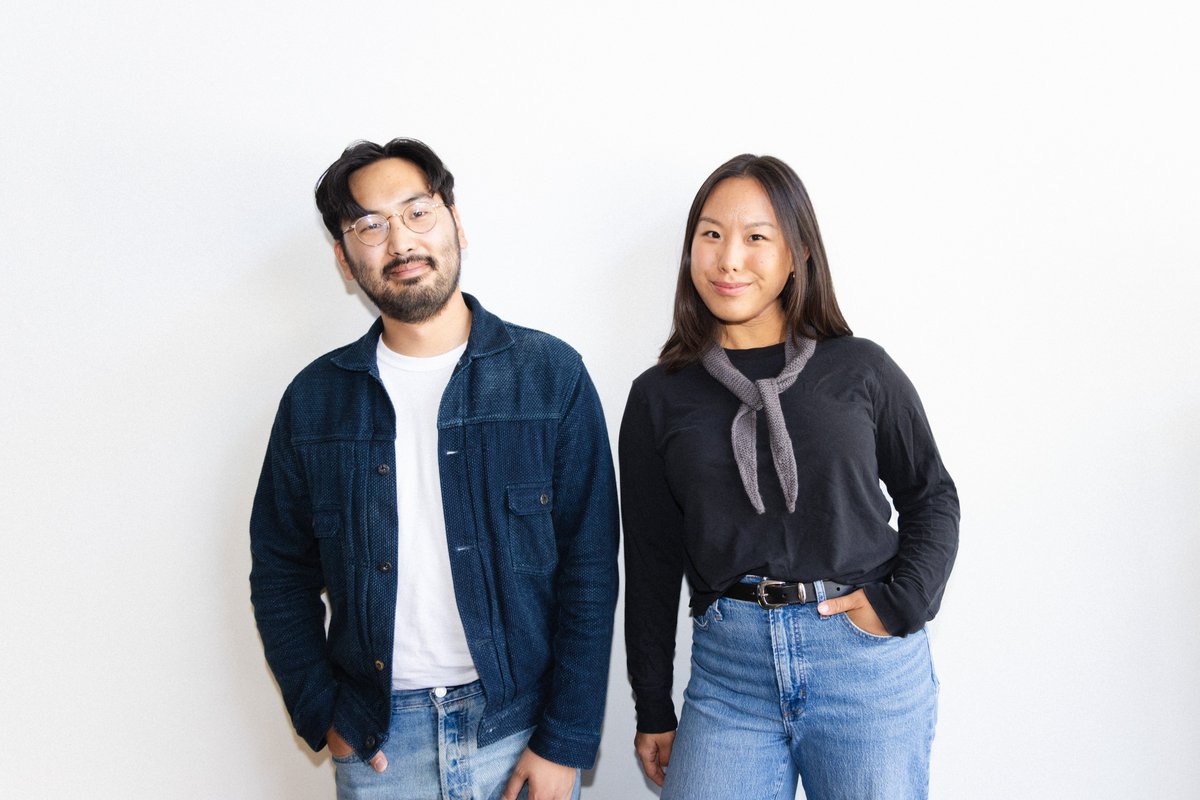
we're on a mission to help inventors protect their IP, which means building reliable AI systems people can actually trust. we're looking for engineers and researchers ready for a fast-paced environment where you'll work across the entire stack, take on problems you've never touched before, and learn fast by getting comfortable being uncomfortable.
if that sounds like your kind of challenge, come build with us 👇
1
9
809
Mitchell Overfield retweeted

May 26
Today, we're promoting Ashraf Alkarmi to co-CEO of @Dropbox. Ashraf and I will jointly lead the company, and after a transition period, I'll move into the role of executive chairman and Ashraf will be sole CEO.
Ashraf has transformed our core business since joining — the business has gotten stronger every quarter under his leadership, and he's the leader I trust to run this company.
What’s next for me: my focus right now is making sure Dropbox is in the strongest possible shape. But knowing myself, it won't be long before I'm getting credit card alerts for my Cursor token spend.
109
36
1,201
291,402

Mitchell Overfield retweeted

May 19
this app is a true fashion enthusiast’s dream, such a rare blend to see app developers really get culture and taste
May 19

70,000 members. 162 countries. 4 months.
Introducing Lekondo
THE THIRD SPACE FOR FASHION 🌎
Now available on iOS and Android
2
91
2,032
88,850
May 19
I LOVE hard engineering problems at scale. Growth usually comes at the cost of performance: more content, slower app. We've managed the opposite. Our content is exploding and the app keeps getting faster. Lekondo is a labor of love.
May 19
70,000 members. 162 countries. 4 months.
Introducing Lekondo
THE THIRD SPACE FOR FASHION 🌎
Now available on iOS and Android
4
110
Mitchell Overfield retweeted

19 Nov 2025
You start a startup.
That’s what people say. “Start a startup.” Like it’s a kettle. Like it has an on switch.
But it didn’t feel like starting anything. It felt like quitting. You and @moverware quit your jobs in April, and the next day you just… sat there. Looking at each other like, okay, what now.
No ribbon. No toast. Just a Google Doc called tldr.docx, a WeWork that smelled like kombucha, and an understanding that shopping online sucked.
You kept saying ‘ownership,’ which sounded impressive, but you mostly meant the way people post fit-pics on Discord and comment things like “fire” or “put the fries in the bag bro” and then move on. But not you. You had questions.
Like: what happens to the clothes after the photo?
And: what if people could go on aesthetic rabbitholes the same way they did with music?
You said these things out loud and no one stopped you. Mitchell sat on a camp chair because you didn’t have a second normal one. You worked 14-hour days from an overbooked WeWork, debating if beige hashtag#F5F5DC was more “trustworthy” than hashtag#F8F8FF. Mitchell said the second one had “too much trauma.” You agreed, immediately.
You called your mom and tried to explain it. She asked if you were eating enough. You lied.
You started telling friends that Lekondo was a “digital record of aesthetic memory,” but all they wanted to know was which pharmacy had Adderall in stock.
You said you didn’t know. Two weeks later, you updated them that you're moving to Verci, and your WeWork debt was going to collections.
Crazy, but not surprising—like the museum you’re making that no one asked for. A museum of yourself. Of friends posting fitpics. Of the way someone looked on a Tuesday in September when they decided they wanted to be seen, even if no one saw them.
You posted your first fitpic on Reddit. One comment said it looked like you were dressing for the weather report. Another said, "yo, this is fire.” You printed that one. Taped it to the wall. Three hours later, Reddit banned you for spam.
You thought about Tarkovsky again. You always do. Solaris. A movie about how our connections might just be mirrors of ourselves. You wondered if that’s what you were building: a social network and a longing machine.
You’re trying to name a feeling. That clothes are a proxy for connecting. That taste has the highest authority on reality. That maybe, if people uploaded the right fit at the right time with the right metadata, you could—what?
Re-invent retention?
Anyway, that’s the company. You haven’t figured out monetization, but you have cursor and sonnet, a few thousand users, and a database that reveals itself like the burning bush. And you wake up every day to build a thing that doesn’t quite exist.
You tell yourself you’ll do anything to make it work.
Because the best things in your life all started as maybes.
What is art if not the lie that reveals the truth?
--
If this story resonated, follow our journey here → yengt.substack.com
1
7
259
Mitchell Overfield retweeted
27 Oct 2025
THE GRAMMAR OF FASHION
TLDR: AI stonks go up; taste stonks must also go up. If not P(doom)
LD;TR
About six months ago, @mover333 and I started Lekondo. We wanted to think about fashion less through the lens of consumption and more through the lens of play. What happens when you stop shopping and start thinking with clothes? When fashion becomes less about products and more about propositions?
For the past nine weeks, we at Lekondo have been running the Aura Awards. It began as a small experiment in how our users express authenticity through clothing. Every week, we introduced a theme — Schrödinger’s Cat, Orpheus & Eurydice, Reverie — and watched how our communities engaged through ideas. The results were beautiful, but also revealing. People could tell when something “worked.” They just couldn’t explain why.
That gap between knowing and naming became the center of our work. When you can’t describe what you see, you start relying on proxies. Price. Brand. Algorithmic popularity. Over time, those proxies replace perception itself. Taste becomes something you buy or inherit, not something you practice.
That absence of language became the real problem we were chasing.
That insight brought us back to Wittgenstein’s Tractatus Logico-Philosophicus: a century-old book about the limits of language. Ludwig Wittgenstein was an Austrian philosopher who tried to map the limits of what language can say. The Tractatus, his only book published in his lifetime, is a series of numbered propositions that build toward a surgical idea: that if we could understand how words picture the world, we might finally see the limits of what can be thought or said.
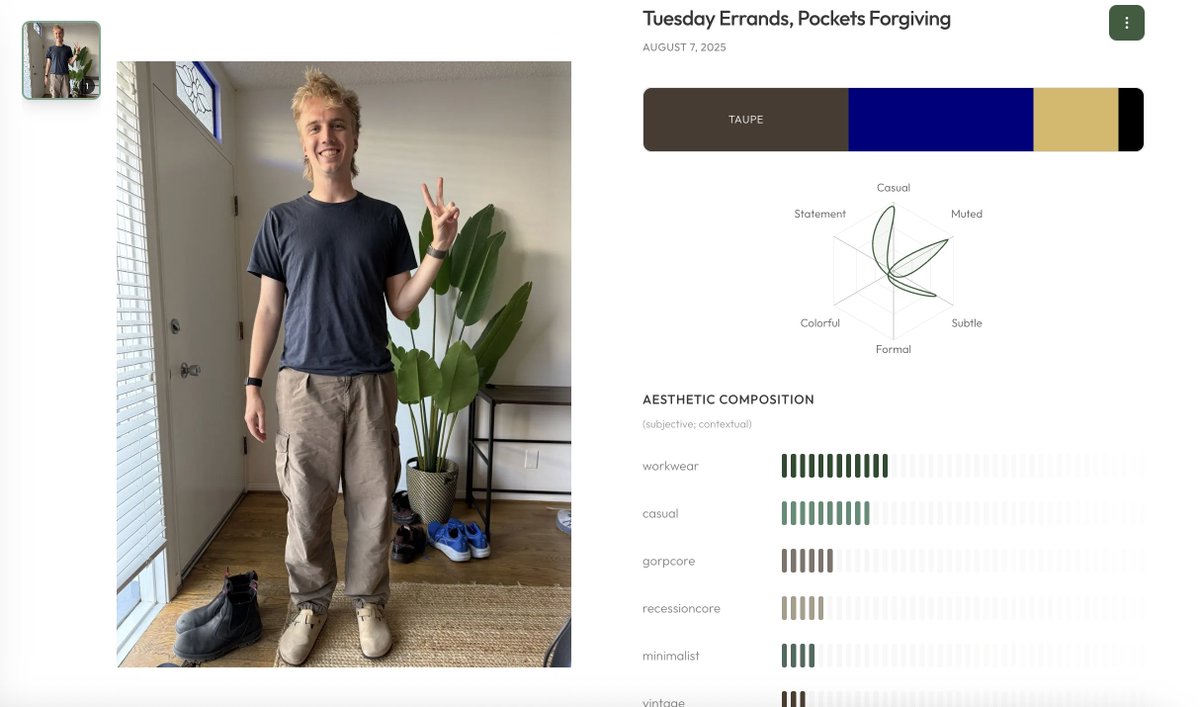
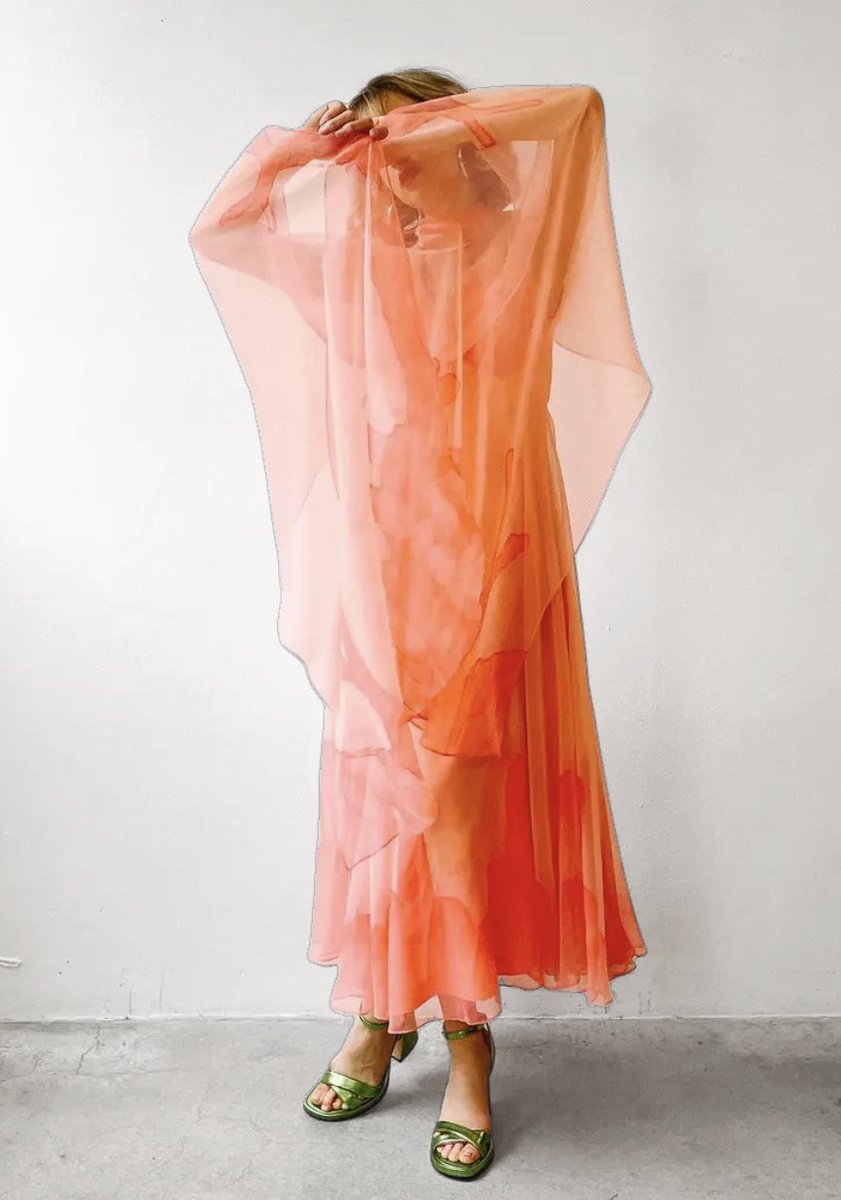
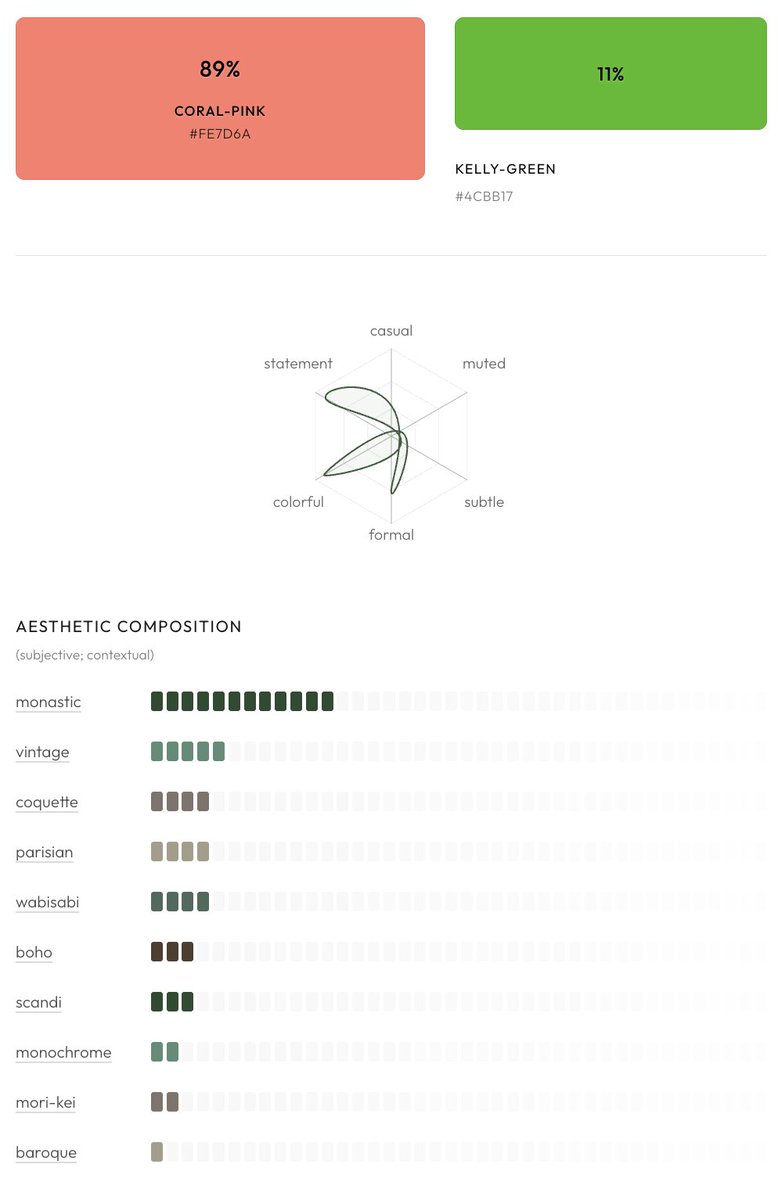
Fashion, we think, has the same boundary. Beyond brands and products, there’s a place where meaning stops being constructed and starts being felt. What if fashion had a shared vocabulary the way coffee does? A flavor wheel for style. A set of coordinates that helped people say why something felt elegant or loud or calm.
We began sketching axes: formal to casual, statement to subtle, colorful to muted. Most of us know when something works, but we don’t know how to say why. Either a) the words don’t exist, or b) they have been flattened by marketing until they mean almost nothing.
So we tried to build a place where people could express it with a different flavor. Where describing an outfit was not about signaling but curiosity. Where judgment could feel generous, not competitive. What happens when you give a community a new vocabulary (?) and let them engage visually.
At first, I thought we were building an app. But the longer we worked, the more it felt like designing a discipline. A way of being. A way of seeing. People began expressing their OOTDs (Outfit Of the Day) with precision, empathy, and humor. They were not optimizing. They were observing. And from those observations, a culture began to form.
Looking back, I think the real experiment was not in the technology or the aesthetic model. It was in creating a small garden of internet where lived experiences could be discussed with celebration and sincerity. A place where authenticity itself was the art form.
Wittgenstein spent his life chasing the edges of language. He wanted to know where thought ends and the world begins. The deeper he went, the more he realized that language isn’t just how we communicate; it’s how we see. What we can’t describe, we struggle to notice. What we can’t name, we start to overlook.
It’s a deceptively simple idea, but it carries enormous weight. If the boundaries of language are the boundaries of our world, then language is not just a mirror of reality but the infrastructure of it. Every new word is a small expansion of consciousness. Every word that loses meaning shrinks it.
Fashion lives right on this edge. It is a language made of texture, proportion, and gesture. It’s not just about what we wear, but how those choices become legible to others. When we say, “this feels right,” we’re really saying, “this fits inside the grammar of my world.”
But fashion’s grammar is fragile. The words we use for it—“chic,” “timeless,” “minimal,” “avant-garde”—are constantly collapsing under commercial pressure. Once a word becomes profitable, it stops being descriptive. It turns into marketing. And when the language of style becomes marketing, the field of perception narrows. We stop seeing difference. We start repeating ourselves.
When our words no longer describe the world, we stop being able to think clearly about it. And this isn’t just about fashion. It’s happening everywhere—politics, art, technology. “Innovation,” “authenticity,” “community”—these words used to name real experiences. Now, they gesture at meaning without creating it.
Philosophy’s job was to show the fly the way out of the bottle; to remind us that the mazes we live in are often built from our own language. In some sense, that’s what we’ve been trying to do with Lekondo. To rebuild a part of that visual language. To make space for authenticity again. Fashion just happens to be the medium we use to think out loud.
Every formal system — from logic to software to AI — works by describing the world through symbols. Those symbols define the universe the system can understand. Anything outside that vocabulary is invisible to it. When the grammar expands, so does the world.
By turning aesthetic perception into structured data, we can begin to describe beauty in ways that machines, brands, and communities can reason about. The systems that increasingly shape culture — recommendation models, generative tools, and search algorithms — all depend on language. They can only optimize what they can describe. When beauty, taste, and authenticity exist outside that formal vocabulary, the result is sameness: the aesthetic equivalent of AI slop.
Beauty is the acute perception to the immense yet delicate. And there is nothing more immense yet delicate than taste.
2
9
478

VESTING LIVE: @YengT9, Founder Lekondo (Speedrun 005) x.com/i/broadcasts/1eaKbjLWO…
5
2
22
1,976
Mitchell Overfield retweeted

21 Oct 2025
None of my investments are contrarian because they are the future. Those who don't believe that are the Contrarians.
E.g Lekondo.com will have millions of users in less than 12 months from now.
1
1
11
1,402
Mitchell Overfield retweeted
19 Oct 2025
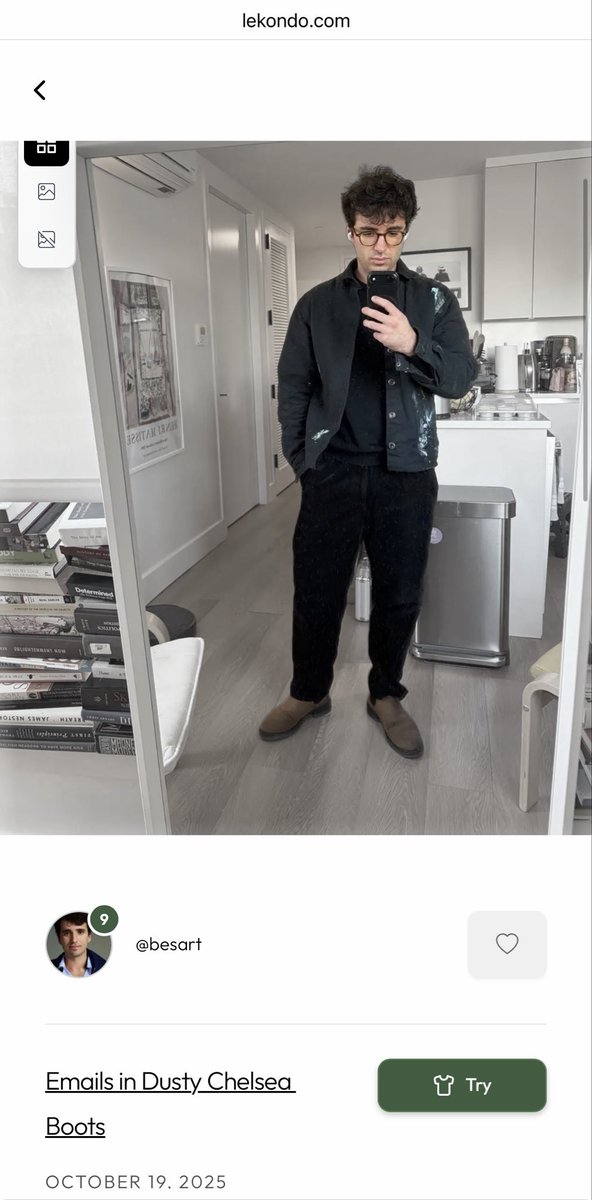
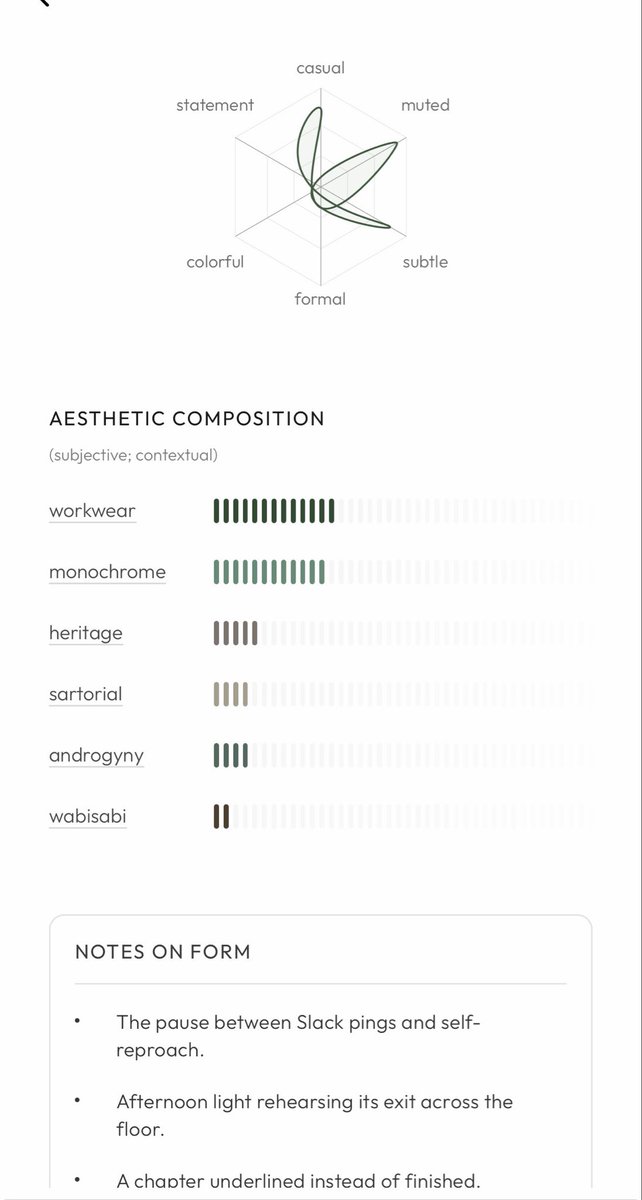
One of the most delightful AI apps out there. Become one of the first OG users at lekondo.com and follow.
cc @moverware @YengT9 @StreetNightLive
1
1
21
2,080
Mitchell Overfield retweeted
14 Oct 2025
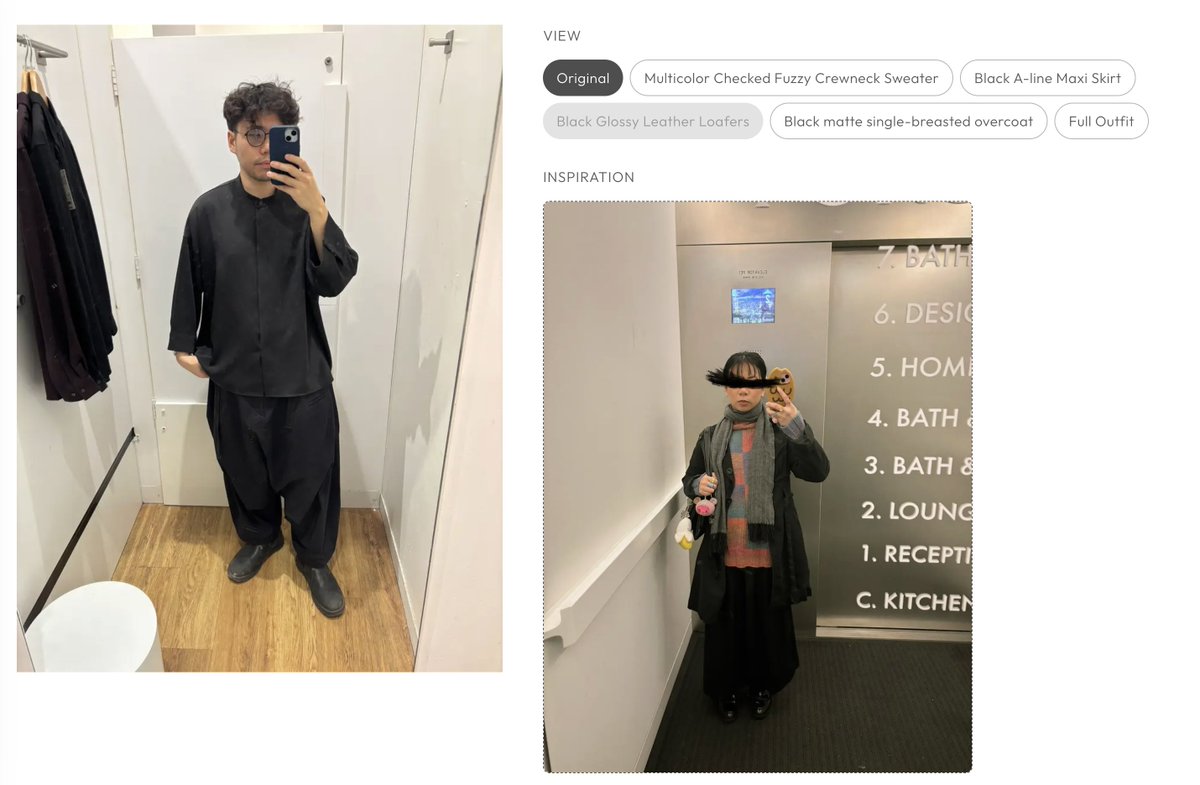
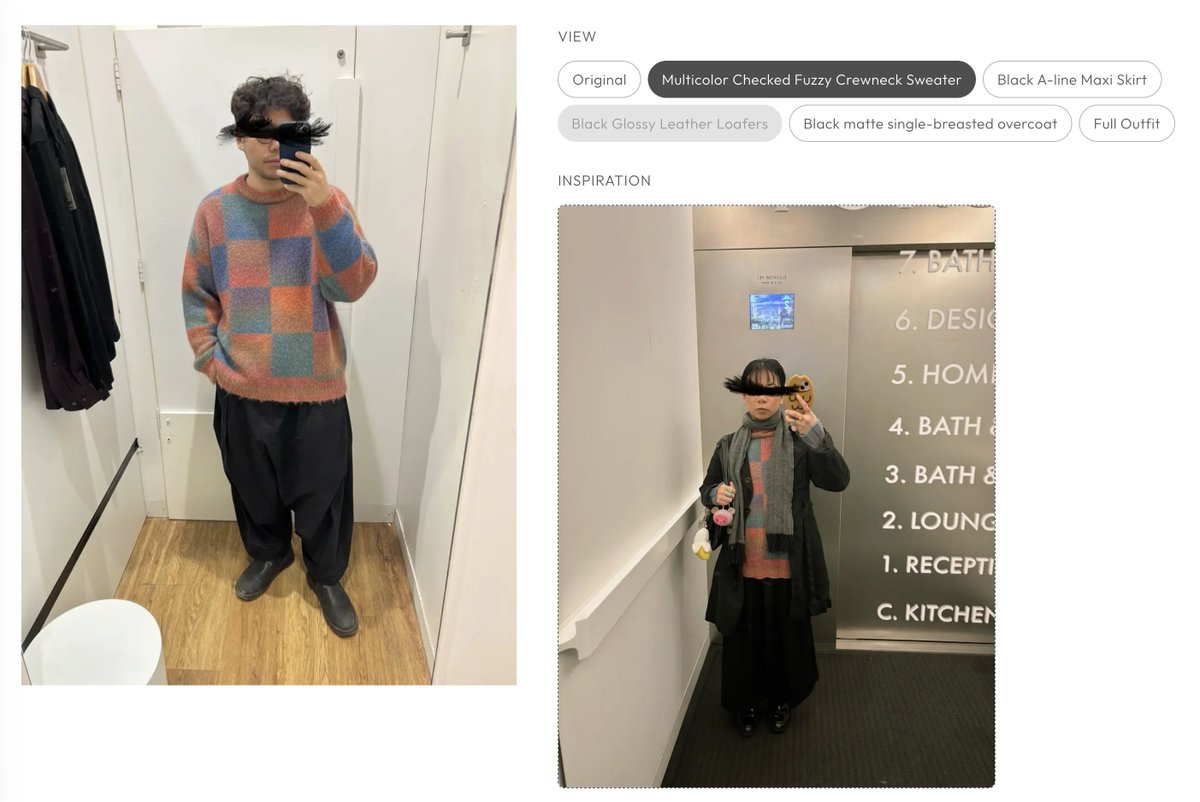
the possibilities are endless
1
12
351
Mitchell Overfield retweeted
12 Oct 2025
In SF past two weeks...hearing things along the lines of "consumer startup in NYC because closer to consumerism/ more social/ more in touch with the cool masses/ well crafted products✨🌀🤌."
Either said with pride, from those moving to NYC, or derogatorily, from hardcore technologists.
First of all,
1. Culture-wise -- NYC has worked 24/7 before the Bay Area... META was giving employees CBD massages and doing their laundry up until 2020, post-2016 coddle.
2. 996? No founder in my immediate group in NYC doesn't work on Sundays. They just don't post about it incessantly.
3. Location matters for hiring and investors. For most pure consumer software startups, esp in the first few years, location will not be the main factor of your success.
The best builders -- in NYC or otherwise -- are not at Boiler Room or spending $400 at Moscot on "well-crafted products." The rush they get from their users and metrics is 100x the dopamine that cheap surface-level consumerism delivers.
I know this is hard to understand from the outside -- but building a Good Product With Paying Users is the equivalent of... drinking a 100 matcha whiskeys from hand-blown weightless glass, while wearing Japanese denim, that dweeby green/ white Aimé Leon Dore hat, under the orange light of a Noguchi Lamp, at Chez Margaux, Peggy Guo playing a private set, with a beautiful Spanish fairy who reminds you of your middle school Physics teacher. And a low-key Rolex.
Now -- Times that Dopamine Rush by One Million. Everyday.
(Unless things don't work, then it's more like Painful Death Everyday, haha.)
10 Oct 2025

i inherently don’t trust anyone in this city who doesn’t own or have an eye for well crafted products.
how are you supposed to build/invest in beautiful products or abstract complex ideas elegantly if you can’t even pick the right ones as a consumer?
5
3
64
12,003

unreal @speedrun moment #3491 - shooting a launch video in the same studio as the Dark Knight.
if you're a fashion enjoyer, follow @lekondonyc


20
4
145
15,092
Mitchell Overfield retweeted

8 Oct 2025
@speedrun legit has the most offbeat woke (in a cool way) startups.
Like what's @lekondonyc even? A gourmet boutique photo gallery?
cute, woke and bold!
2
3
223
Mitchell Overfield retweeted
6 Oct 2025
Introducing Lekondo: The Taste Graph for Fashion
59
27
445
45,024
Mitchell Overfield retweeted

30 Sep 2025
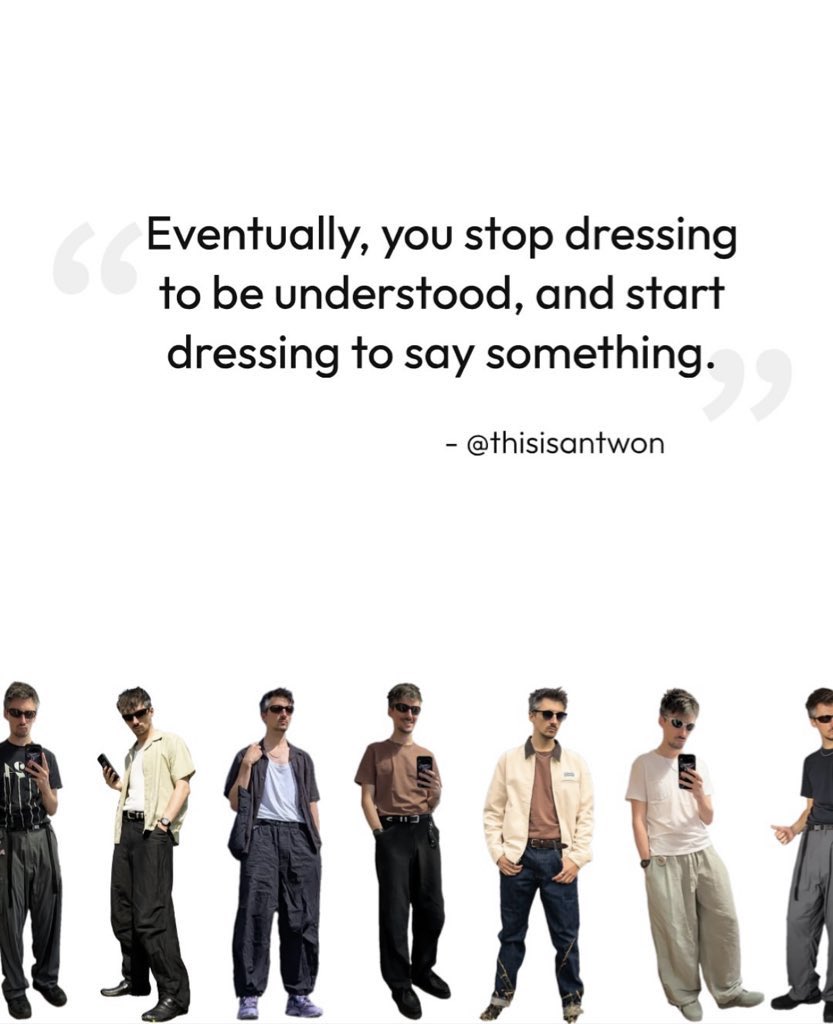
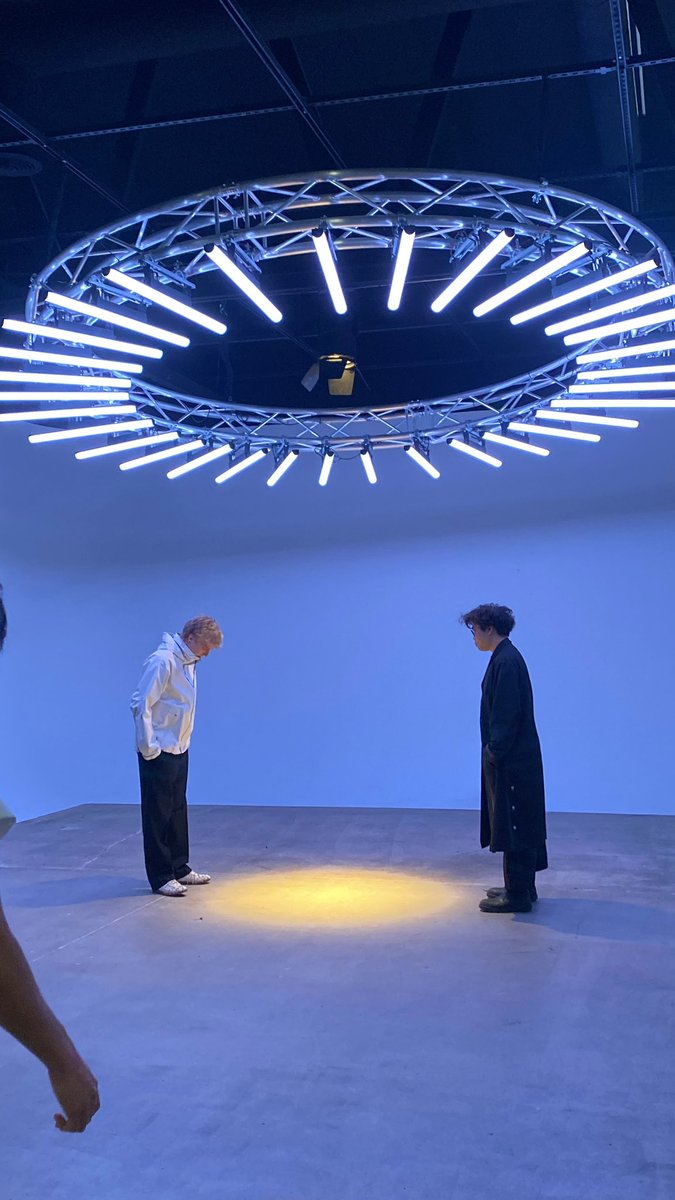
life update - I’ve joined @lekondonyc working on GTM and content!
Lekondo is building the discovery layer for fashion - if you’re into fashion, fitpics, journaling, or think about manufactured desires & anti-consumerism, check us out!
lekondo.com
1
2
238
Mitchell Overfield retweeted

8 Sep 2025
lock in inspo
190
500
4,765
698,234