Because everone else passes off lamb as mutton!
Joined April 2023
- Tweets 2,612
- Following 343
- Followers 223
- Likes 1,569
Photos and videos
Pinned Tweet

2 Jun 2023
🔥 #MuttonCrew's socks: taking flavor to a whole new level! 😅 These brave souls indulged in mutton testicles, and their socks paid the price. 🧦💦 Who knew culinary adventures could be this wild? 🍖😮 #SweatySocks #FoodieAdventures
1
6
2,757
Crewe Mutton Co. retweeted

I get considerably more freedom online when I set my VPN to either China, North Korea or Russia.
Think about that for a moment.

1
11
143
Can we now accept that the German worker's party, a national socialist group was actually left-wing and not right-wing?

I’m more disturbed that you spent the night thinking about me.
The antisemitism I’ve woken to from the extreme left over night is utterly unhinged, shameful and disturbing.
13
Jun 15
Can we get with the times and call them "arse-on attacks"?
Jun 15

JUST IN: Investigation alleges Russia was behind arson attacks targeting UK Prime Minister Keir Starmer.
22
Jun 15
Do not make peace with evil.
Jun 14

🇬🇧 UK Muhammad Arshad Iqbal, 36, from Bradford, attempted to Rape a 13-year-old girl.
He regularly goes to Victoria Road Mosque to learn about Sharia law. Arshad told the girl, 'Age doesn't matter in Islam, I will marry you.
25
Jun 15
I propose an amendment to the legislation rather than fully repealing it.
My reasoned amendment is as followed:
"This act is not to be enacted- it is to be rolled up and inserted into Keir Starmer's rectum without lubrication"
Jun 15

Farage says Starmer’s social media ban ‘is well-intentioned’.
We disagree. It is not well-intentioned.
It is sinister.
1
1
41
Jun 15
Jun 15

Prime Minister fucks rent boys.
Forgets to pay them.
Rent boys try to burn his house down.
Establishment tries to start WW3 by blaming Russia to hide it.
Well, that escalated quickly.
24

You are a taker, not a maker. All you’ve done your whole life is take from the makers of the world.
The zero-sum mindset you have is at the root of so much evil. Once you realize that civilization is not zero-sum and that it is about making far more than one consumes, then it becomes obvious that the path to prosperity for all is just let the makers make.
Regarding Tesla, the reality is that I have been given nothing.
However, if I lead Tesla to become the most valuable company in the world by far and it stays that way for 5 years, shareholders voted to award me 12% of what is built. Anyone who wants to come along for the ride can buy Tesla stock.
If Tesla “merely” becomes a $1.999 trillion dollar company, I get nothing. This is a great deal for shareholders, which is why they voted so overwhelmingly to approve this, for which I am immensely grateful.
And they did so by a margin far more than you won your political seat.
9,049
16,141
130,647
12,396,407
Jun 15
My Youtube account is more than 16 years old.
Jun 15
JUST IN: UK Government clarifies adults will still be able to use social media by verifying their identities with digital IDs, facial recognition, passports and credit cards.
32
Crewe Mutton Co. retweeted

The evidence is there, as a result of our Operation Talla investigation.
Use it or lose it. It's a public decision to be made.
Either way, I don't care.
2
11
31
800
Crewe Mutton Co. retweeted

Jun 14
People ask how being paralyzed after my Moderna shot affects my daily life.
Today, my son is at an outdoor airsoft game with his friends.
It’s raining, my power wheelchair can’t get wet.
Instead of playing with them, I’ll spend the next 4 hours sitting in a van watching from a distance.
No amount of money fixes this.
No amount of money gives you your life back. Repost #crimesagainsthumanity

28
314
971
11,198
Jun 13
Remember: Some people genuinely believe that the end always justifies the means.
Jun 12

That people trying to stop genocide are sentenced as terrorists is a hideous injustice.
But remember these words, too.
This country is headed to naked right-wing authoritarian rule.
This precedent will be used to lock up dissidents.
You've been warned.
Remember it.
20
Jun 12
I feel sorry for the guys on the bottom of the dinghy, then phased through it into the bin.
1
9
Jun 12
The world is a simulation and Elon's found the infinite money glitch......

18
Jun 10
5) Encased in an iron ball and fired at the Sun.
When are @elonmusk 's lunar mass drivers in operation?
Jun 10

Would you like to see Sir Keir Starmer
1️⃣. Dimissed
2️⃣. Resigned
3️⃣. Jailed
4️⃣. All of the Above

18
Crewe Mutton Co. retweeted

David Lammy’s proposals to restrict the right to jury trial have been examined by the Justice Committee of the House of Commons.
And. Well. Um.
It’s *quite* the report.
I think it’s actually worse than politely scathing.
It’s embarrassing 👇🏼🪡🧵
87
1,786
6,451
320,130
Please don't use pliers to attach crimps.
Neither of those joints are correct.
You need to apply sufficient force to cold-weld the conductor to the terminal for a reliable crimp connection.
If there's sufficient current, this could cause a fire.

23
Crewe Mutton Co. retweeted
27 Jan 2024
Which covid vaccine is the best?
Please RT, like and comment for a large sample.
1%
Pfizer
49%
Moderna
1%
Astrazeneca
49%
None of the above
6,077 votes • Final results
90
119
133
26,012
May 28
Task Manager author figures out how to compile and run software on a human brain.
But will it run Doom?
May 28

Dude, I retired like ten years ago. Since then, I've written and published two books, a metric crapton of software, learned 3D graphics and embedded systems, built a YouTube channel with a million subscribers, restored two cars, sent three kids off to college, learned to drive a race car, and now I'm a public speaker for fun.
I don't have a garden. No chill needed.
9
Crewe Mutton Co. retweeted

Apr 30
Oh man.
This one hurts.
I raced Craig on the human genome project. It was Epic.
Although he was vilified by many of my peers.
I was young and bought into some of the vilification at the time.
I got to know him more personally after ABI purchased ApG.
Our team in Beverly even sequenced his genome, HuREF.
I came to learn my earlier perspectives on him were really flaws in my own world perspective at the time.
It was the Public vs Private science debate and I no longer look at tax funded science the way I did back then.
The C19 pandemic really emphasized this as I witnessed Craig’s arch rival turn personalized medicine into herd medicine.
After a reckless abuse of PCR-amplified pandemic fear, all the public sales pitches on precision medicine and personalized treatments went up in smoke.
The moment some of the virtuous public genome project leaders saw a window for immature genomic tools to save the world (and cover up their own lab leak), plans behind closed doors fell into place.
The transparency promised in the Bermuda accords turned into burner phones and FOIA evasion.
Suddenly the public sector displayed a whole level of unaccountability and subterfuge once garnished on Celera for the mere crime of being privately funded.
Craig was an entrepreneur who had no patience for red tape. He ruffled feathers but in the end he pushed everyone to run faster.
Some argue it came at the cost of quality but in reality, we now know we didn’t have the tools to 100% close the genome in 2000.
The last 8% took another 20 years as we had to wait for 2 generations of new sequencers to finally deliver 20-100kb reads.
We would have burned infinite money holding our breath for the last 8%.
But without that fast first 92%, 454, Solexa and SOLID would have matured later. These sequencers all relied on a human reference genome.
Sometimes we need the impatient private sector urgency spending their own money to create the price signal. What is the fastest path to a result the market will pay for?
For gov labs, this calculus departs from ROI decisions and it becomes easy to spend other people’s money in the pursuit of perfection. Public Scientists after-all are in a circular firing squad yelling perfection and , as long as someone else pays the bills, you can’t afford to compromise on perfection or the PubSmear mob will wreck you.
Pricing signals matter to get ROI decisions properly calibrated and avoiding asymtoptic costs for marginal gains.
Many will claim that Craig was out for shelf interest and was patenting 300 genes.
Public was giving it away for free.
That’s the story but it’s not true.
In the end the NIH ended up with more gene patents than Craig.
Not from their genome centers but from their funding streams. Jim Watson quit the genome project over it and some of the patents were from NIH funding Craigs EST projects.
I have a whole paper in Nature methods on Gene Patents and how to evade them with DREAM PCR.
If you were morally opposed to this, you didn’t have to buy Celera stock. Your tax dollars had no such veto right and in the end your tax dollars were used to patent genes, charge you again as those were licensed to CDX companies and raised pricing.
Suddenly the good guy vs villain story blurs into a story about human nature and poor incentive structures.
Apr 29

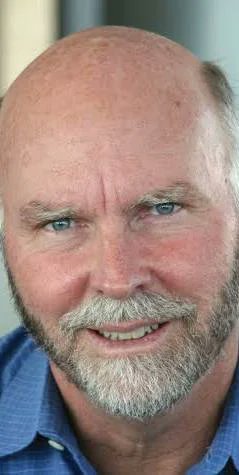
I came back to the United States, hearing about a very sad news: Craig Venter passed away today. He is a pioneer, successfully sequenced the first Human genome, and tried to create Synthetic Cells. We lost a giant in Science. RIP.
@JCVenterInst
21
69
282
38,409