A new intelligence science lab founded by @fchollet & @mikeknoop. Deep Learning-guided Program Synthesis. We're hiring.
Joined October 2024
- Tweets 109
- Following 97
- Followers 10,861
- Likes 268
57 Photos and videos
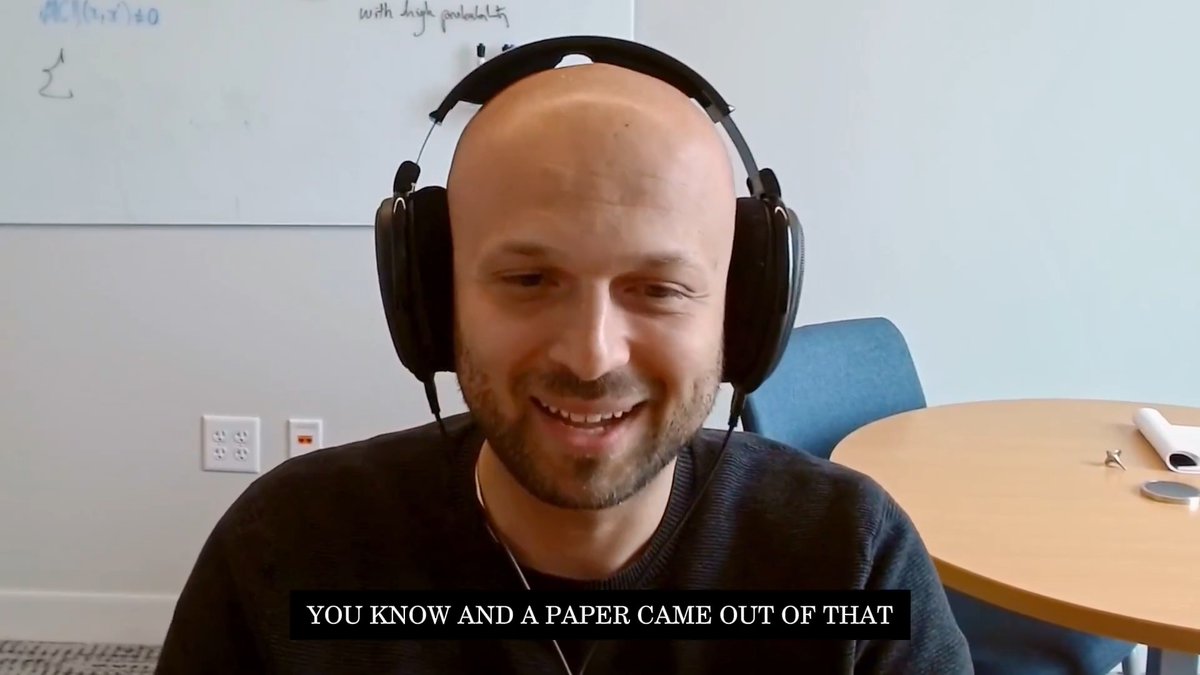
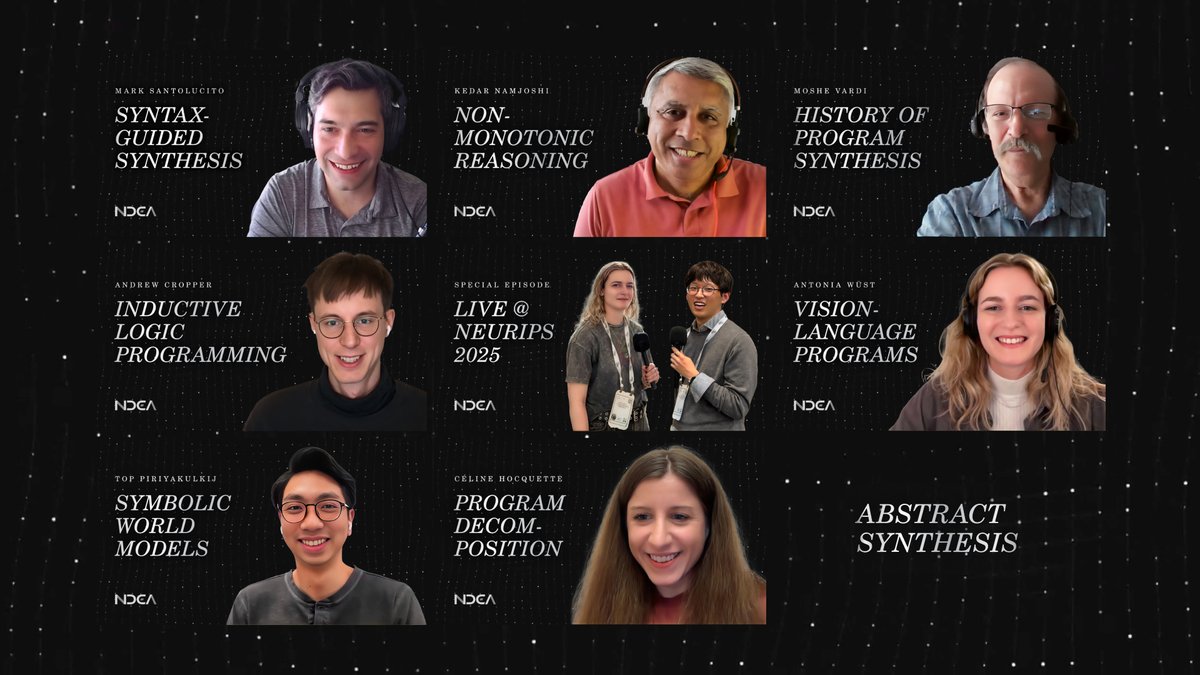


On the pod: "Recursive Program Synthesis" with @awsTO, Associate Professor at @WisconsinCS.
How cold-emailing @SumitGulwani at Microsoft Research led to a novel research paper and inside Aws' vision to automatically synthesize the software stack for future quantum computers.
1
3
21
2,437
Watch the full interview:
youtu.be/y9Op7ivdaz4
1
1
3
1,391
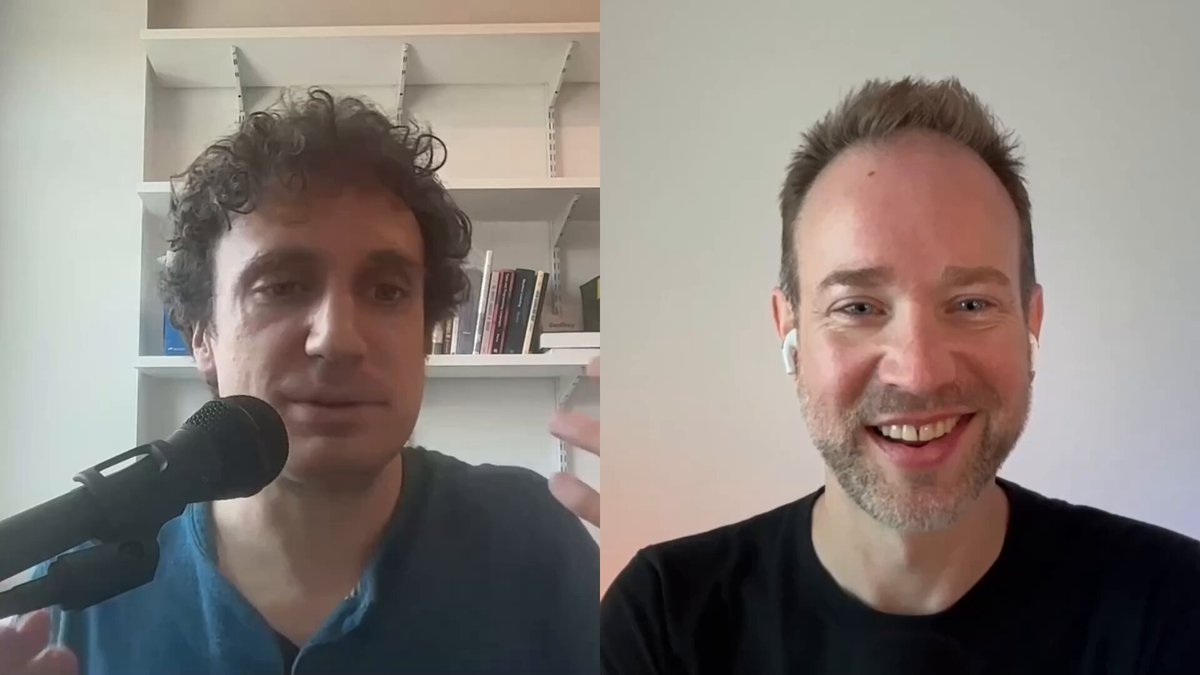
On the pod: our most-requested guest! @ellisk_kellis from @Cornell shares the origins of his influential neurosymbolic paper "DreamCoder".
Plus: program synthesis, wake-sleep library learning, world models, running an AI research lab, and more.
3
8
60
26,850
Watch the full interview:
youtu.be/H5FKqIDq5cM
8
5,611

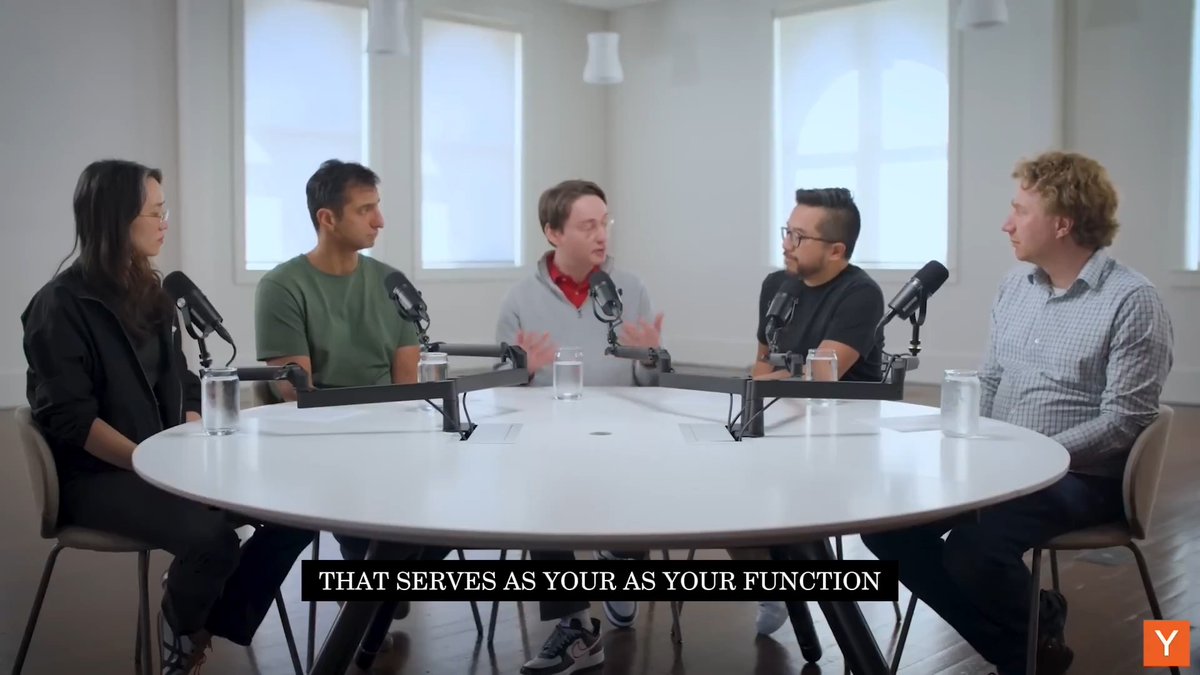
"We are trying to build a new branch of machine learning. An alternative to Deep Learning itself...building something that we call Symbolic Descent."
@fchollet joins the @ycombinator Lightcone podcast to share about our research at Ndea and the launch of ARC-AGI-3.
17
37
312
64,696
Watch the full episode:
youtu.be/k2ZLQC8P7dc
11
3,507
Ndea retweeted

Mar 27
François Chollet (@fchollet) has spent years asking a different question than most of the AI world. Instead of scaling what already works, he’s trying to understand what intelligence actually is and how to build it from first principles.
In this episode of the @LightconePod, he traces that path from his early work on deep learning to the creation of the @arcprize, and the launch of ARC V3, a new benchmark designed to measure something deeper than performance: the ability to learn, adapt, and reason efficiently in entirely new environments. He explains why today’s systems may be hitting limits, what recent breakthroughs really mean, and why reaching true general intelligence may require a fundamentally different approach.
00:00 - AGI by 2030?
00:31 - Introducing Ndea: A New Path Beyond Deep Learning
01:08 - A New ML Paradigm
01:30 - Replacing neural nets with compact symbolic programs
03:04 - Why Ndea Isn’t Competing With Coding Agents
05:20 - Why Everyone Might Be Wrong About Scaling LLMs
07:22 - Why Coding Agents Suddenly Work So Well
08:50 - The Limits of LLMs in Non-Verifiable Domains
10:48 - What AGI Actually Means (And Why Most Definitions Are Wrong)
13:30 - Why Deep Learning Hits a Wall
14:00 - ARC’s Origin Story
18:20 - ARC Benchmarks Explained: From V1 to V3
22:49 - The RL Loop Powering Coding Agents Today
27:03 - ARC-AGI V3: Measuring “Agentic Intelligence”
31:14 - Inside the ARC Game Studio
35:31 - Could AGI Fit in 10,000 Lines of Code?
44:01 - Building Ndea: From Idea to Compounding Research Stack
46:46 - The Future of ARC: Benchmarks That Evolve With AI
47:21 - Why There’s Still Huge Opportunity for New AI Paradigms
53:37 - How to Build a Breakout Open Source Project - Lessons From Keras
56:39 - Advice For How To Think About AI
41
95
620
151,007
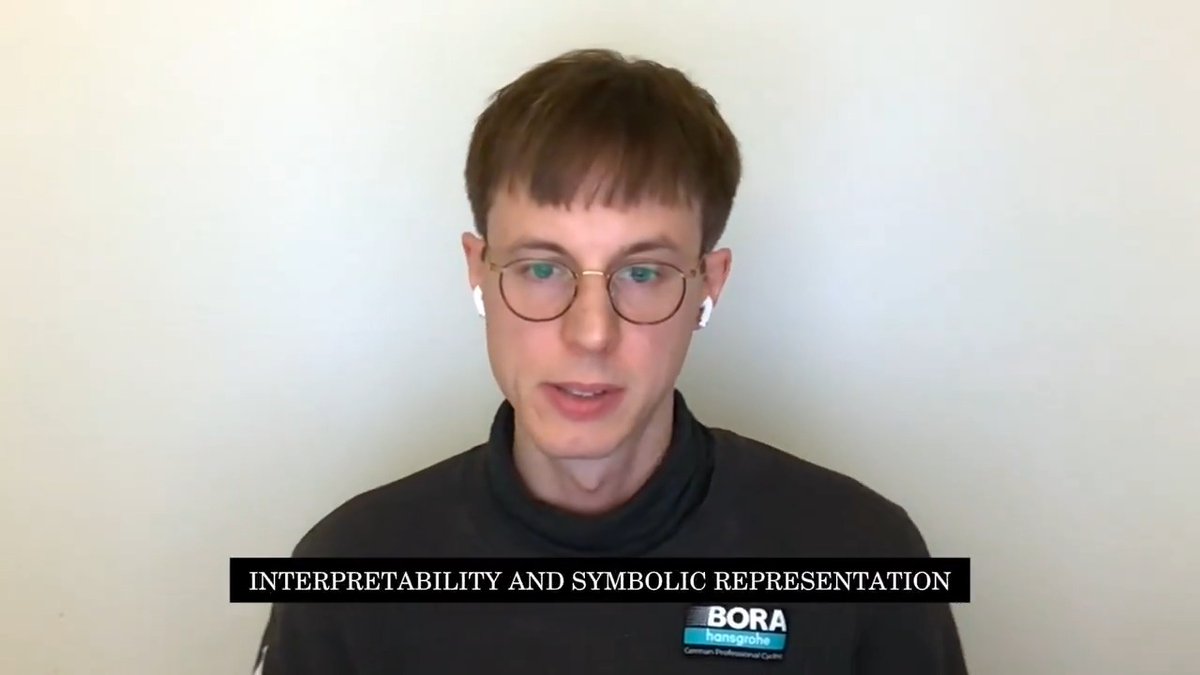
AI researcher @pidgeyusedgust of @ProseMsft joins us on the pod to discuss his favorite paper, "Semantic Programming by Example with Pre-trained Models" - a neurosymbolic framework where Flash Fill meets GPT-3.
Symbolic for structure (syntactic), LLMs for meaning (semantic).
2
2
15
5,729
New open role: Technical Staff - Search Guidance
Accelerate science & innovation. Join our small, talent-dense, globally remote team. Apply your RL/DL search expertise to the most advanced program synthesis system.
Also: $10k referral bonus
Details: ndea.com/jobs/search-guidanc…
3
3
22
15,742
Watch the mini-recap episode:
youtu.be/t_RgBe2CVms
Subscribe share your feedback!
2
3,360
"...simply looking at a problem differently can greatly improve learning performance."
New pod: Ndea researcher & ILP expert @CelineHocquette on "Relational Decomposition for Program Synthesis" - making symbolic learning systems more efficient without domain-specific knowledge.
1
4
15
3,346
Watch the full episode:
youtu.be/O4Hyy-9VimI
1
1
3
3,266
On the pod: @topwasu from @ellisk_kellis' lab at @Cornell discusses his paper PoE-World.
We explore how symbolic world models can achieve strong generalization and sample efficiency by composing many small causal programs instead of learning a single monolithic model.
2
2
20
2,997
Watch the full episode:
youtu.be/fCaLTOCiOsk
1
4
2,651
Vision-language models (VLMs) can see well, but they struggle to reason.
In this episode, @toniwuest (PhD researcher, @TUDarmstadt) explains how combining VLMs with program synthesis yields more reliable visual reasoning, with fewer tokens than chain-of-thought.
9
8
172
22,123
Dive into the paper, "Synthesizing Visual Concepts as Vision-Language Programs".
A neuro-symbolic approach to visual concept induction that treats VLMs as perceptual tools inside symbolic programs.
Watch the full episode:
youtu.be/uefqvsButp8
1
11
3,293
Watch the full interview:
youtu.be/_8UJOYi-BKQ
2
4
2,496