
I code.
Joined August 2022
- Tweets 9,795
- Following 188
- Followers 91
- Likes 52
285 Photos and videos
















Linuxuser retweeted

Found this amazing book on creating an os from scratch!

7
70
570
20,414
Linuxuser retweeted

Jun 1
I think about these t-shirts alot👌👌👌
27 Aug 2025

Make them 5!
Each is kes 500.
Quality guaranteed!
To place an order dm / WhatsApp 0710577795.

5
16
95
15,300
Linuxuser retweeted

Jun 1
I am going to teach everything about Linux in 30 days in this new month of June. It will be a tutorial per day.
If interested say hi 👋
1,950
223
4,602
240,828
Linuxuser retweeted

May 31
Did you know you can create a Word Search in Canva?
Here's a quick 1:30 minute tutorial.
7
22
95
4,799
Linuxuser retweeted

May 31
Najua y'all would want to see her sexy body, don't worry i gotchu lads @_Hoely_grail . Happy trails solo explorers


143
154
1,107
111,421
Linuxuser retweeted

May 31
He speaks so well.
May 29

President of Botswana 🇧🇼 Duma Boko stunned the audience after stopping midway through his speech to deliver a brutal but powerful lecture on relationships, loyalty, and trust.
3
468
Linuxuser retweeted

That's why I tell people to just build an AI Agent that scrapes from Jobs from Non-Workday sites. I have a free e-book that teaches you how to do it.
May 28

Nobody wants to admit it but LinkedIn is a SCAM.
7
37
659
65,783
Linuxuser retweeted

May 30
While previous administrations faced high unga prices in the country, no one is talking about it today.
This video is only 6 minutes you’ll have a level understanding why Wayahudi elites are mad and the power plays underneath. Good analysis by Alai.
12
40
181
6,152
Linuxuser retweeted

May 30
The "Constant Gardener" is a novel by John le Carré published in 2001 and later made into a film in 2005. It is set in Kenya.
The story follows Justin Quayle, a British diplomat in Nairobi, whose wife Tessa is murdered. As he tries to find out why she was killed he uncovers something much bigger. A pharmaceutical company is secretly testing a tuberculosis drug called Dypraxa on poor Kenyans in Kibera and in northern Kenya. The drug has dangerous side effects. People are dying. But instead of stopping the trial the company is hiding the deaths, removing names from records and continuing the experiment. The British government knows and protects the company because the business relationship matters more than the lives of poor Africans.
The Kenyan officials who could speak up are either paid off or silent. The people of Kibera never consented to anything. They were simply poor, available and therefore useful.
Now look at Kenya today.
The American government has entered into an agreement with the Kenyan government to set up an Ebola isolation facility on Kenyan soil for American citizens exposed to the virus. Kenyans were not consulted. They found out and went to court. The American government responded by saying it was optimistic that objections could be resolved. Not that it would respect the court. Not that it would reconsider. That it would resolve the resistance.
The structure is exactly the same as the novel. A powerful Western government identifies a need. It finds a willing administration in Kenya. An agreement is made above the heads of ordinary Kenyans. When the people object they are told the matter is being handled. The government that is supposed to protect them is the same government that made the deal.
In the novel the people of Kibera had no idea they were being used. In Kenya today the people know. They have gone to court. They have said no loudly and clearly. The only question now is whether their government will listen to them or whether it will do what the government in the novel did. Protect the more powerful partner and hope the resistance eventually goes quiet.
Le Carré wrote the book as a warning. Kenya appears to be living it as a plan.
Dismas wa Tabu. Dreaming in installments. Billed in full.

3
31
49
5,144
Linuxuser retweeted

May 30
Guy, AWS Cloudfront is coming for both Vercel and Cloudflare's lunches.
The only barrier is the ease of deployment on CloudFront. It is not beginner-friendly, but it is more powerful.

4
26
1,568
Linuxuser retweeted

May 30
It took me over 25 blown accounts to realize this

9
91
849
17,791
Linuxuser retweeted

May 29
Different looks Same Main character…..@urbantortoisee did their thing with the Eyewear….
14
45
282
18,105

Umenikumbusha zile siku nlikuwa soja night shift..jioni naenda na 10 morning narudi na uniform kwa mat free 😔😂

Hautawai skia malaya wakicomplain matatu fares juu they are always moving against traffic.Jioni wanaenda taon na 20 asubui wanarudi kulala na 20.
4
22
426
17,180
Linuxuser retweeted

May 29
hahahaha mafans wamechoka kuenda streets alafu wanakuona india the following week
May 29

Twendeni streets. Hii ndo lugha wanaheshimu.
84
507
2,851
100,629
Linuxuser retweeted

May 29
This Murangiri apparently had for many years been a menace. Kule kwa channel ya Mwabili, Julius Kamau said years back Murangiri alimdunga na screwdriver kwa maskio and raptured his eardrum! He said it was so painful he passed out. Over him protesting time ya Uhuru.

IPOA investigator presents CCTV footage allegedly showing officer Isaiah Murangiri shooting Rex Masai
Video by Sengre
1
232
361
12,209




Linuxuser retweeted

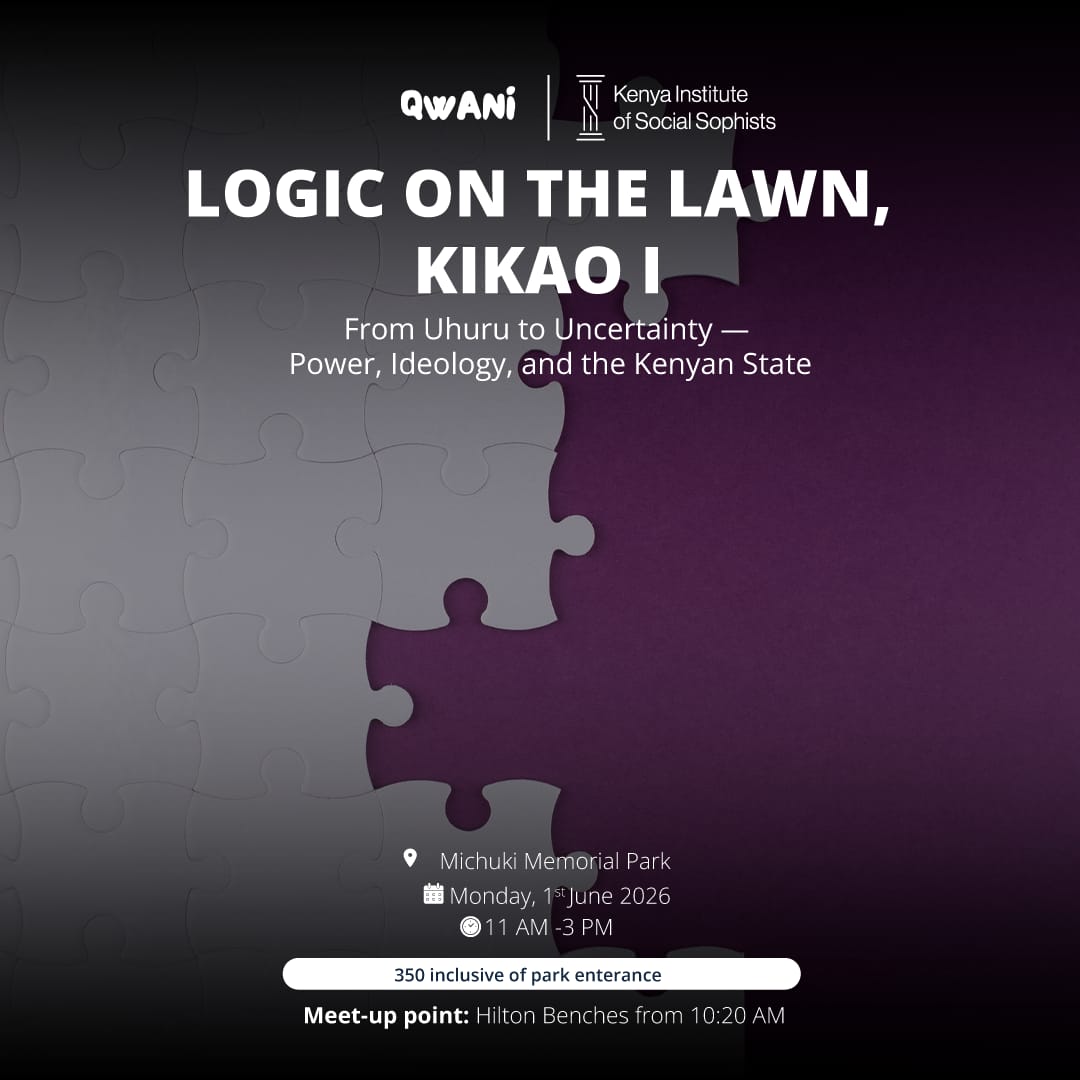
This Madaraka Day we're hosting an outdoor event with games as we discuss how the ideology of the funding fathers influenced the direction of the Kenyan state.
Tickets available at 350 KES PP
qwanibok.hustlesasa.shop/pro…
6
10
365