
Assistant Professor @TUDelftTBM. Policy Innovation | Sustainable Energy Transition | Computational Text Analysis. Views personal. RT ≠ endorsement.
Joined November 2017
- Tweets 934
- Following 480
- Followers 566
- Likes 4,885
26 Photos and videos
Pinned Tweet

3 Oct 2024
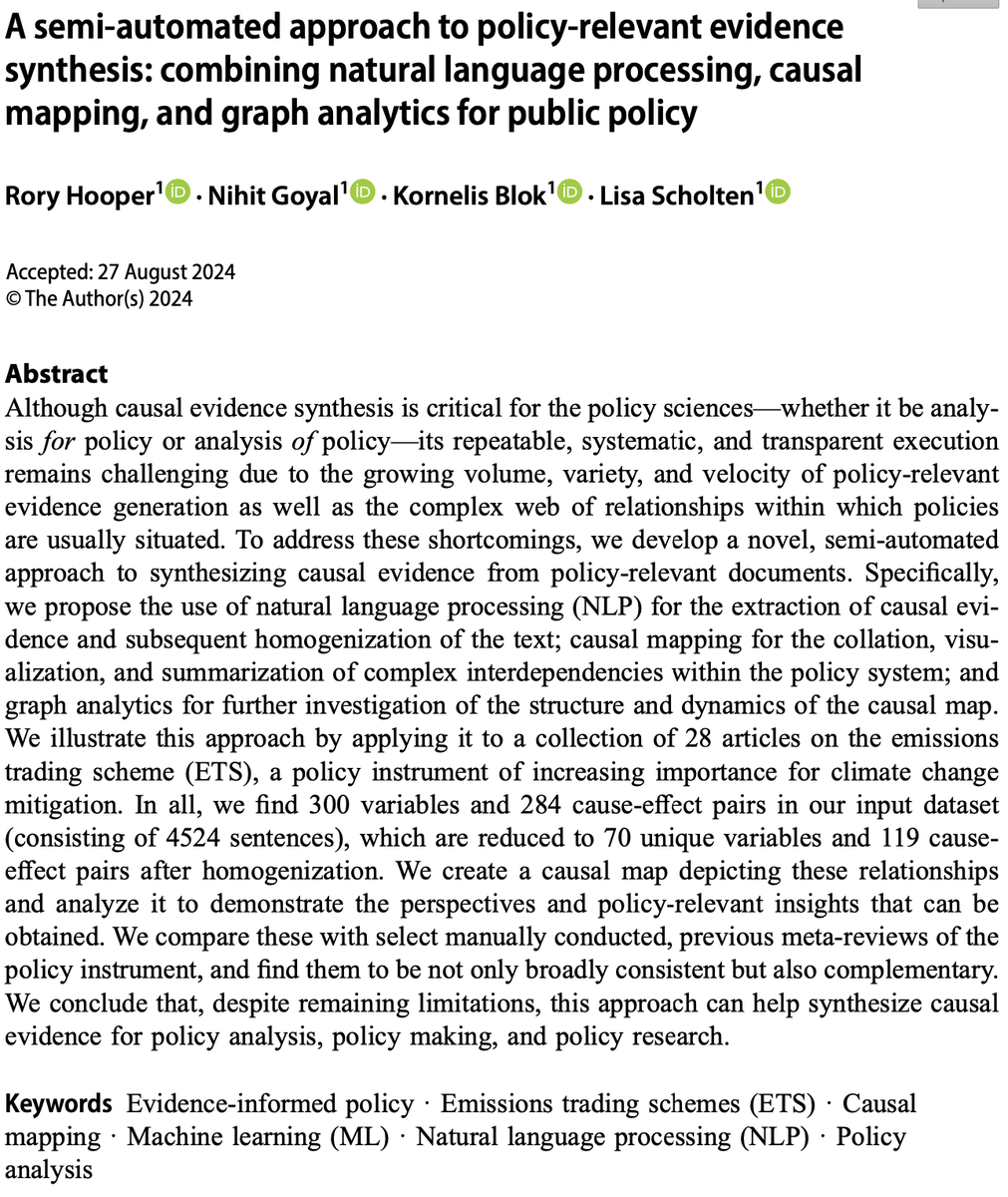
In this new article in @PolicySciences, Rory Hooper, @KornelisBlok, Lisa Scholten, and I propose a semi-automated approach for synthesising policy-relevant evidence using natural language processing, causal mapping, and graph analytics.
@TPMTUDelft
tinyurl.com/mr46tx22
3
10
906
Nihit Goyal retweeted

20 Dec 2024
At #JCPA_ICPA we are relaunching the Policy Innovation section of this journal, responding to a need amid global challenges. If your work is cutting-edge, rigorous, or actionable, send it through our portal and read this editorial by @nihitgoyal and @PattynValerie to obtain more information:
tandfonline.com/doi/full/10.…
1
2
140
Nihit Goyal retweeted

3 Dec 2024
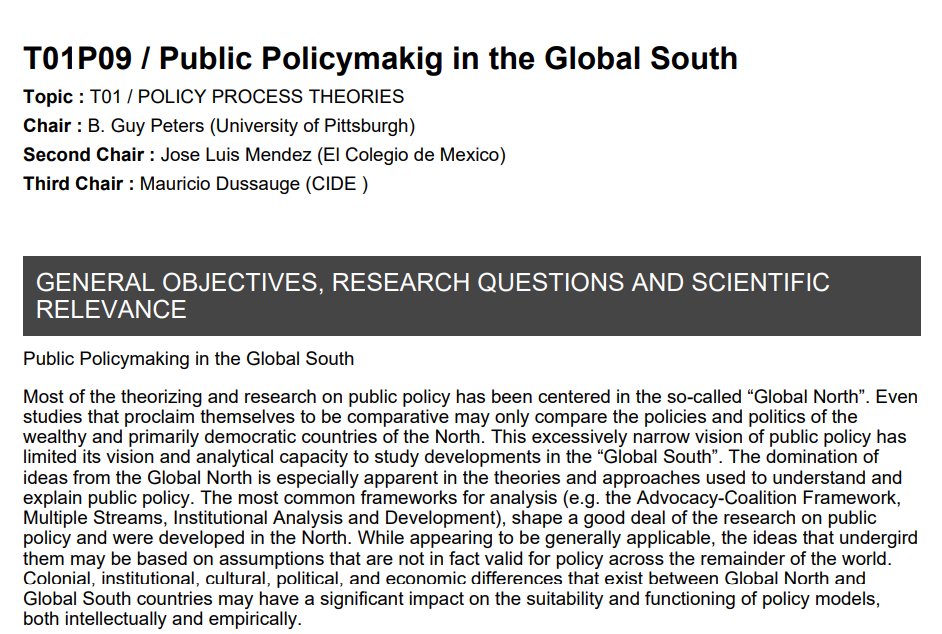
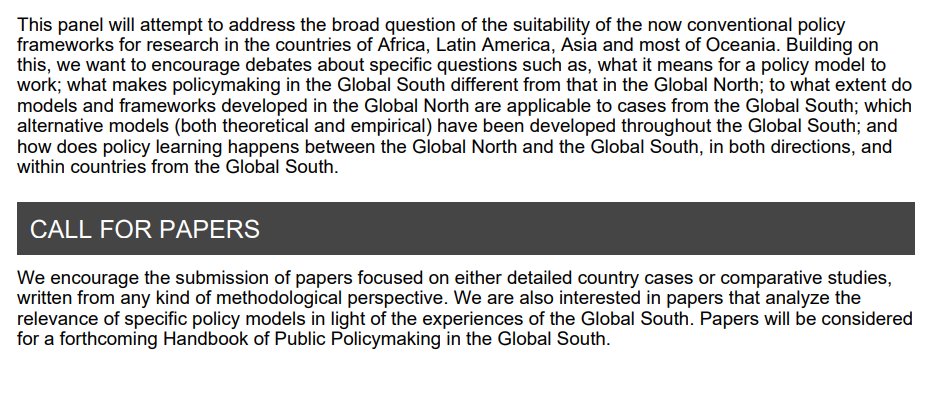
Dear all, remember the call for papers for @_IPPA_'s ICPP2025 (Chiang Mai) is now open:
ippapublicpolicy.org/confere…
Guy Peters, José Luis Méndez and I look forward to your proposal for this panel and forthcoming Handbook on Public Policy in the Global South:
ippapublicpolicy.org/confere…
1
21
45
2,637
Nihit Goyal retweeted

4 Dec 2024
Are you interested in pursuing a PhD in public policy? Are you passionate about public policy research? I have an open PhD position @sspunil @unil and look forward to receiving your applications: shorturl.at/phNGY #Careers
1
10
11
1,283
Nihit Goyal retweeted

17 Nov 2024
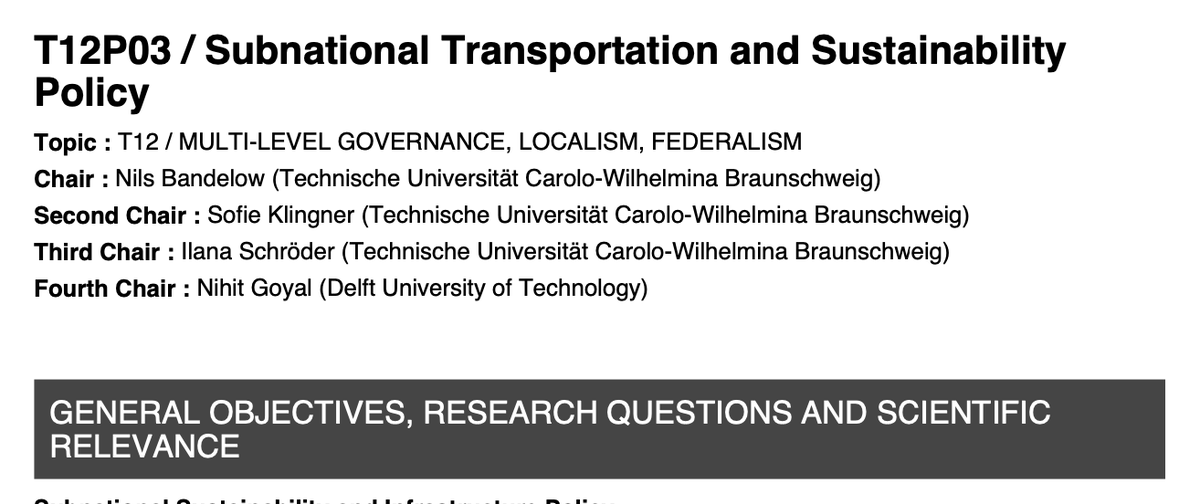
🇹🇭CfP Alert for panel on "Subnational Transportation and Sustainability Policy" at #ICPP7 in Chiang Mai (May 2025) local challenges & solutions for sustainable mobility and infrastructure! Deadl.: 31.1.2025 @sofieklingner, @IlanaSchroder, @nihitgoyal More: shorturl.at/g2mlX
3
3
316
Nihit Goyal retweeted

15 Oct 2024
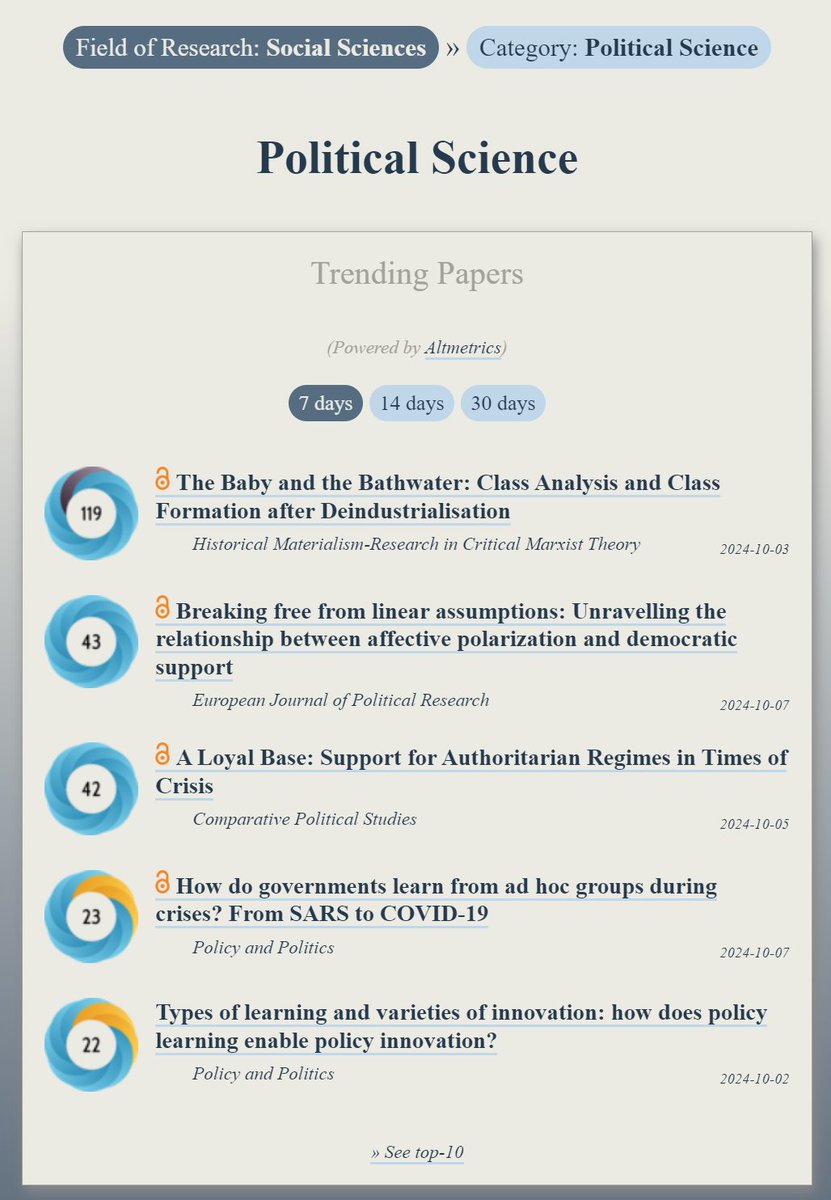
🚨 We have TWO fantastic articles trending 🚨
@nihitgoyal & @howlettm: Types of learning and varieties of innovation: how does policy learning enable policy innovation?
🔓Open Access until Oct 31
doi.org/10.1332/030557321X16…
8 Oct 2024

Trending in #PoliSci:
ooir.org/index.php?field=Soc…
1) Class Formation after Deindustrialisation (@histmat)
2) Affective polarization & democratic support (@ejprjournal)
3) Support for Authoritarian Regimes in Crisis (@cps_journal)
4) Ad hoc groups during crises (@policy_politics)
1
3
8
1,070
Nihit Goyal retweeted

2 Oct 2024
Now out in Special Issue of Policy & Politics on Learning and Innovation
"Types of learning and varieties of innovation: how does policy learning enable policy innovation?"
by Nihit Goyal and Michael Howlett @nihitgoyal @howlettm
bristoluniversitypressdigita…
9
28
1,481
Nihit Goyal retweeted
6 Sep 2024
🌤️Early View and 🔓Open Access
@nihitgoyal & @howlettm dive into the link between policy learning & innovation 👇
Types of learning and varieties of innovation: how does policy learning enable policy innovation?
doi.org/10.1332/030557321X16…
1
6
9
787
Nihit Goyal retweeted

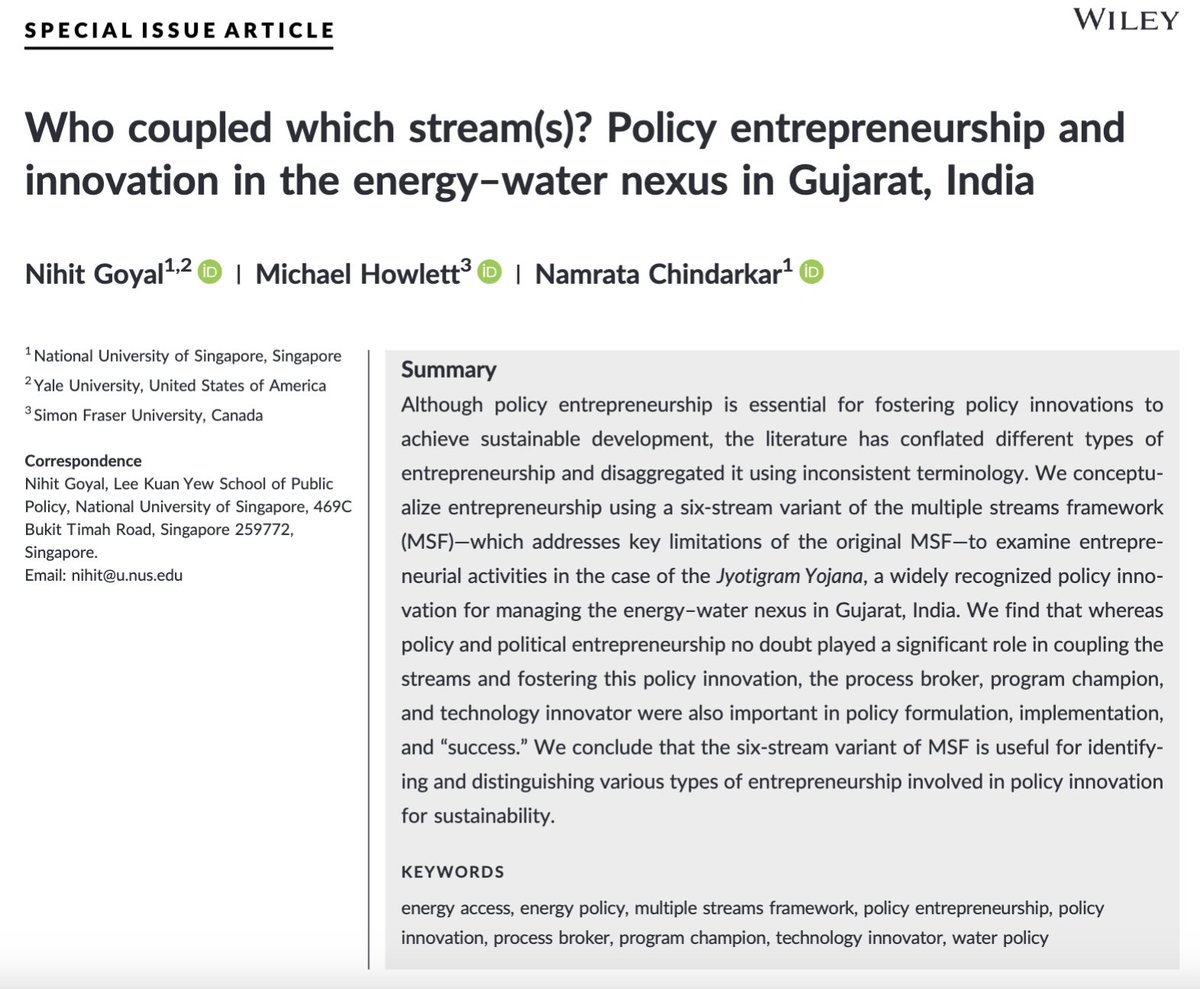
🔙 This week's #ThrowbackThursdayArticle is from 2019 by @nihitgoyal @howlettm & @namratarc on policy innovation and entrepreneurs in #Gujarat #India
. #FullAccess
🔗onlinelibrary.wiley.com/doi/…
4
9
519
5 Feb 2024
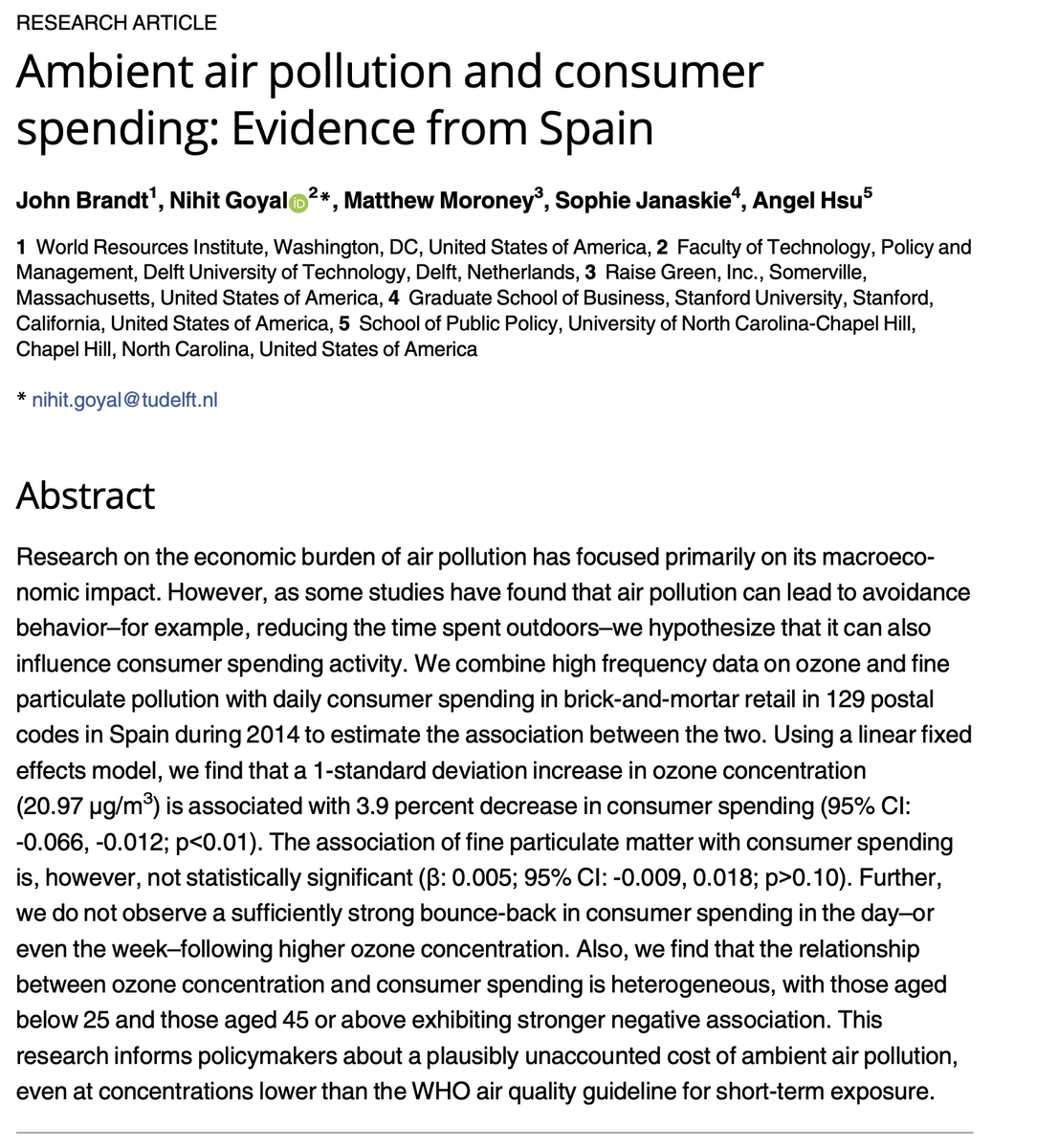
In this new study in @PLOSONE, @john_m_brandt, M Moroney, @sophiejanaskie, @ecoangelhsu, and I find that higher ambient ozone pollution is associated with lower retail spending, an unaccounted microeconomic cost of air pollution.
journals.plos.org/plosone/ar…
@TUDelftTPM @WHO
2 Feb 2024

Air pollution is the leading environmental killer worldwide; its microeconomic impact, however, is not well understood.
In our first pub of 2024, we explore the relationship between consumer spending and ambient air pollution using data from Spain:
🔗journals.plos.org/plosone/ar…
1
13
823
Nihit Goyal retweeted

19 Dec 2023
📯Call for PANELS and PAPERS at the @ECPR General Conference 2024 in Dublin 📯
Our network is organizing 2⃣ sections, one focused on the politics of #ClimateAction, the other on #EnergyTransition
Check out the sections here:
ecpr.eu/Events/Event/Section…
ecpr.eu/Events/Event/Section…

1
5
8
1,802
10 Jan 2024
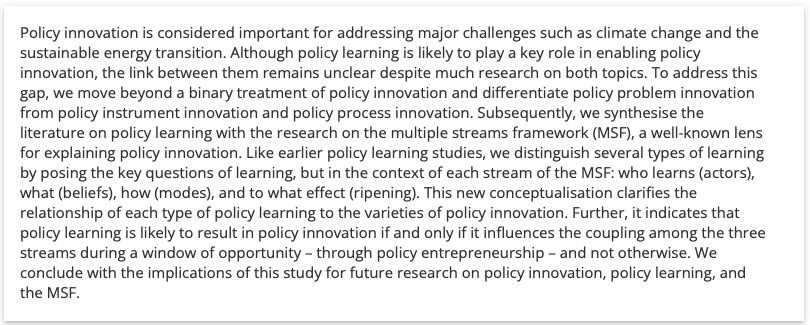
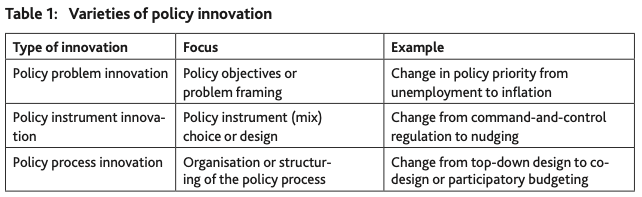
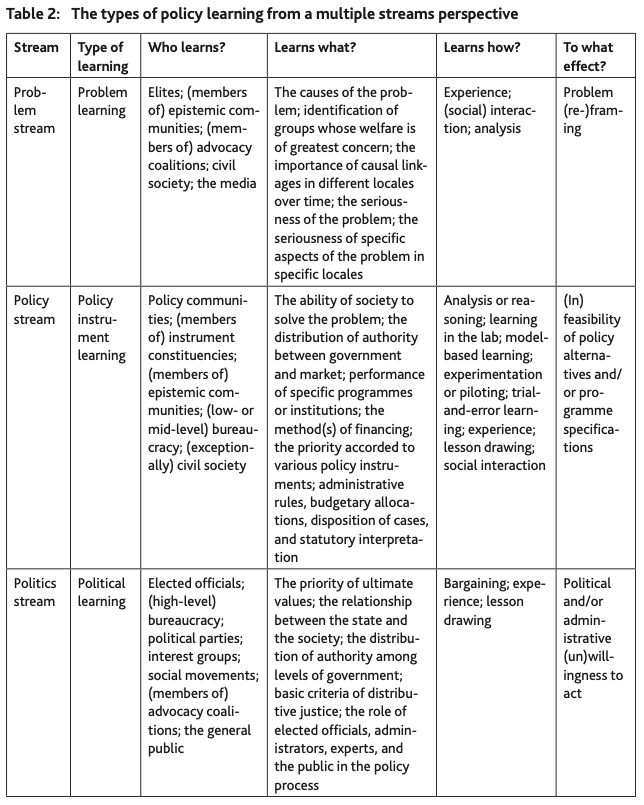
In this new article, @howlettm and I shed light on the (complicated) relationship between learning and policy innovation by differentiating varieties of innovation and synthesising research on policy learning with policy change.
twtr.to/my8qw
1
6
25
1,711
Nihit Goyal retweeted
8 Jan 2024
Just out - Nihit Goyal & Michael Howlett - "Types of learning and varieties of innovation: how does policy learning enable policy innovation?" in Policy & Politics, Jan 7, 2024 @howlettm @nihitgoyal
bristoluniversitypressdigita…
15
59
3,728
Nihit Goyal retweeted
28 Nov 2023
Now out in issue:
"Brown-out of policy ideas? A bibliometric review and computational text analysis of research on energy access"
by Nihit Goyal & Michael Howlett @nihitgoyal @howlettm
Frontiers in Sustainable Energy Policy
doi.org/10.3389/fsuep.2023.1…
4
8
563
Nihit Goyal retweeted

20 Nov 2023
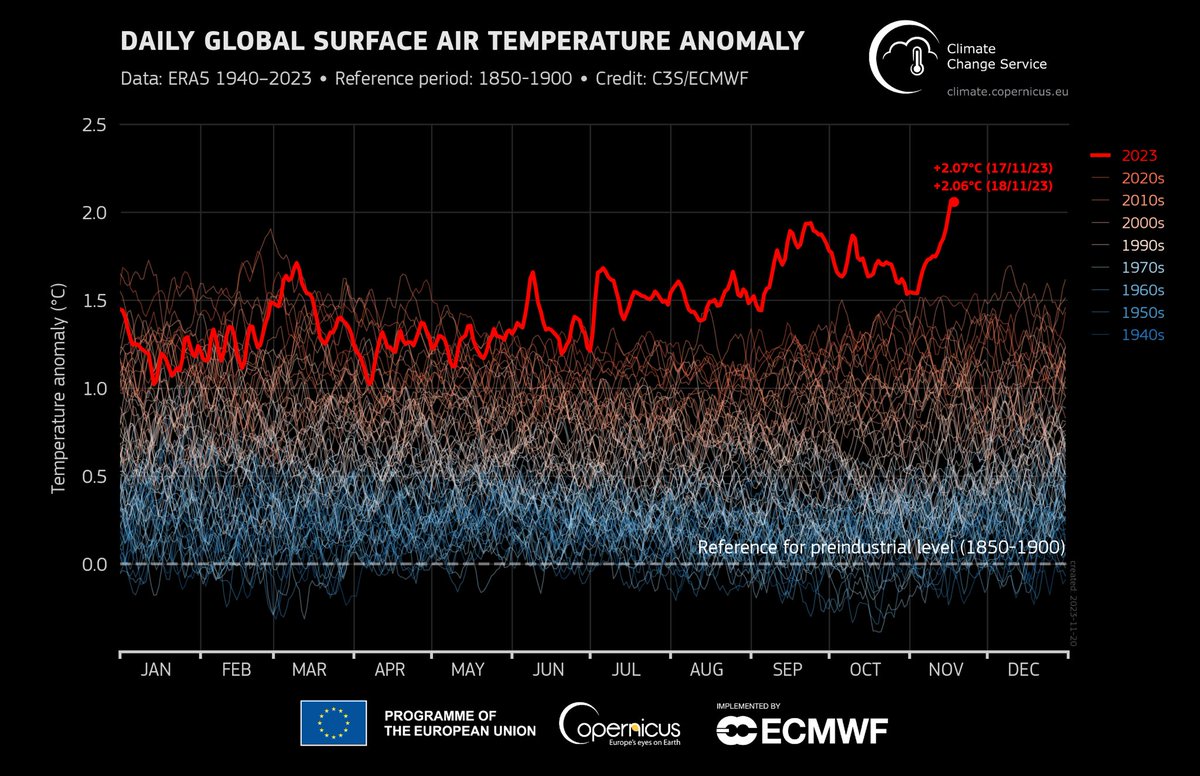
🌡️ ERA5 data from @CopernicusECMWF indicates that 17 November was the first day that the global temperature exceeded 2°C above pre-industrial levels, reaching 2.07°C above the 1850-1900 average and the provisional ERA5 value for 18 November is 2.06°C.
71
519
829
641,359
26 Sep 2023
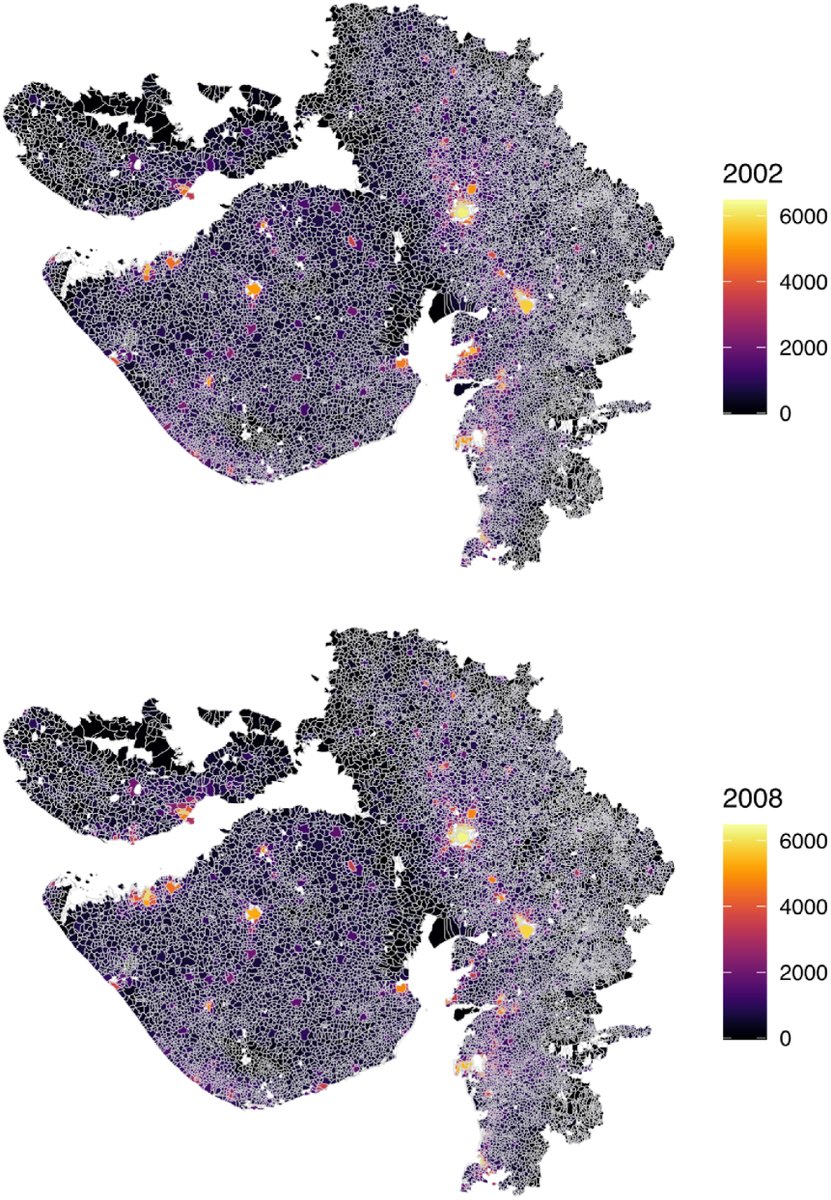
In this new article in @ElsevierEnergy Policy, @namratarc and I examine the effect of a state-level rural electrification policy in India on electricity access using night-time lights and granular implementation data.
doi.org/10.1016/j.enpol.2023…
@tudelftTBM @tudelftglobal
(1/3)
1
6
23
2,137
26 Sep 2023
We find that the overall effect of the policy on (night-time) electricity consumption was not substantial. More likely, the policy had a slight re-distributive effect, increasing electricity consumption in some villages (in some districts) while reducing it in others.
(2/3)
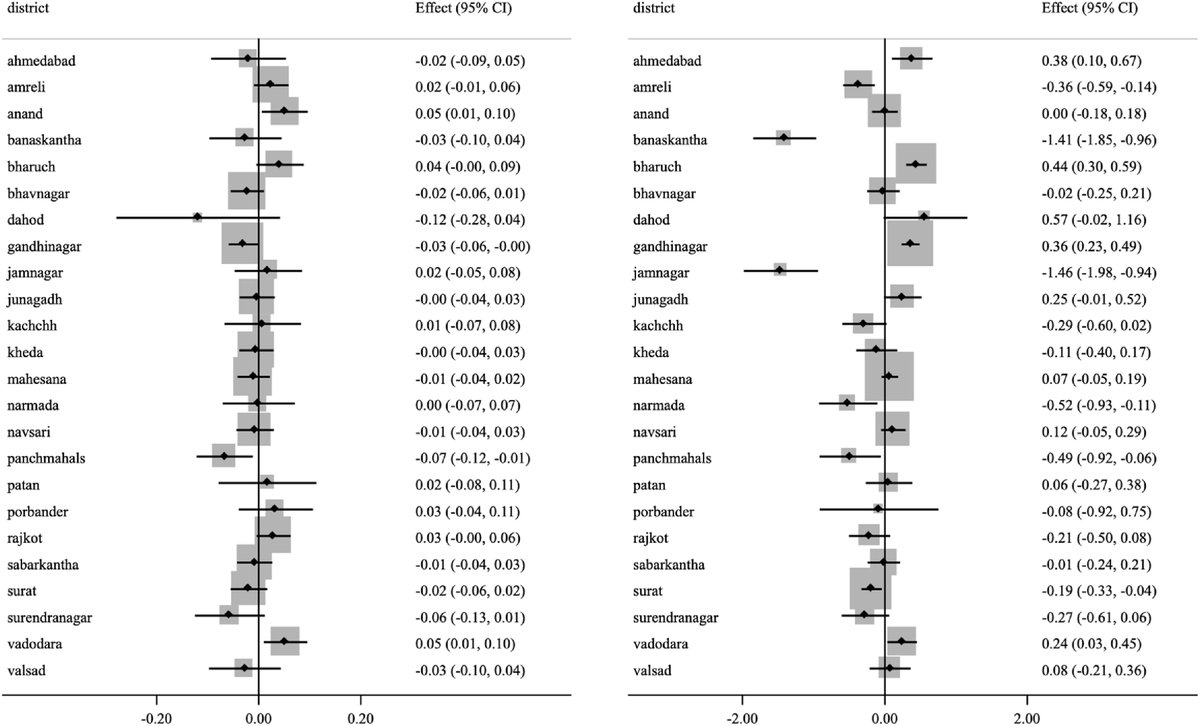
1
2
105
26 Sep 2023
A reason for the discrepancy between the perceived benefit of the policy and its limited effect on electricity consumption might be the focus of the policy on electricity supply; we recommend more emphasis on demand characteristics and tariff design for realising SDG7.
(3/3)
1
64
16 Aug 2023
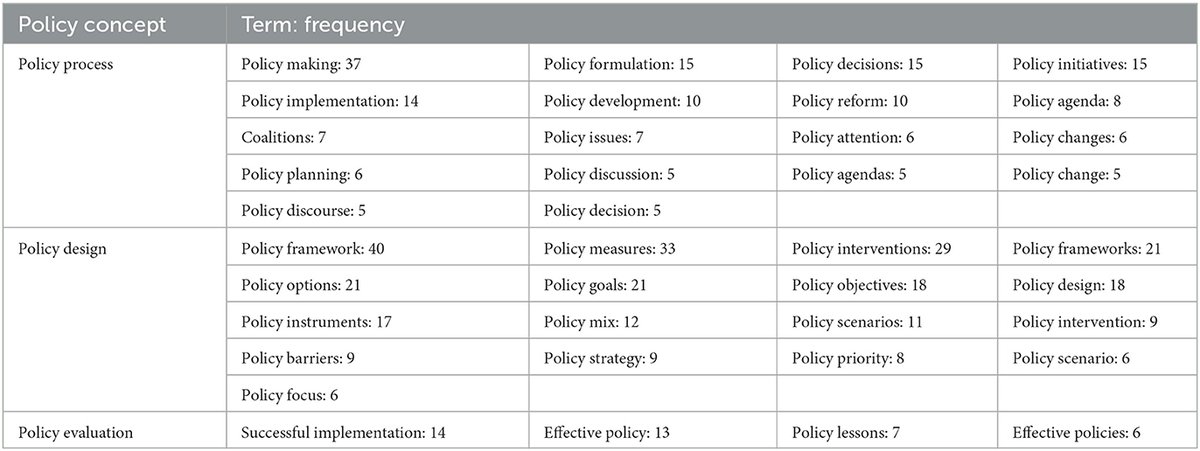
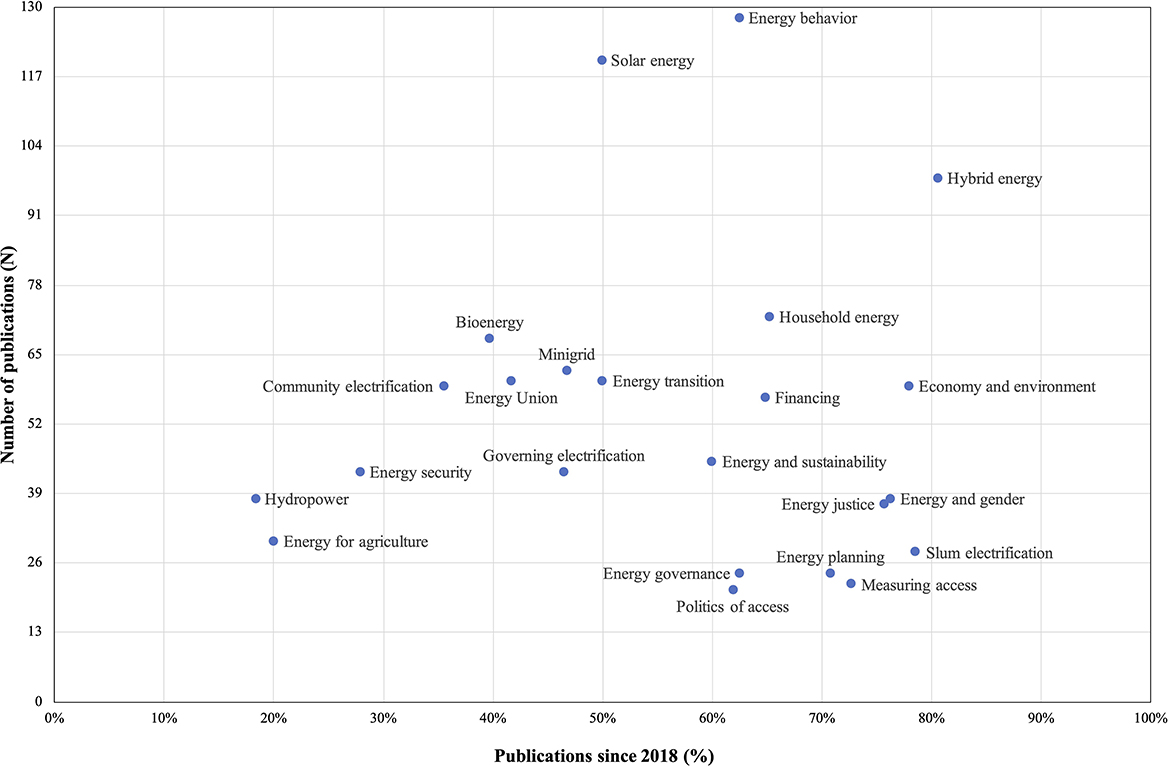
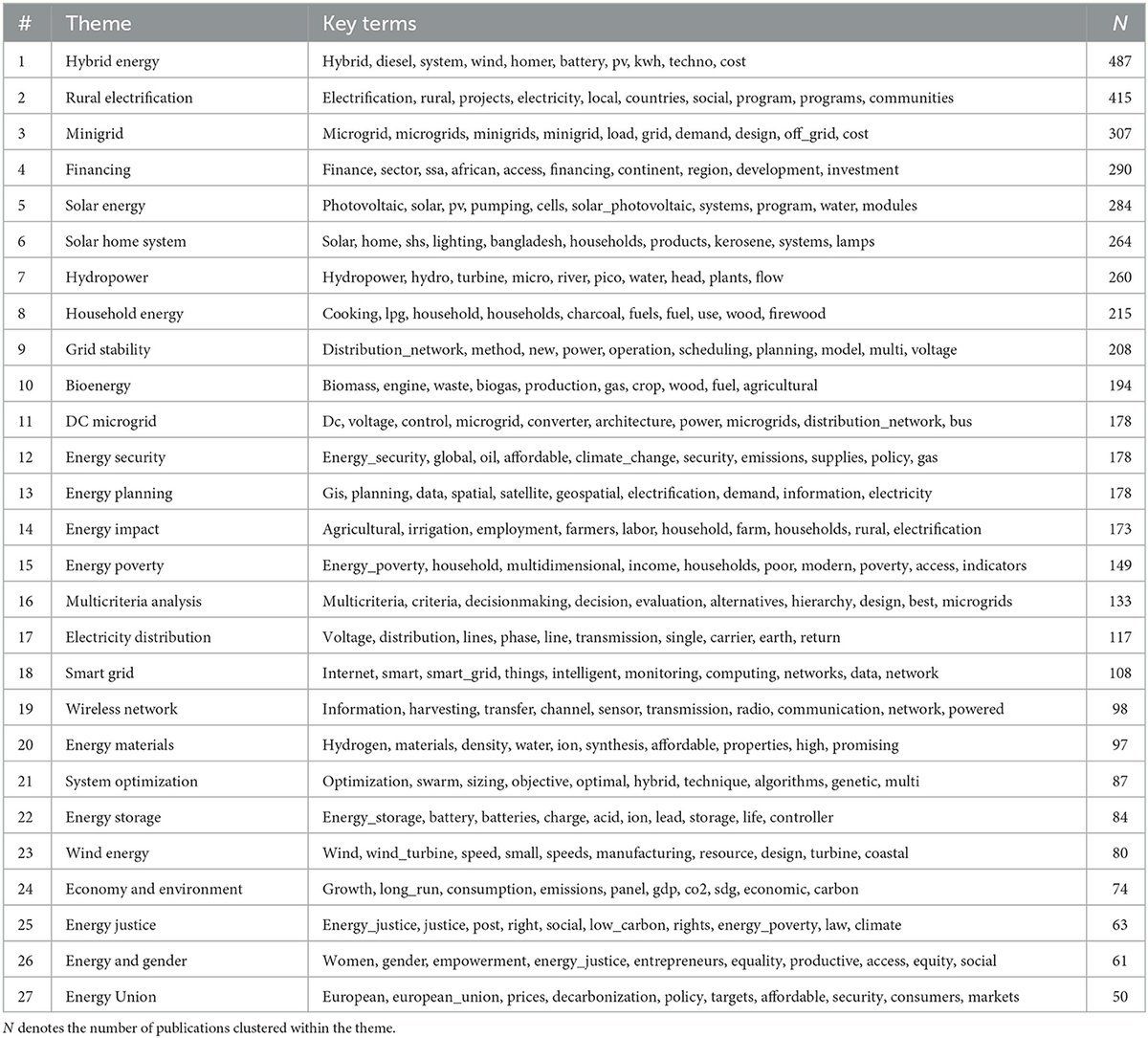
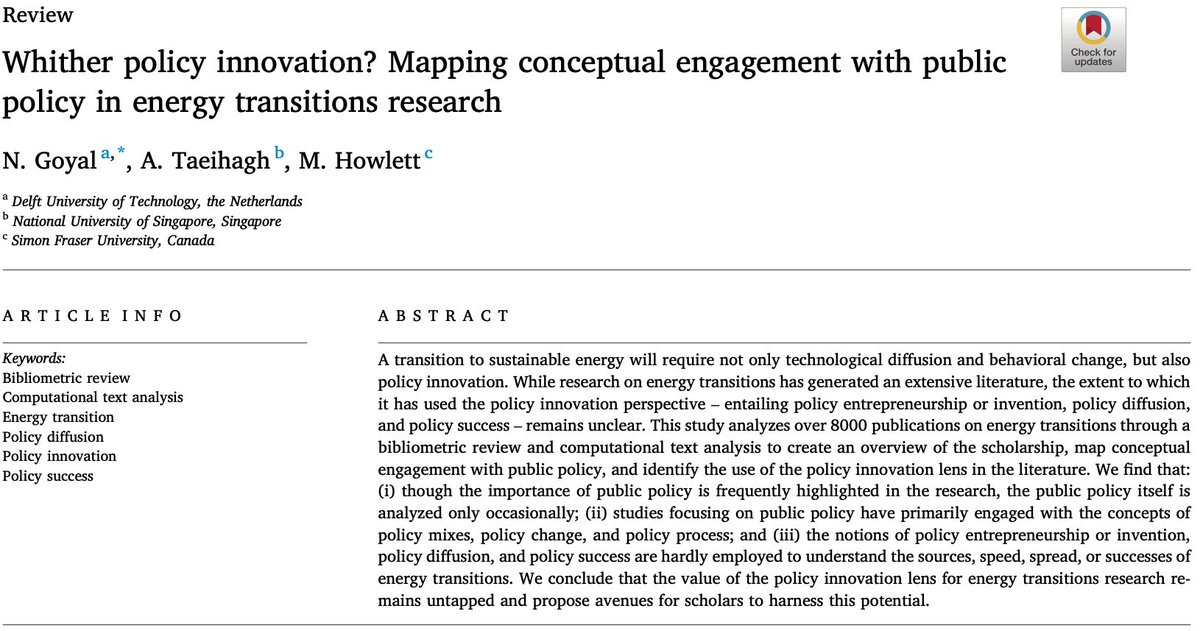
In this new article in @FrontiersIn, @howlettm and I analyse ~7500 articles on energy access through a bibliometric review and computational text analysis; we conclude that the field might be in a 'brown-out' of policy ideas.
@tudelftTBM @tudelftglobal
journal.frontiersin.org/arti…
16 Aug 2023

Just out - "Brown-out of policy ideas? A bibliometric review and computational text analysis of research on energy access" by Nihit Goyal & Michael Howlett, in Frontiers in Sustainable Energy Policy @nihitgoyal @howlettm
journal.frontiersin.org/arti…
1
8
24
2,158
16 Aug 2023
We argue three, relatively overlooked, strands from policy studies can add value to this research area: policy process research, policy design studies, and the literature on policy evaluation.
1
57
16 Aug 2023
Among other things, this might require (even more) cross-disciplinary effort and scholarly exchange; we call on scholars in energy studies and policy studies to address this gap in the future.
53