Joined November 2007
- Tweets 9,279
- Following 1,018
- Followers 62,565
- Likes 11,479
348 Photos and videos


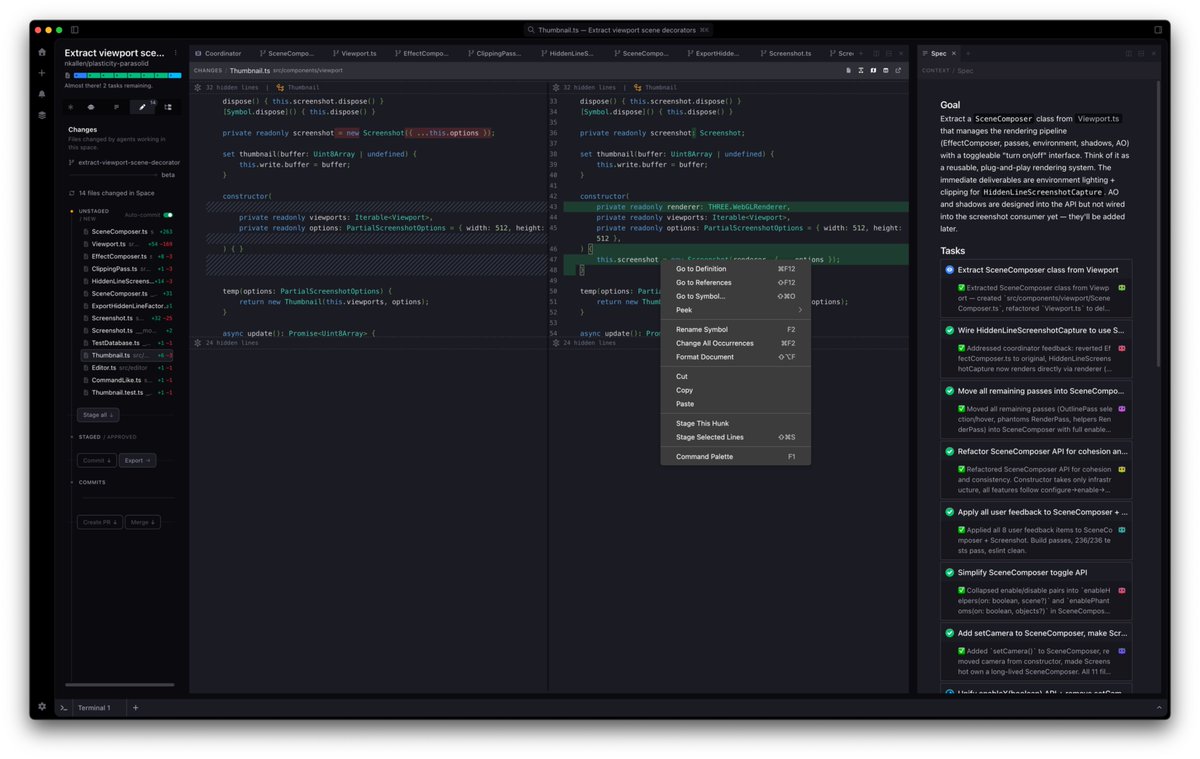

May 17
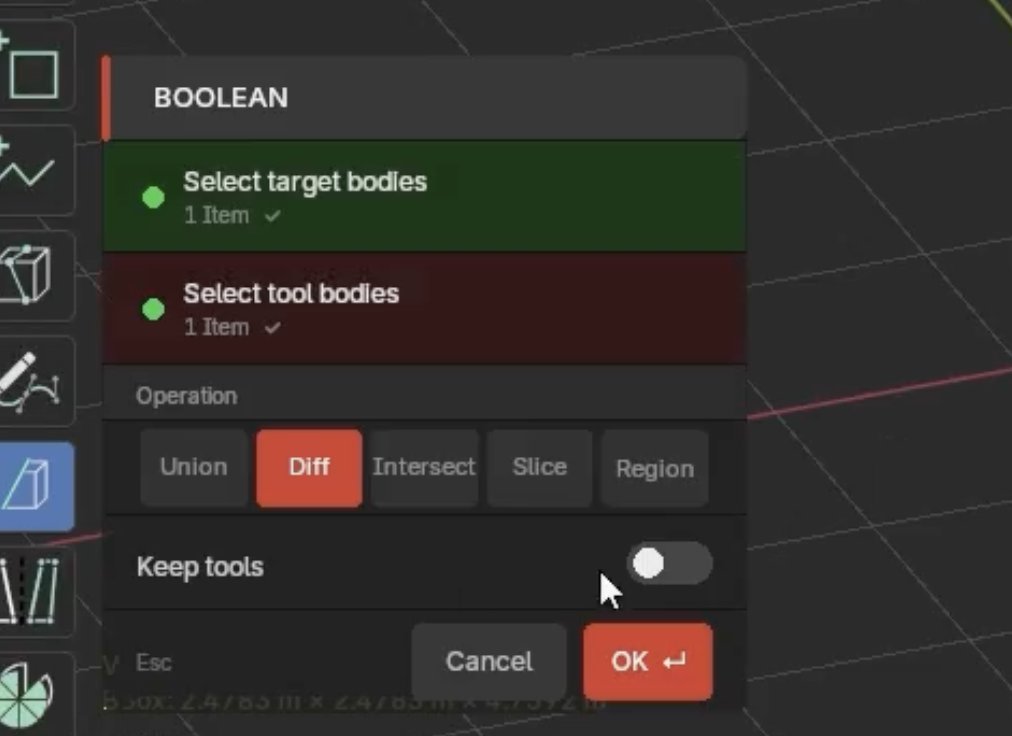
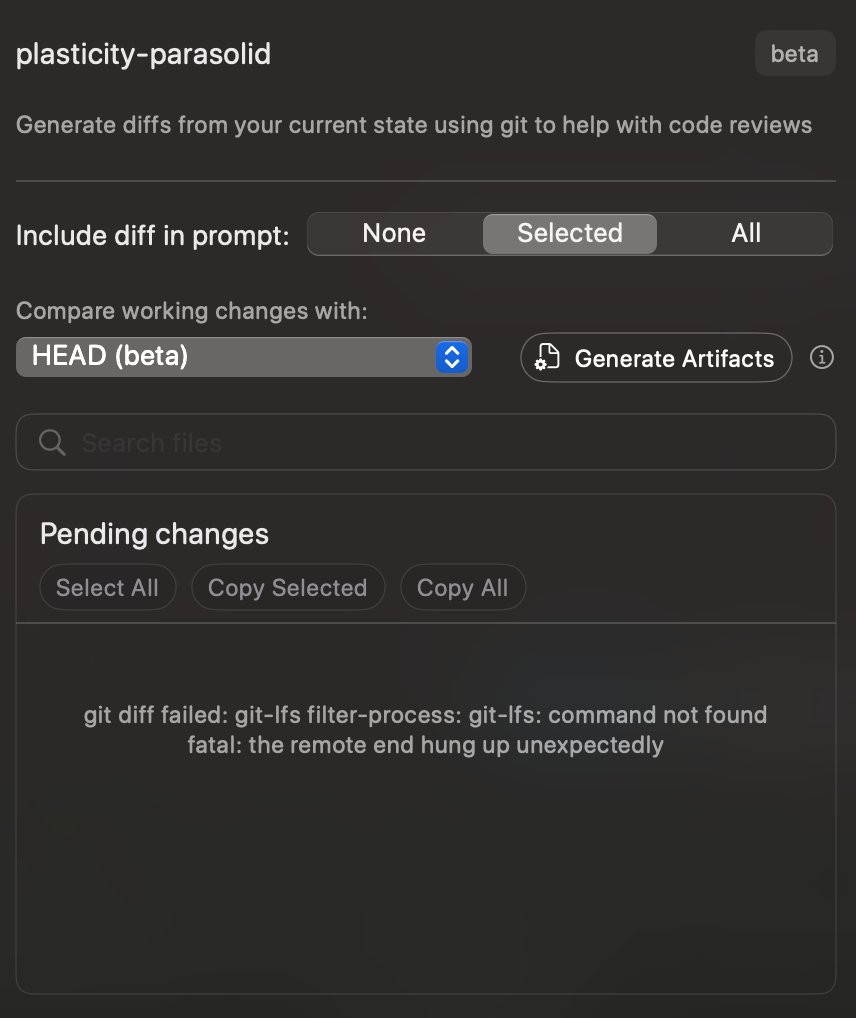
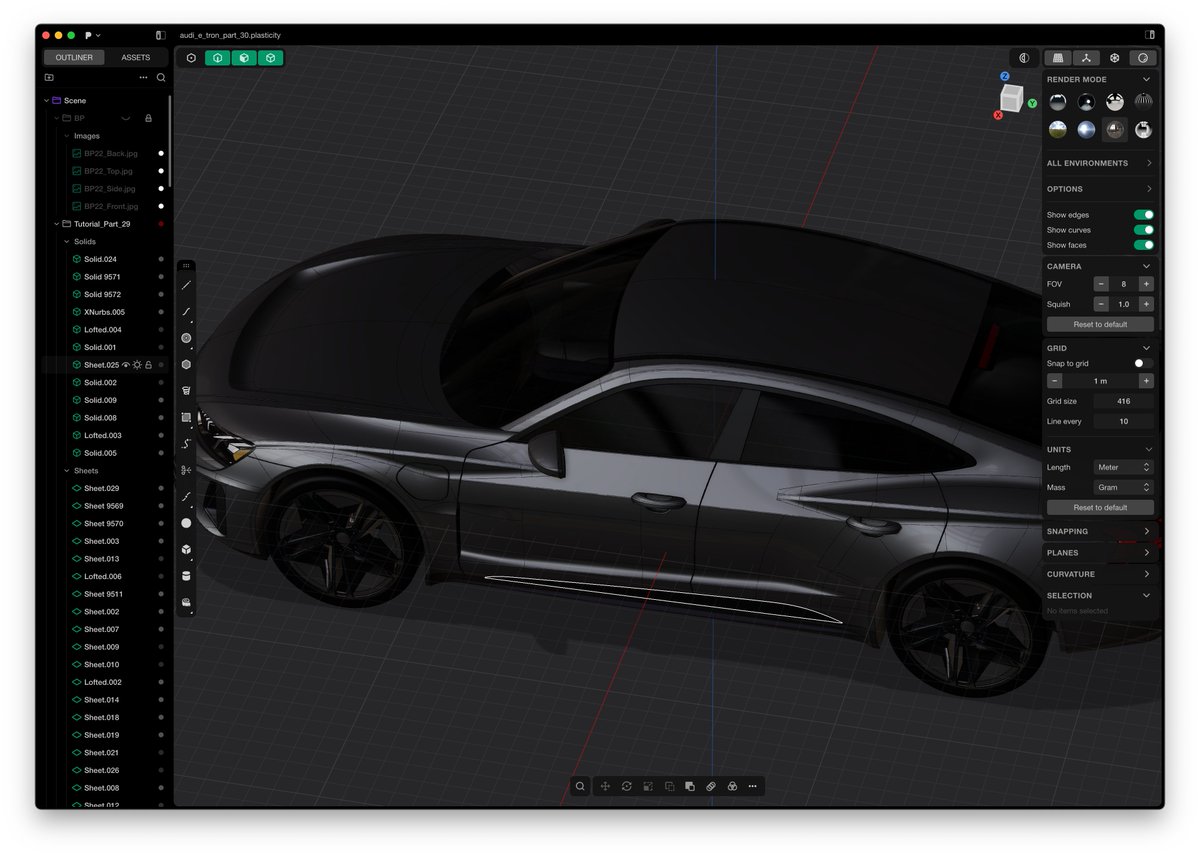
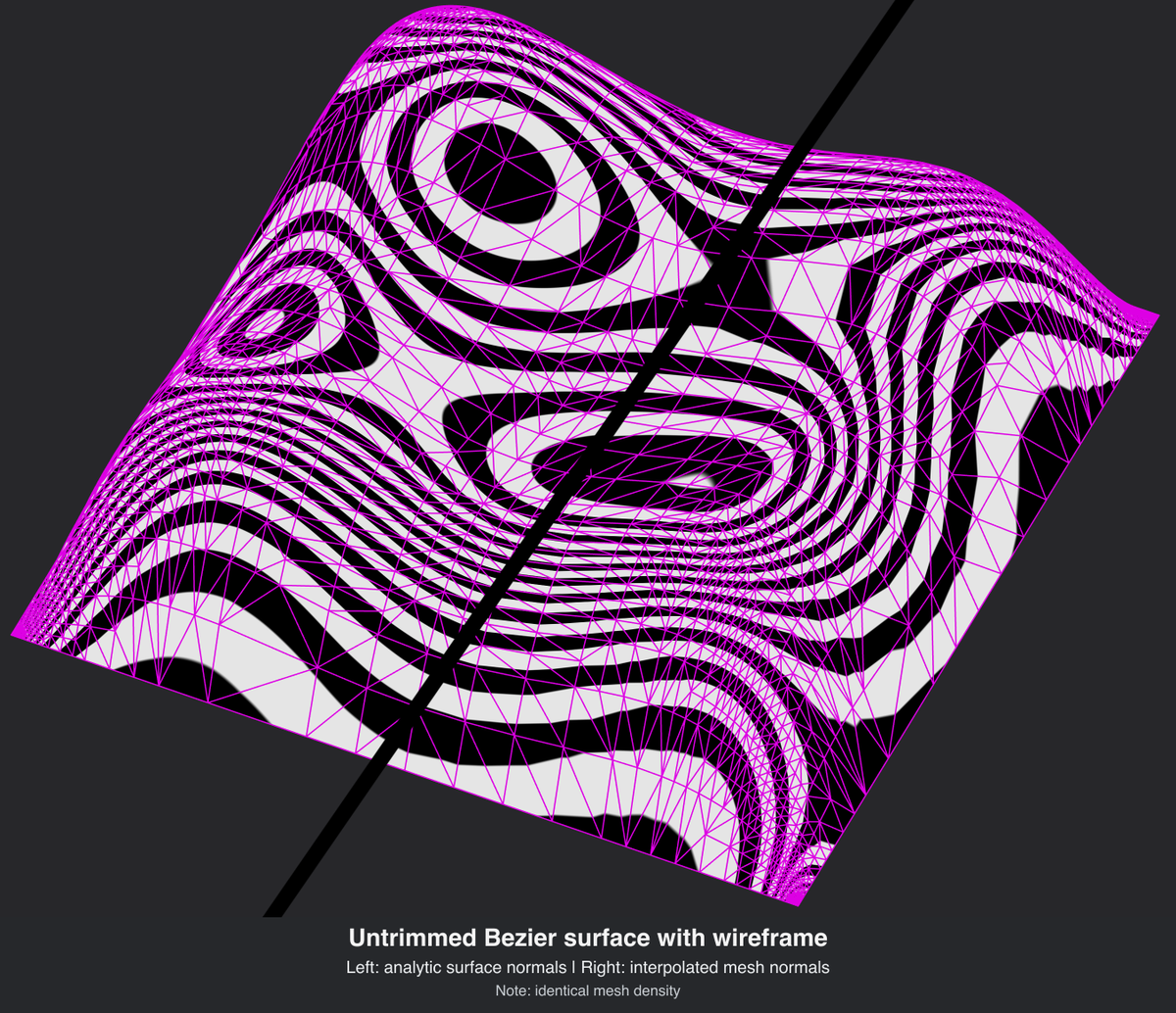
Something I’ve been researching for a bit: smoother CAD body shading without generating expensive, dense meshes.
For Bezier surfaces, the fragment shader can evaluate the surface normal analytically instead of using interpolated mesh normals. So even a coarse mesh can have clean highlights.
1
5
57
4,292
May 17
The same approach works for trimmed surfaces since the fragment shader uses interpolated UVs to evaluate the Bezier normal. The extra compute and VRAM cost is modest - certainly smaller than a denser mesh of equivalent quality. Hopefully I’ll have time to write this up soon.
15
833
Apr 16
I talk here a bit about Polysplines, a new kind of spline surface, which is a generalization of the b-spline and (hopefully) a successor technology for Catmull-Clark.
youtube.com/watch?v=FFEIhpiB…
3
5
33
5,506
from the future retweeted

Apr 16
Plasticity 2026.1 is here.
New commands like PolySplines, Slot, and Hidden Line export expand what’s possible, while major upgrades to tools like Extrude, Align, Sweep, and Mirror give you more precision and control in every step.
Less friction. More control. Update now.
6
47
280
20,752
Mar 8
Chat GPT 5.4 is really frustrating to work with. Awful hallucinations and laziness. It's hard to tell if it's "smarter" when it's so difficult to steer.
1
4
1,746
Feb 26
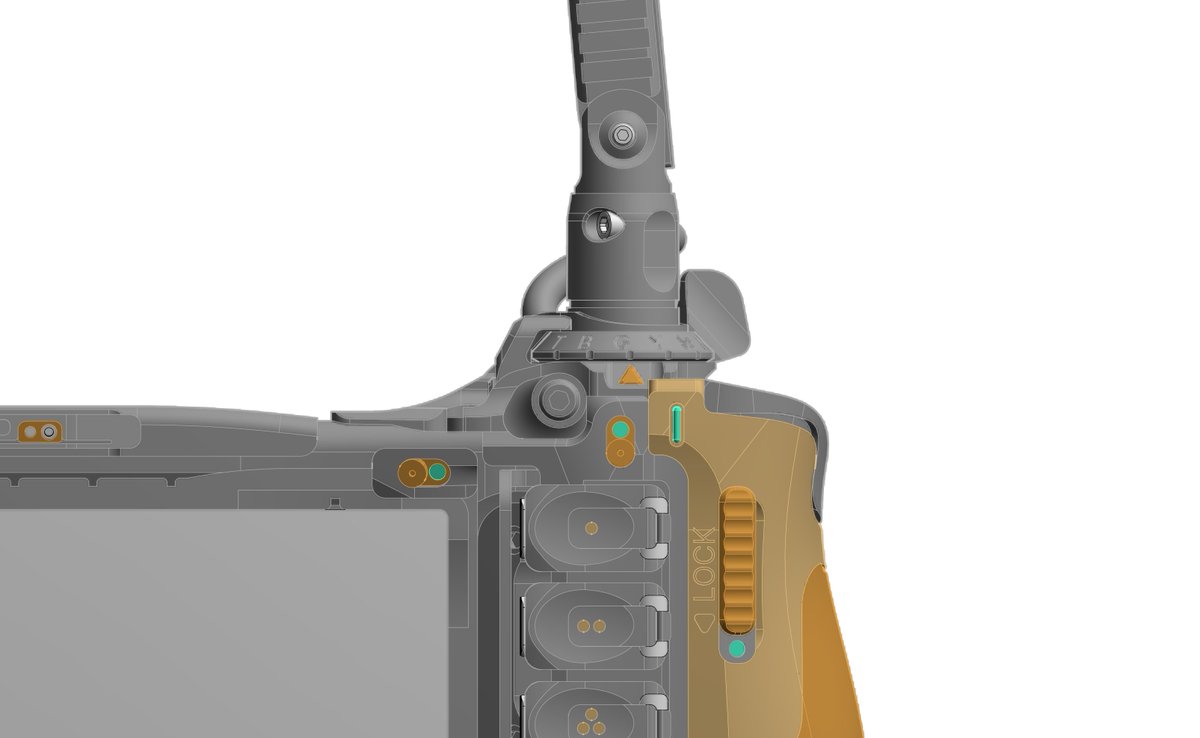
I'm excited about this upcoming feature: a rasterized image behind an (mostly analytic) hidden line drawing. It just makes for a very cool look
2
115
6,172
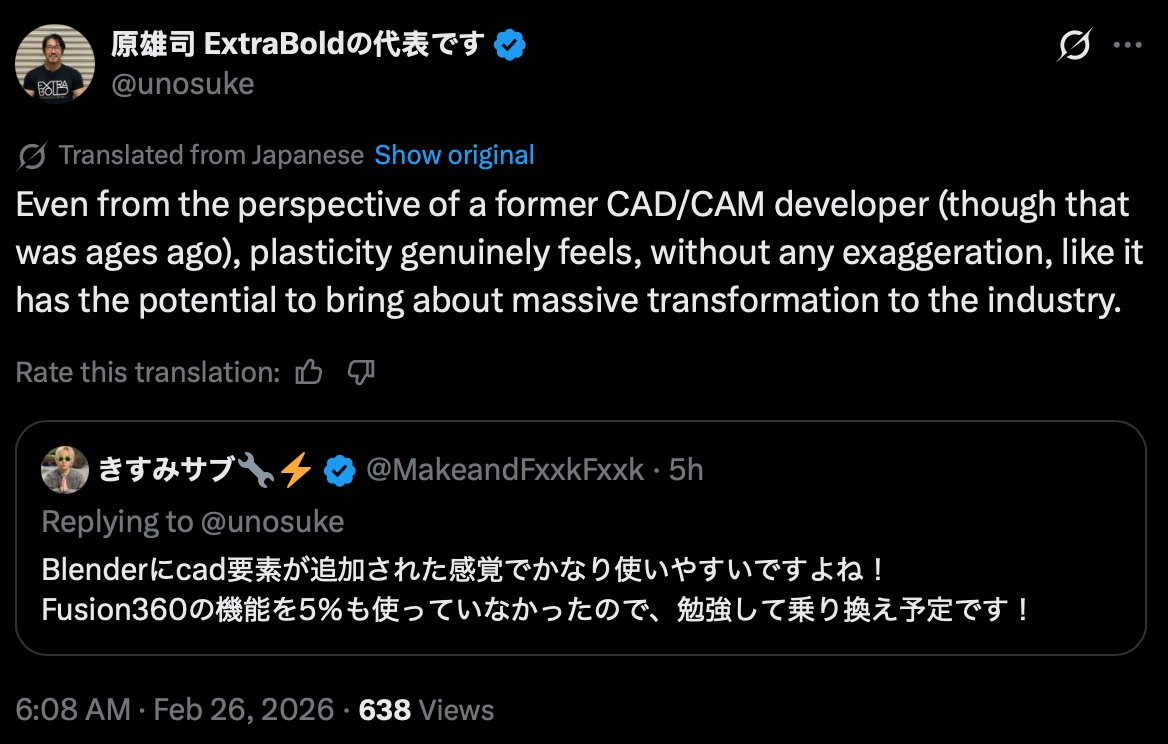
Feb 26
Honestly the next year of development is going to be even more exciting
1
16
1,769
Feb 23
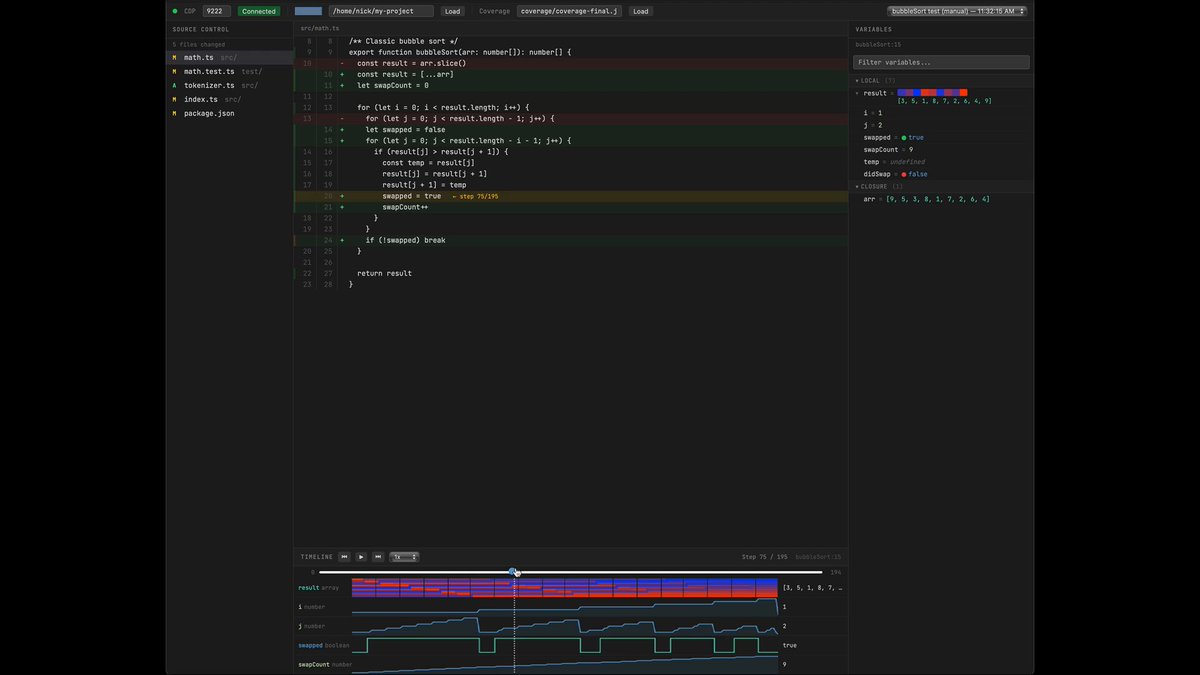
It's insane how quickly you can build throw-away prototypes with Claude now. I made a timeline recording debugger in about ten minutes.
Warning: this is partly fake data! It would surely be many weeks to make this production ready. But you can also just hack together a tool like this, use it once and throw it away after. "Single use plastic" code.
2
16
1,512
Feb 18
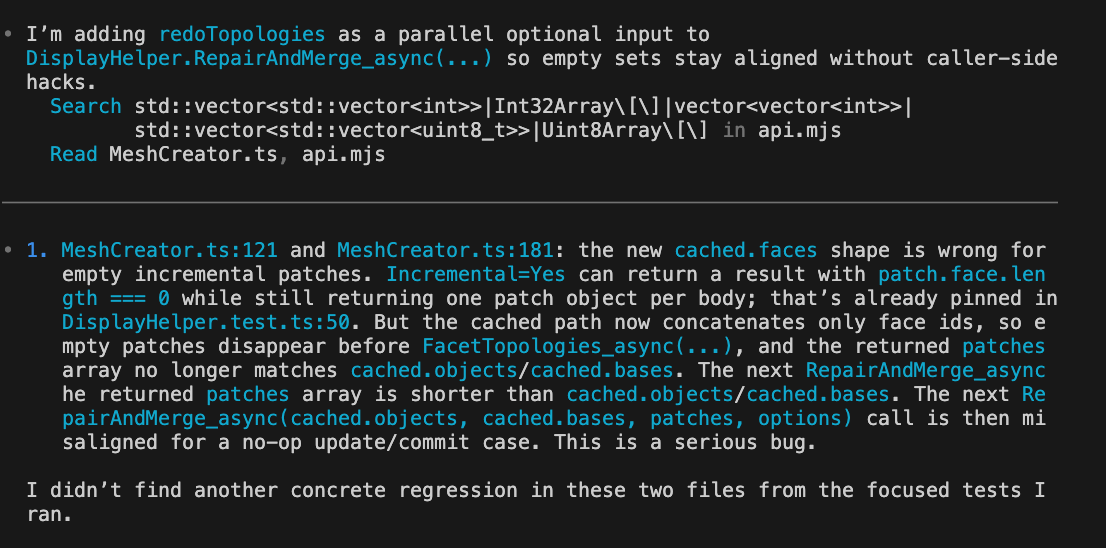
I guess this is a contrarian take at this point, but Claude Opus 4.6 is better for everyday programming tasks than Codex 5.3-(extra) high. Claude does higher quality "ordinary" work and is better at following instructions. Codex is great for anything especially tricky or mathematical, and it's superior for finding bugs during code reviews. But for everyday tasks the outcomes are worse.
13
1,313
Feb 13
Prediction: code quality will continue to matter a lot - at least for the next few years. High availability network services, for example, can easily have impossible to debug cascading failures when the architecture is unsound.
There is a large class of software where just barfing out a million lines of code is going to be a disaster. This applies to a lot of SaaS stuff that people are currently paying for, not to mention anything related to payments or banking.
Most of us don’t really care about the generated assembly code of our software (except in some critical sections), and we don’t consider duplicated (inlined) asm instructions to be “slop”. So I think there is a good chance that for a lot of programming “in the small” (ie, internal to a single function) the quality of that code will matter less and less.
But the basic structure of software: how it’s decomposed into modules, how cohesive the design is, the fundamental choice of data structures, and so forth: high code quality here will allow llms to be more productive, produce fewer bugs, and move faster. This is “programming in the large”.
Today’s models (Codex 5.3 and Opus 4.6), are genuinely awful at this programming in the large stuff. Obviously it will get better with time. But for the foreseeable future the best harness for these models is high quality code, good unit tests, good type checking, explicit invariants assertions, etc.

a lot of our recent hires care deeply about code
how's it's written, how to make it elegant, how to make it easy to understand and a joy to maintain
it's a counter bet in a field where most people are saying we won't be looking at code for much longer
2
8
1,834
Feb 10
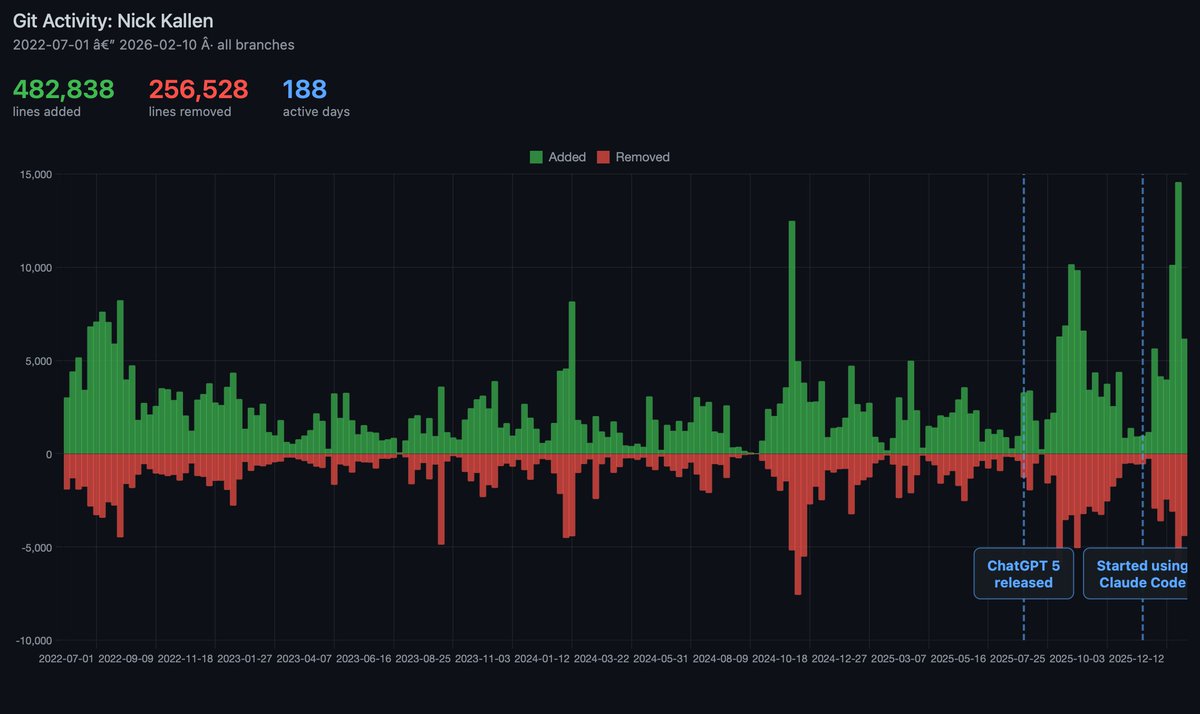
I've been curious exactly how much LLMs have impacted my productivity. Here is a chart of all the lines-of-code I've added/removed from Plasticity over the last 3 years. I've put labels for when ChatGPT 5 came out and when I started using Claude more recently.
2
14
1,663
Feb 10
Whether code quality will still matter is an open question. I'm still spending a lot of time reading tidying the code after the LLMs implement a feature. I'm guessing that good architecture simple code will help LLMs move faster and introduce fewer bugs. But it's not clear that it really matters: maybe the machines will be able to handle any gnarly mess next year.
Feb 10

Same, tbh.
For a very long time I used to believe that code quality matters and most devs just can’t write good code.
Oh boy, how wrong I was.
2
9
1,814
Feb 9
I don't think Opus 4.6 is significantly better than 4.5. Not particularly impressed with this update
4
6
1,023
Feb 5
For my first test with Codex 5.3 it did a great job and it is really fast... Definitely fixes my main frustration using Codex. Still haven't tested Opus 4.6 yet but a 1m token context window could be a huge deal
2
6
1,727
Feb 4
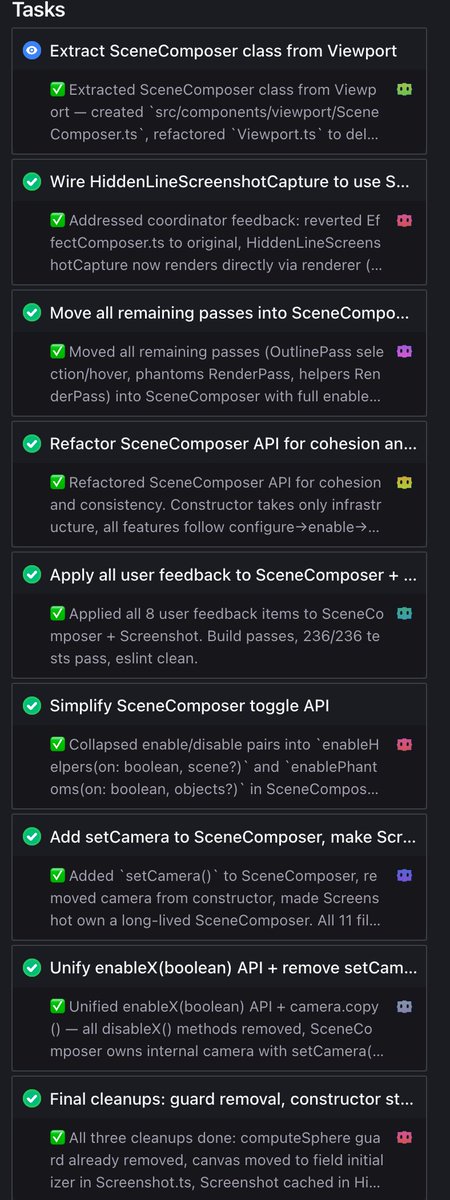
There has never been a better time to refactor code. Claude is amazing at these mechanical tasks like reorganizing classes and removing deprecated methods. You can have it generate 100% code coverage, do the refactoring, have GPT5-Pro do a code review, write performance benchmarks, and even write property tests via tools like fast-check. When you're done, throw away the bloated tests and you're left with better code.

I’ve refactored more code in the last couple months than probably my whole career combined.
Poor architecture and tech debt has no more excuse.
A lot of the refactor sessions were done in parallel while building new things.
1
7
1,906
Feb 4
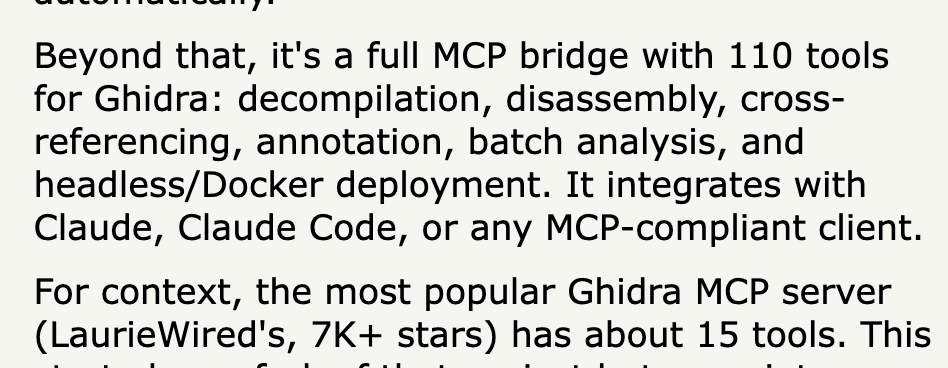
This sort of stuff genuinely frightens me. There are already so many sophisticated software pirates in the world. Making it 100x easier to reverse engineer binaries via Ghidra and Ida would end of the viability of commercial non-subscription software.
Feb 4

I thought it's common knowledge now that fewer tools is better? Also if you want Ghidra: a skill is all you need (unsurprisingly). github.com/mitsuhiko/agent-s…
2
10
1,979
Jan 11
For me it's now 1 month where the majority of the code I write is via Claude Code. A minority is typed out the old-fashioned way. I keep Claude on a very tight leash because quality is mixed; and no vibe coding aside from throw-away experiments. I doubt I'll go back the old way of coding, especially if the models continue to improve. But even with the current model quality, the productivity boost is too big to ignore.

New blog post: Don't fall into the anti-AI hype.
antirez.com/news/158
3
1
7
2,038