
Host @AIDailyBrief // Founder & CEO @besuper_ai
Joined April 2008
- Tweets 38,530
- Following 6,616
- Followers 68,684
- Likes 62,062
5,194 Photos and videos
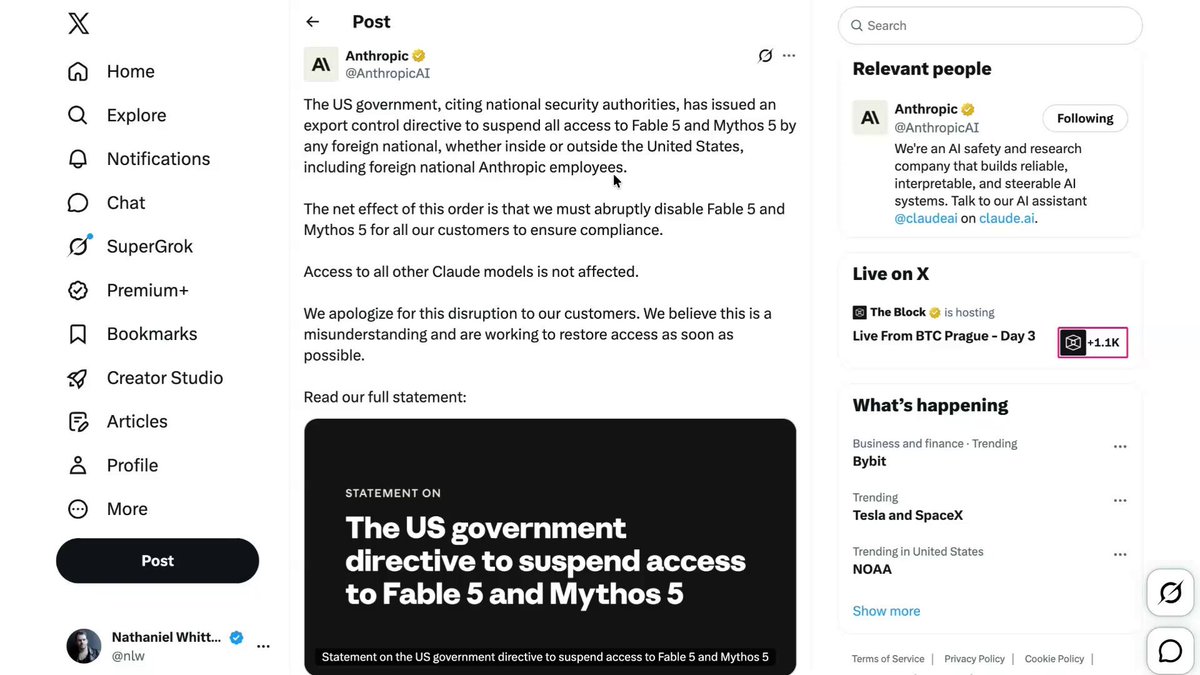



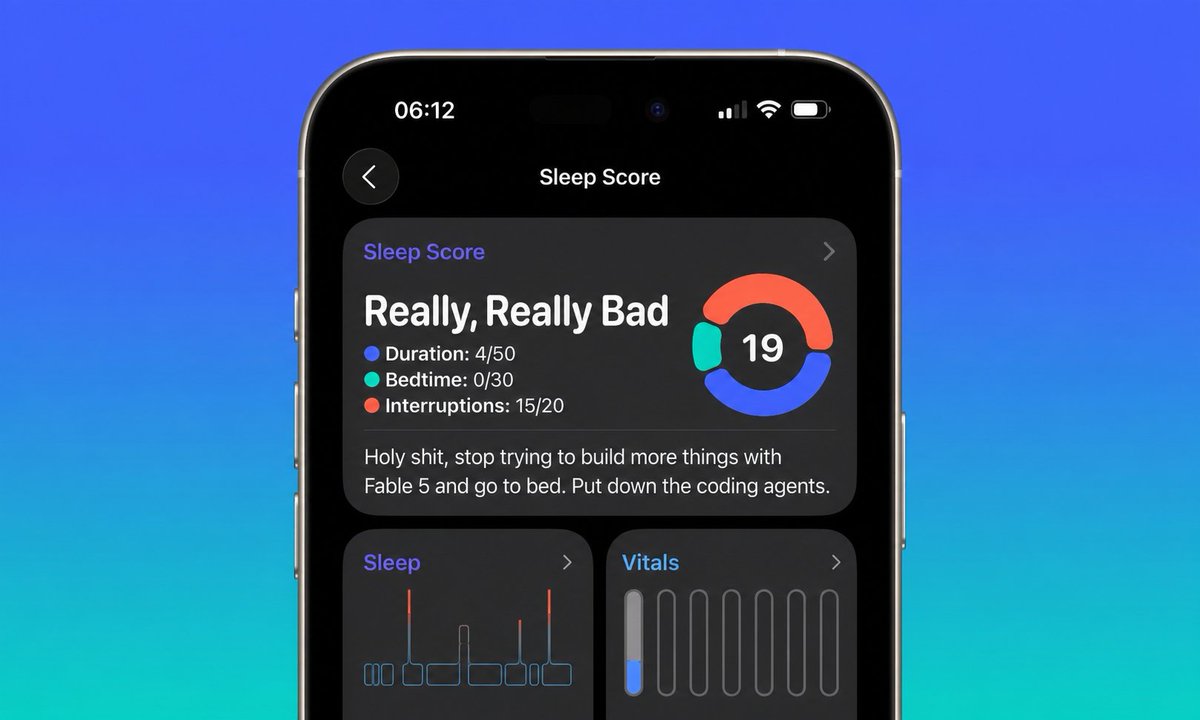

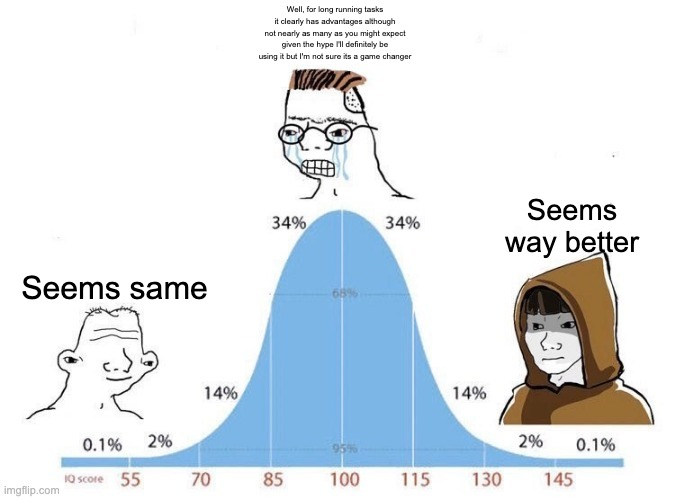




BREAKING: Iran agrees to keep Strait of Hormuz open in exchange for Fable 5 access.
Says Khameni "I was right in the middle of something."
1
24
1,385
I feel like Opus is trying *really* hard to impress me. Like the second stringer just got put in the game because the star went out with an injury.
2
5
1,322

Jun 13
DoW comms certainly not doing much to deny this is primarily about the WH not liking Anthropic.
Jun 13

Three months ago, @DeptofWar kicked @AnthropicAI out of our building—forever.
Every passing day proves why that was the right move. 🇺🇸
4
20
3,696
Nathaniel Whittemore retweeted

Jun 13
I’ve had a number of conversations with folks inside and outside government about the current situation with Anthropic, and here is what I believe to be true:
— As we know, Anthropic publicly released its Mythos class models earlier this week under the commercial name Fable.
— Fable is Mythos with guardrails. But if those guardrails fail, then you’ve exposed Mythos and its advanced cyber capabilities to people who shouldn’t have them. (Keep in mind that Anthropic itself widely promoted the idea that Mythos was a cyberweapon and needed to be regulated as such. They asked for government regulation of Mythos and championed the guardrails on Fable. If there is a vulnerability — big or small — it is Anthropic’s responsibility to patch.)
— A highly credible trusted partner of both Anthropic and the USG who was testing Fable came forward with a jailbreak of those guardrails. The Admin asked Dario to fix the jailbreak or de-deploy the model. Dario refused.
— In their blog post, Anthropic defended its decision by saying the jailbreak isn’t serious. That is not what the trusted partner and the USG believe; nor is that kind of minimizing language consistent with Anthropic’s brand as the AI safety company. It’s difficult to fathom how they could claim a jailbreak allowing operability of a cyber weapon could be defined as not “serious.”
— In the past, Anthropic has always said that safety must be top priority and taken super seriously. In this case, Anthropic prioritized the continued offering of the consumer model over safety.
— In reaction, the Admin issued the export control. The Admin did this reluctantly. It’s been very surprised that Anthropic hasn’t wanted to cooperate with a reasonable safety request (ie fixing the jailbreak issue). Anthropic’s reaction is very much at odds with their branding and ethos as a safe AI research community.
— The Admin’s hope now is that Anthropic remediates the safety issue, the export control is lifted, and Fable goes back into general release. The Admin wants all of this to happen as soon as possible. It is frankly bewildered that Anthropic hasn’t wanted to comply with safety requests that it previously said were its highest priority.
— Those trying to misdirect and tie this action to the prior DoW/Anthropic issues are wrong. The Admin values Anthropic’s technical capabilities and feels that this issue, while serious, should be easily resolved. The ball is in Anthropic’s court.
2,127
3,131
24,466
7,190,795
Jun 13
Blame Anthropic? Blame Howard Lutnick? Blame Andy Jassy? Blame Canada?
First emergency @aidailybrief episode since the sama ouster and let me just say...
There's plenty of blame to go around.
5
1
26
3,022
Jun 13
Does the Trump Admin not realize that the entire US economy is riding on Anthropic's revenue continuing to go up?
15
50
3,686
Jun 13
I haven’t seen a slapfight this disruptive since SBF got after CZ. That one didn’t end well for anyone.
1
8
3,640
Jun 11
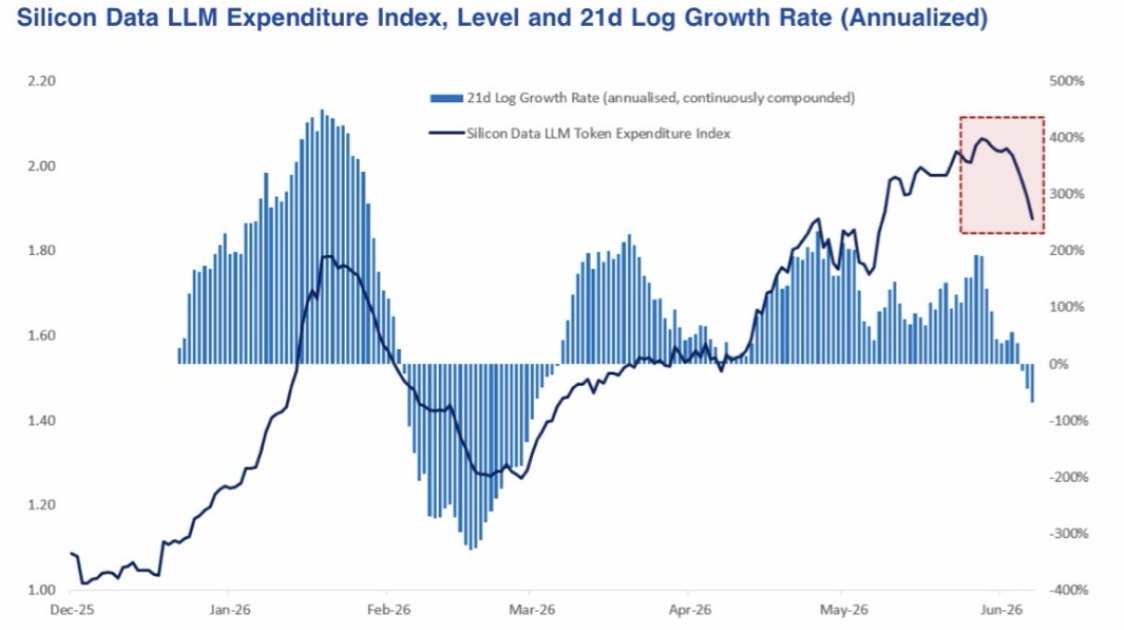
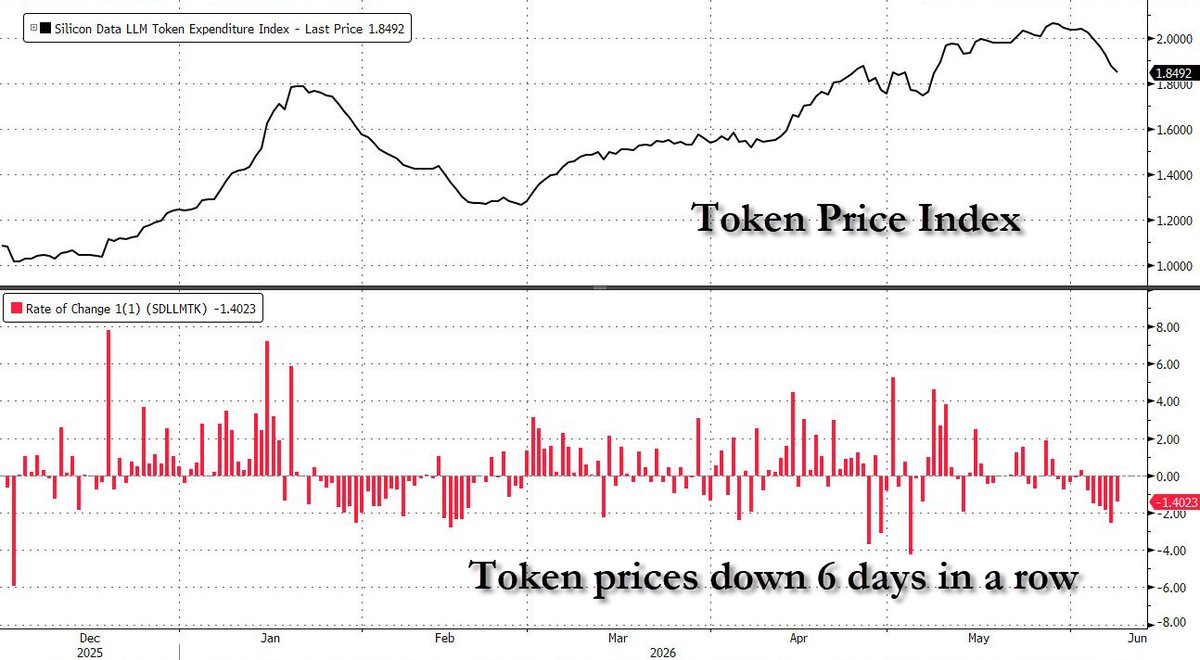
Here's the latest chart that literally everyone is getting wrong. People are treating it like it's an indicator of total AI demand flattening or going down. It's not even close to that.
This chart is an index of the weighted average of the price people are paying for a million tokens, regardless of the LLMs they're using. It has *nothing* to do with total expenditure. It has *nothing* to do with demand.
What it tells us is that the basket of LLMs people are using is shifting to include lower price models. But anyone paying attention to the shift from the token subsidy era to the token scarcity era could have told you that.
You've got:
-@tryramp showing that DeepSeek is a trending vendor
-@Cursor showing Composer 2.5 competing with 4.7 and 5.5 for 1/10th the price
-Companies like @FactoryAI offering updated routing services.
I said before -- every company in AI is now a token efficiency company.
This chart *is* part of that story, and the shift to lower cost options *does* have interesting and important implications (some of which have pathways to being not good for the labs).
But I'm so fucking sick of people acting like Zerohedge trying to drop the newest counter-narrative chart and acting like it's some massive doom pronouncement.
5
2
40
7,934
Jun 11
This is the most horseshit answer he could possibly have for this. He's arguing that he clearly understands the social media dynamics at play and yet somehow he doesn't realize that when he drops numbers like 10 to 50% unemployment, that's the only thing anyone's gonna fucking write about?
Give me a break. You brought this on yourself. You bring it on yourself when you insist on having the same interview three times a week for months at a time. Stop blaming other people.
Jun 10

Anthropic CEO Dario Amodei has this message for anyone calling his AI predictions “doom marketing” — including Jensen Huang. And no, he’s not walking back his concerns about jobs.
13
4
79
11,243
Nathaniel Whittemore retweeted

Jun 10
Today was a bad day so I’ve decided to rage against this index. Shockingly, people don’t know that you can’t reliably track tokens. Nobody outside the labs / hypers sees the actual token flows.
Before I even get to the flaws in the data, did anyone consider that as capability rises and cost falls, task complexity goes up? Agentic work has a long tail of simple steps for every hard one, and the easy stuff scales disproportionately. This index skews toward API middlemen running harnesses that route subtasks to the cheapest capable model (including using sonnet > opus!!). So a falling blended price may say very little about who’s using what, and a lot about total usage and task complexity going up. Now to the data.
This index in particular is a blended avg price of itself a subset of incomplete data. For ex, one big synthetic data run on a cheap open model could impact it while frontier demand remains the same.
The sample also liens on aggregators (api middlemen man). So you’re not seeing direct enterprise contracts or first party consumption (using the app). This is like looking at online retail and not having prime or Walmart.
And it has no idea what anyone actually pays. 1) All tokens are not the same, 2) list prices do not equal token prices.
On 2, important cost reduction techniques like batching / caching are offered at huge discounts (50-90%) and so mix shift here adds to the noise.
Free tokens / expanded limit promos (liek what anthro is doing right now) also show up as falling prices… so the marketing budget is bleeding into the “demand” chart.
And if you needed another reason: if the conclusion is people are using frontier models less bc the chart is rolling, how would you explain the chart also rolling at the start of the year when everyone was having an orgasm about frontier lab (Claude) ARR absolutely ripping during this period?
Which is all to say that model usage is assuredly evolving (see NBIS token factory) and that may be the right conclusion, but i would not be using this data to “track” that.
Jun 10

This data is not what people think it is.
5
6
88
30,033
Nathaniel Whittemore retweeted
Jun 10
This data is not what people think it is.
Jun 10

Token prices down 6 days in a row: longest streak since January.
"Adoption is becoming less about what frontier models can do and more about the price... the recent drop in the token index may reflect some of this shift toward cheaper models"- Citadel
5
1
45
52,479
Jun 10
X today in a nutshell:
Option 1: “Fable sucks. How could anyone use this garbage. GPT 5.5 is better. Opus 4.8 is better.”
Option 2: “Hark; I am an empty vessel as the machine god’s unfathomable capacity maketh my toil well & truly meaningless. Woe, woe I say!”
No in between.
23
2
29
5,560
Jun 10
This isn't even slightly the average response people are having. This is the response of people who have never asked AI a question about biology in their goddamn lives, read Anthropic telling them that they put ridiculously overzealous filters around biology, and then go ask a biology question so they can tweet angrily about it.
Jun 10

i’m sure a few people, like your friend, have gotten good stuff from fable! it is certainly a powerful model. but no, the overwhelming response has been mass disappointment bc most everything is just being routed to Opus, which we already have
3
10
2,820