
Joined June 2023
- Tweets 1,870
- Following 25
- Followers 739
- Likes 5,870
209 Photos and videos










Pinned Tweet

15 Nov 2025
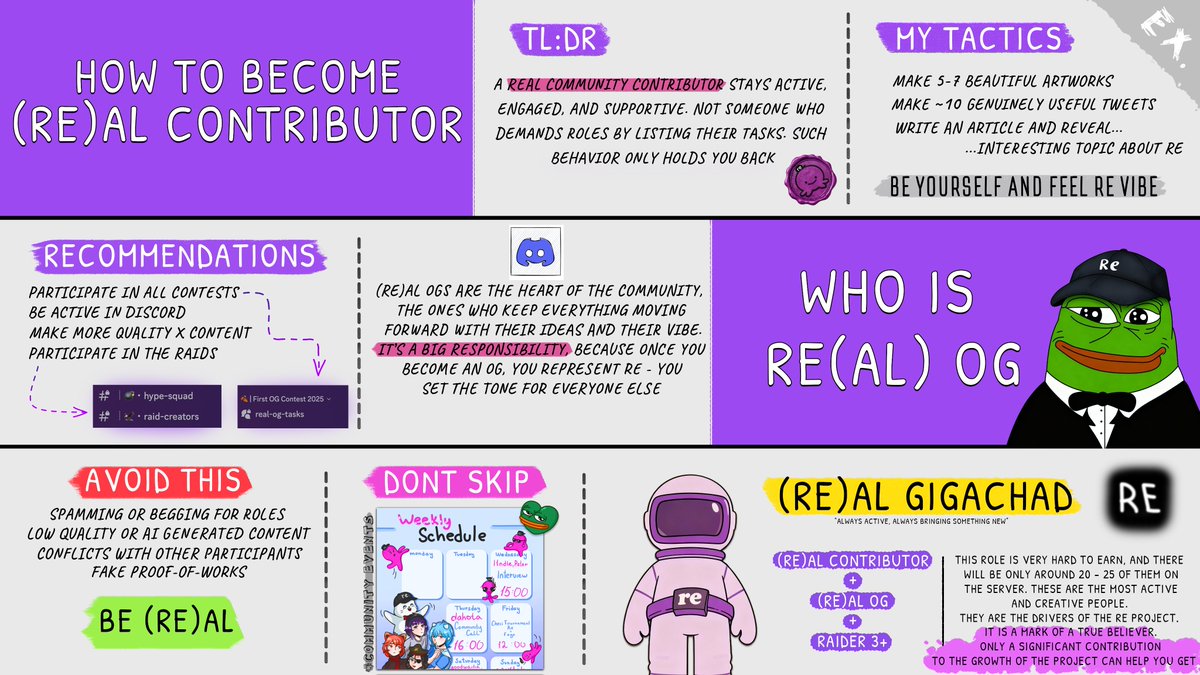
BECOME A (RE)AL ONE
I made a clear infographic for everyone who wants to earn roles in @Re
(Re)al Contributor -> (Re)al OG -> (Re)al Gigachad
Tactics, recommendations, what you should avoid
@ChazEevee | @st3phdoteth | @miketwinks
161
10
278
4,935
Arthur Czar retweeted

3 Dec 2025
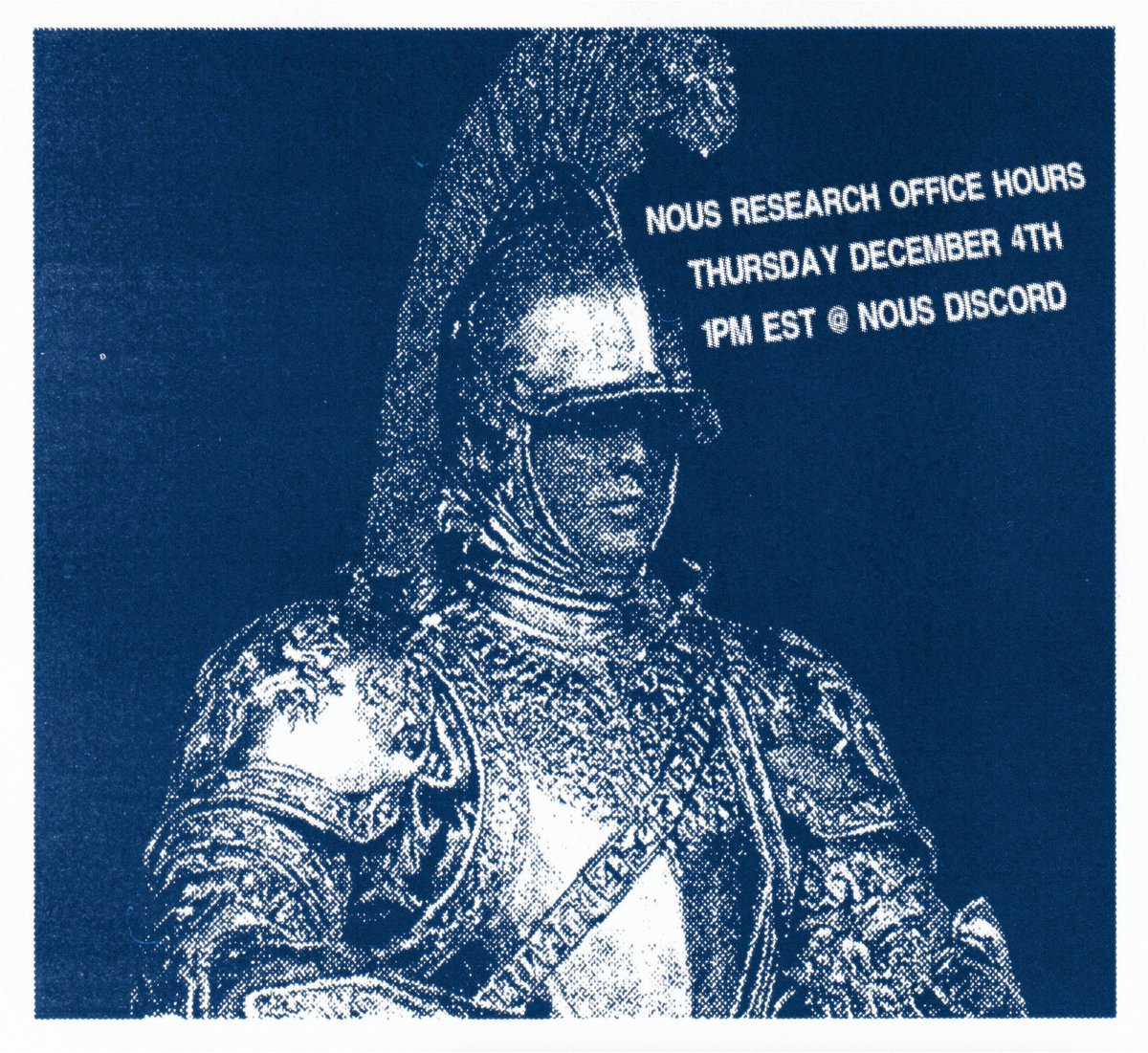
Join the Office Hours tomorrow to learn more from the team building Psyche!
x.com/NousResearch/status/19…
25 Nov 2025

Join the team behind Psyche for an Office Hours session
next Thursday at 1PM EST → discord.gg/NousResearch
1
2
41
11,852
Jan 14
You don’t need to scream to make waves 🌊
@RialoHQ is about true privacy. You decide what to show the world and what stays behind the mask
But here is the trick: everything is still honest and fully verifiable
Your rules, your data, zero trust issues
That’s how we do it
10
159
Jan 8
Dont worry, i always make sure everythings safe before heading out
Thank you, @RialoHQ
1
15
159
Jan 3
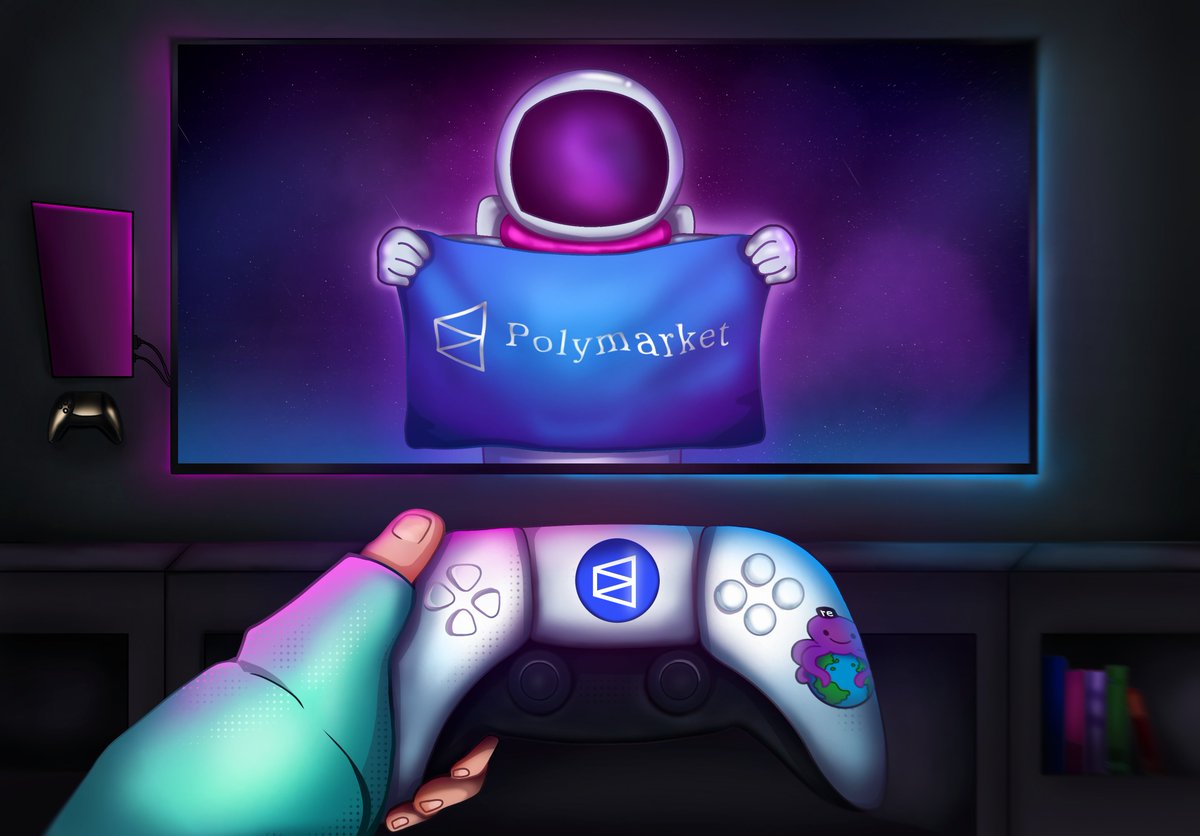
Let’s explain Rialo in gamer terms
Imagine a regular blockchain is a console with no internet. You can play, but everything stays inside the box. It knows nothing about the real world
Rialo is that console plugged into the web 24/7. It doesn’t just keep score, it talks to the outside world directly
Now your "blockchain game" can actually:
- Check the weather and change the game world if it rains outside
- Text your phone when something huge happens in-game
- Safely check your bank balance before you buy loot
- React to real stuff like Bitcoin price or news without needing extra "oracles"
Magic? Kind of.
It’s just a blockchain that actually sees the world out of the box instead of living in a vacuum.
That is @RialoHQ
3
9
148
Jan 2
I catch myself thinking that in Re Protocol the choice between Basis Plus and Insurance Alpha is pure risk psychology.
Basis Plus (reUSD) feels like a cautious deposit: 6–9% APY, backed by T bills and calm strategies. You sleep well, but there’s no crazy upside.
Insurance Alpha (reUSDe) is more like a small business: 15–20% plus with real insurance risk. A wave of big auto or home claims can shake the yield curve.
My take:
want an onchain bond‑style asset → reUSD
believe in the insurance market and can handle drawdowns → reUSDe
Either way it’s RWA, not memecoins. Calculate risk, read the docs, don’t full send on emotions
@re
6
18
169
30 Dec 2025
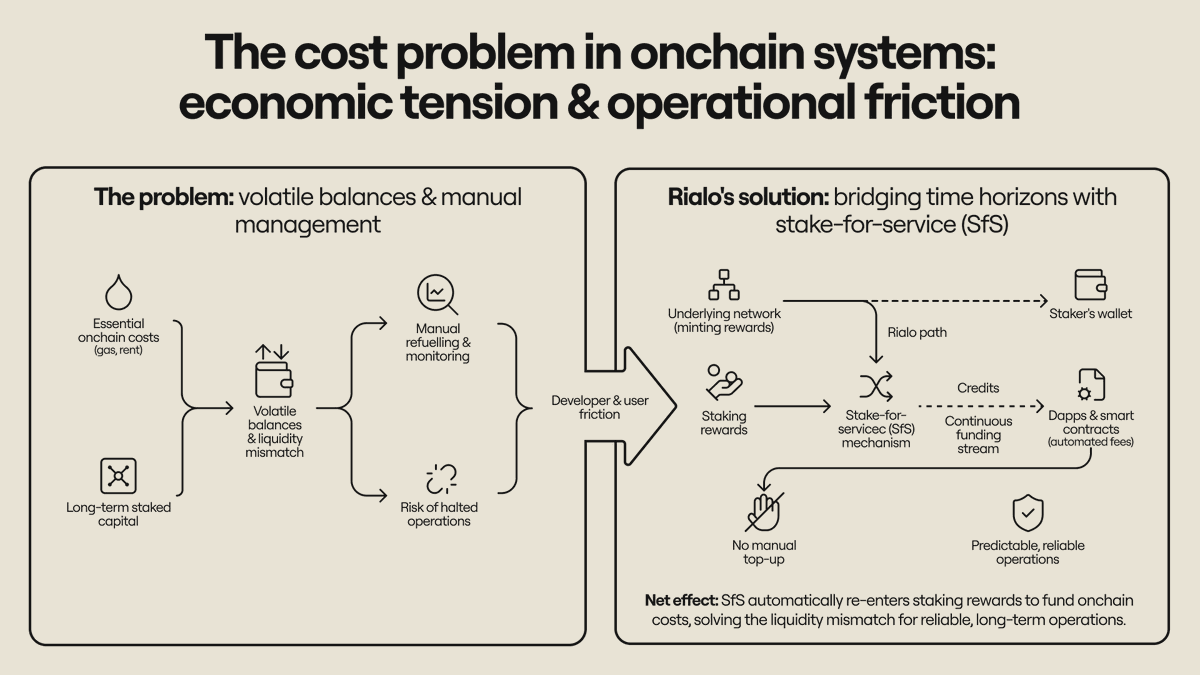
Always-on apps can’t rely on manual top-ups.
That’s a Web2 habit in a Web3 world
@RialoHQ

We need yield and always-on apps.
But today, they live in separate worlds: capital earns yield, while apps depend on manually funded hot wallets to run.
So, when wallets empty, apps stall, bots fail, and infra breaks.
Rialo closes the gap with Stake-for-Service. Here’s how 👇
1
8
115
26 Dec 2025
Rethink. Rebuild. Rialo!
@RialoHQ
Indexers lag.
Oracles break.
Bots fail.
RPCs timeout.
Relayers stall.
When they do, apps freeze, & automation dies.
This is Web3’s hidden tax: middleware everywhere just to function.
With Rialo, it all goes native.
No middleware. Real apps. Only on Rialo.
Get real. Get Rialo.
1
8
124
Arthur Czar retweeted
18 Dec 2025
The #Bulkmas Mission is complete!
Creating a Christmas ornament became a real adventure for me. I made a hot air balloon and a cozy little house where Bulkie will spend the upcoming Christmas
@bulktrade



35
2
73
814

Category 1: SVG Yourself
First Prize: @norektguy
11 Dec 2025

After several hours of struggle and spending 10,000 Yupp Credits, I finally did it!
Category 1 - SVG Yourself: A still or animated SVG of your twitter PFP
→ I tested many models, and I can say that Gemini 3 Pro and Claude Opus 4.5 turned out to be the best models for creating animated SVGs
This is the SVG of my Twitter PFP. The hardest part was removing the gap in the crown, but I reduced it to normal as much as possible.
Here is my final prompt and the final adjustments:
yupp.ai/share/19a81300-7d40-…
I spent quite a lot of time on this, but I’m only grateful for the opportunity. Thank you, @yupp_ai
2
1
13
355

17 Dec 2025
Privacy is not a simple on or off switch
It’s important to hide what is unnecessary while still remaining verifiable. Otherwise, there will be no trust at all
@RialoHQ
Privacy isn’t all-or-nothing.
Real applications need a balance between what stays private and what stays verifiable.
Full anonymity breaks trust. Full transparency breaks usability.
@JanCamenisch broke it down yesterday on @therollupco TV👇
20
30
327
14 Dec 2025
Frequency vs Severity: Why Re Protocol Bets on Predictability, Just Like Polymarket
The year 2024 became the moment when prediction markets stepped into the spotlight. Polymarket showed the world something important: when you aggregate thousands of opinions and data points, you get forecasts that are disturbingly accurate. Crowd wisdom, backed by financial incentives, often works better than any single expert.
In DeFi, we are used to splitting risk into smart contract risk and market risk. But there is a more fundamental division borrowed from insurance: frequency and severity. This is exactly where Re Protocol applies the same principle of large scale predictability that Polymarket uses, in order to build one of the most reliable yield sources in crypto.
Frequency vs Severity: Bugs vs Exploits
Think about the difference between small code bugs and a bridge hack.
Frequency risk refers to small bugs. They happen all the time. Fixing them costs money, but they are predictable. You know that per one thousand lines of code there will be a certain number of issues. It is controlled chaos.
Severity risk refers to events like a 500 million dollar bridge exploit. These events are rare, but when they happen, they are catastrophic and can kill an entire protocol.
The real world works the same way.
Frequency includes minor car accidents, everyday injuries, flooded apartments. Each event is cheap, but there are millions of them.
Severity includes hurricanes, earthquakes, massive cyber attacks. Rare, but devastatingly expensive.
Re Protocol and the Law of Large Numbers
Why does Re Protocol focus on frequency? Because this is where the Law of Large Numbers works.
If you flip a coin ten times, you might get seven heads. That is luck, good or bad. But if you flip it ten thousand times, you will get almost exactly five thousand heads. Statistics turns chaos into order.
We cannot predict whether your neighbor will crash into a pole tomorrow. But with data from millions of drivers, we can predict with extreme accuracy how many accidents will happen in a country over a year.
When Re Protocol aggregates thousands of small, independent risks such as commercial auto or general liability, uncertainty fades away. Risk becomes math.
@Polymarket for Insurance
Polymarket proved that aggregating data leads to truth. Re Protocol does the same thing, but instead of betting on elections, it effectively bets on the statistical inevitability of everyday events.
We intentionally avoid extreme catastrophe zones like hurricanes in Florida or earthquakes in California. We do not try to predict when a black swan event will happen. We earn from boring, predictable reality.
Why This Matters for Investors
The reinsurance market generates around 500 billion dollars in premiums every year. It is a massive machine that has produced returns for centuries. And most importantly for crypto investors:
Re Protocol returns do not correlate with Bitcoin.
Bitcoin can drop by fifty percent. Solana can go offline. People will still drive cars, businesses will still insure employees, and goods will still be transported. This is real world yield, driven by physics and statistics, not hype.
In a world where everyone is chasing the next one hundred x gem, Re Protocol is making one of the most contrarian bets possible: betting on predictability. And as Polymarket has shown, betting on accurate data is the winning strategy.
Predictability is not just profitable. It is bankable.
@re | @ChazEevee | @miketwinks
4
18
218
11 Dec 2025
Some secrets are worth keeping 🔮
Privacy-enabled blockchain for the next era of finance
@SeismicSys
✸✸✸
@NoxxW3 | @xealistt
@heathcliff_eth | @lyronctk
10
27
206
11 Dec 2025
Im not planning to stop! A full CPU architecture with advanced components is now on your screen!
Category 3 - Wicked hard
• 5 stage pipeline (IF→ID→EX→MEM→WB) in real time
• Branch Prediction Unit with 91 percent accuracy
• TLB for virtual memory with a 90 percent hit rate
• FPU, L1 Cache with an 87 percent hit rate
• More than 8 different instructions stored in memory
• Color coded bus legend
• A decoder with logical elements
• Realistic metrics including 1.25 IPC and cycle tracking
• 20 plus components, all interacting
After I dont even remember how many attempts, I finally managed to create the perfect 700 word prompt that clearly shows how a modern processor works.
I came to the conclusion that the best mathematical and analytical model is Claude Opus 4.5 Thinking. Everything I described is shown in full detail.
Here is my detailed prompt:
yupp.ai/share/7321e278-fd15-…
Today @yupp_ai was a real discovery for me. Now I can visually show and explain complex examples like this one 🙏
11 Dec 2025
After several hours of struggle and spending 10,000 Yupp Credits, I finally did it!
Category 1 - SVG Yourself: A still or animated SVG of your twitter PFP
→ I tested many models, and I can say that Gemini 3 Pro and Claude Opus 4.5 turned out to be the best models for creating animated SVGs
This is the SVG of my Twitter PFP. The hardest part was removing the gap in the crown, but I reduced it to normal as much as possible.
Here is my final prompt and the final adjustments:
yupp.ai/share/19a81300-7d40-…
I spent quite a lot of time on this, but I’m only grateful for the opportunity. Thank you, @yupp_ai
15
24
387
11 Dec 2025
After several hours of struggle and spending 10,000 Yupp Credits, I finally did it!
Category 1 - SVG Yourself: A still or animated SVG of your twitter PFP
→ I tested many models, and I can say that Gemini 3 Pro and Claude Opus 4.5 turned out to be the best models for creating animated SVGs
This is the SVG of my Twitter PFP. The hardest part was removing the gap in the crown, but I reduced it to normal as much as possible.
Here is my final prompt and the final adjustments:
yupp.ai/share/19a81300-7d40-…
I spent quite a lot of time on this, but I’m only grateful for the opportunity. Thank you, @yupp_ai
20
32
1,780
11 Dec 2025
Rialo Jan Camenisch = is the moment when cryptography stops being a secret language for PhD researchers and becomes a quiet force that can move millions into Web3 without them even noticing it.
This is the future.
Real tech that hides under real products.
@RialoHQ
@JanCamenisch

We are bringing aboard Jan Camenisch one of the most respected figures in modern cryptography.
Privacy and security are fundamental to Rialo’s mission; Jan’s leadership will help us elevate Rialo's cryptography, privacy and compliance capabilities.
More below:
9
9
210