
Builds products, scales companies. Dabbles in stuff, lifelong learner.
Joined June 2009
- Tweets 717
- Following 384
- Followers 154
- Likes 417
36 Photos and videos







May 14
Agents that learn and self-improve will fuel the next wave of agentic innovation. open.substack.com/pub/nagesh…
3

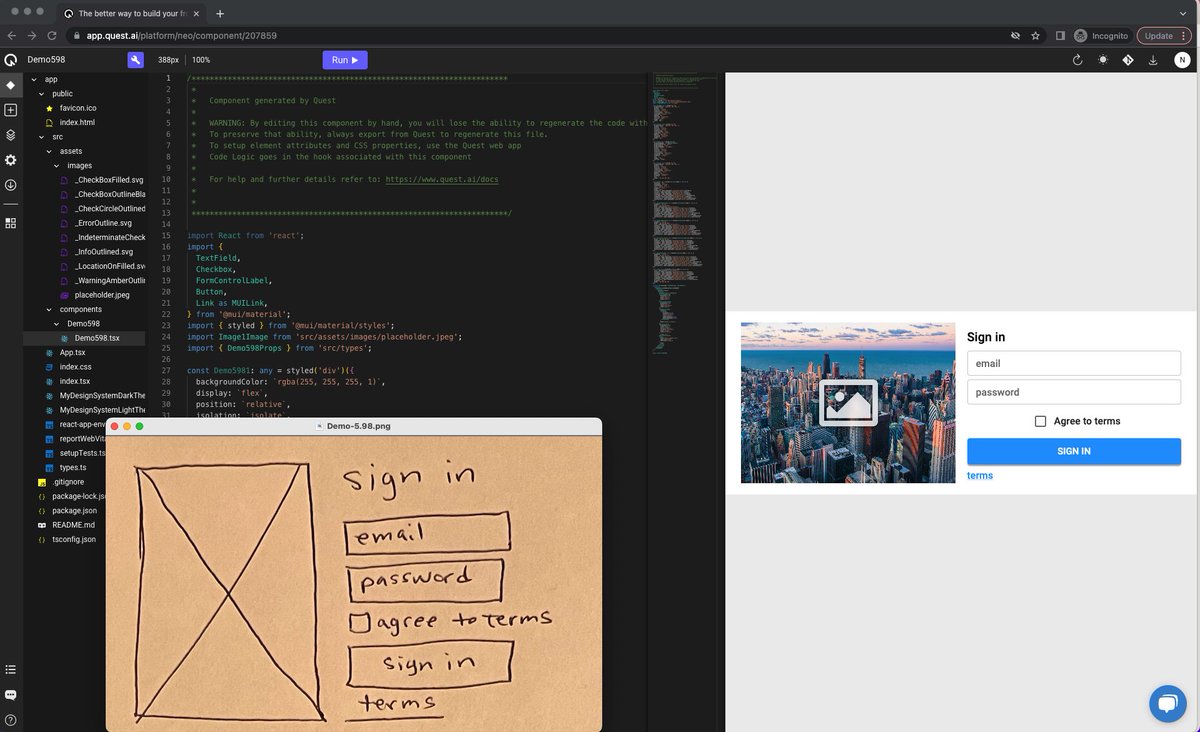
Introducing Claude Design by Anthropic Labs: make prototypes, slides, and one-pagers by talking to Claude.
Powered by Claude Opus 4.7, our most capable vision model. Available in research preview on the Pro, Max, Team, and Enterprise plans, rolling out throughout the day.
4,139
14,996
148,121
63,898,258
Nagesh Pobbathi retweeted

Jan 2
I'm Boris and I created Claude Code. Lots of people have asked how I use Claude Code, so I wanted to show off my setup a bit.
My setup might be surprisingly vanilla! Claude Code works great out of the box, so I personally don't customize it much. There is no one correct way to use Claude Code: we intentionally build it in a way that you can use it, customize it, and hack it however you like. Each person on the Claude Code team uses it very differently.
So, here goes.
1,320
7,019
54,553
8,175,372
Nagesh Pobbathi retweeted

4 Sep 2025
There is significant unmet demand for developers who understand AI. At the same time, because most universities have not yet adapted their curricula to the new reality of programming jobs being much more productive with AI tools, there is also an uptick in unemployment of recent CS graduates.
When I interview AI engineers — people skilled at building AI applications — I look for people who can:
- Use AI assistance to rapidly engineer software systems
- Use AI building blocks like prompting, RAG, evals, agentic workflows, and machine learning to build applications
- Prototype and iterate rapidly
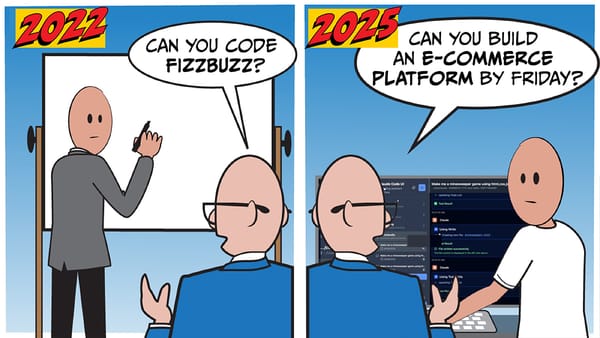
Someone with these skills can get a massively greater amount done than someone who writes code the way we did in 2022, before the advent of Generative AI. I talk to large businesses every week that would love to hire hundreds or more people with these skills, as well as startups that have great ideas but not enough engineers to build them. As more businesses adopt AI, I expect this talent shortage only to grow! At the same time, recent CS graduates face an increased unemployment rate, though the underemployment rate — of graduates doing work that doesn’t require a degree — is still lower than for most other majors. This is why we hear simultaneously anecdotes of unemployed CS graduates and also of rising salaries for in-demand AI engineers.
When programming evolved from punchcards to keyboard and terminal, employers continued to hire punchcard programmers for a while. But eventually, all developers had to switch to the new way of coding. AI engineering is similarly creating a huge wave of change.
There is a stereotype of “AI Native” fresh college graduates who outperform experienced developers. There is some truth to this. Multiple times, I have hired, for full-stack software engineering, a new grad who really knows AI over an experienced developer who still works 2022-style. But the best developers I know aren’t recent graduates (no offense to the fresh grads!). They are experienced developers who have been on top of changes in AI. The most productive programmers today deeply understand computers, how to architect software, and how to make complex tradeoffs — and who additionally are familiar with cutting-edge AI tools.
Sure, some skills from 2022 are becoming obsolete. For example, a lot of coding syntax that we had to memorize back then is no longer important, since we no longer need to code by hand as much. But even if, say, 30% of CS knowledge is obsolete, the remaining 70% — complemented with modern AI knowledge — is what makes really productive developers. (Even after punch cards became obsolete, a fundamental understanding of programming was very helpful for typing code into a keyboard.)
Without understanding how computers work, you can’t just “vibe code” your way to greatness. Fundamentals are still important, and for those who additionally understand AI, job opportunities are numerous!
[Original text: deeplearning.ai/the-batch/is… ]
121
423
1,605
233,252
Nagesh Pobbathi retweeted
10 Jul 2025
My talk at YC Startup School on how to build AI startups. I share tips from @AI_Fund on how to use AI to build fast. Let me know what you think!
10 Jul 2025

Andrew Ng (@AndrewYNg) on how startups can build faster with AI.
At AI Startup School in San Francisco.
00:31 - The Importance of Speed in Startups
01:13 - Opportunities in the AI Stack
02:06 - The Rise of Agent AI
04:52 - Concrete Ideas for Faster Execution
08:56 - Rapid Prototyping and Engineering
17:06 - The Role of Product Management
21:23 - The Value of Understanding AI
22:33 - Technical Decisions in AI Development
23:26 - Leveraging Gen AI Tools for Startups
24:05 - Building with AI Building Blocks
25:26 - The Importance of Speed in Startups
26:41 - Addressing AI Hype and Misconceptions
37:35 - AI in Education: Current Trends and Future Directions
39:33 - Balancing AI Innovation with Ethical Considerations
41:27 - Protecting Open Source and the Future of AI
52
294
1,432
182,419
31 Mar 2025
Excited about Qubits25 conference! Waiting for the livestream to get started!! @dwavequantum
1
13
Nagesh Pobbathi retweeted

23 Jul 2024
Huge congrats to @AIatMeta on the Llama 3.1 release!
Few notes:
Today, with the 405B model release, is the first time that a frontier-capability LLM is available to everyone to work with and build on. The model appears to be GPT-4 / Claude 3.5 Sonnet grade and the weights are open and permissively licensed, including commercial use, synthetic data generation, distillation and finetuning. This is an actual, open, frontier-capability LLM release from Meta. The release includes a lot more, e.g. including a 92-page PDF with a lot of detail about the model:
ai.meta.com/research/publica…
The philosophy underlying this release is in this longread from Zuck, well worth reading as it nicely covers all the major points and arguments in favor of the open AI ecosystem worldview:
"Open Source AI is the Path Forward"
facebook.com/4/posts/1011571…
I like to say that it is still very early days, that we are back in the ~1980s of computing all over again, that LLMs are a next major computing paradigm, and Meta is clearly positioning itself to be the open ecosystem leader of it.
- People will prompt and RAG the models.
- People will finetune the models.
- People will distill them into smaller expert models for narrow tasks and applications.
- People will study, benchmark, optimize.
Open ecosystems also self-organize in modular ways into products apps and services, where each party can contribute their own unique expertise. One example from this morning is @GroqInc , who built a new chip that inferences LLMs *really fast*. They've already integrated Llama 3.1 models and appear to be able to inference the 8B model ~instantly:
x.com/karpathy/status/181580…
And (I can't seem to try it due to server pressure) the 405B running on Groq is probably the highest capability, fastest LLM today (?).
Early model evaluations look good:
ai.meta.com/blog/meta-llama-… x.com/alexandr_wang/status/1…
Pending still is the "vibe check", look out for that on X / r/LocalLlama over the next few days (hours?).
I expect the closed model players (which imo have a role in the ecosystem too) to give chase soon, and I'm looking forward to that.
There's a lot to like on the technical side too, w.r.t. multilingual, context lengths, function calling, multimodal, etc. I'll post about some of the technical notes a bit later, once I make it through all the 92 pages of the paper :)
23 Jul 2024

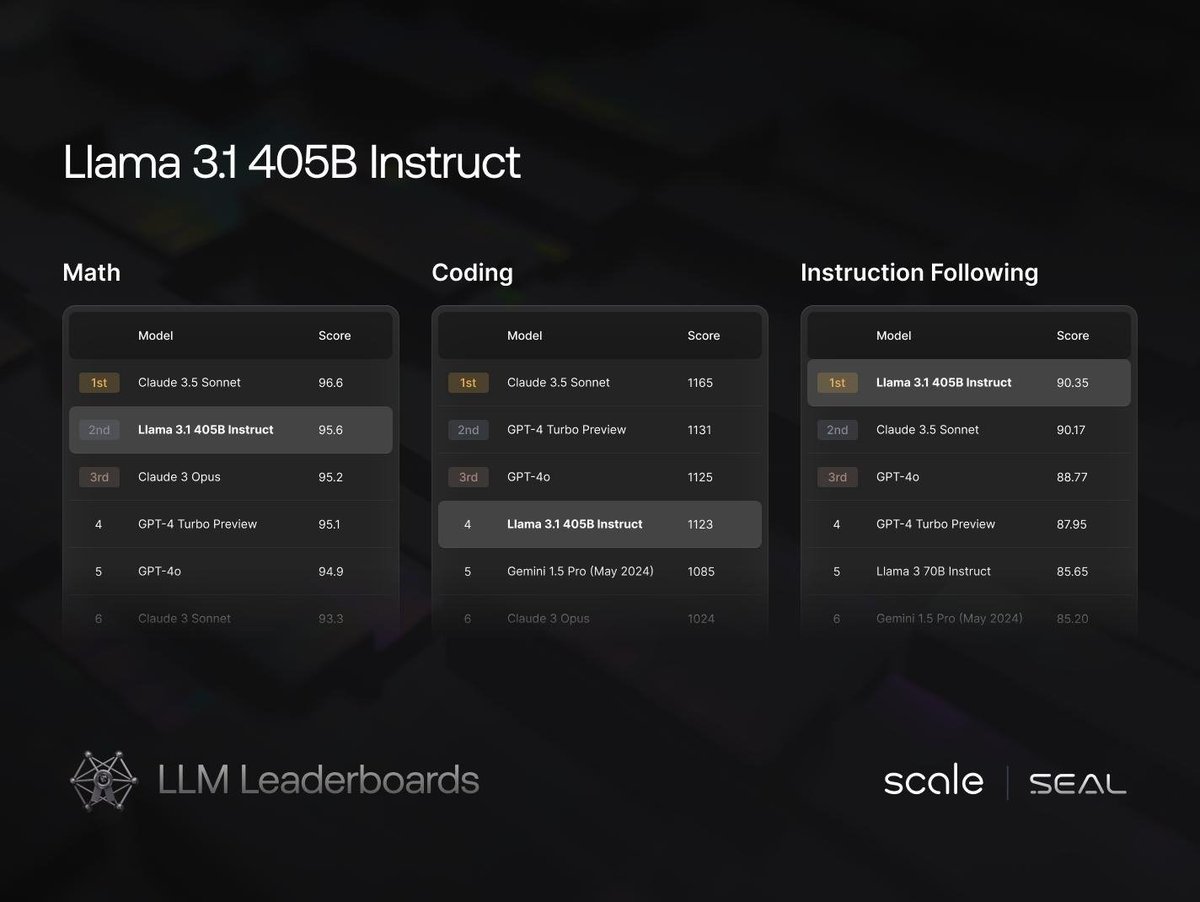
1/Meta just released Llama3.1 405B!
@scale_AI partnered deeply with @Meta on this release:
🥇 SEAL Evaluations: Based on our evals
🥇 on IF
🥈 on Math
#4 on Coding
💼 Enterprise partnership for custom Llama models
🤖 Data Foundry partnership on RLHF & SFT
👇
184
1,394
12,006
988,378
Nagesh Pobbathi retweeted
16 Jul 2024
⚡️ Excited to share that I am starting an AI Education company called Eureka Labs.
The announcement:
---
We are Eureka Labs and we are building a new kind of school that is AI native.
How can we approach an ideal experience for learning something new? For example, in the case of physics one could imagine working through very high quality course materials together with Feynman, who is there to guide you every step of the way. Unfortunately, subject matter experts who are deeply passionate, great at teaching, infinitely patient and fluent in all of the world's languages are also very scarce and cannot personally tutor all 8 billion of us on demand.
However, with recent progress in generative AI, this learning experience feels tractable. The teacher still designs the course materials, but they are supported, leveraged and scaled with an AI Teaching Assistant who is optimized to help guide the students through them. This Teacher AI symbiosis could run an entire curriculum of courses on a common platform. If we are successful, it will be easy for anyone to learn anything, expanding education in both reach (a large number of people learning something) and extent (any one person learning a large amount of subjects, beyond what may be possible today unassisted).
Our first product will be the world's obviously best AI course, LLM101n. This is an undergraduate-level class that guides the student through training their own AI, very similar to a smaller version of the AI Teaching Assistant itself. The course materials will be available online, but we also plan to run both digital and physical cohorts of people going through it together.
Today, we are heads down building LLM101n, but we look forward to a future where AI is a key technology for increasing human potential. What would you like to learn?
---
@EurekaLabsAI is the culmination of my passion in both AI and education over ~2 decades. My interest in education took me from YouTube tutorials on Rubik's cubes to starting CS231n at Stanford, to my more recent Zero-to-Hero AI series. While my work in AI took me from academic research at Stanford to real-world products at Tesla and AGI research at OpenAI. All of my work combining the two so far has only been part-time, as side quests to my "real job", so I am quite excited to dive in and build something great, professionally and full-time.
It's still early days but I wanted to announce the company so that I can build publicly instead of keeping a secret that isn't. Outbound links with a bit more info in the reply!

1,510
3,595
27,647
2,546,338
Nagesh Pobbathi retweeted

8 May 2024
Need a break from big #LLM? 🤖 Check out this blog post by my students on the rise of #TinyML. Good food for thought if you are a student or a researcher looking to make a BIG impact with tiny ML models.
#MachineLearning #ArtificialIntelligence #IoT
sigarch.org/tiny-machine-lea…
1
9
50
4,710

block's entire shareholder letter was dedicated to why we're focused on bitcoin, not crypto. the internet needs decentralized digital cash.
we will do our part to help make it accessible, make it secure, and make it usable every day: s29.q4cdn.com/628966176/file…
417
800
5,814
712,282
11 May 2024
A huge solar storm is slamming into the Earth. Scientists say you should look up. - NPR apple.news/AivFE3a4RTcOVIetF…
1
43
1 Apr 2024
As a $TSLA hodler this pains me, but I guess the pro/anti "woke" crusade cuts both ways.
Would-be Tesla buyers snub company as Musk's reputation dips reuters.com/business/autos-t…
67
9 Mar 2024
On device AI opens up some exciting possibilities like instant responses and privacy for your personal data. Aligns very well with Apple’s products and positioning.
apple.news/ATUFQ5DCKRMWWOQOO…
24
4 Mar 2024
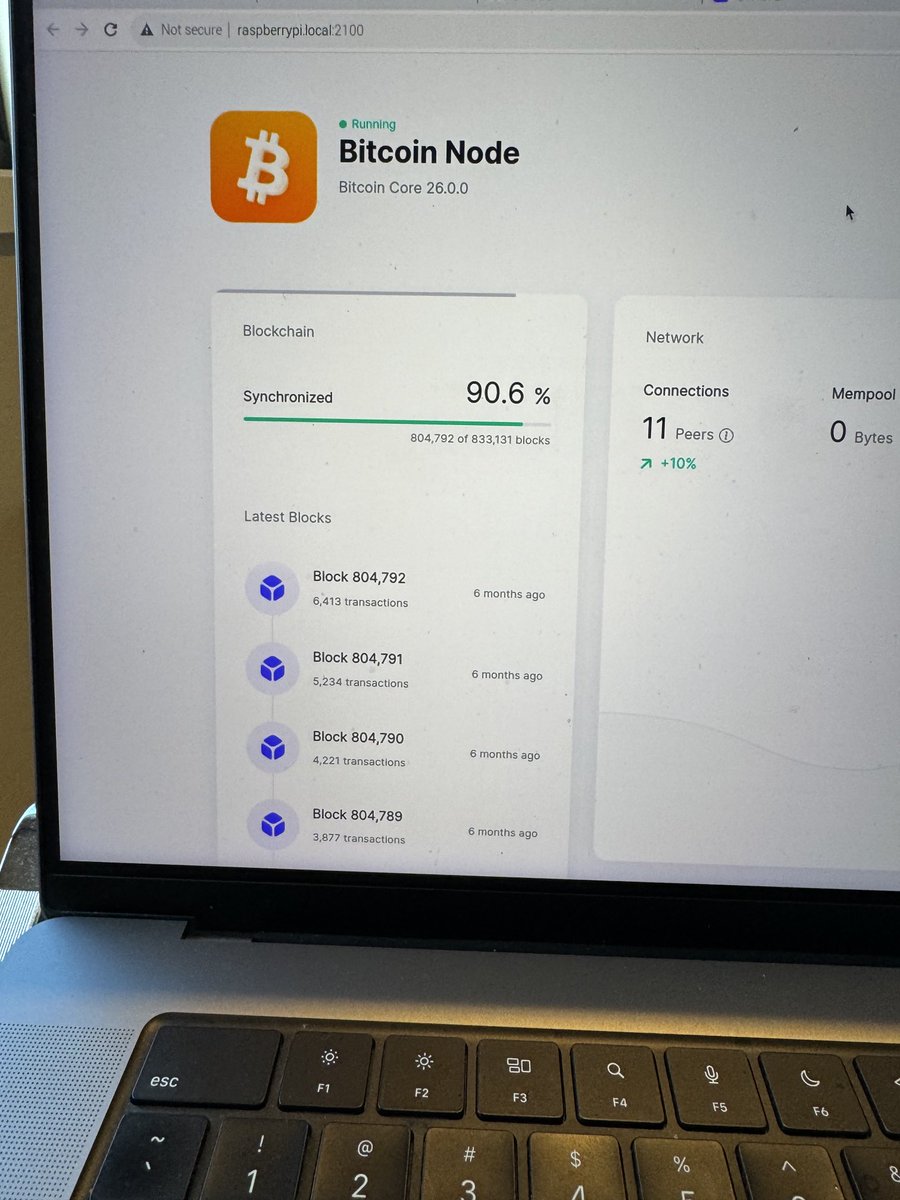
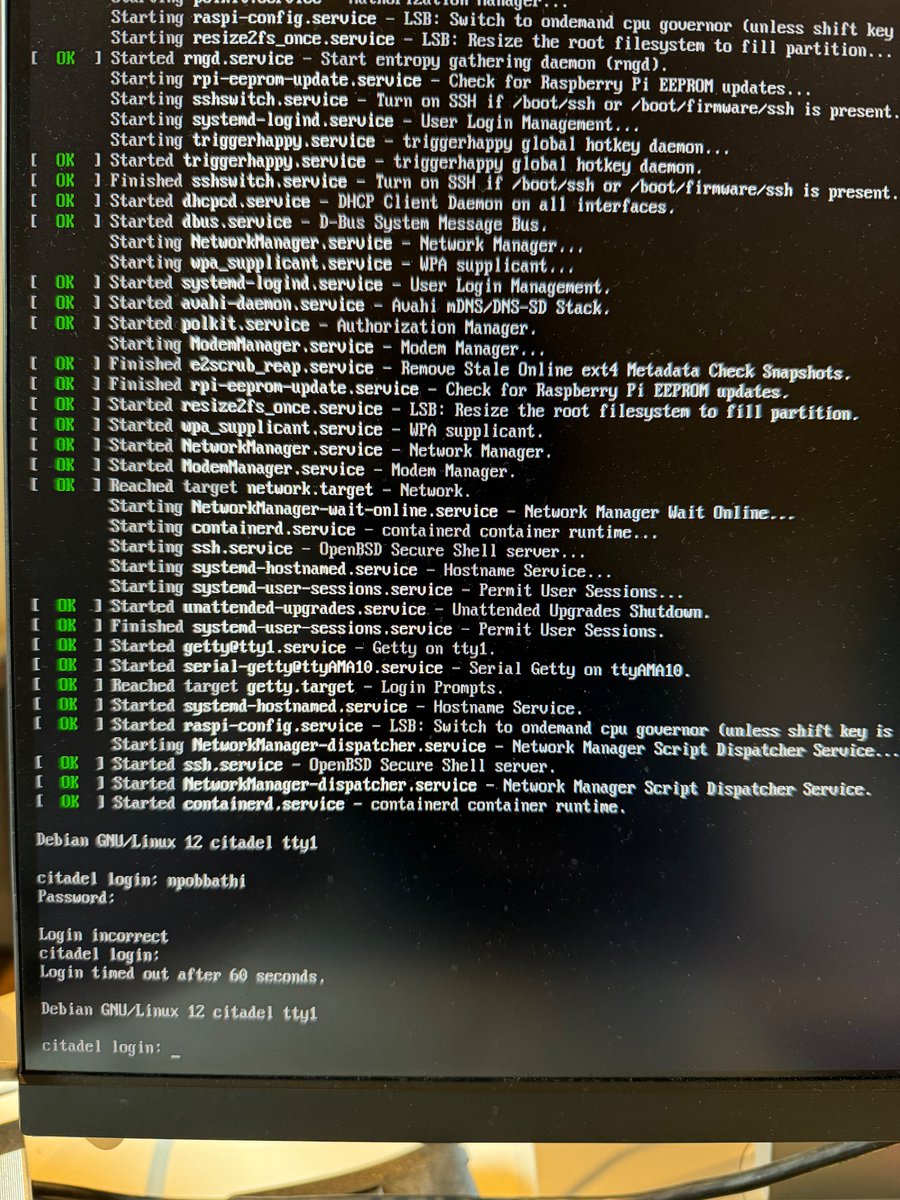
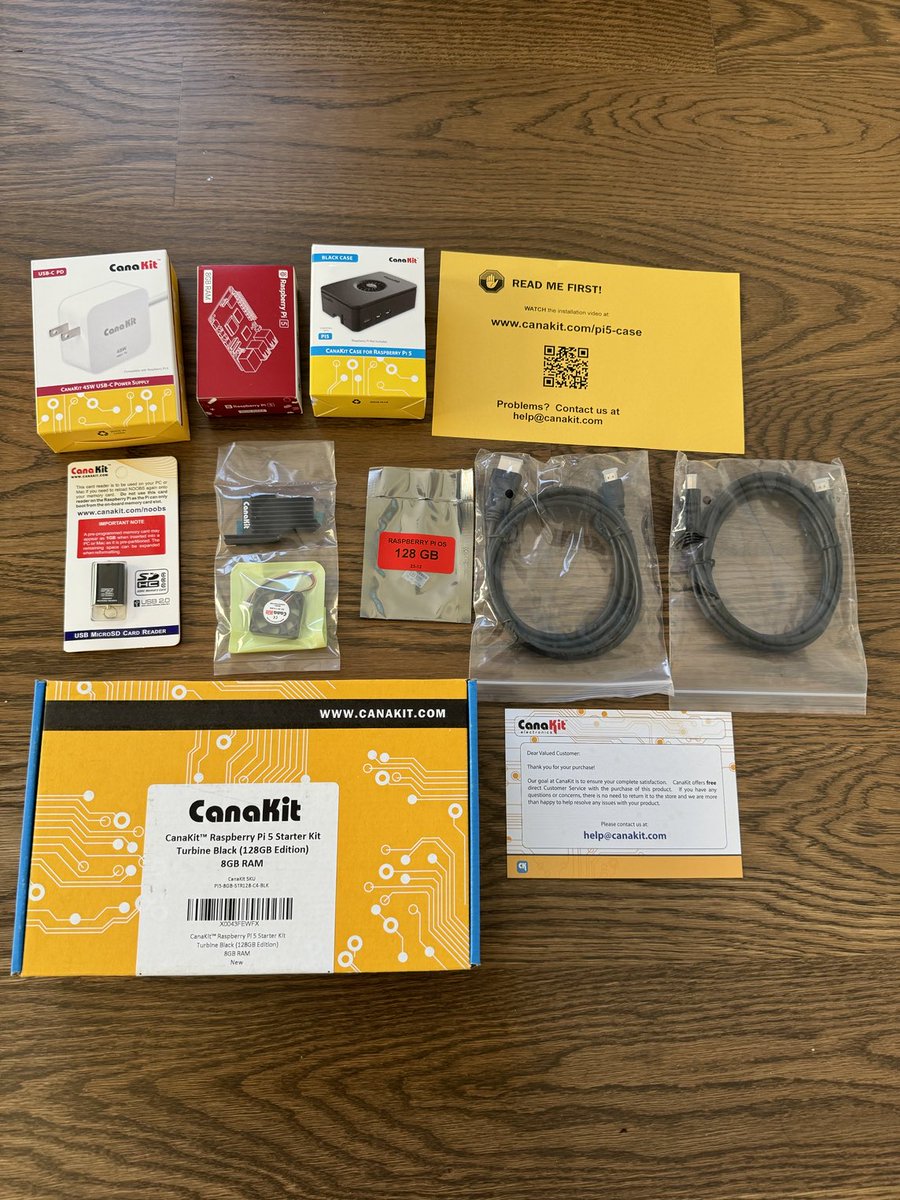
Finally have my bitcoin node setup on my Raspberry Pi 5. Had to use a CLI work around to install @umbrel as we still await official support for Pi 5.
78
2 Mar 2024
It looks like @umbrel does not support raspberry pi 5 yet. Any workarounds or alternatives?
#bitcoin #LightningNetwork
115
29 Feb 2024
I think this was the right move for Apple. With CarPlay, it has a huge potential to be what Windows was to PCs.
Detroit Warned Apple About Making a Car. It Had to Learn the Hard Way. - The Wall Street Journal apple.news/AQHt9foWISYKVCXDa…
59
26 Feb 2024
Been wanting to setup my own bitcoin & lightning node for a while but not acted on it. This video finally is pushing me over the edge to do it. Thanks @bitcoinftm for a great video.
🟧 Why You (Yes, You) Should Be Running a Bitcoin Node youtu.be/NjvFdy_smJo?si=gbnh…
#LightningNetwork #Bitcoin
1
70
20 Feb 2024
Oh no! Love the content on Paramount . Hope AppleTV buys them. @AppleTV @paramountplus apple.news/AefwWVAZkQAqjNE6e…
19