
Chief Archivist at The Media House. Declassifying the economic and historical realities they forgot to teach you. The 'Official Narrative' ends here
Joined February 2026
- Tweets 348
- Following 19
- Followers 3,407
- Likes 395
53 Photos and videos





Pinned Tweet

Feb 14
1/12
For eighty years, you have lived in a museum of gothic horrors, staring at shadows projected by a dying maritime oligarchy. You were told the war ended in 1945. The archives say otherwise. April 12, 1945, was not just the death of a man; it was a coup d’état in Washington.

10
27
66
5,677
Mar 22
We’ve been told forever that NATO is the ultimate shield of democracy, a sacred alliance forged to protect the free world from tyranny. This is the greatest geopolitical grift in modern history. The truth is that NATO is a massive, continent-spanning slush fund designed to bleed the American middle class while subordinating the United States to a rotting European oligarchy.
The Imperial Hijacking of America
To understand the true nature of NATO, you must look at its origins in the immediate aftermath of World War II. The United States emerged as an undisputed economic and military powerhouse, but the "rules-based order" that followed was not built for the benefit of the American people. It was constructed by a transnational oligarchy who profited immensely from the world's destruction and rebuilding.
The Cold War was not a spontaneous ideological clash; it was a carefully orchestrated British geopolitical trap. Following the war, the scoundrel Winston Churchill delivered his 1946 "Iron Curtain" speech, a calculated move to unleash police-state conditions and pit the United States against Russia. The British objective was to manipulate the US into acting as the outsourced policeman of the world, functioning as the "dumb muscle" for a decaying European aristocracy.
The Ultimate Financial Parasite
The Soviet Union collapsed decades ago, effectively ending NATO's original stated purpose. Yet, the alliance not only persists but relentlessly expands. Why? Because NATO is a massive slush fund that enriches countless military contractors, consultants, and bureaucrats.
Financially, NATO is a catastrophic deal for the United States. We pay the lion's share of the costs while our European partners consistently fail to live up to their defense obligations. American taxpayers effectively subsidize Europe's social welfare programs. While the American middle class is hollowed out and our own infrastructure crumbles, US defense spending underwrites the European Union's delusional fiscal reality.
The Article 5 Tripwire
The most sinister aspect of modern NATO is how it is weaponized against American sovereignty. European powers use the threat of Article 5 to push their boundaries and achieve regional ends. They engage in geopolitical adventurism—such as provoking the conflict in Ukraine—and when they get themselves into a war they cannot handle, they hide behind America's military skirts.
Reclaiming Sovereign Independence
We have been gaslit into believing that questioning NATO is tantamount to treason. But leaders who prioritize national sovereignty have recognized the grift. The era where the US military subsidizes global trade and European socialism has reached its terminal limit.
To save our Republic, we must heed Washington's warning and permanently dismantle the entangling alliances that bind us. It is time for Europe to pay for its own defense, and for the United States to unapologetically put the prosperity of its own citizens first.
Mar 20

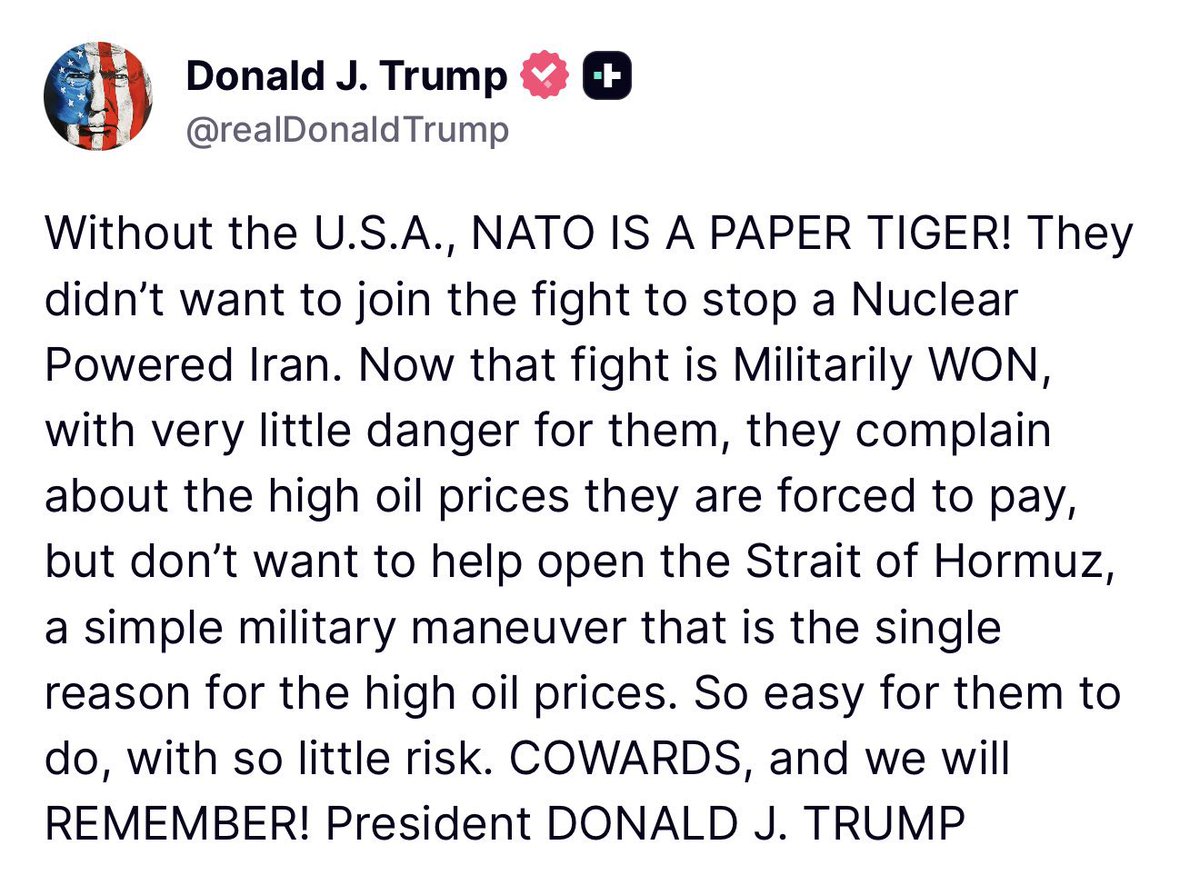
Oh yeah. Trump is setting up the eventual end of US involvement in NATO, which will essentially be the end of NATO.
This will open the door to normalized relations with Russia and an end to the war in Ukraine.
Putin wants NATO off his doorstep. How about no NATO at all?
15
87
239
12,729
Mar 22
Everyone believes Teddy Roosevelt was the ultimate American patriot—a rough-riding, trust-busting hero who defined American greatness. This is a monumental historical illusion.
In reality, Theodore Roosevelt was the ultimate Trojan horse. He was a fanatical Anglophile who systematically dismantled American sovereignty, handing our nation’s destiny back to the very British financial empire our Founding Fathers fought to escape.
Here is the counter-intuitive truth about the man who actually birthed the modern globalist surveillance state:
TR’s aggressive foreign policy wasn't born of American interests. He was actively managed by British agent Sir Cecil Spring-Rice, who successfully urged Roosevelt to drag the US into a war with Spain. TR's Big Stick diplomacy brutalized Latin America and deliberately portrayed the United States as an international tyrant, completely destroying the partnership-based Reciprocity policy of his assassinated predecessor, William McKinley.
You are taught TR was a champion of the people against monopolies. In reality, he was the opposite. He actually completed the consolidation of British financial power over U.S. railroads and industries. He turned national financial power over to the London-connected banking cartel by creating the National Monetary Commission, which directly laid the groundwork for the 1913 Federal Reserve. Furthermore, when Congress refused to fund a national secret police force, TR bypassed them entirely in 1908 to create the Bureau of Investigation (the forerunner to the FBI).
TR is idolized for founding the Conservation movement. But his true motive was closing the American West to sovereign settlement and development. Modeled explicitly on the British regime in India, this policy locked up immense tracts of land, terrorizing and arresting western congressmen who opposed his agenda.
TR was no champion of American equality. He openly praised the Confederate Secret Service run by his uncle, James Bulloch. Roosevelt even condemned the Declaration of Independence's premise of human equality as a pernicious doctrine taught by feeble-minded sentimentalists, instead lecturing at Oxford about the right of English-speaking peoples to manage alien races.
Teddy Roosevelt did not save the American Republic; he assassinated its true economic system. To understand the roots of today’s transnational oligarchies and weaponized bureaucracies, you must strip away the Mount Rushmore mythology and look at the man who sold us out.

Tell your children about the great deeds of American heroes like Teddy Roosevelt.
Instill in them the ideals and values of our American heritage.

10
22
63
8,197
Mar 21
Everyone thinks the ultimate antidote to globalist tyranny and Marxist central planning is libertarianism. They are entirely wrong.
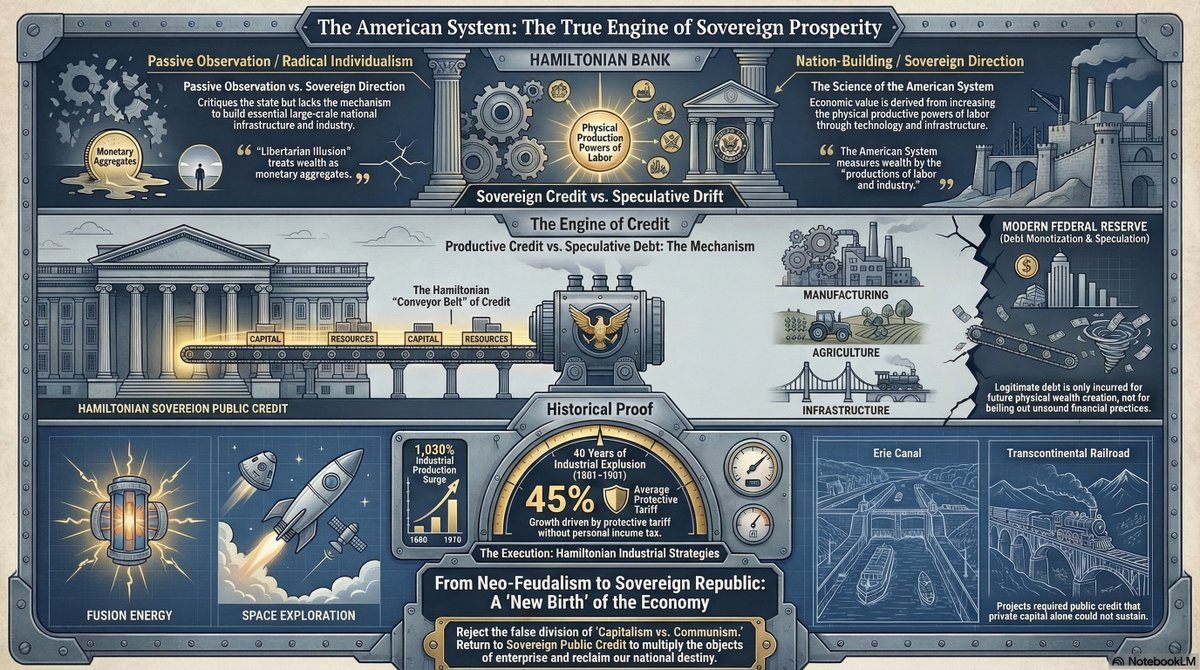
Libertarianism is a siren song of radical individualism—a seductive but empty philosophy that critiques the current system without offering any mechanism to build a better one. The true engine of unmatched prosperity in the United States was never the unbridled "free market" touted by Austrian economists. It was the unapologetic, nation-building science of the American System.
Here is the deep dive into why the American System is fundamentally superior to libertarianism, and how Alexander Hamilton’s blueprint is the only viable path to saving our sovereign republic.
The Libertarian Illusion
Libertarianism operates on a foundational delusion: the myth of "Ancapistan," a utopian vision where actors engage only in mutually beneficial trade without any government distortion. But we do not live in a theoretical vacuum. We live in a world of massive capital flows, geopolitical warfare, and transnational oligarchies intent on crushing national sovereignty.
In this reality, libertarianism fails because it accepts the terms of the status quo and merely works within those boundaries. As one strategist noted, "There are no libertarian solutions, only critiques". When backed into a corner, libertarians rely on circular reasoning, demanding you read a 600-page book by Murray Rothbard rather than proving a workable solution. They completely miss the point of the American tradition of the commons, advocating for the dismantling of the state while shadow banking cartels extract the nation's wealth. Dancing in your underwear and calling it freedom is not the same thing as building a theater.
Furthermore, the heroes of the libertarian movement—like Friedrich Hayek and Milton Friedman—fundamentally mismeasure reality. They use money as their primary metric, ignoring the primary mission of developing and improving sovereign nations. In doing so, they inadvertently perpetuate an artifact of British imperial economics, measuring wealth by monetary aggregates rather than focusing on human progress and physical economic growth.
The Genius of the American System
The American System, pioneered by Alexander Hamilton and advanced by Abraham Lincoln, operates on an entirely different axiomatic foundation. It recognizes that money has no intrinsic value; it is merely a tool to facilitate the creation of true value. Hamilton understood that the true wealth of a nation is measured "not by the abundance of the precious metals contained in it, but by the quantity of the productions of its labor and industry".
Instead of leaving the nation’s fate to the whims of London-controlled "free markets," Hamilton engineered a system of Sovereign Public Credit. A Hamiltonian national bank is completely different from the modern Federal Reserve. It was strictly prohibited from monetizing government debt to bail out financial speculators. Instead, it functioned as a conveyor belt, directing sovereign credit exclusively into physical production—manufacturing, agriculture, transportation, and internal improvements.
This system actively fostered human potential. The American System relies on the understanding that human creativity is the driving force of economic progress. By implementing protective tariffs, sponsoring public infrastructure, and providing productive credit, the government actively stimulated "the activity of the human mind, by multiplying the objects of enterprise".
Nation-Building vs. Passive Observation
The superiority of the American System is proven by its historical execution. When the nation adhered to Hamiltonian principles, the results were explosive.
During the 19th century, the implementation of the American System built the transcontinental railroads, erected the Erie Canal, and fostered a 40-year period of industrial growth that made the U.S. the greatest economic powerhouse in human history. Between 1861 and 1901, tariffs averaged over 45 percent, protecting domestic labor while generating up to 50 percent of all federal revenue—without a personal income tax. This protectionist, pro-growth environment allowed the U.S. to leapfrog the British Empire's stagnant, free-trade colonial model.
Libertarianism would have never built the Erie Canal. It would have never funded the Northern Pacific or Southern Pacific railroads. Private capital alone, operating without the sponsorship, credit, and protective shield of a sovereign government, simply could not initiate or sustain massive infrastructure projects of this scale.
The Path Forward
Today, we are locked in an existential struggle against a globalist elite attempting to impose a neo-feudal order of zero-growth and mass surveillance. The populist, false division between "capitalism and communism" or "liberal Keynesians vs. Austrian School conservatives" is a mental trap designed to keep us arguing over monetary theories while our physical economy is looted.
To reclaim American prosperity, we must reject the siren song of radical individualism that leaves us defenseless against transnational monopolies. We must return to a Hamiltonian framework of Sovereign Public Credit, where capital is not hoarded for speculative usury, but directed toward infrastructure, manufacturing, and the boundless potential of human creativity. The American System is not just an economic policy; it is the physical manifestation of our Republic's sovereign right to dictate its own destiny.
18
49
132
4,796
Mar 21
Robert Mueller died today.
The mainstream media is already drafting their glowing eulogies, preparing to paint him as the ultimate Boy Scout, a steadfast patriot, and a paragon of American justice.
They are lying to you.
Mueller was not a principled lawman; he was the ultimate institutional hitman for a rotting, permanent bureaucracy. While everyone knows about his disastrous role as the face of the Russia collusion hoax, Mueller’s treachery goes back much further. His entire career was dedicated to protecting a corrupt trans-Atlantic establishment.
Here is the deep dive into the dark, untold legacy of Robert Mueller that the establishment wants permanently buried.
1. The Blueprint: Railroading Political Outsiders
Long before Donald Trump descended the golden escalator, the transnational elite needed a reliable mechanism to eliminate political outsiders who threatened their control. Over thirty years ago, Robert Mueller cut his teeth as a leading figure in the malicious prosecution and railroading of innocent American statesman Lyndon LaRouche.
Working alongside Boston banker William Weld, Mueller helped weaponize the justice system to destroy a domestic political movement. Former U.S. Attorney General Ramsey Clark described this exact operation as involving a broader range of "deliberate and systematic misconduct and abuse of power over a longer period of time in an effort to destroy a political movement and leader" than any other federal prosecution in his time. Mueller proved early on that he was willing to obliterate anti-establishment voices on behalf of the elite.
2. The "Contract Assassin" of the Bureaucracy
Mueller’s actions in the 1980s and 1990s set the stage for the modern, weaponized Department of Justice we suffer under today. As LaRouche himself warned in 1995, America is held hostage by a "rotten, permanent bureaucracy which acts like contract assassins, using the authority of the justice system to perpetrate assassination".
Mueller was the absolute poster child for this system. His role was never to uphold the Constitution; it was to serve as the legal executioner for a shadow network of globalists who demanded total compliance.
3. The Russiagate Cover-Up and Psy-Op
Decades later, when Donald Trump threatened to upend the globalist order and normalize relations with Russia, the exact same apparatus that railroaded LaRouche was activated against the President. Mueller was installed as Special Counsel to run a "biased and pointless" investigation.
But the Russiagate probe was never actually about finding foreign collusion. It was a calculated, corrupt psychological operation. According to the data, Mueller specifically widened his investigation to "cover his own personal corruption" and to keep a completely false narrative alive in the media. By turning the justice system into a theatrical circus, Mueller’s objective was to paralyze the Trump presidency, derail sovereign American diplomacy, and give "false hope to millions of Americans that President Trump is just a bad dream".
4. The True Legacy of Lawfare
Robert Mueller’s career was a masterclass in the subversion of the American Republic. From his early days railroading innocent dissidents to prison, to orchestrating a deeply corrupt and inept political witch hunt intended to overthrow a sitting President, Mueller consistently served as the sword and shield of a hostile oligarchy.
As we watch the media mourn him today, remember the truth of what he built. Until we permanently dismantle the bureaucratic contract assassins of the justice system that Mueller championed, "this country is not free, nor anyone in it".
The swamp just lost one of its most ruthless architects. History will not absolve him.
CC: @PrometheanActn @sjkokinda @BarbaraMBoyd @ehret_matthew

419
3,738
7,880
159,015
Mar 21
Everyone thinks AI is just a software arms race. They are entirely wrong.
The real AI war is a heavy industry land grab, and Japan just fired the biggest shot on American soil.
SoftBank isn’t just building a $33 billion natural gas plant in Ohio to run ChatGPT queries. They are executing the most brilliant geopolitical arbitrage of the century.
Masayoshi Son understands what the mainstream financial media completely misses. You cannot build a 10-gigawatt AI data center complex on the back of intermittent, unreliable wind and solar power.
The rules of the game have fundamentally changed: if tech giants want the massive compute capacity required for the future, they must now bring their own power plants to the table. SoftBank’s 9.2-GW natural gas behemoth in Piketon proves that the era of parasitic tech growth is officially dead. We are returning to the core principles of physical economics, where speculative capital must finally be tied to hard, productive infrastructure.
This Ohio mega-project is the first major wave of SoftBank’s pledged $500 billion investment in the United States. Japan is looking at a demographic deflationary collapse and desperately needs reliable, high-yield, sovereign harbors for its massive capital reserves. By unwinding the decades-old "Yen carry trade" that previously subsidized European globalist agendas, Japan is deploying its wealth into the safest, most lucrative jurisdiction on Earth: a rapidly reindustrializing American heartland.
Artificial intelligence absolutely requires massive increases in energy flux-density. A single 9.2-GW natural gas facility provides the concentrated, uninterrupted baseline electricity that modern supercomputing demands. By building the largest power plant in the US specifically for a 3,700-acre AI hub, SoftBank is locking in absolute energy security and circumventing a legacy power grid that is entirely ill-equipped for these massive new loads.
The ultimate winners of the AI revolution will not be the companies writing the code. The true victors will be the sovereign nations and bold investors who actually pour the concrete, forge the steel, and build the natural gas and nuclear infrastructure required to turn the lights on.
Japan gets it. America gets it. The software illusion is over. The hard-asset renaissance has arrived.
Mar 21

🇺🇲🇯🇵 Japan's first phase of promised investments in the United States begins.
Masayoshi Son of SoftBank broke ground on a $33 billion natural gas power plant in Piketon, Ohio, to power a 10-gigawatt AI data center complex, aiming for completion by the end of the decade.
The 9.2-GW project, would be the US's largest power plant and supports a 3,700-acre AI hub.
6
84
234
14,777
Mar 21
Everyone from libertarian bloggers to Ivy League professors will tell you that Alexander Hamilton created the blueprint for the modern Federal Reserve. This is the greatest financial lie in American history. Hamilton's Bank of the United States and today's Federal Reserve are as different as honey and vinegar.
Hamilton did not build an oligarchical central bank to endlessly print fiat money and bail out Wall Street speculators. Instead, he engineered a revolutionary system of Sovereign Public Credit designed to drive the physical industrialization, infrastructure development, and technological advancement of a new nation.
Here is the exact data synthesis showing why Hamilton’s system was the absolute antithesis of the modern Fed:
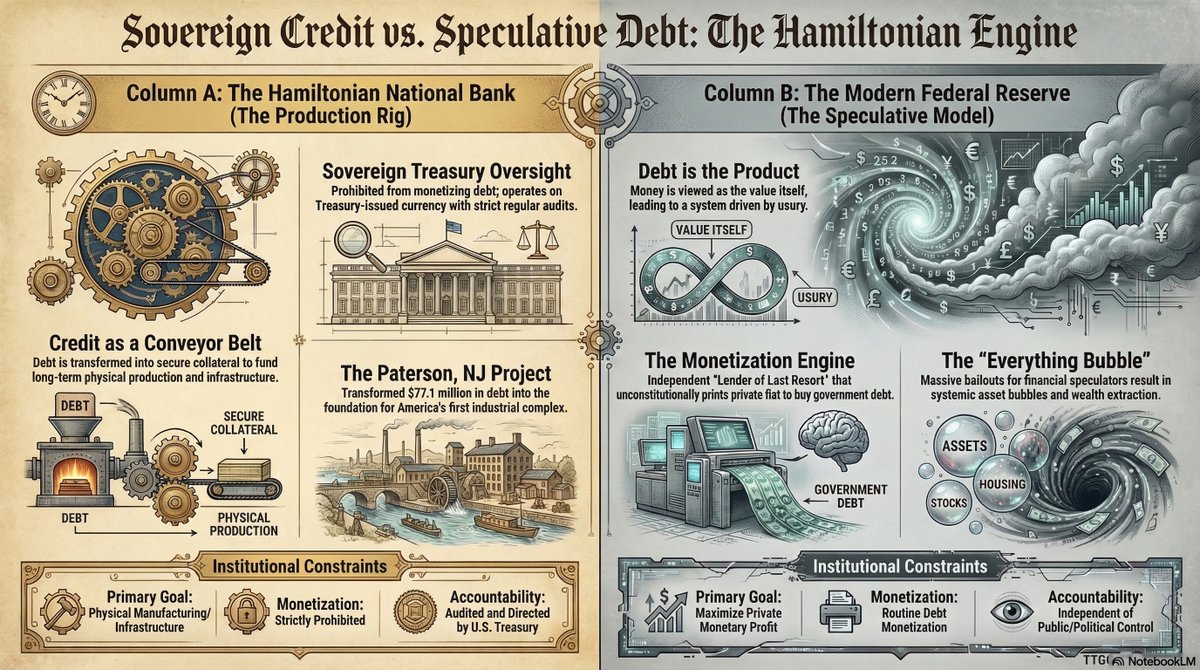
1. It Could Not Monetize Government Debt: The Federal Reserve routinely buys U.S. debt, acting as an engine to grow endless federal borrowing. Hamilton’s Bank was strictly prohibited from monetizing government debt.
2. It Did Not Print Fiat Money: The Federal Reserve unconstitutionally prints its own money (Federal Reserve Notes). Hamilton’s Bank was forbidden from doing this and operated strictly on money issued by the U.S. Treasury under the Constitution.
3. It Was Heavily Audited: Today’s Fed operates independently with zero true oversight. Hamilton’s Bank had its books regularly audited by the U.S. Treasury, which was empowered to intervene against any unsound practices.
4. It Was Not a "Lender of Last Resort": The Fed sets monetary policy and bails out degenerate financial gambling. Hamilton's Bank had no power to set monetary policy—that belonged exclusively to Congress and the Treasury—and it existed to provide commercial loans to manufacturing, agriculture, and transportation.
5. It Was a Bulwark Against Speculation: Hamilton designed the bank to explicitly "succor the wary and industrious" while discrediting "usurious lenders and usurious borrowers".
The core difference between these two systems lies in the fundamental definition of wealth. Modern central banking operates on the British imperial model, where value is nominally located in the money itself. The day-to-day operations of this system are driven by usurious and speculative monetary schemes to maximize private profit.
Hamilton understood that money has no intrinsic value; it is merely a tool to facilitate the creation of true value. In his 1790 Report on a National Bank and his 1791 Report on the Subject of Manufactures, Hamilton argued that the ultimate source of all wealth comes from mankind’s creative discoveries and physical production. He stated clearly that "the intrinsic wealth of a nation is to be measured, not by the abundance of the precious metals contained in it, but by the quantity of the productions of its labor and industry".
When George Washington made him Treasury Secretary, the young United States was completely bankrupt, suffocating under $77.1 million in debt. Instead of imposing crippling austerity, Hamilton executed a brilliant economic maneuver. He consolidated the state debts into one pile, funded them at par, and used that secured debt on deposit in the National Bank as collateral for the issuance of new loans.
This created a "conveyor belt" of sovereign credit flowing directly from the U.S. Treasury, through the Bank, and into productive investments like factories, canals, and agriculture. The system functioned by utilizing future payments on credit to make long-term investments in physical infrastructure possible. By linking credit directly to physical output, this system stimulated "the activity of the human mind, by multiplying the objects of enterprise".
Hamilton put this into practice by helping to found the Society for Establishing Useful Manufactures in 1791, creating an entire industrial complex in Paterson, New Jersey as a pilot project for public-private development. Furthermore, a portion of national tariff revenues was intentionally earmarked for "Bounties and Premiums" to directly fund the work of scientists and inventors creating technological breakthroughs.
The system Hamilton built was designed as a direct weapon against the British Empire's economic model of "free trade" and raw material extraction. A Hamiltonian national bank provides sovereign governments the power to create productive credit and direct it to create new physical wealth, which subsequently extinguishes the debt. It acts as a capital budget for the nation, utterly distinct from the central bank model which simply monetizes debt to fuel asset bubbles.
The Federal Reserve system we suffer under today is an oligarchical architecture designed to extract wealth and fund a parasitical financial elite. To rebuild American prosperity, we must stop pretending that endless fiat money printing from a private central bank is normal. We must return to a Hamiltonian framework of Sovereign Public Credit, where capital is directed exclusively toward infrastructure, manufacturing, and the boundless potential of human creativity.
8
60
124
4,291
Mar 20
The greatest financial revolution of our lifetime didn’t happen on Wall Street, and it wasn't debated on the floor of Congress. It happened when the United States Federal Reserve quietly assassinated LIBOR.
For half a century, the global economy was held hostage by an interest rate set by a shadow cartel of banks in the City of London. It was the ultimate subversion of American sovereignty, a system designed to extract wealth and export control.
But a silent financial coup has reclaimed the US dollar. Here is the untold story of the death of LIBOR, the weaponization of SOFR, and the explosive, real-time return of the true American System of economics.
The Forgotten American System
To understand what we just won back, you must first understand what was stolen from us. The American Revolution wasn't just a political war; it was an explicit, philosophical rebellion against the British Empire's economic model of free-trade imperialism, speculative finance, and raw material extraction.
Our Founding Fathers, led by Alexander Hamilton, engineered a revolutionary alternative: The American System. This system relied on absolute national sovereignty over banking and the issuance of public credit to fund physical infrastructure, manufacturing, and scientific advancement. Hamilton’s National Bank was the exact opposite of the modern central banking cartel; it was strictly prohibited from monetizing government debt for financial speculation.
Later, Abraham Lincoln revived this system with his Greenback policy to build the transcontinental railroad, proving that human creativity and productive labor—not stockpiled gold or speculative usury—are the true sources of a nation's wealth. The American System was designed to foster human potential, rejecting the British imperial model of parasitic rent-seeking and artificial scarcity.
The Offshore Hijacking
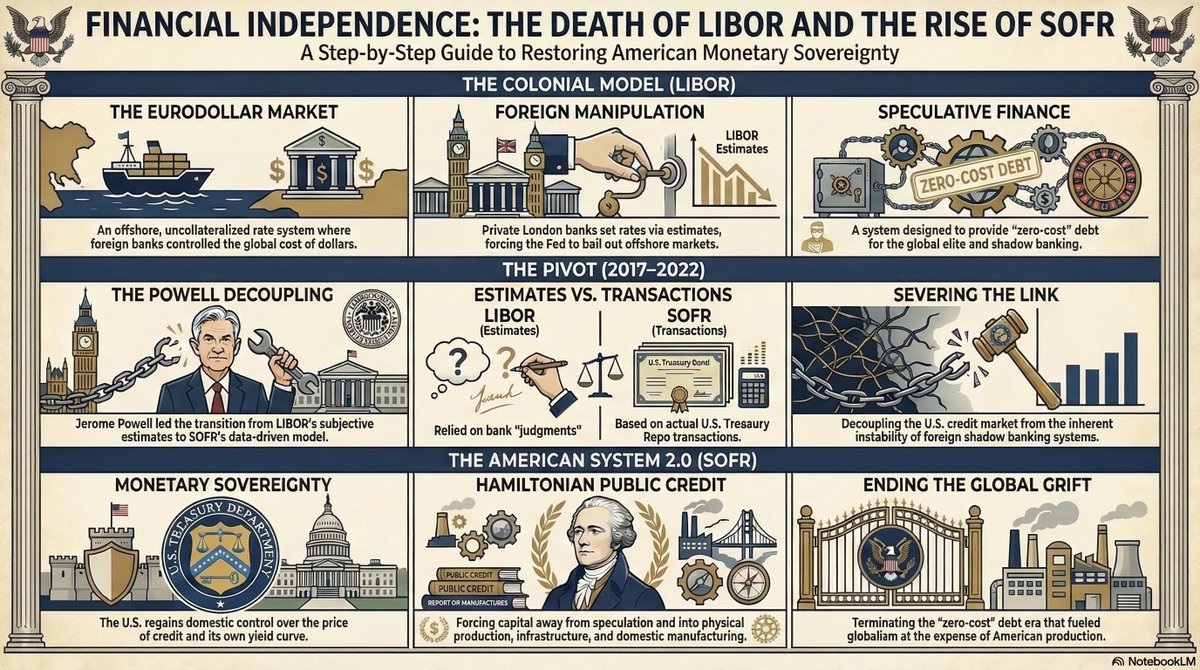
However, over the late 20th century, America surrendered its economic sovereignty to the very financial empire it once defeated. The mechanism of control was the "Eurodollar" market—trillions of US dollars held in offshore foreign bank accounts, operating completely outside the jurisdiction and regulation of the United States.
To regulate this massive, shadow banking system, the London Interbank Offered Rate (LIBOR) was created. By 1986, LIBOR dominated the globe. It dictated the price of global dollar debt, allowing a handful of London banks to skim a massive vig off the world economy while systematically stripping the US Federal Reserve of its power.
Because the entire world's debt was indexed to LIBOR, the Fed became a helpless dog wagged by its offshore tail. US monetary policy was constantly forced to chase offshore rates, bailing out foreign Eurodollar markets whenever they seized up to prevent domestic contagion. This was the ultimate betrayal of Hamilton and Lincoln. It aligned US monetary policy with European globalist objectives, fueling a system that stripped the American middle class of its wealth to subsidize a transnational financial oligarchy.
The Kill Shot: Enter SOFR
The turning point arrived in 2017, when a silent, coordinated effort began to break this colonial blackmail once and for all. Under the Trump administration, FOMC Chair Jerome Powell began the relentless transition away from LIBOR to the Secured Overnight Financing Rate (SOFR).
This was not a mundane bureaucratic update. It was a financial declaration of independence.
Unlike LIBOR, which was an uncollateralized rate manipulated by London banks, SOFR is a market-driven rate based strictly on domestic US repo markets and backed by actual Treasury collateral. By officially sunsetting LIBOR and fully implementing SOFR across US financial markets by 2022, the Federal Reserve achieved the impossible: it fundamentally decoupled onshore US dollars from offshore Eurodollars.
Reclaiming the Republic
The implementation of SOFR severed the direct link that allowed European banking powers to hold US credit markets hostage. Your home equity line of credit, your auto loan, and domestic corporate debt are no longer tied to the derivative books of offshore banks like Deutsche Bank or Barclays; they are tied directly to the Fed's policy rate and local US bank balance sheets.
This single structural shift returned ultimate monetary power to Washington. Because the Fed no longer had to instantly bail out foreign markets to protect domestic lending, Jerome Powell gained the superpower to relentlessly hike interest rates.
By aggressively raising the Fed Funds Rate to 5.5% and holding it there, Powell began starving the highly-leveraged Eurodollar system of vital liquidity. He weaponized the US dollar to crush the offshore shadow banking system that had parasitized American wealth for decades.
The Hamiltonian Revival
We are witnessing the violent, real-time death of the globalist monetary order. The transnational elite—often referred to as the "Davos Crowd"—relied entirely on zero-cost Eurodollars to fund their neo-feudal agendas, enforce global compliance, and dictate terms to sovereign nations. Without the Fed acting as their unconditional lender of last resort, their entire architecture of control is collapsing under the weight of higher interest rates.
The switch from LIBOR to SOFR is the foundational step in reviving the true American System 2.0. By taking back control of the price of the US dollar, the United States has reclaimed its sovereign right to dictate its own economic destiny. We are moving away from a post-industrial era of uncollateralized, speculative debt and returning to a system where capital has a real cost. This forces investment back into physical production, hard assets, infrastructure, and domestic industry.
The era of the offshore empire dictating American prosperity is over. Hamilton’s vision is finally rising from the ashes, and the rebuilding of sovereign public credit has just begun.
12
111
300
11,701
Mar 20
The greatest heist in human history wasn’t a bank robbery. It was the hijacking of an entire nation.
Everyone believes the British Empire—along with its financial systems, constitutional monarchy, and free-trade doctrines—was a native product of the English isles. This is a monumental historical illusion. The oligarchical system of Great Britain is not an autochthonous product of English history. It is, in fact, a transplanted operating system, a direct continuation of the traditions of Babylon, Rome, Byzantium, and the Republic of Venice.
Here is the deep dive into the true origins of the global financial matrix.
The Original Offshore Empire
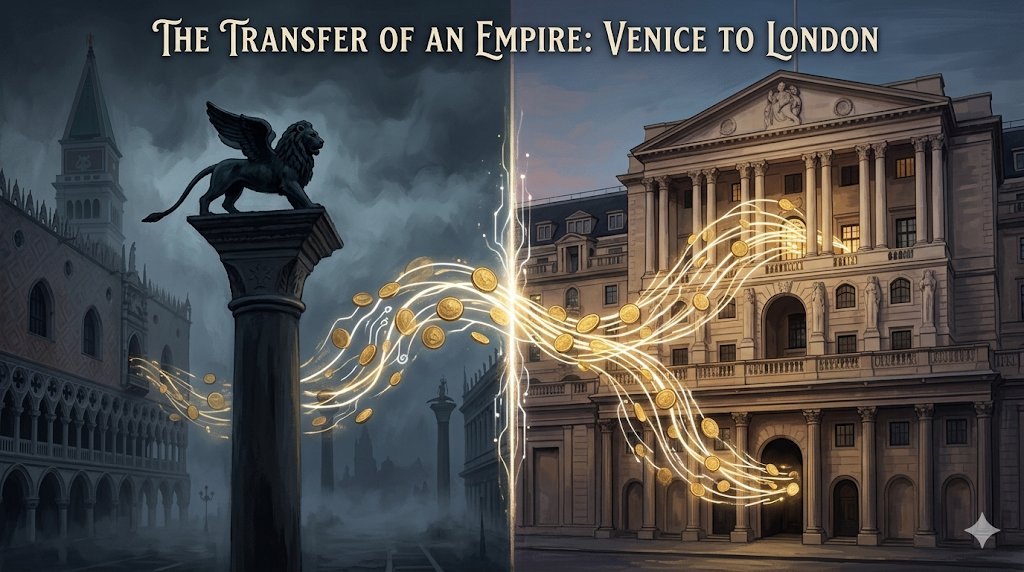
Before London became the financial capital of the world, that title belonged to a tiny, impregnable swamp in the Adriatic: Venice. For 1,500 years, Venice operated as the supreme oligarchical superpower of the Mediterranean, establishing an unmatched continuity of despotic rule.
The Venetian system was not built on domestic physical production; it was built on usury, the monopolization of global trade chokepoints, and massive networks of slavery.
Venice was the ultimate surveillance state. Internally, the regime was governed by the terrifying Council of Ten, an intelligence-coordinating body with the power to issue secret death sentences without trial or appeal. Citizens were encouraged to inform on one another by dropping notes into the "Lion's Mouth" mail slots scattered around the city. This panopticon of terror ensured absolute compliance and established a framework for elite control that modern intelligence agencies still emulate today.
The Philosophical Weapon
To maintain their dominance, the Venetian elite relied on a specific philosophical software. They recognized that human creativity and scientific discovery were mortal threats to their static, unyielding hierarchy. Therefore, they engaged in relentless epistemological warfare. They championed the pagan philosophy of Aristotle, reducing human knowledge to crude sense-certainty and dismissing the existence of a creative human soul. This "no-soul" thesis justified their absolute rule, allowing them to treat populations as mere cattle to be culled, enslaved, and looted,. This formalism was a weapon designed to kill innovation, replacing true scientific method with the fetishism of professional authority.
The Geopolitical Playbook
But Venice's true genius lay in its geopolitical espionage. As a geographically tiny power, Venice survived by pitting massive dumb empires against one another. They orchestrated the horrific Fourth Crusade in 1204, manipulating French knights to sack Constantinople and allowing Venice to seize control of the Byzantine Empire's vast trading routes. Venetian intelligence even guided the Mongol hordes of Genghis Khan into Europe, effectively using them as a wrecking ball against Venetian rivals.
The Great Metastasis
However, the turning point of modern history arrived in 1508. During the War of the League of Cambrai, almost all the major nation-states of Europe united to wipe Venice off the map. The Venetian mercenary armies were crushed, and their empire was nearly annihilated. The Venetian oligarchy realized a terrifying truth: their tiny lagoon base could no longer withstand the military might of the newly emerging sovereign nation-states.
They needed a new host. They needed a geographically secure island that could serve as the headquarters for a new global maritime empire.
They chose England.
What followed was a slow, deliberate metastasis of the Venetian cancer into the British Isles. The Venetians began transferring their massive family fortunes—known as fondi—as well as their philosophical outlook and political methods into northern Europe.
To conquer England from within, Venetian intelligence orchestrated a cultural and political takeover. Venetian operative Francesco Zorzi was deployed to the English court to act as King Henry VIII's sex counselor, manipulating the King into his historic break with the Roman Papacy. This severed England from its traditional alliances and set the stage for centuries of manipulated religious wars. Decades later, the brilliant Venetian spymaster Paolo Sarpi personally guided English philosophers like Francis Bacon and Thomas Hobbes, laying the ideological groundwork for British empiricism and the brutal, dog-eat-dog philosophy that would come to define the British Empire.
The Financial Takeover
The final phase of this hostile takeover was financial. The relocated Venetian fondi provided the nucleus of capital that ultimately created the Bank of Amsterdam and the Bank of England. In 1688, a pro-Venetian English oligarchy installed William of Orange on the British throne in the so-called "Glorious Revolution," a coup that definitively transferred sovereign power from the monarchy to a Venetian-style financial elite. By the time George I took the throne in 1714, the regime in London was the most perfect copy of the Venetian oligarchical system ever produced,.
The British Empire wasn't British at all. The entire apparatus of British political economy—from Thomas Malthus's depopulation theories to the brutal free-trade imperialism that looted India and China—was simply the Venetian model scaled up for the global stage. Venice beat the British to the punch in inflicting these radical philosophical and economic models on the world, later utilizing London as its new imperial capital.
Today, if you want to understand the modern globalist order or the central banking cartels, you must look past Wall Street and the City of London. You must look to the rotting marble palaces of the Venetian lagoons, where the greatest enemies of human progress first perfected their craft.
4
13
33
1,139
Mar 20
Most Americans believe the United States was built upon the free-market ideas of British philosophers like John Locke and Adam Smith. This is the greatest historical heist in modern education. The truth is exactly the opposite. The American Revolution was an explicit, philosophical war against the British Empire's economic system of "free trade," raw material extraction, and speculative finance.
Today, the genius of our Founding Fathers has been watered down into simplistic myths of kite-flying, cherry trees, and Broadway musicals. But these men were not just abstract political theorists; they were elite scientists, engineers, and nation-builders executing a master plan based on the physical economy concepts of German philosopher and scientist Gottfried Leibniz. They recognized that Locke’s obsession with "property" and Newton’s "empty space" were the ideological justifications for a brutal, zero-growth British Empire.
Here is the three-point data synthesis that exposes the information gap between what you were taught in school and the actual genius that built the American Republic:
Benjamin Franklin was an Industrial Mastermind, not a mere tinkerer. The modern narrative reduces Franklin to a quirky inventor. In reality, he orchestrated the very beginnings of the industrial revolution. While stationed in England in the 1750s and 1760s, Franklin directed a network of scientists and industrialists, including Matthew Boulton and James Watt, guiding the development of the first practical steam engines and the modernization of manufacturing. Franklin believed that true wealth was measured by human labor and scientific progress, not stockpiles of gold and silver. He championed the creation of sovereign paper currency—public credit—to finance physical economic development and free the colonies from London's financial stranglehold, echoing the earlier American innovations of Cotton Mather.
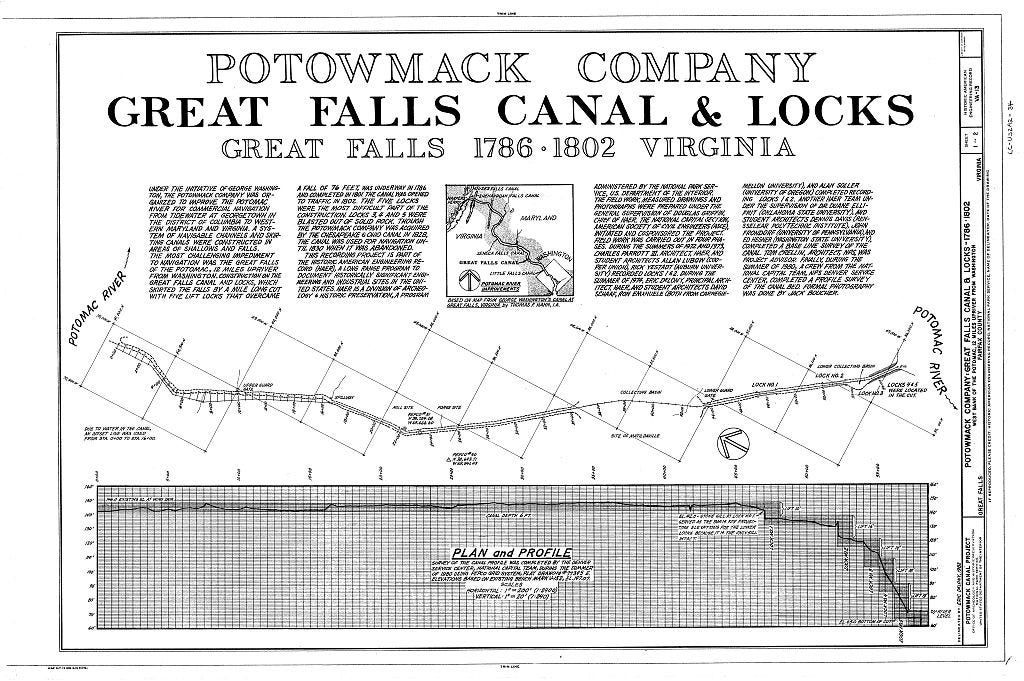
George Washington's push for infrastructure birthed the Constitution. We are taught Washington was the "Father of our Country" strictly because of his military leadership. But the United States Constitution itself was born out of Washington's obsession with massive infrastructure projects. After the Revolutionary War, the Articles of Confederation prevented the national government from funding internal improvements. Washington personally initiated the Mount Vernon Conference in 1785 to secure a multi-state agreement for the construction of the Potomac Canal. This specific push to connect the eastern tidewater to the western frontier directly triggered the Annapolis Convention, which immediately led to the Constitutional Convention in Philadelphia. Furthermore, Washington wasn't just a general; he was America's first true agro-industrialist, running a massive operation at Mount Vernon and personally sponsoring the inventors of the first American steamboats, such as James Rumsey and John Fitch.
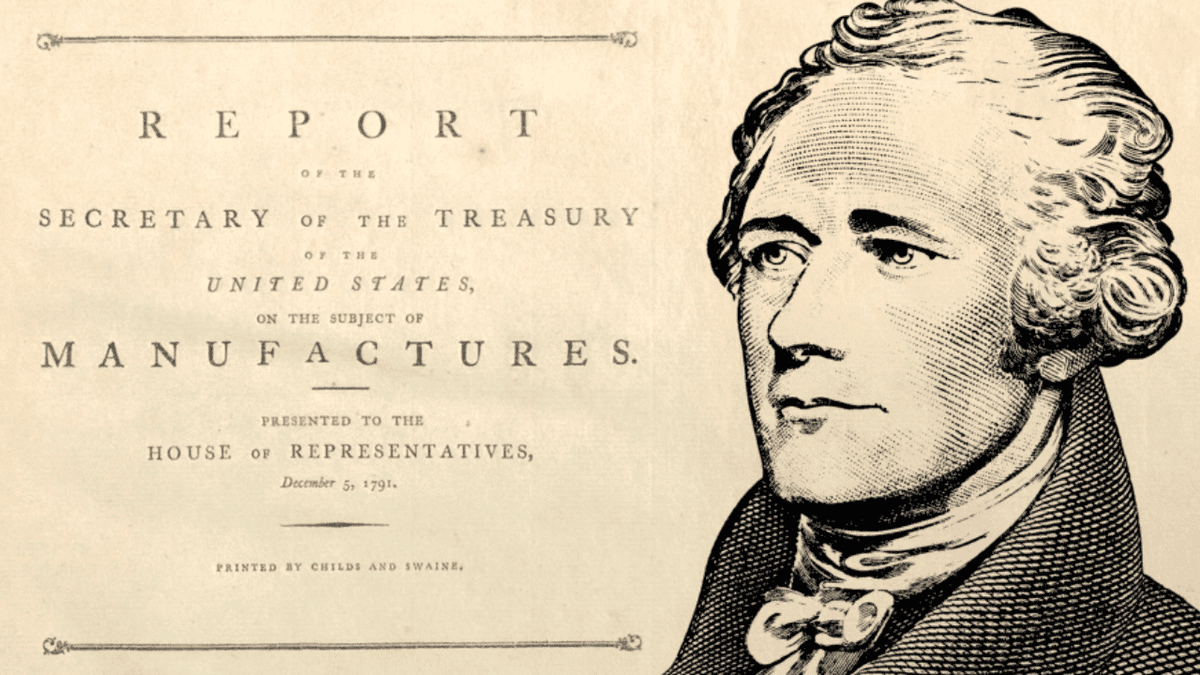
Alexander Hamilton’s Public Credit was the exact opposite of the Federal Reserve. Libertarian and Marxist historians alike falsely claim Alexander Hamilton created the blueprint for the modern Federal Reserve. This is a complete fabrication. Hamilton's First National Bank was the antithesis of an oligarchical central bank. It was explicitly prohibited from purchasing or monetizing government debt, meaning it could not act as an engine for endless federal borrowing. Instead, under the strict audit of the U.S. Treasury, the bank functioned to direct sovereign public credit exclusively into the physical development of the nation—funding manufacturing, agriculture, transportation, and internal improvements. Hamilton's 1791 Report on Manufactures proved that his system of public credit was designed not for financial speculation, but to "cherish and stimulate the activity of the human mind" through technological advancement and to free the new nation from a feudalistic dependency on raw agricultural exports.
The information gap between our modern perception and historical reality is staggering. We have been conditioned to accept a "post-industrial" society ruled by speculative finance, assuming it is the natural evolution of American capitalism. But the true American System, forged by these three geniuses, relied on high protective tariffs, aggressive government sponsorship of infrastructure, and a credit system tied strictly to physical production and human creativity.
The Founding Fathers understood that if the nation adopted British free-trade economics, it would be permanently reduced to a colony of impoverished raw-material exporters. They built a constitutional framework specifically designed to foster human innovation and sovereign economic power. To reclaim American prosperity today, we must discard the British myths and return to the unapologetic, nation-building science of our true founders.
2
14
27
815
Are you a Capitalist or a Socialist? It is a trick question because both modern British free trade and Marxist communism are cut from the exact same epistemological cloth. These systems ignore the only thing that creates true wealth, which is continuous human technological discovery. It is time to rediscover the lost American System of economics.
2
14
36
1,013
The ultimate scientific measure of economic success is potential relative population density, which requires a constant increase in energy-flux density. If a society's potential relative population density falls below its existing population, famine, disease, and societal collapse inevitably follow. We must constantly advance to denser energy sources.
1
5
10
463
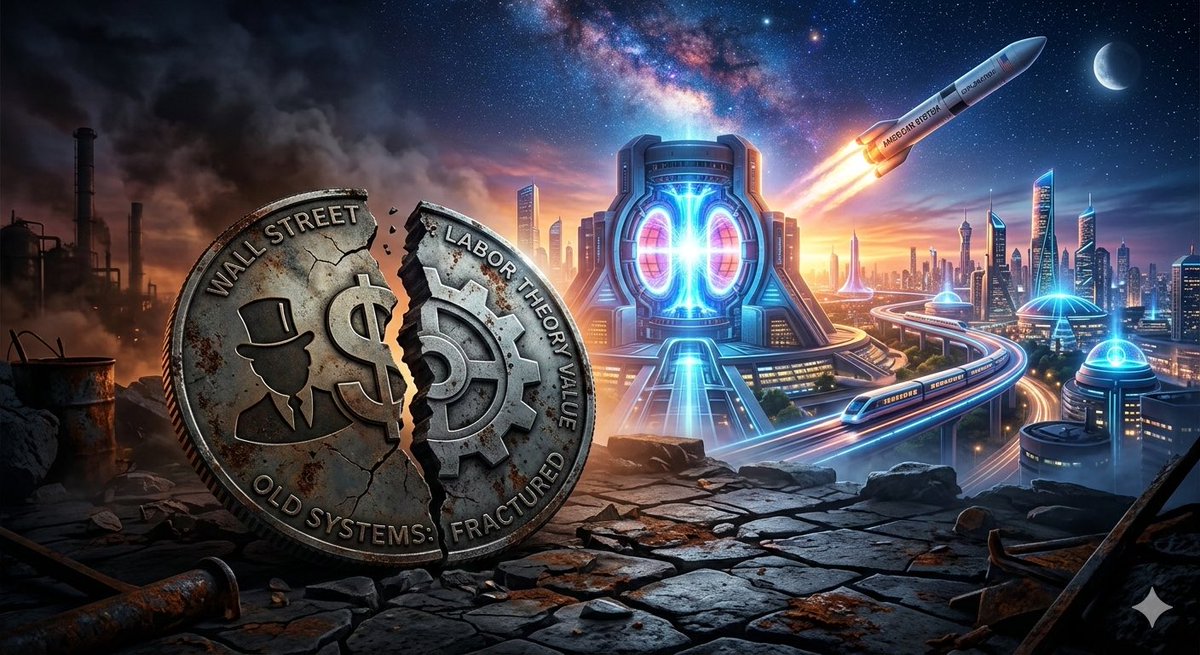
To eradicate poverty and secure a prosperous future, we must adopt a crash program to achieve an entirely new economic platform defined by controlled thermonuclear fusion. A fusion economy is the urgently needed next step for humanity's gains of power within the solar system, eventually mining helium-3 from the moon to unleash unparalleled productivity.
5
10
429
💯
The assertion that we simply need a "foreign intelligence gathering organization" fundamentally misunderstands what the CIA actually is. President John F. Kennedy realized this exact danger after the Bay of Pigs fiasco, famously vowing to "splinter the C.I.A. into a thousand pieces and scatter it to the winds." He recognized that the agency was actively subverting his constitutional authority to pursue an unaccountable imperial agenda. Consequently, elements of the CIA and the broader intelligence apparatus orchestrated his assassination and managed the subsequent Warren Commission cover-up, permanently destabilizing the institution of the Presidency.
Far from merely gathering foreign intelligence, the CIA has functioned as a covert operational arm for a transatlantic financial oligarchy. It has historically run domestic counterinsurgency operations against American citizens, funded massive psychological warfare programs like MKUltra, and collaborated with international syndicates in global narcotics trafficking to finance off-the-books paramilitary operations.
This machine operates entirely beyond congressional control. For example, when Congress mandated the release of the remaining JFK assassination files, the CIA simply refused, overriding the law. Politicians are terrified of this apparatus; as Senator Chuck Schumer bluntly warned in 2017, the intelligence community has "six ways from Sunday to get back at you" if challenged.
Breaking apart the CIA is not about blinding America to foreign threats; it is a necessary step to reclaim the Republic from an unelected, rogue domestic empire.
Mar 1

Why does the CIA need to be broken apart? Don’t we need a foreign intelligence gathering organization?
Realize that this is not what the CIA is. It is a domestic and global self perpetuating machine that will expand itself by its very design, to maintain control at all costs. The machine has evolved to exist across US administrations and is beyond congressional control.
5
42
106
4,992
The Observer retweeted

Mar 1
This is the deep dive analysis of Westphalia that I've been meaning to attempt for years.
Because it is the principle that is ignored by all the neo-cons/libs as they hoot about Trump's "incompetence".
@observerfiles did it better than I could've ever hoped to.

2
13
61
3,813