
Starting a new career as a Talent Sourcer in Tech 🔎 I find people with tech skills and help them go after opportunities that might change their lives. 🚀
Joined February 2007
- Tweets 151,256
- Following 4,870
- Followers 2,200
- Likes 253,995
5,180 Photos and videos










Omar Vásquez Lima retweeted

Jun 12
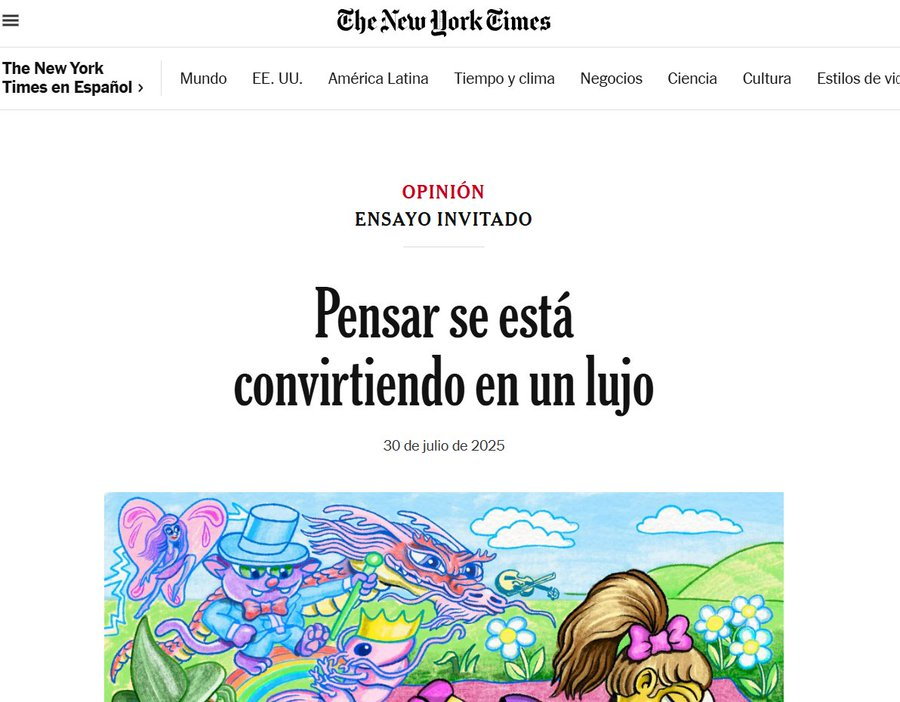
La lectura experta (reconfigura el cerebro: concentración, empatía y razonamiento complejo) requiere tiempo, silencio y un entorno
La sociedad saturada de estímulos rápidos, especialmente las clases más vulnerables, no desarrolla ae pensamiento profundo
nytimes.com/es/2025/07/30/es…
16
30
1,148
Omar Vásquez Lima retweeted

Jun 11
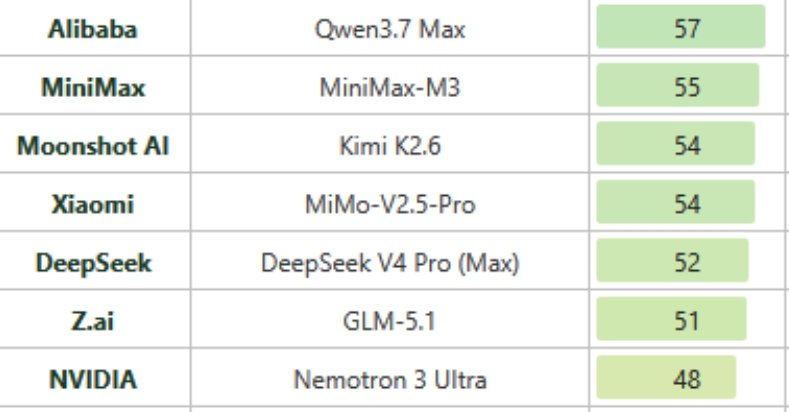
The future is still being worked on.
He runs Apple Vision Pro marketing.
We worked together at an augmented reality contact lens company.
If you know anything about Apple, they rarely let an executive talk like this about the future.
10
14
196
19,648

Omar Vásquez Lima retweeted

Jun 10
El cristiano, además de ser bondadoso y amable, ha de ser compasivo, amar sin interés y buscar el bien de los demás, sabiendo que en cada hermano y hermana que sufre es el mismo Señor quien pide y recibe, quien es acogido o rechazado, amado o despreciado.
112
1,737
17,480
611,705
Omar Vásquez Lima retweeted
Jun 10
Mañana comenzará el Mundial, y muchos estarán atentos a los partidos. El fútbol nos recuerda algo que no debemos olvidar: la vida no es una carrera para lucirse en solitario, sino un camino que aprendemos a recorrer juntos. Quien no sabe pasar el balón, aunque tenga talento, todavía no ha entendido el juego. Y quien no sabe vivir con los demás y para los demás, todavía no ha entendido la vida. #ViajeApostólico
1,323
29,267
145,776
8,150,940

El alumno perfecto no quería ser ingeniero o médico, sino graduarse en Filología Clásica. "Sobre la utilidad de las carreras me pregunto: ¿útil para qué o para quién?" elpais.com/educacion/2026-06…
16
21
78
29,141
Omar Vásquez Lima retweeted

Jun 10
RT RT RT
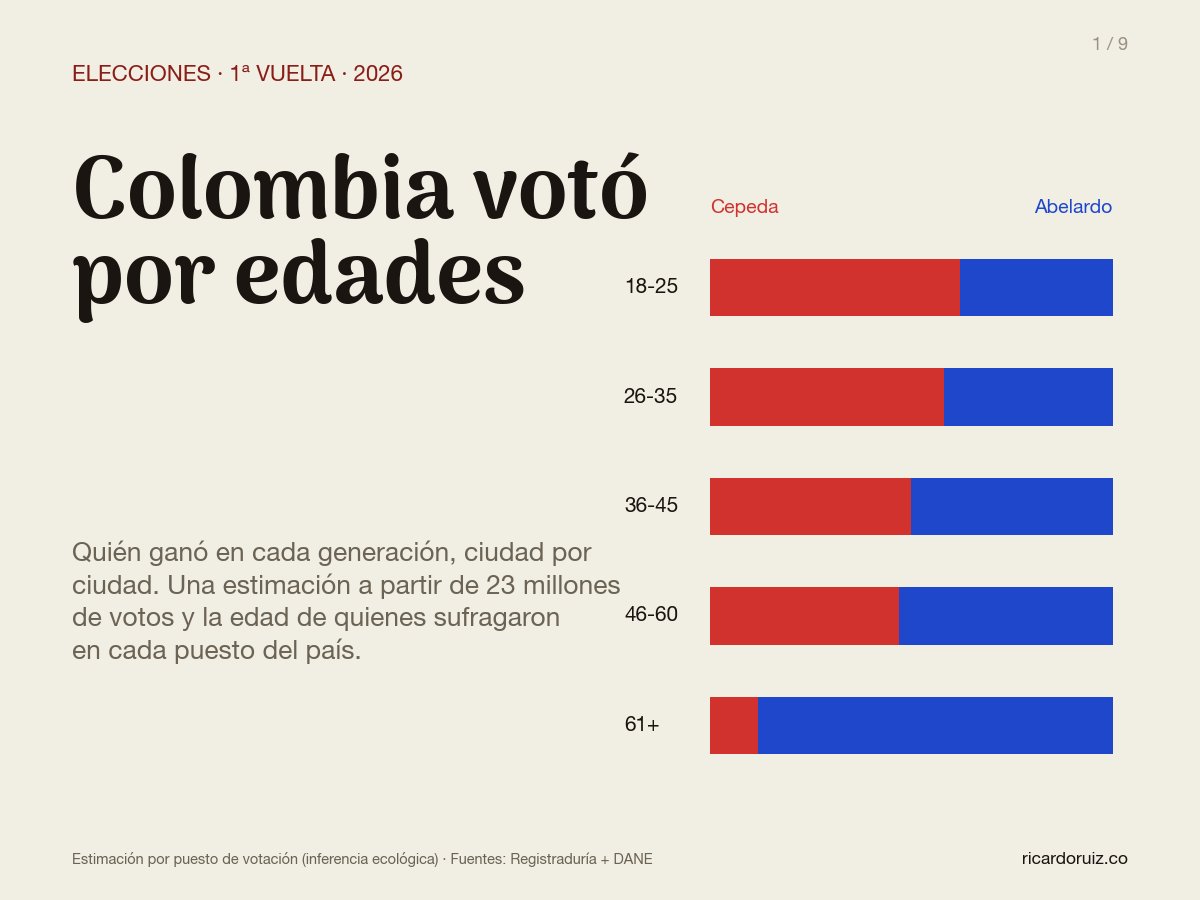
🧵 ¿A qué edades le ganó cada candidato en la primera vuelta? El voto es secreto, pero la Registraduría sí publica cuántas personas votaron por edad en cada puesto. Cruzamos eso con los resultados y reconstruimos la elección por generaciones. Lo que salió 👇
56
206
783
243,451
Omar Vásquez Lima retweeted
Jun 10
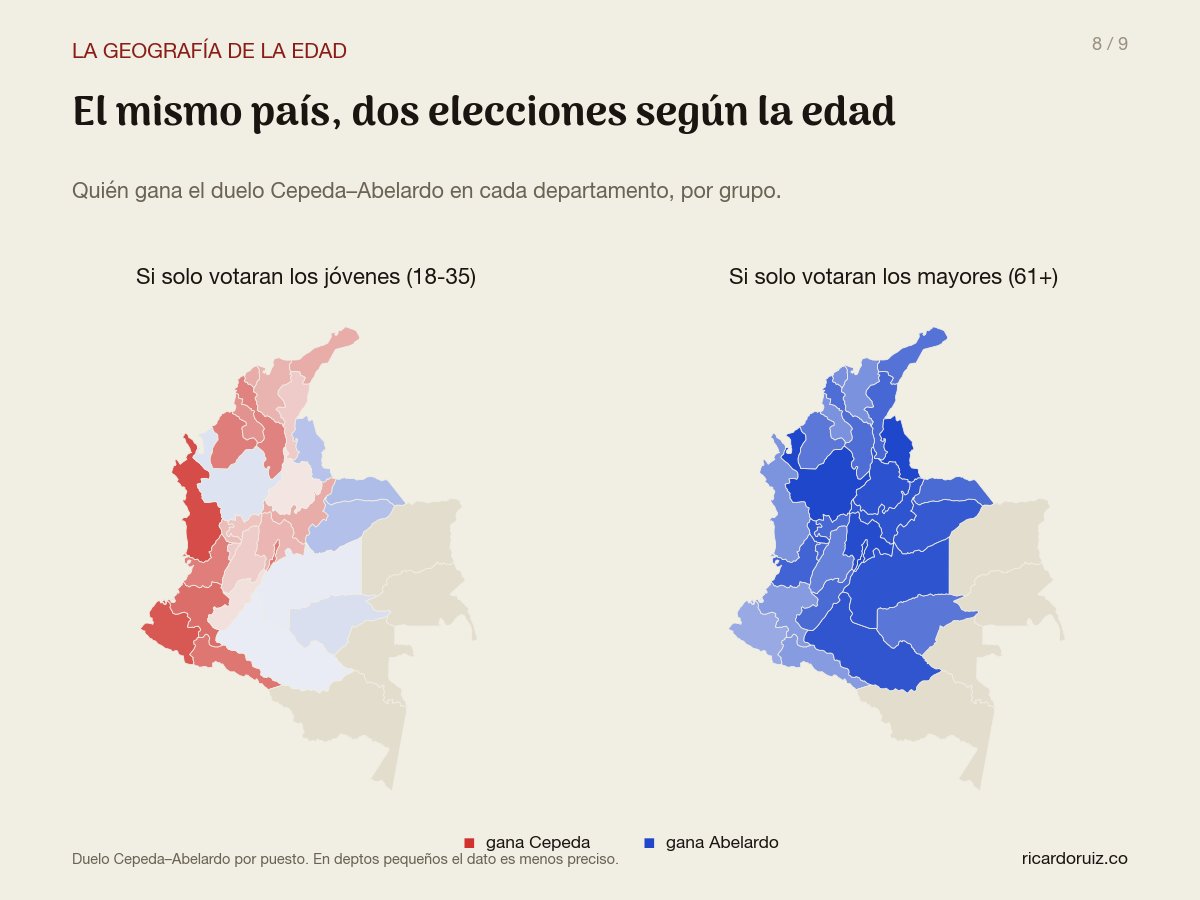
Llevado al mapa, da para dos países distintos según la edad. 👇
🔴 Si solo votaran los jóvenes, Cepeda ganaría casi todo el país.
🔵 Si solo votaran los mayores, Abelardo ganaría en todos los departamentos.
7
39
324
159,380
Omar Vásquez Lima retweeted

Jun 9
Tired: explaining your job in Word, Excel, PowerPoint, Outlook to get your work done
Wired: explaining your job to a bunch of AI agents to get your work done

every job will turn into explaining your intentions to ai
explaining what you want to ai is surpringly time consuming, coders already spend 80% of their time doing it, and this will be true for everyone
3
1
21
6,333
Omar Vásquez Lima retweeted

Jun 9
Watched all of WWDC yesterday and then talked about it on Yahoo finance. Takeaways:
1. Siri might finally work the way it was intended. After two years of false starts, the new Siri holds a real conversation and reads your mail and files for context. Is Apple entering the agentic era?
2. The problem here is that much of the AI brain comes from Google. Apple built the new Apple Intelligence with Google's Gemini. But Apple traditionally likes to control the hardware-software stack altogether -- relying on Google for key software could place a cap on what Apple's hardware will be capable of. (I'm sure Apple is well aware of this problem and finding ways around it.)
3. The one part I liked was the Passwords app that resets your weak passwords for you. An upgrade that will lead to a massive upgrade in cybersecurity across companies and even the country.
4. Europe and China are cut out. They've regulated themselves into less and less relevance.
5. The whole event was steak over sizzle. Sometimes a company needs that.
4
3
16
2,820
Omar Vásquez Lima retweeted
Jun 9
Thanks everyone for all your incredible messages and support for Steve Jobs in Exile. The sheer amount of reader feedback has been inspiring.
For media and podcast requests, I'm sorry to say I can't respond to every message during the book tour. For that, please contact publicist Lauren Ball at laball@penguinrandomhouse.com. Thanks!
1
2
12
389
Omar Vásquez Lima retweeted

"The era of setting this up as a competition between Apple and Microsoft is over, as far as I'm concerned. This is about getting Apple healthy. This is about Apple being able to make incredibly great contributions to the industry, to get prosper again"- Steve Jobs, MacWorld, 1997
2
2
27
2,986
Omar Vásquez Lima retweeted

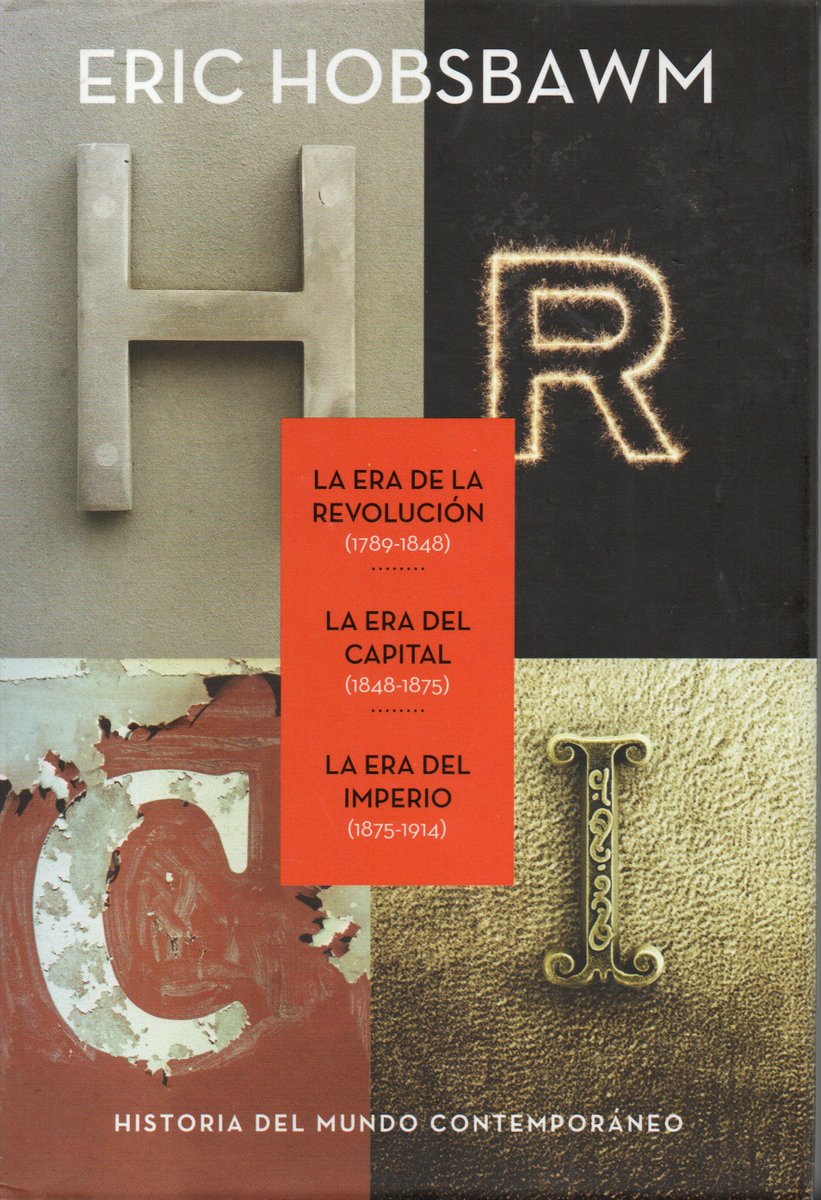
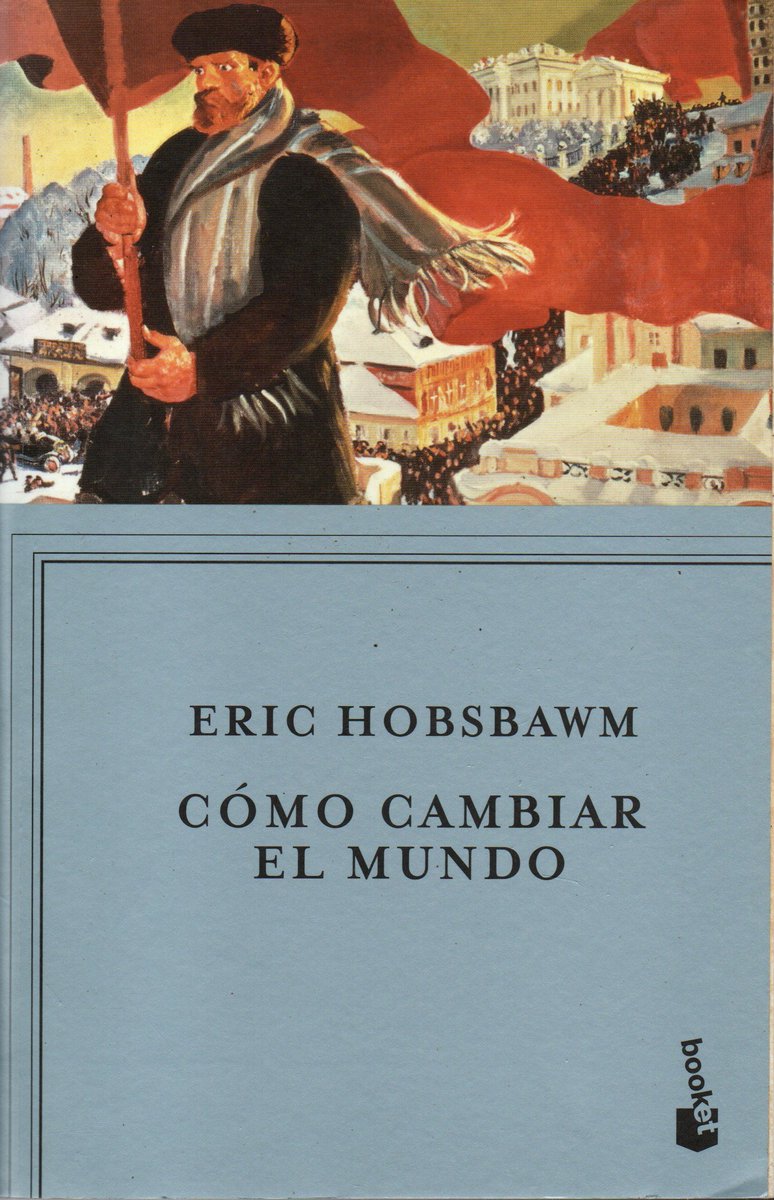
Eric Hobsbawm cumpliría hoy 109 años. Su obra histórica es la visión alternativa a las «historias oficiales» de los que ganaron los poderes políticos y las guerras. Por eso, lo releo para recordar. En este siglo XXI que está destruyendo la memoria colectiva de la humanidad.


7
40
250
8,726
Omar Vásquez Lima retweeted
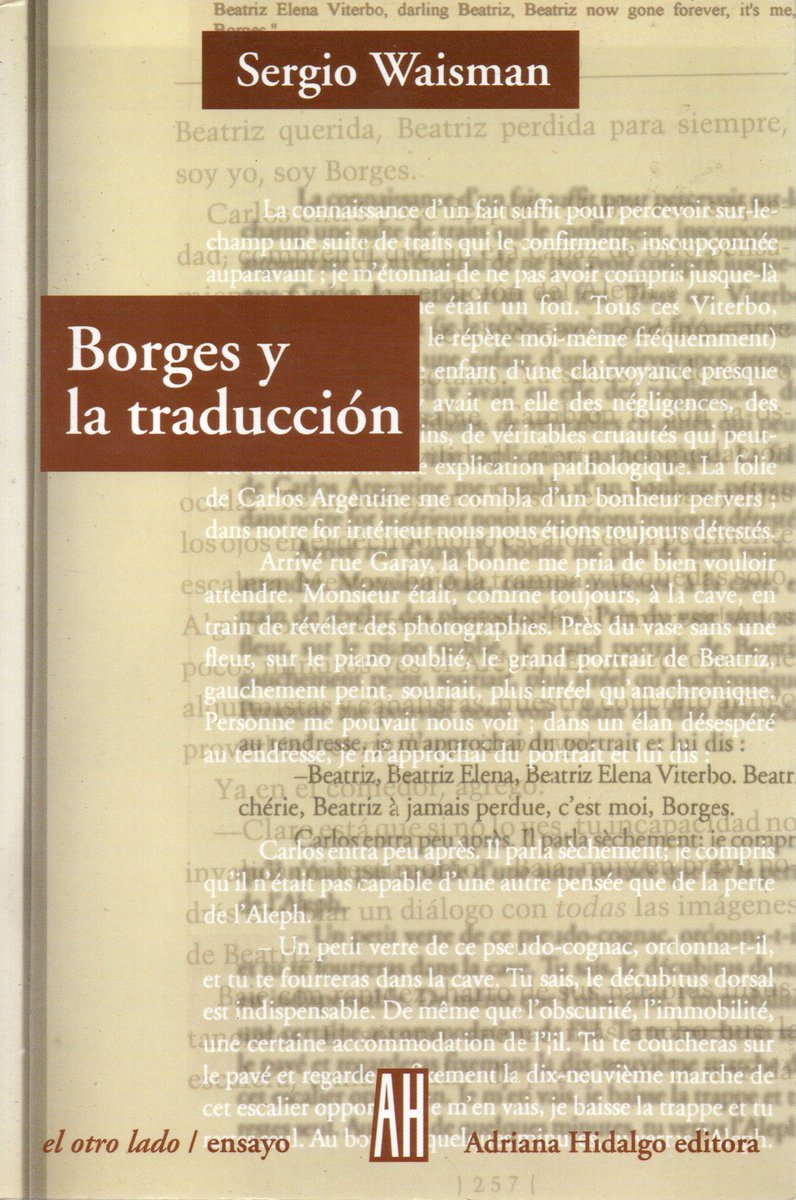
J. C. Onetti critica, de manera contundente, una traducción de Borges de Las palmeras salvajes de Faulkner. En realidad la traducción fue de la mamá de Borges. En este buen ensayo Waisman profundiza sobre el arte de traducir en Borges y cómo fue para él otro género literario.
1
8
42
867
Omar Vásquez Lima retweeted
Se cumplen 52 años de la muerte de Miguel Ángel Asturias. Ha sido olvidado de manera injusta. Su obra barroca y difícil no es una impostura, sino un reservorio fabuloso de la lengua española. A veces releo fragmentos de Leyendas de Guatemala o El señor presidente y me renuevo.


3
10
61
1,568
Omar Vásquez Lima retweeted

Jun 8
Así fue la primera "WWDC" de Apple en 1983: muchas preguntas sobre el uso del ratón y la revolución de la interfaz gráfica applesfera.com/curiosidades/…
3
7
4,366
Omar Vásquez Lima retweeted
Jun 2
ARM CEO gifts Nvidia CEO Huang with historic Windows-ARM device HT @renehaas237 notebookcheck.net/ARM-CEO-gi…
1
2
12
3,031
Omar Vásquez Lima retweeted
Jun 2
Here's a story that didn't make it into Steve Jobs in Exile. An audience member at the @ComputerHistory Museum asked whether the Apple G4 Cube (pictured below, released in 2000) was a sequel to the NeXT cube.
In my book interviews, I put that question to Jon Rubinstein (known as Ruby), Steve's hardware chief at Apple, and his answer was no. "It wasn't another [NeXT] Cube. It was completely different," he told me.
Ruby designed the G4 as a high-end machine for professionals. The idea was to put the powerful parts in a small cube, and let anyone who needed to add extra parts plug in a separate box for them. His reasoning was that most people who bought the big tower computers rarely bothered to add anything inside them anyway, so why make everyone pay for a big box?
Jony Ive, he said, "did a phenomenal job on it." The project taught Apple how to work with clear plastics, touch-sensitive switches, and fanless cooling -- designs used for later products -- and the G4 Cube now sits in the Museum of Modern Art.
The mistake: Steve retargeted the G4 from a professional product to a consumer one. "It was way too expensive for a consumer product. And so that was a failure," Ruby told me. He recalled it as the only failure of his nine years at Apple.
There's one connection to NeXT, and it's about Steve, not the design. Steve liked the idea of computers that carried little storage of their own. The NeXT Cube was built that way, using a removable optical disc instead of a normal hard drive (the hard drive was an optional add-on). Ruby didn't believe in that approach. "The Apple [G4] Cube always had storage in it, because I wouldn't do a product without it," he said.

6
4
81
5,346
Omar Vásquez Lima retweeted
Se cumplen 15 años de la publicación de El Giro de S. Greenblatt, pero se ha convertido en un clásico del ensayo contemporáneo. La fascinante pesquisa de la única copia del poema Rerum natura de Lucrecio y cómo su concepción materialista del universo transformó al Renacimiento.

3
29
127
3,483
Omar Vásquez Lima retweeted

Que tragedia esta, dónde hay que mendigar un bono.
Que clase de país el que nos han legado.
Uno dónde la educación superior tiene valor 0.
Jun 1

El BONO DE RESPONSABILIDAD ACADÉMICA supuestamente se pago el 30/04/26 y el 30/05/26 a los profesores activos a DE, TC, MT. Esto es FALSO, no se pago a la mayoría, se pago a una minoría por segunda vez, a otros se le dejo de pagar #UniVE #Venezuela @FAPUV
6
54
61
2,220