
Co-Founder @CoinruleHQ YC S21
Joined March 2009
- Tweets 11,878
- Following 6,905
- Followers 2,851
- Likes 54,410
315 Photos and videos







Pinned Tweet

11 Dec 2024
Nice highlights reel! Thanks for hosting a wonderful conference @TheBlock__ @Emergence_Conf
Looking forward to defending my title next year!
Rise new challengers, I'm ready 😎
11 Dec 2024

At @Emergence_Conf we hosted a game show that saw @ogiberstein win $30,000! Catch the highlights here:
3
1
54
8,621
Oleg Giberstein retweeted

Jun 12
If you’re trying to get the most out of your coding agents, take a look at this.
@christinetyip and I mention a few emerging patterns:
1. Shifting left (or not) in harness engineering
2. Compressing intent and coercing the genius out of the model using precise language
3. Tool interfaces, CLI composition, and when code mode wins
4. Using oracles for testing and even as specs!
Check out the recording for the full conversation.
Jun 12

In the age of AI, taste is the differentiator.
But how do you channel taste into the things you build?
@bkase_ and I discuss 4 emerging practices:
Shifting left inside agent harnesses, expert language, tool interfaces, and oracles.
01:54 @_lopopolo's (OpenAI) talk on harness engineering and shifting left
05:45 Birgitta Böckeler on guides and sensors in harness engineering
13:11 @rauchg (Vercel) on mastery of language in the age of AI
17:04 @bkase_ on borrowing expert language from an additional domain (algebra) with better abstractions
26:06 MCP, CLI tools, Bash, and code mode
32:07 @trq212 (Anthropic) on how Claude can express a workflow through code
35:47 @mattzcarey (Cloudflare) on a code-mode-style approach to search
36:37 @bkase_ on when using code mode is better
40:48 @justincormack (former CTO at Docker) on building an S3 clone using an oracle at @tessl_io's AI Native DevCon London
Would love to hear what practices others are using to channel taste into what they build.
2
3
16
2,738
Oleg Giberstein retweeted

Jun 8
Introducing
Shift: Founders' Cohort
Shift protocol enables you to send crypto directly to anyone via the Shift chip.
Instant, no gas fee is required and neither banks see it nor any blockchains log it.
Just like cash. But digital.
9
8
35
2,671
Oleg Giberstein retweeted

How could this be perceived as anything but a massive failure in today’s world? Would Stripe even be investable today? Which investors would ever think that only launching after two years of work and with 50 users would ever be the beginning of something gigantic?
I can’t see how anybody would be happy with this today. And yet, almost imperceptibly, Patrick and John were painstakingly laying the foundation for something that was built to last and built to grow strong and immovable like a Sequoia. How can mushroom growth rates produce anything other than mushroom longevity?
I’m not saying that real value CAN’T be built quickly. But I think it’s far more common than we like to talk about that founders work for two, three, four, seven, even fifteen years before something extremely valuable is born into the world and really takes off.
James Dyson worked on the design of his vacuum cleaner for 5 years before he got to a working prototype and 8 years before it became a commercial product.
Dylan Field worked on Figma for four years before launching a *closed* beta.
Tim Leatherman worked on his idea and prototype for 8 years before he had his first multitool design that was ready to sell.
Palmer Luckey spent about 7 years from the time he began working on VR prototypes before Oculus released the first consumer headset.
Jensen Huang started Nvidia in 1993 and it wasn’t until 4 years later in 1997 that they had their first major commercial success with the RIVA 128.
Steve Wozniak was the fastest and went from an idea for a personal computer in 1975 to the Apple II release 2 years later in 1977.
Time and again the reality is that great things take time to build. I’m not saying it doesn’t take hard work. I’m definitely not saying it doesn’t take determination and extreme focus. But it does take time. I think we try and pretend that it doesn’t take time and lift up the seeming exceptions to the rule.
Why not be honest and instead focus on the determination and extreme grit that it takes to keep building for years before any outward success arises or glory is received?
I hope we can be honest with young founders and repeat these stories again and again so that they learn to work thanklessly for years before the outward vindication comes, because that’s what it really takes.

John Collison: We only had 50 users two years after founding Stripe
“We started working on Stripe in the Fall of 2009, and we launched Stripe in September 2011,” John Collison reflects. “I remember right at the beginning when we were starting it I said to Patrick [Collison], ‘Yeah let’s do it. How hard can it be?’ Which gives you a sense of our mindset. And the answer was: two years of difficulty. We had not predicted that.”
John remembers feeling dejected when Stripe only had 50 users two years later:
“When you spend two years getting 50 users, it doesn’t feel like a whole lot of progress. It feels like things are going pretty slow.”
But this is one of the challenges of startups, he argues:
“If you’re working on a startup that’s a bad idea, it’s going to feel like slow-going. But if you’re working on a startup that’s a good idea, it may feel like slow-going too.”
Yet slow growth has a silver lining:
“I think the thing that allowed us to take off in the subsequent years was the fact that since we were spending so much time on each one of those users; since we were hyper-focused on building a great product; and since we weren’t dealing with problems of scale yet, that allowed us to build the product that we wanted. Part of the culture that set in really early on was taking abnormally good care of those early users.”
The Stripe founders would get an email or phone call anytime a user ran into a bug. When they sent the customer an email moments later alerting them that the bug was now fixed, people’s minds were blown.
They set up a Campfire room that any customer could join and use to message John and Patrick at any hour of the day or night. And if a user was based in the Bay Area, the founders would invite them to come by the office and help integrate Stripe for them.
In the Stripe dashboard they would prompt their customers for feedback and feature requests. Then the Stripe founders would reply to that feedback within 10 minutes.
“What this meant was that even though the user growth was happening quite slowly in the early days,” John explains, “it actually had a pretty surprising viral effect where people had a good experience, they told their friends about it, and we were able to spread entirely through word-of-mouth even to this day.”
39
77
941
219,237
Jun 7
Good take which nobody wants to hear because people hope for the quick 100x
Jun 7

I’ll forever be bullish on crypto.
I think we overestimated how quickly crypto would become the next major computing paradigm. A lot of people were searching for the next platform shift and assumed it would be crypto, but in many ways that ended up being AI.
Over the past decade, ton of capital flowed into crypto, and much of it went toward overbuilding. Instead of focusing on a handful of narrow sectors where crypto had a clear advantage, the industry tried to reinvent everything all at once. What we’re seeing now is a natural pullback and consolidation after that period of excess
I don’t think the core thesis is broken by any means. Crypto’s biggest success may not be apps first (even though we have a few), but rails first. As stablecoins, wallets, tokenized stocks and onchain financial infra via neobanks reach every human and eventually every AI agent, crypto becomes the default settlement layer of the internet.
Once those rails are everywhere, many of the ideas that arrived too early like DAOs, decentralized marketplaces, machine to machine payments, and the ideas Vitalik wrote about in the early days of Ethereum may finally have the distribution needed to get it off the ground.
1
1
120
Oleg Giberstein retweeted

Jun 6
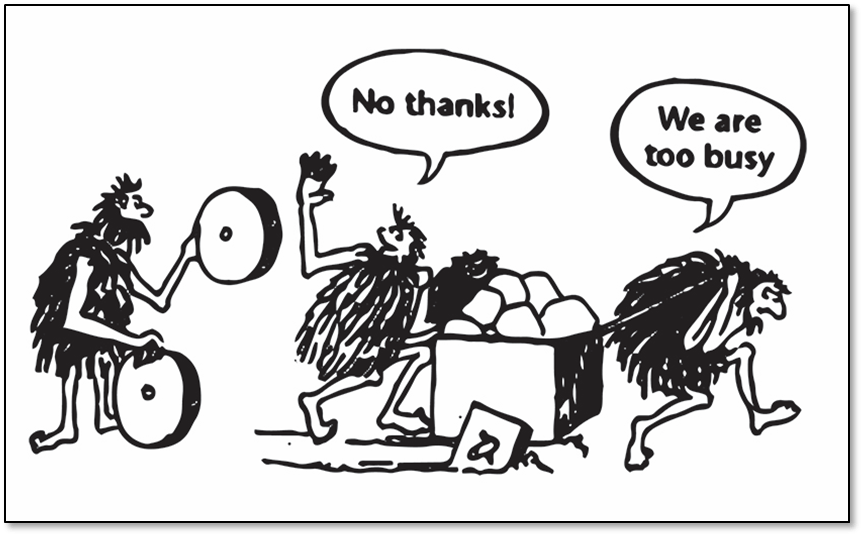
As someone with a bit of time on my hands lately, I've become a living microcosm of this.
Since leaving Euler, I've built five different startup ideas. None have progressed much beyond the idea stage. All have beautiful web apps.
AI can make you feel productive. But without focus, it's often just another form of procrastination.

23
5
147
18,544
Jun 6
👀
Jun 6

The Aave team will bounce back.
But that will be under another ticker.
1
2
337
Jun 5
Looks like they discovered an infinite mint bug in the Nasdaq as well

You don’t see this very often.
The Nasdaq 100 is quite literally moving in a straight-line lower.
Now down -4.5%, on track for its biggest daily loss of 2026.

136
Jun 5
Didn't expect I'd ever be retweeting @HunterBiden
Jun 5

Fiat is a sham, the banking class is corrupt, decentralized digital currency and the blockchain are the inevitable future, and the incumbents will fight it to the death.
2
90
Oleg Giberstein retweeted

Jun 4
A lot of orgs have yet to make the shift to shared agents.
Frameworks such as @openclaw and @NousResearch's Hermes make it possible, but care needs to be taken in their setup and management, especially with regard to access control.

2
3
7
182
Oleg Giberstein retweeted

Jun 3
I’ve been out long enough to say this, but one of the reasons I left academia for crypto was the sheer insanity that swept the sector due to this DEI mind virus thing. It became completely insufferable.
The people that run these training workshops are universally unhinged Marxists and / or arbitrary current thing activists. They confuse “speaking truth to power” with whinging about everything.
We went from hiring in some random consultant for an hour long workshop that went through a list of things that are cultural faux pas in different countries (fine), to hiring full teams that mainstreamed this weird theoretical grievance discipline into all things.
It operates on a debilitating psychosocial level that occupies spaces of perfect subjectivity. Things like “whiteness” and “unconscious bias” and “microaggresion.” I became convinced these concepts had been invented in a lab to be perfect organisational cancer. Squabble fuel.
The most insidious bit is that it has this kind of self protective auto immune effect where saying “wait, this is total bollocks”, is equivalent to declaring you are literally Hitler. So no one does.
I watched over the course of several years as it ground entire institutions to a halt, it went from 5% of an agenda to 70% then to entire purpose built committees, then the committees had committees.
We had baked it into everyone’s performance criteria, then into the curriculum of every course. Even computer science. Literally everything had to be passed through the lens of it. I saw lecturers accuse other lecturers of being white supremacists because they had no African scholars on their reading lists. I sat in equality and diversity committees and watched the people who run EDI training cancel each other for saying the wrong thing. It’s institutional mental illness.
It must cost us hundreds of billions at the national level, just due to all the wasted time, but now it’s provably lethal. If we annihilated it from the system it would add points to our GDP and save lives.
Jun 3

🚨NEW: A number of police officers from the force responsible for arresting Henry Nowak say they felt "pressured to think a certain way" after undergoing DEI training
[@billcurtis0]
18
23
187
12,967
Oleg Giberstein retweeted

Jun 2
Hey Polymarket actually according to you this did not happen

$MSTR sold 32 Bitcoin for ~$2.5M last week.


Community note
June 1, 2026 Polymarket deemed a "Will Microstrategy sell Bitcoin by May 31st market" as NO, despite Microstrategy filing with the SEC that they did sell 32 Bictoin in the week leading up to May 31st, causing approximately $2M in user losses. Source below for further details.
x.com/willo2_Poly/st…
103
178
6,769
562,153

You can work 5 days a week and succeed as a startup.
Mercury has done that from day 0 and we are valued @ $5.2bn 7 years after launch.
I have been an entrepreneur for 20 years and raised 3 kids while doing it.
The point of success is to have a great life not just a startup 😊
May 30

"If you are not working 7 days per week, you are going to lose".
Corgi Insurance is the most intense workplace culture in startups.
- The company works 7 days per week.
- Founder (@nico_laqua) lives and sleeps in the office.
- He built a cafe in the office because there was no local cafe that was open 24/7.
- 2/3 of the first 30 team members have the Corgi logo as a tattoo.
Today I went behind the scenes with Nico, who has used this culture to scale the company to a $2.6BN valuation in just two years.
My condensed notes below:
1. If You Are Not Working 7 Days Per Week, You Are Going to Lose:
Whatever you can get done in 5 days, you'll get more done in 6 and 7. If you are trying to solve the world’s hardest problems, a standard 5-day workweek will not cut it.
2. Work Trials Repel the Mediocre:
Corgi forces candidates into mock work trials over the weekend. If seeing a full office on a Saturday scares them, they don't belong. True intensity acts as a natural filter to attract killers and repel clock-watchers.
3. Lead from the Front Lines
You can’t demand 7-day weeks while sitting on a yacht. Nico sleeps 3–4 hours a night on a mattress inside the office. If you want your troops to bleed, you have to be in the trenches with them.
4. Culture Only Means One Thing: Winning
Forget superficial jargon like "hackers" or "ex-founders." Strip away the corporate fluff. A great startup culture is aggressively optimized around one single word: Winning.
5. Lifespan vs. Victories
Building something world-historic requires radical sacrifice. When asked if he'd rather build a trillion-dollar company and die at 50, or fail and live to 80, the answer was easy. "I would rather measure my lifespan in victories."
6. Reject the Comfort of "Quiet Quitting."
If you are operating in a hyper-growth environment and your days off happen to be Saturday and Sunday every single week, you are quiet quitting. To win, you must deliberately bypass the off-ramps of personal comfort and low volatility.
Corgi isn't for everyone—and that’s exactly the point.
199
253
5,642
486,914
Oleg Giberstein retweeted

Jun 1
Gravy is building Agents for your money.
@gravy_finance connects to your banks, investments, email and more to explain your money and automate your financial tasks.
Congrats on the launch, @alitabba_ & @DevMaxC!
ycombinator.com/launches/QdW…
50
35
326
43,739

I've joined @TorqueProtocol as Head of Growth 🫡
Hyped to be back on Solana, solving one of crypto's biggest hurdles: sustainable growth.
Torque turns data into predictable growth loops. we've scaled from Colosseum winners to driving $5B in volume for Raydium, Axiom, and USD1.
Shout out to @SuperteamUK and the House of Sol community for the support, and the welcome back to the ecosystem 🙌
P.S. If you wanna chat growth, agentic incentives, or what we're up to at Torque, drop me a DM.
43
6
155
11,337
Oleg Giberstein retweeted

May 27
It's been a while since global sentiment towards crypto has been that bad.
I said this many times, we're not in 2021/22 end of cycle because this time no SBF/Celsius/Luna. We're in 2018, a slowand lingering despair of "we're not cool anymore" mostly solely due to price not going up.
Back then, when the tourists left, the builders delivered MakerDAO, Compound, SNX, EthLend (Aave) and more with mostly apathetic reception.
It's an exciting time to focus and deliver even if the market will be ungrateful for a while.
98
66
1,034
75,338
Oleg Giberstein retweeted

May 24
Some of my perspective on where the @ethereumfndn is going.
First of all, this is only my own view. The board is not just me, and I have no extra special powers on the board that the other board members do not. @aerugoettinea is the one executing much of this transition. My input has been largely on technical questions. The board is in the process of expanding, and my own power within the org will continue to decrease, which is honestly what I want.
The 2025 era brought many important improvements to EF and its ability to execute. Many issues were resolved, and EF continues to benefit from its improved efficiency and greater focus on concrete goals to this day. And so with those problems resolved, early this year, the largest remaining hole that I perceived was something different nagging at me: I would regularly spot people saying things like "vitalik says these beautiful things about ethereum needing to be decentralized, and have privacy, and be a sanctuary technology, but why do the EF's actions not reflect that?"
Now, you may have been hearing something different. You may not have been sensing a feeling of crisis at all, and maybe were hearing people saying that finally we were taking execution and BD seriously and the main task for us is to keep going that way and be even better and faster. Then probably there is genuine difference between you and me, in what kinds of criticism I take most seriously, and what kinds of critics through their criticism are most able to make me feel pain.
As an analogy, let's briefly switch over to a different domain.
One belief you can have about Google is that it is a success story, and has brought a lot of good to humanity in organizing the world's information. Another belief you can have about Google is that they had a beautiful idealistic beginning, but at some point the corruption of mainstream corporate attitudes seeped in, and they slowly bit by bit completely abandoned the "don't be evil" slogan.
My belief on Google specifically is probably somewhere between the two. BUT, if you had taken me back in time to ~2008, and offered me a button to press to make Google one or two standard deviations more "dogmatic", eg. give Richard Stallman permanent veto power over some key policies, I would immediately press it.
Why? Because a choice for one company is not a choice for the world, or even one country. Google existed and exists in the context of a technology industry generally drifting away from early idealistic don't-be-evil roots and toward greed for financial gain, totalizing visions of accelerated superintelligence, infiltration by sociopaths, and craven capitulation to (or worse, active participation in) government pressure for ideological control, surveillance and war. And so *one company* doing something different, positioning itself to be what George Bernard Shaw calls the Unreasonable Man, resisting the trend of the times, would have been better for freedom, balance of power and stability of society as a whole, than *all* large companies bending to dominant trends. This is a part of my version of pluralism.
This line of thinking is not just mine, but I also is not too far off from what Aya and others had in mind with the Mandate.
Now how does this all get to the role of the EF?
EF is not a "center of Ethereum", rather EF is "one node, with a defined purpose, alongside other nodes". We've always said that the EF should be the latter, but many in the Ethereum ecosystem (and even within the EF) wanted us to be the former. Now, we are taking action to ensure that we will be the latter.
This is particularly important because EF is a limited organization, with limited resources and limited organizational capacity. The EF has only ~0.16% of all ETH (less than many other individual ETH holders), whereas among other blockchains it's common for "the central foundation" to have 10-50%. Fiscally, the EF was originally designed to fulfill a limited work scope defined in the token sale docs and other pre-launch materials (building the chain software; getting through Frontier, Homestead, Metropolis, Serenity), which was fully completed in 2022; it was not designed to be an eternal steward.
And so today, the EF is choosing to use its remaining resources to pursue longevity over breadth (yes, this means we sell less ETH). The EF focuses *specifically* on those activities critical to the success of ethereum as a censorship/capture-resistant, open, private and secure system, that would not happen otherwise. This means making hard choices, and in some cases even activities that we highly approve of and people that we highly respect becoming outside of the EF. People of great technical talent, public respect and even alignment with the mission and CROPS being outside of the EF is in fact necessary if we want important tasks to be able to attract outside capital. This also means the EF taking opinionated stands culturally.
This is all intended in cooperation with all other parts of ethereum. We recognize that many other parts of the ethereum world highly respect CROPS and related values. But highly respecting is not the same as choosing to specialize and totally dedicate to a domain (Compare in a different domain: I think reducing animal cruelty is important, and I like vegan food, but am not full unconditional vegan myself)
EF is still in a transition period, and we expect its new long-term form to stabilize over the next few months. What are the guiding principles of this new form? Again, I am only one person, but I can give my answer from a technical perspective (there are also critical non-technical aspects).
At the core, *Ethereum must be impressive*. We are living in an age of highly intelligent AI and all kinds of other technological acceleration. "Status quo EVM, with a hard fork or two a year to optimize for short-term needs of users" is not interesting.
To some, "impressive" means: 250ms latency and 1M TPS. I think Ethereum trying to go that route is a mistake. Being as fast and as scalable as possible, and only a small epsilon more decentralized than the others, is a route to mediocrity, and if we try it we will lose.
I think Ethereum should scale. But I think Ethereum should strive the hardest to be deeply impressive in a different dimension: the CROPS dimension. This means things like:
* Provably bug-free Ethereum. This is a goal that all cybersecurity researchers would have thought is absurd and impossible, up until roughly 6 months ago. Now, it's on the cusp of being possible, thanks to AI-assisted formal verification. So we should be frontrunners in doing this.
* Available chain consensus. Ethereum is, and with lean consensus will cotninue to be, the ONLY chain that has both (i) traditional-BFT style properties that it's safe under asynchrony up to a high level of fault tolerance, and (ii) the bitcoin PoW-style property that under synchrony it's safe up to 49% attackers. As far as I can tell, literally no other chain has this or is planning for it; bitcoin goes for (ii) only and most other chains go for (i) only. Some will remember I fought hard for this, Unreasonably insisting that it is not OK for ethereum to rely on social consensus and hard forks to rescue ethereum from 34% of nodes going offline. It's OK for chains like hyperledger, bnb, solana, tempo, etc. It's not OK for bitcoin or ethereum or eg. zcash.
* Intermediary minimization. The fact that smart contract wallets, protocols like railgun, etc have to send transactions through intermediaries to get included onchain is honestly embarrassing, and it's a constant point of fragility. Hence the work on FOCIL and EIP-8141 (and 7701 and years of work before) to make transaction sending intermediary-minimized with public mempool and strong inclusion properties, in a truly general-purpose way, that covers not just eg. secp256r1, but also privacy protocols and much more. Kohaku is pushing intermediary minimization at the user layer, pulling Ethereum away from the dystopian status quo world where our wallets don't even verify the chain, send our private data out to a dozen third-party servers, and toward a brighter CROPS future.
Some of these goals are Unreasonable - maybe Ethereum would be "fine" getting only 50% of the way - what if we depend on intermediaries, but make it easy to switch? But going 50% of the way would not make Ethereum Deeply Impressive in the CROPS way. So we push for 100%.
Fortunately all these goals are compatible with high TPS, this is a major focus of research (esp. on scaling the state). Well-designed L2s can also help, especially L2s optimized for specific applications (eg. high-volume trading, privacy...). These goals are even compatible with significantly lower slot times, thanks to Raul's work on erasure-coded P2P, and many other optimizations.
The most high-value "product" of the ethereum blockchain, financially speaking, is ETH the asset. Ethereum secures $250 billion of ETH. The types of properties of Ethereum that I mentioned above are very good for ETH the asset. Nearly 90% of my net worth is in ETH, and most of the remainder is ~$40m of onchain fiat of which every dollar has already been allocated for some open-source biotech or software or hardware initiative. That said, there are aspects of supporting ETH the asset - *necessary* aspects even - that are outside the scope of the EF. This is where we need other heroes (some of whom hold more ETH than the EF does) to step in and help. EF has been recently thinking more about how it will relate to other such organizations, and give them needed initial support.
EF will be a smaller ship than in previous years, a more opinionated one - in some cases more opinionated in ways that might be difficult to comprehend - but a longer-lasting one, and one suited to making sure that ethereum brings something meaningful to the world. We are grateful to all those inside and outside the EF who are helping to make this happen.
1,614
1,599
7,880
4,097,233
May 26
some things are better left unsaid. Recommend no more news like these, for the sake of the people, our industry (and your business)
May 26

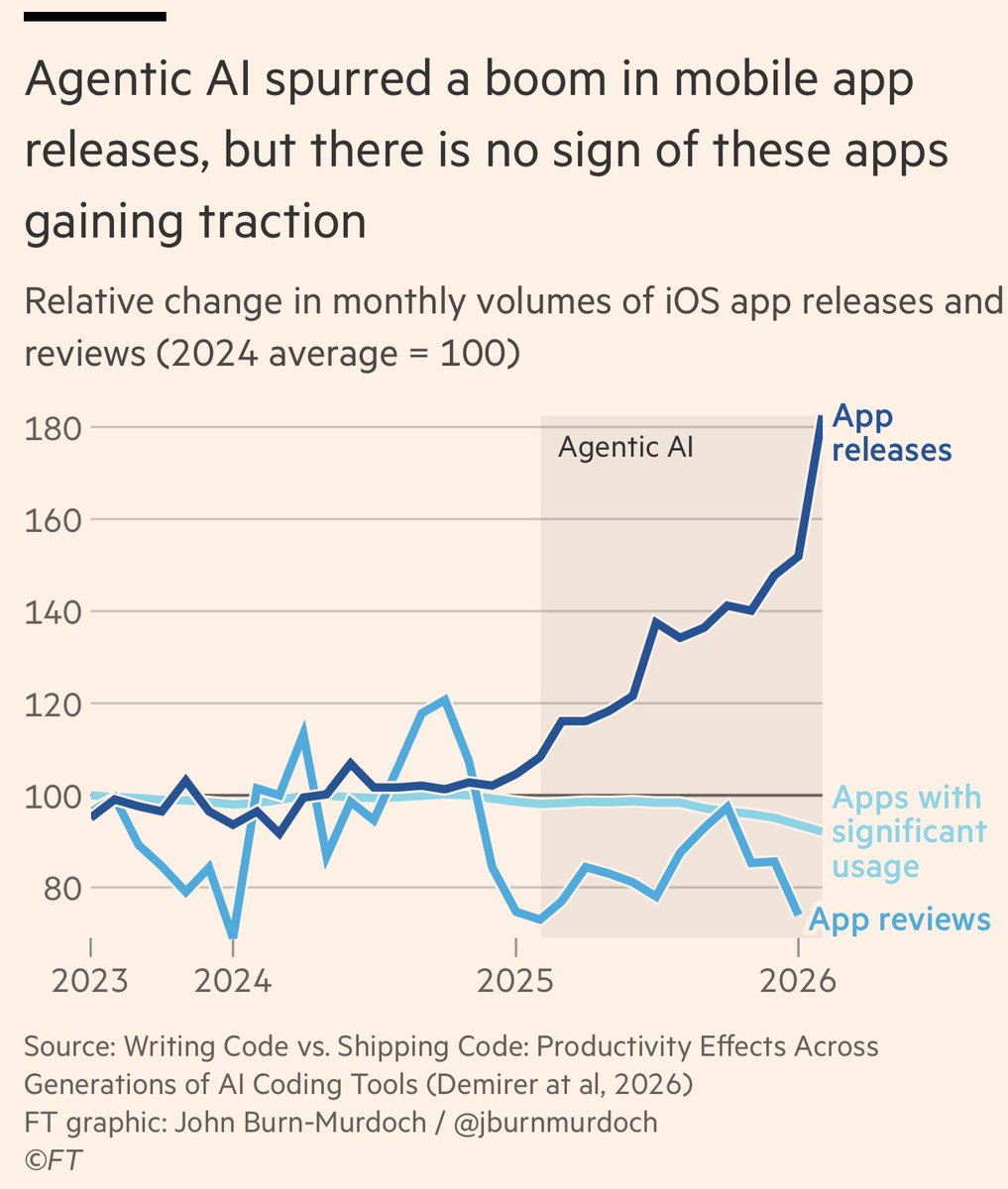
We keep hearing about 10x or 100x productivity gains in engineering and knowledge work.
But outside the model labs, I haven’t seen the corresponding 10-100x revenue growth across the market or increase in quality.
So where is the productivity going?
1
2
90
May 22
People building agent harness systems and then selling them to other people building agent harness systems who sell them to yet another group of people building agent harness systems.
2
2
87