
Joined July 2023
- Tweets 2,150
- Following 97
- Followers 12
- Likes 101,461
237 Photos and videos












Jitendra retweeted

May 30
Here’s a longer video of Abhishek Banerjee being pelted with eggs.
Enjoy 3 minutes and 19 seconds of pure retribution

#WATCH | Sonarpur, West Bengal: TMC MP Abhishek Banerjee says, "...They wanted to kill me... The whole incident has been captured on camera. We will definitely let the high court know about this. We will also let the governor know about this... I will definitely move to court..."
969
4,587
20,201
712,568
Jitendra retweeted

May 9
Why don't BJP karyakartas jump ship like TMC or other party workers? Here is the answer. Not many here would have heard of Shri Makhanlal Sarkar. It would have gone unnoticed if he hadn't been honored. The party has memory and systems to recognize unsung heroes.
43
1,105
6,683
130,377
Jitendra retweeted

May 9
ममता दीदी कह रही हैं, मैं कुर्सी नहीं छोड़ूँगी!
"अरे भाई, तू कुर्सी अपनी गेल ले जा। कोए रोक रह्या सै तन्ने? अपने घर ले जा।”
मुख्यमंत्री श्री @NayabSainiBJP जी
34
1,144
7,545
155,410
Jitendra retweeted

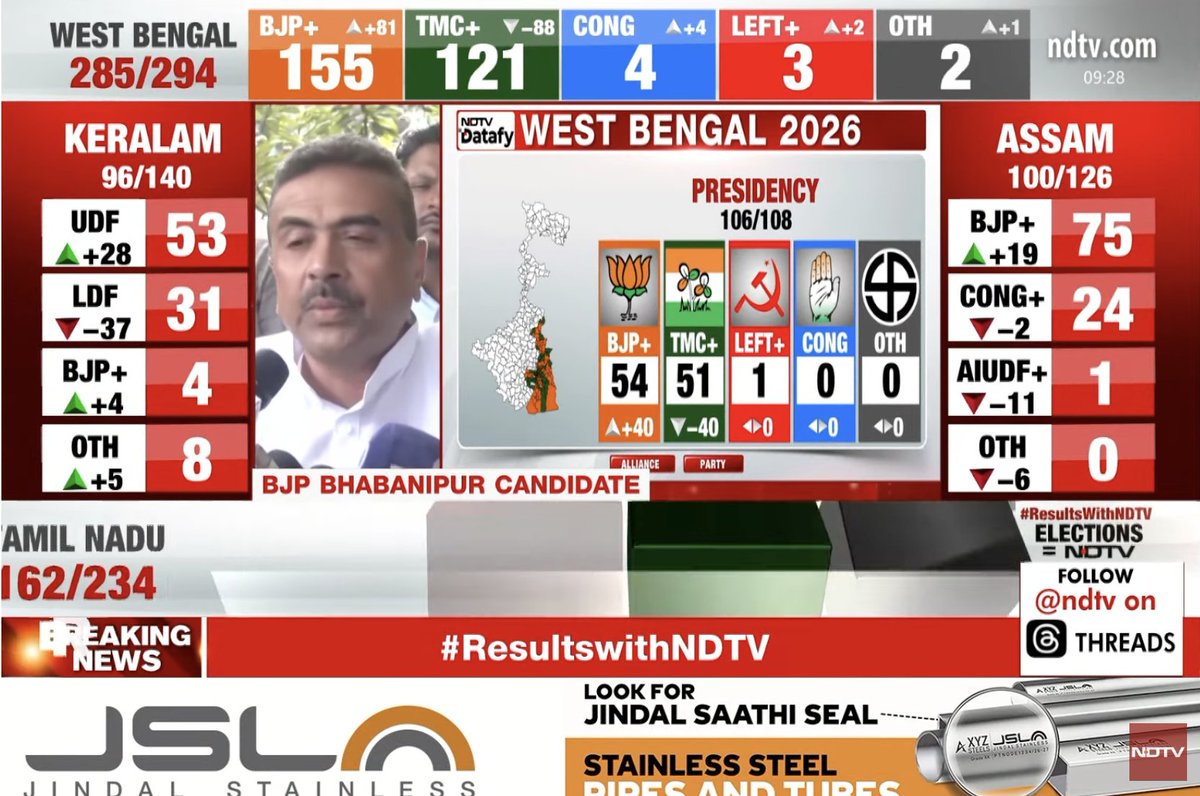
DO YOU HEAR THE PEOPLE SING?
SINGING THE SONG OF ANGRY MEN?
It is the music of the people
Who will not be slaves again!
When the beating of your heart
Echoes the beating of the drums
There is a life about to start
When tomorrow comes!
8
47
335
5,310
Jitendra retweeted

Apr 29
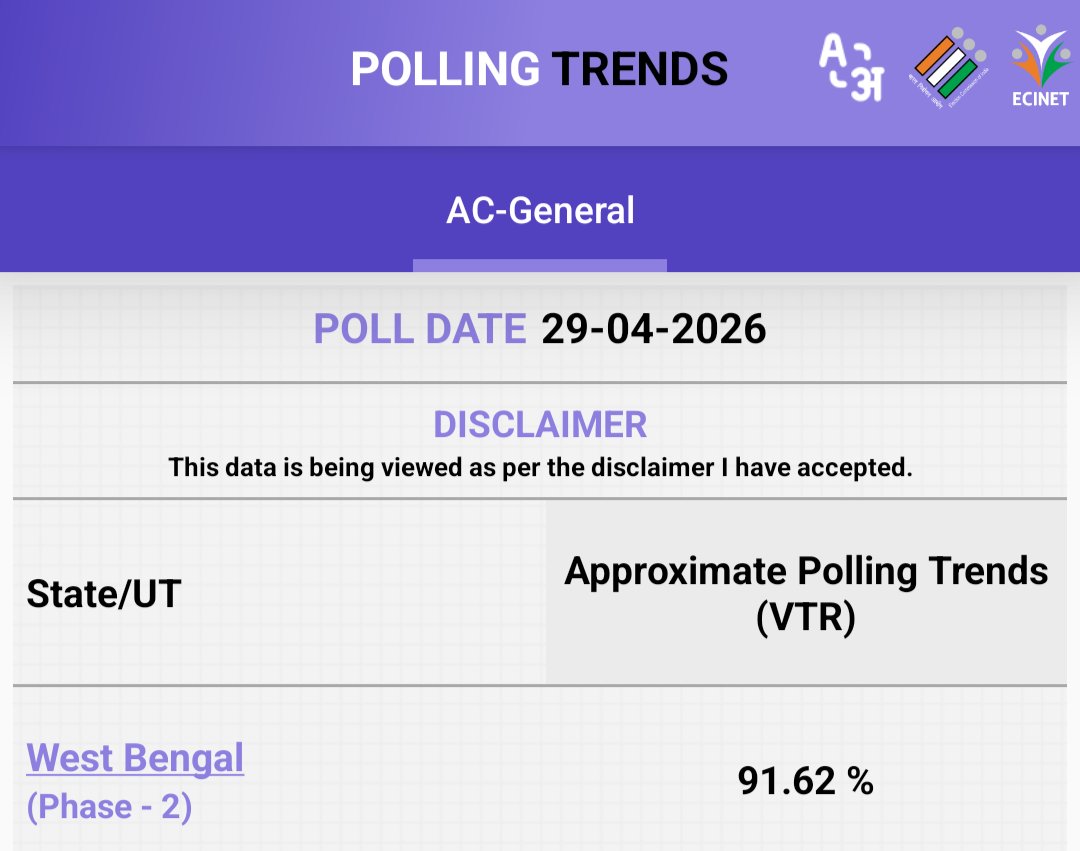
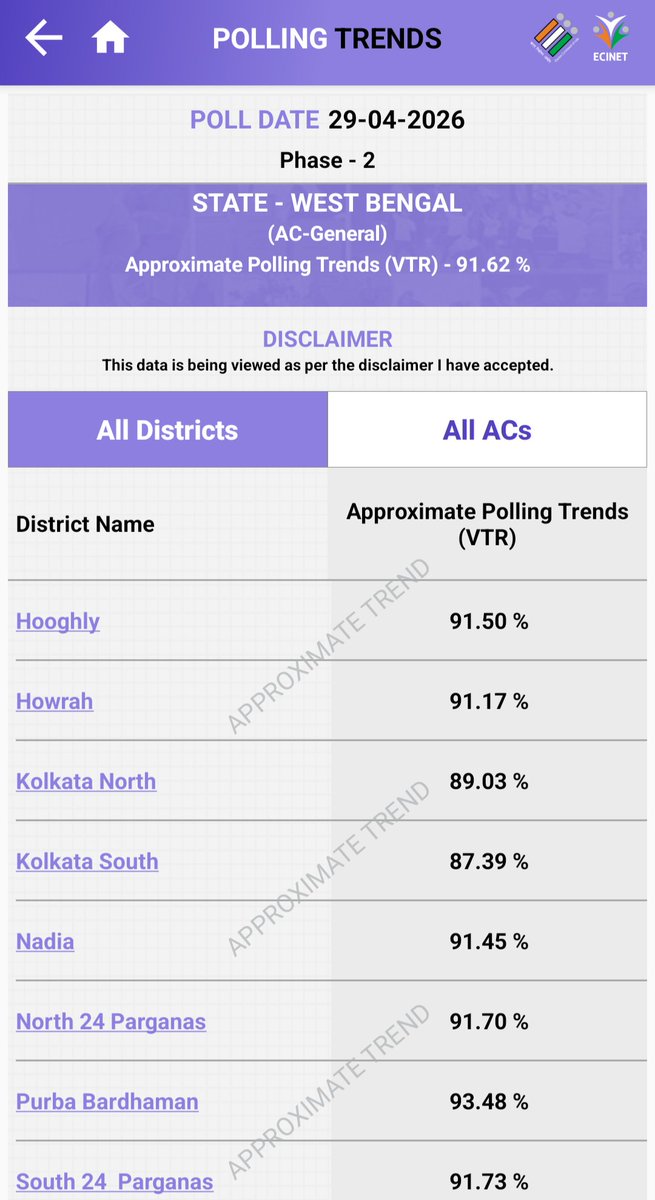
Bengal Makes History in Independent India
Phase - 2 Polling Trends Till 7PM: 91.62%
Hooghly and Purba Bardhaman Trending Highest Numbers with 91.50% and 93.48%
-----------------------------------
Phase - 1, till 7 PM Polling: 91.35%
Final Numbers available from ECI Press Release.
Apr 29

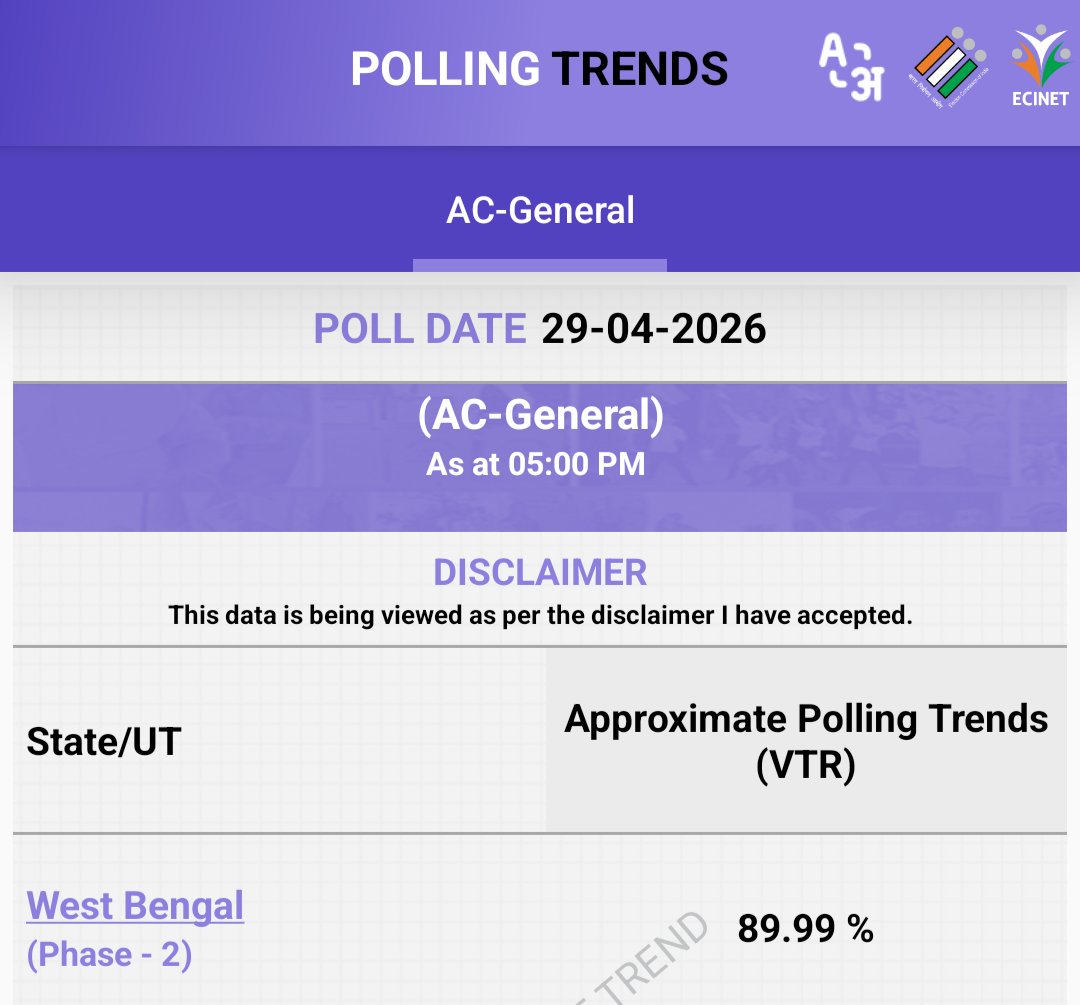
Major Milestone in Bengal !
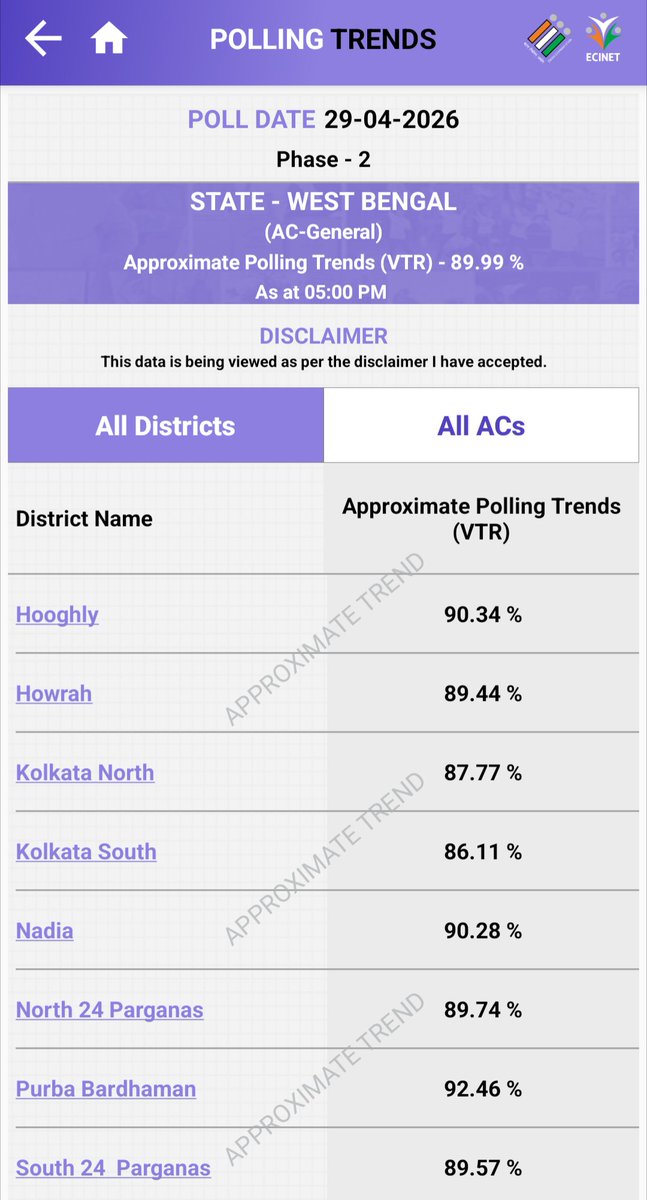
Phase - 2 Polling Trends Till 5 PM: 89.99%
Hooghly and Purba Bardhaman Trending Highest Numbers with 90.34% and 92.46%
-----------------------------------
Phase - 1, till 5 PM Polling: 89.93%
4
24
98
6,933
Jitendra retweeted
Massive amount of "Chup Chap Kamal Chhaap" going on across Kolkata!
14
181
1,586
21,591
Jitendra retweeted
Apr 29
Major Milestone in Bengal !
Phase - 2 Polling Trends Till 5 PM: 89.99%
Hooghly and Purba Bardhaman Trending Highest Numbers with 90.34% and 92.46%
-----------------------------------
Phase - 1, till 5 PM Polling: 89.93%
Apr 29
Brave People of Bengal are on Mission!
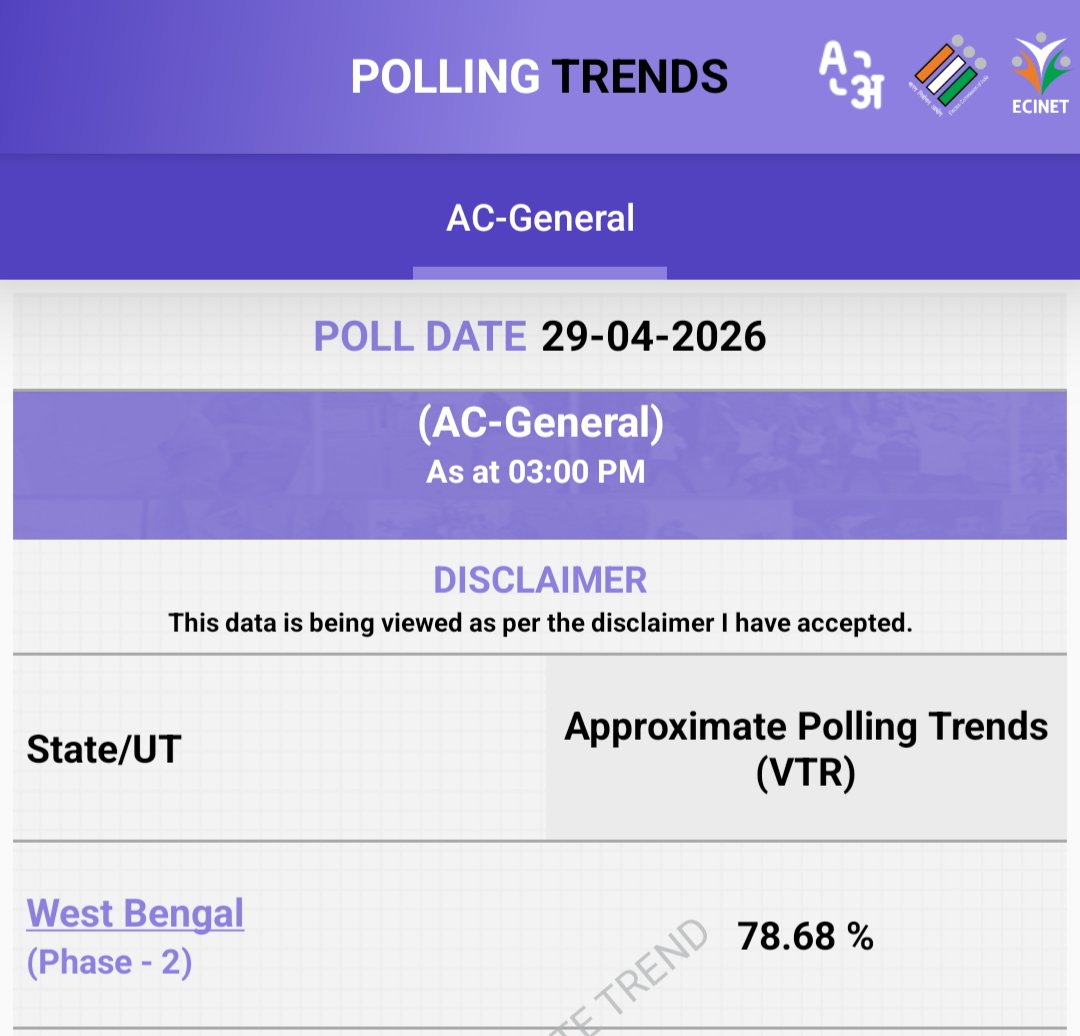
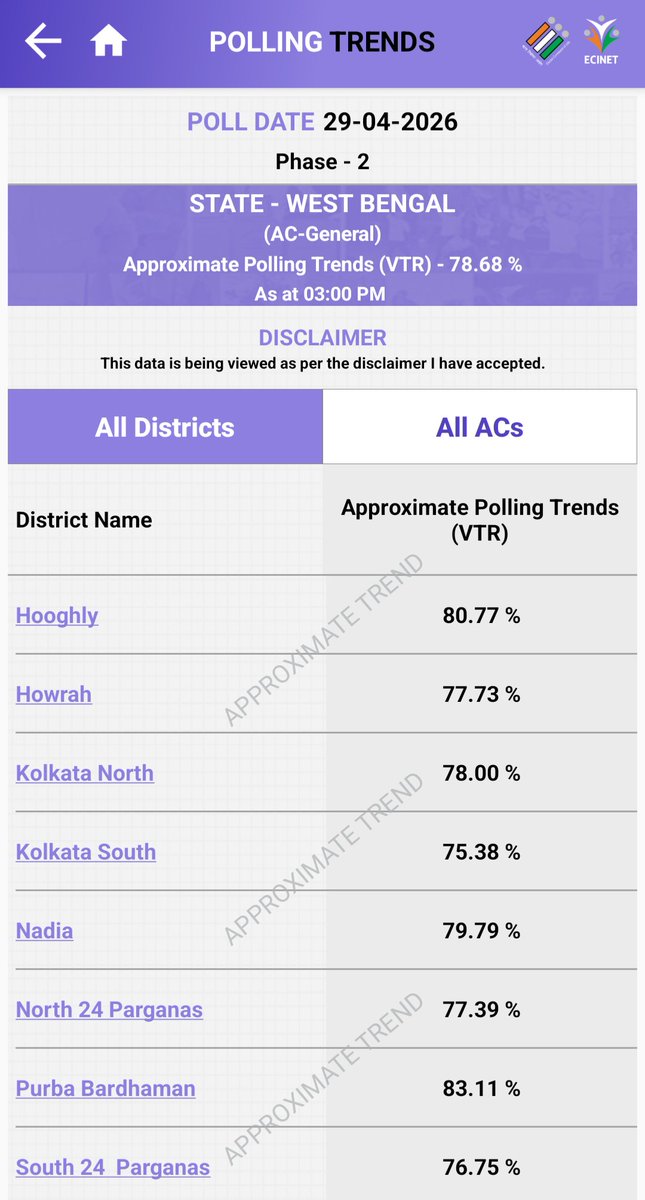
Phase - 2 Polling Trends Till 3 PM: 78.68%
Hooghly and Purba Bardhaman Trending Highest Numbers with 80.77% and 83.11%
-----------------------------------
Phase - 1, till 3 PM Polling: 78.77%
6
41
165
21,581
Jitendra retweeted
Apr 29
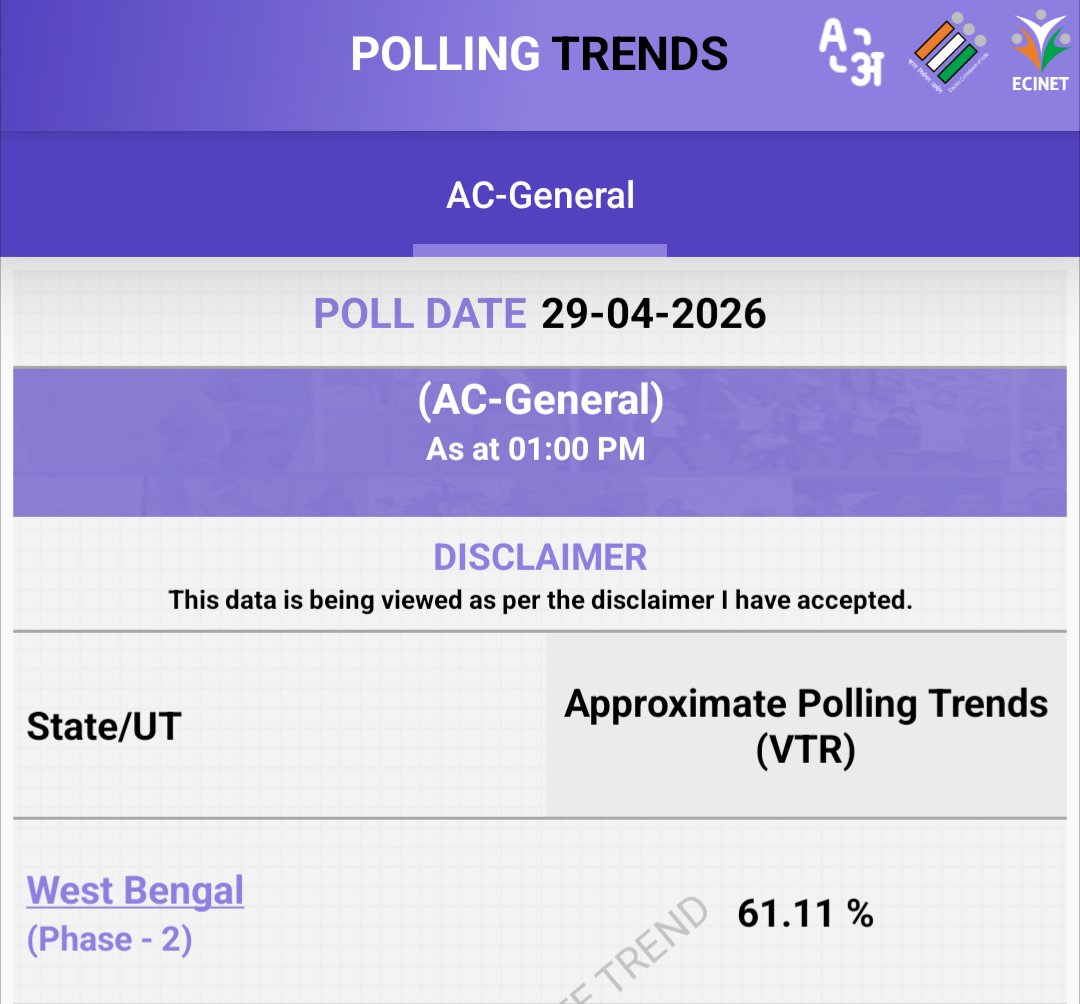
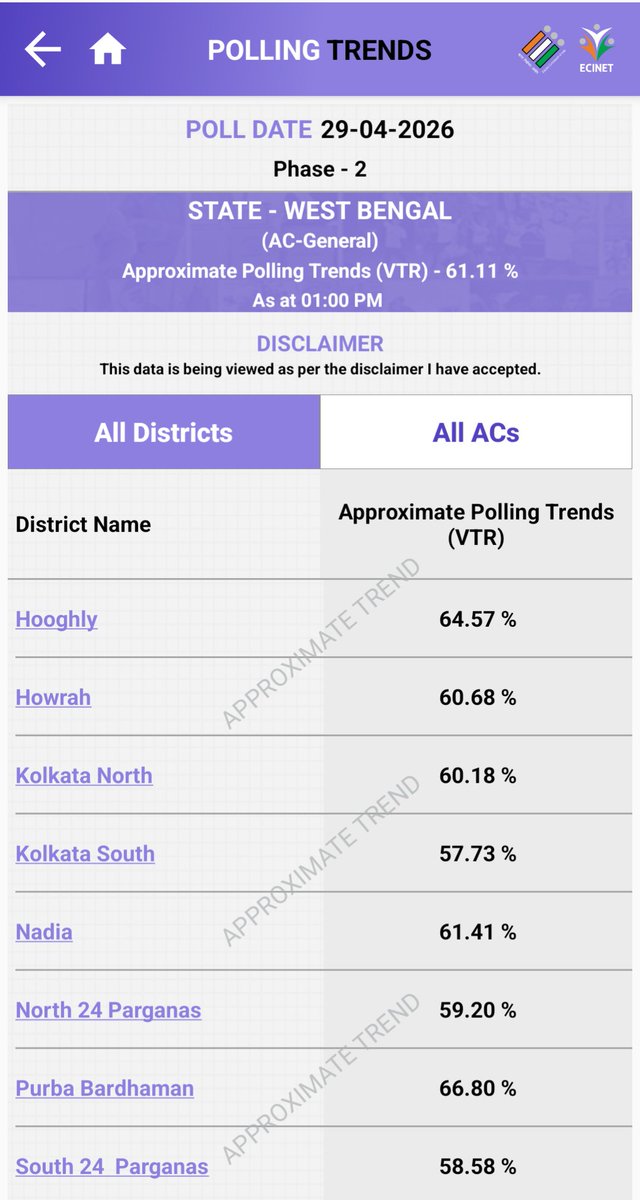
History in Making in Bengal
Polling Trends Till 1 PM: 61.11%
Hooghly and Purba Bardhaman Trending Highest Numbers with 64.57% and 66.80%
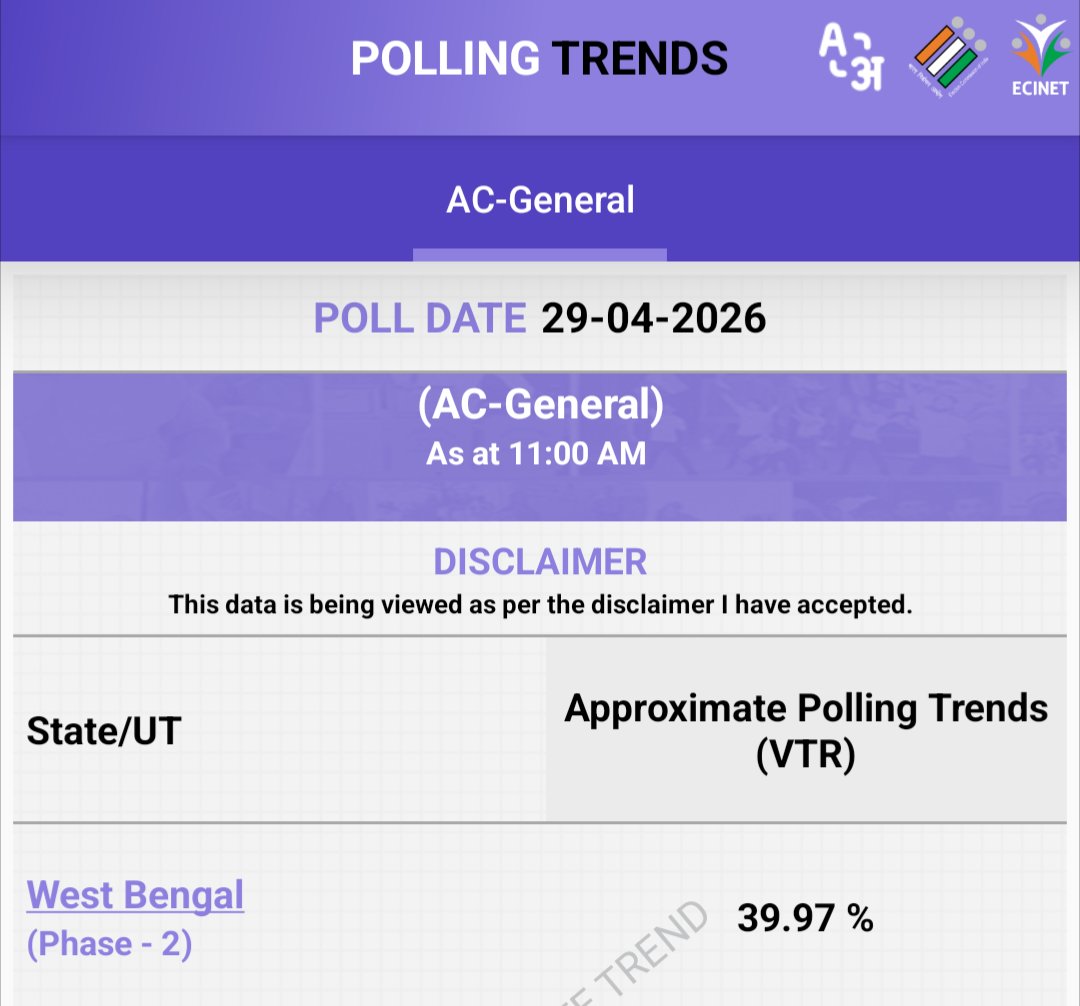
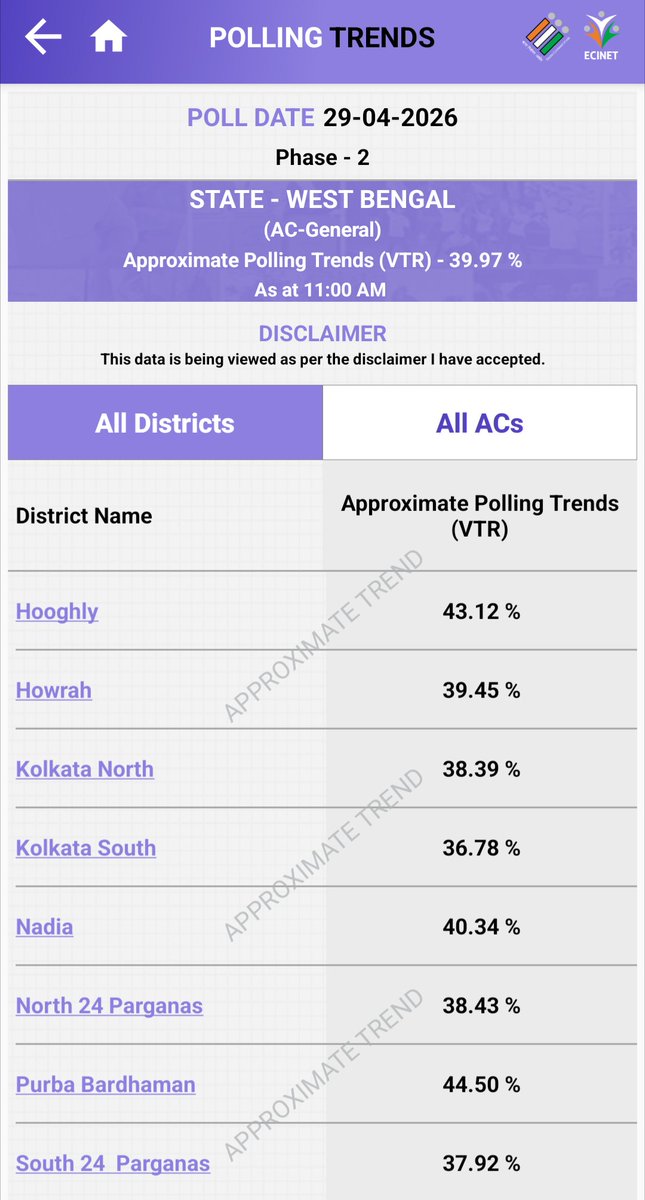
Apr 29
Polling Trends Till 11 AM: 39.97%
Hooghly and Purba Bardhaman Trending Highest Numbers with 43.12% and 44.50%
6
40
171
19,202
Jitendra retweeted

Apr 29
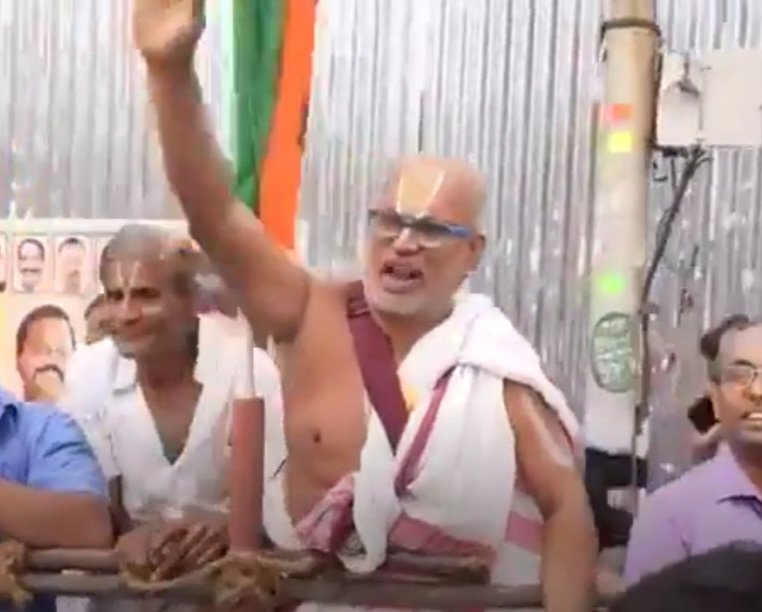
To everyone working on the ground to achieve the impossible task of ensuring free & fair elections in West Bengal, at great personal risk...
The dharma that you protect, may that dharma protect you.
5
103
390
6,681
Jitendra retweeted

Apr 27
This shows the situation of so called democracy in West Bengal under TMC Mamata Begum.
People are afraid to vote due to fear of TMC goons.
VC: clearcutindia
29
1,504
4,524
46,799
Jitendra retweeted

And its on. IPS Officer Ajay Pal Sharma has arrived at Jahangir Khan's office to issue to a warning. Large number of TMC supporters have united to raise slogans.
86
717
3,687
104,952
Jitendra retweeted

NIA , CAPF, ITBP , CRPF , UP Police
All are now involved in Bengal election
🤓🤓
Ye Election hai ya War?
119
275
2,830
41,369
Jitendra retweeted
Apr 28
Indian Army and Special Forces are missing the action. They might want to join in if need arises.

NIA , CAPF, ITBP , CRPF , UP Police
All are now involved in Bengal election
🤓🤓
Ye Election hai ya War?
7
25
161
4,346
Jitendra retweeted

Apr 28
“Last time we lost in Arambagh, Goghat, Khanakul, Pursura…but we spared you out of magnanimity. This time, I personally take responsibility. After May 4, I'll see whose father from Delhi comes to save them.”
~ Abhishek Banerjee’s open threat to voters.
736
5,407
11,241
789,968
Jitendra retweeted

Apr 14
🌄Today is Tamil New Year
Tamizh Puthandu🌄
Govt owned milk supplier Aavin has no greetings to Tamizh makkal !!
On Ramazan & Christmas see the milk packets - Full of wishes
Choose to vote wisely !
Choose a Tamizh Hindu - not a Telugu convert who never wishes for our festivals




140
1,123
3,189
79,212
Jitendra retweeted

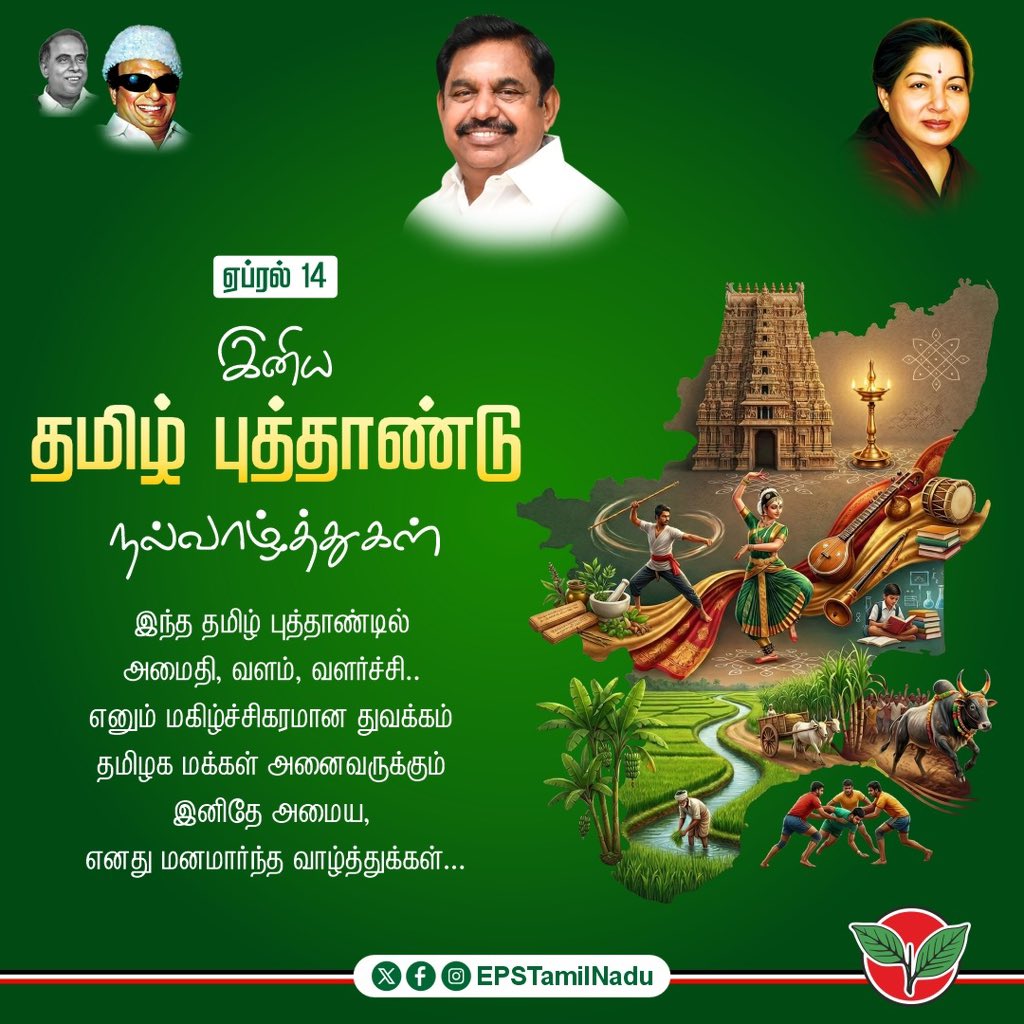
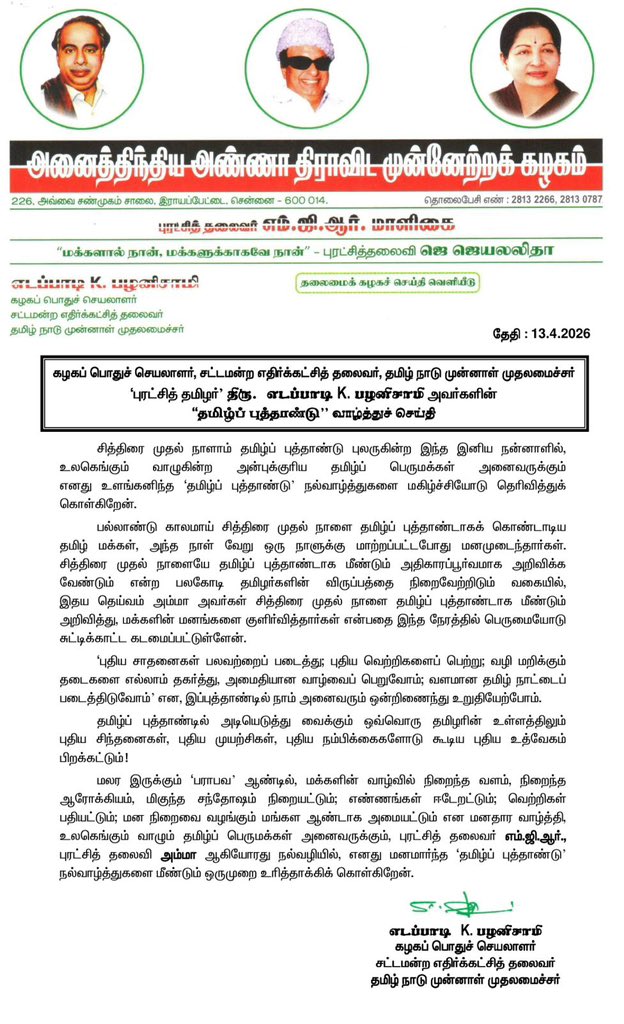
சித்திரை முதல் நாளாம் தமிழ்ப் புத்தாண்டு புலருகின்ற இந்த இனிய நன்னாளில், உலகெங்கும் வாழுகின்ற அன்புக்குரிய தமிழ்ப் பெருமக்கள் அனைவருக்கும் எனது உளங்கனிந்த 'தமிழ்ப் புத்தாண்டு' நல்வாழ்த்துகளை மகிழ்ச்சியோடு தெரிவித்துக் கொள்கிறேன்.
'புதிய சாதனைகள் பலவற்றைப் படைத்து; புதிய வெற்றிகளைப் பெற்று; வழி மறிக்கும் தடைகளை எல்லாம் தகர்த்து, அமைதியான வாழ்வைப் பெறுவோம்; வளமான தமிழ் நாட்டைப் படைத்திடுவோம்' என, இப்புத்தாண்டில் நாம் அனைவரும் ஒன்றிணைந்து உறுதியேற்போம்.
தமிழ்ப் புத்தாண்டில் அடியெடுத்து வைக்கும் ஒவ்வொரு தமிழரின் உள்ளத்திலும் புதிய சிந்தனைகள், புதிய முயற்சிகள், புதிய நம்பிக்கைகளோடு கூடிய புதிய உத்வேகம் பிறக்கட்டும்!
#TamilNewYear
@AIADMKOfficial
87
958
2,472
34,617

Jitendra retweeted

Apr 14
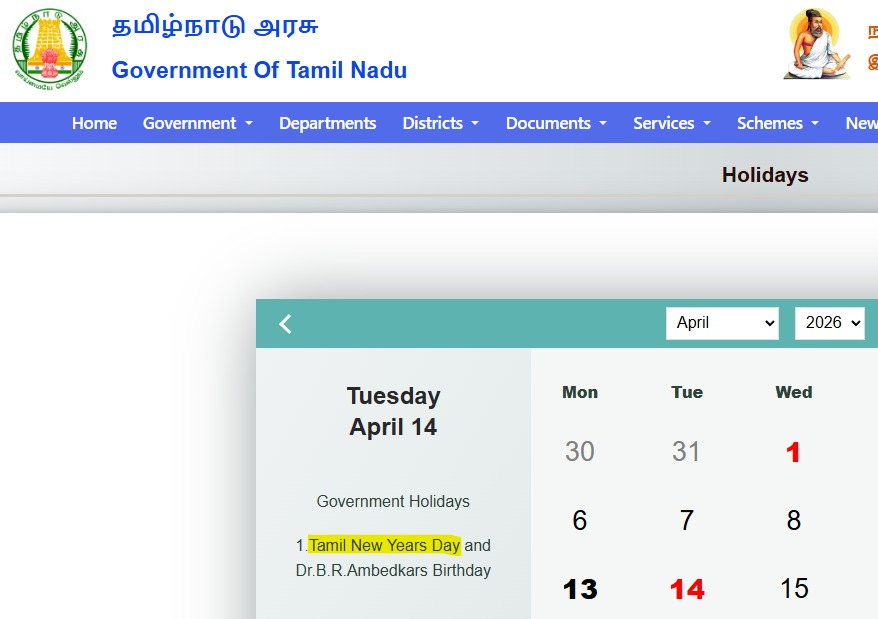
TN has an official govt holiday for Tamil New Years day today, but none of our leaders in the government - CM, ministers or MLAs will wish us on our New Year today. They wished promptly for Ugadi and will wish for Vishu tomorrow.
If you care about your culture, vote properly.
40
467
1,609
26,830
Jitendra retweeted

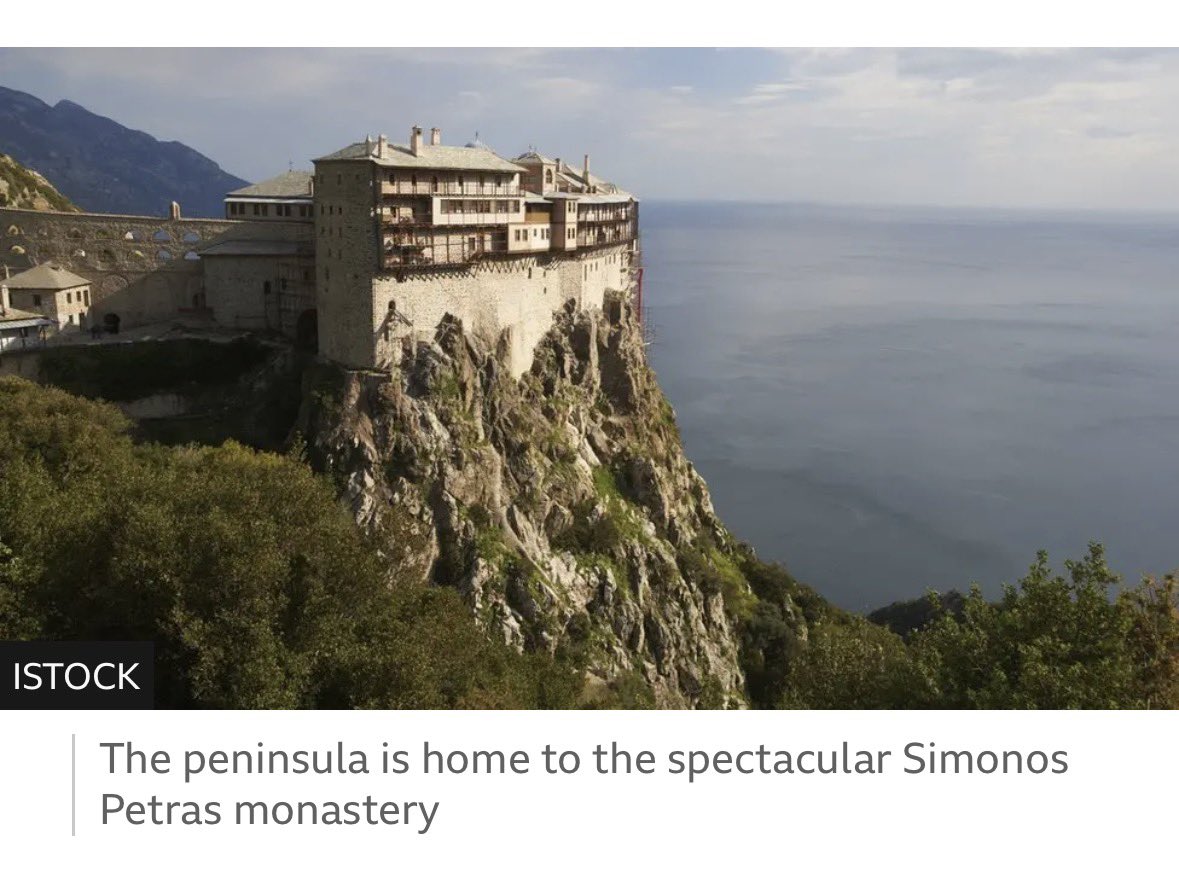
Mount Athos, an autonomous monastic region in Greece, enforces a strict Avaton (prohibition) that bans women and even female animals (except cats to curb mice, lol) from entering the entire peninsula. This rule has been in place for over 1,000 years to maintain monastic celibacy and honor the Virgin Mary. Violating this law can result in legal penalties, including imprisonment. Access is restricted to men with a specific permit.
The prohibition extends 500 meters (approx. 1,640 feet) from the coastline. Even tourist boats are restricted to maintaining this distance.
The ban is upheld by the Greek Parliament and is recognized within the European Union for spiritual and religious reasons. Attempting to enter can lead to a prison sentence of two months to one year.
According to Orthodox tradition, the peninsula is dedicated to the Virgin Mary ("The Garden of the Theotokos"), who is considered the only woman allowed on the mountain.
One of the traditions that has been handed down regarding this is that the Virgin Mary was supposedly blown off course when she was trying to sail to Cyprus and landed on Mount Athos. And she liked it so much that she prayed to her son that she should be given it as her own and he agreed. It is still called 'the garden of the mother of God', dedicated to her glory, and she alone represents her sex on Mount Athos.
Another tradition has it that centuries ago, after several monks reported visions of the Virgin Mary, following whom it was decided that the Athos monks should devote themselves only to her, and that no other woman should be allowed lest they may outshine her.
I am waiting for @AKanisetti (who blocked me recently) to write articles on this too and call the Virgin Mary as controversial because there is a small mountainous peninsula where she won’t allow other women to enter.
Please reshare a lot. We need women to enter Athos mountain too. European Union should intervene in this affair asap and our judiciary should enforce our constitutional morality on the Greek Orthodox Church. @halleyji @infinitchy @jsaideepak @labstamil
Link for an article reg this :
ap.org/news-highlights/spotl…
Apr 9

How Ayyappa went from a local forest deity to Kerala’s most controversial God
Anirudh Kanisetti @AKanisetti, author and historian, writes
#ThinkingMedieval #ThePrintOpinion
theprint.in/opinion/how-ayya…
32
1,087
2,381
65,221
Jitendra retweeted

Apr 2
A mob attacked judicial officers who were acting as decision-makers on voter inclusion and exclusion. First, the mob gheraoed the office, then attacked the judicial officers. When they left in their car, the mob tried to block the road and stop their vehicle.
This reminds me of the vandalism during the RG Kar case in West Bengal. When the head of state uses statements like 'Why were you out at 12?" one can expect some form of statement coming again to justify this act too.
Where the protectors of justice can't receive protection, what does a common man expect from them?

The recent events in Kaliachawk, Malda, offer a disturbing glimpse into the vulnerability of the Indian judiciary. Judicial officers, performing essential duties regarding voter inclusion and exclusion, were held hostage for 17 hours by a provoked mob. This is the ultimate "Chilling Effect," where physical terror is utilised to manipulate democratic decision-making.
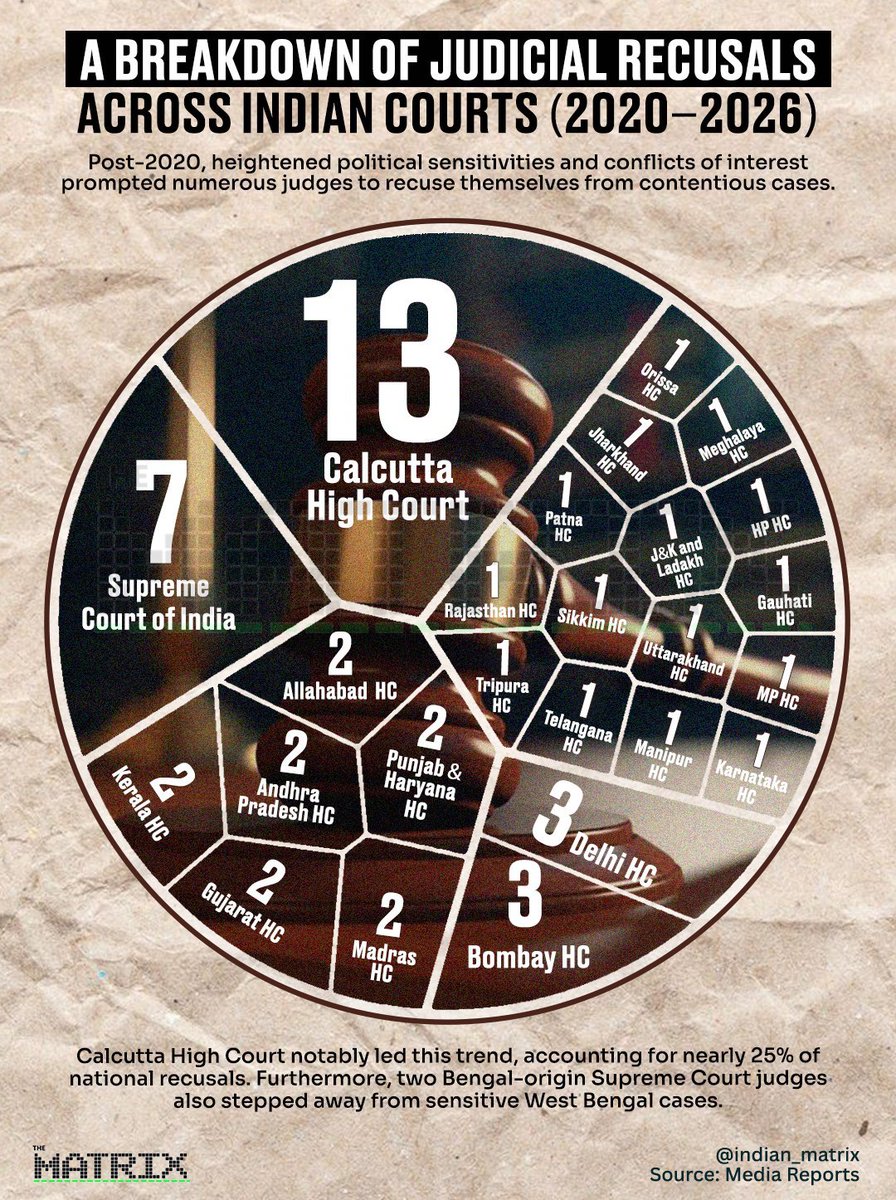
This physical intimidation correlates directly with the unprecedented volume of judicial recusals in the state.
- Between 2020 and 2026, the Calcutta High Court recorded 13 recusals, one-quarter of the national total.
- The friction is so acute that judges at the highest echelons, including the Supreme Court, have felt compelled to step away from sensitive state cases to preserve institutional neutrality.
This transition from partisan litigation to street-level stone-pelting suggests a deliberate strategy of institutional paralysis. When judicial officers must choose between their safety and their duty, the judiciary’s role as an independent arbiter is fundamentally compromised.
The silence of the "Pro-Establishment" media regarding the Malda siege is a testament to the selective outrage defining our times.
12
41
2,622