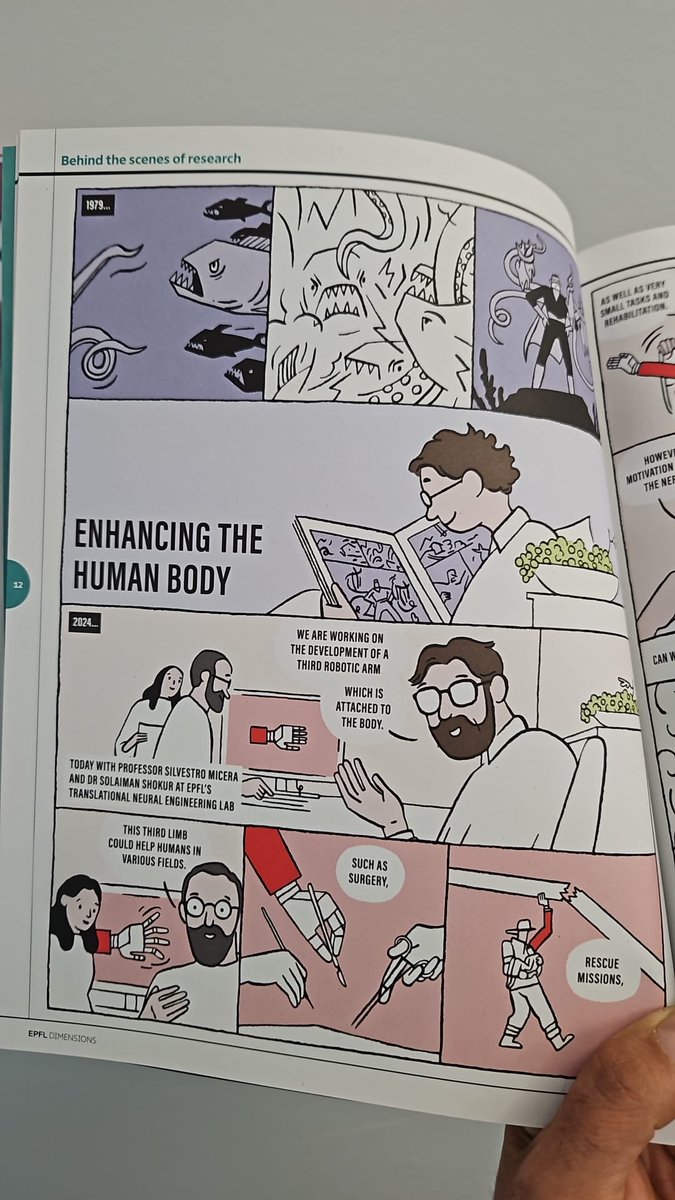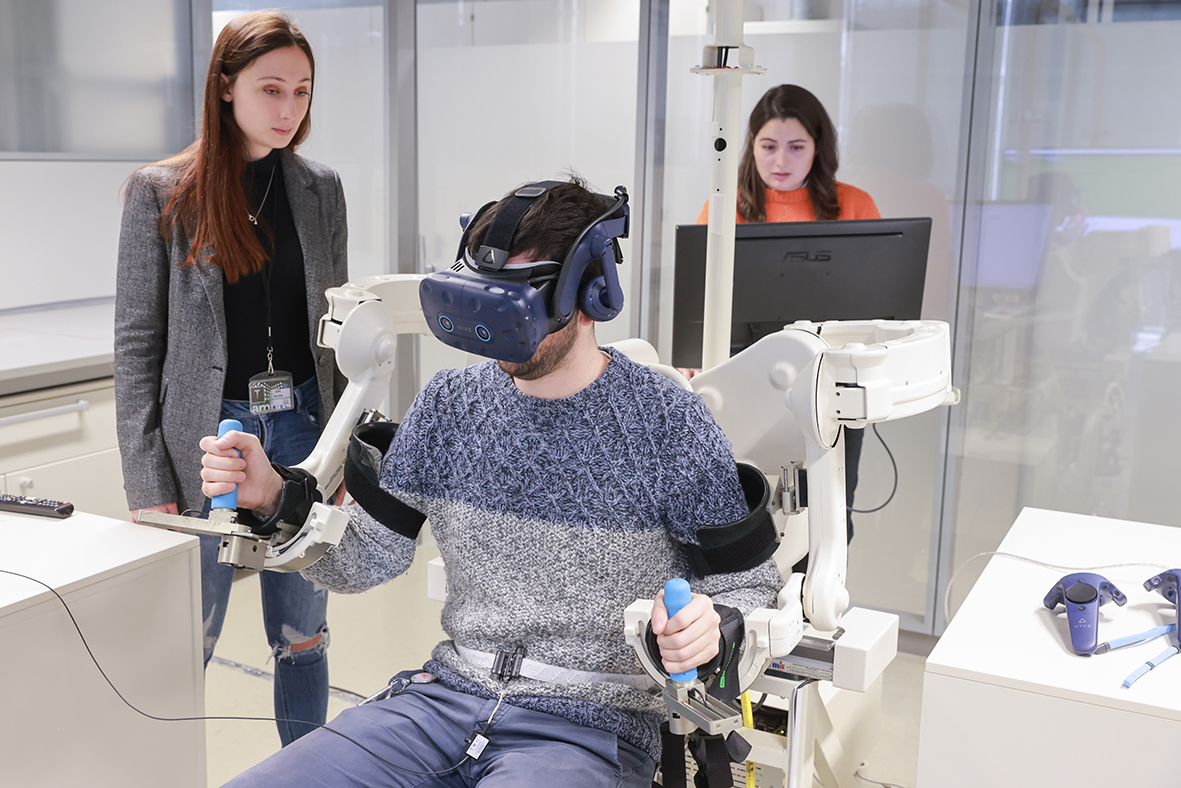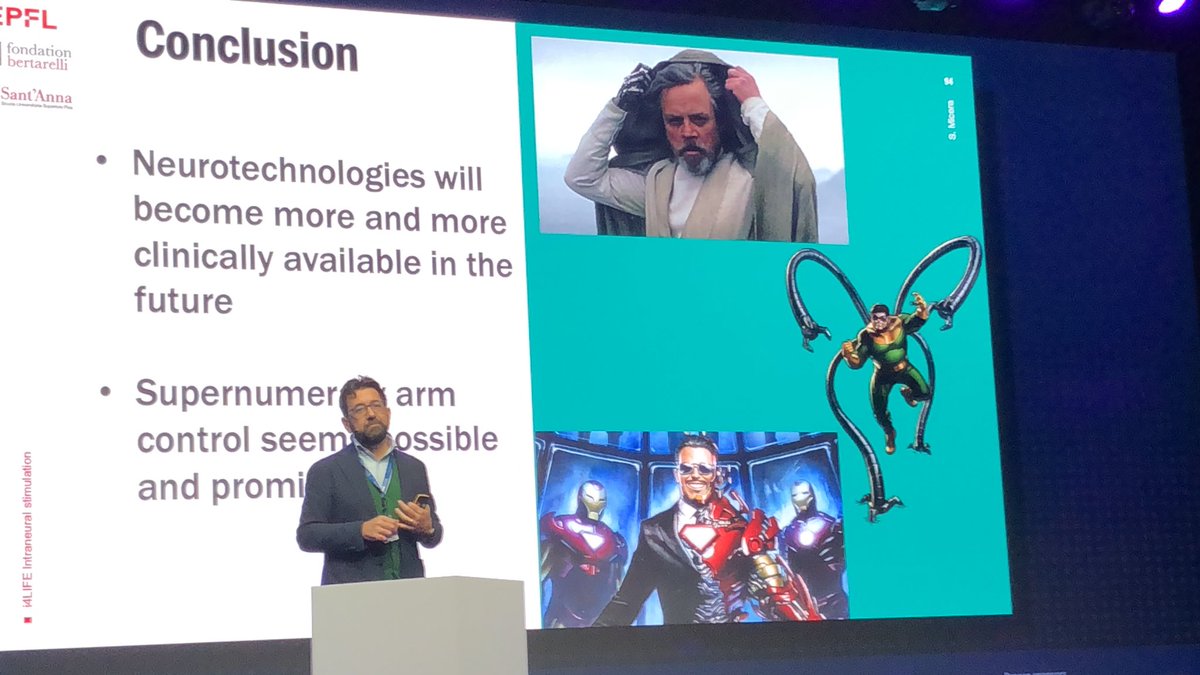
1/ 🚀 Can you train to use an extra robotic arm (XRA) and generalize that skill to different environments?
Our new study with @SolaimanShokur, Daniel Leal Pinheiro et al: advanced.onlinelibrary.wiley…
explores whether training with an XRA leads to true skill generalization.
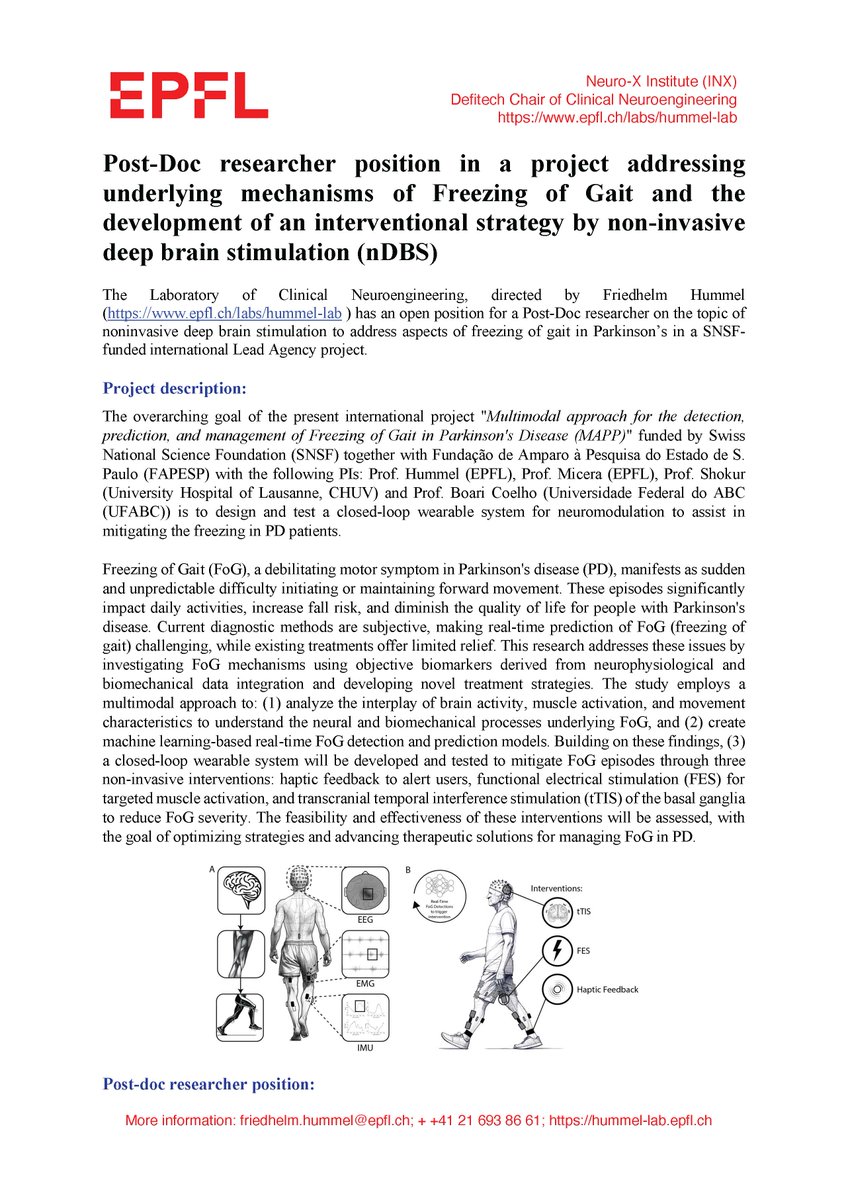
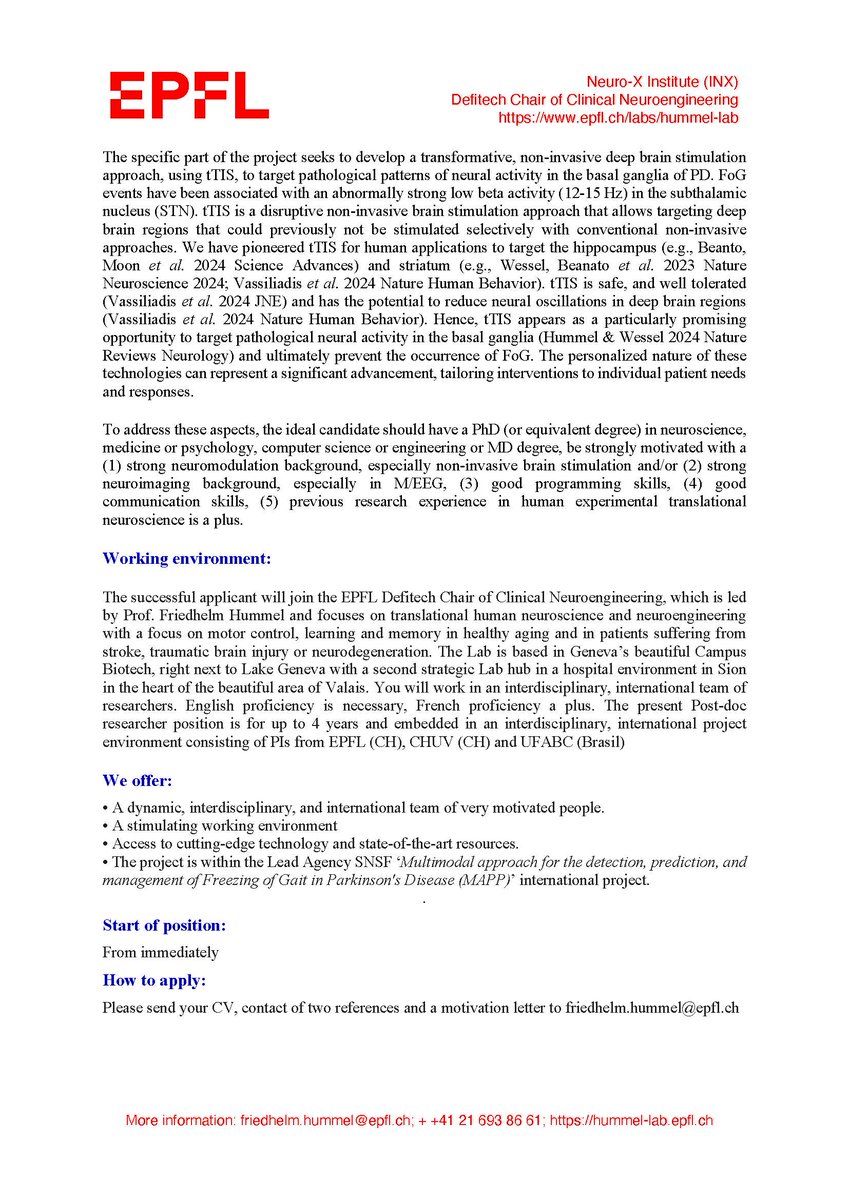
We have an open post-doc position to work on an exciting international project (with @_smicera, @SolaimanShokur & Prof. Boari Coelho) on freezing of gait in Parkinson's disease and develop a new non-invasive temporal interference strategy to alleviate these symptoms.
More info👇
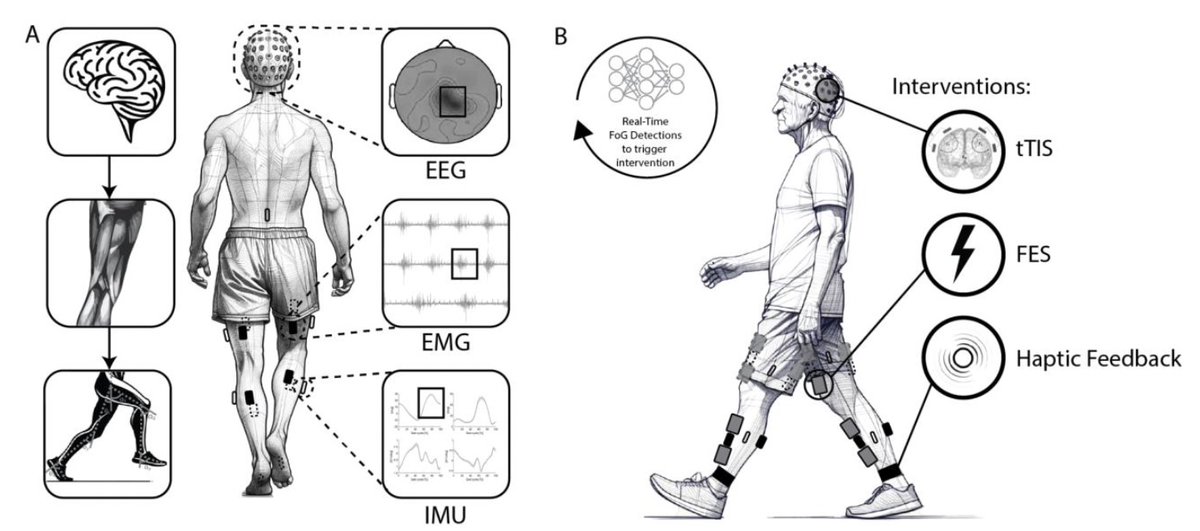
GREAT NEWS: @snsf_ch with @AgenciaFAPESP just approved a new @TNE_LAB project to design and test a closed-loop wearable stimulation system to assist in mitigating the freezing in PD patients with @SolaimanShokur@UPHUMMEL_EPFL, Dr. Daniel Boari Coelho and more!
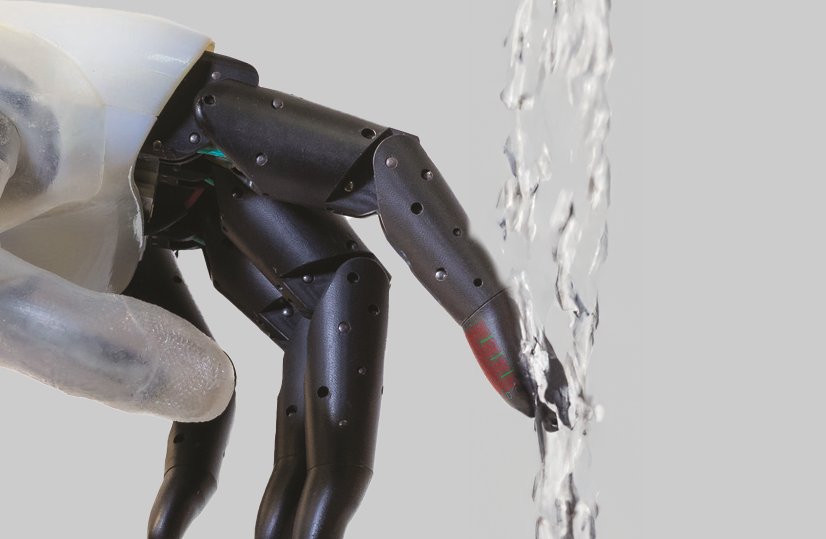
Avec cette main bionique, les personnes amputées comme Fabrizio peuvent ressentir la température et distinguer le contact humain du contact artificiel. Non invasive et révolutionnaire, cette technologie marque une avancée significative dans les prothèses. cell.com/med/fulltext/S2666-…
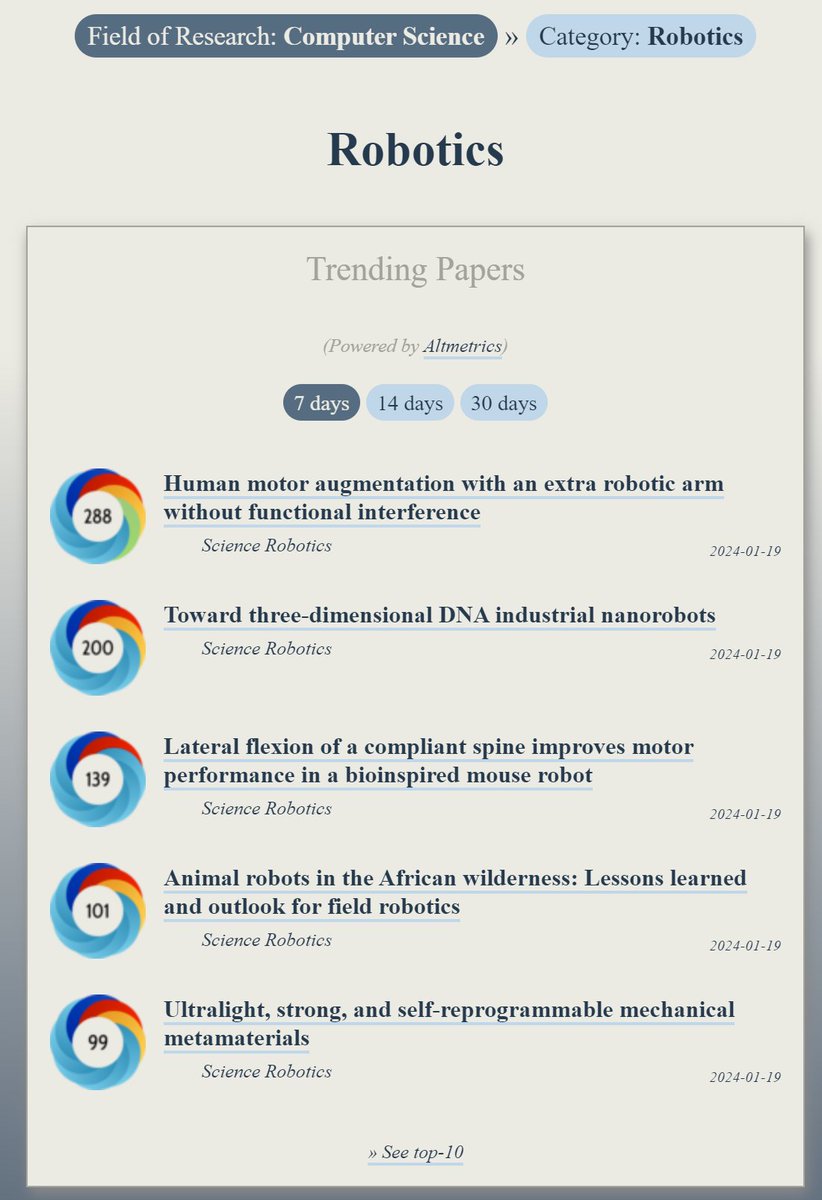
Trending in #Robotics:
ooir.org/index.php?field=Com…
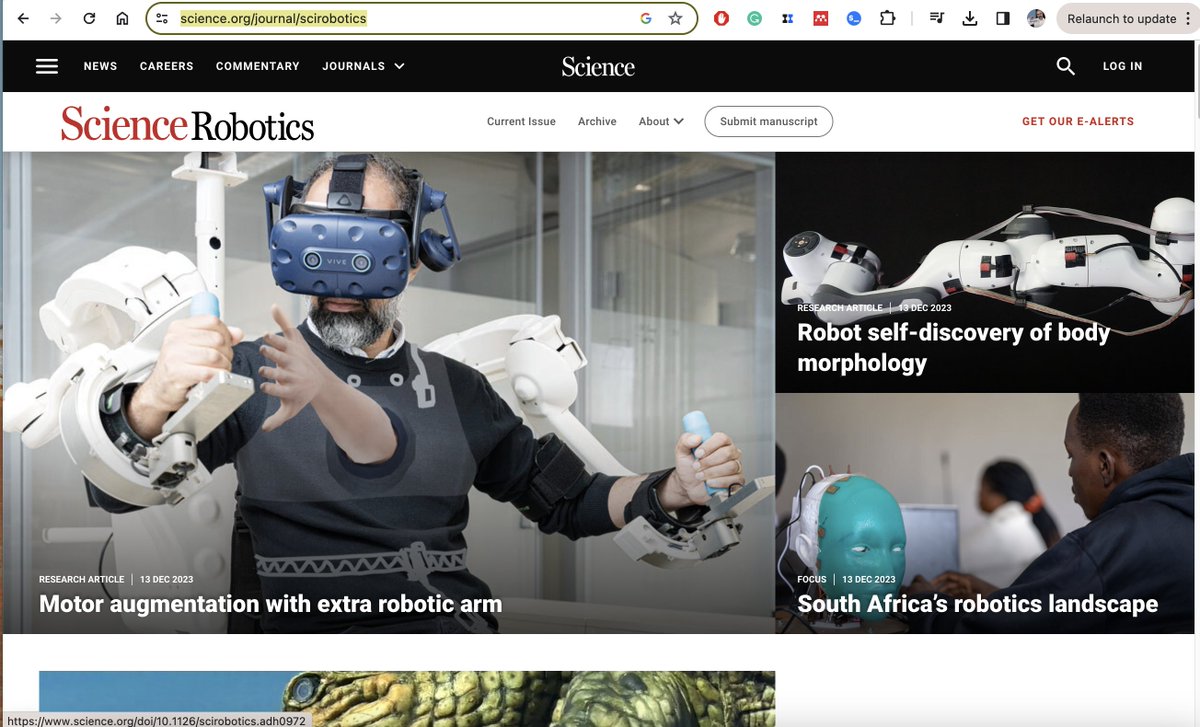
1) An extra robotic arm for humans without functional interference (@SciRobotics)
2) Toward 3D DNA industrial nanorobots
3) Mouse-inspired robot with high degree of spinal flexibility
4) Animal robots in the African wilderness
5) Ultralight & self-reprogrammable metamaterials
How do you know if something is wet/dry? Humans have no dedicated sensor for humidity. Instead, we rely -mainly- on thermal cues.
Do the test: sit on a cold bench, your first reaction is: The bench is Wet!
@ploumitsakou, @JonathanMuheim, @_smicera, @yonderboy_ , @thermosenselab
ALT 🦾 Cognitive strategies for augmenting the #human body: a EPFL study coordinated by Silvestro Micera shows how breathe can be used to control a wearable #robotic arm.
🗣 “The main motivation of this third arm control is to understand the nervous system. We can transfer this knowledge to develop assistive devices for #people with disabilities, or rehabilitation protocols after stroke.”
Photo credit: Alain Herzog / EPFL
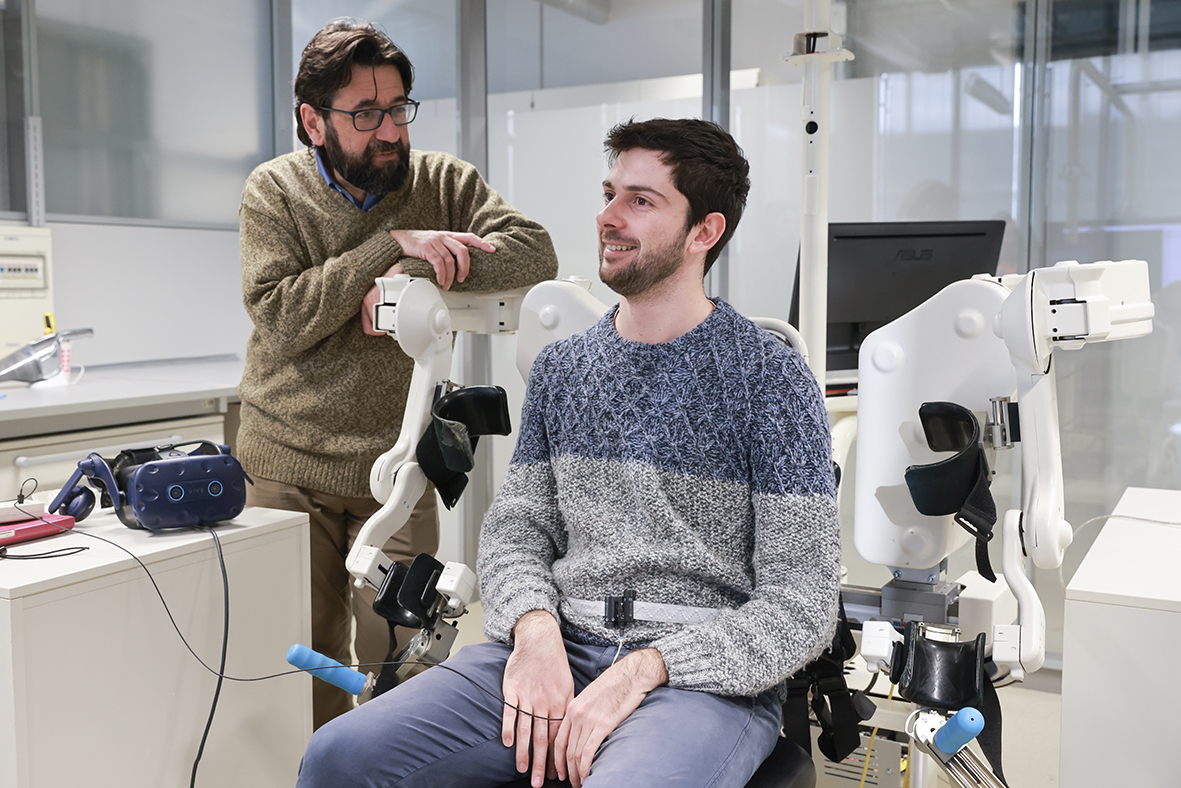
ALT 🦾 Cognitive strategies for augmenting the #human body: a EPFL study coordinated by Silvestro Micera shows how breathe can be used to control a wearable #robotic arm.
🗣 “The main motivation of this third arm control is to understand the nervous system. We can transfer this knowledge to develop assistive devices for #people with disabilities, or rehabilitation protocols after stroke.”
Photo credit: Alain Herzog / EPFL
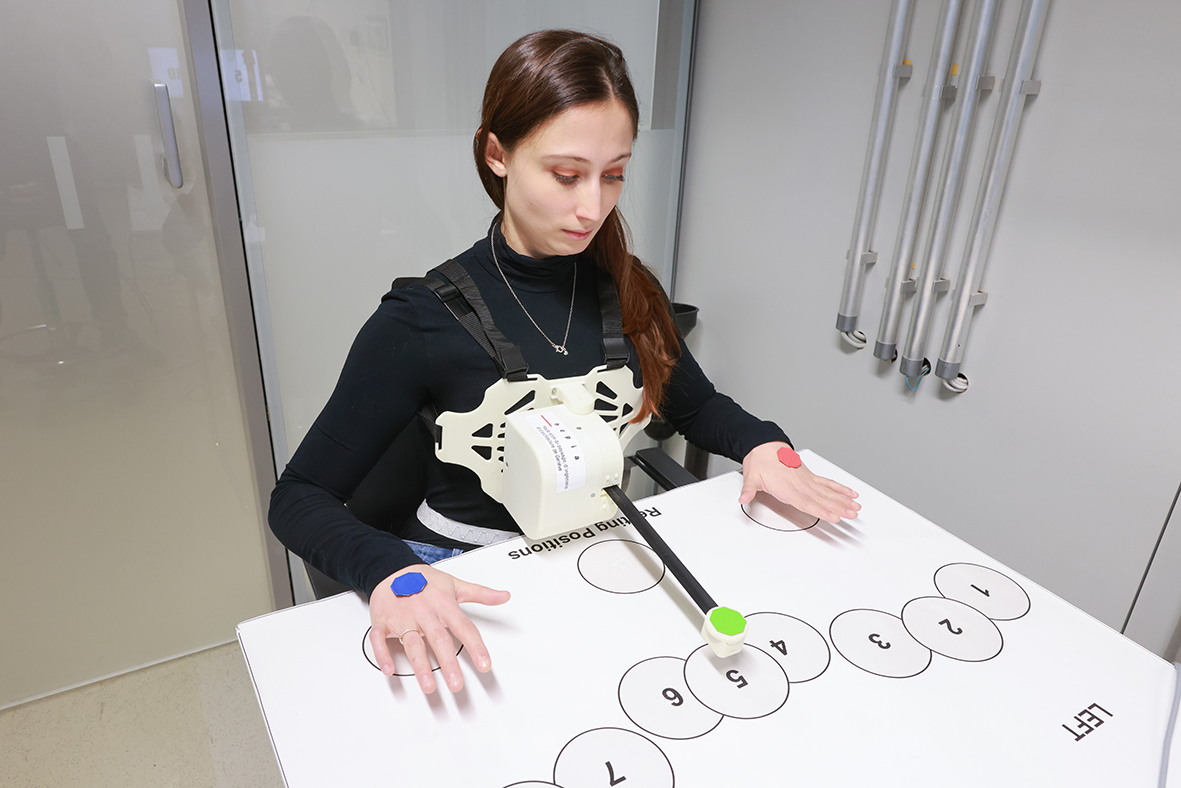
ALT 🦾 Cognitive strategies for augmenting the #human body: a EPFL study coordinated by Silvestro Micera shows how breathe can be used to control a wearable #robotic arm.
🗣 “The main motivation of this third arm control is to understand the nervous system. We can transfer this knowledge to develop assistive devices for #people with disabilities, or rehabilitation protocols after stroke.”
Photo credit: Alain Herzog / EPFL
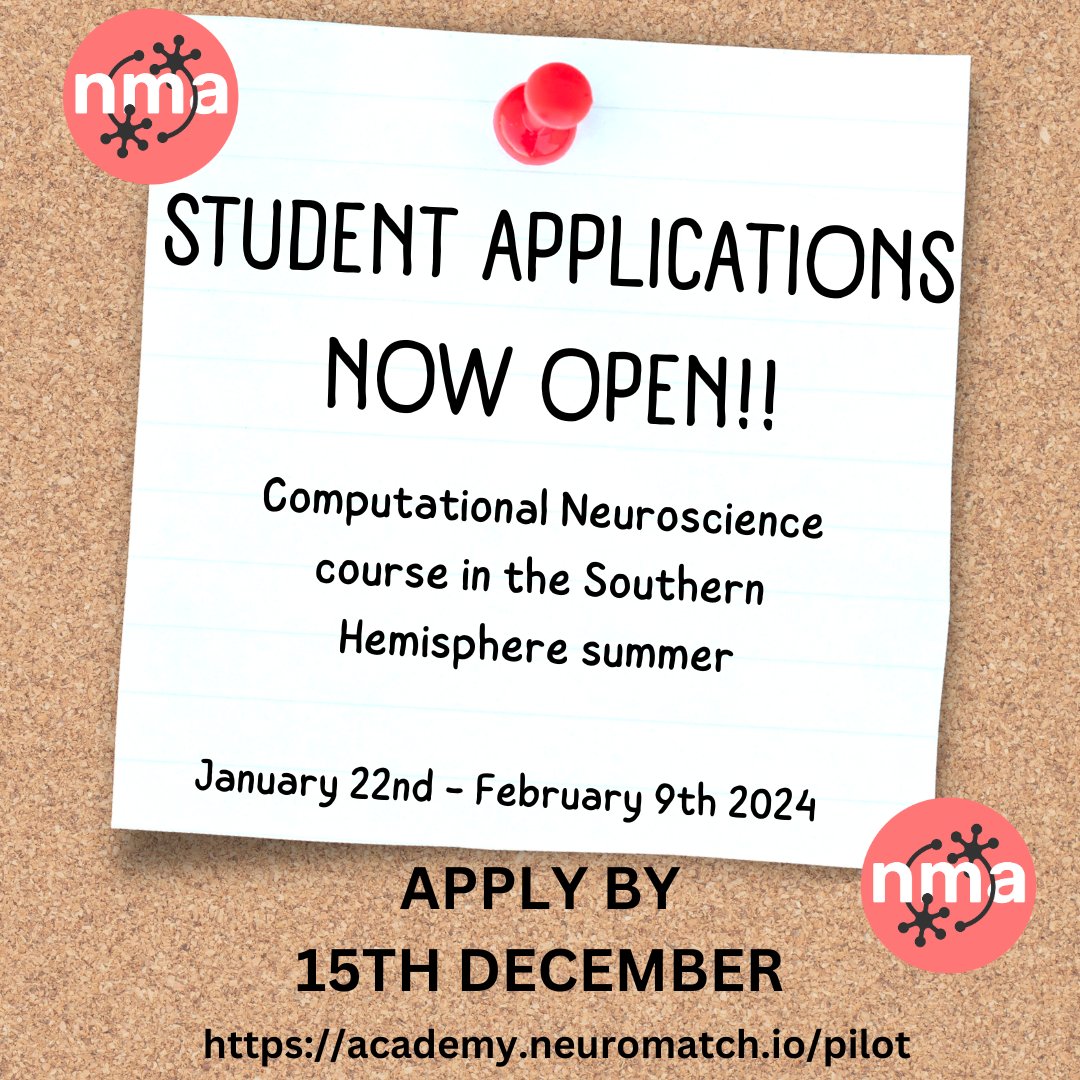
It's happening! Applications are open for our Pilot January to February course in Computational Neuroscience!
This is a smaller course in only the Americas timezone, so spots will fill up quickly! 💨
Link in comments. 👇
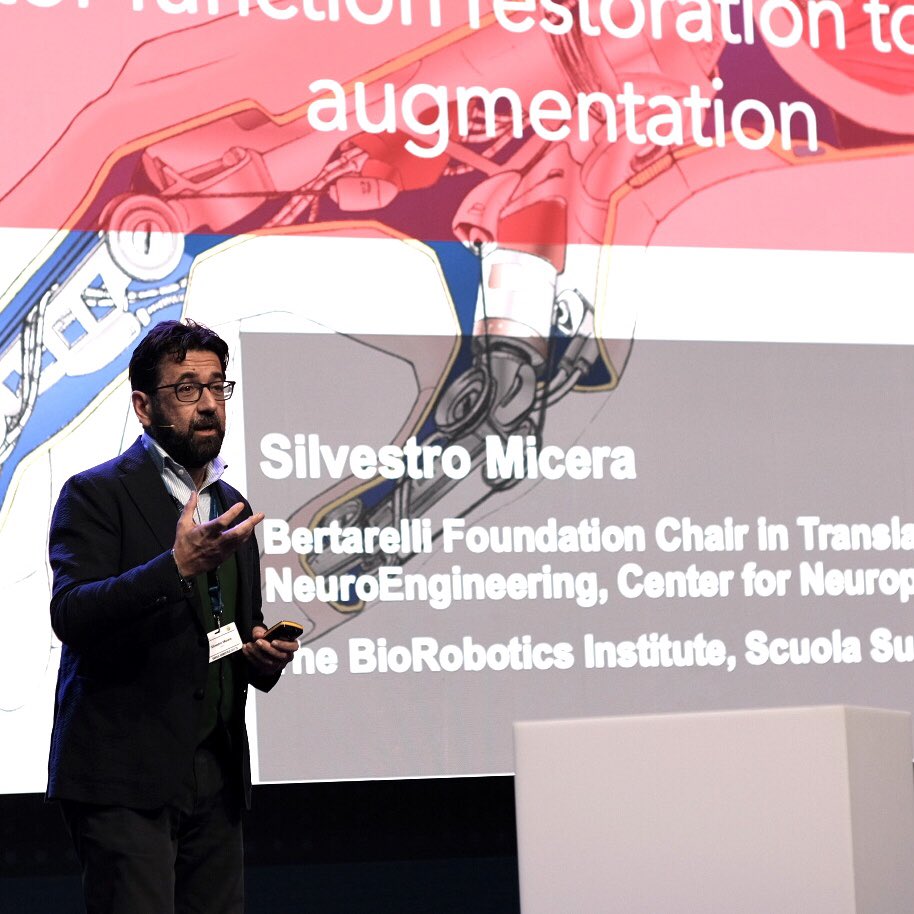
Silvestro Micera, from EPFL’s Neuro-X institute, is tricking the brain to have phantom thermo sensations in amputated limbs. “Reconnecting prosthesis to the brain greatly improves control and mobility.” In conclusion, science fiction becoming reality. #SRD2023