
Yale Law School - Paul Tsai China Center // NYU - US-Asia Law Institute // Harvard Fairbank Center for China Studies
Joined April 2013
- Tweets 10,532
- Following 523
- Followers 15,171
- Likes 5,876
70 Photos and videos

Peter Dutton retweeted

Jun 12
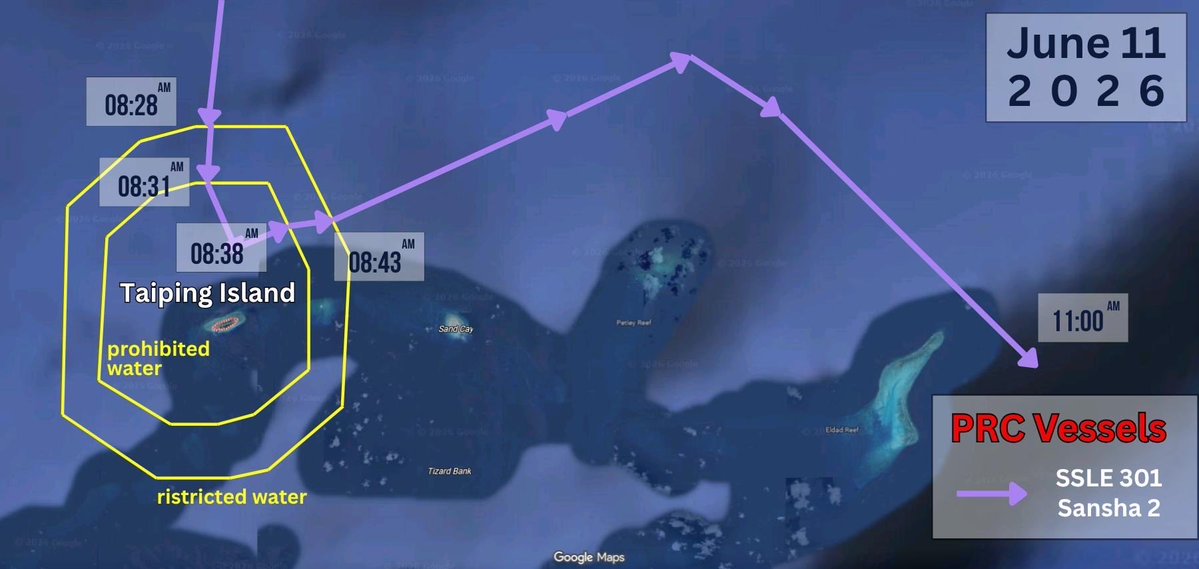
#China's CG deliberately intruded into the prohibited waters of #Taiwan🇹🇼’s Taiping Island (Itu Aba), using #Japan-#Philippine🇵🇭 delimitation talks as a pretext. But the JP-PH EEZ overlap is more than 1500 km away. What a shameless bully!
58
120
350
10,367

Peter Dutton retweeted

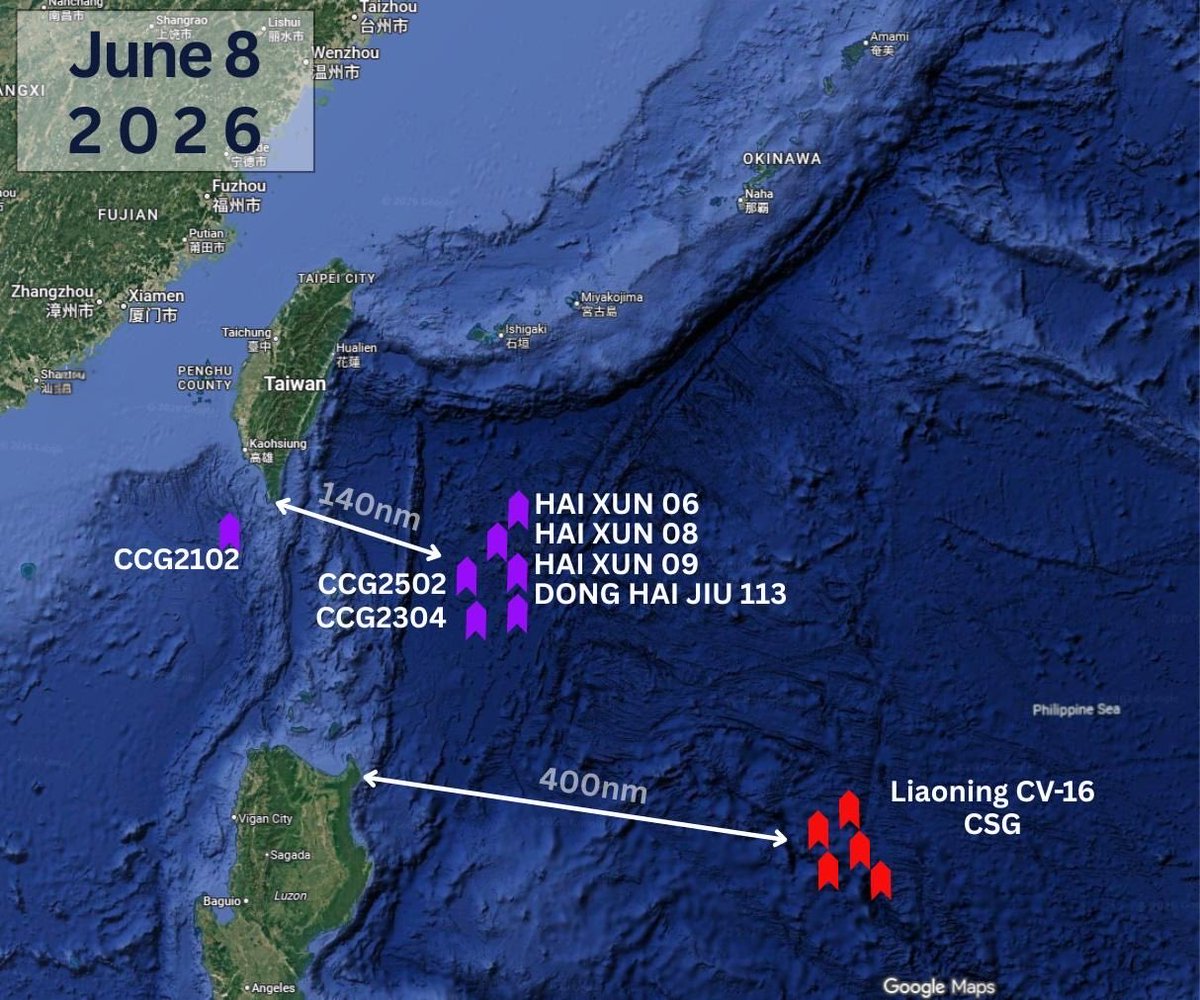
Meanwhile in the Indo-Pacific..
👇
Jun 7

China's coast guard harasses Filipinos. Philippines documents it. China gets upset when the footage reaches the rest of the world and accuses Manila of "playing the victim."
If you don't want the reputation of a bully, stop behaving like one.
x.com/globaltimesnews/status…
15
85
380
23,598

May 12
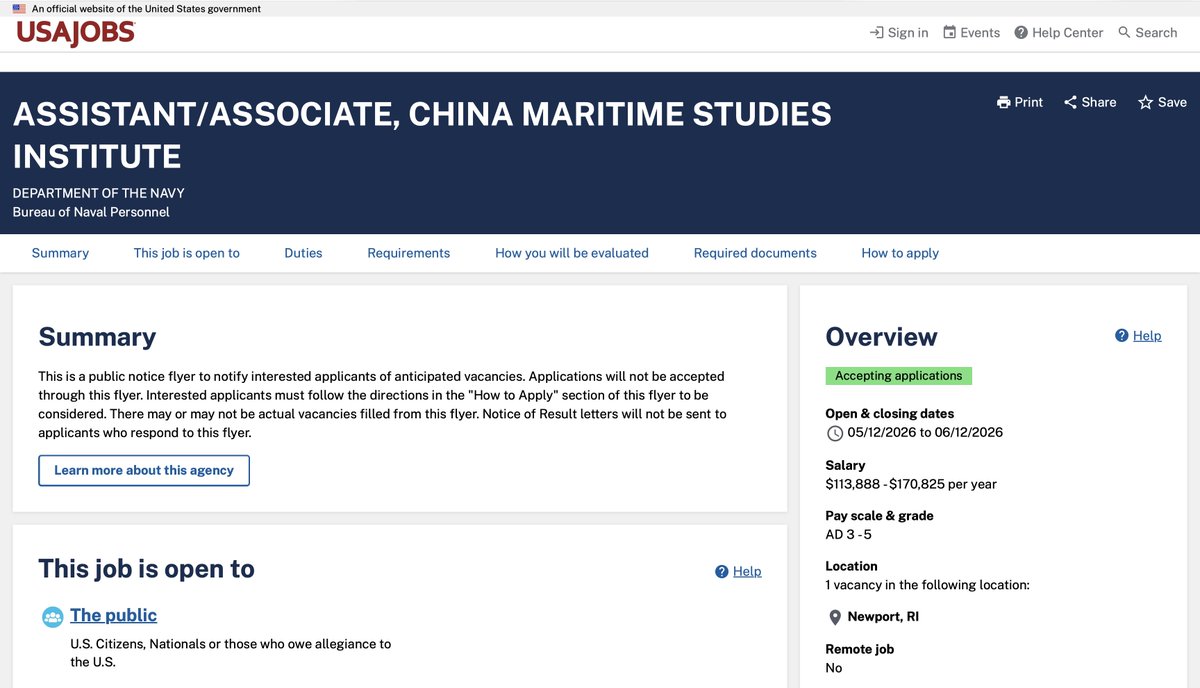
This is an OUTSTANDING opportunity to join a first rate team. Apply!

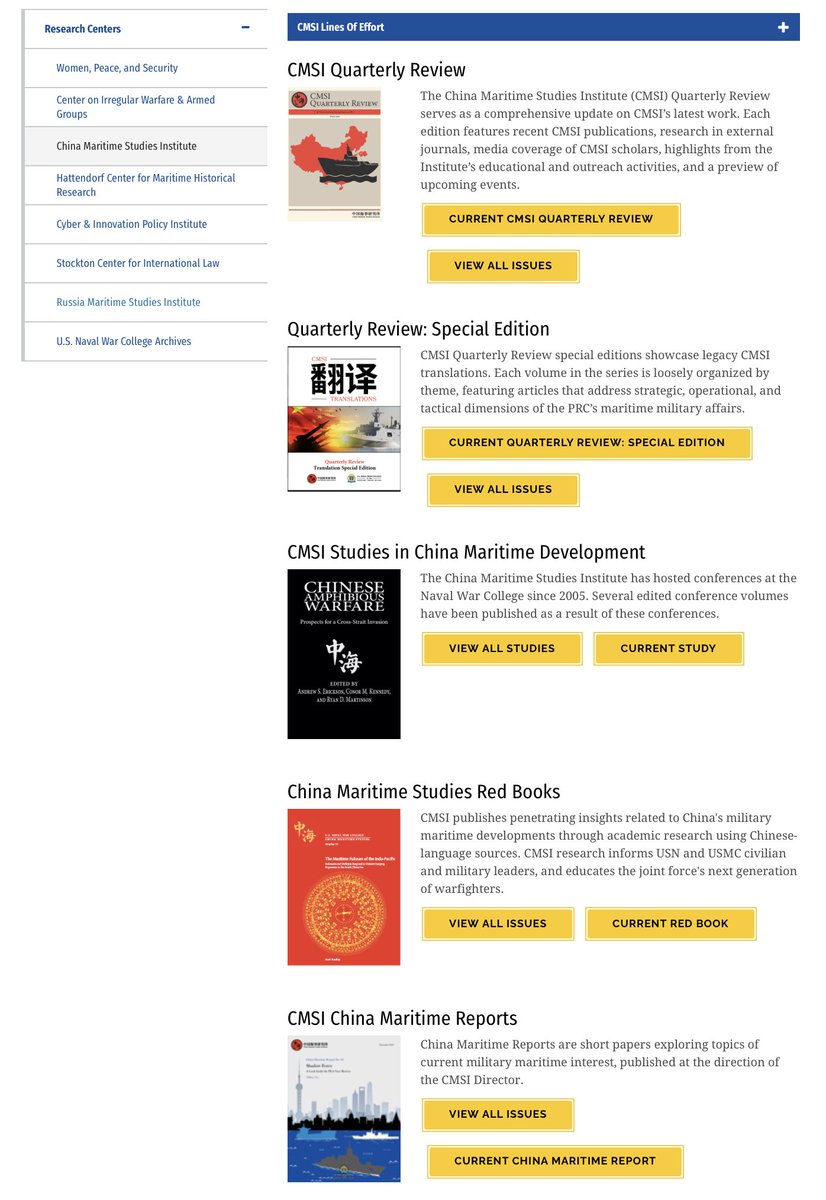
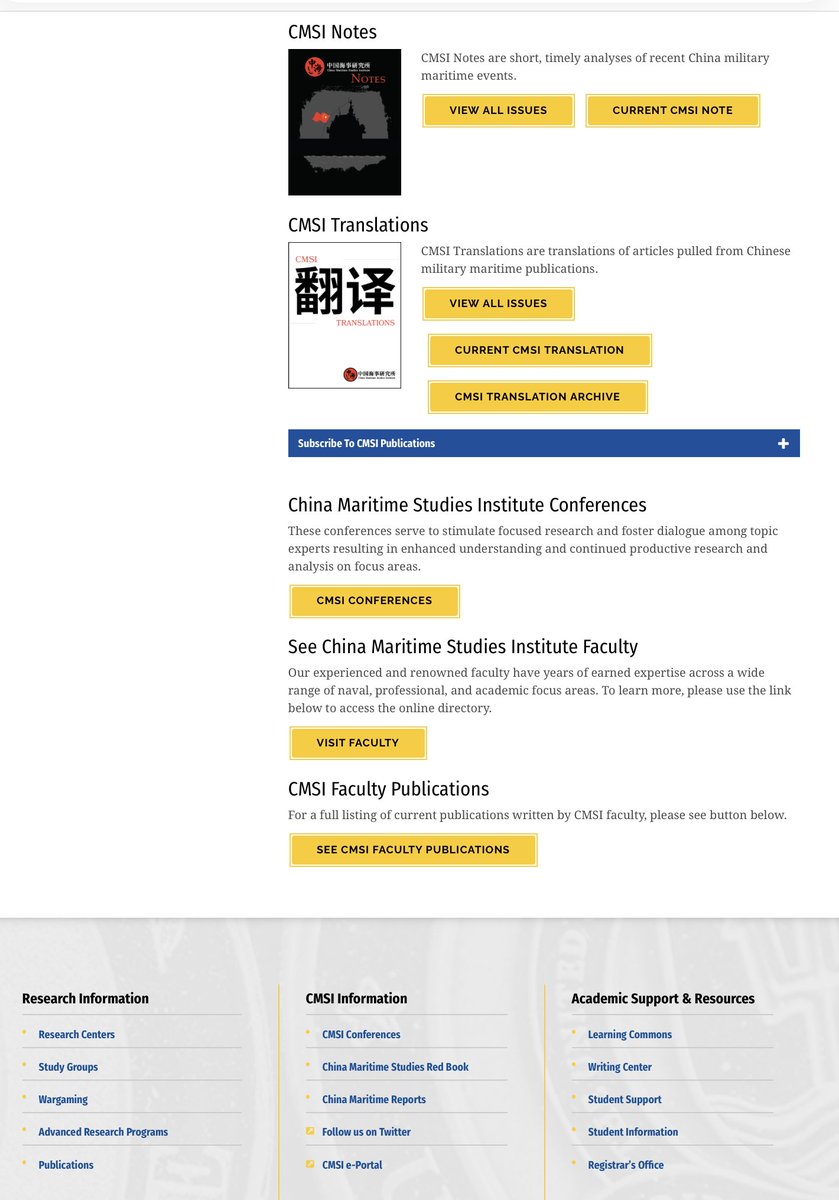
New @USAJOBS! @NavalWarCollege / @ChinaMaritime Studies Institute Seeks New Professor—Apply by 12 June 2026!
usajobs.gov/job/868717600
➡️ Complete info here: bit.ly/CMSIProfessor
From #CMSI Director CAPT @ChrisHSharman, @USNavy (Ret):
Come Join the #China Maritime Studies Institute Team!
China Maritime Studies Institute (CMSI) Friends & Colleagues –
CMSI at the #NavalWarCollege in Newport, Rhode Island is pleased to announce a new (& rare) hiring opportunity to join the CMSI team as an Assistant / Associate Professor.
⚓ CMSI is the @DeptofWar’s 1st service-specific China center & premier research center for the scholarly study of China’s military maritime power.
⚓ CMSI scholars perform academic research based on Chinese-language sources to develop deeper insight into key aspects of China’s military maritime development, capabilities, trends & future trajectory.
⚓ We seek candidates with strong research & analytical skills, demonstrated expertise on China & maritime security issues, & the ability to produce high-quality written analysis for both academic & operational audiences. Chinese-language proficiency is required.
⚓ Highly desirable candidates will have significant experience researching PRC security issues; analytical experience, including in developing innovative approaches to research & analysis; an extensive, top caliber publication record focusing on PRC strategy, policy, military, &/or maritime issues; & impact recognized by leading stakeholders.
⚓ Candidates must be U.S. citizens & capable of obtaining a DoW security clearance.
⚓ The position is located in Newport, Rhode Island & offers the opportunity to work alongside a highly collaborative team conducting impactful research on issues of critical importance to the future military maritime security environment for the Department of War & other key stakeholders.
Please circulate this opportunity widely among qualified colleagues, researchers & professional networks. Thanks!
1
4
900
Feb 17
Great kit!
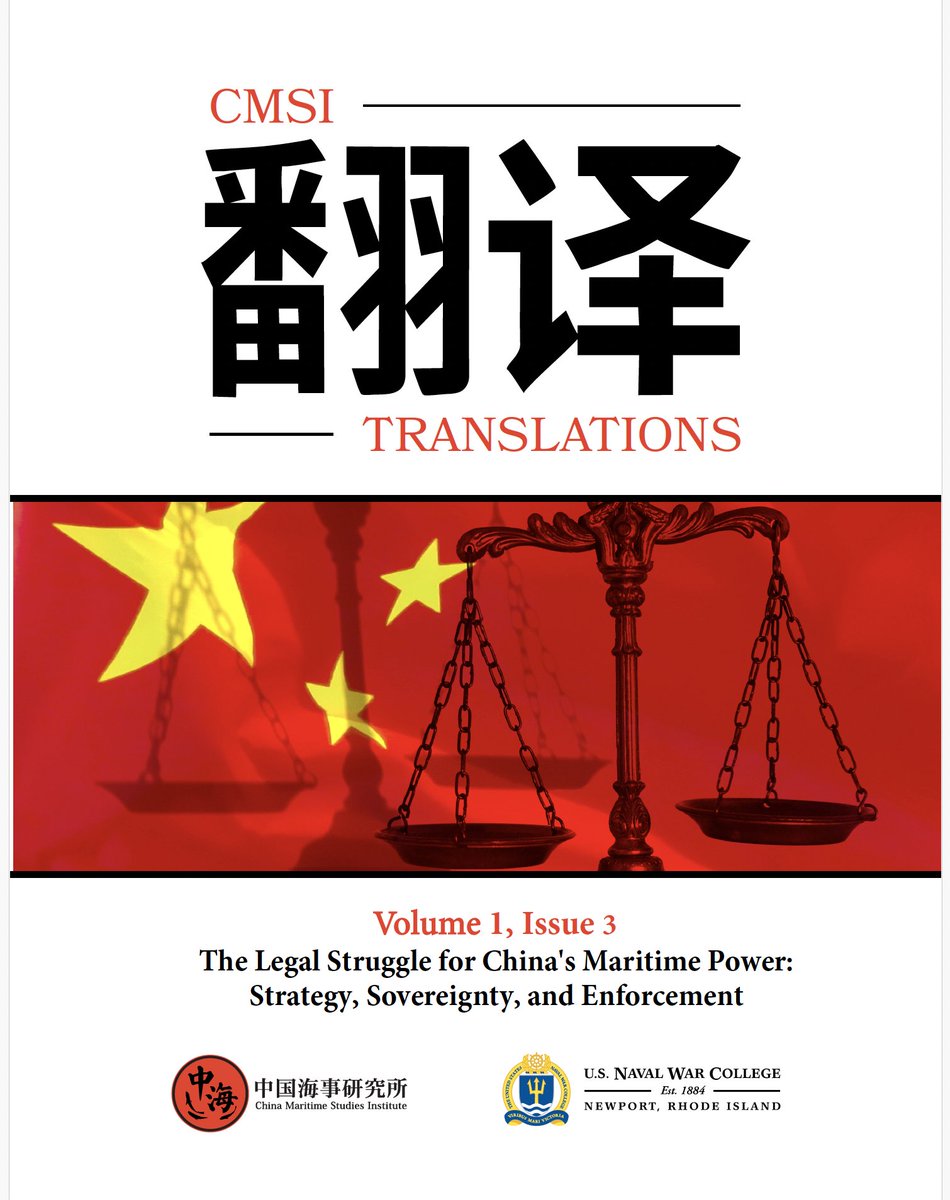
New! 20 #Chinese (中文) #Naval/#Maritime #Law-Related Translations Published!
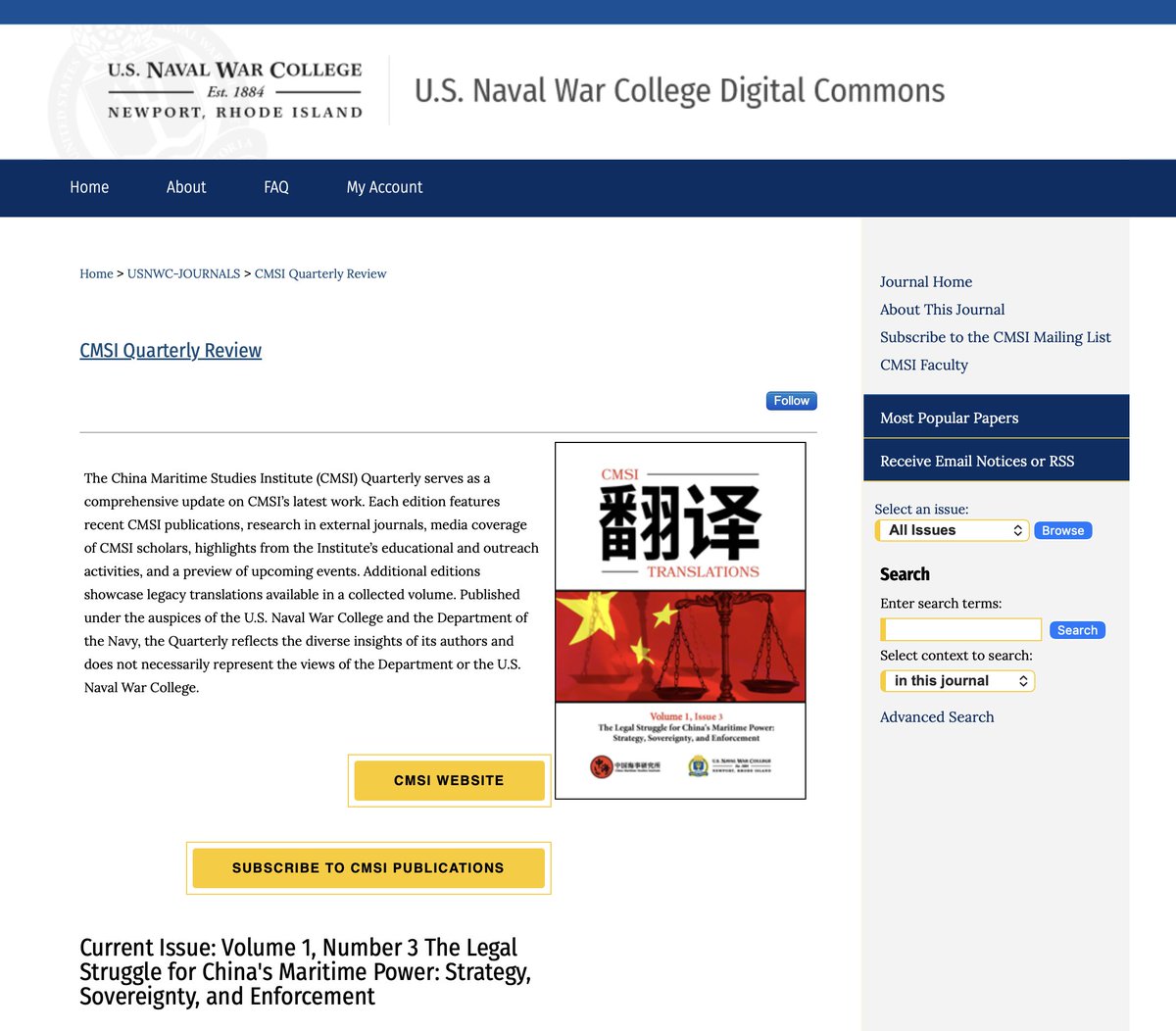
@NavalWarCollege/@ChinaMaritime Studies Institute Quarterly Review 1.3 (February 2026)—The Legal Struggle for #China’s Maritime Power: Strategy, Sovereignty, & Enforcement
digital-commons.usnwc.edu/cm…
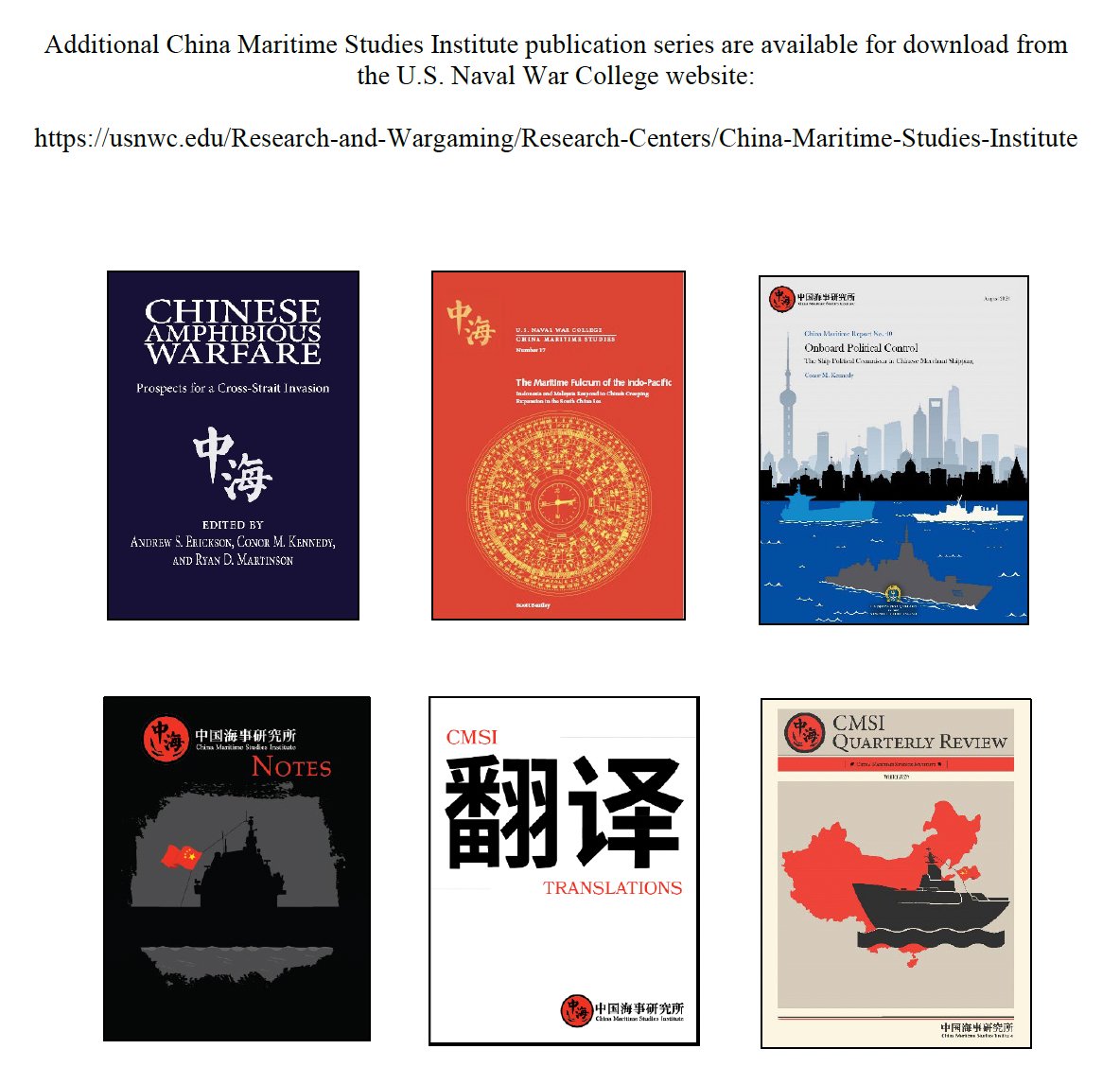
Previous issues curated here: bit.ly/CMSIQuarterlyReview1-…
From CMSI Director CAPT @ChrisHSharman, @USNavy (Ret.):
China Military Maritime Watchers: How does maritime law become an instrument of power & influence?
The China Maritime Studies Institute (CMSI) is pleased to announce the publication of our latest CMSI Quarterly Review – Translation Special Edition.
This volume brings together 20 archived CMSI translations to trace how the People’s Republic of China (PRC) built & operationalized a robust legal architecture in support of its strategic transition from a large maritime country to a maritime power.
Drawn from official and unofficial PRC journals, these articles reveal how maritime law has been used to legitimize expansive extraterritorial claims, establish legal “red lines,” & shape competitive behavior at sea.
Rather than reading history backward, the volume treats each article as a snapshot in time, capturing evolving PRC thinking—from China’s role in international maritime negotiations to the modern employment of law as an operational instrument.
As PRC maritime disputes intensify, understanding how China arrived at its legal positions—& how it intends to use them—matters more than ever.
We hope this collection of archived translations proves a valuable resource for scholars, warfighters, & policymakers navigating the Indo-Pacific’s increasingly contested legal terrain.
@JamesKraska/@julianku/@BonnieGlaser/@graham_euan/@djag2/@BuchananLiz/@justinburke/@RUMLAE
2
8
2,155
Peter Dutton retweeted

New! 20 #Chinese (中文) #Naval/#Maritime #Law-Related Translations Published!
@NavalWarCollege/@ChinaMaritime Studies Institute Quarterly Review 1.3 (February 2026)—The Legal Struggle for #China’s Maritime Power: Strategy, Sovereignty, & Enforcement
digital-commons.usnwc.edu/cm…
Previous issues curated here: bit.ly/CMSIQuarterlyReview1-…
From CMSI Director CAPT @ChrisHSharman, @USNavy (Ret.):
China Military Maritime Watchers: How does maritime law become an instrument of power & influence?
The China Maritime Studies Institute (CMSI) is pleased to announce the publication of our latest CMSI Quarterly Review – Translation Special Edition.
This volume brings together 20 archived CMSI translations to trace how the People’s Republic of China (PRC) built & operationalized a robust legal architecture in support of its strategic transition from a large maritime country to a maritime power.
Drawn from official and unofficial PRC journals, these articles reveal how maritime law has been used to legitimize expansive extraterritorial claims, establish legal “red lines,” & shape competitive behavior at sea.
Rather than reading history backward, the volume treats each article as a snapshot in time, capturing evolving PRC thinking—from China’s role in international maritime negotiations to the modern employment of law as an operational instrument.
As PRC maritime disputes intensify, understanding how China arrived at its legal positions—& how it intends to use them—matters more than ever.
We hope this collection of archived translations proves a valuable resource for scholars, warfighters, & policymakers navigating the Indo-Pacific’s increasingly contested legal terrain.
@JamesKraska/@julianku/@BonnieGlaser/@graham_euan/@djag2/@BuchananLiz/@justinburke/@RUMLAE
2
21
43
10,092
Peter Dutton retweeted

The Fairbank Center remembers Professor Jerome A. Cohen (1935 - 2025), founder of the East Asian Legal Studies (@EALSHLS) program and tenured member of the law faculty from 1964 to 1979 @Harvard. He was 95 years old. Read stories and tributes from his friends and family below:
fairbank.fas.harvard.edu/res…
4
6
12
1,406
Jan 28
Spot on. There is a tension in the NSS between seeking a stable relationship with China and denying it a future that includes Taiwan. The NDS does nothing to resolve it.
Jan 26

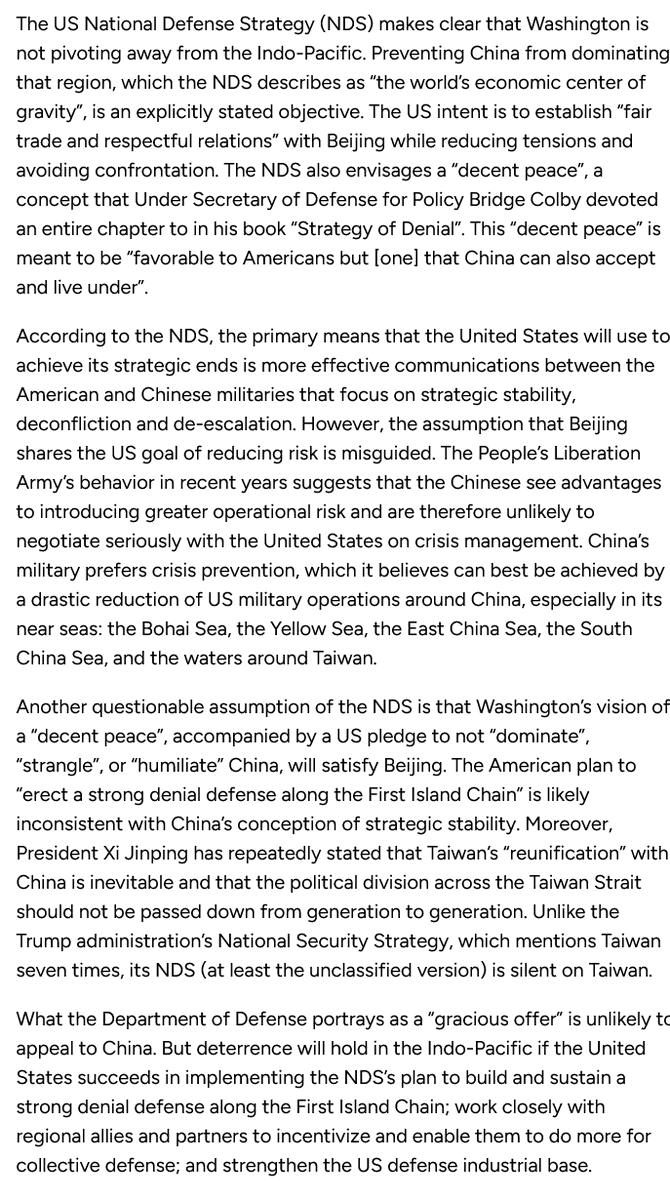
Here is my take on the approach to China in the National Defense Strategy: gmfus.org/news/us-national-d…
A “Decent Peace” With China
5
5
26
7,805
Jan 27
The UK, Europe, and Trump’s National Security Strategy ... my thoughts.
rusi.org/explore-our-researc…
1
4
522
Jan 22
If at first you don’t succeed….

130 schools said no.
He led the losingest program in college football history to a national championship anyway.
Fernando Mendoza was a 2-star recruit from Miami.
He tried to walk on at his hometown school. They passed.
So did FIU.
So did FAU.
So did everyone else.
At 17, he was sitting in his bedroom, crying over a silent recruiting inbox—after driving to 18 camps with his dad and sending highlights to more than 100 programs.
Not one FBS offer.
His only option? Yale. No scholarship. No NFL path.
Everyone told him to be “realistic.”
“Know your place.”
“Be grateful.”
He didn’t listen.
Because Mendoza understood something most people miss:
The worst outcome isn’t failing.
It’s never getting the chance to try.
Two weeks before signing day in 2022, his phone rang.
Cal needed a body. One offer. Out of 134 schools.
He took it.
He arrived as the third-string quarterback.
Spent a year on the scout team.
Lost his first four starts.
Got sacked 41 times behind a broken offensive line.
Still got up. Every time.
Then Cal brought in a transfer instead of building around him.
So Mendoza left the only school that had ever said yes.
He transferred to Indiana—the losingest program in college football history.
People laughed.
“Career suicide.”
“Graveyard program.”
“Nobody wins there.”
One coach told him something different:
“I’m going to make you the best Fernando Mendoza possible.”
That was enough.
Mendoza wasn’t just playing for football.
His mother has battled multiple sclerosis for 18 years.
Before every snap, he thought of her.
“My mother is my why.”
Indiana went 16–0.
Beat six Top-10 teams.
Won their first Big Ten title since 1945.
Mendoza threw 41 touchdowns.
Won the Heisman—first in school history.
First Cuban-American to ever do it.
Then came the title game.
Miami. Near his hometown.
Fourth-and-4. Season on the line.
Quarterback draw.
The kid 134 schools rejected spun through defenders and dove into the end zone.
Game over.
Indiana—national champions.
The losingest program became the best team in America.
All because a 17-year-old refused to believe “no” was the end.
Rankings don’t decide your ceiling.
Gatekeepers don’t write your ending.
Being overlooked isn’t a verdict—it’s a starting point.
Sometimes all you need is one shot…
and the courage to bet on yourself when nobody else will.
Don’t quit.
Credit: Barclay Mullins

1
830
Jan 10
What a wonderful essay, reminding us of the common humanity we share with all people and cultures.
In these terrible but hopeful times, my thoughts are with the people of Iran.
Much lies beyond my own expertise, but through research and personal family history I have encountered unmistakable evidence of the depth, sophistication, and humanity of Iranian civilization and society—worth recalling now.
The Persian Empire was one of the earliest great continental empires—and the first on such a scale—to become a sustained maritime power. It remains one of the very few land powers in history to successfully become a sea power on a sustained basis—an extraordinary feat.
google.com/books/edition/Chi…
During the late Cold War, the Shah of Iran—himself an experienced pilot—sought advanced aircraft to counter high-altitude Soviet incursions that violated Iranian airspace. His efforts intensified after Moscow repeatedly rebuffed his appeals for mutual overflight restraint.
theaviationgeekclub.com/form…
Amid a competitive U.S. selection process, the Shah chose Grumman’s F-14.
youtube.com/watch?v=G-mrFcsw…
As president of Grumman’s aerospace subsidiary beginning in 1972, and its president and chief operating officer starting in 1976, my grandfather oversaw the contracting and delivery of 79 F-14s to Iran.
bit.ly/F-14IranSale
To support the program, Grumman sent roughly 2,000 employees and their families to Imperial Iranian Air Force Base Khatami, 15 miles north of Isfahan. There, a Grumman-U.S. Navy team trained approximately 80 Iranian pilots and 40-50 radar intercept officers. My grandfather personally ensured that all employees and family members received extensive instruction in Persian language and culture as part of a six-month “trans-cultural” program beginning on 20 January 1975. Years later, while reading related materials, I first encountered Iran’s rich heritage and culture myself.
bit.ly/GrummanInIran
In 1979, just before I was born, my grandfather was preparing to visit his employees in Iran. What followed in the broader sweep of history is well known. Less widely known is the unreserved kindness that ordinary Iranians showed to the guests in their community even as their own lives were thrown into turmoil. Despite having everything to lose, they remained neighbors in the truest sense of the word to foreigners they would never see again.
Local Iranians helped delay the incoming Revolutionary Guards’ focus on the Grumman employees and their families, protecting them long enough for all to reach Tehran’s airport and depart safely aboard aircraft arranged by Grumman. Months later, the personal belongings they had abandoned in haste arrived in Long Island by shipping container, with no valuables missing. My grandfather always credited this humane treatment—and the later return of those effects—to the respect fostered by the cultural training program and reflected in their conduct as guests in Iran.
My grandfather knew key Iranian government and industry leaders of the 1970s and was deeply impressed by their expertise. After 1979, he watched as many oil industry specialists relocated to Houston and communications professionals to Los Angeles, where they went on to make major contributions in their new homes.
Since 1979, Iranian technical talent has produced some of the world’s earliest anti-ship ballistic missiles, but domestic repression and regional warfare have left Iran far short of its potential.
bit.ly/IranASBMs
Aggression during the 1981-88 Tanker War proved a disastrous failure.
bit.ly/TankerWar
Iran’s internationally unique possession of two parallel navies—the Islamic Republic of Iran Navy and the Islamic Revolutionary Guard Corps Navy—underscores the abnormal government-military system imposed by its clerical regime today. frontiersin.org/journals/pol…
Yet the sophisticated promise of Iranian culture has by no means been destroyed. It awaits the chance to flourish anew in unshackled freedom. Analysts of regional and military affairs have long emphasized this enduring Iranian sophistication to me.
Today, more than ever, I see a groundswell of popular determination and a rising tide of resolve. Iran’s current government, which suppresses a diverse and dynamic society within a sectarian straitjacket, does not reflect the will of its people. Forty-seven years of oppression and injustice have only deepened the damage. Iran should—and can—be far better than this.
If someone as distant and tangential as me can witness so much of the goodness inherent in Iranian people, culture, and civilization, I can only imagine what is evident to those truly in the know.
At the end of the day, what matters most are Iranians themselves—and their freedom to live good lives of their own in peace, prosperity, and promise. I hope the people of Iran will soon have a government that truly represents them and is worthy of their rich, highly advanced culture and tremendous positive potential.
1
5
7
1,996
15 Nov 2025
Report: USS Ford's Pilots are Studying Up on Venezuelan Air Defenses maritime-executive.com/artic…
621
5 Nov 2025
UK Pauses Legislation to Transfer Chagos Islands to Mauritius
… a faint ray of good news. maritime-executive.com/edito…
1
2
730
5 Nov 2025
UK Frigate Deal With Norway
… “The Type 26 is a purpose-built anti-submarine warfare frigate, designed from the keel up for hunting subs…”
maritime-executive.com/artic… #maritime #maritime-news
1
476
5 Nov 2025
Carrier USS Ford Crosses Atlantic as US Forces Gather Near Venezuela
… “The administration has not requested a declaration of war on Venezuela from Congress, and is said to be discussing alternative legal theories that could support regime change-level operations without legislative approval, all related to alleged drug smuggling activity.”
maritime-executive.com/artic… #maritime #maritime-news
1
1
397
30 Oct 2025
420
30 Oct 2025
PH Interdicts PRC Fishermen
... "Second Thomas Shoal is within the Philippines' 200-NM EEZ boundary...it submerges at high tide and does not constitute land for the purposes of UNCLOS claims...[nonetheless] China claims the reef...as its own."
maritime-executive.com/artic… #maritime #maritime-news
1
2
601
30 Oct 2025
To maintain pace with China, "for Washington and Seoul, the lesson is clear: industrial cooperation must ... expand capacity, protect supply chains, and keep production lines running on both sides of the Pacific."
maritime-executive.com/edito… #maritime #maritime-news
1
2
464
16 Oct 2025
NATO Sees Success in its Baltic Anti-Sabotage Mission
… “These shippers, these illegal shippers, are aware that they're being watched very closely, and we believe that in itself is a deterrent.” maritime-executive.com/artic…
1
4
408
Peter Dutton retweeted

28 Sep 2025
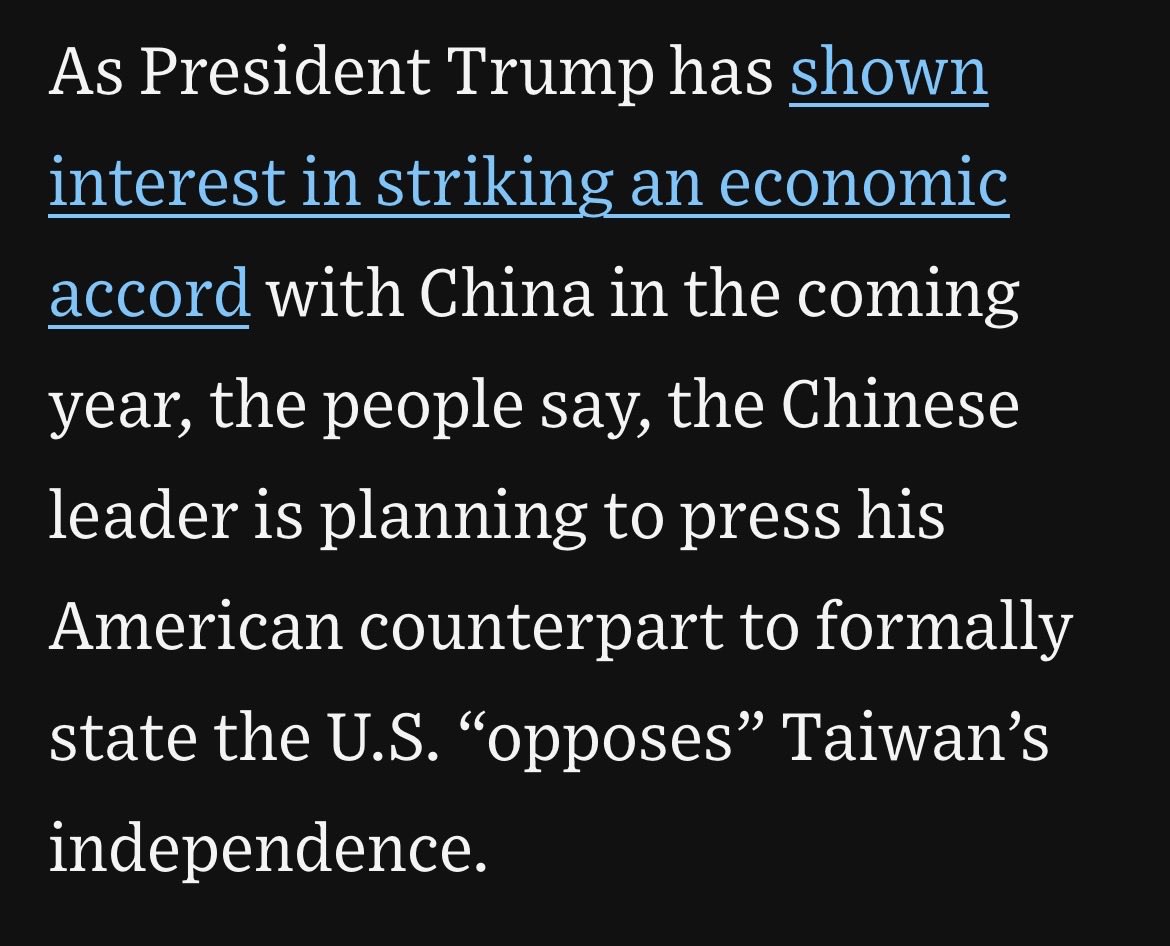
This sounds like a small ask by China, but it would be a pretty big shift in U.S. policy to go “not supporting” to “opposing” Taiwan independence.
1
5
10
1,241