Tenured Senior Researcher in quantum information at the Freie Universität Berlin (prev.: PhD at ETH Zurich @ETH_physics / post-doc at Caltech @IQIM_Caltech)
Joined September 2017
- Tweets 263
- Following 756
- Followers 1,636
- Likes 3,079
20 Photos and videos

Jun 11
What a ride! It's been such a pleasure to be a part of this wonderful project. Thank you @victorvalbert for your vision and for being such an amazing zookeeper!
Jun 11

Big update: the EC Zoo is now a handbook. It spans codes, sphere packings, lattices, designs, groups, and phases of matter. Extensively checked, but not perfect—feedback very welcome:
arxiv.org/abs/2606.11484
6
709
Philippe Faist retweeted

Jun 11
oh wow, the handbook of error-correcting codes is out.
That's massive!
Congrats to the zoo keepers @victorvalbert @phfaist
1
5
36
1,753
9 Dec 2025
So this just happened 🎉 I'm profoundly excited about what's ahead and deeply grateful for all the support you've provided along the way! #ERCCoG
9 Dec 2025

The results of the ERC Consolidator Grant call have been announced! 📣
349 researchers have been selected for funding. Congratulations to all! #ERCCogG!
👉 erc.europa.eu/news-events/ne…
#FrontierResearch #EUfunded #HorizonEurope
@EUScienceInnov
1
8
316
7 Aug 2025
We all have a favorite characterization of the thermal state: as an equilibrium state, via a maximum entropy principle, from the resource theory of thermodynamics, as a step in learning algorithms, among others.
What is the analogous concept for quantum channels?
2
1
13
918
7 Aug 2025
Sumeet Khatri and I answer this question in arxiv.org/abs/2508.03993 (short) and arxiv.org/abs/2508.03994 (technical).
I've got a longer post & a thread on other social media platforms for whoever would like a short thread-style summary.
1
3
240
Philippe Faist retweeted

18 Oct 2024
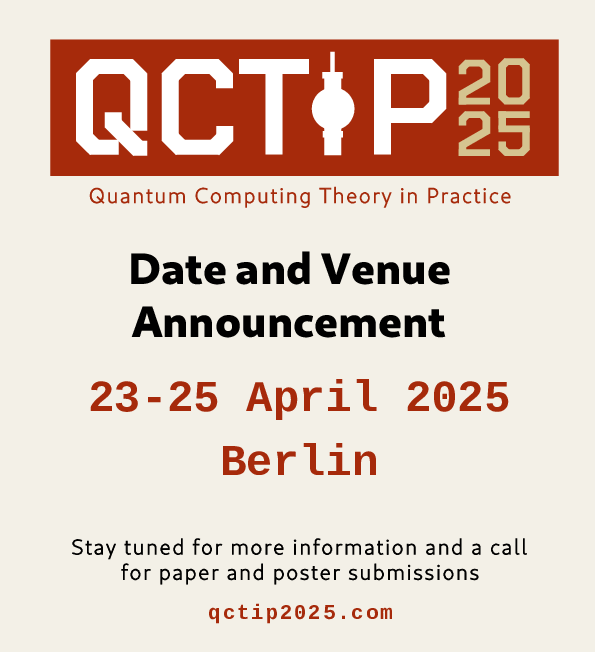
We are thrilled to announce that the 6th edition of QCTiP will be in Berlin on the 23-25 April!
5
17
43
8,846
Philippe Faist retweeted

7 Oct 2024
But that’s not true is it. After all, your ears can definitely tell when you play a “wrong” note, even if it’s not written down.
We often argued, “but the best jazz musicians don’t follow the rules, why should we?”
The answer is because we were not the best. We were beginners
2
4
20
3,665
Philippe Faist retweeted

5 Sep 2024
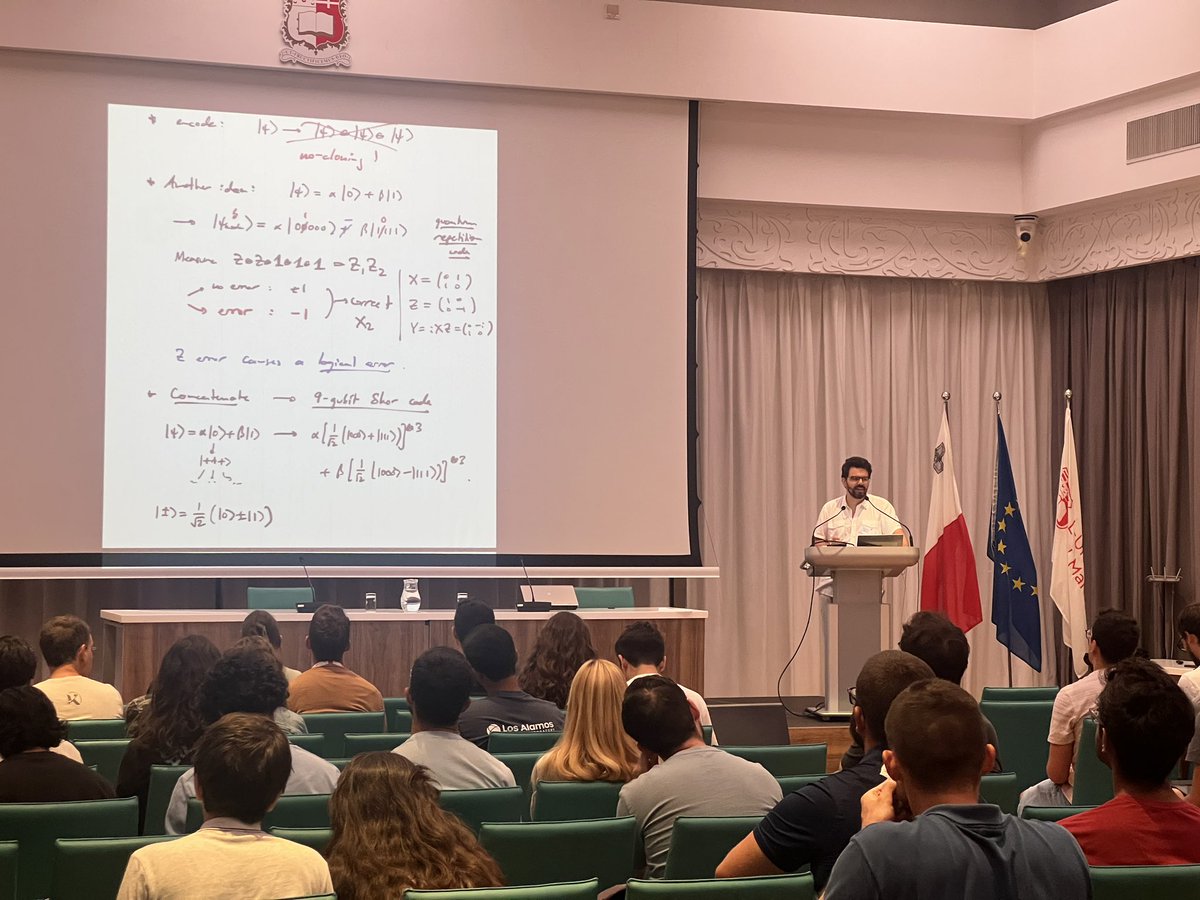
Today we moved into the exciting realm of Quantum Error Correction @qalypsoschool , guided by the steady hand of @phfaist 🤩
1
1
8
417
Philippe Faist retweeted

7 Jun 2024
The EC Zoo is now on Discord! Join us to discuss all things error correction: discord.gg/mzJpzQHD
3
16
1,801
28 May 2024
How do you track the latest exciting developments in the dynamic and constantly evolving field of quantum information science and technology? You organize a conference with awesome invited speakers and many opportunities for contributed talks. Please join us for #QTech2024! ...
1
1
15
1,242
28 May 2024
Our amazing confirmed plenary speakers include: Antonio Acin, Markus Aspelmayer, Mete Atature (@MeteAtature), Stacey Jeffery, Richard Kueng (@RichardKueng), Anthony Leverrier (@letonyo), Maria Schuld, Christine Silberhorn, Jelena Vuckovic, ... and more to be confirmed! ...
1
2
389
28 May 2024
The conference will be held in Berlin on Sept 10-12, 2024. More information, submission, and registration here: premc.org/conferences/qtech-… . Hope to see many of you in Berlin :)
233
Philippe Faist retweeted

3 Apr 2024
We are pleased to introduce the co-chairman Dr. @phfaist.
Find out more information about the conference on our website :
premc.org/conferences/qtech-…
#QTECH2024 #Quantum #PremC #Berlin
1
13
950
11 Mar 2024
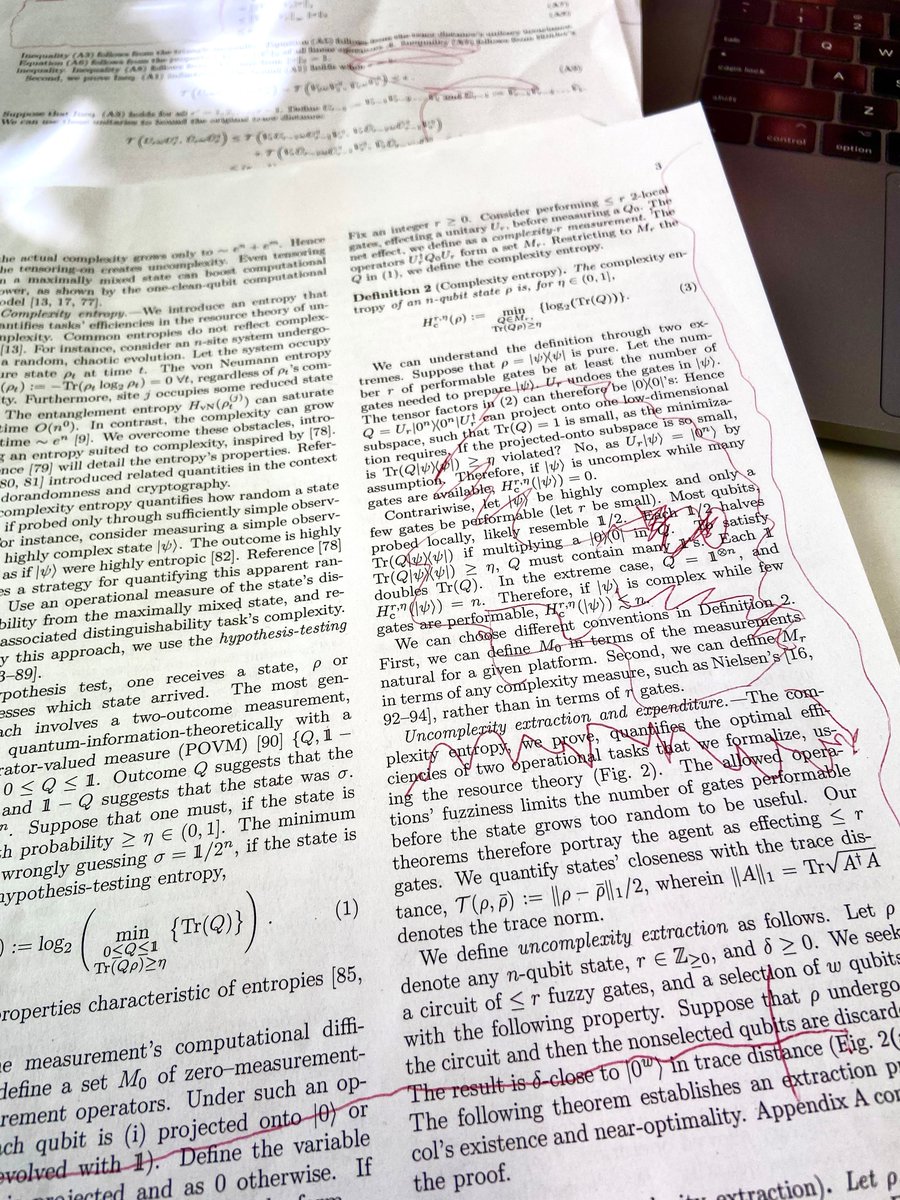
Conventional thermodynamics dictates which processes are or aren’t allowed. Yet it omits to forbid processes that are too complex to be realistic, such as cooling systems with complicated energy landscapes. Here’s our take on how to fix this omission. arxiv.org/abs/2403.04828 1/
2
9
58
3,982
11 Mar 2024
The complexity entropy might be an appropriate measure of randomness in many scenarios. After all, an environment can’t probe a system using complex observables. Applications can lie beyond thermodynamics, including information-theoretic tasks under complexity limitations. 6/
1
7
317
11 Mar 2024
Follow us on our journey to include a notion of time in thermodynamics in our new preprint, which also contains many more details and results. Special thanks to wonderful collaborators Anthony, @nagateja95, @haferjonas, @nicoleyh11 and @jenseisert! arxiv.org/abs/2403.04828 7/7
3
15
1,052