
Philosopher turned dev turned founder.
Joined April 2014
- Tweets 1,177
- Following 269
- Followers 1,025
- Likes 682
148 Photos and videos






Pinned Tweet

28 Jul 2023
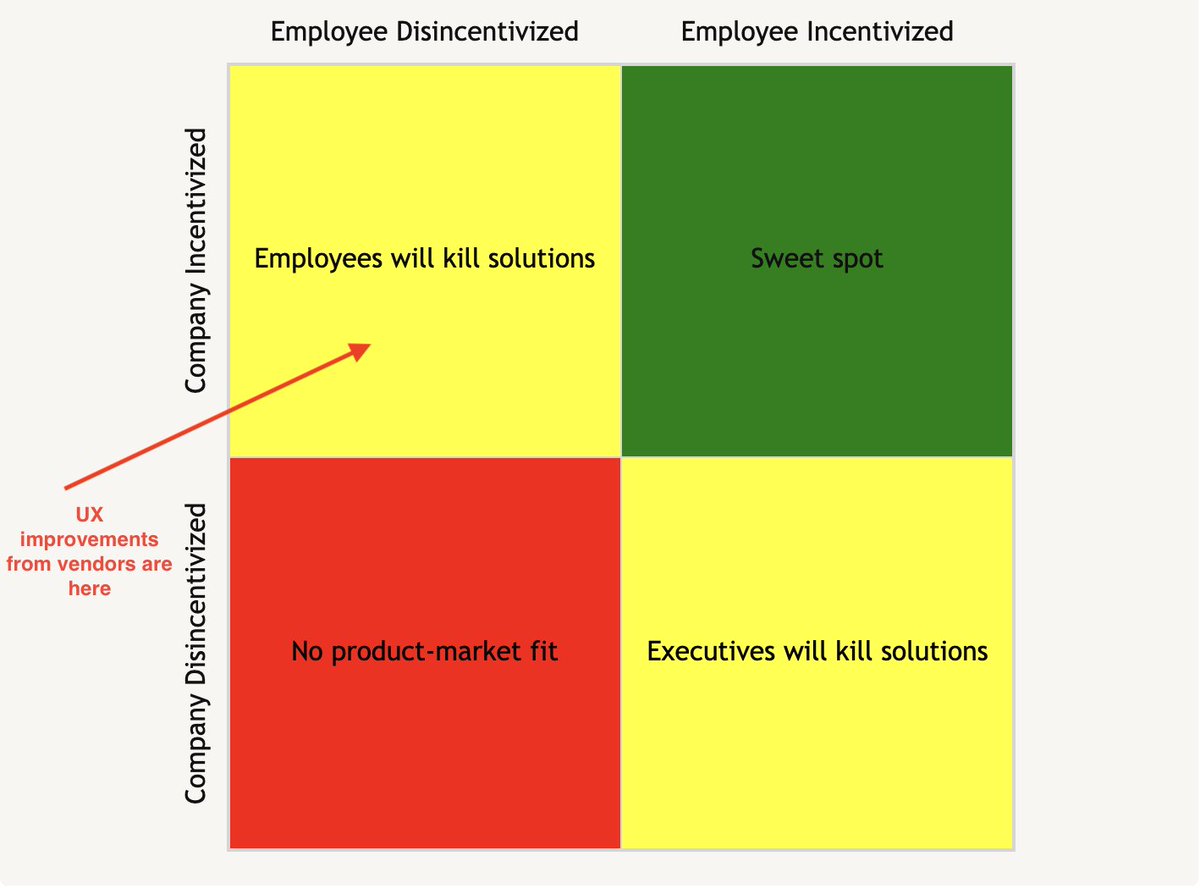
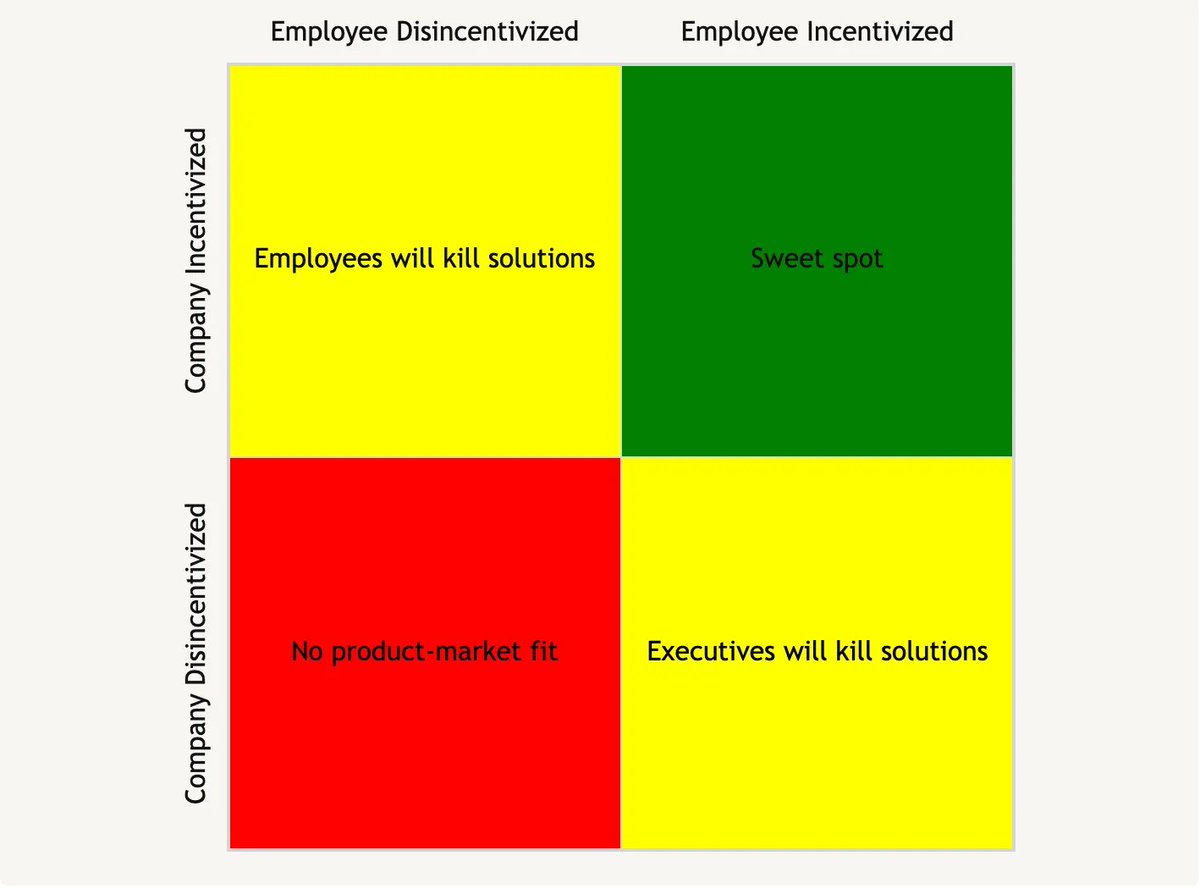
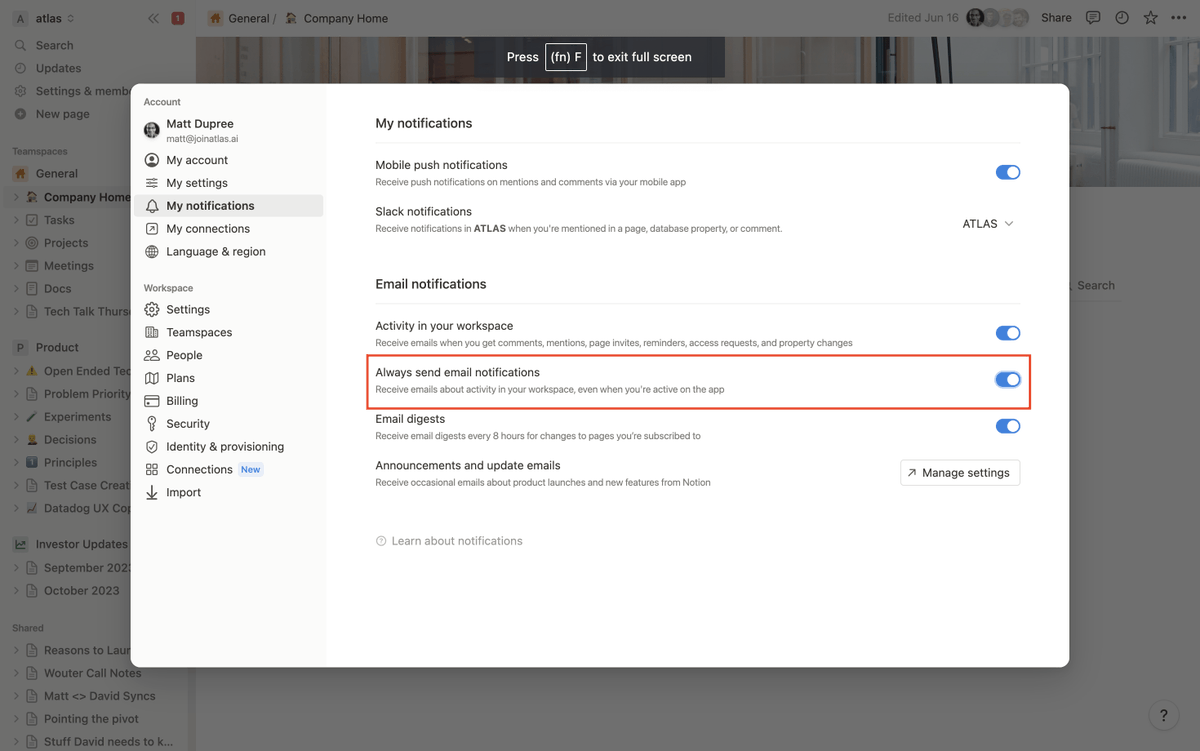
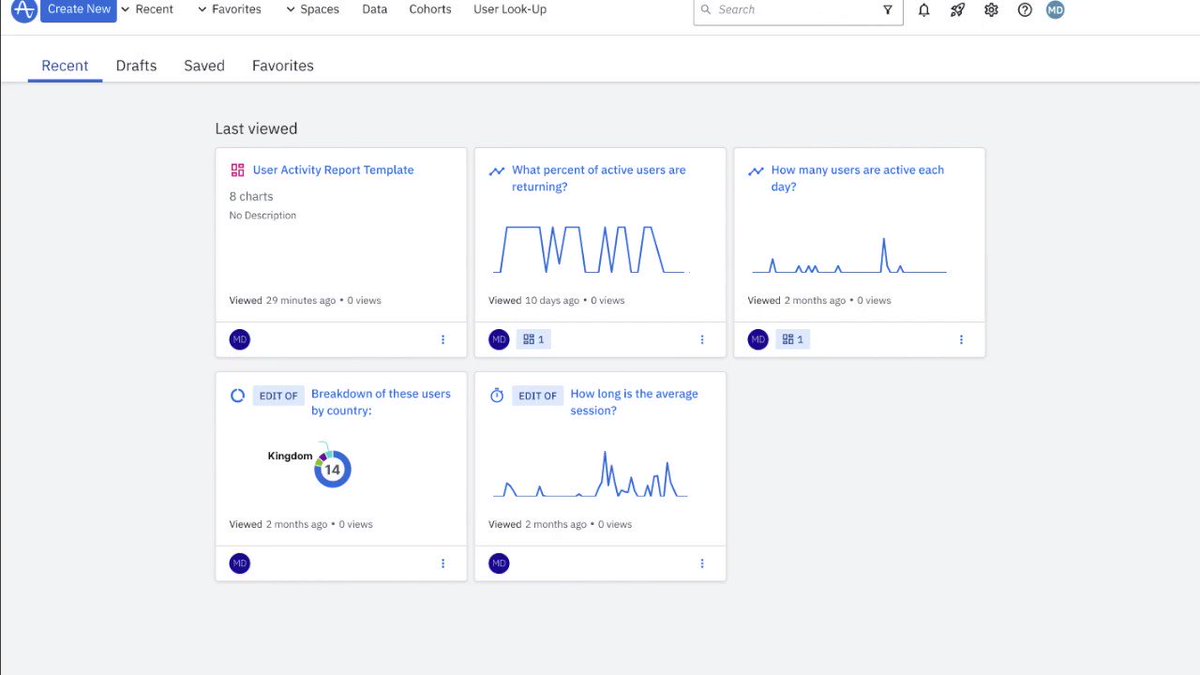
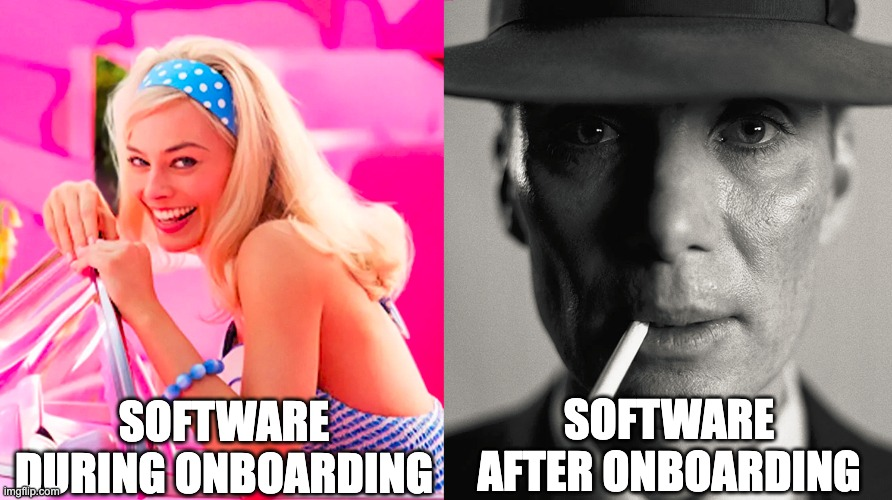
Been thinking a lot about UIs lately while doing customer research for @join_atlas_ai and I've concluded that UIs almost always get worse over time. Companies may hire better designers or PMs to avoid this, but their UIs will inevitably become harder to use anyway. Here's why.🧵
1
2
14
1,889
Matt Dupree retweeted

May 13
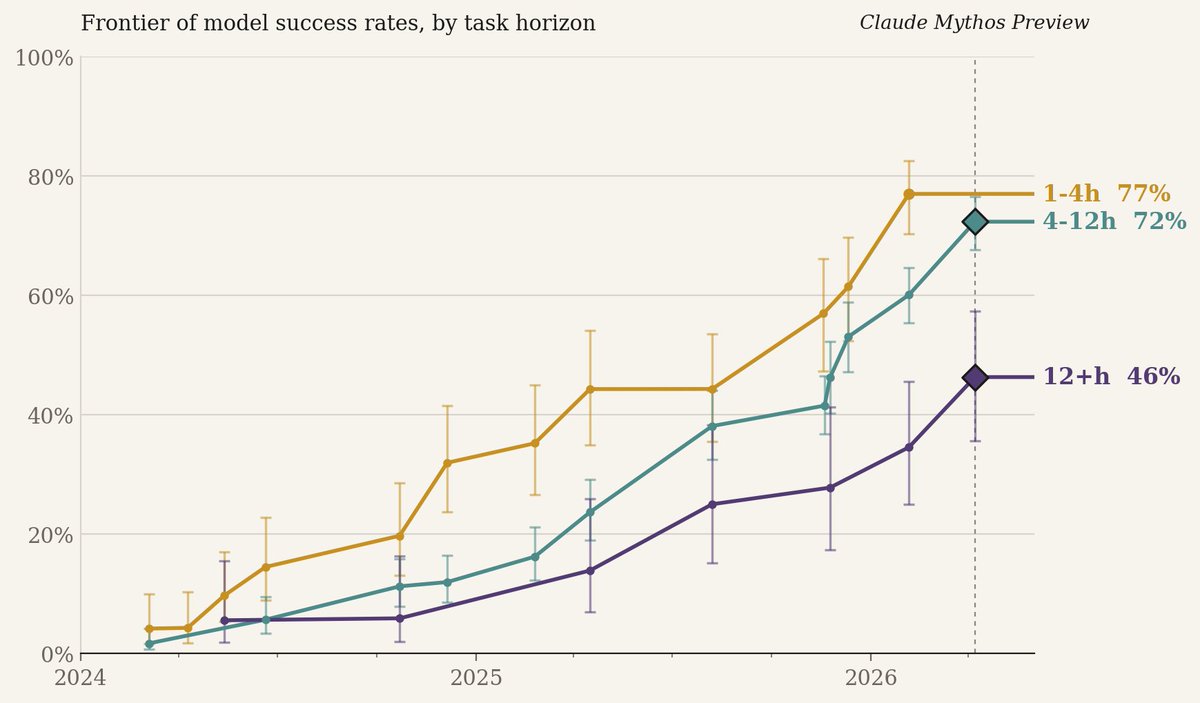
This is a much more transparent way of reporting METR's time horizon results.
May 13

The new METR time horizon graph is pretty bad imo. It's a great benchmark, but the time horizon estimation isn't reasonable rn. I think something like this would be more justified:
1
6
24
3,908
May 16
If agents are going to replace me I’d expect my job to be getting easier. It’s getting harder.
1
3
224
Matt Dupree retweeted

9 Dec 2025
We built a bug finder. We're finding serious, "let's fix that right now" issues in every codebase we run it on.
Introducing Detail!

28
24
361
112,935
2 Oct 2024
Today's your lucky day, folks. @join_atlas_ai is winding down, which means @JoshShroyer -- an awesome engineer, person, and friend -- is on the market.
I met Josh 8 years ago while working at another startup. It was immediately clear to me that he was a brilliant engineer. Software was a craft that he cared deeply about and he studied with a fervor that I've haven't seen in anyone else in my decade long career.
Josh's humility was equally apparent when we first met. Although he knew more than his peers, he was cautious in his thinking and patient with how he communicated.
As I got to know Josh better, I learned that in addition to being humble and brilliant, he is also a ridiculously kind person. He really cares about people. He wants to do right by the users and customers he builds for.
After we parted ways, I knew I wanted to work with Josh again, so I sought him out after raising capital for my new venture. He has continued to impress me with his ability to quickly pick up new technical skills. He went from iOS dev to fully productive Fullstack web and AI dev in less than a month. He pushes himself hard, and it shows.
Although he works extremely hard, he has remained kind, patient, and calm through all the ups, downs, and twists of startup life. I'm grateful that I had the opportunity to work with him twice, and I'm especially grateful that someone so talented and kind put up with my first crack at being a CEO of a startup.
This isn't my last attempt at being a CEO, so if you hire Josh, treat him like royalty because I'm definitely going to try convince him to work with me again!
1
4
245
2 Aug 2024
15 minutes left on this poll! I want your vote!
1 Aug 2024

Trying to get a sense of developer attitudes about data privacy. Please pick the option that best fills in the blanks in the sentence below:
I am building a (B2B | B2C) product and am (happy | unhappy) with our privacy practices.
e.g., pick choice 1 if you're working on a B2B product and are unhappy with your product's data privacy practices.
192
1 Aug 2024
Trying to get a sense of developer attitudes about data privacy. Please pick the option that best fills in the blanks in the sentence below:
I am building a (B2B | B2C) product and am (happy | unhappy) with our privacy practices.
e.g., pick choice 1 if you're working on a B2B product and are unhappy with your product's data privacy practices.
26%
B2B, unhappy
41%
B2B, happy
26%
B2C, unhappy
8%
B2C, happy
39 votes • Final results
5
4
21
5,112
Matt Dupree retweeted

28 Jun 2024
We've reached the point in platform maturity where businesses need to concern themselves with building for a niche, or delivering features @Apple won't go after, else risk feature absorption
@1Password is a good example, growing out of Apple's ecosystem.
techcrunch.com/2024/06/18/io…
2
7
244
Matt Dupree retweeted

22 May 2024
PSA: gpt4o's behavior is chaotic and unpredictable when temp is set just above the default (of 1.0). [0]
Past temp of 1.1 we're seeing nonsense responses in multiple languages and character sets
[0] platform.openai.com/docs/api…


2
2
212
21 May 2024
There's consensus emerging among VCs that #LLMs will make software companies look more like services businesses because software will own a task end-to-end instead of merely enabling a human to work on a task faster. I've seen this from partners at @NFX , @FoundationCap, and @OpenViewVenture. The shorthand they like for this "LLMs enable service as a software."
I'm betting the company (@join_atlas_ai) that they're wrong. I'm trying to work with GTM/PLG teams instead of replacing them, not because I'm particularly precious about displacing jobs but because LLMs just aren't good enough to do their jobs and that won't change anytime soon.
LLM optimists point to LLM's effectiveness in domains like coding, prospecting, and SEO content gen, but the wins here are limited and will be short-lived.
Coding is unlike any other domain in that the content (code) generated by LLMs can often be unambiguously verified as correct. The code either runs or it doesn't. It's a mistake to generalize from the coding domain.
The effectiveness of LLM-powered SEO content gen and prospecting, moreover, is primarily a function of the competitiveness of the space in which these solutions operate. Once the competition shows up, no one is going to care about 80th percentile performance on cold outreach or SEO content. Humans will be back in the game. E.g., Dave Rigotti banned GPT for content gen at @Inflection_Io this week. I already use "better than ChatGPT" as a filter for content I want to write.
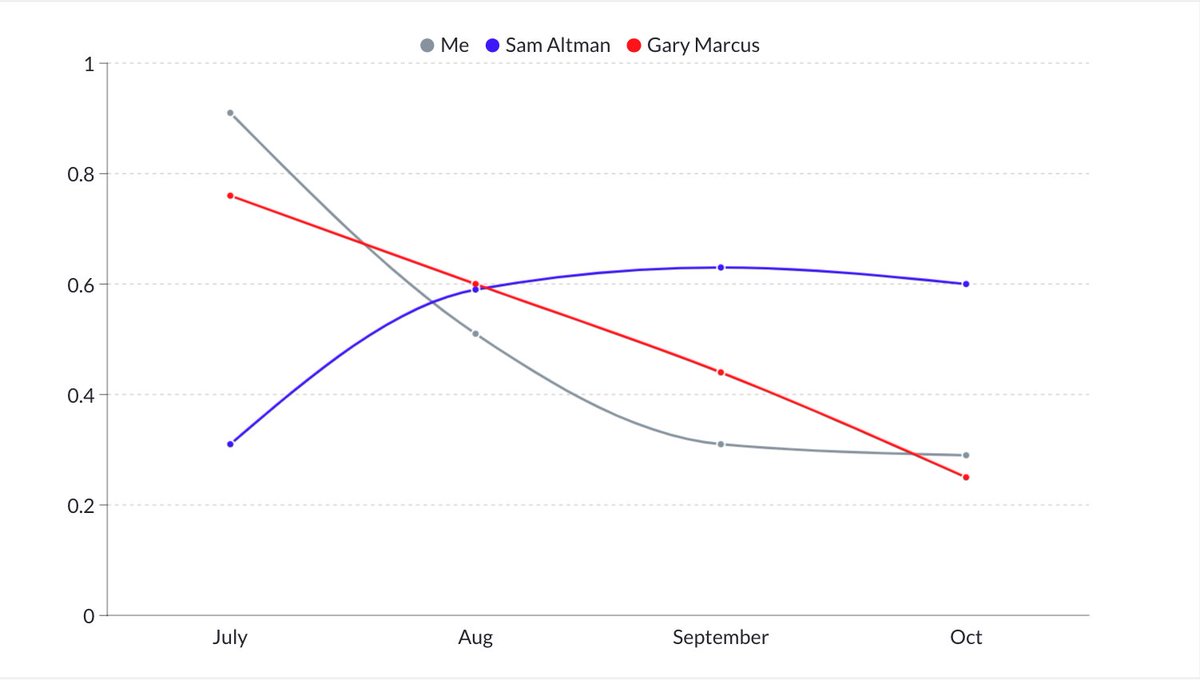
LLM optimists often think that there's a clear path to making these models much better. There isn't. Pay less attention to people who have a financial interest in having you believe otherwise. Don't take my word for it either. I'm just incentivized in the opposite direction. @GaryMarcus is too, but he's worth paying attention to.
1
1
145
Matt Dupree retweeted
3 May 2024
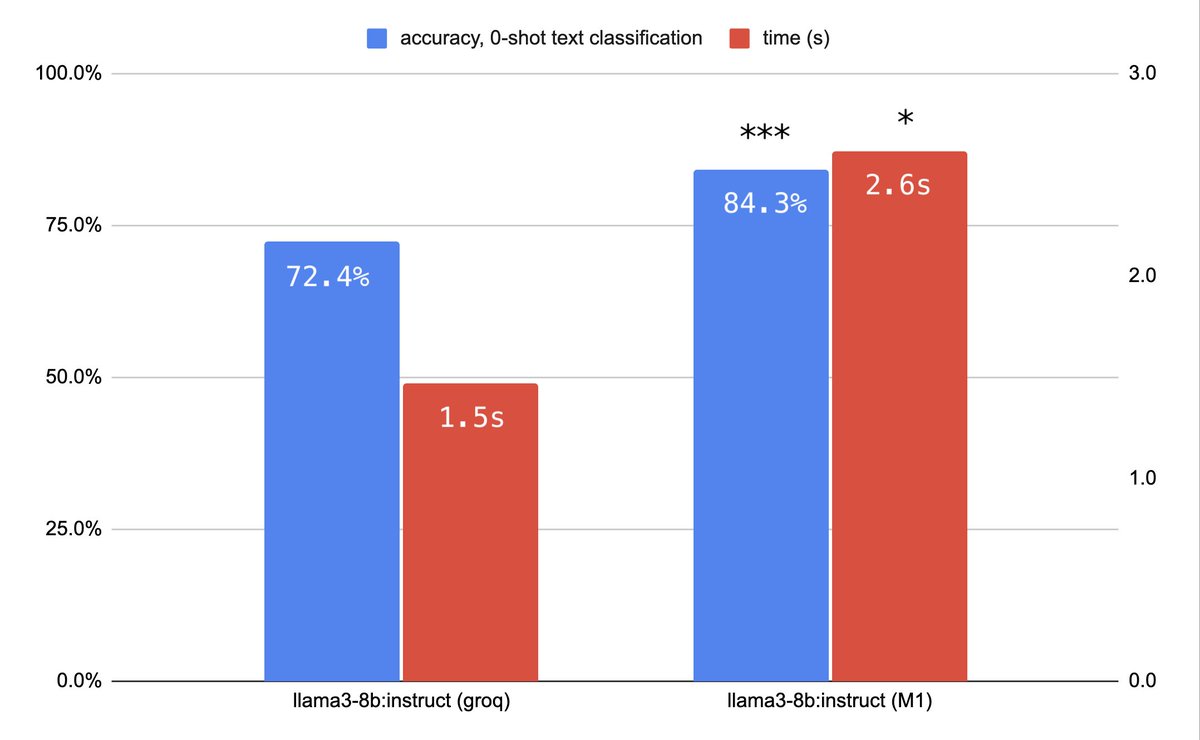
Anyone else notice that #LLaMA3 performs differently on @GroqInc's API than it does locally?
I’m running llama3-8b-8192 (instruct) via @ollama on an M1 mac and seeing consistently better accuracy than the same model on groq for the same tasks (mostly 0-shot text classification)
1
2
1
297
Matt Dupree retweeted
13 May 2024
Theory for B2B SaaS: the smarter your customers seem, the more likely you're nearing product-market-fit
1
1
1
116
Matt Dupree retweeted
29 Apr 2024
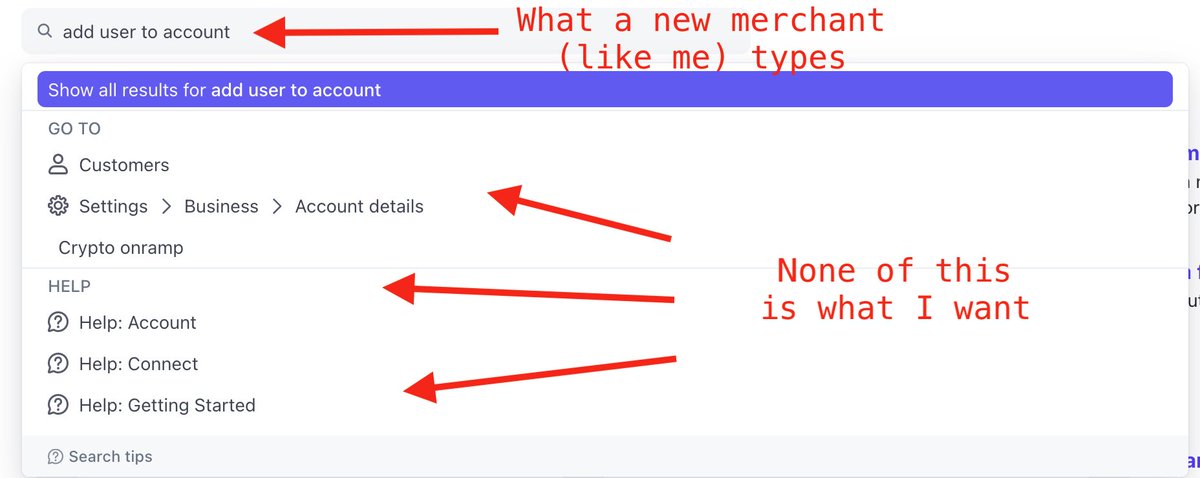
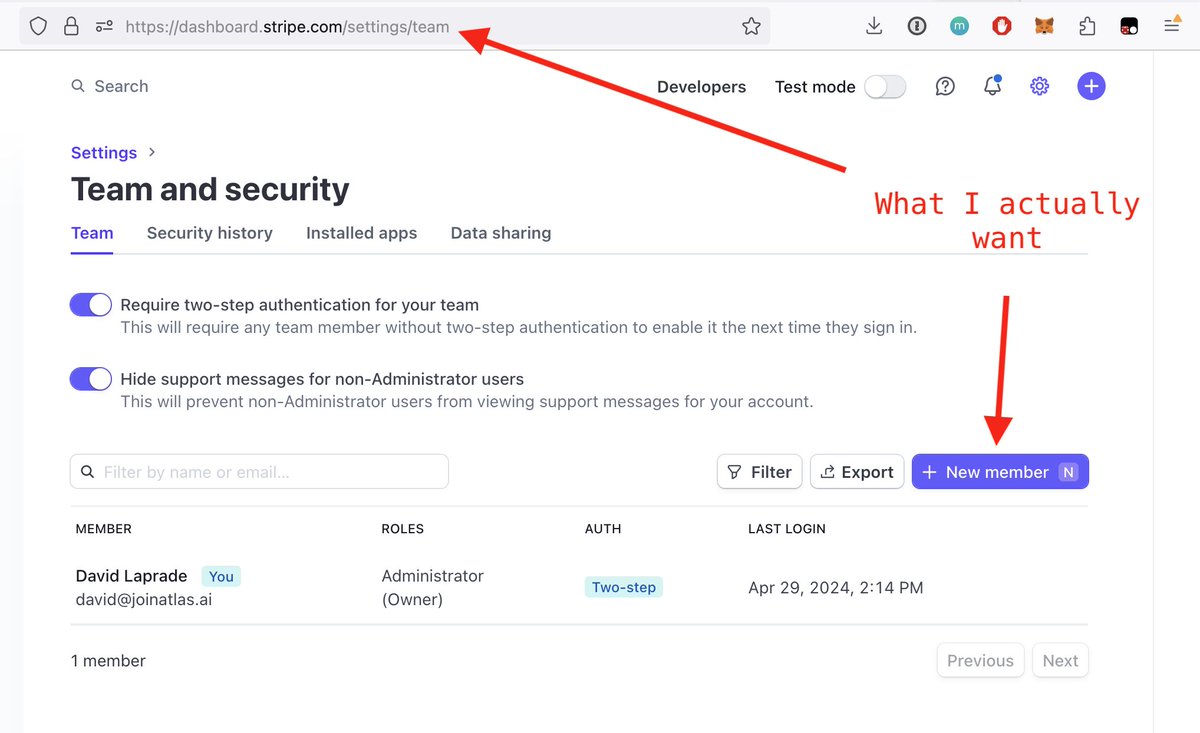
@stripe cc @jeff_weinstein low hanging UI improvement that would help new dashboard users: semantic search over your UI
would match queries like "add user to account" to the page the user intends to go to. You shouldn't need to know the magic word "member" to get there
1
1
2
108
22 Apr 2024
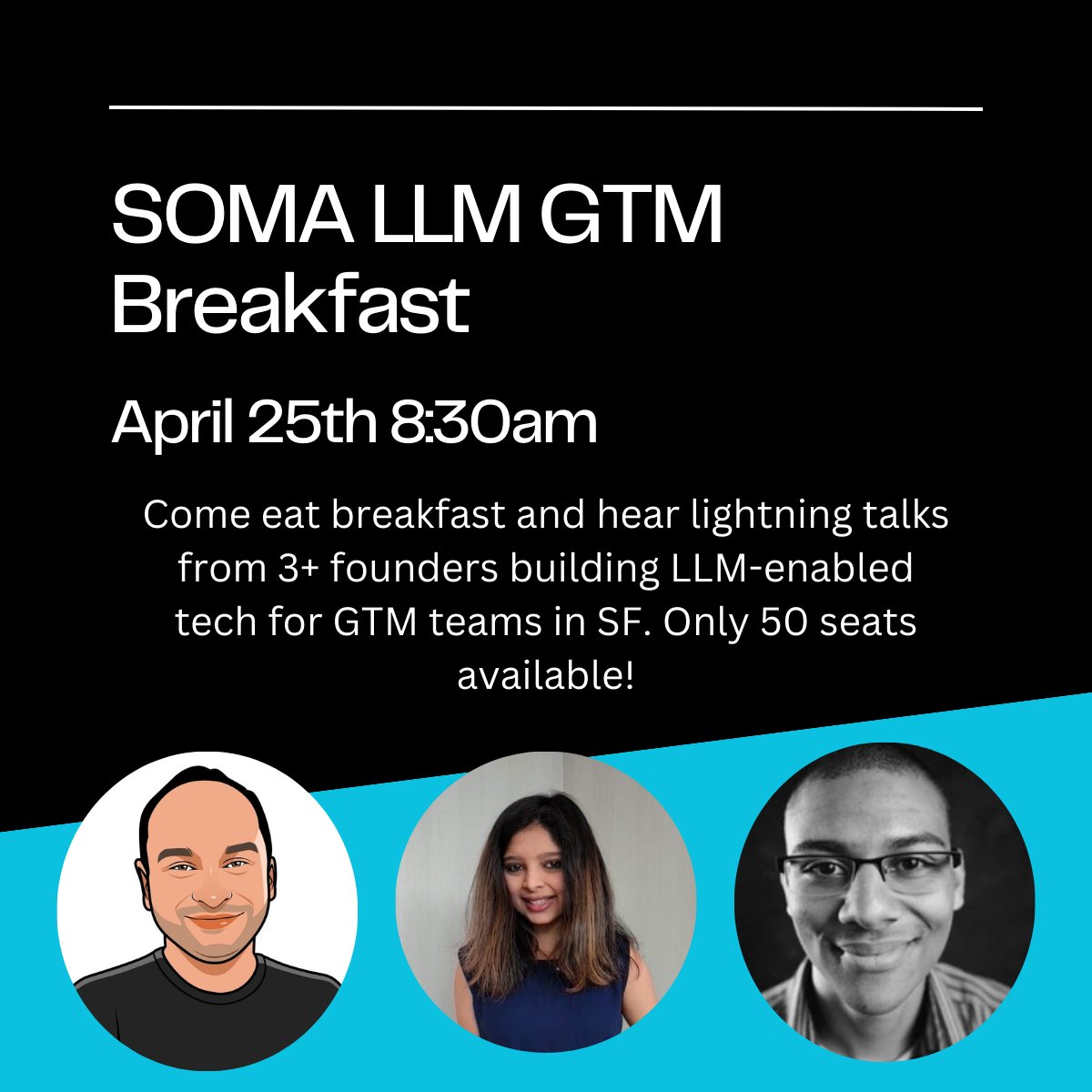
Met @saksenarjun -- a fellow @forumventures founder and former growth PM at Adobe -- and @amruthagujjar -- @ycombinator and x-Meta engineer -- this past week at #PLGTM.
We're all working #LLM-enabled tech for GTM and #PLG teams and thought it would be fun to invite folks around SOMA to have breakfast this Thursday and hear some lightning talks about what we're building and why.
Registration link is in the comments.
We likely have space for one or two more presenters, so if you know someone else working on LLM-tech for GTM teams, tag them in the comments!
1
5
9
715
Matt Dupree retweeted
22 Apr 2024
I spent the last few weeks reading papers on LLM text classification
Some practical takeaways below 🧵(1/9)
2
2
8
298
28 Feb 2024
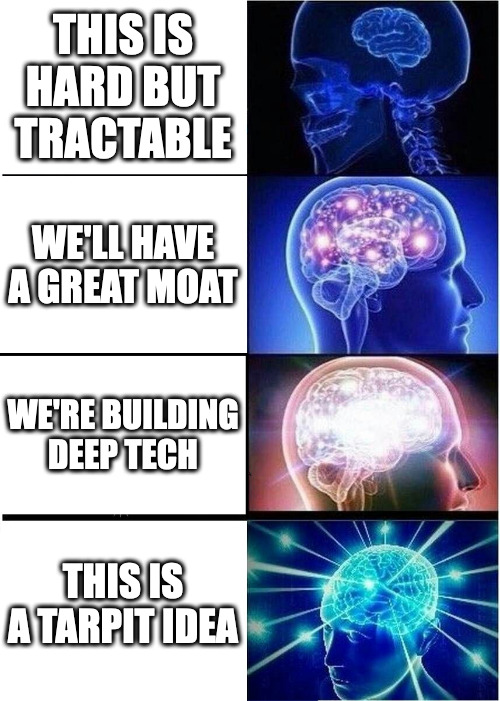
After 6 months of working on @join_atlas_ai, we're moving on to something else. Helping product teams improve their UX via LLM-powered in-app help is just not a good business. Stay tuned for what we’re building next! In the meantime, here's a thread on why we’re moving on.
1
5
287
28 Feb 2024
Painkiller UX doesn’t matter
Even if you solve the Goldlocks problem, there’s another headwind to deal with, one that I should have seen early on in our user research when I spoke with a customer success consultant. During our call, she told me:
"Most of the founders I work with don’t think about customer success until its too late. Their product is a few years old and they’ve already started to see some churn that they’re worried will affect their ability to raise the next round."
Translation: software companies only want to help their customers if they’re so fed up that they’re willing to churn, and customers tolerate all sorts of abuse before getting to this point.
In this sense, software customers are like painkiller users: they only quit when the experience of using is worse than the experience of not using. And things can get very bad before that happens. LinkedIn’s Sales Navigator UX drives me nuts, but its the only way to get the data I need to prospect. During user research calls, I have listened to 20-minute tirades about how awful it is to use Salesforce. Their market cap doesn’t seem to care.
When founders have a hit software product, they are selling something that has the addictive properties of a drug, or, if you prefer the more palatable VC-speak: “They’re selling pain-killers, not vitamins.” Whatever metaphor you prefer, try to sell a drug dealer on something that makes the UX of drug usage easier. Unless it somehow increases revenue, they won’t care. People are already bending over backwards to buy their product.
1
81
28 Feb 2024
The tenuous connection between good UX and revenue
But doesn’t good UX increase revenue? If a user is looking at products A and B and all other things are equal, except that A has better UX, won’t they pick A? Sure, but the price of the two products can’t be equal because building a product with better UX costs something and someone has to pay that cost somehow.
We are often unwilling to pay that cost, even with a product as great as the iPhone. The leap from laptops to the iPhone is arguably the greatest UX improvement of our generation, and most of us don’t even pay full price for the device. Instead, the cost of the device is subsidized by cell carriers who are just trying to sell more data/minutes.
Even with the iPhone’s subsidies and better UX, Android has 70% of the smartphone market. We will put up with worse UX for a cheaper phone that is also partially paid for by our willingness to feed data into Google’s ads business.
Why don’t we care enough about good UX to pay for it, even though good UX saves us time? We don’t really value our time. At work, we get paid the same regardless of how efficient we are. Why pay to be more efficient by using products with good UX? At home, we already waste hours of our lives doom scrolling and binge watching Netflix. We can probably just suffer the extra 2-minutes using an app with bad UX and save our dollars for the next streaming service that drops.
If anyone values UX enough to pay for it, it would be me, someone who was working in the UX business, someone who literally curses at my computer all the time as I’m dealing with bad software. As I’ve thought more about this business and my own behavior, I realized that I’ve drastically over-estimated my willingness to pay for better UX. Wittgenstein was right:
“Nothing is so difficult as not deceiving oneself.”
1
65