
Joined August 2016
- Tweets 7,256
- Following 1,189
- Followers 492
- Likes 1,306
977 Photos and videos










𝗦𝗰⚽️𝘁𝘁- 𝗣𝗵𝘆𝘀𝗶𝗼 𝗦𝘁𝗿𝗲𝗻𝗴𝘁𝗵 𝗖𝗹𝘂𝗯 retweeted

Coffee may be doing far more than delivering caffeine.
Recent research suggests even decaf can influence inflammation, mood, stress biology, and the gut microbiome.
For people carrying chronic invisible load, that's a useful reminder:
1
1
2
15
𝗦𝗰⚽️𝘁𝘁- 𝗣𝗵𝘆𝘀𝗶𝗼 𝗦𝘁𝗿𝗲𝗻𝗴𝘁𝗵 𝗖𝗹𝘂𝗯 retweeted

May 17
Nope. Running actually helps preserve your joints.
If you don’t like to run don’t run… but don’t say worthless nonsense like this.
May 17

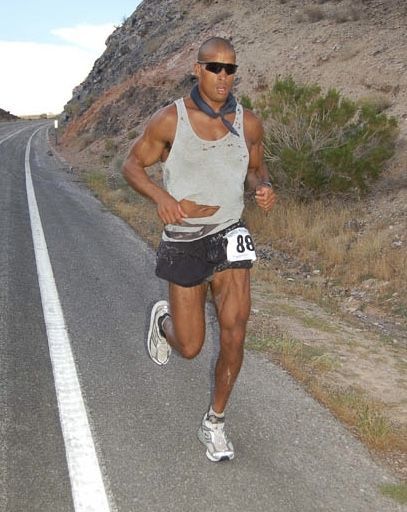
Running has to be the worst sport out of all:
> not fun at all
> destroys joints
> no meaningful goal
> extremely stressful
> makes you low T
> ages you fast
> gives you skinny fat physique
> inefficent to lose weight
240
125
2,494
472,465

A lot of physical decline may be less about ageing and more about reduced recovery capacity.
Muscle health is linked to inflammation, sleep, blood sugar regulation, stress load, hormonal shifts, and nervous system function.
The body ages as a system, not in isolated parts.
11
People carrying invisible load often get told they need “better sleep habits” when the deeper issue is accumulated under-recovery.
A body surviving on fragmented sleep, stress hormones, cognitive load, and constant responsibility will experience sleep differently.
1
22
"Pain does not always mean that you are injured. We want everyone to recognize that pain is a request for change." — @thereadystate
20
A lot of health advice fails because “average biology” isn’t real.
Same risk factor.
Different biology.
Potentially different outcome.
One of the biggest problems in medicine:
Important differences get averaged away.
1
14
A treatment can look ineffective
when it was simply too generic.
Sex differences are not a side note.
They can be the mechanism.
The body is often more context-dependent than the headline suggests.
1
12
The future of better care is probably less “one answer for everyone”
and more: “who does this actually work for?”
7
Strength often stays longer than people expect.
Speed doesn’t.
You can still lift well.
But the “snap” starts to fade.
Power is strength expressed quickly.
That’s the part most people don’t notice slipping.
Nothing breaks.
Things just get slightly slower.
1
40
Reaction time, balance, force production
They all sit under the same umbrella.
Most training keeps strength.
Very little preserves speed.
The early signal isn’t weakness.
It’s hesitation.
5
After nearly 30 years in ortho/MSK, one pattern stands out.
Many joint problems in midlife aren’t sudden injuries.
They’re the moment declining capacity finally reveals itself.
For years the body compensates quietly.
1
43
The picture becomes the diagnosis.
But often the real issue is something else.
Loss of physiologic reserve.
Less muscle.
Less tendon resilience.
Less tolerance for load.
The MRI didn’t create the problem.
It revealed something that had likely been there for years.
1
7
What usually helps people recover?
Rebuilding capacity.
Stronger muscles stabilising joints.
Gradual loading restoring tolerance.
The same foundations that tend to protect joints in the first place.
9
𝗦𝗰⚽️𝘁𝘁- 𝗣𝗵𝘆𝘀𝗶𝗼 𝗦𝘁𝗿𝗲𝗻𝗴𝘁𝗵 𝗖𝗹𝘂𝗯 retweeted
Mar 14
All these budding exercise physiologists and strength coaches. 🤦♂️🤦♂️
This is made up slop. Walk all you want. None of your muscles are working hard when you’re walking and your adductors are firing too.
Is walking enough? No. You need strength and power training too.
And no. This is not how knee OA arises.
Why don’t these guys keep developing apps and posting their incomes in their bio 🤣
Mar 14

The healthiest habit in America is quietly destroying millions of knees.
Walking 15,000 steps a day builds your heart, your lungs, your endurance. It also loads the same five muscle groups in the same direction, 5.5 million repetitions per year, while the muscles responsible for keeping your knees from collapsing inward barely fire at all.
Your body moves in three planes. Sagittal (forward and back), frontal (side to side), and transverse (rotation). Walking is almost entirely sagittal. Quads, hamstrings, glutes, calves: all getting hammered. Your adductors, the five muscles along your inner thigh, work in the frontal plane. They stabilize the pelvis, keep the knees tracking straight, and prevent the femur from drifting into varus alignment under load. During level walking, they activate at a fraction of their capacity. Along for the ride.
Run that imbalance for a decade. The outer thigh gets progressively stronger. The inner thigh stays the same or atrophies. The knee joint, caught between two muscle groups pulling in opposite directions, starts absorbing asymmetric force with every single step. Cartilage wears unevenly. The medial compartment takes the hit first.
This is how knee osteoarthritis develops. Knee OA now affects roughly 23% of the global adult population. In the US alone, surgeons perform nearly 800,000 total knee replacements per year at $30,000 to $50,000 each. That number is projected to hit 3.5 million annually by 2030.
Patients with knee OA show 8 to 24% weaker hip abductor and adductor muscles compared to healthy controls. A longitudinal cohort study found that weaker hip muscles predicted faster OA progression. When the NHL gave players with weak adductors a 6-week strengthening program, injury rates dropped from 3.2 to 0.71 per 1,000 game exposures. 78% reduction from targeting one muscle group.
The doctor telling this person’s dad to walk less is treating the symptom. The imbalance is the disease. Copenhagen planks, lateral lunges, side-lying adductions. Fifteen minutes, twice a week. That’s the difference between a $40,000 surgery and a body that can actually handle its own mileage.
Community note
Walking for exercise is associated with reduced knee pain, improved function, and slowed structural progression in knee osteoarthritis.
pubmed.ncbi.nlm.nih.gov/35673832/
pubmed.ncbi.nlm.nih.gov/38206636/
pubmed.ncbi.nlm.nih.gov/41093618/
pubmed.ncbi.nlm.nih.gov/39625083/
34
26
518
79,966
I try to convey this message to my clients all day, every day.
In the setting I work in now, most seem reluctant to listen or engage with it.
Feb 28

Load Management:
When I talk about load management in the office, I can see the moment it lands the wrong way. People often hear “don’t do too much.” They hear restriction, caution, and many hear weakness. That is not what I intended.
Load management is not about doing less. It is about doing the right amount — and then building from there.
Tendons do not heal because we protect them indefinitely. They adapt because we challenge them. But they adapt on their timeline, not ours. When the load exceeds the capacity, they breakdown and become painful. When load is too low for too long, their capacity shrinks and they’re more susceptible to overuse injury. The sweet spot lives in between.
That middle ground is not avoidance. It is progressive exposure.
If your Achilles hurts, the answer is rarely “stop moving.” It is also rarely “push through it.” It should almost never be put in a boot! The answer is to adjust the load so the tendon can tolerate it, then gradually increase that demand. That might mean temporarily reducing volume, slowing down tempo work, or modifying range.
Think of it like strength training. You do not walk into a gym and deadlift your lifetime goal on day one. You pick a weight you can manage, stress the system, recover, and come back slightly stronger. Tendons are no different. The stimulus has to be enough to matter, but not so much that it overwhelms your ability to recover.
What I am trying to teach when I talk about load management is durability. It is the skill of matching stress to capacity and then expanding capacity over time. That requires honesty about where you are today, not where you were ten years ago or where you wish you were.
In midlife, especially, recovery becomes the governor. Aging is associated with a higher price for intensity and longer recovery time frames.
Cardiovascular systems adapt quickly. Connective tissues adapt slowly. If we ignore that reality, pain becomes the teacher instead.
Load management is not about shrinking your world. It is about expanding it safely. It is the difference between repeatedly flaring the same tendon for years and building the kind of resilience that lets you run, lift, hike, and play for decades.
The goal is never to do less. The goal is to build the capacity to do more.
41
Norway delays scorekeeping, shares rewards, encourages multi-sport play, and keeps youth sport affordable.
Not to avoid competition — to protect development.
Where did pressure enter your life earlier than it needed to?
1
24
Most kids don’t quit sport because they lack talent.
They quit because it stopped feeling safe to learn.
What would change if enjoyment stayed the priority longer?
1
8
Early wins feel good.
Long-term engagement builds champions.
Which one are we really optimising for?
8