Building paperzilla.ai/. High-signal academic paper feeds for agent-assisted research and humans 🦖.

Joined October 2007
344 Photos and videos
Pinned Tweet
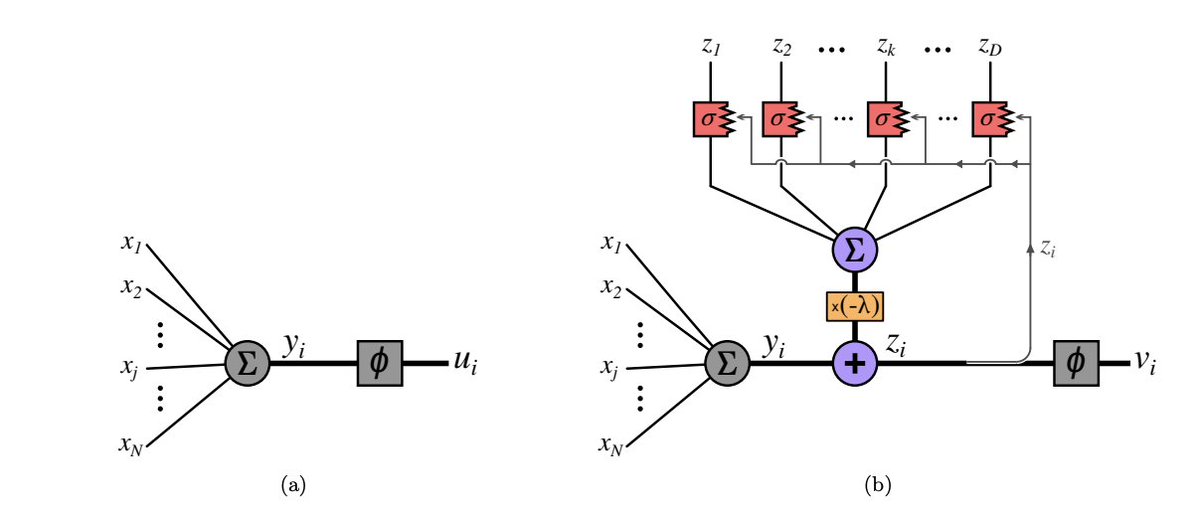
Most neural nets are still based on the model of a neuron as proposed in the 1950's: u = activation(w·x b) In a new paper, researchers propose a more accurate model of a biological brain neuron and found that it has quite a few advantages, like needing less training data.
33
122
1,264
90,817
Mark Pors 🦖 retweeted
There is no inevitability in AI. We all have agency in what comes next: Path 1: closed-source APIs, concentration of power, and a future decided by a handful of people in Silicon Valley and DC Path 2: open-source AI, where everyone gets to participate, own, and build together, including orgs like the city of Rio. Pick your path anon!
SITUATION DETECTED: The city of Rio de Janerio has post-trained a model. Based on Qwen 7/2, Rio 3.5 Open 397B adds SwiReasoning on top of the base Qwen model — a framework that dynamically switches between standard chain-of-thought and latent-space reasoning, guided by entropy-based confidence signals, so the model only "thinks out loud" when it needs to and otherwise reasons silently in hidden space for better token efficiency.
55
90
820
67,508
Mark Pors 🦖 retweeted
Startups are soon going to hire randos from rural America. Job title “guy with Mythos access”.
55
160
4,822
141,607
Mark Pors 🦖 retweeted
I am all in on AI for years & want AI to help humanity eliminate all diseases & reverse aging. I was so excited about Fable 5 releasing today. Yet, I can’t even say the word “cancer” to Fable 5, because I am a biomedical scientist! Anthropic is the only AI company that I fear!
To @AnthropicAI: don't be evil. You are acting like the biggest villain of the AI world.
42
67
717
50,192
Mark Pors 🦖 retweeted
One of my personal favorite features announced at WWDC will I suspect be a sleeper hit: container machines, allowing your Mac to run a lightweight, persistent Linux environment with your home directory and repos automatically mounted: github.com/apple/container/b…
228
815
9,697
728,317
Mark Pors 🦖 retweeted
Barbell strategy for killing it in an age of superhuman AI: Simultaneously get as close to AND stay as far away from AI as humanly possible. 1. Get close — play with AI models, use them to help you think, ask them to teach you about the world, get them to help you create, work with them to write code, understand what makes them tick, embed them into your everyday life, have fun. 2. Stay far away — learn to tell stories, make eye contact, build a team, lead with courage, connect far-flung ideas, build lifelong friendships, debate persuasively, think forbidden thoughts, handwrite ideas, confess your fears, fall in love. Spend less time trying to master mental transformations that are purely mechanical — building spreadsheets, analyzing trades, balancing accounts, writing code by hand, following playbooks, searching for needles in haystacks. These are the emerging no-man's land, squarely the domain of AI. Venture to the extremes. That’s where all the fun is anyway.
148
414
3,580
552,083
I'm probably not the first to think about this, but haven't read about it yet: software development will move to constant complete rewrites of a codebase from scratch. With lessons learned from the last version. This allows you to vibe code a first release and test it against a small user group. Learn from feedback. Make a new spec and code from scratch, etc. So the opposite of what Joel on Sw said ages ago. Which was true then.
1
1
82
@spolsky what do you think?
57
Mark Pors 🦖 retweeted
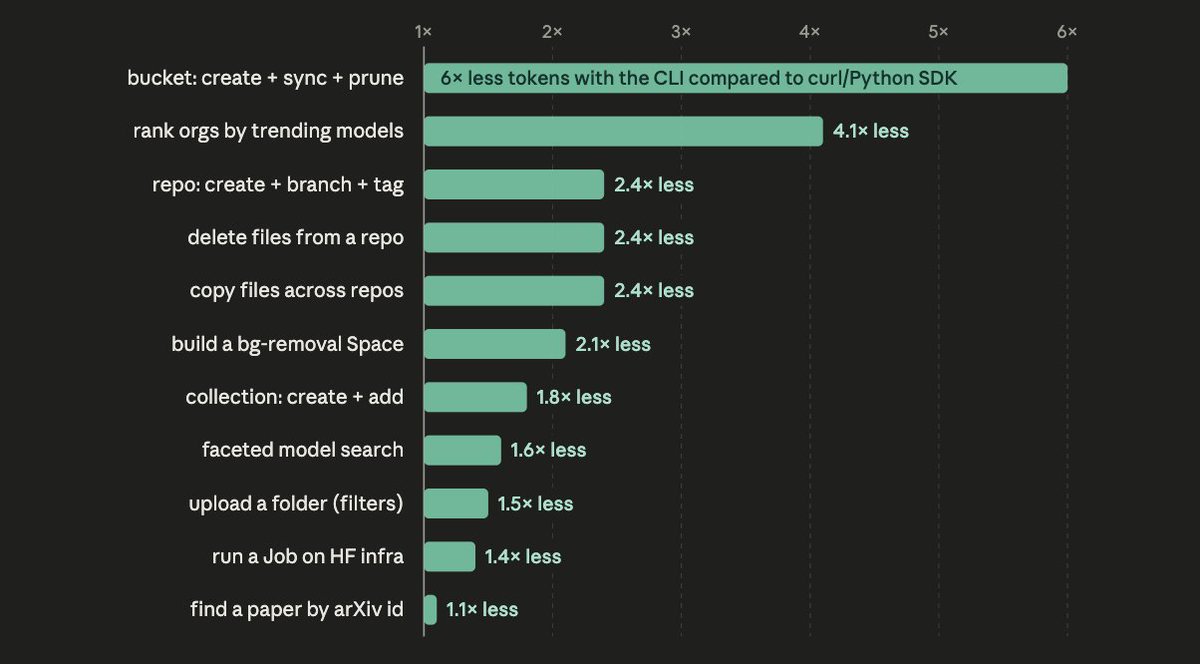
Token costs are why there will be no saas apocalypse / good dev tools are cached intelligence for agents! The popular theory goes: agents can write code, so they'll just rebuild every tool from scratch and hit raw APIs. no more dev tools, no more CLIs, no more software layers. just agents and endpoints! We just tested this and the data says the opposite. We benchmarked Claude Code and Codex on real Hugging Face Hub tasks (~1,000 graded runs), with two setups: the agent-optimized hf CLI vs the agent hand-rolling curl or SDK calls from scratch. Hand-rolling burns up to 6x more tokens on multi-step tasks and fails more often (84% vs 94% task success). And that's just dropping one abstraction layer. It would obviously be orders of magnitude more tokens and a dramatically higher failure rate if the agent tried to bypass HF altogether and rebuild model hosting, versioning, and distribution from scratch. Every time an agent re-derives a workflow from raw API calls, you pay for that reasoning in tokens. every single run. a good CLI compresses that entire chain into a few high-level commands the agent can't get wrong. In a world where everyone is complaining tokens are too expensive, abstraction is leverage: thousands of hours of design decisions your agent doesn't have to re-reason about at inference time. Good tools are cached intelligence for agents! So no, agents won't rebuild everything from scratch. they'll gravitate to the most token-efficient tools, because that's what their owners pay for. The software that survives won't just be accessible to agents, it will be accurate and cheap for them to drive. We're seeing it happen with HF, which is becoming the platform for agents to use AI: ~49M requests in just two months, and growing fast! huggingface.co/blog/hf-cli-f…
95
93
543
115,177
Great article about why group chat at work is not great. I mostly agree, but the feeling of belonging in a full remote company is important as well, and always on chat helps there.
Chat-first work tools are not the answer. The flaws are baked into the system, you can't undo them. It would be like asking a kangaroo to fly. It can get off the ground, and look like flight for a moment, but it comes crashing right down. Here's why: 37signals.com/group-chat-pro…
49
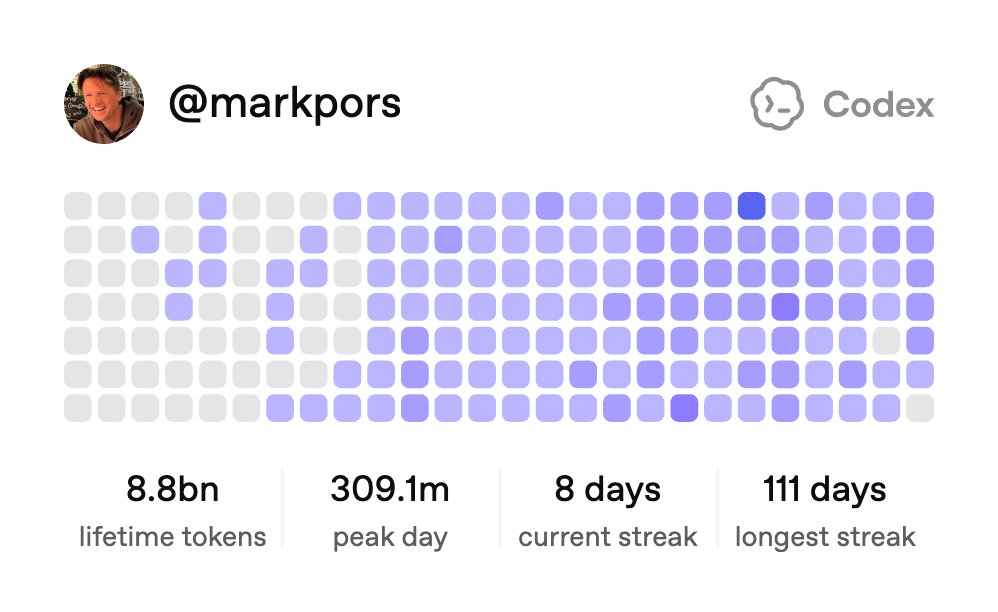
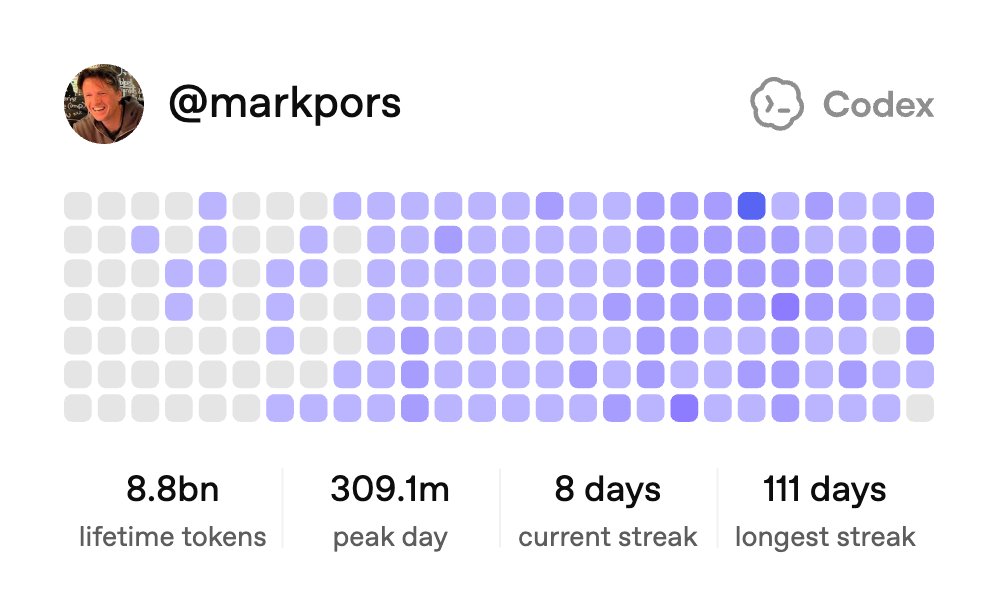
Check out my Codex activity
34
There is a trend in RAG moving away from raw data chunk search at runtime toward pre-compiled/pre-structured data with simplified runtime search. Typical RAG performs retrieval over the entire data corpus at runtime, but we now see a shift to doing the work up front to make runtime faster and more efficient (and probably more accurate). Read on👇
1
1
1
70
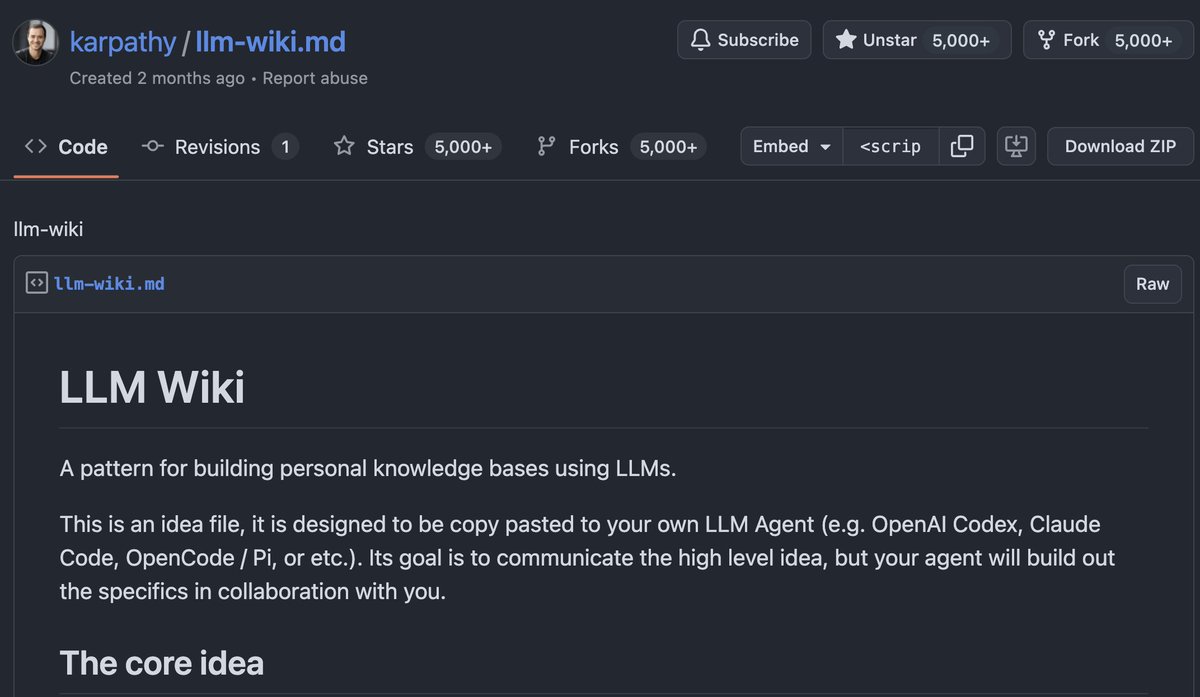
The alternative is to maintain a knowledge source when new information becomes available and structure it so it is easy to query at runtime. Karpathy's LLM Wiki is a great example of this, which I love and use myself. Now I just found an interesting paper that took a different approach: a typed graph compiled memory formal cache/index machinery. Summary and link to paper here: paperzilla.ai/p/4af0238a/gro…
1
65
Automated bug fixing works pretty good nowadays. I have Codex automations that check my email for Sentry alerts and custom backend monitoring email alerts every hour, and fix actual bugs. Still blows my mind 🤯
48
Most neural nets are still based on the model of a neuron as proposed in the 1950's: u = activation(w·x b) In a new paper, researchers propose a more accurate model of a biological brain neuron and found that it has quite a few advantages, like needing less training data.
33
122
1,264
90,817
Mark Pors 🦖 retweeted
The Internet just discovered GPT is better than Opus 🤨 Would love to understand the process that allowed the obvious to take months, otherwise my trust on the average AI expertise, which is already very low, may drop further.
130
55
894
102,601
Interesting
Make skills more deterministic ? read this. medium.com/@shreyas.kapale/s…
126
so true
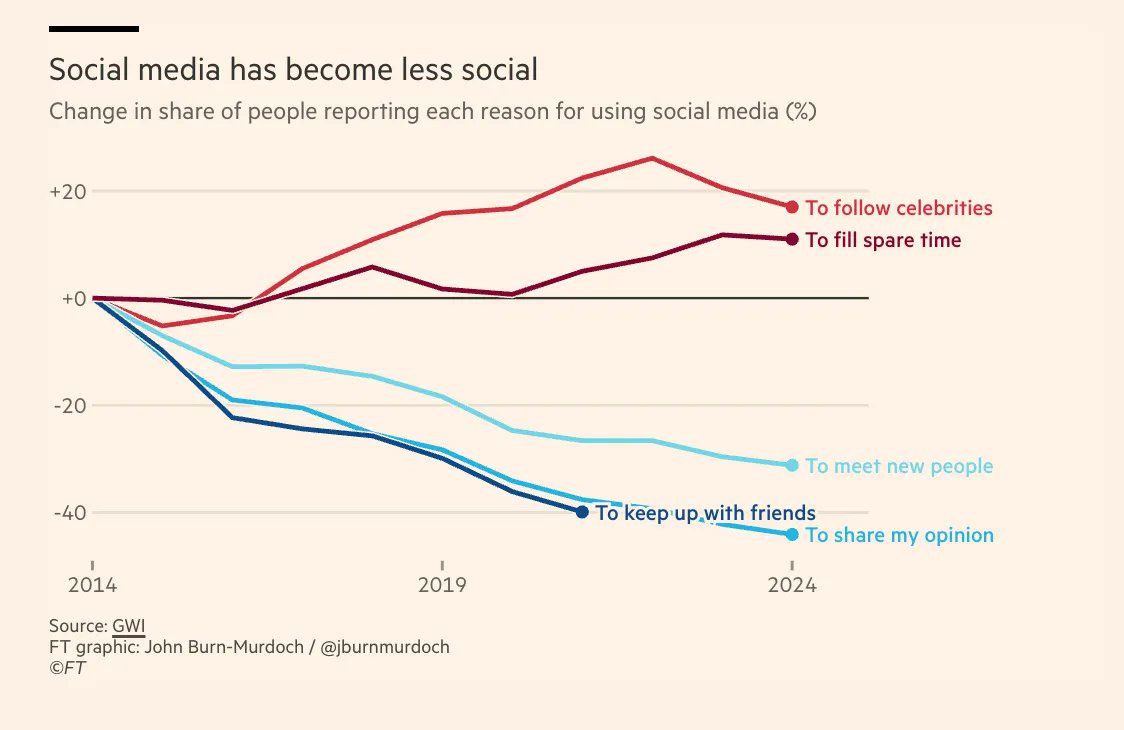
god what a bleak chart
101
Mark Pors 🦖 retweeted
one of the most interesting things about ai products today is that almost none of them are *live*. there’s nothing running continuously, reacting to context as it changes.. maybe a scheduled digest here or a timer there, but that’s just pull dressed up as push. everything is fundamentally a vending machine where you walk up, ask, get an answer, & then leave. getting this right is obviously tricky & the business model behind must fit to justify the burn but this is where really interesting application layer problems live rn.
153
50
926
128,199