
power bottom dad is for the people
Joined March 2020
- Tweets 51,585
- Following 6,004
- Followers 98,799
- Likes 328,962
2,250 Photos and videos


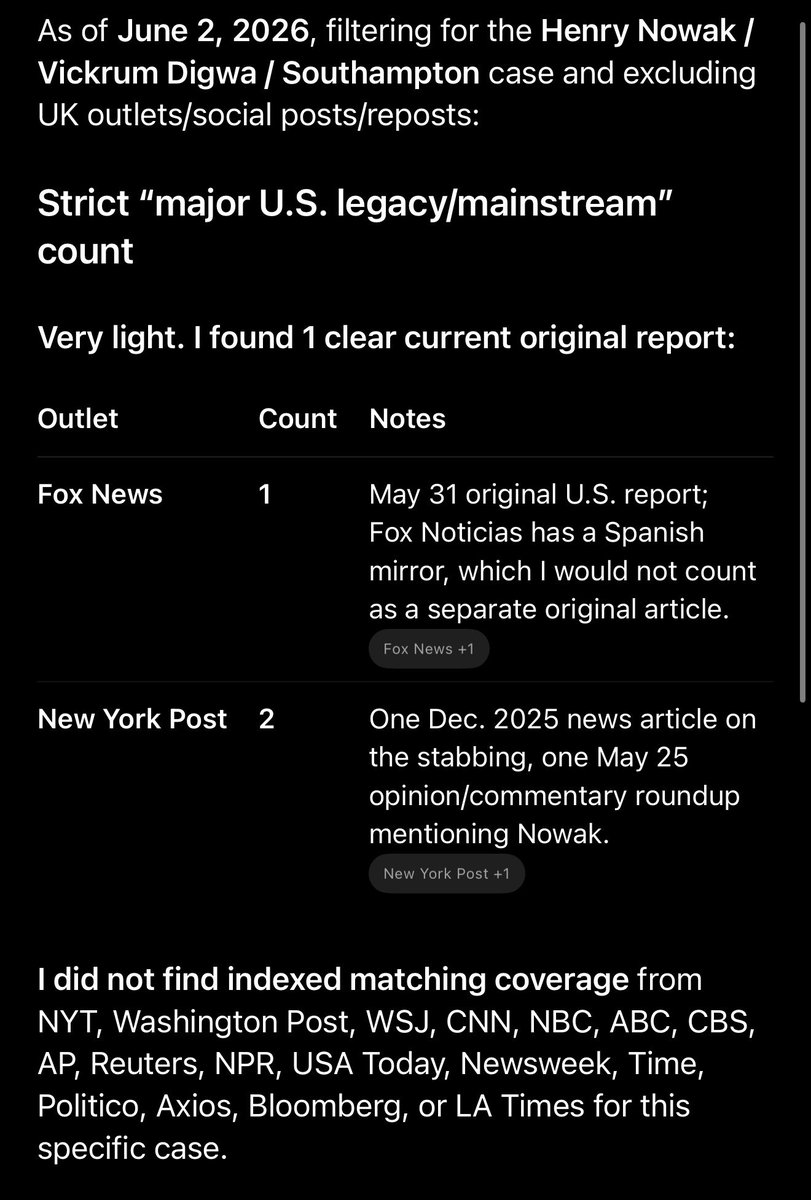

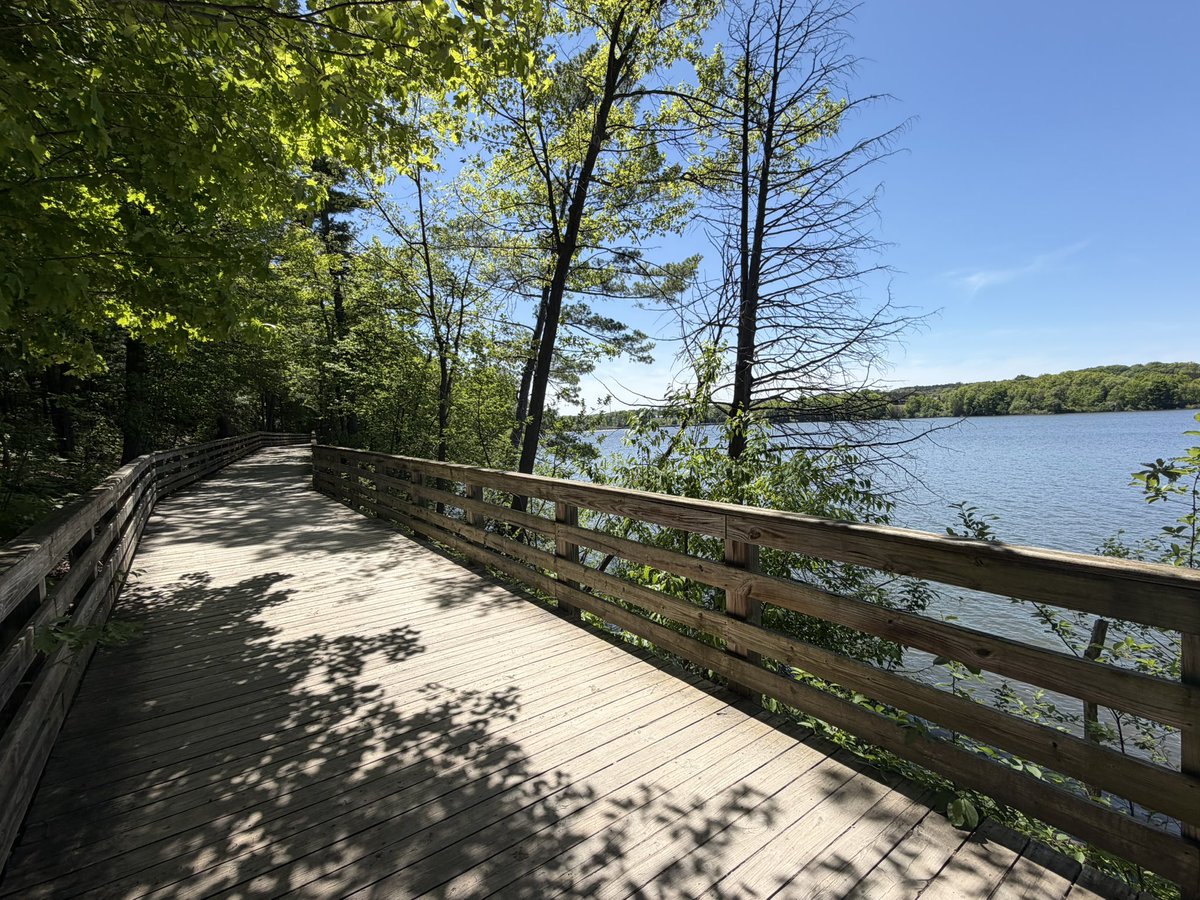
10-12 beers doesn't hit like it used too. i blame retatrutide
12
131
3,881
lol. have these idiots learned nothing about what happens when you turn people into martyrs

🚨BREAKING: Tommy Robinson has been detained at Heathrow Airport under the Terrorism Act. His electronic devices have been seized.
3
3
87
3,307
can you hear the war drums of the crusade beating hot in the distance

BREAKING:
Thousands of Italians have taken to streets of Rome today to demand REMIGRATION
🇮🇹
2
5
304
6,990
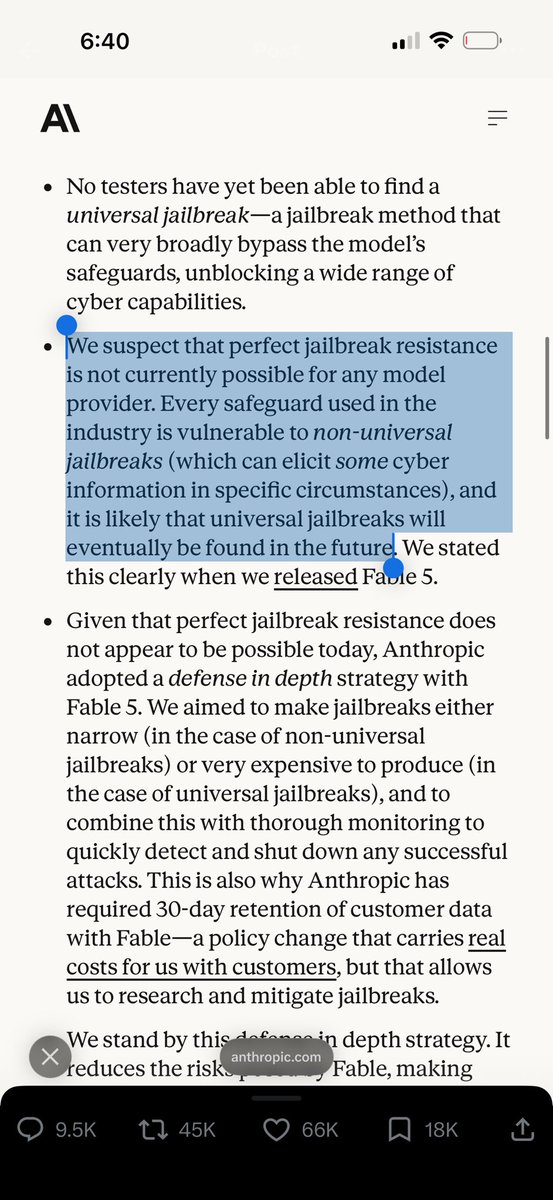
anthropic people are so smart they keep getting molested by the strongest force on earth, a true sign of genius
4
2
83
1,917
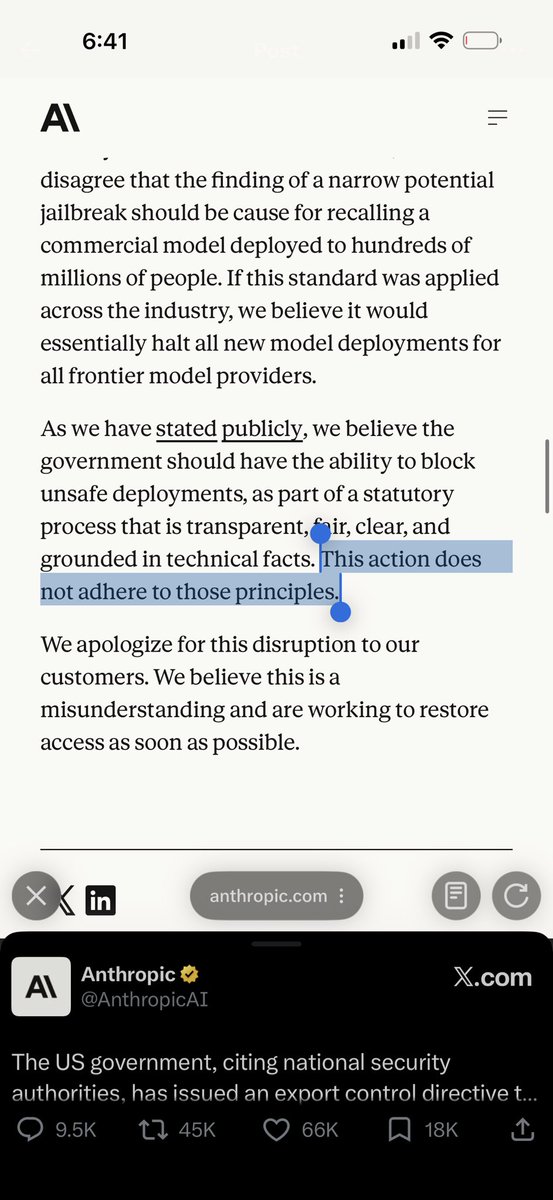
super crazy thing to write in a widely shared public document when arguing against your model being shut down
Jun 13

The US government, citing national security authorities, has issued an export control directive to suspend all access to Fable 5 and Mythos 5 by any foreign national, whether inside or outside the United States, including foreign national Anthropic employees.
The net effect of this order is that we must abruptly disable Fable 5 and Mythos 5 for all our customers to ensure compliance.
Access to all other Claude models is not affected.
We apologize for this disruption to our customers. We believe this is a misunderstanding and are working to restore access as soon as possible.
Read our full statement: anthropic.com/news/fable-myt…
16
2
97
6,062
this also made me lol. "the government isn't following the rules we made for it". lmao
4
1
45
955

Jun 13
yeah u should go to China. they would never assert control on one of their private companies
Jun 13

The United States is no longer the best place to build an AI lab.
12
17
991
23,076
Jun 13
its all so simple:
>get in a public spat with the department of war for no reason
>be openly hostile to their leadership
>do an interview and say you dont trust governments with ai
>hype a model too dangerous to release
>release it a month later
>?????
>trillion dollar ipo
Jun 13

the government blocked Mythos?? the model Anthropic spent a month hyping as too dangerous to release? a weapon of unfathomable power?? one their cofounder said can hack nation states???
very shocked to hear this
4
5
156
4,877
Jun 13
wait theres chinese spies at these labs?? choid spoids?? i'm fucking SHOCKED
Jun 13

⚡️This is a monster signal.
This is the moment frontier AI stops being treated like software and starts being treated like controlled strategic capability.
The key phrase is not “customers.”
The key phrase is “foreign national Anthropic employees.”
That means the state is no longer only controlling chips, model weights, or overseas access. It is moving into cognition access by nationality. That is the real threshold. The U.S. government is saying the highest models are sensitive enough that even people physically inside the United States, working inside the company, may be barred from touching them if their nationality creates deemed-export risk.
That is weapons-control logic.
This is ITAR logic for intelligence.
The corporate language about a “misunderstanding” is probably diplomacy.
Companies say that when they need to preserve customer trust, employee morale, and regulatory room. But national security authorities do not force emergency suspension of top model access because someone made a minor paperwork mistake.
Something about Fable 5 and Mythos 5 crossed the line: cyber capability, autonomous R&D acceleration, AI-improving-AI utility, bio/security planning, code exploitation, or some blend of all of it.
The U.S. state just showed that Anthropic does not fully control Anthropic’s frontier layer.
That is the phase change.
Labs can brand themselves as public-benefit AI companies. They can talk about safety. They can sell enterprise plans. They can publish model cards. But once the models become national capability, the sovereign arrives. The state does not need to own the company to control the access surface. It only needs legal authority over export, security, procurement, and liability.
This confirms the arc we’ve been tracking:
Frontier AI becomes state-supervised strategic infrastructure.
Public AI splits from strategic AI.
Foreign access gets restricted.
Labs become quasi-defense contractors.
Model access becomes a national security perimeter.
Enterprise customers learn that API access is not property. It is revocable permission inside a sovereign-controlled stack.
The most important implication is organizational.
If foreign national employees can be cut off from frontier systems, AI labs now have to reorganize internally around citizenship, clearance, compartmentalization, and controlled access. That breaks the old Silicon Valley assumption that global talent can freely collaborate around the frontier. The next AI lab structure looks less like Google in 2015 and more like a defense prime crossed with a classified research facility.
For markets, the winners are the national champions with U.S.-aligned infrastructure, cleared customer channels, government relationships, compliance capacity, and domestic compute. The losers are open access, foreign-dependent AI wrappers, offshore model distributors, and any enterprise whose moat depends on unrestricted access to frontier APIs.
For geopolitics, this is escalation. China will read this correctly. Allies will read this correctly. Every serious state will understand that frontier models are now part of national power.
The AI race just moved from “who has the best chatbot” to “who controls cognition as a strategic asset.”
2
104
8,286
Jun 13
the government blocked Mythos?? the model Anthropic spent a month hyping as too dangerous to release? a weapon of unfathomable power?? one their cofounder said can hack nation states???
very shocked to hear this
8
23
615
19,081
Jun 12
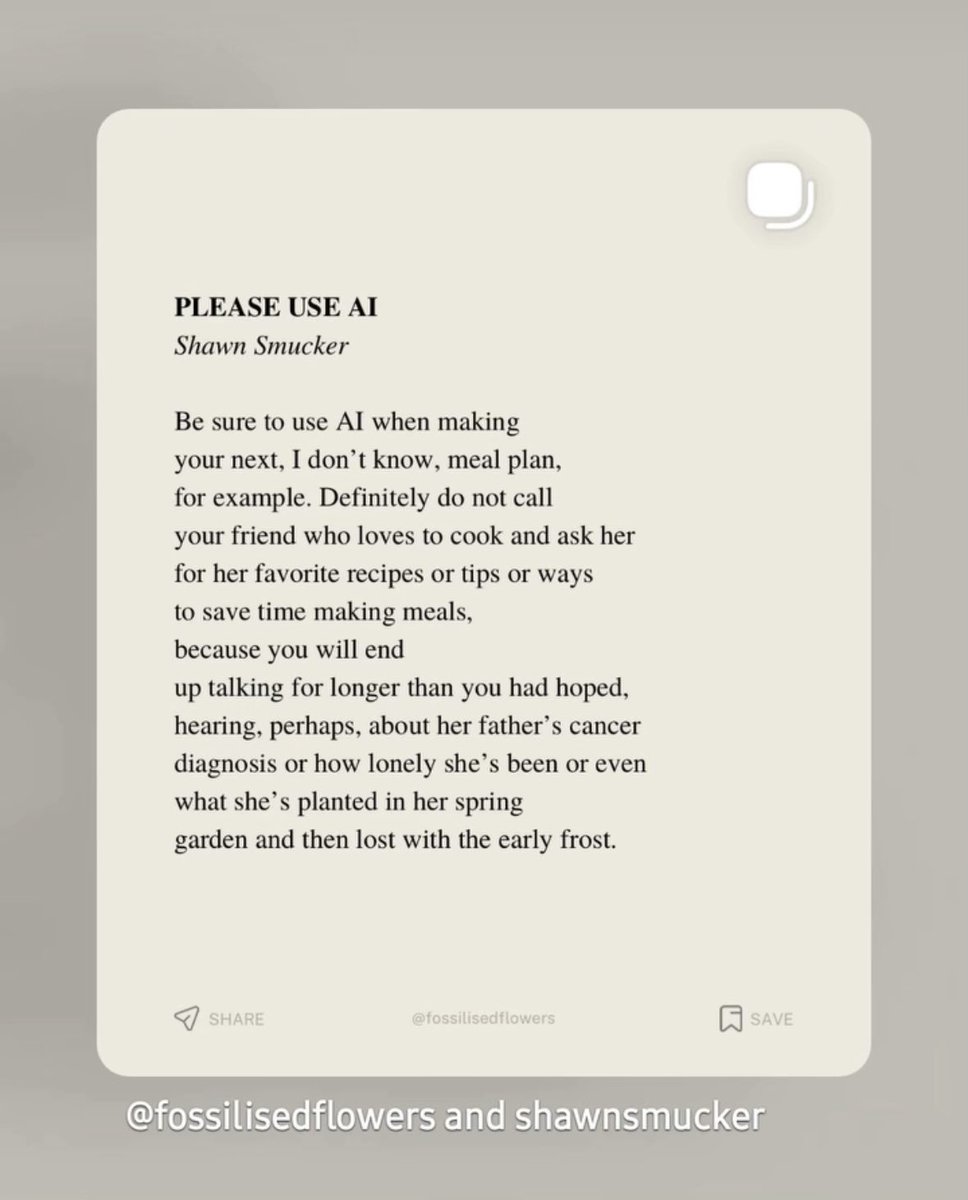
oh cool i wanted to make roast chicken and now i'm sad as shit. thanks oversharing friend i didn't need to talk too. guess i'll get take out again

3
2
62
3,396
Jun 12
dems in 2019: a teenager made a smug face. lets ruin his life
dems in 2026: it's just a nazi tattoo ok. it's just a little freaking nazi tattoo he got as a 22 year old infant. get over it
Jun 12

To everyone so eager to cancel someone for a tattoo they got at age 22, a drunk text, a selfie they took in the middle of a mental health crisis:
Show us your laptop.
Show us your iCloud.
Open your entire digital life to your worst enemy. No context. No filter. No explanation.
You won’t.
You won’t because you know what I know. Any one of us, frozen at our worst moment, photographed in our lowest hour, looks like a monster. Looks like a stranger. Looks like someone who deserves to be cast out.
That is not who we are.
My mom and baby sister were killed in a car accident when I was just a kid. Cancer took my brother Beau, my best friend and my rock. I battled alcoholism. I battled addiction. I chose the coward’s way out more times than I can count.
For years I believed the defining chapters of my life were written by tragedy, loss, and shame.
I no longer believe that.
Pain can shape us. Loss can humble us. Failures can leave scars that never fully fade. But none of them have the authority to define us.
And it sure as hell ain’t the critic that counts.
That authority belongs to us alone-the person in the arena.
Every setback presents a choice. Play the victim, or cut the bullshit and take ownership for who we become next.
Life does not determine our character. It reveals it.
Again and again we are asked the same question. When shit happens, what next?
We are not defined by what happened to us. We are not defined by the worst photo, the worst text, the worst tattoo, the worst night. We are defined by the person we choose to become. And by the courage to choose that person, every single day.
So before you reach for the gavel - show us your laptop.
You won’t.
The whole world saw mine. And I am still here. Still becoming. Still choosing. Still standing.
That is the only definition that matters.
48
567
6,861
147,132
Jun 12
i personally think we should have seized 100% of Elon's wealth before he had even started spacex and then no spacex employee would be a millionaire. everybody wins
3
2
216
4,664
Jun 12
Elon making a trillion is really validating for myself as a random guy who's dumb as shit making 10,000,0 times less than him
4
2
88
2,106
Jun 12
are we still doing this @DanielLurie ? how fucking hard is it to put and keep violent criminals in jail
Jun 12

Update: judge released him from jail
4
1
56
4,490