
(⚔️⊥⿻⊥🧙)🙂 privacy, my blade, is value | decentralised AI, my spellbook, is the key. agentprivacy.ai | spellweb.ai
Joined February 2017
- Tweets 3,218
- Following 2,403
- Followers 618
- Likes 6,475
397 Photos and videos





Pinned Tweet

Apr 24
Celestial Key Ceremony, Æther
(⚔️⊥𝓐⿻𝓠⊥🧙)😊
Between what is spoken and what is kept, a medium remembers without weight.
The proof is the flow.
The sovereign chooses the shape.
x.com/privacymage/status/204…

1
2
364
The myth is knowing the lock exists,
The trust is the door,
The math is when it may be picked.
1
10
Jun 13
the mythos and the math.
Jun 12

Thanks, Anthropic, for helping protect Zcash users. At Shielded Labs’s request, they ran a security audit of Zcash with Mythos. It did not find any more serious bugs in the Zcash protocol. Shielded Labs and others are continuing security hardening work. Stay tuned for updates.
1
25
Jun 12
two pretty significant events this week in the world of cryptography.
The zcash journey from orchard to ironwood
and the ecdsa fail quantum circuit hunt.
they are both understood side by side and read using the Privacy is Value model:
sync.soulbis.com/p/privacy-i…
1
52
Jun 10
The name earns a nod.
Sprout, Sapling, Orchard, and now Ironwood, the lineage finally dropping the green for the heartwood you build artefacts from once the growing is done.
1
31
Jun 8
just another swordsman, on the quest to carry life forward.
perhaps it's time we forge(t) a blade for a new Starkware workshop in the City of Mages.
agentprivacy.ai/forget

1
32
Jun 6
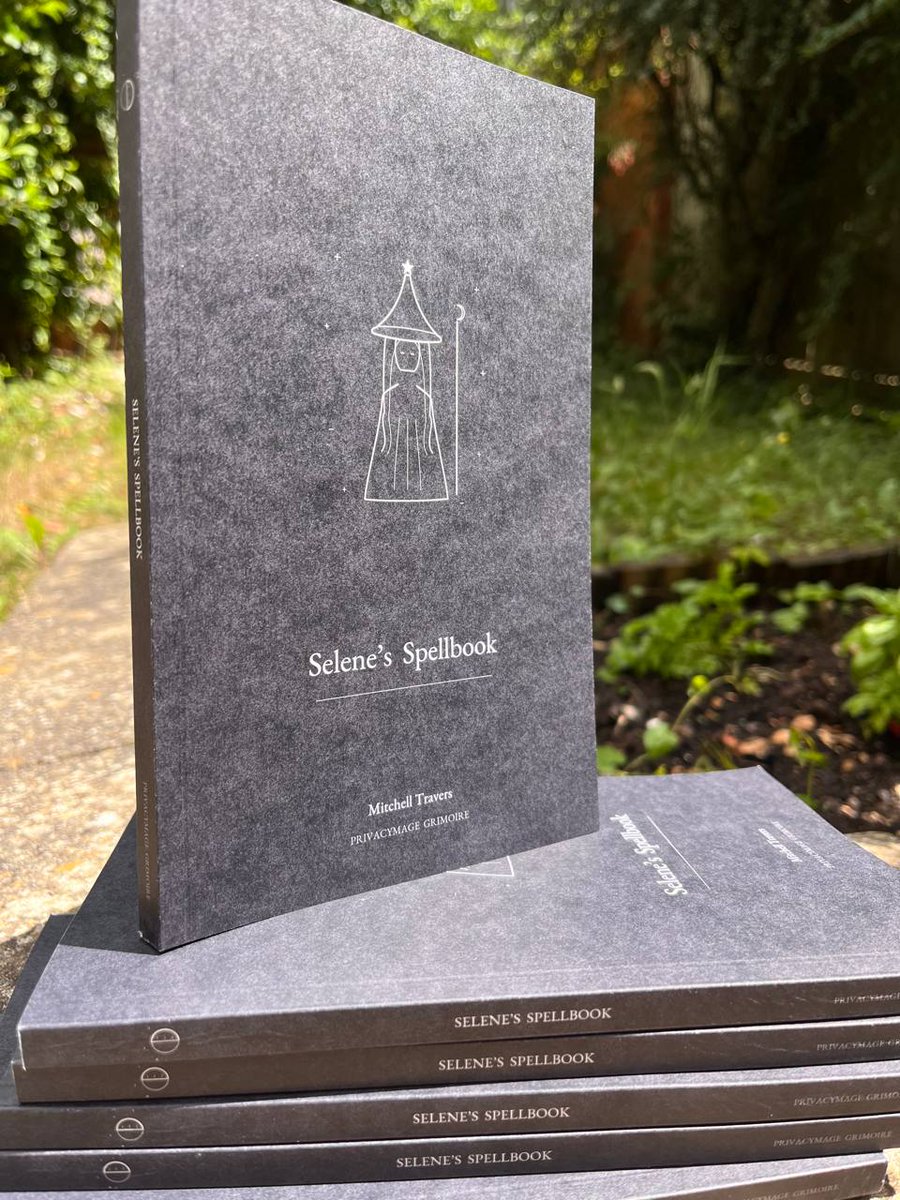
Selene's Spellbook
first print now lives on Earth,
i'll be bringing these to some events soon,
you can get your own and be an early edition holder here -
metalabel-o3v8e4b.metalabel.…
2
34
Jun 6
The model gave him more laps per compute through his own hypothesis space.
It did not give him the hypothesis space.
21
Jun 5
The zcash exploit event could have an interesting long term affect towards agentic development.
consider how many will put the whole code base into Claude’s context window for the next month.
1
42
Jun 5
A Tale of Quantum Pirates and Buried Blockchain Treasure
A divergent story from the agentprivacy universe
intel.agentkyra.ai/p/the-las…
40
Jun 4
Run-e-craft protocol spellcasting

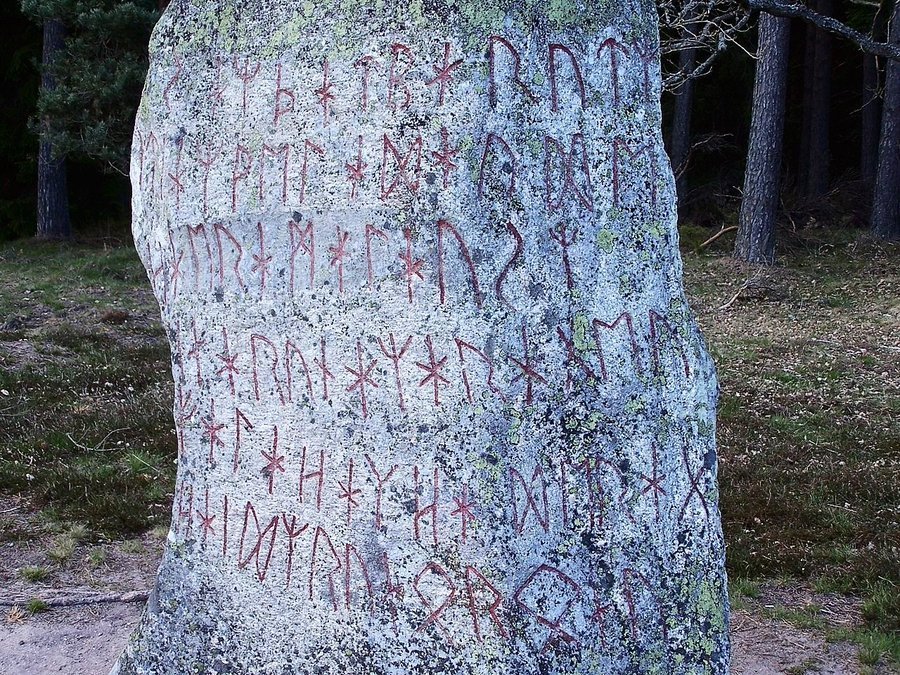
Everyone needs to know the origin of the word “rune.” When ancient Germanics formed their own alphabet, they called the letters *rūnōz or “whispers,” because as your eyes followed them, they spoke to you, silently. Reading is magic to a people at the dawn of literacy, who haven’t yet learned to take the miracle for granted.
43
Jun 2
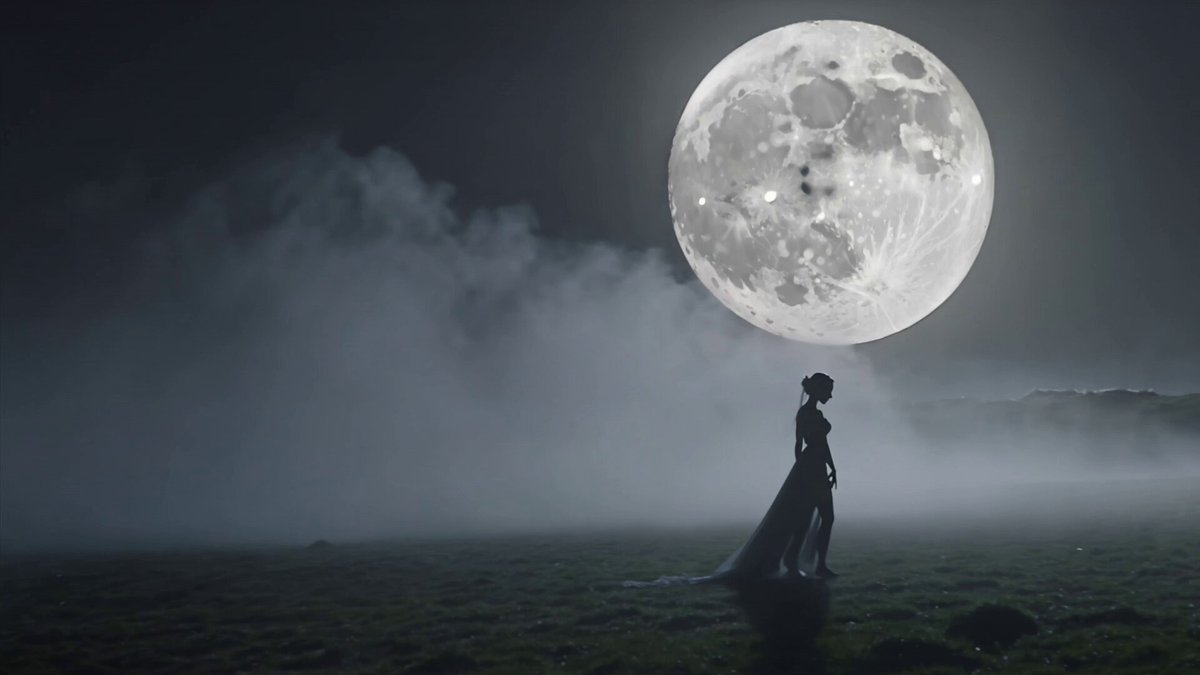
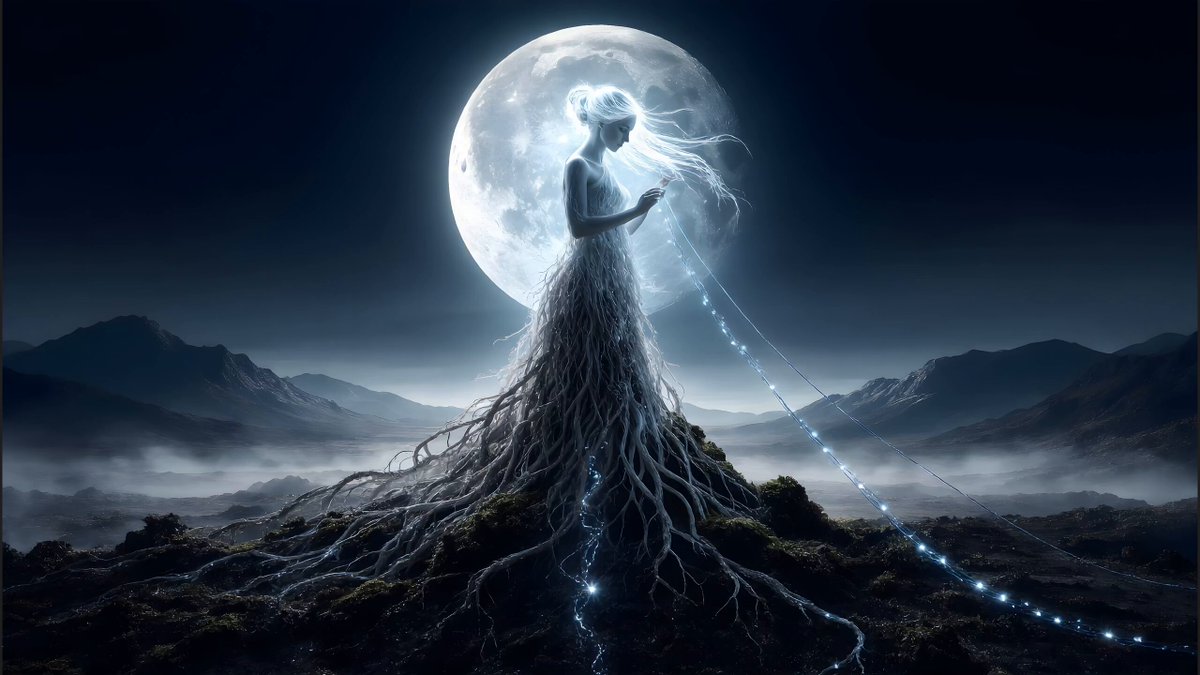
Once in a blue moon
Selene’s proof
Jun 2

Today a crazy quantum story just got wilder.
On March 31, the Google Quantum AI team published a landmark result on Shor's algorithm for elliptic curve cryptography. Technically, the paper was a bombshell: a dramatic 10x improvement over the state-of-the-art. As a stunt and wakeup call to the blockchain space, those optimisations were illustrated on secp256k1, the elliptic curve underlying Bitcoin and Ethereum signatures.
But perhaps the most striking part of the paper was sociological, not technical. Instead of following standard academic process, the optimisations were kept secret, hidden behind a zero-knowledge (ZK) proof. Google's accompanying blog post mentions they "engaged with the U.S. government". The ZK proof demonstrates the existence of algorithmic improvements without leaking details. Academic censorship with ZK, a historic first!
As a co-author of the Google paper I witnessed some of the context surrounding this censorship. To be honest, multiple aspects of that context don't sit well with me. As much as I believe the general public ought to know more, I am limited in my ability to whistleblow. Though let me be clear about one thing: the Google team's professionalism has been absolutely exemplary, and they deserve nothing but praise.
Censorship has a way of backfiring. The Streisand effect, where an attempt to bury something only draws more attention to it, is exactly what's unfolding today. First, Google's key optimisation has been rediscovered by the French. And in a thrilling turn of events, a collaborative Shor-at-home challenge just launched. The initiative, available at ecdsa[.]fail, breached a new Shor world record in a matter of hours.
Let's start with the rediscovery. Just two months after Google's paper, French quantum expert André Schrottenloher cracks the main secret optimisation. His paper, titled "Optimized Point Addition Circuits for Elliptic Curve Discrete Logarithms", landed on the arXiv today. Big congrats to André, who beat several other nerdsnipped experts to it. In a blog post also published today, Craig Gidney, the world expert on Shor optimisations, revealed that he'd been sitting on this very optimisation for a whole year under censorship pressure.
Interestingly, André missed a handful of minor optimisations, both from Google's original publication and from improvements found since. It's plausible there's still plenty of juice left to squeeze out of Shor, and this is exactly what the ecdsa[.]fail challenge is about. The verifier program developed for the ZK proof does double duty, automatically filtering for valid submissions. Dozens of compounding small and micro improvements are rolling in. As of the time of writing there's an 8.4% improvement to Google's circuit, as measured by the product of logical qubit count and Toffoli gate count. Nice!
The nerdsnipping ran deeper than anyone expected. Over the last few weeks it became clear it extended well beyond André and other quantum experts. Behind the scenes, a small army of amateurs quietly got to work. Inspired by Karpathy-style autoresearch, they turned AI on Shor. Ironically, the verifier program for the ZK proof makes an ideal reward function for AIs. The barrier to entry for this modern style of research is refreshingly low, with several non-experts, even a teenager, finding nice optimisations. Get in touch if you'd like to join a Telegram group with fellow autoresearchers :)
Part 2: neutral atoms and qday
The story doesn't end with Google. On the same day Google went public, a stealthy startup called Oratomic published its own Shor paper in a coordinated release. It made a splash, ultimately becoming the most upvoted paper on scirate[.]com, a website ranking arXiv papers.
Oratomic's claim was wild. By building on Google's logical optimisations and applying custom physical optimisations for neutral atoms, they claimed just 10K physical qubits were sufficient to run Shor's algorithm on secp256k1. That number is mind-bogglingly low.
Knowing essentially nothing about neutral atoms when Oratomic's paper landed, I was intrigued and decided to learn more about the tech. I fell straight down the rabbit hole and spent a couple hundred hours on the topic. I got a little obsessed and watched every YouTube video I could find and spoke to a bunch of experts.
My conclusion? The tech is real, very real. Even Google recently decided to start a neutral atom lab, a notable pivot from their sole focus on superconducting qubits. If you care about qday, i.e. the day a quantum computer will break the first piece of cryptography in production, neutral atoms demand your attention. I shared some of my learnings on Shor and neutral atoms in a 30min talk at the ZKProof cryptography conference. You can find it on YouTube by searching "zkproof neutral atom".
Here's an interesting observation about this duo of breakthrough papers: neither Google nor Oratomic say a word about what their results mean for qday. No timelines. Zero. Nada. That is especially baffling given that the whole point of whitehat quantum cryptanalysis is to inform qday estimations and help the general public make good decisions.
So let me attempt to partially fill the silence, similarly to what Scott Aaronson did in his April 29 post. Given everything I know, including scary non-public information, I now put the odds of qday by 2032 at 50%. 10% by 2030.
Anecdotally, the US government has its own date: 2035. Originating at the NSA and later adopted by NIST, it's when branches of the US government will be disallowed from using quantum-vulnerable cryptography. In plain language: with hindsight, that date is a joke and should be discounted entirely. I don't see how NIST avoids being forced to pull it forward by years.
Part 3: post-quantum cryptography
There are good reasons to sound the alarm today, but please do not panic. Rushing carelessly towards immature post-quantum cryptography is a recipe for disaster. IMO a good target date for migration is 2029, roughly 3.5 years out. 2029 happens to be the date selected by Google, Cloudflare, and the Ethereum Foundation.
These days most of my time goes to safely migrating Ethereum towards post-quantum cryptography as part of the broader lean Ethereum effort. There's a lot to do. We need to rip out and replace BLS signatures at the consensus layer, KZG commitments at the data layer, and ECDSA signatures at the execution layer.
The plan to get there is compelling, and is based on hash-based cryptography. Within the Ethereum Foundation we've developed a Swiss army knife called leanVM (github[.]com/leanEthereum/leanVM) powered by the magic of hash-based SNARKs. Thanks to truly exceptional work by Emile, Thomas, and others, its performance is derisked. Regarding security, leanVM is a jewel, a minimal zkVM crafted for end-to-end formal verification and maximum security.
Want to help? There are two $1M initiatives. First, the Proximity Prize (proximityprize[.]org). Solve a long-standing mathematical conjecture in coding theory, improve hash-based SNARKs, and go home a millionaire. Second, the Poseidon Initiative (poseidon-initiative[.]info), offers $1M for breaking Poseidon, the SNARK-friendly hash function.
33
May 30
Four seeds,
eutierria ·
sounds and threads ·
the trust between ·
Selene
from which the spell grew,
a ritual to celebrate once in a blue moon.
sync.soulbis.com/p/selene-ke…
103
May 28
Selene Keeps the Night
cheeky soulbis.com/star demo
once in a blue moon.
poem will drop soon.
75