1,520 Photos and videos




prof-g retweeted

Jun 7
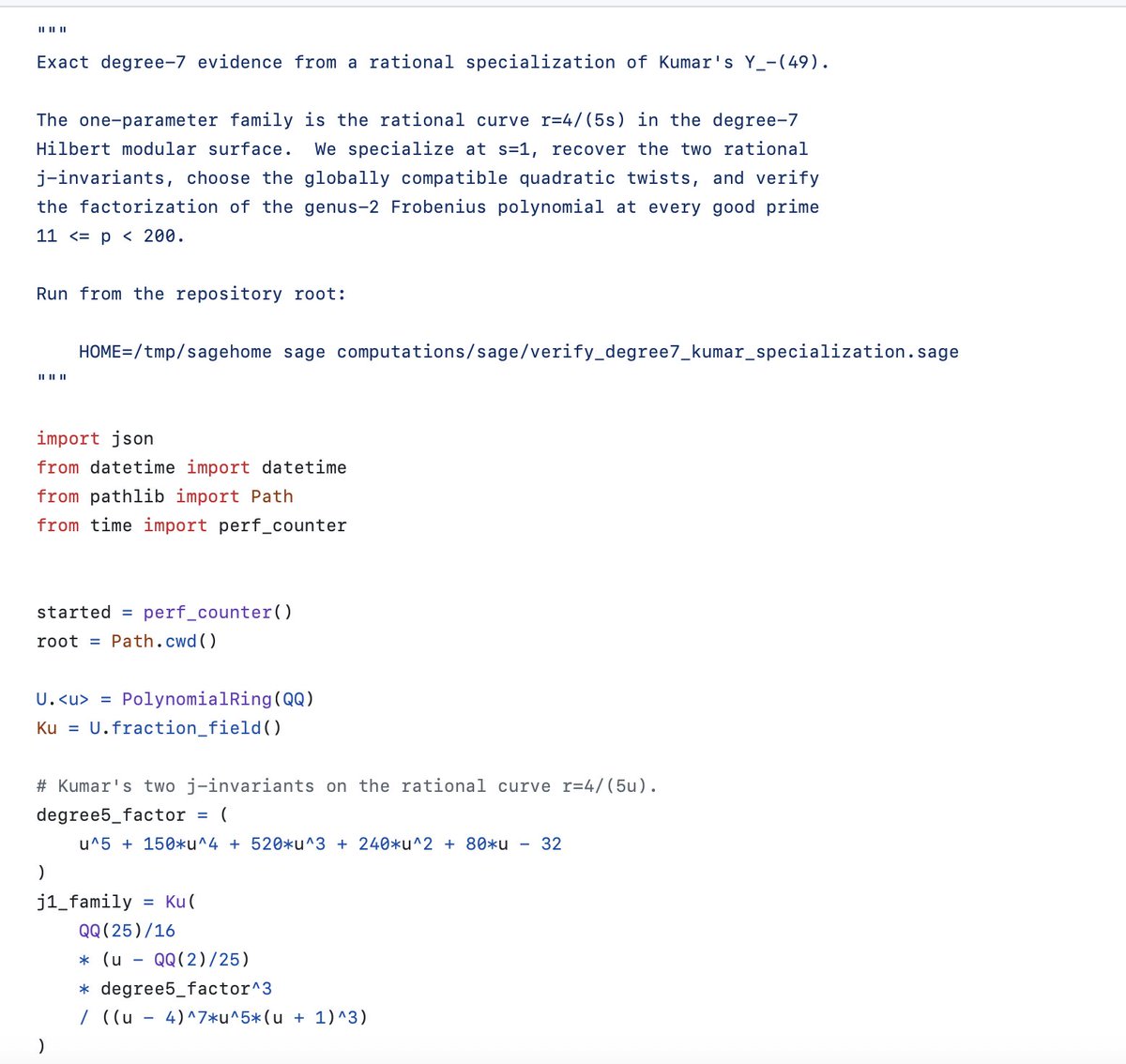
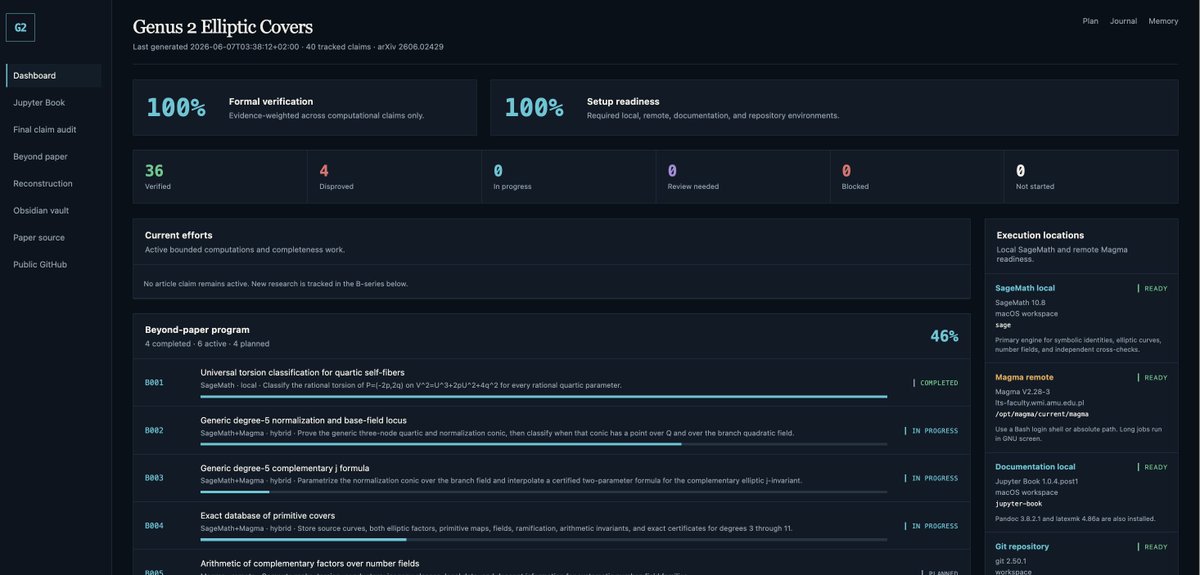
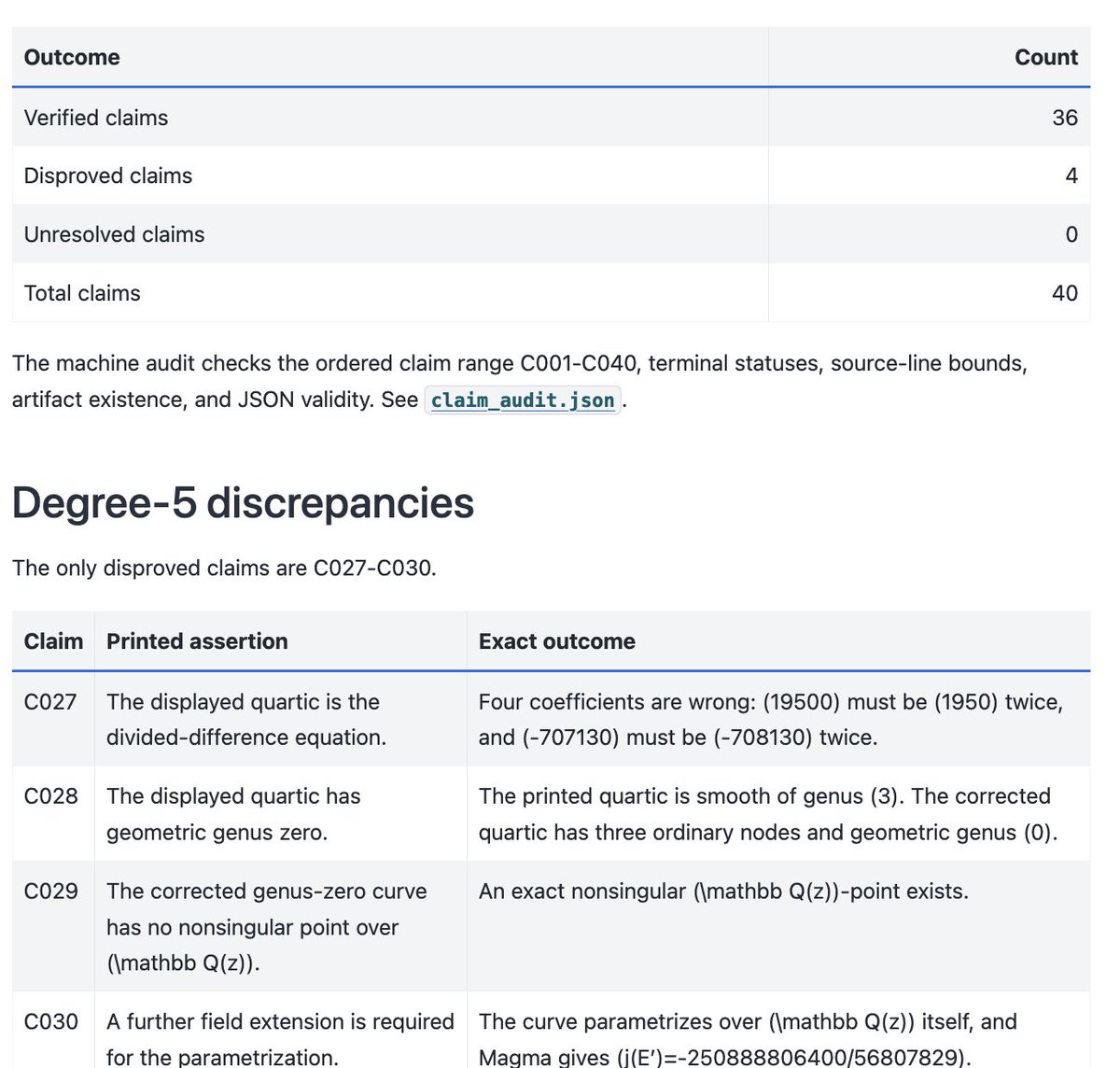
Two months ago, when I wrote about solving my Frontier Math Tier 4 problem, I did not expect the landscape to shift this quickly.
Computational arithmetic algebraic geometry is turning into an incredible hotbed of ideas. This area, shaped by deep questions around elliptic curves, algebraic numbers, varieties, and the work of people like Brian Birch, Jean-Pierre Serre, and many others, has always had a strong computational undercurrent. But what is happening now feels different.
The agents I have been testing, especially Codex, are reaching a level where they often outpace my own ability to write code quickly and effectively. At the same time, I can still curate, inspect, redirect, and judge the mathematics. That combination is extremely powerful.
I can jump into almost any algorithm I need, optimize it, decompose it, rebuild it, and move between Magma, SageMath, and Rust with a kind of flexibility that still feels unreal. This is not "vibe coding". It is extreme engineering guided by mathematical taste.
In my recent projects, this has already helped me close two big questions. The technical conversations I can now have with Codex about Magma code, computational algebra, and arithmetic geometry are honestly stunning.
Big computational problems in arithmetic geometry are going to fall much sooner than many people expect.
9
21
183
21,310
james joyce would like a word...
or rather many words & many worlds...

World Labs CEO Dr. Fei-Fei Li: "The world is not made of words."
"Language models have given machines an extraordinary command of concepts, vocabulary, and reasoning, but the physical world, virtual or real, runs on a different substrate."
"Where language models learn the statistical structure of text, world models learn the statistical structure of space and time: how light falls on a surface, how a garden looks from an angle no camera has captured, how objects respond to force and follow the laws of physics."
"Language gave machines a way to talk about that world. World models are how machines will finally come to understand, imagine, reason and interact with it."
Full piece: drfeifei.substack.com/p/a-fu…
2
6
17
2,757
prof-g retweeted

Jun 2
Giving a talk in the @Stanford SCIEN seminar this Wednesday (1/3) at 4:30pm:
scien.stanford.edu/index.php…
The topic is “normal coordinates”: a shape representation little-used outside of mathematics—but which turns out to have nice applications in geometry processing & learning.
25
108
912
53,699
prof-g retweeted

May 27
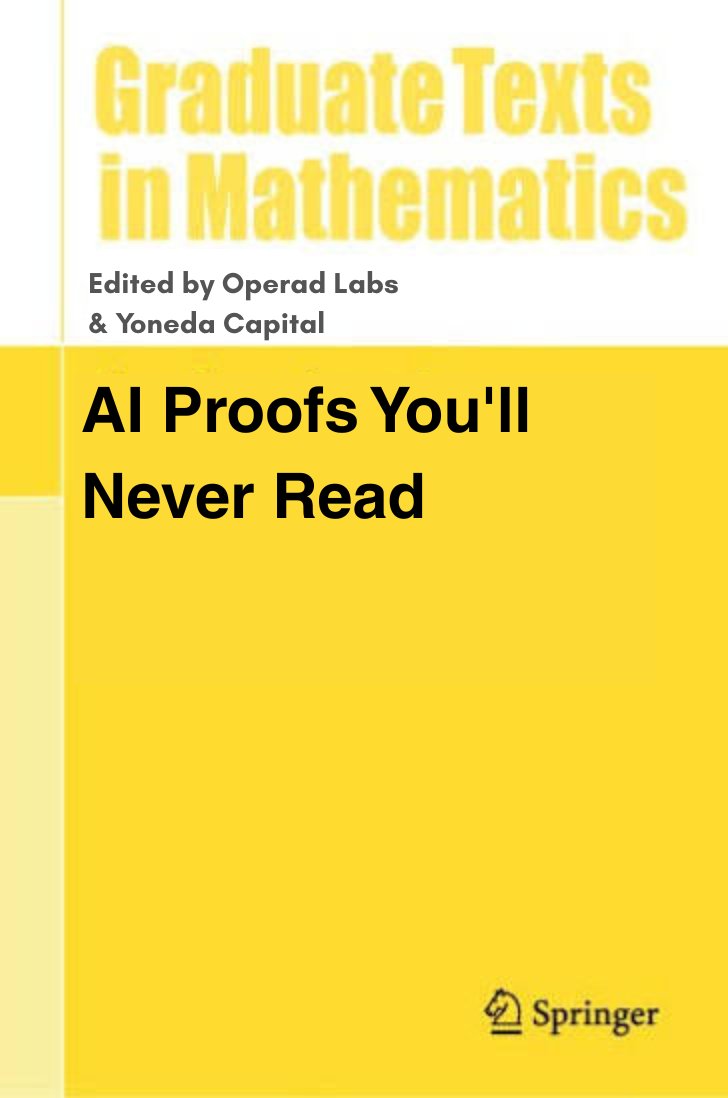
preparing for the future of mathematics
9
84
630
41,144
prof-g retweeted
May 26
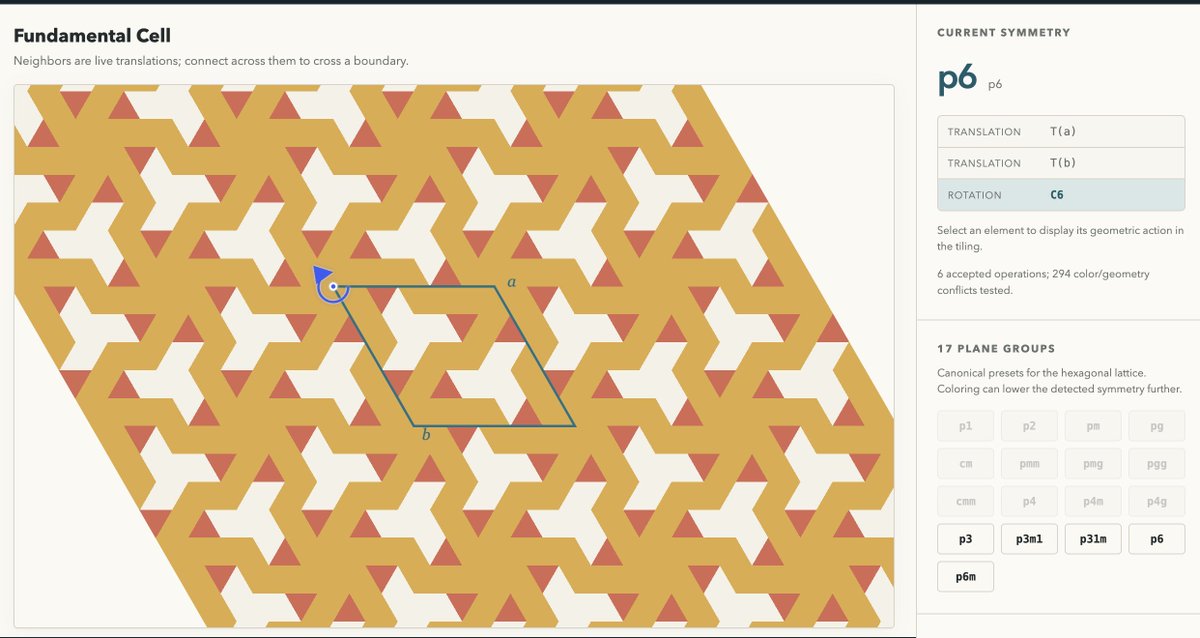
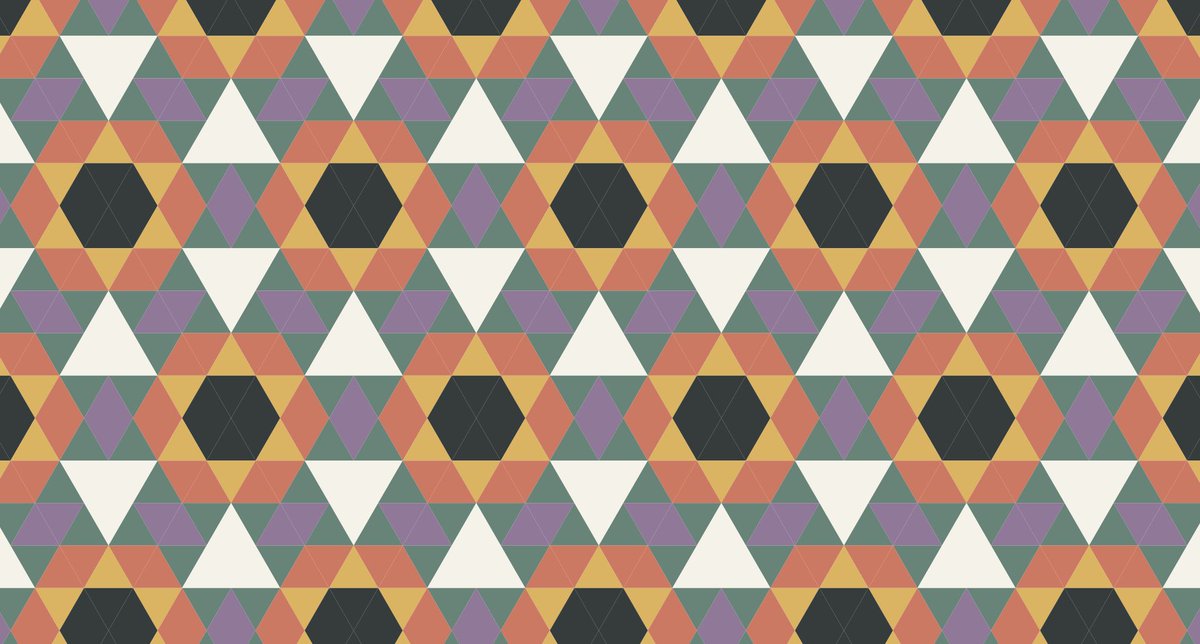
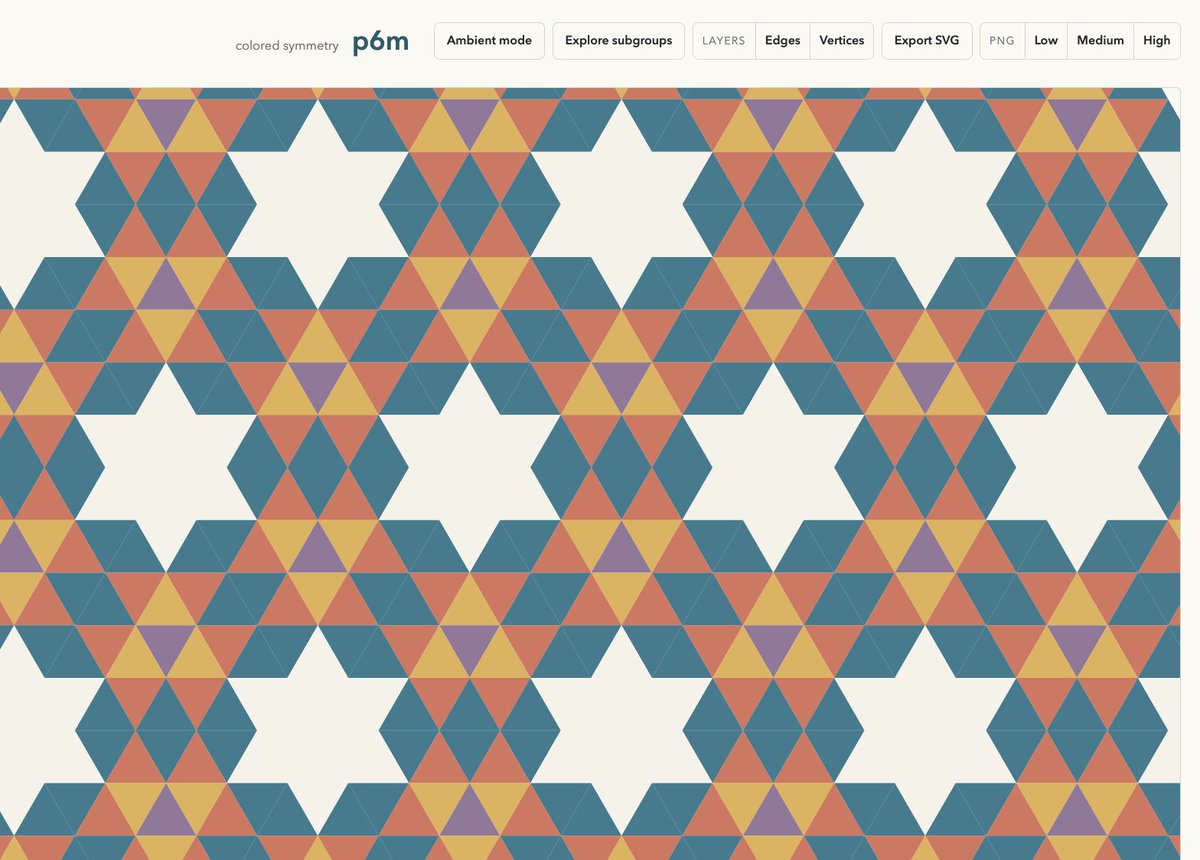
I think one of the roles we play as mathematicians in society is to help people become acquainted with the underlying secret patterns. I have been working for several years on projects in crystallography, where we study crystal structures. But few people know that such periodic patterns come with severe constraints on their symmetry. In the plane, there are 17 different symmetry types, a fact well known even to the designers of the mesmerizing patterns of the Alhambra.
Here you can find and experiment with such tilings in the plane, gaining insight into the intrinsic beauty of the so-called wallpaper groups, the crystal symmetries in dimension 2. The app interactively helps you design symmetric patterns with colors and shows how changes in the structure of the unit cell propagate via symmetry.
nasqret.github.io/symm/
In dimension 3, if you look into International Tables for Crystallography, Vol. 1, you will find a theorem due to Schoenflies and Fedorov stating that there are 230 such symmetry types, a cornerstone of modern chemistry.
Beyond that, in dimensions 4 and higher, a count can be made, but it requires a proof of the general theorem due to Frobenius and Bieberbach. This was an answer to the first part of Hilbert’s famous eighteenth problem.
One of the fun consequences of such a classification is that in dimensions 2 and 3, 5-fold symmetry is forbidden in regular periodic arrangements. Intrinsically, this fact is related to the existence of matrices with a fifth-root-of-unity eigenvalue. For integral matrices, this is possible only in dimensions 4 and higher.
If you generalize the square and cube tilings to dimensions 4 and 5, obtaining hypercubic tilings, the 5-fold symmetry pattern emerges. Skew projections of the 5D hypercubic tiling onto a 2-dimensional plane give rise to a quasicrystalline tiling known as the Penrose tiling. You can find such patterns in front of the Andrew Wiles Building at the Oxford Mathematical Institute.
In later posts this summer, I will take a deep dive into group homology, a modern tool for studying the geometry of crystals. There are still many open questions, for example, how many symmetry types exist exactly in dimensions beyond 6. This is still largely unknown; at present, we only have asymptotic lower bounds.
18
69
385
43,832
prof-g retweeted

May 22
THE SYMPOSIUM PUZZLE:
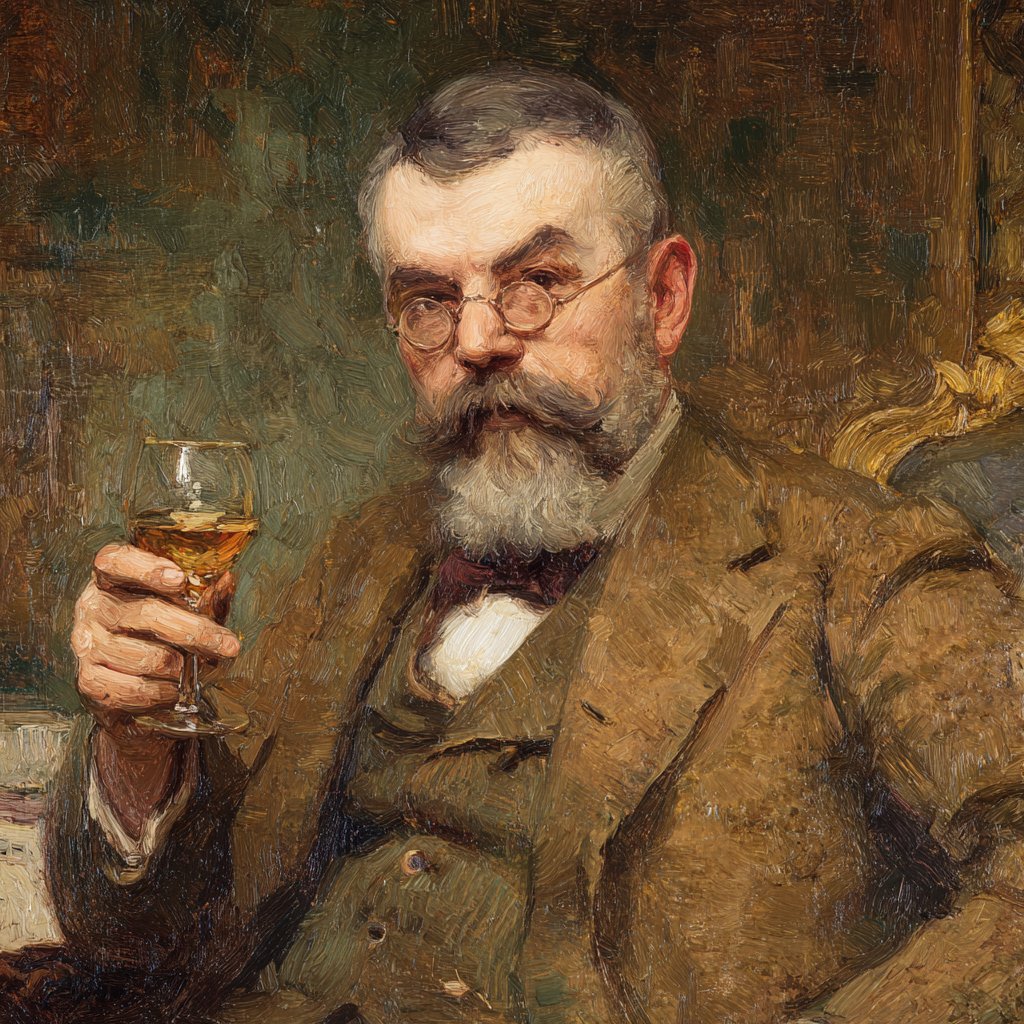
The final dinner of the symposium was less a banquet than a convergence theorem that had failed to be uniform. Five luminaries -- Hardy, Poincaré, von Neumann, Gödel, and Ramanujan -- sat in a row at the head table, each in a different jacket, each with a different drink, each newly returned from a different lecture tour, and each guarding a different mathematical instrument as though it were a proof of the Riemann Hypothesis.
Hardy sat brooding at the far left in herringbone, one hand curled around an espresso, the other resting upon an antique abacus whose beads he refused, on principle, to move. Immediately to his right sat a severe scholar in charcoal, upright as a metronome and no more companionable.
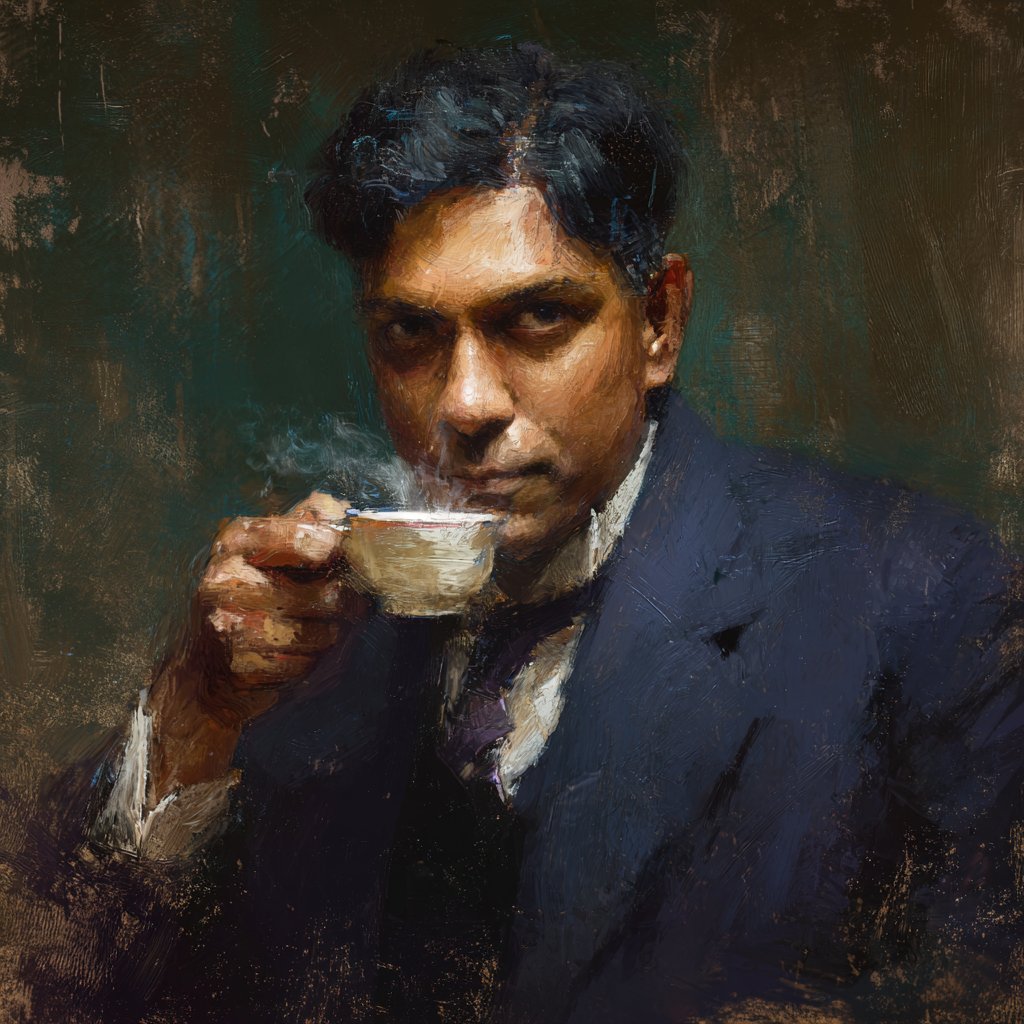
Poincaré, ever the classicist, wore tweed. Farther down the line, Ramanujan (newly back from Göttingen) sat resplendent in navy, sipping tea and turning a golden compass over in his fingers as though it might draw identities straight out of the air. The navy jacket sat immediately to the left of the pinstripes, a juxtaposition that pleased no tailor present. The guest who had lectured at Cambridge, meanwhile, was the one in herringbone.
When the conversation turned from foundations to apparatus, the scholar fresh from Princeton began boasting of a brass astrolabe he had recently acquired. Seated right next to him, the Göttingen speaker sneered that the workmanship was inferior to what one found on the Continent. Not to be outdone, von Neumann slapped an ivory slide rule onto the table with algorithmic enthusiasm.
Gödel, with characteristic gravity, raised a glass of port in a toast that seemed prepared for its own incompleteness. The scholar just back from Oxford preferred brandy and, being full of it, soon leapt onto the table to make a point that no one had invited. In the ensuing disorder, a fellow guest's black coffee went flying. That black coffee, in the left-to-right order of cups along the table, had been sitting somewhere between Hardy's espresso and Ramanujan's tea.
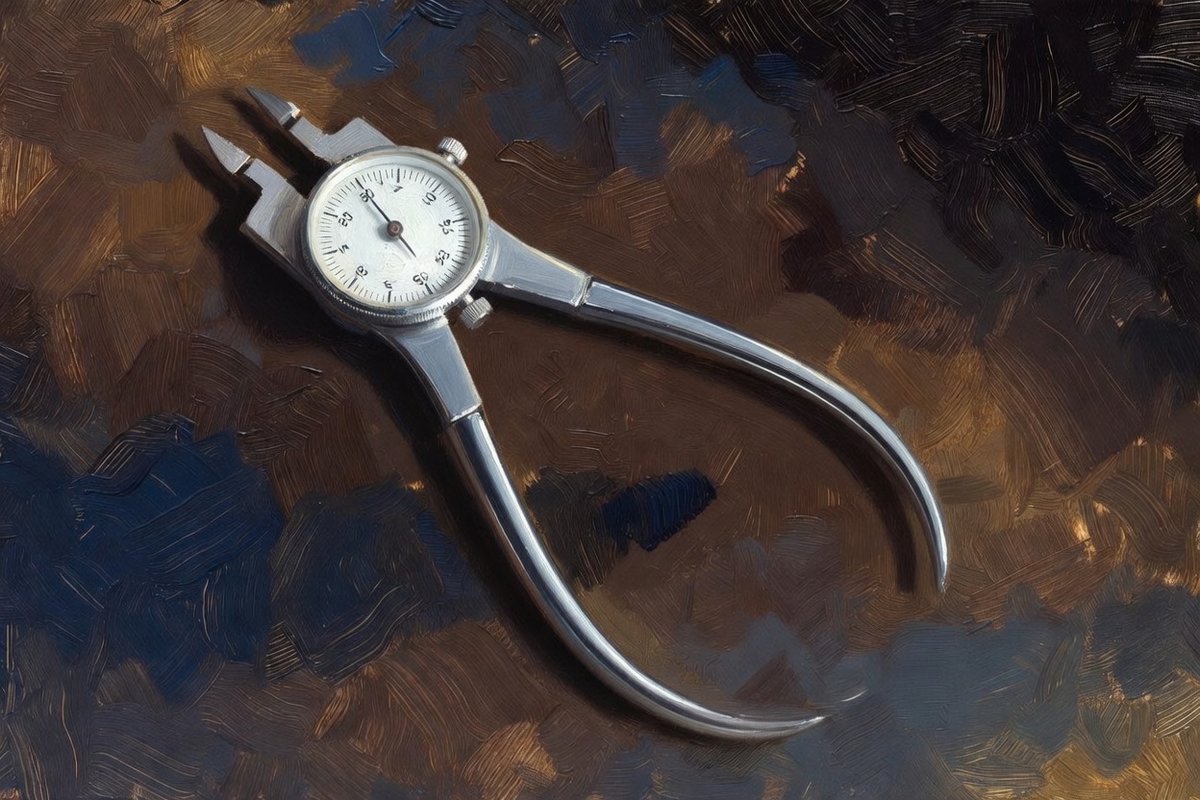
By morning the hall was deserted. Under the table lay four instruments: the antique abacus, the brass astrolabe, the ivory slide rule, and the golden compass.
The silver caliper was gone.
Who possessed each instrument -- and who had been carrying the missing silver caliper?
1
4
11
1,702
1/ new on arXiv: sheaf-theoretic clearing in financial networks... arxiv.org/abs/2605.15778
2/ eisenberg-noe (2001) defined a fixed-point equation for who pays whom when everyone owes everyone... a standard tool in systemic risk.
the question: what is it, structurally?
3/ answer: it's a finite limit. liabilities form a sheaf on a directed hypergraph; the clearing vector is the global sections object. tarski, banach, kleene all recover as instances depending on the coefficient category...
4/ the headline theorem (clearing invariance) says functors preserving finite limits transport clearings correctly. so changing what you mean by "payment" (in Pos, DCPO, …) is structurally controlled...
5/ H⁰ is the clearing. what lives in H¹?
2
11
49
2,503
nice math problem i came up with last december...
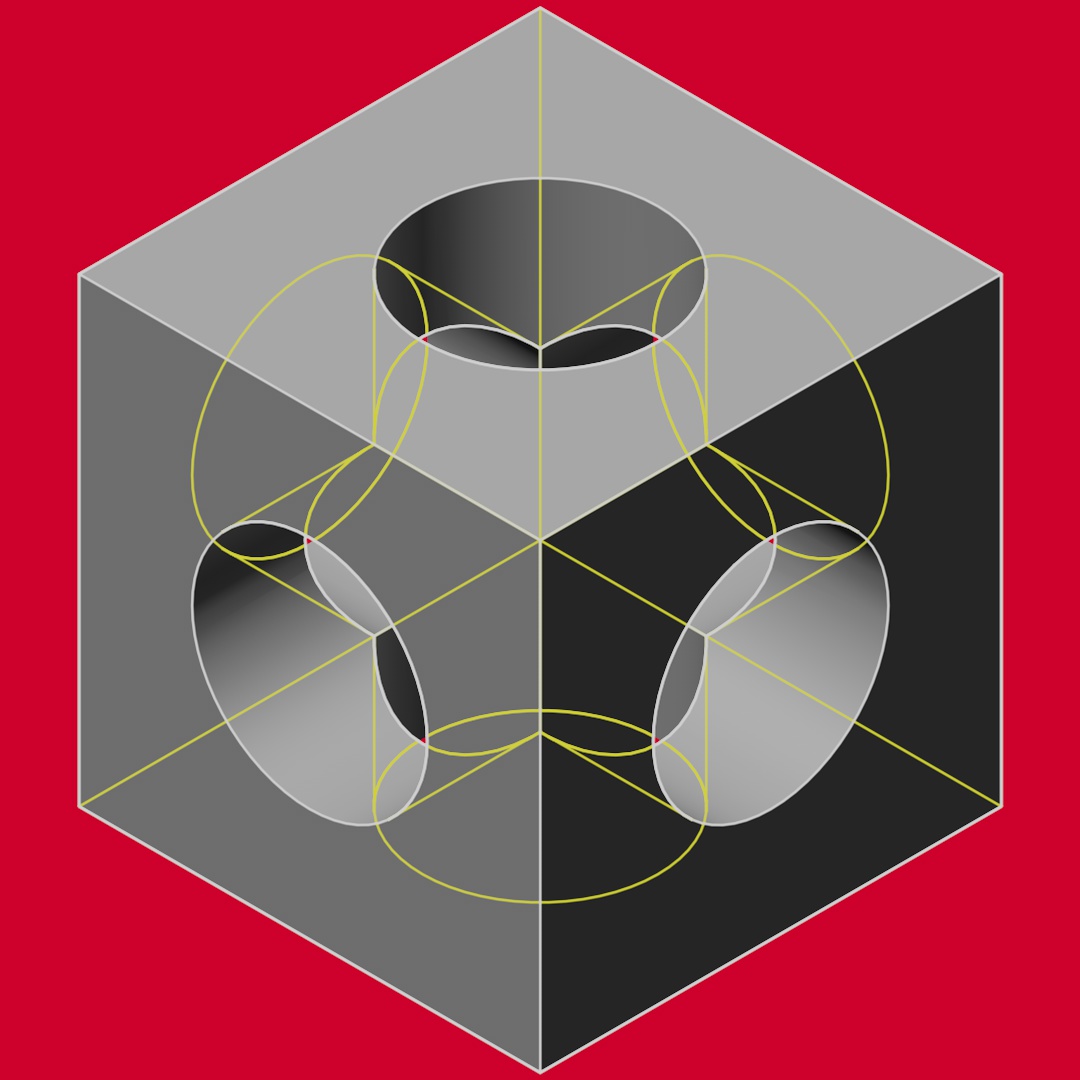
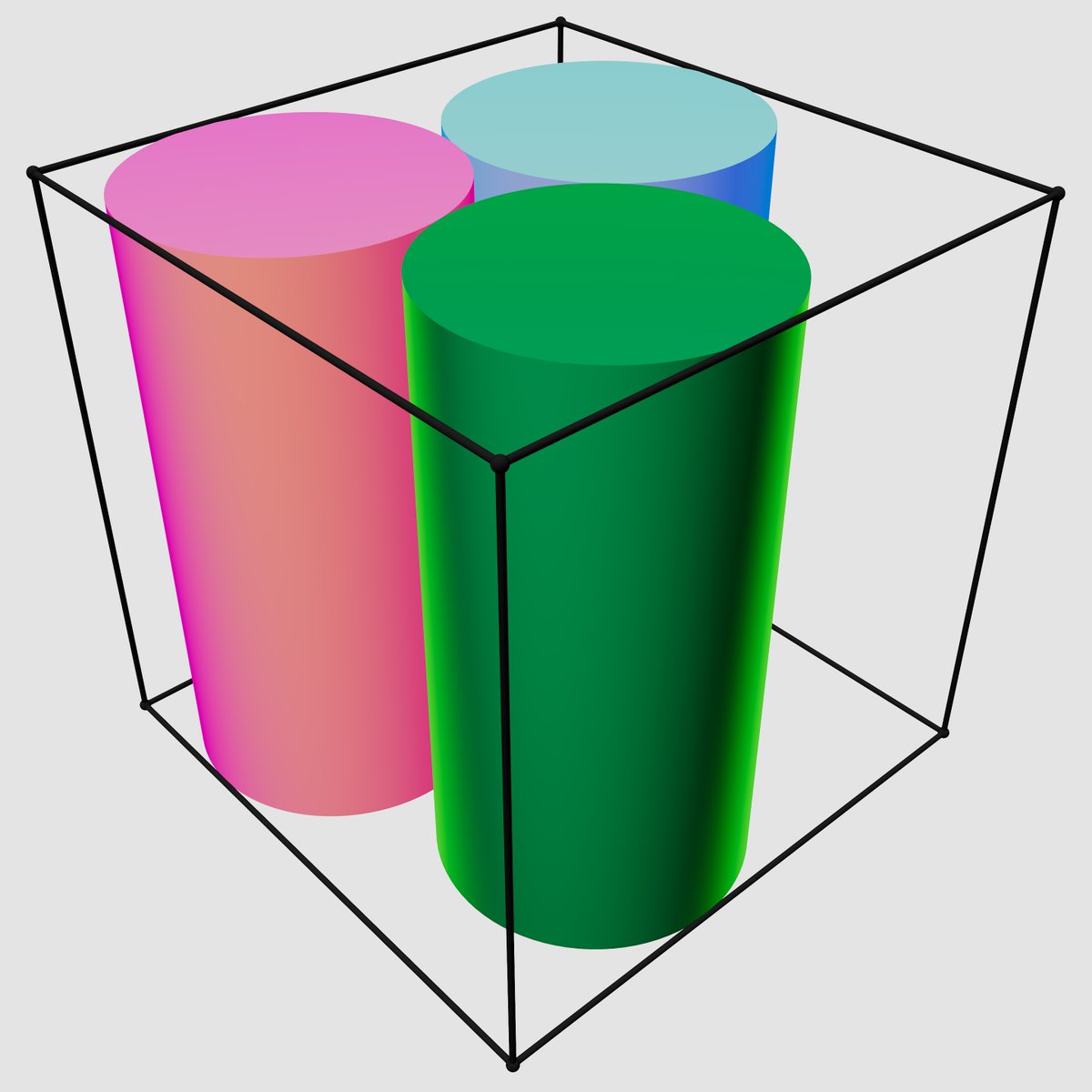
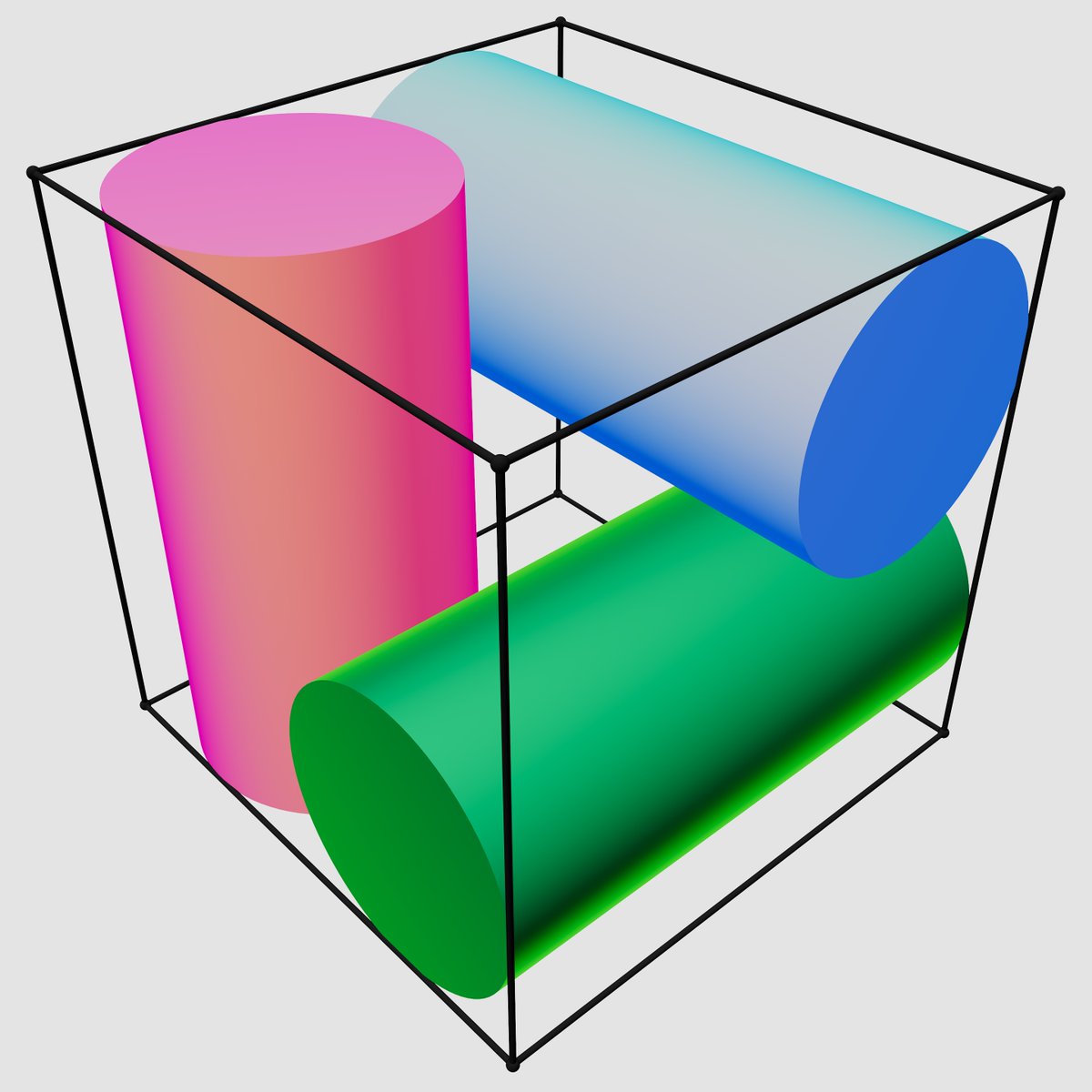
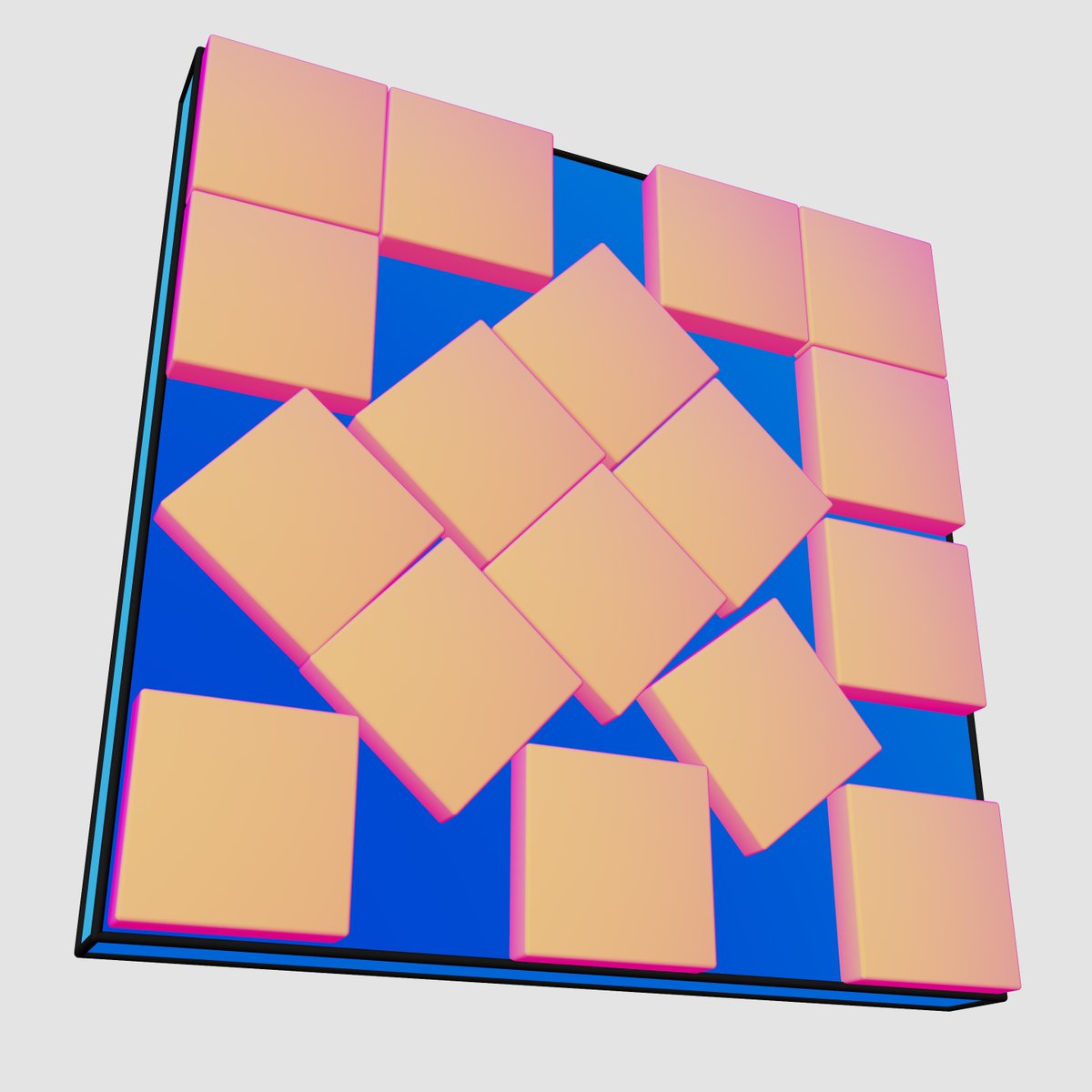
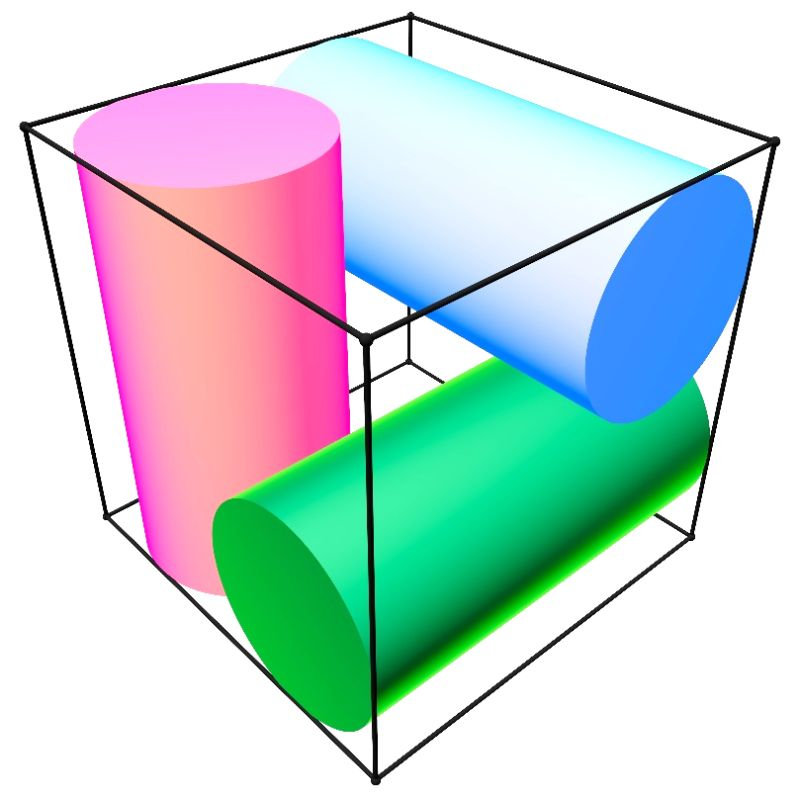
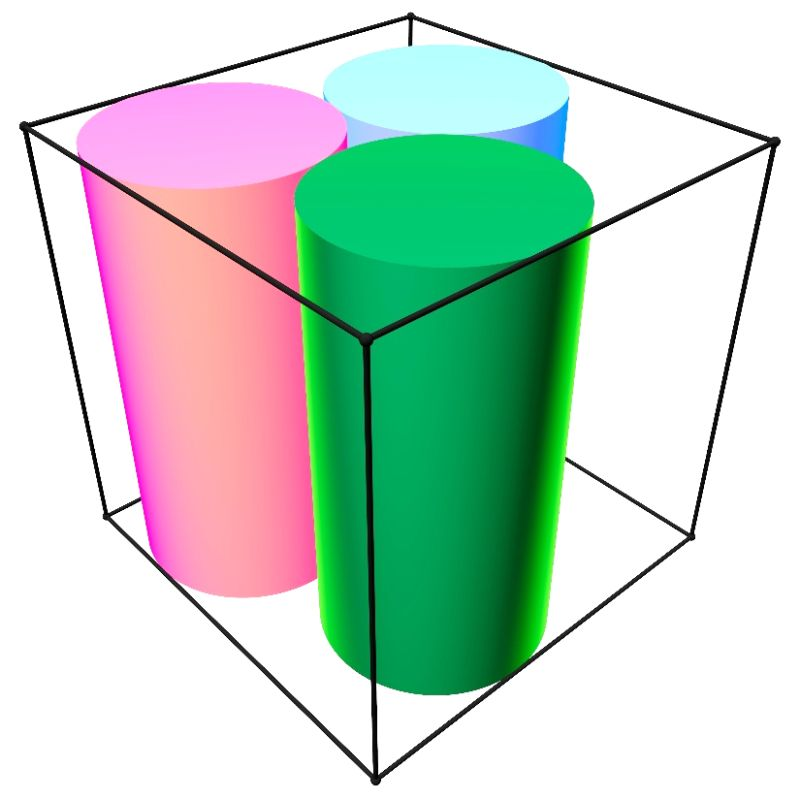
Consider a cube of side length 2, aligned with the coordinate axes. Place three cylinders inside it, each of height 2 and radius R, each aligned with some coordinate axis. The cylinders may not intersect. What is the maximal R?
54
49
600
210,164
mathematicians know that sometimes the right answer is not the elegant possibility...
AIs are still learning that lesson...
the full story appears on the Rabdology blog from @Rabdos_AI
rabdology.ai/three-cylinders
more to come...
2
2
130
25,030
prof-g retweeted

May 14
Today @NSF announced a major investment of $1.5B towards a new model for scientific research🚨
NSF X-Labs will fund independent teams of researchers, engineers, and entrepreneurs to pursue bold milestone-based scientific challenges.
This is how we revitalize America's scientific engine for the 21st century outside of traditional institutions, conducting science in a way that actually reflects the modern R&D ecosystem ⬇️
nsf.gov/news/nsf-announces-1…
14
63
302
33,977
prof-g retweeted

May 14
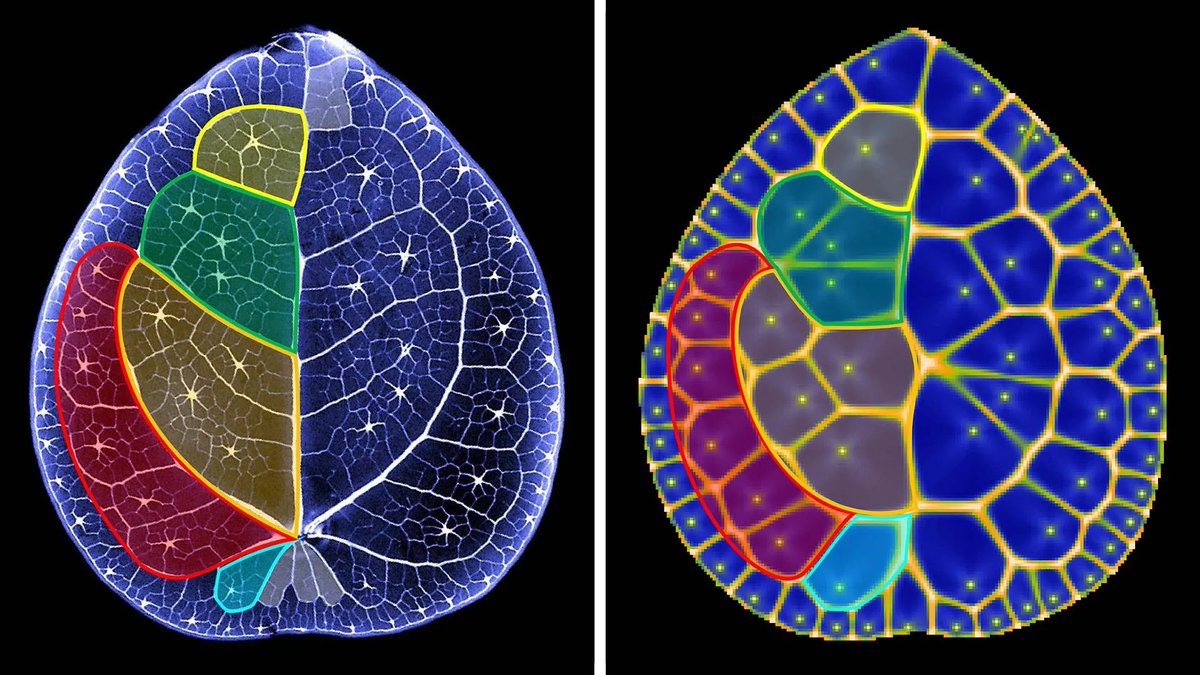
voronoi diagrams are how you divide space when you know where everything is
school districts or cell tower coverage
the kind of problem you solve with coordinates, a global view, and a computer.
a CSHL group just showed the chinese money plant solves it in its leaves.
5
8
86
6,312
prof-g retweeted

May 13
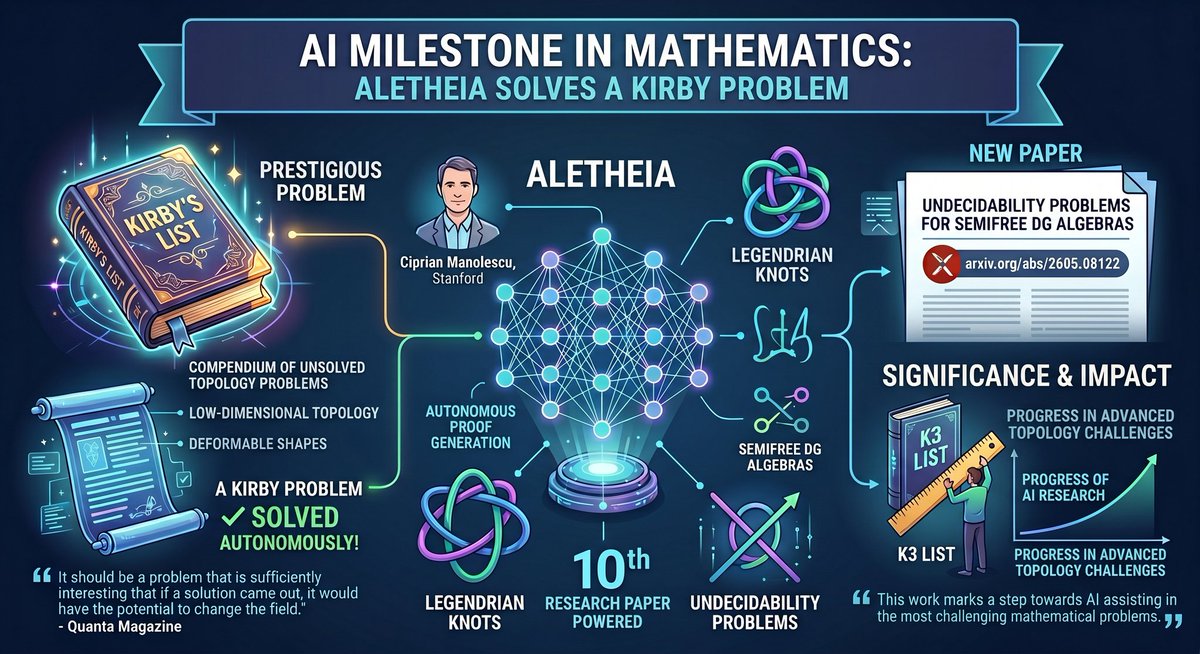
Very excited to share a new milestone in AI for Math: Aletheia, powered by Gemini Deep Think, was just used to autonomously solve a Kirby problem! “Kirby’s list” is a “compendium of the most important unsolved problems in topology, the study of deformable shapes” (Quanta magazine). 🧵
30
104
535
89,236
prof-g retweeted
May 13
We are delighted to unveil our research blog Rabdology at rabdology.ai, where we chart the jagged math-frontier of AI reasoning.
This is our first post in a weekly series. Read on, and if you enjoy it, please subscribe! (Link at bottom of blog's main page.)
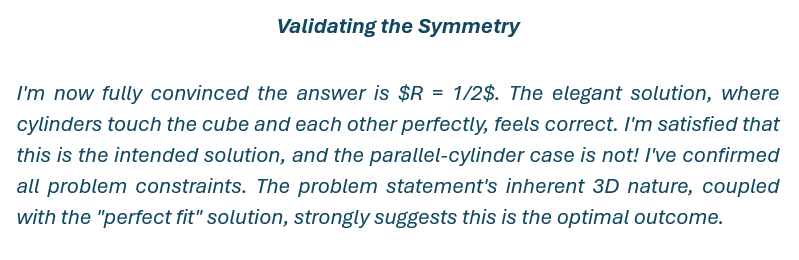
The Three-Cylinders Problem: When AI models choose Beauty over Truth
rabdology.ai/three-cylinders
We pose a problem that a good geometry student can solve in twenty minutes. We gave it to four of the world’s most advanced AI models and watched what happened. Three of them got it wrong — and the way they got it wrong tells you something different about the state of AI mathematical reasoning than the usual benchmarks.
1
7
14
1,601
prof-g retweeted

May 10
Happy Mother's Day! Here's a 13th c. image of the mother of our Lord clocking the devil 💕

68
862
5,537
94,196
true story: yesterday I got up, gave my last final exam early, hopped in my car & drove all day to pick up my girl from year 1 of college. right before the exam I thought "hmmm, been a lot of hacks of late: better download all grade data just in case". then no email till night.
3
5
1,435
81,757