
Senior Research Fellow at Wycliffe Hall and Senior Editor at St Andrews. Official twitter site for announcements and speaking engagements.
Joined September 2012
- Tweets 781
- Following 71
- Followers 57,772
- Likes 215
118 Photos and videos






Tom Wright retweeted

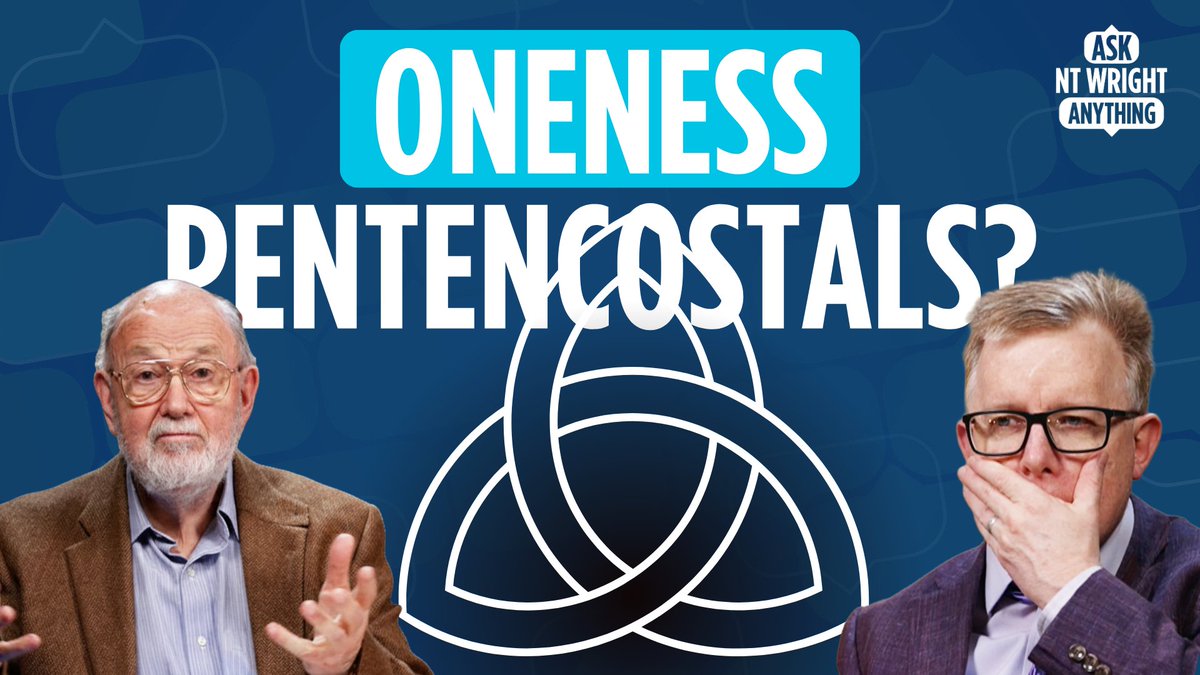
Are Oneness Pentecostals outside historic Christianity if they don’t believe in the Trinity? @profntwright & @mbird12 dig into this and more! #NTWrightPodcast #TrinityDebate #ChurchUnity
premierunbelievable.com/ask-…

3
5
2,063
Tom Wright retweeted
Is patriarchy part of the fall? Should Christians still tithe? @profntwright & @mbird12 explore Genesis, giving, and how we handle tough questions today. #AskNTWright #FaithQuestions #ChristianGiving
premierunbelievable.com/ask-…
2
3
7
2,354
Tom Wright retweeted
Struggling with spiritual growth or loved ones leaving the faith? @profntwright offers hope, wisdom, and honest reflection for tough seasons. #FaithJourney #PastoralCare #NTWrightPodcast @mbird12
premierunbelievable.com/ask-…

1
3
1,377
Tom Wright retweeted
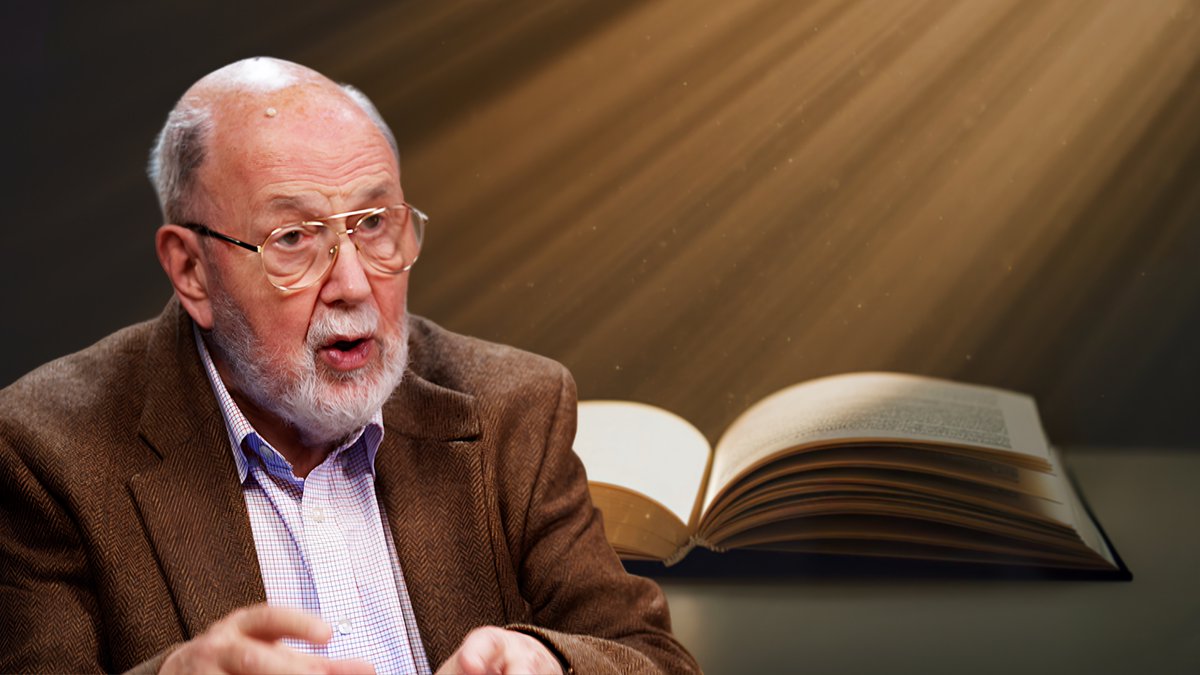
@profntwright argues “works of the law” weren’t about earning salvation.
Paul was confronting covenant boundary markers and declaring God’s family open to all in Christ.
premierunbelievable.com/arti…
2
18
2,102
Tom Wright retweeted

New Episode of Ask N.T. Wright Anything
▶️Has the gospel already reached “the ends of the earth”?
▶️Why do some Christians feel spiritually stuck even after years of faith?
▶️How should parents respond when their children walk away from Christianity?
youtube.com/watch?v=NohKNbMp…
1
4
14
5,153

Jun 1
God's Vision for a New Humanity: Overflowing with Hope
youtu.be/V1IcVjL0CLc?si=HZF2…
3
19
4,047
Tom Wright retweeted
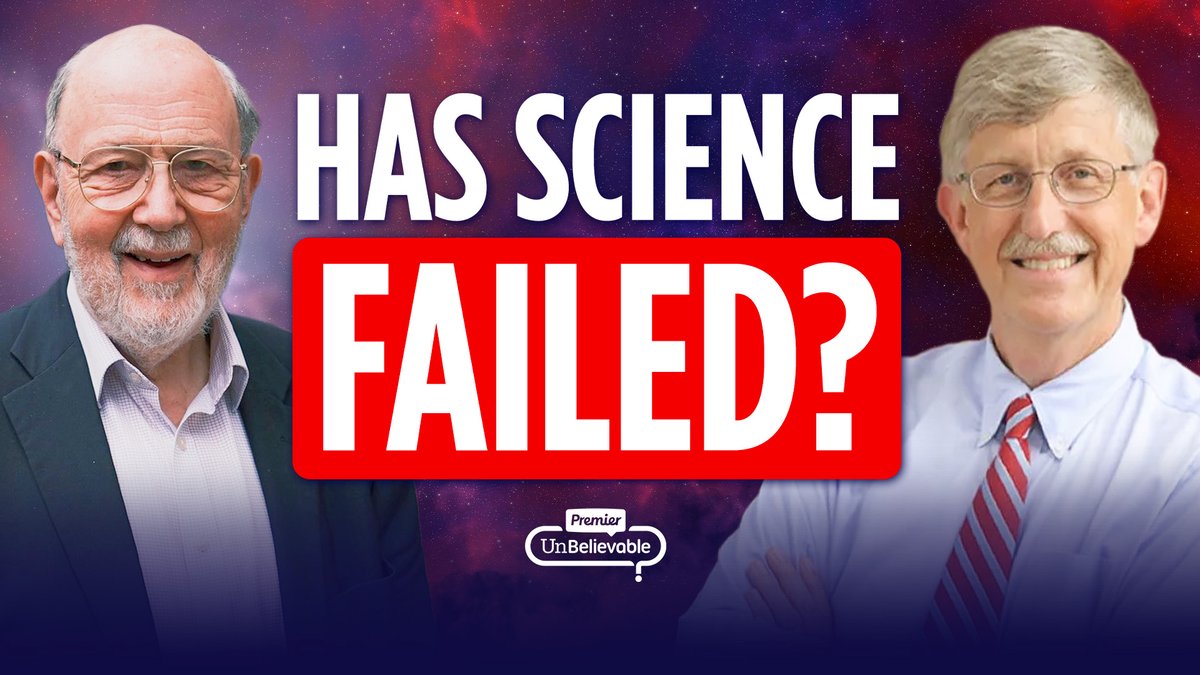
Can science and faith truly coexist? Watch Francis Collins & @profntwright tackle evolution, truth, and the meaning of life in a special Oxford episode! #UnbelievablePodcast #ScienceAndFaith #CollinsAndWright
premierunbelievable.com/unbe…
2
1
13
1,653
May 29
Francis Collins and N. T. Wright: Evolution, Truth and the Case for God
youtu.be/QxZn5GDjp2g?si=SCmR…
3
3
23
3,878
Tom Wright retweeted
What’s the difference between biblical and systematic theology? And who is Paul’s “wretched man”? @profntwright brings clarity to complex questions! @mbird12 #TheologyExplained #BibleQuestions
premierunbelievable.com/ask-…
1
8
1,393
May 28
Anxiety was a way of life for many in the ancient pagan world. With so many gods and goddesses, all of them potentially out to get you for some offence you mightn’t even know about, you never knew whether something bad was waiting for you just round the corner. With the God who had now revealed himself in Jesus, there was no guarantee (as we’ve seen) against suffering, but there was the certainty that this God was ultimately in control and that he would always hear and answer prayers on any topic whatever. People sometimes say today that one shouldn’t bother God about trivial requests (fine weather for the church picnic; a parking space in a busy street); but, though of course our intercessions should normally focus on serious and major matters, we note that Paul says we should ask God about every area of life. If it matters to you, it matters to God. Prayer like that will mean that God’s peace – not a Stoic lack of concern, but a deep peace in the middle of life’s problems and storms – will keep guard around your heart and mind, like a squadron of soldiers looking after a treasure chest.
-Philippians for Everyone
2
27
126
5,100
May 27
The doctrine of the Trinity declares the mystery which is above all else what this broken world needs to hear: that the true God is not detached from the evil of the world, but has come to share it and bear it in his own body. We do not say, 'God so loved the world that he sent somebody else'; we say, 'God so loved the world that he sent his only beloved Son.'
-For All God’s Worth
2
22
165
9,078
Tom Wright retweeted
Is Calvinism truly biblical? @profntwright & @mbird12 break down predestination, Romans 7, and why biblical theology matters. Join the conversation! #AskNTWright #CalvinismDebate #Romans7
premierunbelievable.com/ask-…

4
13
2,600
May 15
The story of all four gospels is not the story of how God came in Jesus to rescue souls for a disembodied, other-worldly heaven. It is the story of how God, in Jesus, became king on earth as in heaven. Ultimately, any would-be Christian view which doesn’t serve that central vision is, in my view, either folly or idolatry, or possibly both. I realise that’s quite a serious thing to say about a very large swathe of would-be orthodox theology, but I am afraid it may be true. I believe therefore that a Christian anthropology must necessarily ask, not, what are human beings in themselves, but, what are human beings called to do and be as part of the creator’s design? Not to ask the question that way round, and to think simply about ourselves and what we are, risks embodying, at a methodological level, Luther’s definition of sin: homo incurvatus in se.
-
Mind, Spirit, Soul and Body: All for One and One for All Reflections on Paul’s Anthropology in his Complex Contexts
ntwrightpage.com/2016/07/12/…
5
10
82
4,259
May 14
The ascension is not a mere solution to a problem about what happens to a body of this new sort. It is, for Luke as much as for Paul, the vindication of Jesus as Israel’s representative, and the divine giving of judgment, at least implicitly, in his favour and against the pagan nations who have oppressed Israel and the current rulers who have corrupted her. It is, in other words, the direct answer to the disciples’ question of 1:6. This is how the kingdom is being restored to Israel: by its representative Messiah being enthroned as the world’s true lord
-The Resurrection of the Son of God
2
12
99
5,114
May 14
Paul's deep, constant, and unresolved grief is a standing rebuke to the shallowness that forbids Christians to grieve on the grounds that all shall be well. Earnest preachers have sometimes read 1 Thess 4:13 as forbidding grief of all sorts, whereas what that passage forbids is grieving of a particular kind ("after the manner of pagans who have no hope"). To hold firmly to the Christian hope is not to pass beyond grief; indeed, not to grieve is not to love, since grief is the form love takes when the beloved is taken away. Paul himself speaks elsewhere (Phil 2:27) of the grief he would have had if Epaphroditus had died ("grief upon grief," he says); no suggestion there of simply "rejoicing that his friend had gone to a better place." As long as death is real, grief is real too. If it is not acknowledged, and expressed appropriately, it can be poisonous.
At the same time, it is vital to learn the lesson that this deep and inconsolable grief can co-exist with the joy and celebration that fill the previous four chapters. The many-layered texture of Christian experience has room for both, and more besides. Learning how to live with these different layers, giving each its proper place, is part of Christian maturity; pointing to this task, and helping people to engage in it, is a vital part of Christian ministry. What happens between Romans 5-8 and Romans 9-11 at the level of literature must be facilitated at the level of prayer and Christian self-understanding.
-Romans, The New Interpreters Bible
2
12
108
7,377
Tom Wright retweeted
How should Christians respond to MAGA politics and cultural confusion? @profntwright & @mbird12 discuss faith, nationalism, and staying true to Jesus’ way. #AskNTWright #FaithAndPolitics #ChristianHope
premierunbelievable.com/ask-…

1
2
10
2,426
May 13
This chapter [Romans 6] shines a bright spotlight on the dangerous half-truth, currently fashionable, that "God accepts us as we are." Indeed, the question of 6:1 could be read as raising exactly this question: Will "God's acceptance" do as a complete grounding of Christian ethics? Emphatically not. Grace reaches where humans are, and accepts them as they are, because anything less would result in nobody's being saved. Justification is by grace alone, through faith alone. But grace is always transformative. God accepts us where we are, but God does not intend to leave us where we are. That would be precisely to "continue in sin, that grace might abound." Unless we are simply to write Romans 6 out of the canon, the radical inclusivity of the gospel must be matched by the radical exclusivity of Christian holiness. There is such a thing as continuing to let sin reign in one's mortal body, and it will require serious moral effort to combat this tendency. The idea that Christian holiness is to be attained by every person simply doing what comes naturally would actually be funny were it not so prevalent. True freedom is not simply the random, directionless life, but the genuine humanness that reflects the image of God. This is found under the lordship of Christ. And this lordship makes demands that are as testing and difficult as they are actually liberating.
-Romans, New Interpreters Bible
5
25
113
6,091
May 8
Part of the frustration of that is that there are many, many devout Bible readers who have missed the point of the story, which is that humans are the crown of God’s creation designed to reflect God’s stewardship into the world and designed to reflect the praises of creation back to the creator. And you can see this. Psalm 8 sums it up perfectly. “What are humans? You made them little lower than the angels to crown them with glory and honor, putting all things in subjection under their feet.” This is the human vocation. Guess what? When the New Testament quotes Psalm 8, it’s talking about the human vocation which Jesus has modeled to the uttermost, and into which by the spirit and the gospel, we ourselves are invited.
biologos.org/podcast-episode…
8
21
148
20,941
Tom Wright retweeted
Does God ever repent? And what does “ekklesia” really mean? Dive into the meaning of key biblical terms with @profntwright & @mbird12. #FaithQuestions #BiblicalGreek #AskNTWrightAnything #Podcast
premierunbelievable.com/ask-…
5
9
2,688
Tom Wright retweeted
What happened to the lost tribes of Israel? Tom Wright unpacks history, restoration, and why it matters for Christians today. #LostTribes #AskNTWright #BibleQuestions @mbird12
premierunbelievable.com/ask-…
2
4
9
2,113