
Joined April 2026
- Tweets 63
- Following 141
- Followers 59
- Likes 284
4 Photos and videos
Project 48 Arizona retweeted

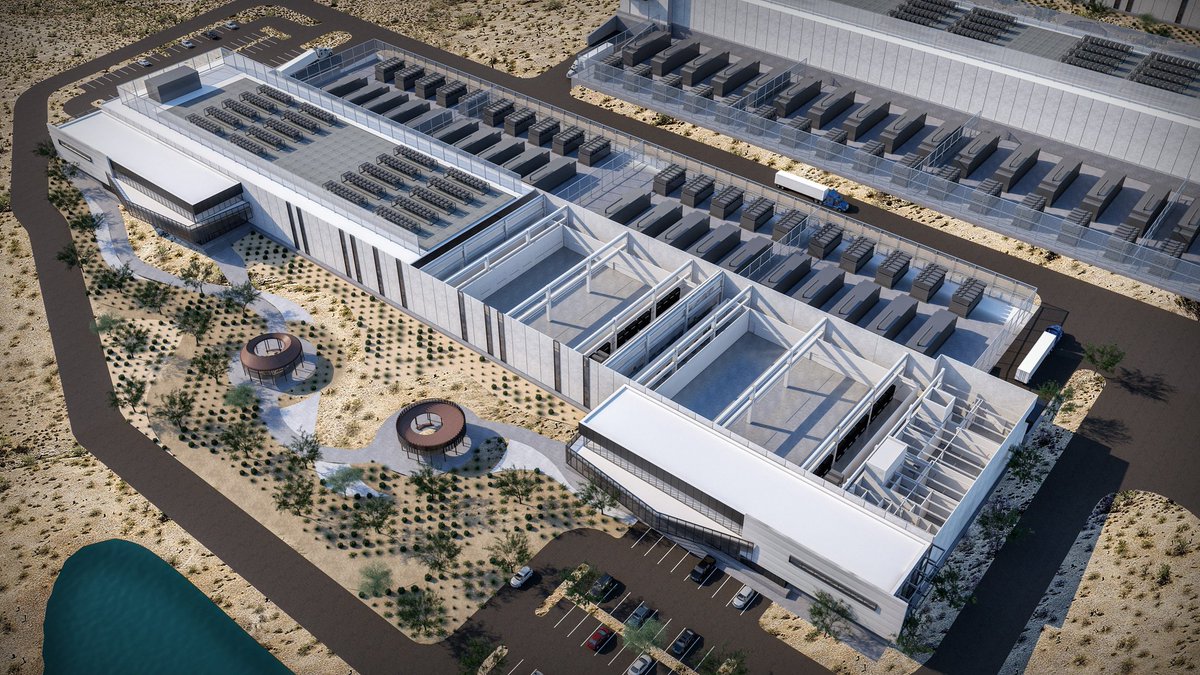
Fact check: Arizona's budget includes a 3-year pause preventing new data centers from getting state sales tax breaks.
Dozens of data centers already approved for the tax incentives, which are still in state law, still get them.
Source: azcentral.com/story/news/pol…

BREAKING: Democrats in Arizona, under the leadership of Governor Katie Hobbs, just nixed any tax incentives that existed for data centers. This is huge.

6
10
26
3,550

Jun 12
Also worth mentioning: Palo Verde uses 100% recycled wastewater for cooling. 💧
Jun 12

We need to build more nuclear in Arizona.
Palo Verde has been helping power Arizona for more than 40 years. That is not theory. It is proof that nuclear works here.
But why nuclear?
Because few energy sources can produce massive amounts of reliable, carbon-free electricity on so little land.
Palo Verde produces more than 32 million megawatt-hours of electricity every year on roughly 4,000 acres.
Using Palo Verde's full-site footprint, Arizona could produce roughly as much electricity as the state currently generates in a year on less land than South Mountain Park and Preserve.
A nuclear fuel pellet, about the size of a Jolly Rancher, contains about as much energy as a ton of coal or 17,000 cubic feet of natural gas (that's enough to fill 34,000 party balloons).
And the waste?
Palo Verde safely stores its spent fuel on site. All the spent nuclear fuel ever produced by U.S. commercial reactors could fit on a single football field at a depth of less than 10 yards.
This is not like the movies. It is solid when it goes into the reactor. Solid when it comes out.
In other words: no green ooze.
The industry is already moving this way. The state's largest utilities are already exploring options to expand nuclear power.
We just need to make sure Arizona is ready to build.
We're not the guinea pigs. Let's build on what works.
It is safe. It is clean. And it is how we can do more than keep the lights on.
2
8
164
Jun 12
We need to build more nuclear in Arizona.
Palo Verde has been helping power Arizona for more than 40 years. That is not theory. It is proof that nuclear works here.
But why nuclear?
Because few energy sources can produce massive amounts of reliable, carbon-free electricity on so little land.
Palo Verde produces more than 32 million megawatt-hours of electricity every year on roughly 4,000 acres.
Using Palo Verde's full-site footprint, Arizona could produce roughly as much electricity as the state currently generates in a year on less land than South Mountain Park and Preserve.
A nuclear fuel pellet, about the size of a Jolly Rancher, contains about as much energy as a ton of coal or 17,000 cubic feet of natural gas (that's enough to fill 34,000 party balloons).
And the waste?
Palo Verde safely stores its spent fuel on site. All the spent nuclear fuel ever produced by U.S. commercial reactors could fit on a single football field at a depth of less than 10 yards.
This is not like the movies. It is solid when it goes into the reactor. Solid when it comes out.
In other words: no green ooze.
The industry is already moving this way. The state's largest utilities are already exploring options to expand nuclear power.
We just need to make sure Arizona is ready to build.
We're not the guinea pigs. Let's build on what works.
It is safe. It is clean. And it is how we can do more than keep the lights on.
3
6
13
973
Jun 12
Sources:
Palo Verde: paloverde.com
DOE, 5 Reasons Nuclear Is a Good Neighbor: energy.gov/ne/articles/5-rea…
DOE, 5 Fast Facts About Spent Nuclear Fuel: energy.gov/ne/articles/5-fas…
1
2
52
Jun 11
Arizona is now No. 4 nationally in total solar capacity and recently ranked No. 2 for utility-scale battery storage additions. ☀️
More power from more places should be the goal.

Arizona's gains come as national solar installations declined 27% from a year earlier amid political and regulatory pressure. bizjournals.com/phoenix/news…
8
2
11
5,482
Jun 11
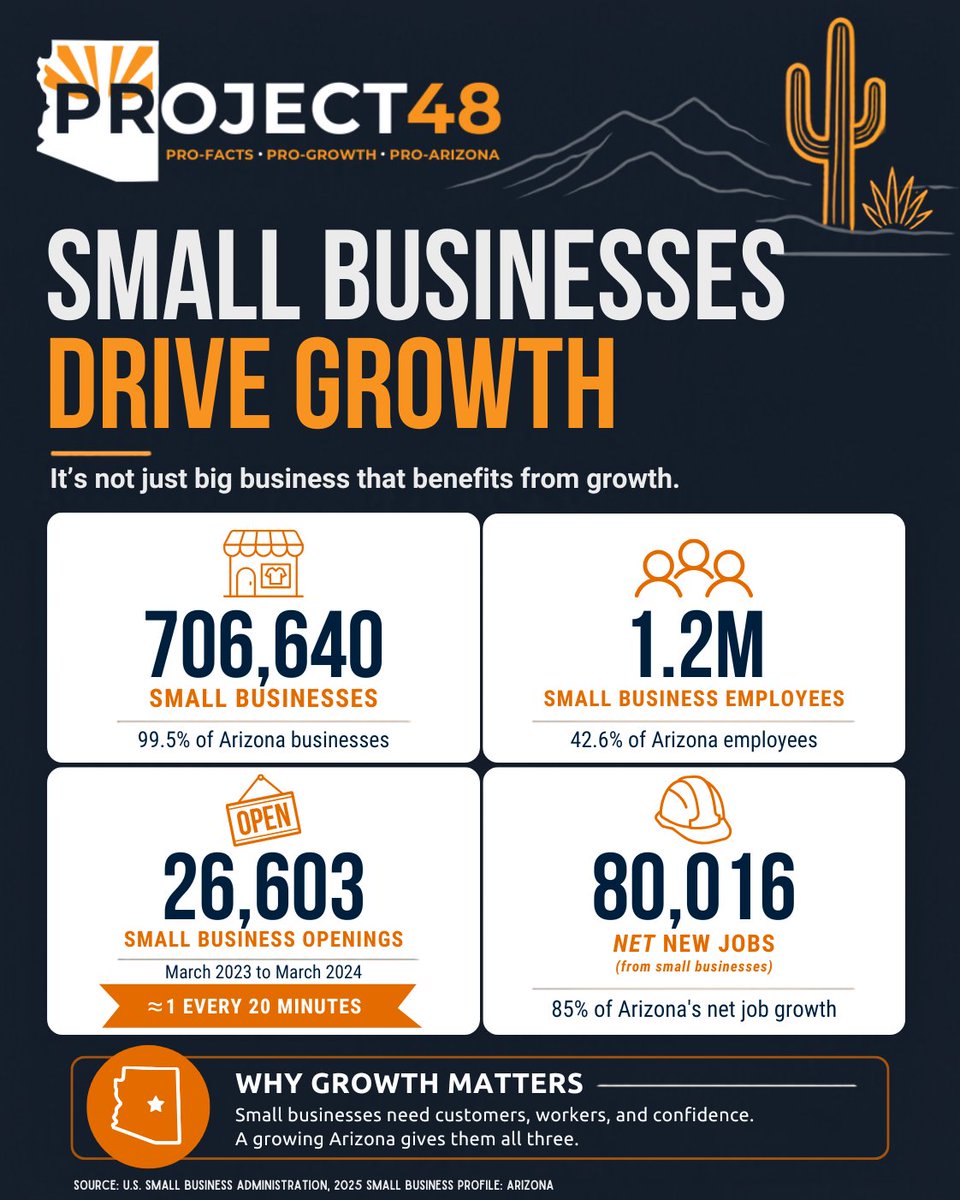
A small business opens in Arizona roughly every 20 minutes.
Small businesses accounted for 26,603 establishment openings and contributed 80,016 net new jobs, driving 85% of Arizona’s net job growth.
They employ 1.2 million people, nearly 43% of Arizona’s workforce.
Pro-growth policies are not just about helping big companies. They help businesses of all sizes start, hire, and grow right here in Arizona.
Small businesses need customers, workers, and confidence.
A growing Arizona provides all three.
1
1
3
99
Jun 11
Source: SBA 2025 Small Business Profile: Arizona
The openings and net job growth cover March 2023 to March 2024.
advocacy.sba.gov/wp-content/…
2
69
Project 48 Arizona retweeted

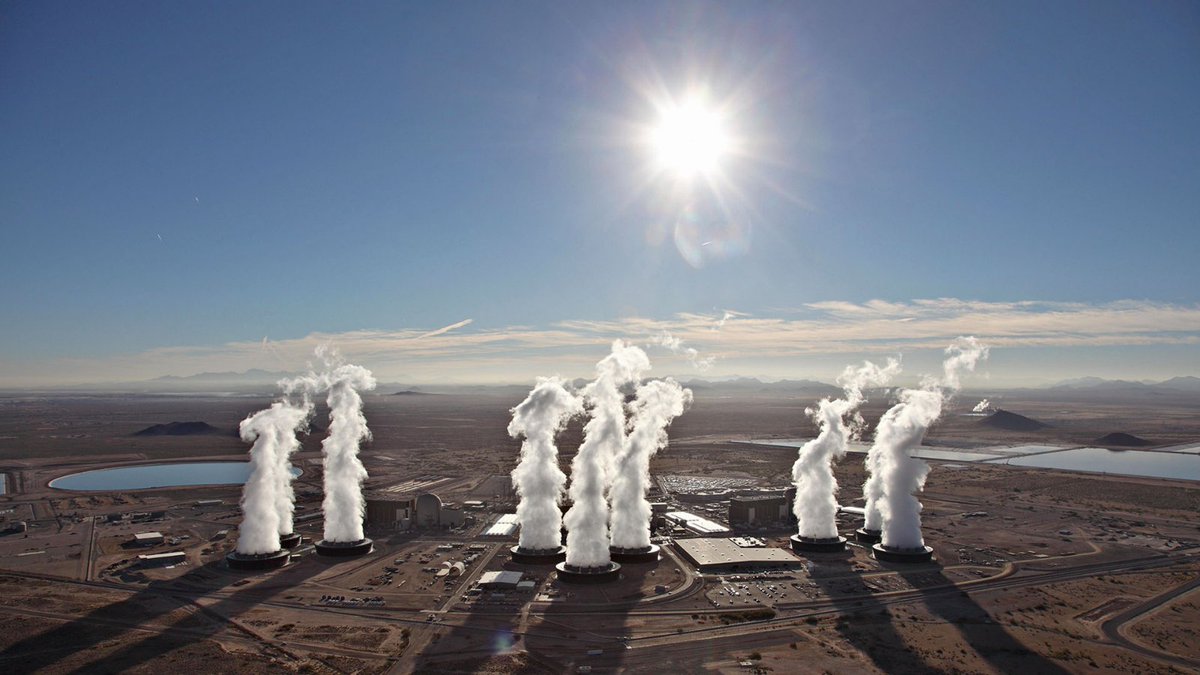
SUPER-SIZED: Palo Verde is Arizona’s only nuclear power plant and one of the largest generators in the U.S.
Unit 1 first connected to the grid on this day in 1985.
11
48
327
8,710
Project 48 Arizona retweeted

Jun 9
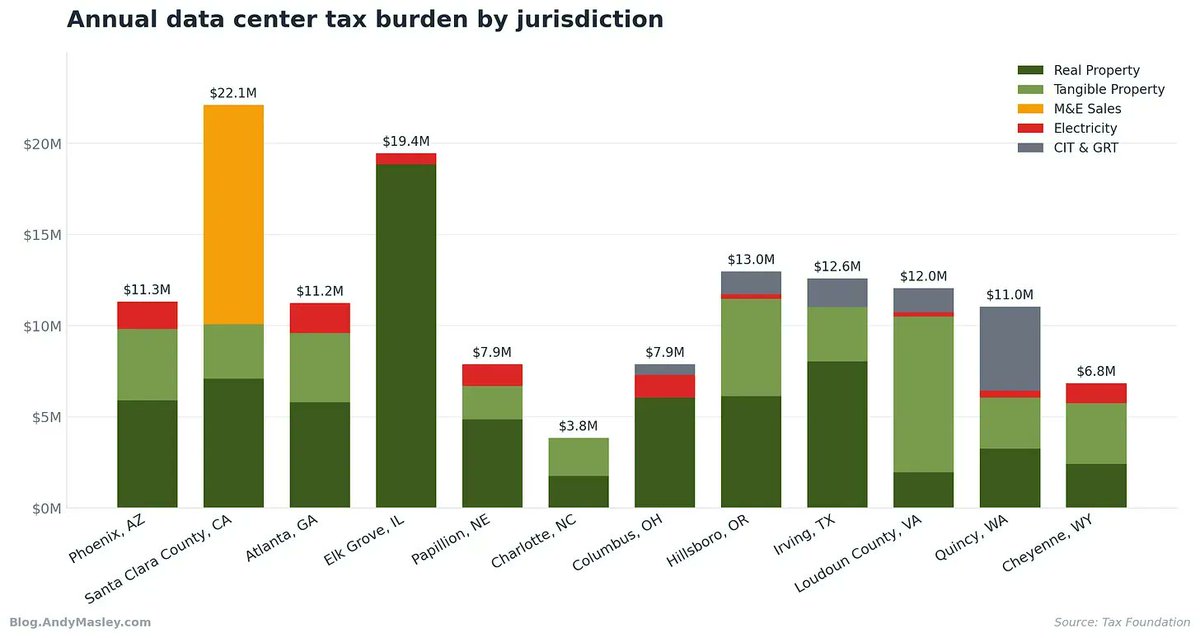
This sales tax is something almost all states (42) already exempt data centers from, because they think it's so much it'd be onerous. Loudoun County, which gets $1.3 billion in tax revenue from data centers annually, doesn't charge a sales tax. It's technically true that this is "losing the state that much money every year" but only in worlds where the big additional tax doesn't scare any data centers away from the state.
These are the numbers we have for how much a $1 billion data center would be taxed in different states each year. The yellow is this sales tax. Notice that in most places data centers aren't charged it but are still taxed a lot.

BREAKING: Ohio secretly gave 100% sales tax breaks, lasting up to 40 years, to tech giants for data centers, per Cleveland.com.
The exemptions—signed by Gov. Kasich—give Google, Meta and Amazon at least $600 million each.
Legislators say the contracts can't be undone.
3
6
69
12,416
Project 48 Arizona retweeted

The expansion comes as Amazon operates drone deliveries in Phoenix and Zipline announced plans to launch service in the city earlier this year. bizjournals.com/phoenix/news…
1
2
328
Jun 10
A few highlights from this @phxbizjournal article:
- Arizona’s data center incentive program has helped attract $8.1 billion in pledged capital investment since 2014.
- Seven projects were pre-approved in fiscal year 2025 alone, representing more than $1.1 billion in projected investment.
As one developer said:
“I understand the state’s desire to evaluate the effectiveness of incentives, but it’s important that any changes preserve Arizona’s reputation as a stable and predictable place to invest. Long-term certainty is one of the biggest factors companies consider when making multi-billion-dollar infrastructure decisions.”
bizjournals.com/phoenix/news…
2
5
800
Project 48 Arizona retweeted
This is unfortunate.
A three-year moratorium on Arizona’s data center tax incentive is arbitrary, bad for business, and not supported by the facts.
Arizona has had this incentive on the books since 2013. Lawmakers renewed it in 2021 and extended it through 2033. So what has changed since lawmakers renewed it?
Well, it is certainly not the math.
Critics estimate the incentive costs roughly $40 million in foregone state revenue. Meanwhile, the industry generated an estimated $863 million in state and local taxes and boosted Arizona’s GDP by $25 billion in 2023. From 2017 to 2021, it generated an estimated $2.3 billion in state and local tax revenue.
The incentive has a cost. But ignoring the other side of the ledger is disingenuous.
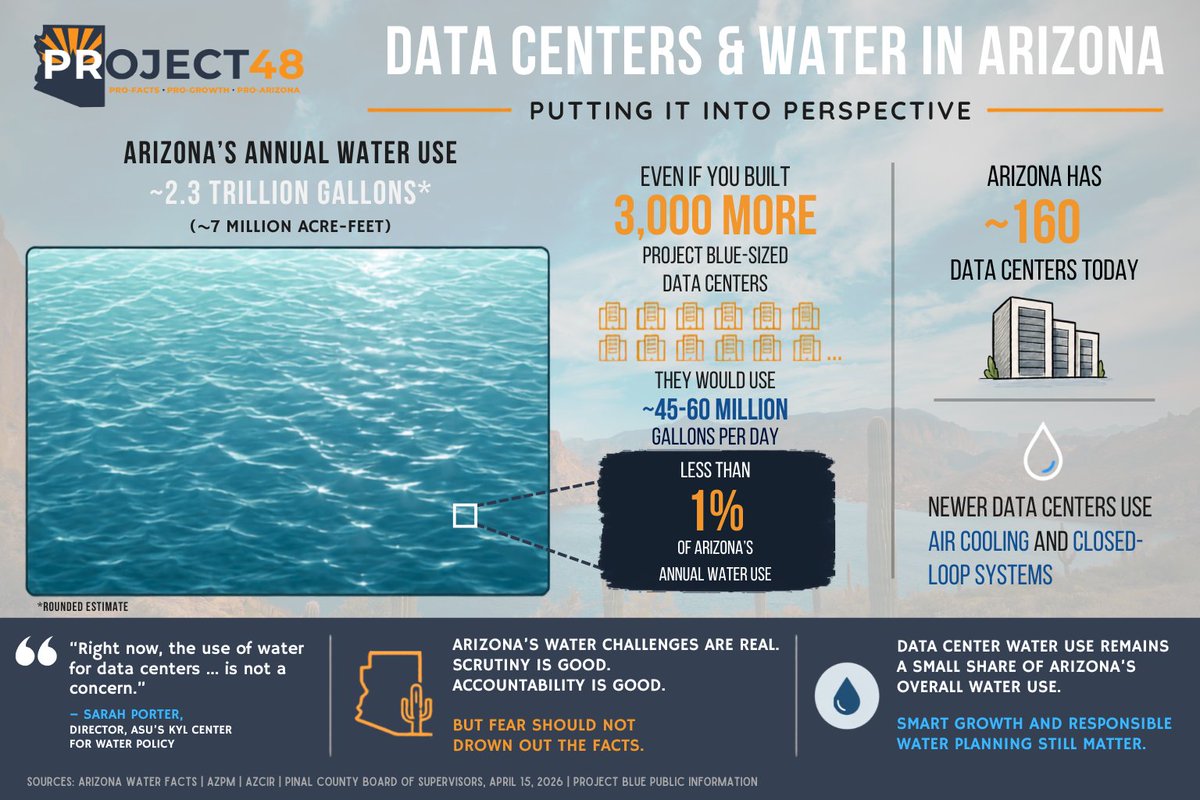
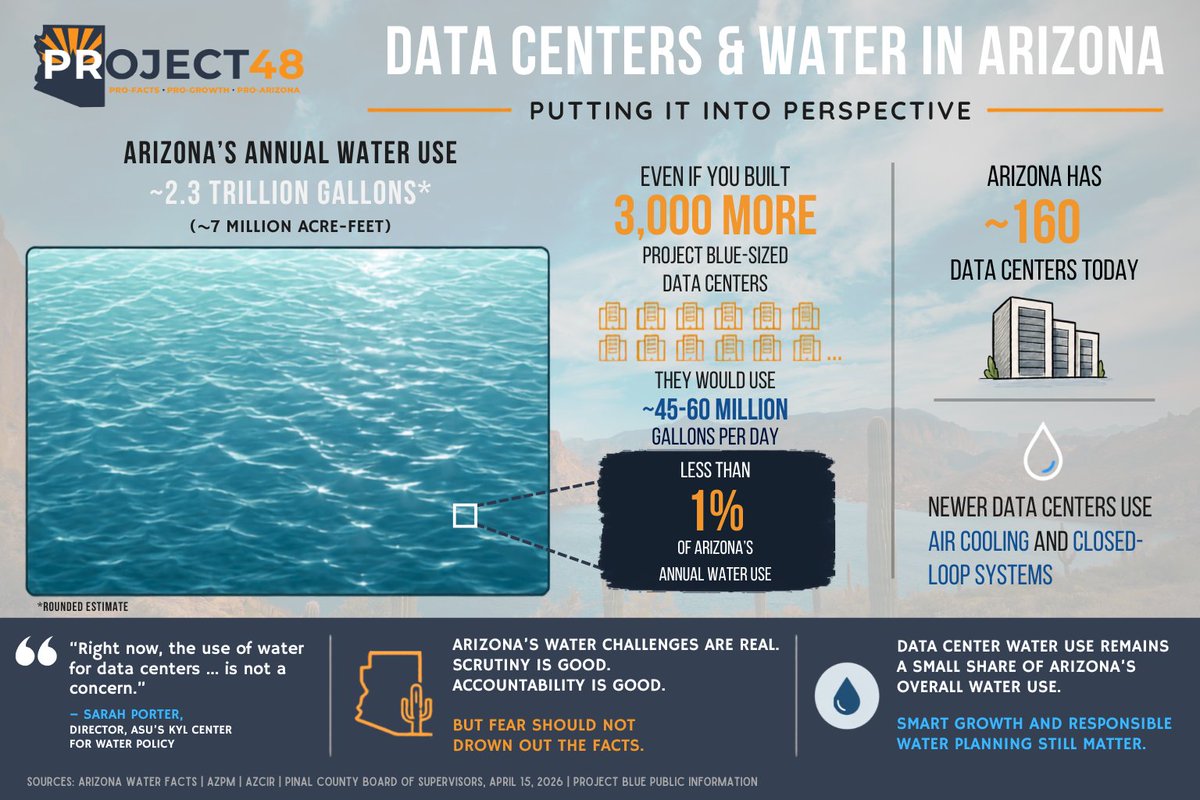
And it’s not as if the industry has moved backward. Many projects are moving toward lower-water designs, utilities have said data centers should pay their own way on power and infrastructure, and cities have added guardrails on zoning, noise, infrastructure, and project-specific conditions to ensure these projects have local oversight.
So if the math did not change and the industry has more guardrails, what changed?
The politics did.
Data centers have become the convenient boogeyman for serious issues facing our state: housing affordability, water, utility costs, infrastructure, you name it.
And the moratorium itself gives the game away. If this incentive is truly indefensible, make that case and repeal it. If the issue is accountability, cost, water, power, noise, or local impacts, debate reforms.
But a three-year pause is splitting the difference. It lets policymakers say they are “doing something” about data centers without making the full case that Arizona should walk away from the program.
That is not serious policy. It is political expediency.
So when people ask, “Why shouldn’t we just get rid of the incentive?” here is the answer: because Arizona’s word has to mean something.
This is not an argument that tax incentives are always good policy. Government shouldn’t be in the business of picking winners and losers. But Arizona also made a commitment.
We told the industry that if they bring tens of millions of dollars in investment to Arizona, and often much more, we will make it worth their while.
Going back on that commitment affects more than just data centers. It tells every other industry looking at Arizona that our commitments are only good until they become politically inconvenient.
A stable regulatory environment matters. Companies do not make long-term investments when the rules change every time the political winds shift.
Dozens of states offer similar data center incentives. Arizona is not competing with itself. A moratorium does not make the investment disappear. It just gives other states a better shot at landing it. Money goes where it is welcome.
A moratorium risks sending billions in private investment, construction jobs, permanent jobs, utility payments, infrastructure improvements, and future tax revenue to other states.
We are trading long-term competitiveness for short-term politics.
It is bad policy, bad for business, and bad for Arizona.

.@AZSenateGOP says the bipartisan budget agreement will include a three-year moratorium on data center tax incentives 👀 @AzCapitolTimes
4
4
16
3,202
Jun 10
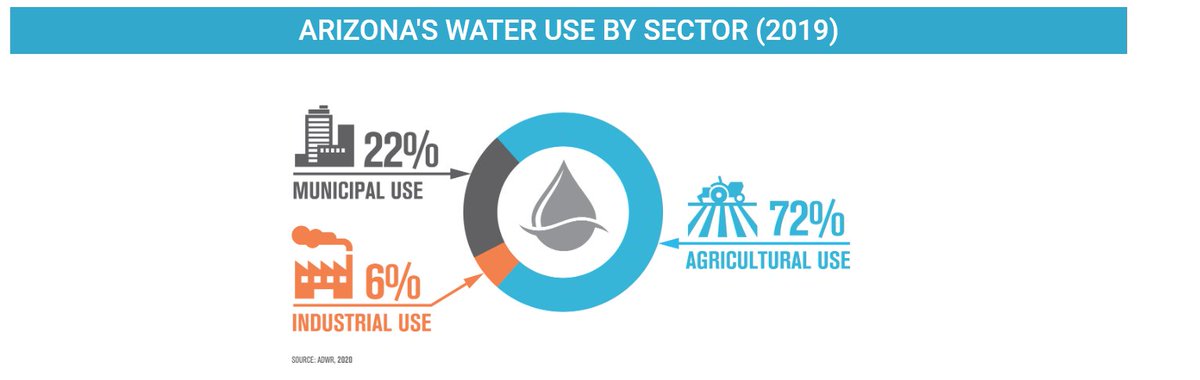
When envisioning new developments or new technologies in Arizona, people often wonder what impact it will have on the state's water use?
The reality is that vast majority of water in Arizona goes to agriculture.
Can we start questioning that? Or is it taboo?
(Graph from MAP)
2
138
We’ve taken autonomy to the streets. Now the skies. ☁️
@Walmart and @Wing are planning drone delivery in Phoenix by 2027.
Driverless cars. Autonomous trucks. Drone delivery.
Arizona keeps making room for the next generation of transportation, and everyday life in the Valley is getting more convenient, more accessible, and safer because of it.
wing.com/news/wing-and-walma…
2
4
5
1,055
Just a reminder: vacant land and empty warehouses employ zero people.
That is where many data center projects here are being sited.
Yes, data centers create fewer permanent jobs than some other industries. But the tax revenue is real.
In Loudoun County, Virginia, data centers occupy about 4% of commercial parcels but generate 38% of the county’s general fund revenue, helping fund public safety, roads, parks, libraries, schools, and lower tax pressure on homeowners.
The job numbers matter. They are not the only thing.
🔗 loudoun.gov/m/faq
The AI data center tsunami is coming. The jobs are not. bizjournals.com/phoenix/news…
1
1
8
628
This is unfortunate.
A three-year moratorium on Arizona’s data center tax incentive is arbitrary, bad for business, and not supported by the facts.
Arizona has had this incentive on the books since 2013. Lawmakers renewed it in 2021 and extended it through 2033. So what has changed since lawmakers renewed it?
Well, it is certainly not the math.
Critics estimate the incentive costs roughly $40 million in foregone state revenue. Meanwhile, the industry generated an estimated $863 million in state and local taxes and boosted Arizona’s GDP by $25 billion in 2023. From 2017 to 2021, it generated an estimated $2.3 billion in state and local tax revenue.
The incentive has a cost. But ignoring the other side of the ledger is disingenuous.
And it’s not as if the industry has moved backward. Many projects are moving toward lower-water designs, utilities have said data centers should pay their own way on power and infrastructure, and cities have added guardrails on zoning, noise, infrastructure, and project-specific conditions to ensure these projects have local oversight.
So if the math did not change and the industry has more guardrails, what changed?
The politics did.
Data centers have become the convenient boogeyman for serious issues facing our state: housing affordability, water, utility costs, infrastructure, you name it.
And the moratorium itself gives the game away. If this incentive is truly indefensible, make that case and repeal it. If the issue is accountability, cost, water, power, noise, or local impacts, debate reforms.
But a three-year pause is splitting the difference. It lets policymakers say they are “doing something” about data centers without making the full case that Arizona should walk away from the program.
That is not serious policy. It is political expediency.
So when people ask, “Why shouldn’t we just get rid of the incentive?” here is the answer: because Arizona’s word has to mean something.
This is not an argument that tax incentives are always good policy. Government shouldn’t be in the business of picking winners and losers. But Arizona also made a commitment.
We told the industry that if they bring tens of millions of dollars in investment to Arizona, and often much more, we will make it worth their while.
Going back on that commitment affects more than just data centers. It tells every other industry looking at Arizona that our commitments are only good until they become politically inconvenient.
A stable regulatory environment matters. Companies do not make long-term investments when the rules change every time the political winds shift.
Dozens of states offer similar data center incentives. Arizona is not competing with itself. A moratorium does not make the investment disappear. It just gives other states a better shot at landing it. Money goes where it is welcome.
A moratorium risks sending billions in private investment, construction jobs, permanent jobs, utility payments, infrastructure improvements, and future tax revenue to other states.
We are trading long-term competitiveness for short-term politics.
It is bad policy, bad for business, and bad for Arizona.
.@AZSenateGOP says the bipartisan budget agreement will include a three-year moratorium on data center tax incentives 👀 @AzCapitolTimes
4
4
16
3,202
Worth reading for more information about Arizona’s data center tax incentive and what data centers contribute to the state’s economy:
@12News spoke with @AZChamber's Danny Seiden about competitiveness, investment, and major technology projects: 12news.com/article/news/loca…
@JustinWilmethAZ published an op-ed in @azcentral on why the debate should look at both sides of the ledger, including the incentive’s cost and Arizona’s return: azcentral.com/story/opinion/…
1
4
258
Three Arizonans will die today in car accidents.
Most fatal accidents are caused by distracted driving or substance use.
The deployment of autonomous vehicles will save lives.
Thank you @Waymo and others who are bringing this technology to Arizona.
azdps.gov/hp
2
5
11
1,061
.@Waymo is investing another $220 million in Arizona with a 5,458-acre site in Surprise.
More private investment, safer roads, and more accessible transportation options.
And all we had to do was just not say no to new technology.
Seems like a good trade. Keep it comin'
Chrysler formerly used the site to test its vehicles, then Apple reportedly used it for its own autonomous vehicle testing. bizjournals.com/phoenix/news…
5
277
Fair. Data centers are not exactly built for curb appeal. Like many warehouse and industrial facilities, they are large, often windowless buildings, and communities are right to care about design.
But the fact that a comparison like this can be made shows how far public opinion has turned against them.
Perception is not reality.
These projects bring jobs, tax revenue, infrastructure investment, and long-term opportunity.
They deserve scrutiny too.
But the debate should be grounded in facts, not preconceived notions.
Jun 8

"At this point, I think the approval rating for syphilis is probably higher than it is for data centers."
Why do so many Arizonans hate data centers?
@stacypearson says it comes down to two things: They're ugly — and "inherently creepy."
Watch the clip from @AZMorningNews:
1
161