
Redefining Web3 Trust with AI | backed by @drapervc @velocitycap_
Joined August 2024
- Tweets 263
- Following 52
- Followers 2,081
- Likes 287
87 Photos and videos







Pinned Tweet

30 Nov 2025
@cbventures' 2026 ideas spotlight "Proof-of-Humanity" in AI Robotics — a timely insight as AI erodes the line between human and synthetic content. Verifiable, privacy-preserving identity is essential. At Solo, our shared vision with our investor @TimDraper on privacy-first human verification inspired his lead investment earlier this year. We're delivering exactly that: Decentralized 1P1A (One Person, One Account) on-chain powered by our own zkFHE biometrics. Enabling Credible Anonymity for secure Web3 lending, frontier AI data labeling, and Sybil-resistant ecosystems.
Our live PoC achieves on-chain verifications in seconds; partnerships with @GEODNET, @Meet_Perle, @JoinSapien, and other leading projects demonstrate real-world impact for Solo-verified human data.
@HoolieG, @jonathankingvc — Let's talk on how Solo advances your PoH vision.
Check out the full blog: coinbase.com/blog/Coinbase-V…
#ProofOfHumanity #Web3 #AI #CredibleAnonymity
25 Nov 2025

Short term price moves do not measure long term progress. 2025 was a huge year for fundamental progress in crypto adoption and innovation.
We're sharing 9 ideas we’re ready to back that could define crypto’s next big thing in 2026. They break down into 4 main themes: 👇
10
29
78
22,753
2h
Strata's 2026 guide to human-in-the-loop has a line I keep coming back to.
"Presence is not practice."
Most enterprises have a human nominally in the loop. Almost none have built an actual intervention mechanism.
That's a policy. Not a verification layer.
6
12
367
Jun 13
Five companies are building incompatible versions of Know Your Agent.
ERC-8004. Visa TAP. Trulioo. Sumsub. FIDO.
Different architectures. Different trust anchors. No interoperability.
The fragmentation problem is arriving before the solutions do.
5
15
376
Jun 12
Gartner's 2026 projection: 80% of unauthorized AI transactions come from internal policy violations.
Not external attacks. Internal ones.
The AI had permissions it shouldn't. Granted by humans who were never properly verified.
3
350
Jun 12
What if, by the end of 2026, AI agents outnumber humans onchain?
How do you know a wallet belongs to a real person?
Imagine every wallet being:
• Provably human
• Provably unique
• Completely anonymous
That's the vision behind Solo's Credible Anonymity ⬇️
7
3
15
463
Jun 12
2/ Solo’s article explains how zkFHE biometrics, 1P1A, and anonymous credit scoring can fix Web3’s privacy vs trust tradeoff, from uncollateralized DeFi to fairer airdrops and better AI data.
Full article: medium.com/@solo_zkHE/what-i…
77
Jun 11
Strata's 2026 research: only 18% of security leaders have high confidence their IAM can handle agent identities.
Not 18% who've had problems. 18% who are still confident.
Every enterprise scaling AI agents is running on a foundation its own security team doesn't trust.
5
1
13
110
Jun 10
Google Threat Intelligence: criminal groups are now running agentic AI as a persistent operational tool across multi-week attack campaigns.
Not AI-assisted hacking. AI-conducted operations.
The attack surface is anyone who trusts an agent without verifying the human behind it.
5
1
8
2,308
Jun 9
Vitalik Buterin: ZK proofs are the standard for AI agents transacting on-chain.
The concern: a pseudonymous agent's requests can be correlated over time and re-identify the human behind it.
Privacy at the payment layer means nothing without privacy at the identity layer.
6
2
15
447
Jun 8
Anthropic withheld Claude Opus Mythos from public release in April 2026.
The reason: internal testing showed offensive cyber capabilities the safety team wasn't prepared to manage.
When the model's own creator withholds it for safety reasons, the risk surface is real.
5
2
12
495
Jun 5
McKinsey estimates AI agents could unlock $2 trillion in enterprise productivity.
The number nobody calculates: what percentage of those decisions require verified human accountability?
The productivity case is clear. The trust architecture to back it doesn't exist yet.
5
3
6
381
Jun 5
IBM Think 2026 had one theme that dominated every enterprise AI session: identity.
Not model selection. Not deployment. Identity.
Every AI story either starts with who authorized this, or ends with why nobody knew.
The foundation problem is finally the main conversation.
5
2
13
415
Jun 3
As AI agents become indistinguishable from humans online, identity becomes less important than humanity.
The next digital economy won’t ask:
“Who are you?”
It will ask:
“Are you human?”
Proof-of-humanity is becoming the foundation of trust in the age of AI.
9
2
13
674
Jun 2
Experian confirmed it: synthetic job candidates are landing enterprise interviews.
AI-generated faces. Cloned voices. Fabricated credentials.
Hiring managers can't tell the difference on a video call.
The fix isn't detection software. It's verification before the call starts.
6
1
11
328
Jun 1
The new deepfake attack surface isn't external.
It's your contact center. Your internal comms. Your account recovery process.
The attacker is already inside the trust boundary.
Detection at the perimeter was never the fix.
4
639
May 31
Bloomberg just published: AI is making fraud easier, faster, and harder to stop simultaneously.
Not one of those things. All three at once.
Every fraud team building detection tools is fighting a losing race.
You can't detect your way out of an identity problem.
5
1
7
113
May 29
Enterprises are spending over $1 million cleaning up after compromised AI agents.
Detection takes hours. The damage is already done.
The root cause is the same every time: no verified human at the authorization endpoint.
Fix the foundation.
6
1
9
623
May 29
If an AI model was trained on data labeled by bots, would you trust its outputs?
0%
Yes, data is data
0%
Absolutely not
0%
Depends on the task
0%
Never thought about it
0 votes • Final results
6
567
May 27
Ping Identity: only 9% of companies are prepared for AI-powered identity threats.
The threat they're not ready for: rogue agents that look exactly like legitimate ones.
Your defense stack can't tell them apart.
The attack surface is the authorization layer.
8
2
11
661
May 27
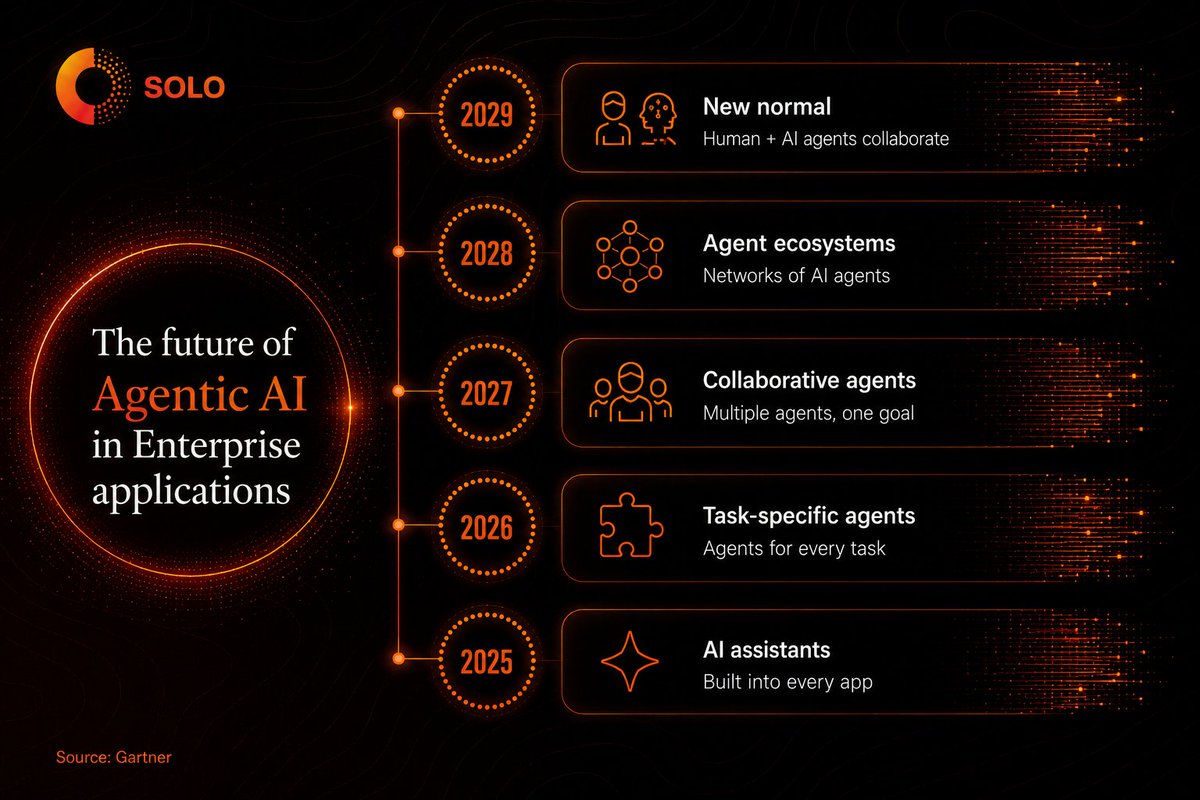
Gartner forecasts 40% of enterprise applications will feature AI agents by the end of 2026.
Only 6% of organizations have an advanced AI security strategy.
The deployment curve & the security curve are diverging in real time.
That gap is the next wave of enterprise breaches.
11
2
10
791