
Impact Research | Market Intelligence | Strategic Advisory | Stakeholder Engagements | Digital Media
Joined April 2009
- Tweets 75,390
- Following 524
- Followers 98,562
- Likes 1,022
17,562 Photos and videos





What to Expect from the Markets this Week – 15th June 2026
Nigeria’s financial markets closed the week on a broadly positive but cautiously balanced note, reflecting a delicate interplay between improving macroeconomic indicators and structural constraints. Equities extended gains despite a shortened trading week due to the Democracy Day holiday on Friday, supported by strength in banking, insurance, and oil & gas stocks. Fixed income markets, however, remained under pressure as yields edged higher across Treasury bills, OMO bills, and FGN bonds, signalling tight liquidity conditions and sustained investor demand for higher returns. Commodities were mixed, while the naira showed mild weakness across both official and parallel markets.
The improvement in Nigeria’s foreign reserves and fiscal flows provides a supportive base for macro stability. However, according to the IMF, risks remain elevated, with inflation projected at 17% by the end of 2026 and concerns around global fuel and food price shocks, insecurity, and elevated poverty continuing to weigh on the outlook.
Business sentiment is improving, as reflected in the @cenbank's Business Confidence Index, which rose sharply in May 2026, with firms expecting stronger activity across key sectors. However, persistent constraints, weak demand, and insecurity continue to limit employment growth and gains in capacity utilisation.
Looking ahead, markets are expected to remain highly responsive to incoming inflation data, global monetary policy decisions, and geopolitical developments affecting commodity prices. While macro stability indicators are improving, the transition from stabilisation to productivity-driven growth remains incomplete.
proshare.co/articles/what-to…
2
7
10
667
Eleven years ago, #Proshare published Dr Temitope Oshikoya's analysis of Nigeria's romance with foreign portfolio capital and the bitter separation that followed the country's removal from the @jpmorgan Government Bond Index in 2015.
The argument was simple and durable. High yields and currency adjustment can pull foreign money quickly into a market, but liquidity that arrives for price can leave for price. The present debate over Nigeria's 2025 capital importation figures, in which portfolio flows reached about $19.74 billion while foreign direct investment was barely $923 million, is not a new question. It is the same recurring test inside a new reform cycle.
In this OpEd, we note that the current status is directional intelligence rather than a verdict and, as such, consider the current debate healthy in context. Foreign portfolio investment is a credible early signal of returning confidence, and Tanimu Yakubu is right that its disappearance in 2015 and 2016 carried real macroeconomic cost. Yet a signal is not a settlement.
The ecosystem is thus encouraged to treat renewed foreign interest as an invitation to build the structural foundations that convert liquidity into factories, infrastructure and jobs. What Nigeria does with the confidence now on offer will decide whether the cycle ends differently this time.
proshare.co/articles/tanimu-…
4
2
139
Proshare retweeted

QUICK NOTE
I am glad Nigerians are engaged in discussions about the management of the economy, both fiscal and monetary. This matters even more as we head towards the polls, dealing with the gains, pains and fears of the reforms implemented thus far.
The post below is useful, but it also shows why economic issues require nuance beyond headlines. See...., the claim that the #IMF asked Nigeria to impose fuel and telecom taxes is substantially true, but incompletely framed. That framing may reflect the trust deficit that has built up over time with such statements, but we should not deepen it. We should help reduce it.
The IMF did not simply say “impose fuel and telecom taxes now.” In its 2026 Article IV Staff Report, it said Nigeria may need further tax policy changes over the medium term, including increasing VAT, extending VAT to fuel products, rationalising tax exemptions, and introducing telecom excises.
But it also added an important caveat. The timing of such reforms must consider poverty and food insecurity, and ensure that the cash transfer system is in place and funded.
Paragraph 20, Fiscal Policy, page 17, states:
“Further tax policy changes will likely be needed, such as increasing the VAT rate, extending VAT to fuel products, rationalising tax expenditures … and introducing telecom excises, to complement administrative gains. The timing of reforms must consider the poverty and food insecurity situation and ensure that the cash transfer system is in place and funded.”
See: proshare.co/articles/imf-202…
The Executive Board summary also notes that additional tax policy measures may be needed over the medium term, including to fund a scaled-up cash transfer programme for vulnerable households.
Nigeria’s Executive Director also made the balancing point clear. The authorities are open to further tax policy adjustments, including possible VAT increases, VAT on fuel products, and telecom excises, but only when the cash transfer system is fully funded and operational, so the burden does not fall disproportionately on the vulnerable.
See: proshare.co/articles/imf-com… via @proshare
So, to the good people at @NigeriaStories, the “breaking news” version is not false. Perhaps, due to the editorial summary, it unwittingly overstated the message by omitting the IMF’s caveats on timing, sequencing, and social protection.
Without holding brief for the @IMFNews or the @NigeriaGov, and without prejudice to the wider debate on whether taxes are the right solution, the more accurate framing is this:
The IMF recommends that Nigeria consider further medium-term revenue measures, including extending VAT to fuel products and introducing telecom excises, but says timing should depend on poverty conditions and the readiness of funded cash-transfer protections.
My regards.

BREAKING NEWS: IMF asks Federal Government to impose fuel and telecom taxes in Nigeria as part of broader measures to increase government revenue

33
111
198
26,718
The @cenbank has introduced another important marker in the sequencing of financial sector reform. On 10 June 2026, the banking regulator released its Draft Guidelines on Ring-Fencing Operations of Closely Linked Entities in the Nigerian Financial System for stakeholder review, with comments due on or before 09 July 2026.
The draft seeks to establish clearer operational, governance, capital, data, and conduct boundaries among entities connected by ownership, directors, shared infrastructure, common branding, or related business arrangements. Its central objective is to reduce regulatory arbitrage, contagion risk, and opacity where activities, customers, systems, or obligations cut across licence categories.
For boards, the message is institutional independence. For investors, it is capital discipline, transparency, and resolvability. For financial institutions and their ecosystem partners, it signals a move away from implicit balance-sheet support, shared operating assumptions, and blurred customer pathways. For regulators, it strengthens the shift toward group-aware, risk-based supervision. For consumers, it reinforces the right to know which licensed entity holds their funds, provides the service, bears the obligation, and is accountable for outcomes.
#Proshare reads the draft not as a routine regulatory circular, but as part of a broader structural reform pathway in Nigeria’s financial system, consistent with the direction earlier identified in its commentary on the revised financial holding company guidelines. As the document remains subject to consultation, this note treats it as a statement of regulatory direction rather than a final rule, and sets out the key implications for market operators, investors, boards, regulators, and consumers.
proshare.co/articles/cbn-ext…
1
5
6
332
The visit of @ngxgrp Chairman, Dr. Umaru Kwairanga, to the Abu Dhabi Securities Exchange highlights Nigeria's growing efforts to strengthen international capital market partnerships and attract global investment flows. The engagement comes at a time when Nigeria's capital market is benefiting from improved investor sentiment, market reforms, and stronger market performance.
proshare.co/articles/ngx-gro…
2
1
231
The second week of June revealed a market in transition. While the broader @ngxgrp recorded gains and investor interest returned to banking, insurance, and oil & gas stocks, the slight decline in the Proshare Market Cap-Weighted and Total Return Float-Adjusted indices suggests that caution remains embedded in institutional portfolio decisions.
The transition to the T 1 settlement cycle appears to be moving beyond its initial disruption, with bargain hunting gradually emerging in sectors that experienced sharp corrections in previous weeks. The strong performance of insurance and banking indices shows that investors continue to favour fundamentally sound companies with attractive valuations and earnings prospects.
The key takeaway is that market sentiment has shifted from broad-based optimism to selective accumulation. Investors are rewarding quality and earnings resilience while remaining cautious about valuation excesses. As market reforms deepen and macroeconomic stability strengthens, corporate earnings' ability to justify current valuations will increasingly determine market direction in the months ahead.
proshare.co/articles/the-pro…
6
3
281
Proshare retweeted

Jun 13
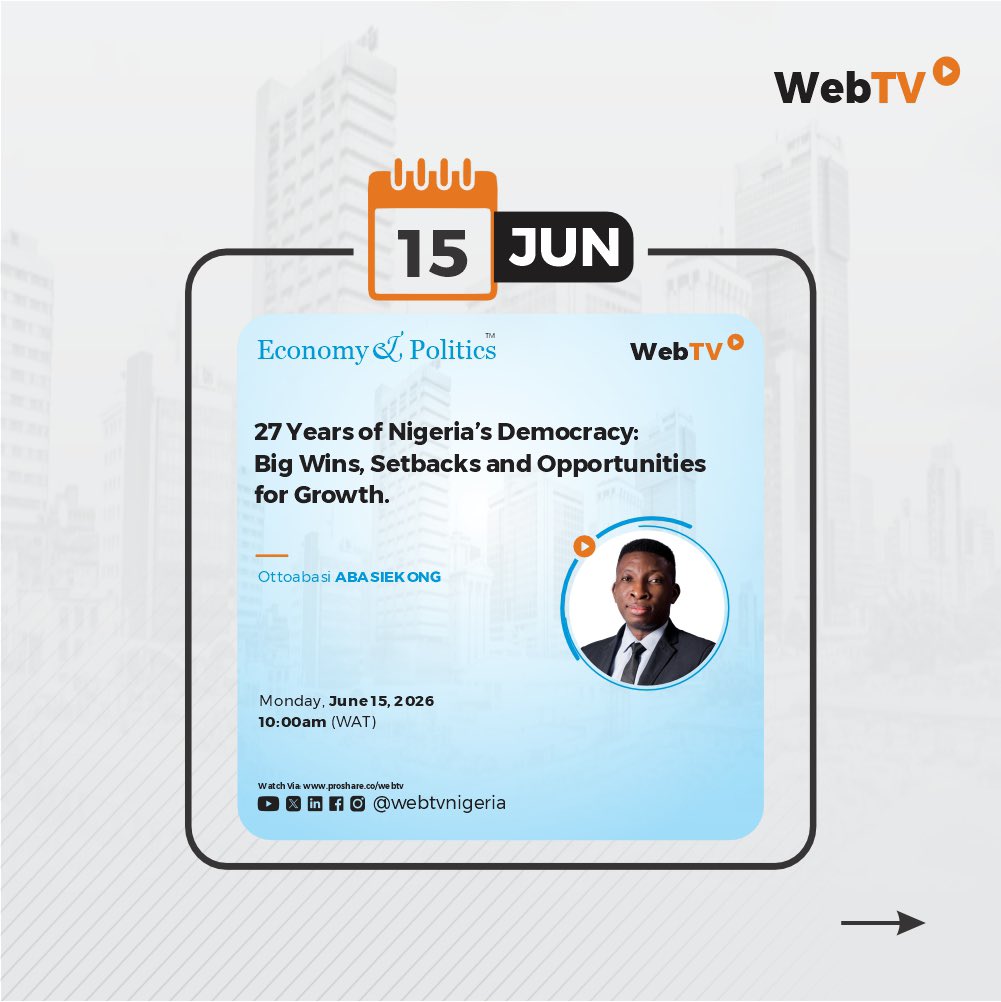
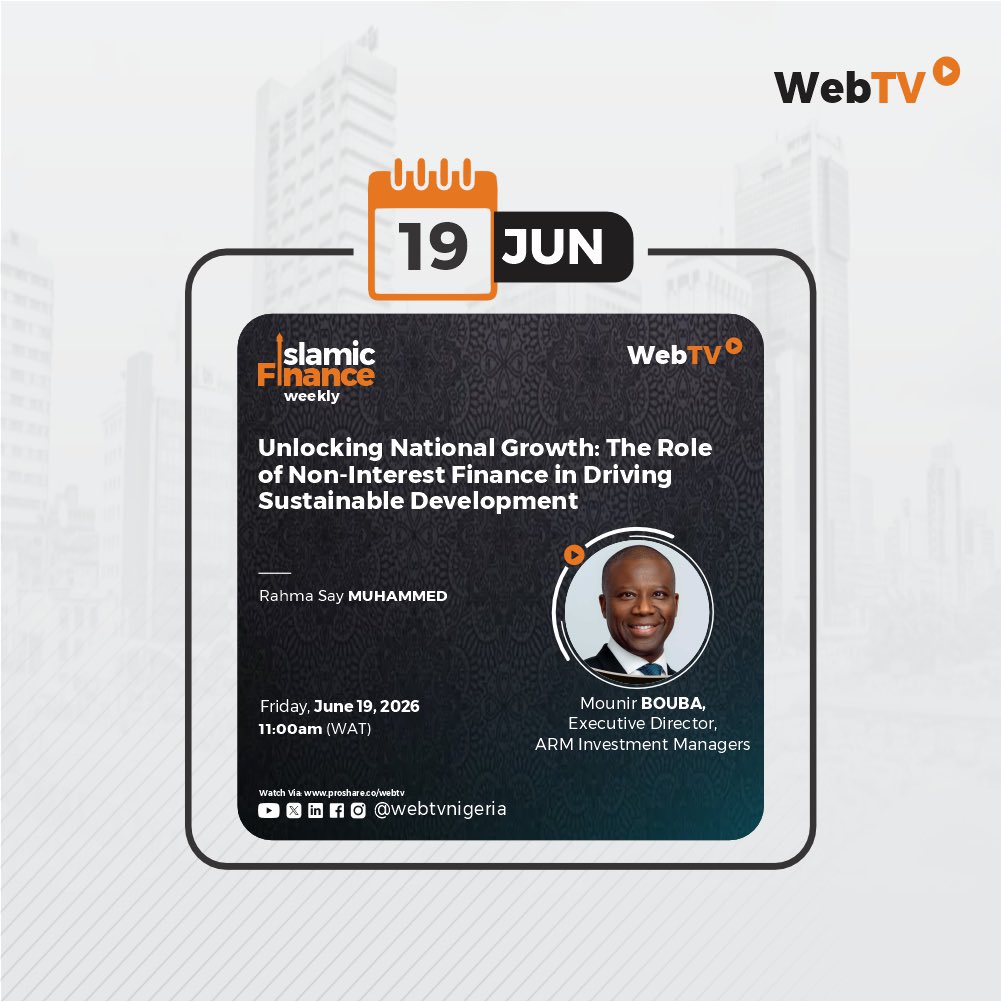
#WhatToExpect: Check the slides to see our programme schedule and event for next week.
#EconomyAndPolitics
#PEARLCorporateSummit
#IslamicFinanceWeekly
#WebTVNigeria


4
1
249
What to Expect from the Markets this Week – 15th June 2026
Nigeria’s financial markets closed the week on a broadly positive but cautiously balanced note, reflecting a delicate interplay between improving macroeconomic indicators and structural constraints. Equities extended gains despite a shortened trading week due to the Democracy Day holiday on Friday, supported by strength in banking, insurance, and oil & gas stocks. Fixed income markets, however, remained under pressure as yields edged higher across Treasury bills, OMO bills, and FGN bonds, signalling tight liquidity conditions and sustained investor demand for higher returns. Commodities were mixed, while the naira showed mild weakness across both official and parallel markets.
The improvement in Nigeria’s foreign reserves and fiscal flows provides a supportive base for macro stability. However, according to the IMF, risks remain elevated, with inflation projected at 17% by the end of 2026 and concerns around global fuel and food price shocks, insecurity, and elevated poverty continuing to weigh on the outlook.
Business sentiment is improving, as reflected in the @cenbank's Business Confidence Index, which rose sharply in May 2026, with firms expecting stronger activity across key sectors. However, persistent constraints, weak demand, and insecurity continue to limit employment growth and gains in capacity utilisation.
Looking ahead, markets are expected to remain highly responsive to incoming inflation data, global monetary policy decisions, and geopolitical developments affecting commodity prices. While macro stability indicators are improving, the transition from stabilisation to productivity-driven growth remains incomplete.
proshare.co/articles/what-to…
2
7
10
667
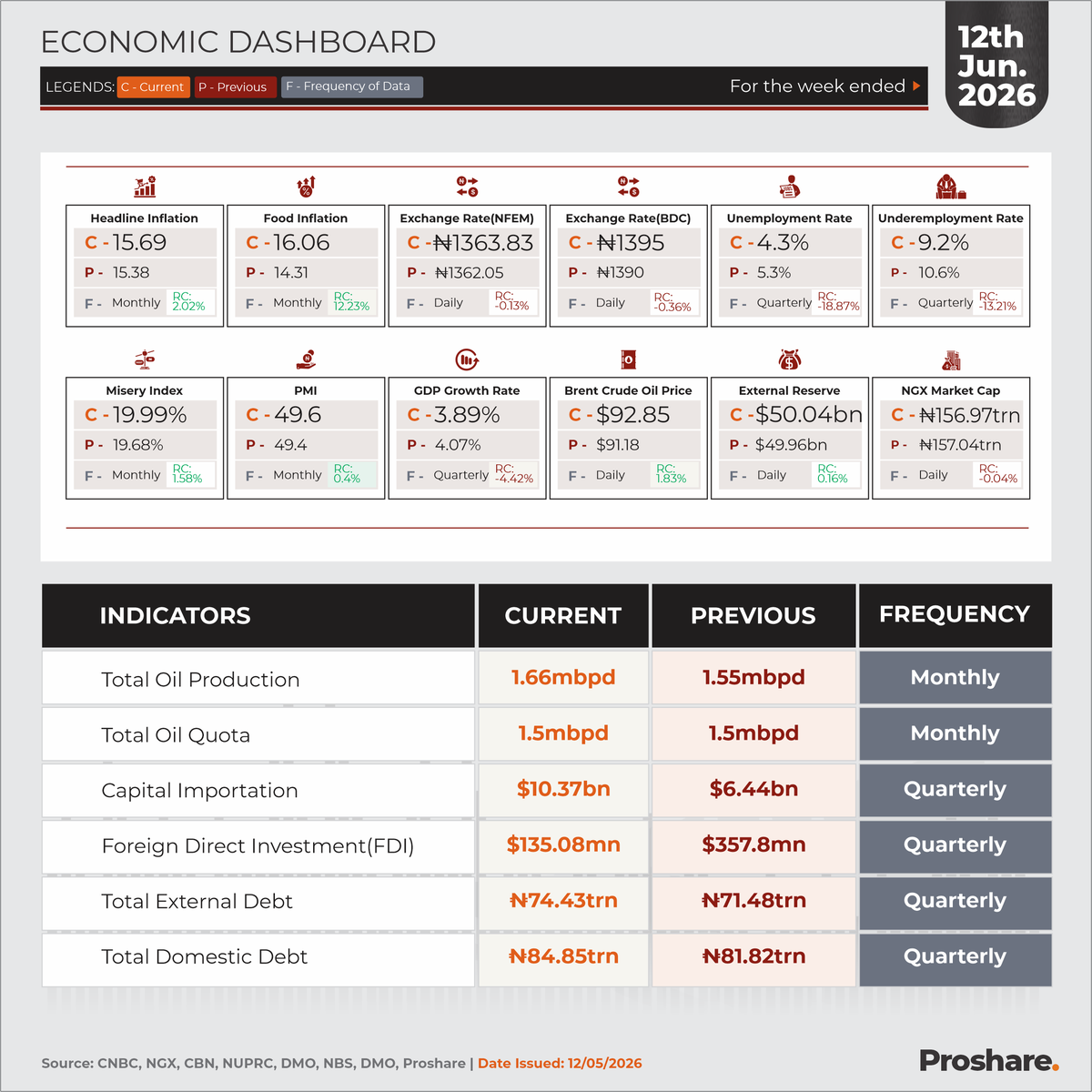
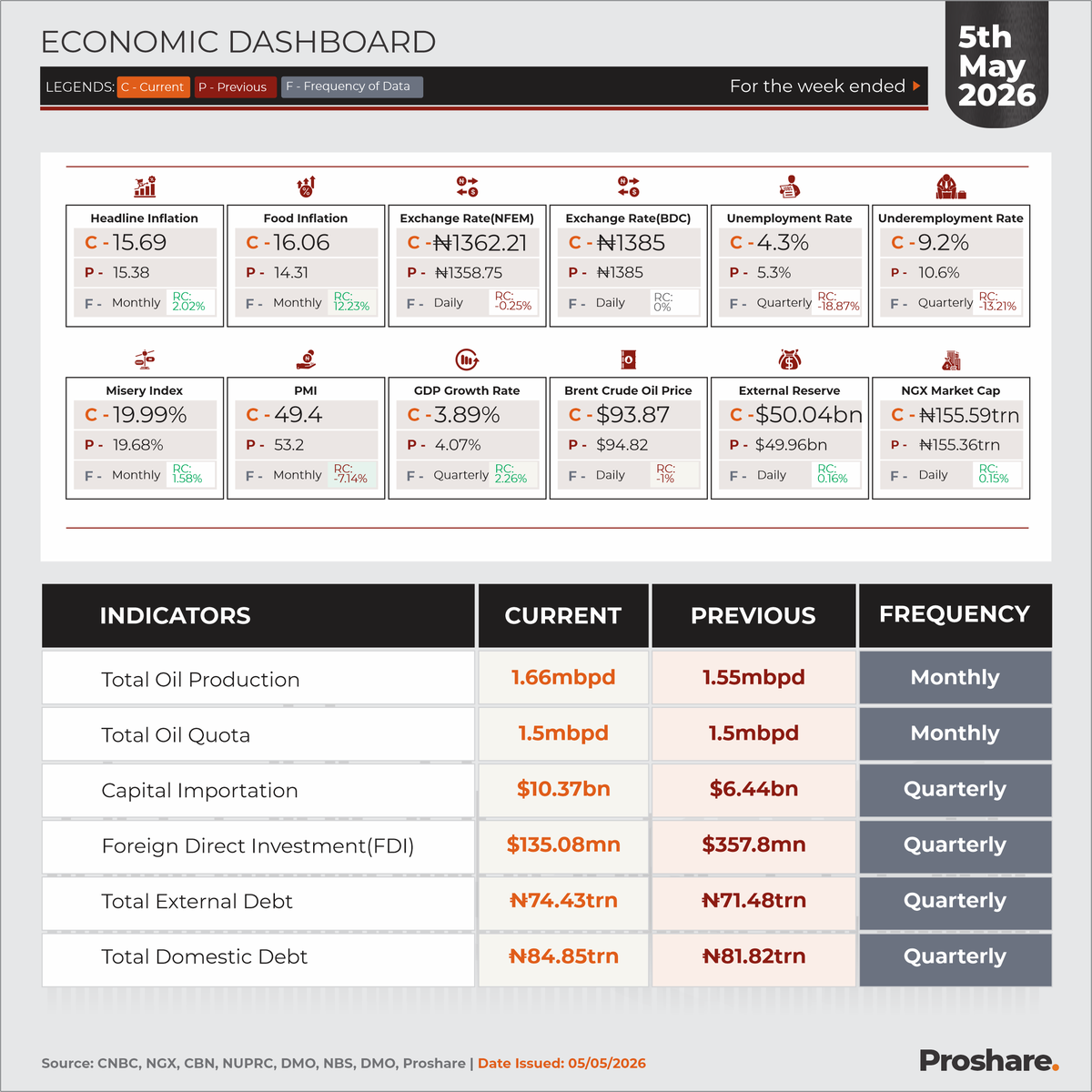
The Nigerian Economic Dashboard, 12th June, 2026, via @ecopoliticsNG
🔗 proshare.co/articles/what-to…
cc: @FinMinNigeria, @NGRPresident, @cenbank, @DMONigeria, @ngxgrp, @NASDNG, @NBS_Nigeria
8
2
512
Proshare retweeted

Jun 13
Global oil markets ended the week under pressure, with Brent crude sliding to a two-month low near US$88 per barrel amid heightened volatility driven by shifting geopolitical signals between Washington and Tehran. The oscillation between expectations of diplomatic progress and renewed tensions reinforced a fragile sentiment environment, in which headline risk, rather than fundamentals, dictated short-term price direction. At the same time, structural supply-and-demand indicators increasingly pointed to a looser market balance.
Demand-side signals weakened further as China’s refiners sharply reduced nominations for Saudi crude, reflecting price sensitivity and softer import appetite. On the supply side, @OPECSecretariat revised down its 2026 demand growth outlook for a second consecutive month, while non-OPEC dynamics, including rising Atlantic Basin logistics flexibility and alternative export routes, continue to moderate perceived supply tightness. Inventory trends and production resilience in key non-OPEC regions further reinforced downside pressure on prices.
For Nigeria, the moderation in Brent prices carries direct fiscal and external implications. Lower oil benchmarks relative to budget assumptions may place pressure on hydrocarbon revenue inflows, with potential transmission effects on Federation Account allocations, FX liquidity, and external reserves accumulation. While ongoing reforms have improved macro stability and supported investor confidence in oil-linked assets, sustained softness in crude prices could temper FX inflows and complicate fiscal planning. Inflation dynamics may also remain sensitive to energy import costs and exchange rate pass-through effects, even as subsidy reforms continue to moderate direct fiscal exposure.
Looking ahead, market direction will remain closely tied to OPEC communication, geopolitical developments in the Middle East, US inventory data, and evolving demand signals from Asia, particularly China.
proshare.co/articles/a-war-o…
5
3
442
.@ThinkBusinessAf's @Dr_Okiti challenges the popular claim that President @officialABAT is Nigeria's largest borrower since 1999, presenting dollar-denominated @DMONigeria data as the cleanest analytical basis.
The piece argues the real fiscal challenge is debt service consuming a disproportionate share of revenues, not the headline stock, and calls for a more disciplined, data-led national debt conversation.
proshare.co/articles/who-bor…
7
9
438
The @cenbank has released the revised Guidelines for Licensing and Regulation of Financial Holding Companies in Nigeria as an exposure draft, with comments invited on or before 9 July 2026. The circular, referenced FPR/DIR/PUB/CIR/001/017 and dated 10 June 2026, supersedes the August 2014 Guidelines and the December 2011 circular that first introduced holding companies under the new banking model.
It arrives at a deliberate moment. After a recapitalisation cycle that concentrated on raising fresh equity, the regulator is turning its attention to the quality of that capital, the transparency of group structures, and the discipline of dealings between a holding company and its subsidiaries.
The draft repositions the financial holding company from a passive equity vehicle into an accountable group platform. It raises the group capital margin, ring-fences subsidiary capital, regulates shared services, caps contingent liabilities, prohibits insider-related borrowings, and reinforces consolidated supervision. For boards, executives, shareholders, and analysts, the signal is that scale alone no longer defines strength.
In this review, we examine what the circular changes, who is affected, and how it fits within Nigeria's broader financial sector reform, governance, and market confidence architecture.
proshare.co/articles/cbn-tur…
8
5
523
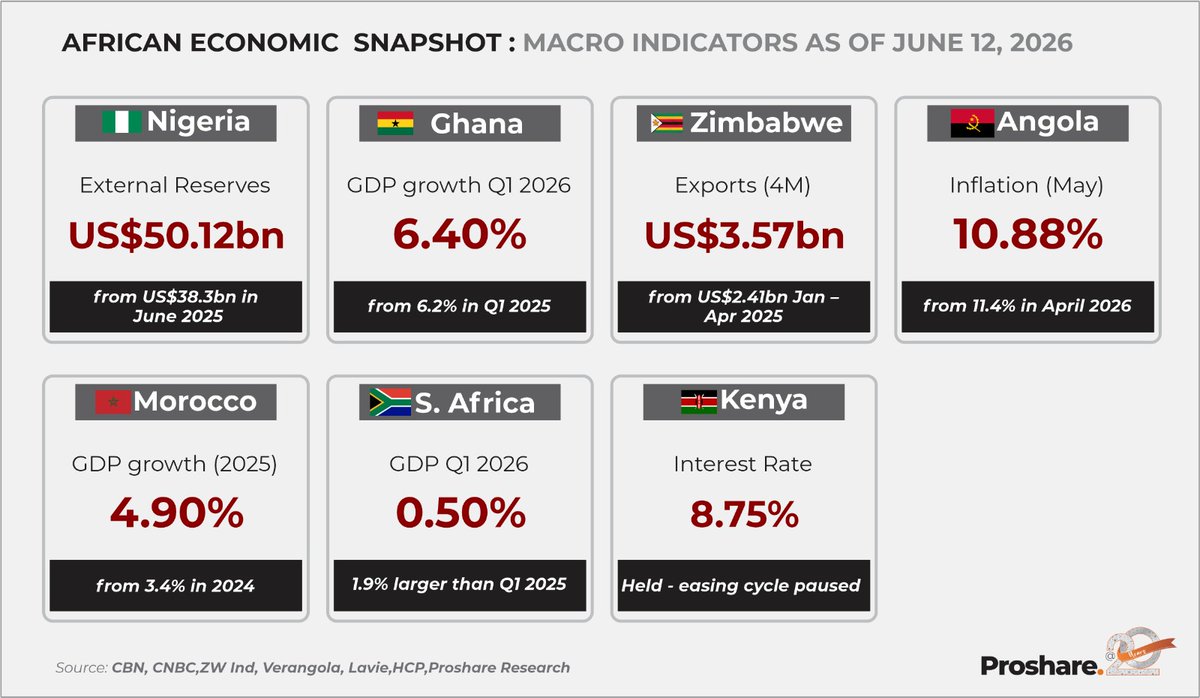
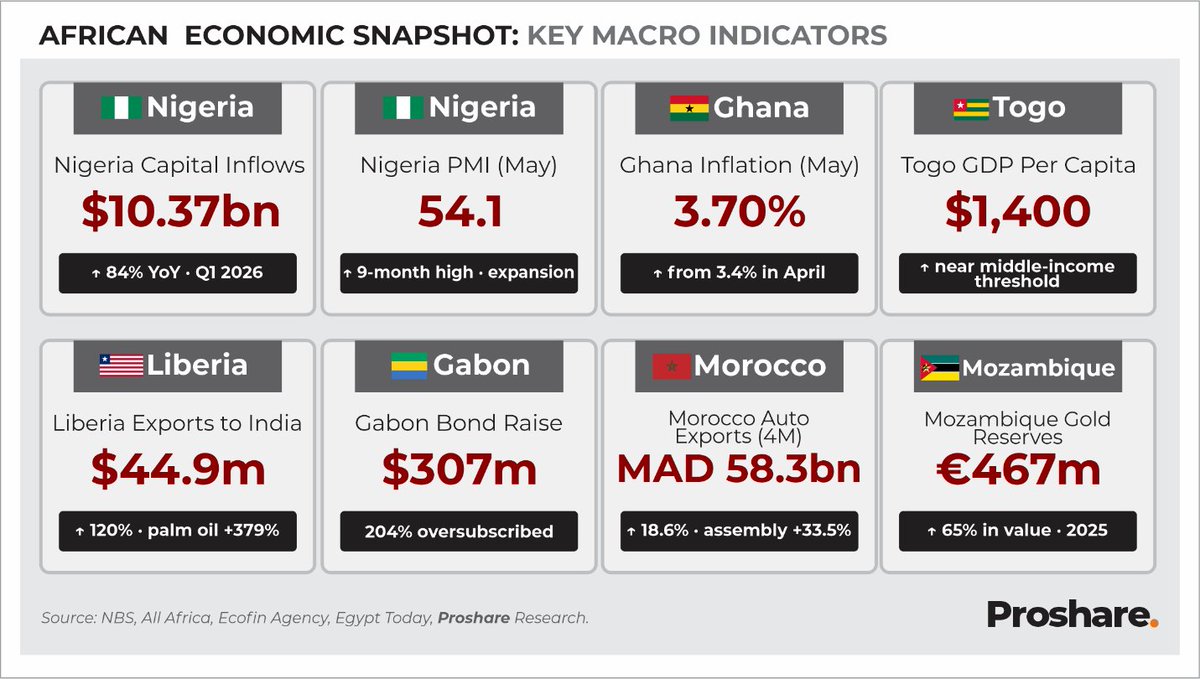
As Nigeria observes Democracy Day today, commemorating the country's democratic journey and institutional evolution, Africa's most consequential economic story this week remains the widening gap between the headline gains of macroeconomic stabilisation and the structural vulnerabilities those gains have yet to resolve.
Nigeria's external reserves reaching a 17-year high of US$50.12bn, up 30.9% year-on-year, stands as one of the most significant reserve milestones recorded in West Africa in over a decade. The @IMFNews's 2026 Article IV endorsement, which projects Nigeria's GDP growth at 4.1%, further highlights the direction of President Tinubu’s reforms.
Democracy Day also provides an opportunity to reflect on the next phase of the reform agenda. While reserves have strengthened and macroeconomic stability has improved, the IMF's caution regarding the Senate-approved US$5bn Abu Dhabi total return swap highlights the importance of transparency and sustainability in debt management.
Across the continent, the pace of reform payoffs remains uneven. Ghana's GDP growth accelerated to 6.4% in Q1 2026, supported by moderating inflationary pressures, suggesting that post-debt-restructuring reforms are beginning to translate into productive expansion. However, concerns over fiscal transparency remain after the country's budget transparency score declined sharply in the 2025 global survey. Morocco continues to demonstrate the benefits of consistent industrial policy, recording 4.9% GDP growth in 2025 while deepening economic ties with China through increased trade and strategic investment commitments.
Zimbabwe's 48% export surge to US$3.57bn within four months and the growing contribution of value-added exports point to a meaningful shift in export composition, with implications for long-term economic resilience. In contrast, Mozambique's IMF-revised growth forecast of just 0.2%, rising food inflation risks, and continued reliance on external financing illustrate the challenges faced by economies yet to establish self-sustaining reform momentum.
Two structural trends deserve particular attention. The first is the growing role of digital financial infrastructure as a transmission channel for growth. Tanzania's 33% increase in cross-border mobile money inflows underscores East Africa's emergence as the continent's most operationally advanced payments corridor, while Nigeria's US$1bn @AfCFTA credit facility represents an effort to convert continental trade ambitions into tangible financing support for exporters.
The second trend is the reconfiguration of sovereign debt and fiscal space across Africa. Cameroon's scheduled CFA120bn bondholder repayment, Togo's domestic debt issuance programme, Angola's prolonged disinflation alongside persistent tax expenditure leakages, and Libya's warning of a salary budget shortfall all reveal a common reality: headline indicators of stability increasingly coexist with deeper concerns around revenue mobilisation, expenditure efficiency, and domestic capital formation.
As Nigerians celebrate Democracy Day, the broader lesson extends beyond politics to economics. Sustainable development is not measured solely by stronger reserves, lower inflation, or improved growth forecasts. The true test lies in whether reforms deepen institutional resilience, strengthen fiscal governance, expand productive capacity, and create lasting prosperity. Across Africa, that remains the unfinished agenda.
Read More: proshare.co/articles/weekly-…
6
4
365
The @cenbank has released an exposure draft of the Revised Guidelines for the Licensing and Regulation of Financial Holding Companies (FHCs) in Nigeria, inviting stakeholders and members of the public to submit comments on the proposed changes.
proshare.co/articles/cbn-pro…
4
3
369
Today, we honour the strength of Nigeria’s democratic journey and the resilience of the people whose voices continue to shape our nation’s future.
From all of us at Proshare, we wish Nigerians a reflective and purposeful Democracy Day.
Happy Democracy Day.
#DemocracyDay
#June12
3
4
249
Nigeria in 1min: Economic, Business and Financial Market Headlines – 12th June 2026
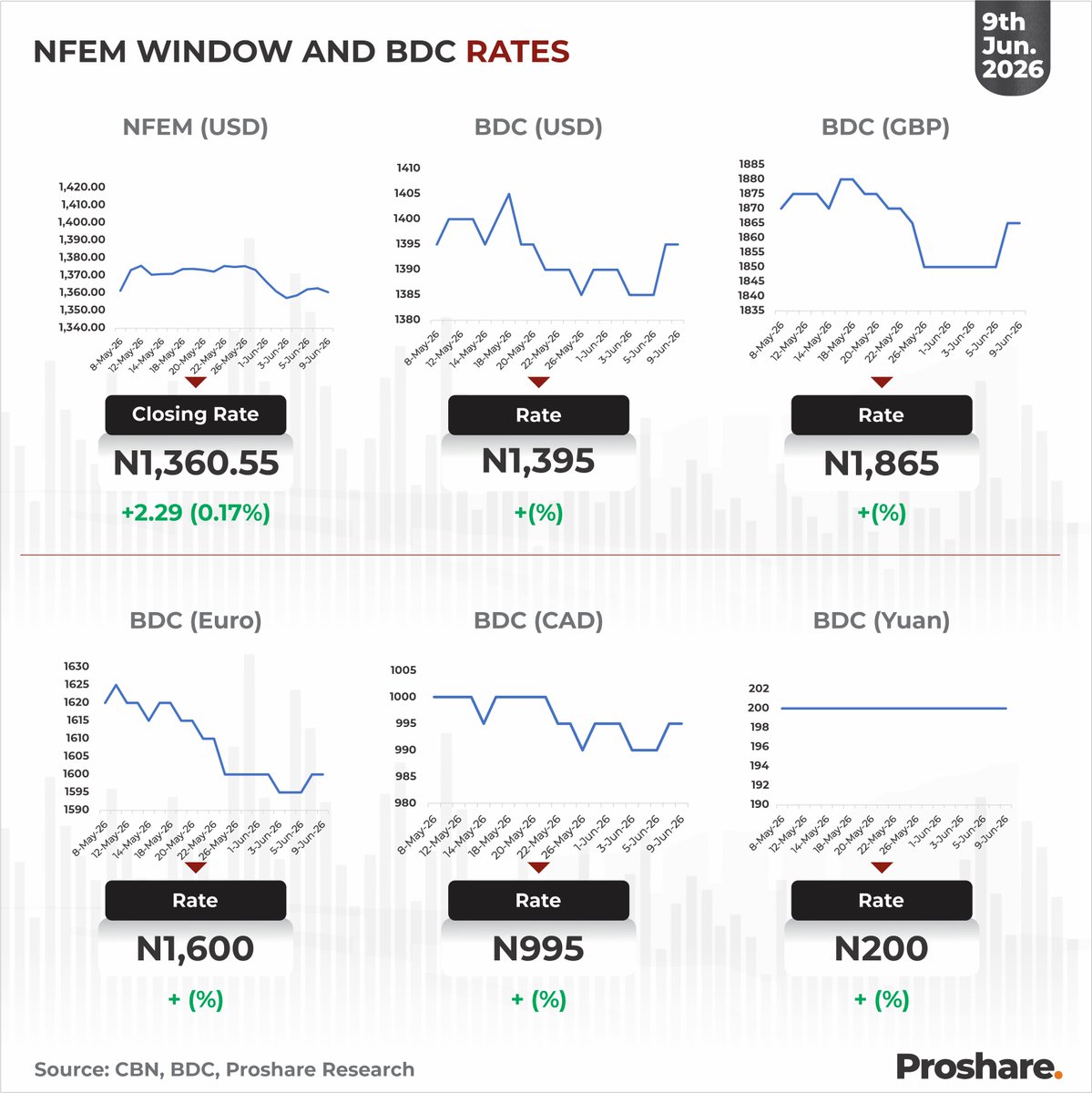
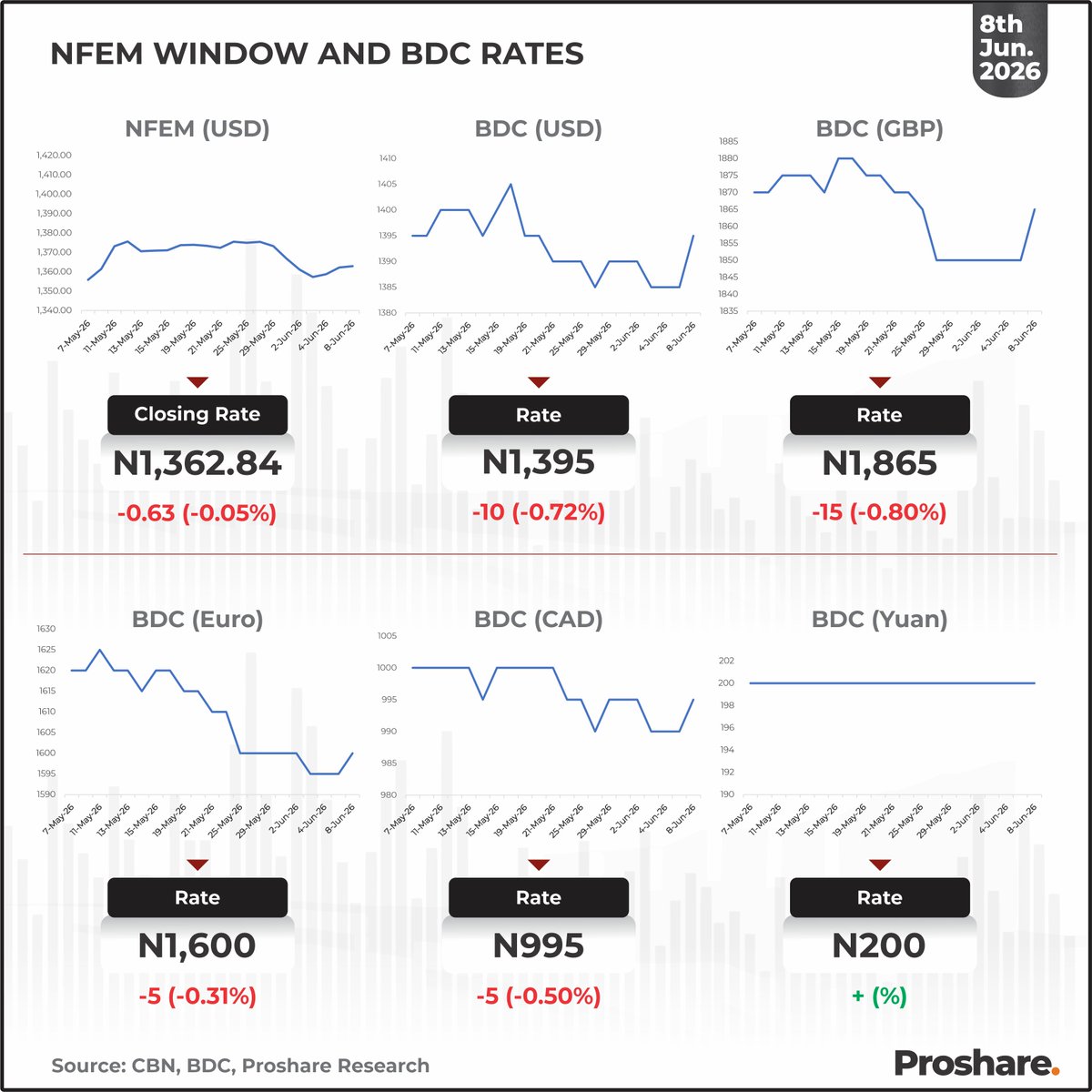
Nigerian equities closed Thursday's session with a N72.7 billion decline in market capitalisation as profit-taking in banking and consumer names ended a four-day advance, a measured correction ahead of the Democracy Day holiday. With the NGX closed today and markets resuming Monday, June 15, the intervening period offers institutional participants an opportunity to reassess positioning in light of several developments. The BDC rate settling at N1,395 per US dollar reflects ongoing demand pressure in the parallel segment and remains a variable to track as the new trading week opens.
The Senate's extension of capital budget implementation to September 30 introduces a fiscal timing signal relevant to infrastructure-linked exposures. On the production side, Nigeria's crude output reaching a 15-month high above its @OPECSecretariat quota provides a near-term revenue tailwind that warrants consideration in sovereign risk assessments. @NERCNG's new obligations on DisCos and the federal government's planned deal room reflect a regulatory environment in active transition
Globally, renewed US-Iran diplomatic momentum is supporting equity sentiment while exerting downward pressure on oil prices, a dynamic with direct implications for Nigeria's external balance.
As markets reopen on Monday, investors and decision-makers would do well to observe opening volume patterns in banking names, currency rate direction, and any post-holiday policy communications as early indicators of the week's directional tone.
Cc: @business, @TecheconomyNG, @technextdotng, @TechCabal, @TechCrunch, @vanguardngrnews, @MobilePunch, @CNBC, @Reuters, @daily_trust,
proshare.co/articles/nigeria…
5
3
305
Access Holdings held its 4th AGM on June 10, 2026, with Chairman Aigboje Aig-Imoukhuede reaffirming the Group's strategic pivot from scale to value creation.
proshare.co/articles/access-…
4
2
263
The Court of Appeal has affirmed that Section 18(2) of CAMA 2020, which permits private companies to have a single shareholder, applies to all private companies in Nigeria, whether incorporated before or after CAMA 2020.
The landmark decision in Corporate Affairs Commission v. Primetech Design and Engineering Nigeria Limited and Anr. sets a binding precedent for corporate restructuring in Nigeria, strengthens the ease-of-doing-business framework, and aligns local company law practice with global standards.
@BanwoIghodalo represented the Respondents in this landmark case.
Read more: proshare.co/articles/court-o…
2
15
13
10,187
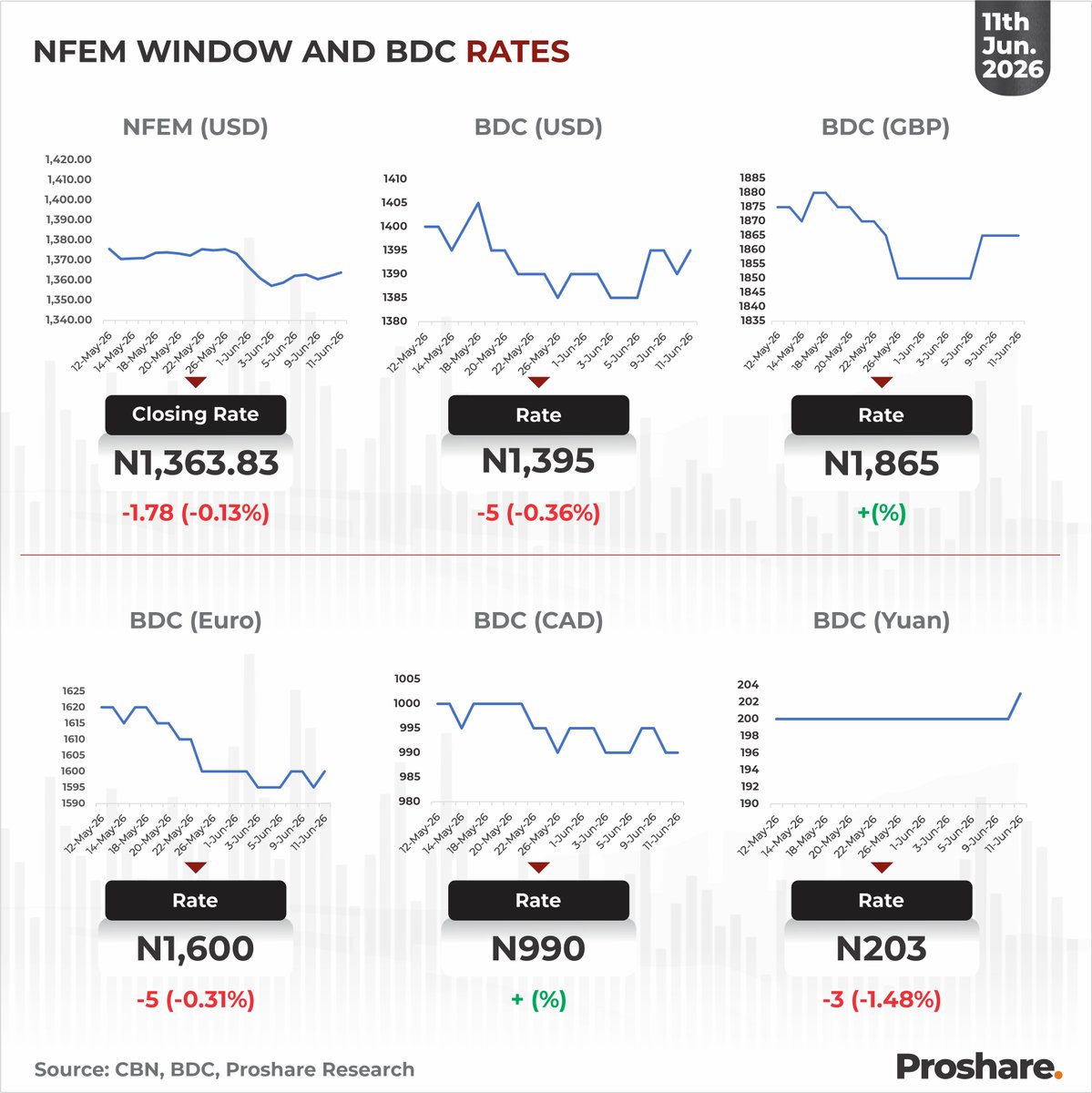
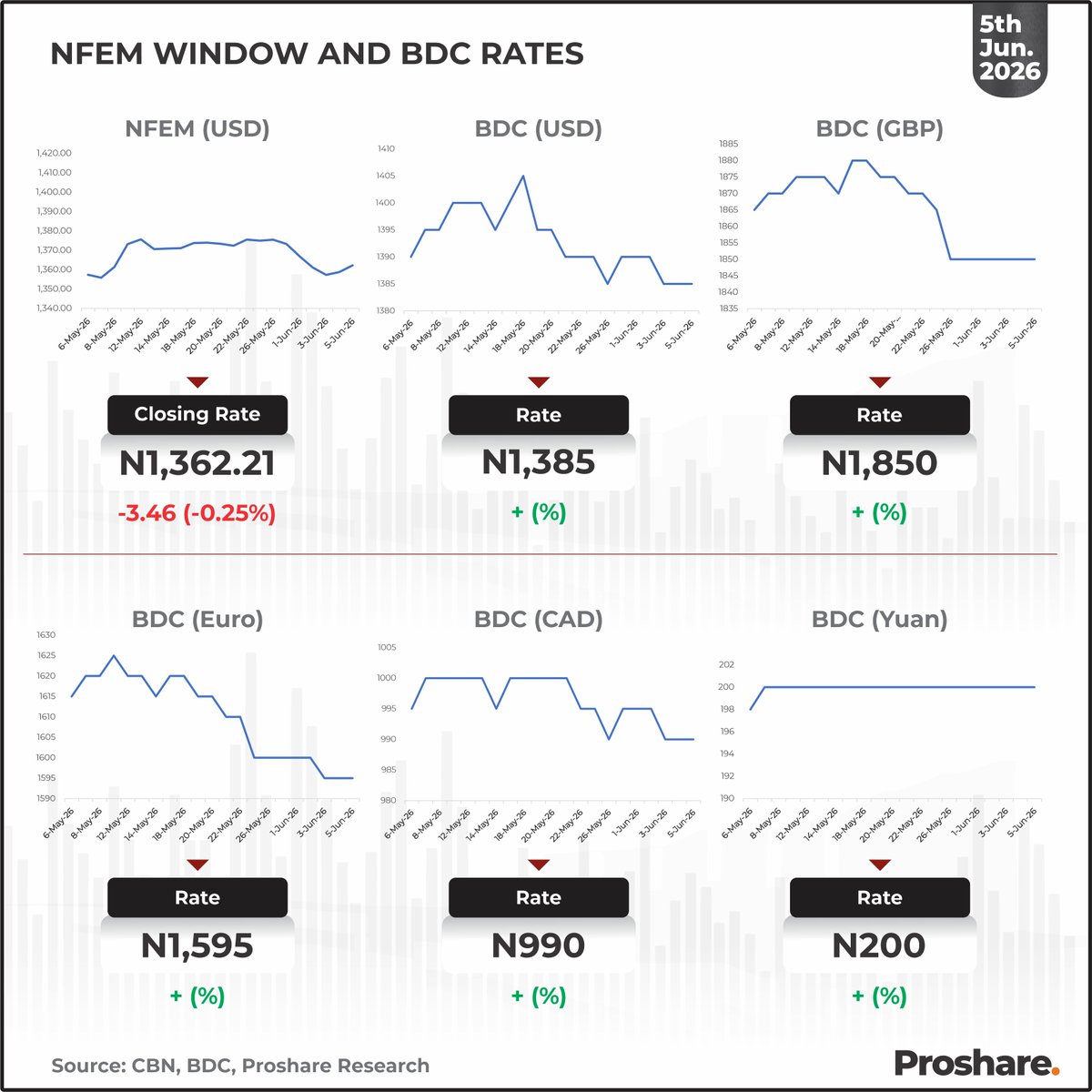
Window and BDC (USD, GBP, CAD, EURO & YUAN) Rates – June 11, 2026
Closing Rate - N1,363.83
BDC Rate - N1,395
GBP Rate - N1,865
EURO Rate - N1,600
CAD Rate - N990
YUAN Rate - N203
Compare more currencies at proshare.co/ExchangeRates
Visit our Data Hub via proshare.co/stocks for more market information.
5
3
306