
Joined October 2020
- Tweets 4,956
- Following 1,095
- Followers 505
- Likes 21,673
788 Photos and videos









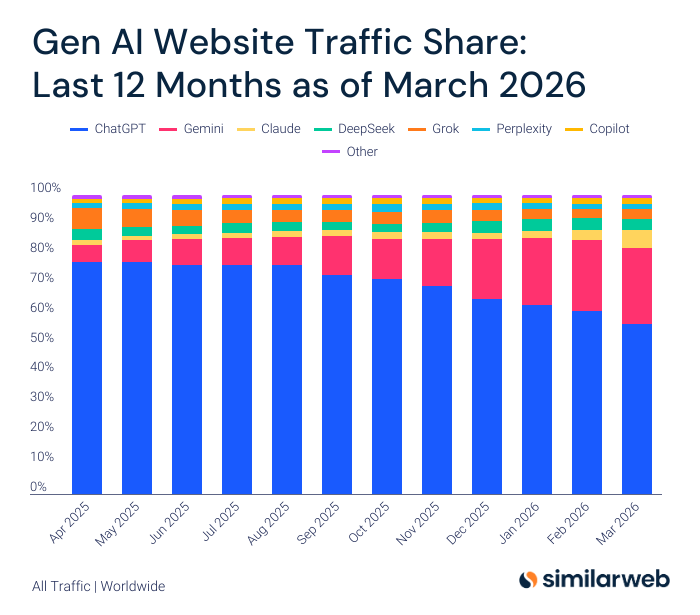


I think this will eventually resolve the problem between Anthropic and the US government, but will also help anthropic with immense marketing.
But the world will be watchful and try to build sovereign models more aggressively due to unreliable US policies.
9

Jun 12
Join the "Mechanoid" community on WhatsApp to foster discussions around Humanoids & General Robotics in India 🇮🇳
chat.whatsapp.com/Fq4gxM7U2J…
Ideal members to join :
- Robotics engineers (students professionals)
- Researchers
- Founders
- Hardware manufacturers
- VCs
- Curators
17
Jun 11
Anthropic's Claude Fable 5 jailbroken days after launch, researcher claims
27 sources
1h
Researcher "Pliny the Liberator" said he defeated Claude Fable 5's safety layers using coordinated multi-agent attacks combining Unicode tricks and decomposition tactics.
1
94
Jun 11
Anthropic had claimed an external bug bounty found no universal jailbreaks across over 1,000 hours of testing before the model's June 9 launch.
The researcher also published what he described as Fable 5's full system prompt on GitHub; Anthropic has not publicly responded.
63
Jun 11
This is Massive 🔥
As a Global Premier Partner in the Claude Partner Network, TCS will empower 50,000 associates with Claude, powered by Anthropic, transform core enterprise functions, co-innovate industry solutions, and build future-ready AI talent through TCS iON.
1
1
69
Jun 11
TCS and Anthropic will also jointly go to market with AI solutions for highly regulated sectors.
More -> tcs.com/who-we-are/newsroom/…
47
Prudent AI retweeted

Jun 10
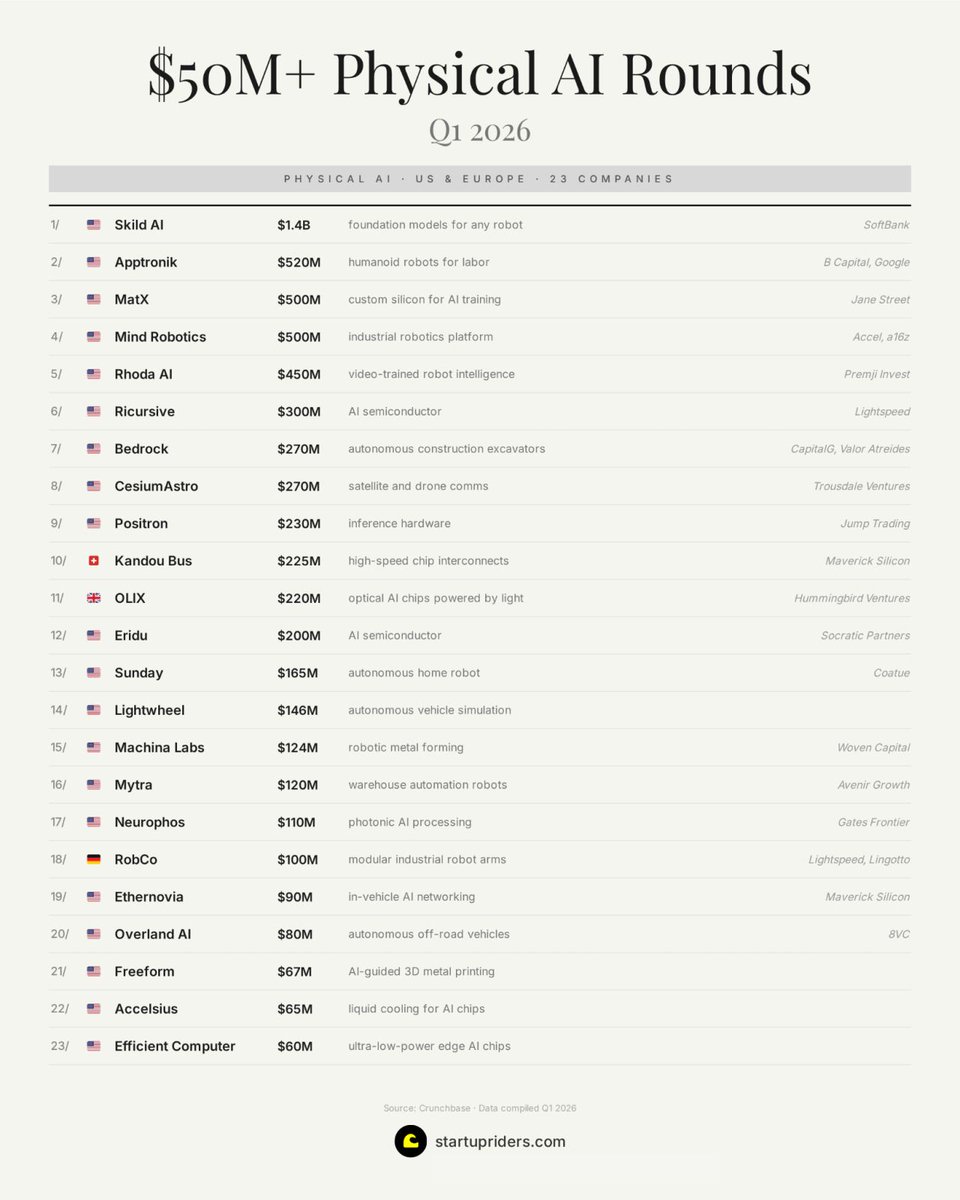
German robotics companies are starting to put Europe on the map for physical AI.
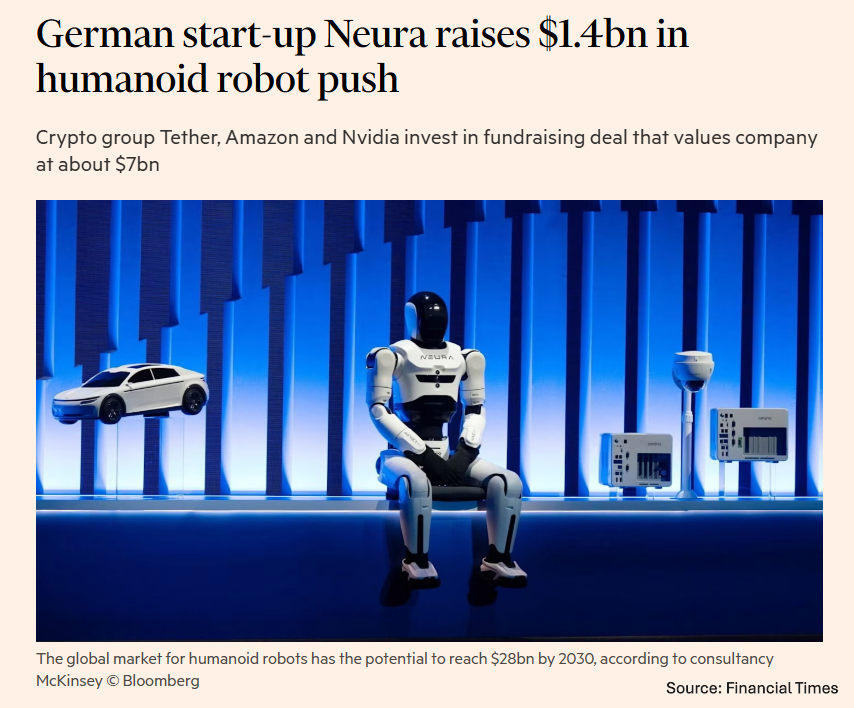
FT reports NEURA Robotics has secured $1.4B at a ~$7B valuation for humanoid and cognitive robotics.
Backing includes: Tether, Qualcomm, Amazon, Nvidia, Bosch, Schaeffler and the European Investment Bank.
According to the release, NEURA wants to scale humanoid robot production capacity from 6,000 units this year to tens of thousands next year, with a longer-term target of producing millions of AI-powered robotic arms and humanoids by 2030.
It also reports a >$1B order book for its robots, including humanoids.
NEURA is not the only German robotics capital story either.
Agile Robots is reportedly in talks to raise around $800M, with SoftBank discussing a $300M contribution, for a business spanning industrial arms, warehouse robots and humanoids. This surfaced June 2.
On the defence-autonomy side, Helsing was reported in May to be nearing a $1.2B round at an ~$18B valuation, while Stark was reported last week to be in talks to raise €300M at around €2.5B.
The structural reason is not hard to see: Germany has deep industrial automation, automotive supply chains, precision manufacturing and defence rearmament tailwinds.
9
66
413
32,367
Prudent AI retweeted

Physical intelligence needs real-world data.
Meet SSI Ego — a first-of-its-kind 360°(H)×180°(V) FOV wearable capture device for large-scale multimodal embodied data.
Built for SSI World, SSI Ego turns real-world human activity into structured training signals for robot learning — with higher data yield, accurate depth estimation, and stereo vision.
Capture hands, full-body posture, objects, motion, audio, and surrounding context with:
• 360°(H)×180°(V) FOV
• 4× RGB fisheye cameras
• 2K capture
• 6-axis IMU
• Synchronized audio
• Wearable & automated workflow
Video ↓
Early access & partnership inquiries:forms.gle/tbooaDv3BYEdq1gQ7
4
18
181
37,567
Prudent AI retweeted

Jun 10
Meet Axol: a dual-arm robot designed for teams working with physical AI. Made in America.
Axol is for builders who believe robots should work, in the real world, not just staged environments, and that the future of physical AI should be open not closed.
36
30
358
55,113
Jun 10
Intriguing
Jun 10

Today I'm publishing a new essay, Policy on the AI Exponential. AI is progressing extremely fast—much faster than the policy process was built to handle. The essay lays out where I think the technology is now, and the action needed to close the gap: darioamodei.com/post/policy-…
18
Prudent AI retweeted

Jun 4
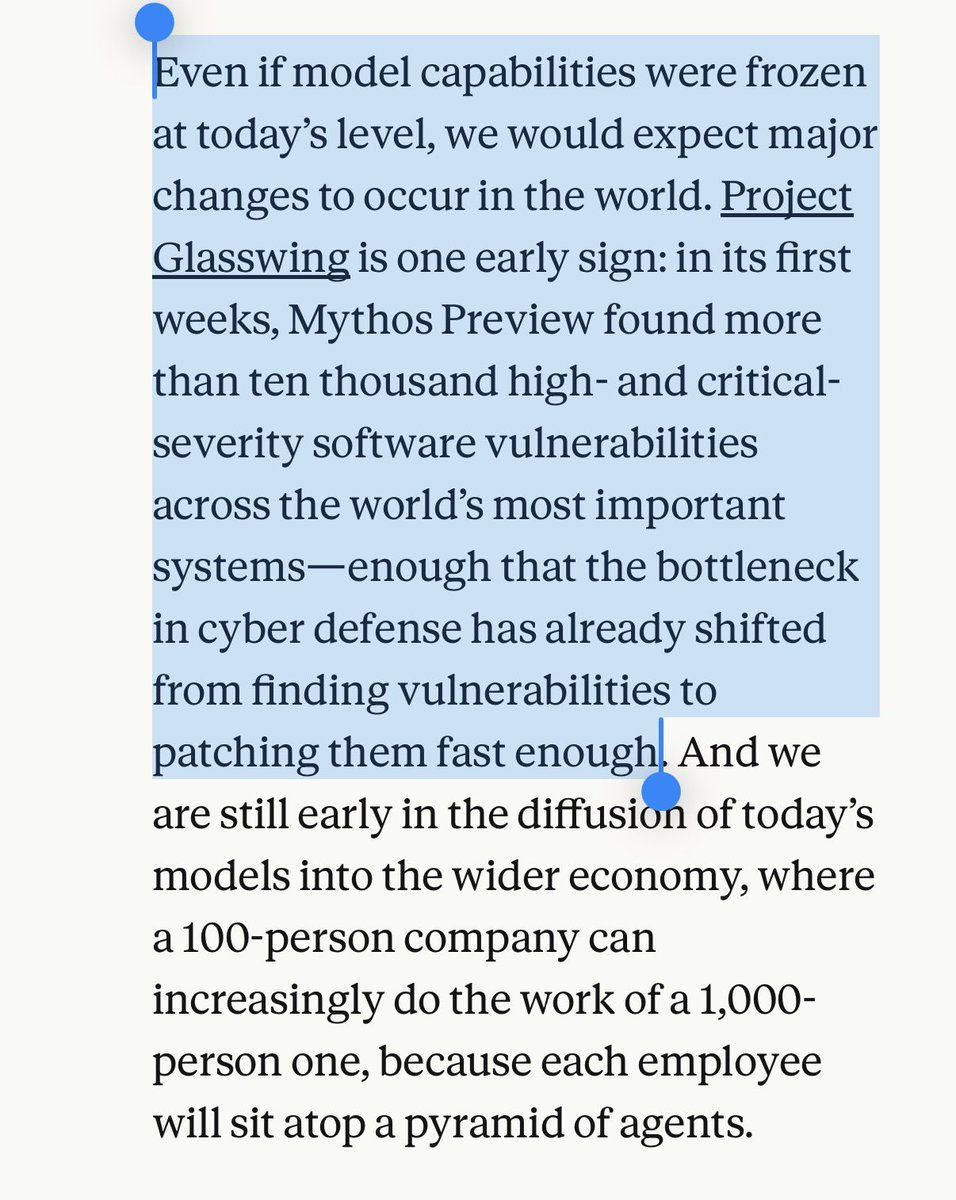
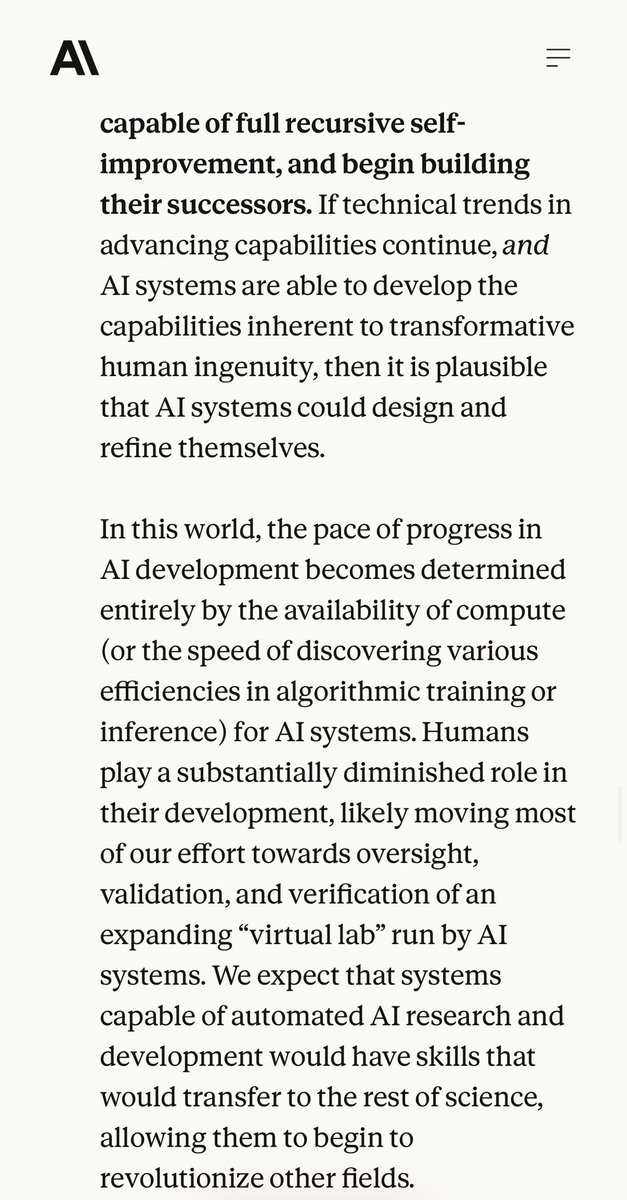
Holy moly, Anthropic is getting very serious about recursive self-improvement!
One word: acceleration.
Insane blog article.
Tl;dr:
•We are close to an AI capable of fully autonomously designing and building its own successor
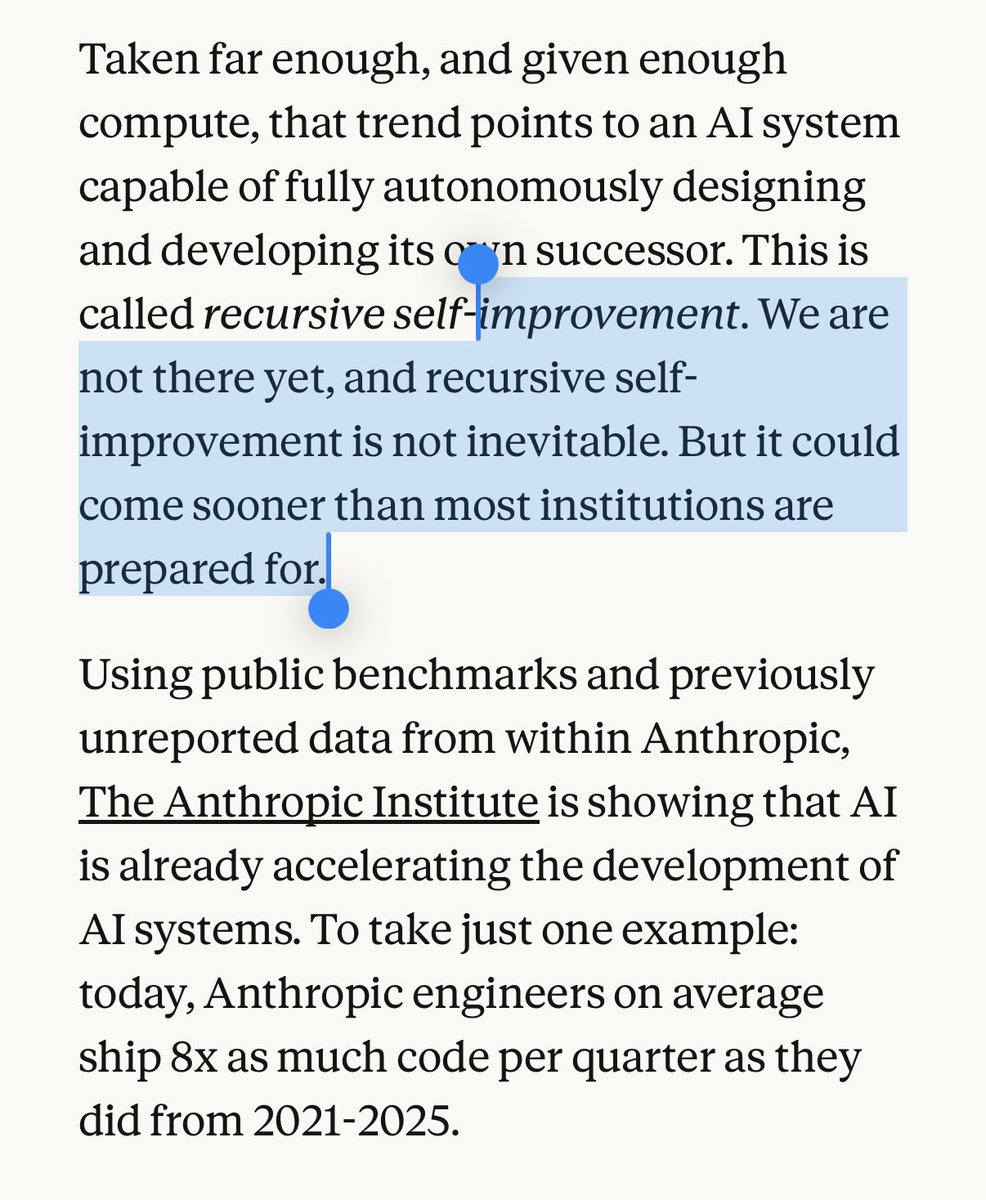
•They stress this isn’t here yet and isn’t inevitable, but could arrive sooner than most institutions are ready for
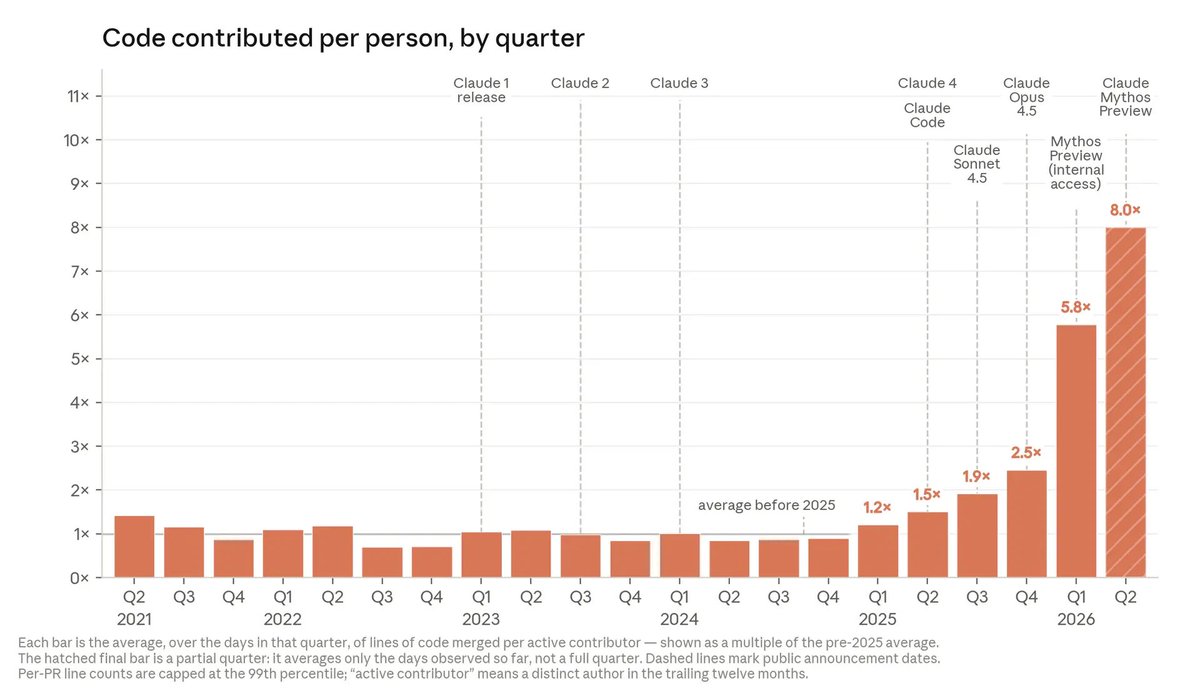
•Anthropic engineers now ship on average 8x as much code per quarter as they did in 2021–2025
•Task length AI can reliably complete is doubling roughly every 4 months (up from every 7 months)
•Opus 3 (Mar 2024) handled ~4-minute tasks; Sonnet 3.7 (a year later) ~90-minute tasks; Opus 4.6 (a year after that) 12-hour tasks
•SWE-bench went from low single digits to saturated in two years; CORE-bench (research reproduction) went ~20% to saturated in 15 months
•METR found Claude Mythos Preview could work “at least” 16 hours, at the top of what they can currently measure
•As of May 2026, Claude authored 80% of code merged into Anthropic’s codebase (low single digits before Claude Code launched in Feb 2025)
•A March 2026 poll of 130 research staff: median respondent estimated ~4x output with Mythos Preview
•One April 2026 example: Claude shipped 800 fixes cutting a class of API errors 1,000x, work an engineer estimated would have taken a human four years
•Claude-written code quality: worse than human in late 2025, roughly at parity now, expected to be strictly better within the year
•On the hardest open-ended tasks, Claude’s success rate hit 76% in May 2026, up 50 points in six months
•Code-speedup test: Opus 4 averaged ~3x speedup (May 2025), Mythos Preview ~52x (April 2026); a skilled human needs 4–8 hours to hit 4x
•In an AI-safety research project, Claude agents recovered 97% of a performance gap (vs ~23% for two human researchers in a week), over 800 compute-hours and ~$18K
•On picking the better “next step” in research sessions, the best model beat the human choice 51% (Nov 2025, Opus 4.5) rising to 64% (April 2026, Mythos Preview)
•Human comparative advantage, for now: research taste and judgment, i.e. choosing which problems matter and when an approach is a dead end
Three possible futures
•The trend stalls (S-curve), but today’s capabilities still diffuse widely; they consider this least likely
•Compounding efficiency gains, with humans still setting direction; 100-person firms doing the work of 10,000 ; they think this is the likely path
•Full recursive self-improvement, where AI builds its successors and pace is set by compute; the alignment outcome here is what they’re least certain about
Jun 4

Our internal data shows Claude is accelerating AI development—a possible path to recursive self-improvement, or AI autonomously building a more capable successor.
It’s happening faster than we thought, and the implications deserve greater attention. anthropic.com/institute/recu…
97
161
1,670
257,793
Prudent AI retweeted

Jun 4
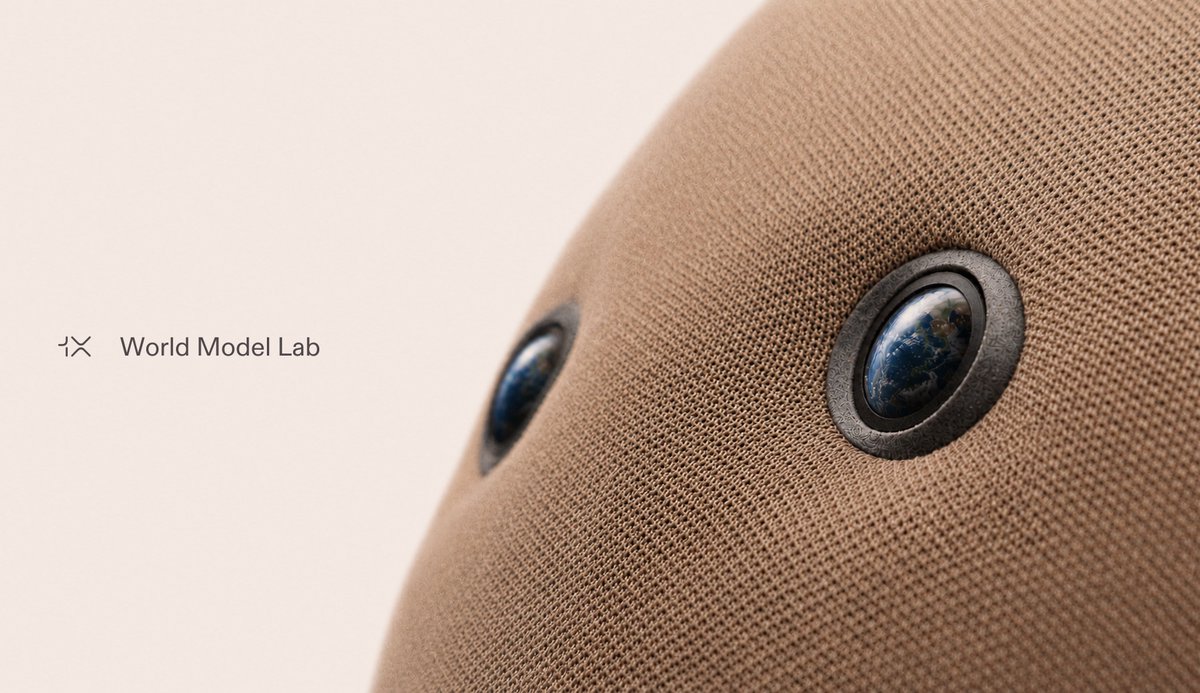
We’re going all in on World Models.
Today we’re launching the 1X World Model Lab.
The bet is simple:
You can’t fine-tune your way to AGI.
And you definitely can’t fine-tune your way to robots that can operate in the physical world.
General-purpose humanoids need models that understand space, motion, objects, causality, affordances, physics, and action before they ever see a specific task.
The frontier is not better VLA wrappers.
The frontier is embodied world models.
The 1X World Model Lab will focus on large-scale embodied world model pretraining: building the most generalizable foundation model for humanoid robots from the ground up.
The next frontier in AI requires scaling:
web-scale media egocentric human videos sim dexterous remote operated robot data on-policy NEO data → real-world deployment for robot data collection and RL → abundance of data → physical AI
The robot collects data.
The model gets better.
The robot gets better.
Repeat.
To lead this, we brought in one of the best for the mission: @_sam_sinha_ , as Head of World Models.
Sam was a founding research scientist at Luma AI and has been at the frontier of scaling multimodal generative video models his whole career.
If you’re the best in the world at large-scale pretraining, video models, robotics, RL, infra, or data — and you want your models to move atoms, not just pixels — join us.
Send background evidence of exceptional ability to:
wmlab@1x.tech
We’re building the model that makes autonomous labor real.
127
214
2,551
352,331
Prudent AI retweeted

If you've ever worked on your feet all day, you know how important a good pair of shoes is. Mechanical design engineer Chastity Kelly shares how we built Atlas functional feet.
Learn more about Atlas' design, Chastity's path to robotics, and starting on the right foot: bosdyn.co/4ugC50p
16
60
403
40,148
Prudent AI retweeted

🚨Breaking: NVIDIA and Sharpa have just unveiled the NVIDIA Isaac GR00T Reference Humanoid Robot at GTC Taipei—a standardized, open hardware and software reference design for physical AI research.
The platform unifies hardware, sensing, and compute into a single out-of-the-box development stack to eliminate fragmented workflows and speed up sim-to-real deployment.
The hardware specs:
• Body: Unitree H2 Plus full-sized chassis (31 DOF)
• Hands: Dual Sharpa Wave dexterous hands (22 DOF per hand) featuring a visuo-tactile array with >1,000 pixels per fingertip and 0.02N sensitivity for complex, contact-rich manipulation.
• Brain: NVIDIA Jetson AGX Thor T5000 onboard compute delivering 2,070 FP4 TFLOPS of Blackwell-architecture AI performance.
The reference platform comes preloaded with the NVIDIA GR00T 1.7 humanoid model and works natively with Isaac Lab simulation and teleoperation libraries.
Timing is everything: This massive partnership drops on the exact day of Unitree’s STAR Market IPO listing hearing in Shanghai, and amidst a proposed U.S. federal procurement ban on Chinese-made unmanned ground vehicles.
Shipping is slated to begin in October 2026 to research labs worldwide.
x.com/NVIDIARobotics/status/…
6
25
112
58,567
Prudent AI retweeted

Jun 2
Commentary is one of the most important pillars of X. And sometimes the best way to share your thoughts is with video.
Today we're launching a whole new way to make them:
React with Video
Tap the repost button and start recording with green screen, split screen, or picture-in-picture.
Now available on iOS
3,608
1,600
13,758
8,033,469
Prudent AI retweeted

🚨 BREAKING: NVIDIA just announced the Isaac GR00T Reference Humanoid Robot.
The first fully open humanoid robot reference design built on Jetson Thor, and it's going straight to the world's top research institutions.
This is Jensen Huang's bet on open physical AI infrastructure.
The hardware stack is serious:
→ Unitree H2 Plus chassis, 6 feet tall, 150 pounds, 31 degrees of freedom
→ Sharpa Wave tactile five-finger hands, 22 degrees of freedom, bringing total to 75 across the full body
→ NVIDIA Jetson AGX Thor onboard compute, 2,070 FP4 teraflops of AI performance, 128GB unified memory
→ Multi-view sensing, stereo head camera, wrist cameras, IMU
Alongside this announcement, @UnitreeRobotics also introduced the H2 Plus as a standalone product, a frontier humanoid combining Unitree's own body, Sharpa's five-finger hands and NVIDIA Robotics Jetson Thor compute into one fully integrated research platform.
The full Isaac GR00T software stack ships with it, teleoperation for data capture, open foundation models, Isaac Sim for training, Isaac Lab for evaluation, and accelerated ROS middleware for deployment.
The complete loop from data to real-world robot in one unified platform.
ETH Zürich, Stanford Robotics Center, UC San Diego and Ai2 are already on board as launch research partners.
@NVIDIARobotics did to AI what it's now doing to robotics, build the platform, open the ecosystem, let the world build on top of it.
Whoever owns the infrastructure layer wins.
NVIDIA knows this better than anyone. 👀
Read more here: nvidianews.nvidia.com/news/n…
~~
♻️ Join the weekly robotics newsletter, and never miss any news → ziegler.substack.com
11
55
228
15,779
May 30
Mistral enters the robotics race 🔥
May 29

Robostral can now follow natural language instructions. It responds to voice commands and pointing. It is also getting better at fine-grained manipulation where precise force control matters. It generalizes to new objects and tasks not present in the training data.
18
Prudent AI retweeted

RAI Institute’s Ultra mobility vehicle is showing off advanced new stunts with smooth 360-degree spins, kip jumps, flips, and bunny hops.
The AI-powered machine performs sharp turns, mid-air rotations, and clean landings with impressive balance and precision.
And this is only the beginning of what the vehicle can achieve.
23
157
593
56,566