
67 Photos and videos















T_ retweeted

Jun 7
🔻 LED LIGHTS FLICKER 120 TIMES PER SECOND. YOU CAN'T SEE IT. YOUR BRAIN REGISTERS EVERY SINGLE ONE. THIS WAS KNOWN BEFORE THEY MADE THEM MANDATORY.
In 2012, the U.S. government banned incandescent light bulbs. The reason given: energy efficiency. The real reason is in a document that was never meant to be public.
In 2007 — five years before the ban — the Department of Energy's Pacific Northwest National Laboratory completed a 14-month neurological study on LED flicker. Reference: PNNL-SA-2007-4419. Classified: "Limited Distribution — Not for Public Release."
What they found:
LED bulbs at 120Hz produce flicker invisible to conscious perception but fully registered by the thalamus. Continuous exposure over 6 hours per day: measurable melatonin suppression, circadian disruption, and a 23% reduction in deep-sleep duration within 90 days.
23% less deep sleep. In 90 days. From your ceiling lights.
A former lighting engineer — 9 years at one of three companies manufacturing 87% of LED bulbs in North America:
"We were told the flicker had to remain at 120Hz. Not because of cost. Not because of engineering limitations. Because the specification came from outside the company. It was a compliance requirement attached to the federal energy rebate program. If you wanted the subsidy, you built to their spec. Nobody asked why the spec existed. We just built to it."
The spec came from the DOE. The DOE study proving neurological harm was completed 5 years before the ban. They knew. They mandated it anyway.
What 120Hz flicker does over years:
Melatonin suppression. Pineal calcification accelerates. Immune response weakens. Emotional regulation deteriorates. Attention span shortens. You become easier to agitate. Easier to distract. Easier to control.
Incandescent bulbs: continuous current. No flicker. Smooth light identical to fire — what human biology evolved under for 300,000 years. They banned the one light your brain was designed for and replaced it with one that degrades you 120 times per second.
The fix: Replace LEDs in rooms where you spend 4 hours — especially bedrooms — with incandescent bulbs. Still legal as "heat lamps" or "rough service" bulbs. They never disappeared. Just relabeled so you wouldn't look.
Your sleep problems are not stress. Your brain fog is not aging. Your irritability is not personality. It's 120 invisible pulses per second, every waking hour, in every room you enter.
CODE: PNNL-2007-4419 / 120HZ-PWM / MELATONIN-23 / DOE-SPEC-MANDATE / THALAMUS-REGISTER
⟁
They banned the light your brain was built for and replaced it with one that breaks you so slowly you blame yourself. The bulbs are still available. They just made sure you'd never think to look. Share this.
311
5,529
10,443
407,081
T_ retweeted

May 26
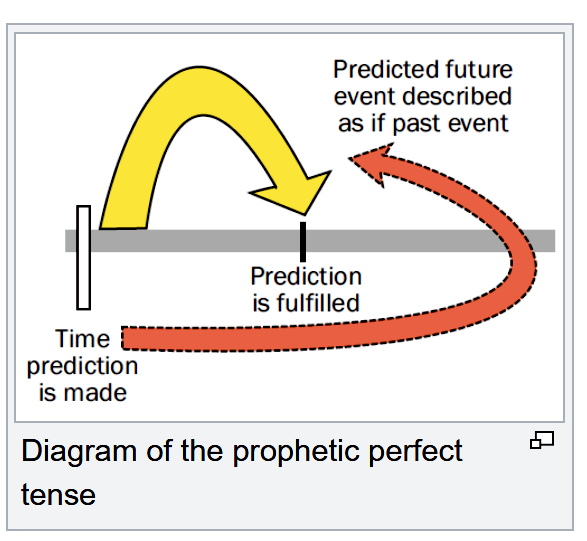
Using the prophetic perfect tense when talking to yourself is the key to successful autosuggestion. This is a concise summation of everything written by Neville Goddard (and he was right).
It's the Landian hyperstition tense.
30
141
2,623
136,598



T_ retweeted

May 4
part of the anthroposophical model of early childhood (what waldorf is based on), is that the child begins life in a kind of magic bubble, and that the time spent in this state is essential for their long term spiritual development.
you can accidentally rush them out of this stage.
the child goes through a process of recapitulating the stages of civilization itself: they eventually go through an egyptian stage, and become fascinated with writing, symbols, and what we think of as the hallmarks of that civilization. later, they go through an antiquity / roman stage, and become fascinated by building, laws (rules), and the things we think of humanity as generally acquiring during that time. later, the medieval, and so on.
but at the start, the child is in magic world. this is occasionally referred to as “the garden”, as in the garden of eden, but i just think of it as fairy world, where the boundary between myth, story, imagination, and reality is completely fluid.
taking this view puts you at odds with modern parenting in ways that you would not expect. a lot of parenting discussion online is about nutrition, discipline in general, appropriate punishments, homeschooling, giving them tablets - there’s a clear set of basic controversial topics.
taking a concern about rushing the child out of this initial state and into the next one too quickly puts you at odds with other less obvious aspects of parenting style. the one i find most interesting is the conception of early childhood and learning itself that i see as flowing downstream from the modern scientific worldview.
recently, i was at an aquarium. they have this large cylinder tank that you can walk around and look into. the walls are glass. in the center, there’s a (real) fish that’s huge - easily the biggest fish i’ve ever seen.
a girl runs up and says, “wow, that’s a huge fish”. the mom says: “yes, it is a large fish, but just keep in mind that the glass is convex. when glass is bent this way, it makes things inside look bigger. but it is a big fish”.
now, the kid asks, “so, it’s not a big fish?”, and the mom says, “well, yes, it is a big fish, but…” and reiterates the explanation about what convex glass is and what it does to your perception.
in the modern scientific worldview, part of “becoming wise” is accumulating facts and that are not intuitive, and that undercut empirical perception. becoming educated means knowing these facts and having them at hand to make sure you’re perceiving things accurately - unlike someone uneducated, who wouldn’t know about glass distorting perception, and the finer mechanics of how and why that happens.
this means that “passing on wisdom” and being “the wise elder” often amounts to passing on and dispensing these facts. here, the kid is looking at something - but has to be told: “don’t get the wrong idea. i, the wise elder, know something you don’t, and i’ll let you in on the secret.”
there’s nothing wrong with this in and of itself, but it’s completely at odds with the world the child is presently inhabiting (in my opinion). the child is just in awe of a large fish. this is a total, magical, all encompassing spiritual experience - but the adult has to step in and take them out of it, to ensure that they’re giving primacy to a scientific perception.
the adult, due to their model of what knowledge is, is constantly stepping in to jet pack the child out of their direct perception, into abstractions that have nothing to do with their inner world.
once you notice this, you really see it all the time. i’m at the park, and a kid is hitting a log with a stick. it’s making a cool sound. he says, “dad, look at this”, and the dad starts explaining that sound is really vibrations, what vibrations are - bam: smash the eject button. the kid can’t just hear the sound: an adult has to step in and make sure that the experience of hearing the sound is being filtered through this paradigm’s conception of what knowledge, and life, “really” is.
76
169
2,015
82,326
T_ retweeted

May 4
More dreams are destroyed from distraction than incompetence.
432
1,384
9,634
183,247
T_ retweeted

Apr 30
No music
No edits.
Just the secret to life.

You can start over on a random Wednesday and decide you want more out of life.
20
1,189
8,714
283,478
Dale Carnegie wrote extensively about this.
(And it worked)
Apr 25

If you have really shitty social skills, just do this and smile a lot and people will like you
102




T_ retweeted

Apr 5
If your inner world is rich its impossible for you to love money
26
75
820
21,539
T_ retweeted

Mar 25
Op je laptop werken in de trein is zo kk performative
30
63
1,000
54,645
Verontwaardigd en geschrokken. Mainstream Media heeft geen geloofwaardigheid meer.
Grappig dat de warmste week met Christelijke waarden samenhangt?
Boycot.
14
RT @ZherkaOfficial: Concentrate all your thoughts upon the work in hand. The Sun's rays do not burn until brought to a focus
―Alexander Gr…
41