
Co-founder karatelabs.io (YC W22) & creator of @getkarate - the only open-source tool that unifies API testing, mocks, performance and UI automation
Joined December 2008
- Tweets 5,401
- Following 3,695
- Followers 4,452
- Likes 9,094
490 Photos and videos





Pinned Tweet

5 Dec 2025
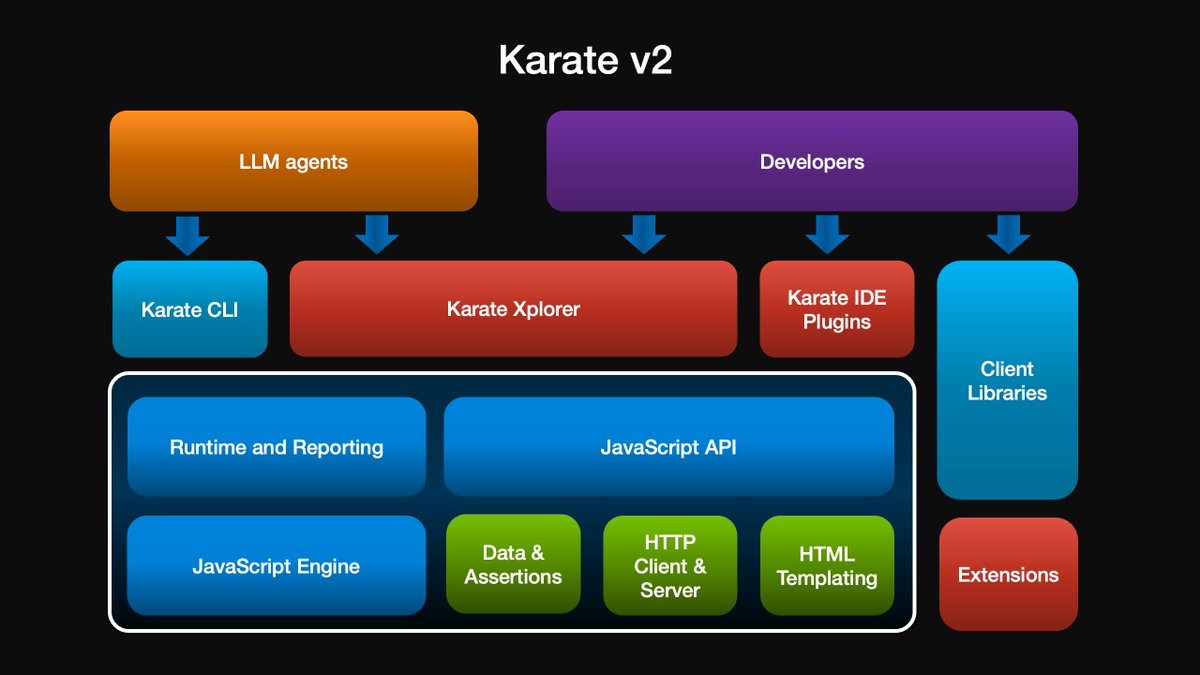
In case you missed the Karate v2 announcement, link is in the comments.
1
1
3
486
Peter Thomas retweeted

Jun 4
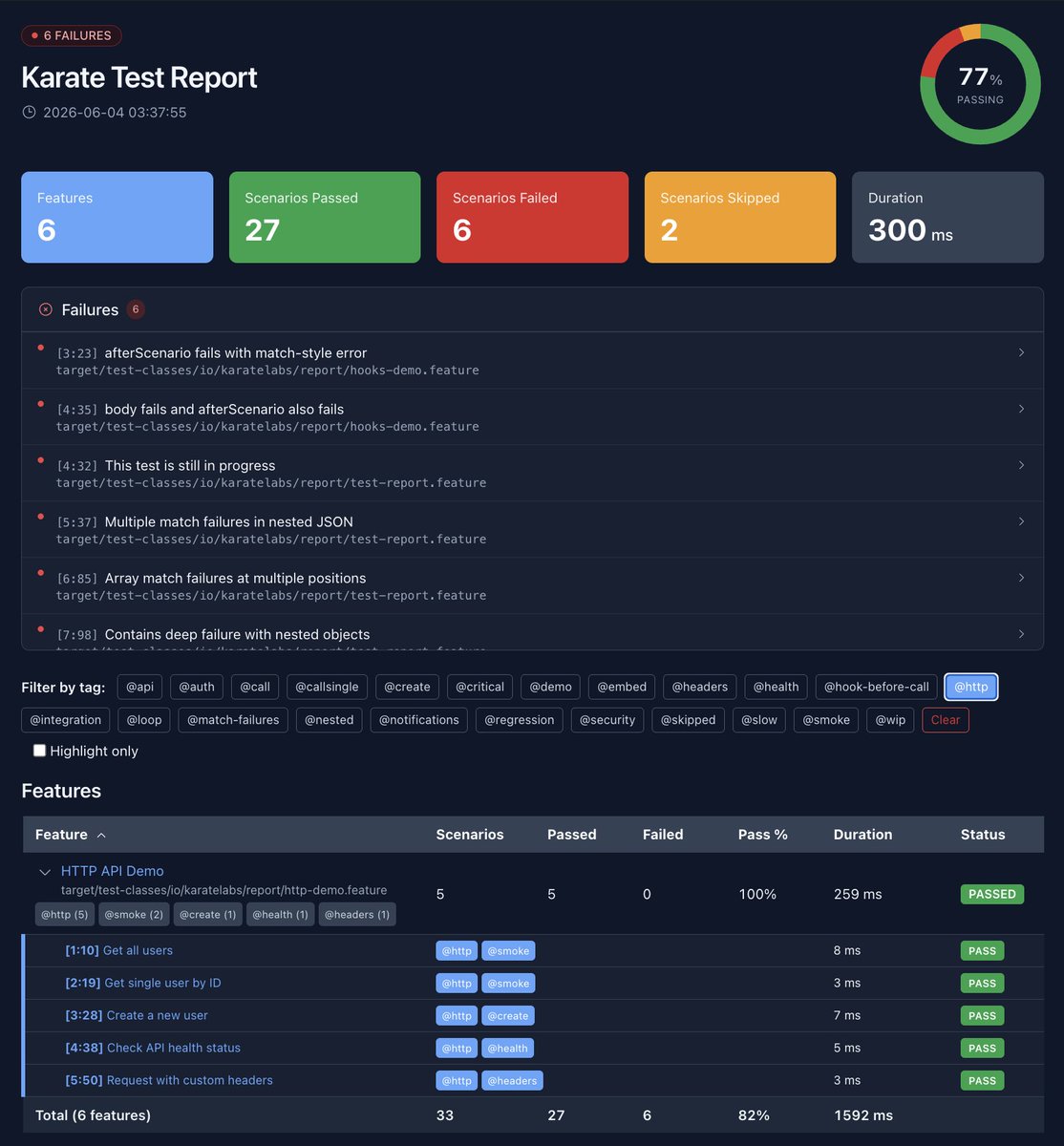
Karate 2.0.10 has been released. If you have been holding off on upgrading to v2, now is the time!
Check out the re-designed HTML report! Dark-mode, tag filtering and JSON syntax coloring!
Thanks to all the users already on v2 and who filed issues, we closed 25 of them in this release.
1
4
4
237
Jun 4
maybe this will make your day - if you also come from the 80's and are a fan of the anime this references
youtu.be/hjtNhzdxkHc?si=2F99…
72
Peter Thomas retweeted
Jun 3
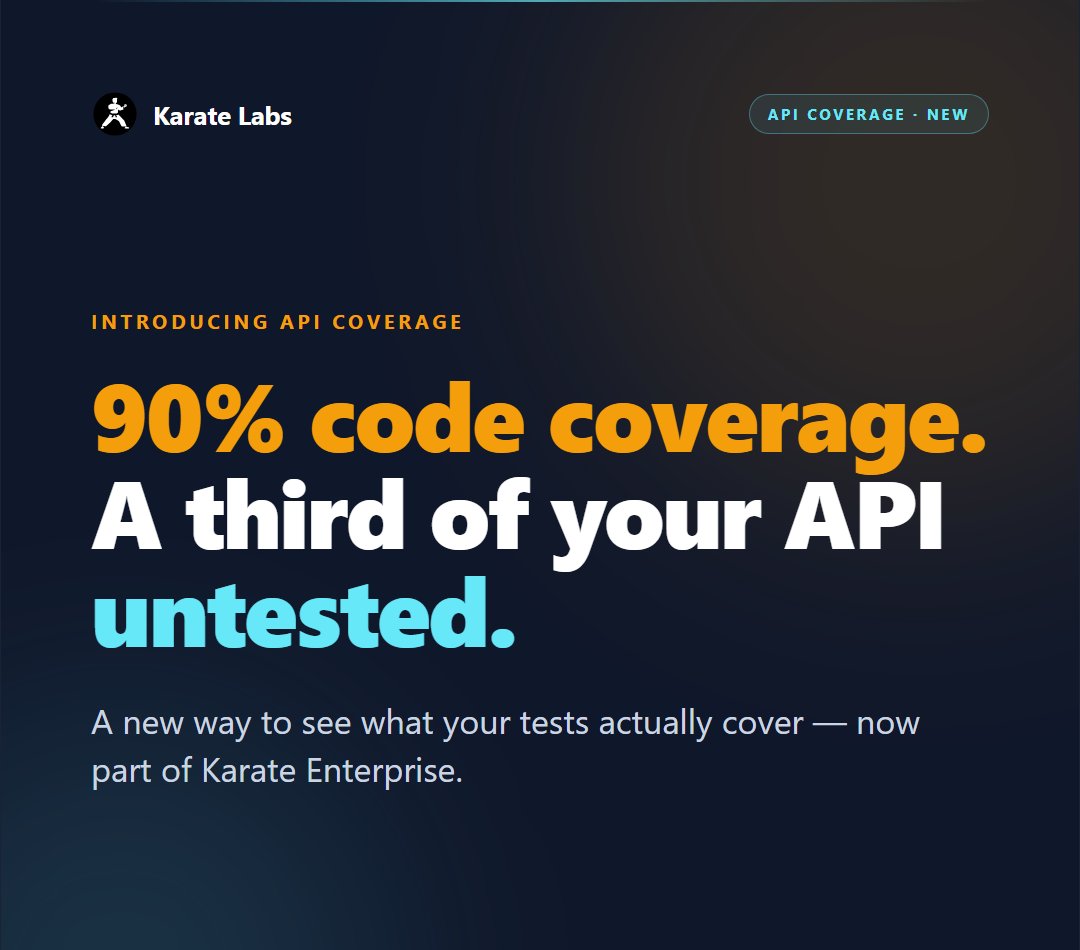
Code coverage tells you which lines ran.
It can't tell you which of your APIs are actually tested.
Introducing API Coverage from Karate Labs - measure coverage against the contract itself, across REST, gRPC, GraphQL & Kafka.
1
1
3
223
Peter Thomas retweeted
May 5
Your API keys belong on your laptop.
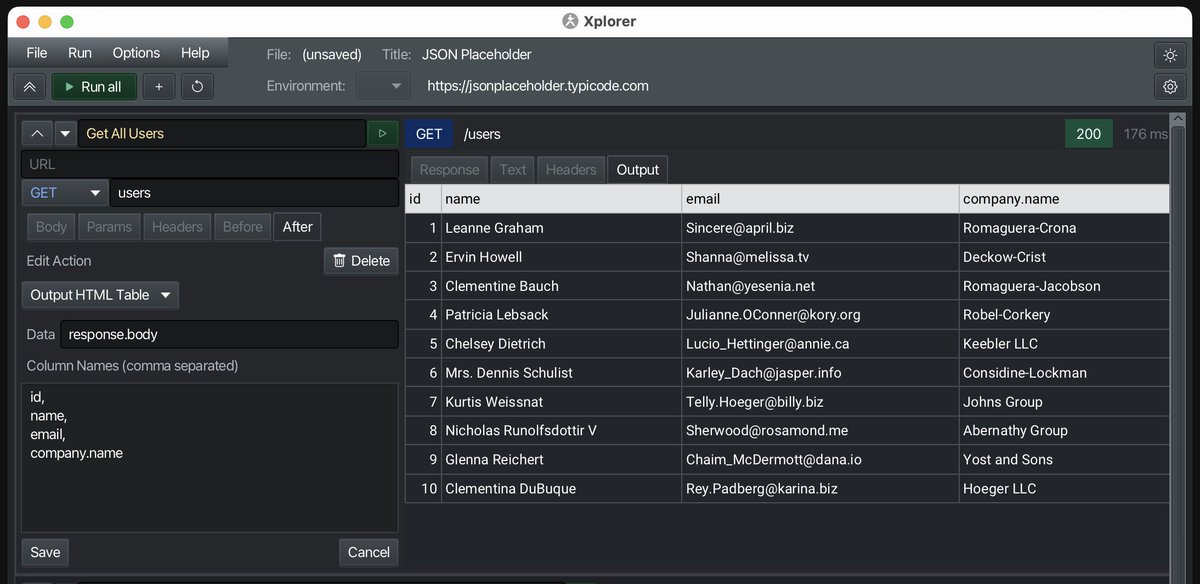
Karate Xplorer: free desktop API client.
Runs your Postman collections as-is: pm.test, environments, scripts, all natively.
LLM agent built in. Bring your own model.
1
2
4
208
Peter Thomas retweeted
Apr 24
Karate Xplorer - a free desktop API client with an LLM agent built in.
→ Zero cloud. Your keys stay local
→ Zero paywall on core features
→ Zero per-seat fees
→ Zero migration: drop in your Postman collections.
1
1
5
179
Peter Thomas retweeted
Apr 23
1
2
3
215
Peter Thomas retweeted
Apr 22
A 1% error shouldn't cost you $10 Million. 📉
In the world of enterprise insurance, a single miscalculated rating factor isn’t just a "glitch"—it’s a massive drain on profitability. For a $1B premium book, a tiny 1% error translates to a $10M loss.
#InsuranceTech #InsurTech #Underwriting #RiskManagement #ActuarialScience #VeriQuant
2
2
3
271
Peter Thomas retweeted
Apr 21
The Future of API Quality is Here.
We are proud to be featured by @Gartner_inc in the newly defined API and MCP Testing Tools category on Peer Insights.
As organizations move toward AI-native architectures, testing standard APIs is no longer enough. The need is for robust testing of the interfaces that power AI agents.
At Karate Labs, we are dedicated to providing the tools software engineering leaders need to:
🔹 Validate behavior across diverse protocols (REST, SOAP, gRPC).
🔹 Support the emerging standards of AI agent interaction.
🔹 Boost developer productivity without sacrificing quality.
Check out what the peer community is saying about us on @Gartner_Peer Insights
#TestAutomation #EngineeringExcellence #Gartner #AIArchitecture #APIManagement
1
2
4
262
Peter Thomas retweeted
Apr 9
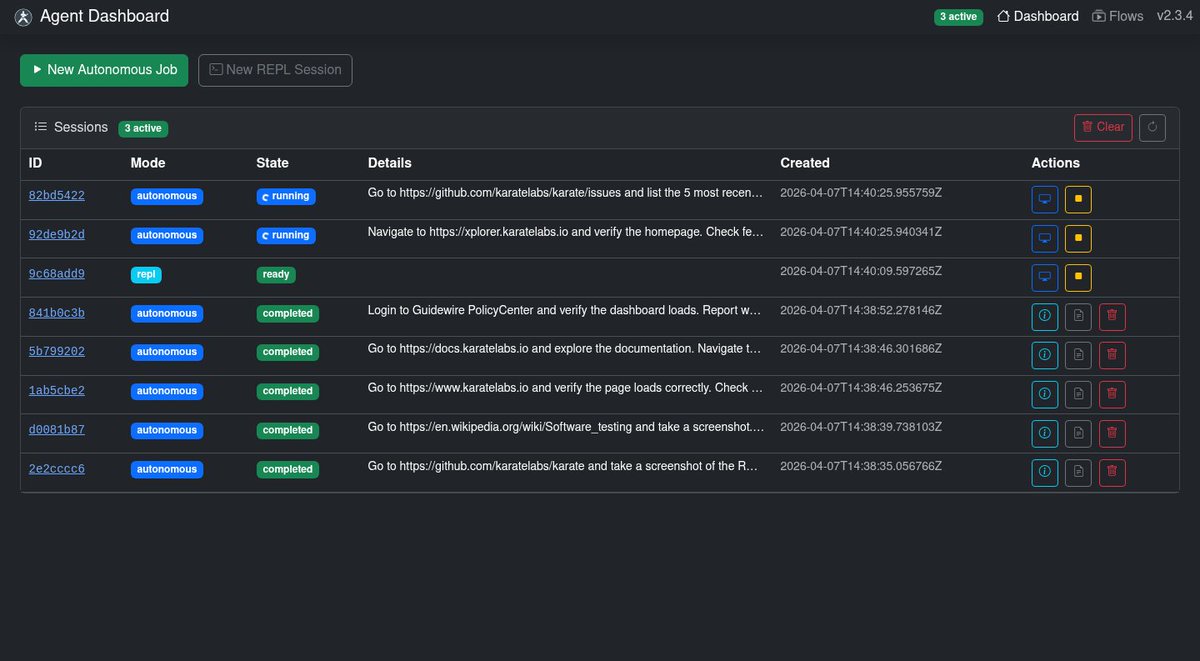
Announcing Karate Agent: The 100% self-hosted, air-gap ready, AI-native verification platform.
Designed specifically for highly regulated enterprise environments, Karate Agent ensures your session transcripts, screenshots, and video recordings stay securely on your own infrastructure.
🔒 Self-Hosted & Air-Gapped: Zero cloud dependency.
🧠 Bring Your Own LLM: Run with Claude, GPT, or entirely local models via Ollama. No vendor lock-in.
📹 Built-in Audit Trails: Opt-in H.264 session recording for compliance and rapid QA review.
Your proprietary application data is exactly that - yours.
Stop choosing between AI-driven efficiency and enterprise security. Reach out to our team today to schedule a demo and trial for your organization.
#EnterpriseSecurity #DataPrivacy #CyberSecurity #HealthTech #FinTech #QA #TestAutomation #KarateAgent #browseruse #rpa
1
3
5
642
Peter Thomas retweeted
Apr 7
Karate 2.0.1 has been released with some important fixes.
github.com/karatelabs/karate…
Mar 26

Karate 2.0 is here.
✅ One-click setup - Install the VS Code extension, hit "Karate: Setup" — done. No Java install, no Maven, no Gradle. You're running tests in under a minute.
✅ Debug JavaScript in your IDE - For the first time, you can set breakpoints and step through embedded JS in `.feature` files. Works in both VS Code and IntelliJ.
✅ Soft assertions for JSON - Match failures no longer stop your test at the first error. Every validation runs, every failure is reported. You see the full picture in one pass.
Other highlights: Native implementation of CDP and W3C WebDriver for cross-browser testing, virtual threads for parallel execution, a custom JS engine with zero dependencies, and a ground-up rewrite built on Java 21.
github.com/karatelabs/karate…
#apitesting #testautomation #cicd #performancetesting #uiautomation
1
1
1
603
Peter Thomas retweeted
Mar 26
Karate 2.0 is here.
✅ One-click setup - Install the VS Code extension, hit "Karate: Setup" — done. No Java install, no Maven, no Gradle. You're running tests in under a minute.
✅ Debug JavaScript in your IDE - For the first time, you can set breakpoints and step through embedded JS in `.feature` files. Works in both VS Code and IntelliJ.
✅ Soft assertions for JSON - Match failures no longer stop your test at the first error. Every validation runs, every failure is reported. You see the full picture in one pass.
Other highlights: Native implementation of CDP and W3C WebDriver for cross-browser testing, virtual threads for parallel execution, a custom JS engine with zero dependencies, and a ground-up rewrite built on Java 21.
github.com/karatelabs/karate…
#apitesting #testautomation #cicd #performancetesting #uiautomation
2
4
791
Feb 23
ah so that's why there weren't any fireworks last night at unearthly hours. serves you right
133
Peter Thomas retweeted

Feb 18
Feels like everyone making their own agent stumbles across the same primitives and thinks they solved something
Let me save you some time (read this, it's funny and useful):
- You're going to make an agent
- You're going to run it on benchmarks
> It's going to suck
- You're going to make a tool to analyze traces
- You're going to say this helped you
> It wont work
- You're going to think about role based agents for solving a single task
- You're going to make a workflow for solving a benchmark
> Both will work. Neither are generalized
- You'll think you made it
> It will be nearly unusable by an end user
> Back to square one
- You're going to realize you're stuck with a for loop
- You're going to think about swarms
> In swarms single agent usability doesn't matter
- But wait you need a task manager
- But wait you need a merge queue
- But wait you need compression for long jobs
> Compression is a foot gun
- But wait now you need an agent to manage it all
- But wait now you need something that checks to make sure the manager is managing
- You're going to go back to single loop agents
- Well, subagents seem like the way to do all of this
> Bam! Plot twist: subagents are hard to do well
- You're going to think "Hmm well subagents isolate context" because <Insert_Person> said so
- You're going to start to look at other agent implementations
> How have they all solved compaction, multi-agent, task management, memory etc.?
- You're going to realize it's all just tradeoffs, but most of them have only one side people care about
- "Oh it's all just context engineering"
> Yep. But it has to be good and it has to be general.
> Back to the starting loop. Rinse and repeat.
Congrats.
Keep it simple. Keep it general.
59
34
706
56,010
Peter Thomas retweeted

Feb 15
Thanks to seedance 2.0, They were relieved of their suffering.
162
862
8,113
621,927
Peter Thomas retweeted

Feb 9
When you accidentally log onto a corporate meeting 5 minutes early
621
2,801
38,035
2,461,751
Peter Thomas retweeted
Jan 22
Test Automation, Reimagined - Karate v2 is here!
====================================
Following-up on our original announcement, we're excited to announce that Karate v2 is now available on Maven Central for you to try!
Read on to see what's new...
1
2
4
267