
Joined May 2023
- Tweets 97
- Following 657
- Followers 94
- Likes 1,745
5 Photos and videos


Radu Constantin retweeted

May 16
Guido van Rossum, who personally oversaw the Python 2-to-3 migration, is disappointed that a keynote wasted everyone's time. Sir.
May 15

PyCon US has started! So far I am very disappointed in the first keynote -- it's just a product pitch and the speaker isn't that engaging. Sorry.
16
28
1,264
240,633

May 15
RT @levelsio: Good reminder to everyone who is always like "what does it matter if everyone gets a mind virus just ignore it"
Okay but the…
123
Radu Constantin retweeted

May 15
Most of the Zig "hate" I've seen is just fun n' games. But even so, having an anti-Zig stance is completely understandable.
- still in beta after 10 years, unstable
- break code almost every release (wonder if they'll rewrite I/O again, again)
- anti-ai policy regardless of code quality
- good PRs blocked due to that policy
- moving off GitHub with a holier-than-thou attitude... while the engineering reasons were understandable, the political bookending was nonsense
- call GitHub engineers monkeys and losers then backtrack when you receive backlash
- their whole comptime duck typing thing is rough. no traits, no interfaces, errors buried in generic bodies. good luck to ya.
Zig's largest user has to fork Zig to ship at a reasonable pace, and when they try to push a change with 4x faster debug compilation, Zig doesn't accept it.
So let's not pretend the Zig "hate" is unwarranted. There are plenty of reasons for it.
May 14

It isn't unexpected that the focus of the Bun Rust rewrite is on the anti-Zig side more than anything, since the internet loves to hate. What is unexpected and unfortunate is that leadership within Bun hasn't tried to steer the conversation away from that at all.
There are so many positive and interesting takeaways from this and I'm not really seeing any of them pushed as the primary message.
A positive thing that hasn't been talked about at all is how far Bun came thanks to Zig. And even if you dump it now, its meaningful for how good Zig was to even build a product to this point and impact by any metric. I would've loved to see anyone in leadership say this.
On the interesting side is how fungible programming languages are nowadays. Programming languages used to be LOCK IN, and they're increasingly not so. You think the Bun rewrite in Rust is good for Rust? Bun has shown they can be in probably any language they want in roughly a week or two. Rust is expendable. Its useful until its not then it can be thrown out. That's interesting!
There's been a lot of talk about memory safety and no doubt Rust provides more guarantees than Zig. But I'd love to see a better analysis of why Bun in particular suffered so much rather than take the language-blame path. How could engineering as a practice been more rigorous to prevent this? What were the largest sources of crashes other programs should watch out for? How does Rust prevent them? How could Zig theoretically prevent them? That's interesting.
I know the official blog post hasn't come out yet from Bun. But they're smart enough to know that that PR would stir up controversy the moment it opened, or they should've been. And plenty in the company have been tweeting and writing about it. Its somewhat telling to me in various dimensions what they chose to talk about first.
I tend to think I'm pretty good at corporate PR/comms (especially when it comes to developer audiences) and I think appealing to the negative is never the right long term strategy; it does work to get short term eyes though.
52
23
567
79,123
Radu Constantin retweeted

May 10
“Vibecoding”, i.e. ~hands-off usage of LLMs to rapidly generate code without regard for the actual code’s contents, for novel applications, can literally never be non-slop, because—as I’ve described before—there is not enough bits of information content in prompts to express the user’s exact desires in sufficient detail, and the desired solution is not expressed in training data (due to the problem’s novelty).
Only a sentient human developer can relate to another human user to determine what is desirable, and design the software such that it accomplishes this desirable outcome, and carefully verify that it is doing that, rather than something else (potentially undesirable).
This is true even for the combinatoric space implied by the training data, for instance if the novel problem is merely novel in that it combines pieces of existing solutions. There needs to be a guiding force to know what to combine and how.
The more detailed the prompt becomes, the more human oversight (the more human-guided round trips with the LLM), the closer it becomes to actual code (i.e. detailed execution instructions for a computer).
May 10

Contradiction of terms
56
61
894
54,591
Radu Constantin retweeted

May 9
Am I the only one who still finds this slow?
I can literally open File Pilot 5-6 times manually in that same time frame.
May 8

Microsoft's hidden Windows 11 trick makes apps launch 70% faster. I tested it on a low-end PC, and early results are promising.
Right now, when you click Start, open File Explorer, launch Edge, or right-click for a context menu, and there’s often that tiny micro-stutter before anything happens.
Microsoft is now testing a feature called Low Latency Profile.
Once turned on, and you do a high-priority action, Windows 11 briefly pushes the CPU to max frequency for 1–3 seconds, finishes the task faster, then drops back down.
In my testing on a constrained VM with just 2 cores and 4GB RAM, the difference was obvious. Edge, Outlook, Copilot, and the Start menu opened much faster. CPU usage spiked to around 96–97%, but only for a few seconds.
For high-end PCs, the difference may be small. But for budget laptops and low-end Windows 11 machines, this could be a real game-changer.
48
41
1,088
83,462

Burkov's Hundred-Page Language Models Book is the best concise survey of language models currently in print.
Burkov has a rare gift for compression. He distills the conceptual foundations of language models—attention mechanisms, transformers, training dynamics—into genuinely readable prose without assuming a PhD. If you need to understand why transformers work the way they do, or how pretraining and finetuning relate conceptually, this is one of the most efficient paths from zero to coherent intuition. The book respects your time.
The prose is notably clean. Each section builds deliberately on the last, and the pacing assumes you're reading to learn, not to skim. For someone who has bounced off denser texts like the original "Attention Is All You Need" paper or found thick textbooks too meandering, this provides a disciplined on-ramp.
It also succeeds as a diagnostic tool. Because it covers the full pipeline—from tokenization through pretraining, finetuning, and inference, you can read it in a sitting and identify which specific areas you actually need to drill into next. Rather than committing weeks to a 600-page textbook only to discover that half the content is irrelevant to your work, you finish this with a clear map of your own gaps. That efficiency is underrated.
The verdict: It's an excellent primer for product managers, researchers pivoting into NLP, or developers who need conceptual grounding before diving into code. If you're looking for hands-on training and mathematical depth, this is a book for you. For its specific niche—conceptual clarity at speed—it's hard to beat.
The book has a standard and a dark edition.
#LMtrainingData

3
56
474
20,205
Radu Constantin retweeted

bro came to github 7 month ago, made it worse then ever, then moved to another project
absolute legend
May 5

Excited to share that I’m joining @Xbox as VP, Engineering & Technical Advisor to CEO @asha_shar
I’ll be focused on building world-class tools, services, and experiences for developers and players across the Xbox ecosystem.
Grateful for the opportunity and excited to get to work.

ALT New 2026 Xbox Logo
55
185
6,166
459,130
Radu Constantin retweeted
Apr 29
A fundamental division between schools of thought in programming is (a) the elimination through simplifying of cruft, boilerplate, and extra abstraction layers, and (b) the automation of maintaining cruft, boilerplate, and extra abstraction layers.
One of the reasons I drifted away from C and newer languages with adjacent philosophies towards a subset of C is that I found myself in the first camp. Some problems were simply not as hard as I was making them. Memory management, threading, UI, and so on could be simplified such that not only the high level C code became simple, but the actual machine code also became simple.
This is starkly different from modern C and Rust programming culture, where the philosophy is simply that dealing with the complicated lower level details is a matter of *automation*. The compiler needs to generate something extra, it needs to check extra things, and so on.
“Agentic programming” falls into the latter camp, and this is also why I don’t employ it in my workflow (other than search engine usage and so on). I don’t need it to generate 10s of 1000s of lines of code. The requirement of 10s of 1000s of lines of code—for implementing something derived from the information content inside a tiny prompt—is an architectural red flag.
Perhaps a substantial portion of that code simply shouldn’t exist. I find that my programs become much better when I do that simplification pass first. After that, there’s drastically less boilerplate, less maintenance, and less busywork to begin with.
41
75
951
36,337
Radu Constantin retweeted
Apr 27
Delete both this feature and your account
18
25
1,252
10,858
Radu Constantin retweeted
Apr 27
So not only are we building File Pilot as a solid File Explorer alternative, we might actually be nudging improvements to it as well!
That's a win either way.
Apr 27

Windows Central claims (based on an inside source) that Microsoft is using File Pilot internally as a benchmark for their Windows Explorer improvements: windowscentral.com/microsoft…
One dev with a Handmade mindset is all it takes to force Microsoft to change course :)
38
69
1,425
100,819
Radu Constantin retweeted

Apr 24
You should spend some of that to change your logo.
73
83
6,550
113,896

Radu Constantin retweeted

Mar 12
“A very common strategy I’ve seen in the programming world is thinking of certain desired high-level features, then directly codifying each one as a separate codepath. I call this strategy ‘top-down’ because it begins enforcing constraints on code by starting with high-level requirements. Such an approach would mean that, in the case of user interface rendering, each of the features I’ve mentioned—text, rectangles, rounded rectangles, rectangle borders, rounded rectangular borders, drop shadows, and icons—would all be implemented as distinct codepaths. Each feature is seen as a separate ‘case’ to handle, and the programmer in charge naïvely translates that into distinct cases in the code.
“This has a number of possible drawbacks. The first is simply that you may write (and thus maintain) more code to implement each feature, when compared to an alternative world where you got all of the features you wanted out of a smaller number of codepaths. That might not sound too bad for a small number of features, but it is worse than you might first assume. Each ‘case’ is heterogeneous, and so there is a degree of variability that propagates elsewhere, and forces itself not only into the implementation of each case, but also other code that must interact with each case. Any codepath that wants to programmatically parameterize this rendering codepath now must scale itself with the number of cases. For these reasons, I consider each addition of a ‘case’ as a multiplication of code, rather than an addition of code.”

2
8
123
10,861
Radu Constantin retweeted
Feb 28
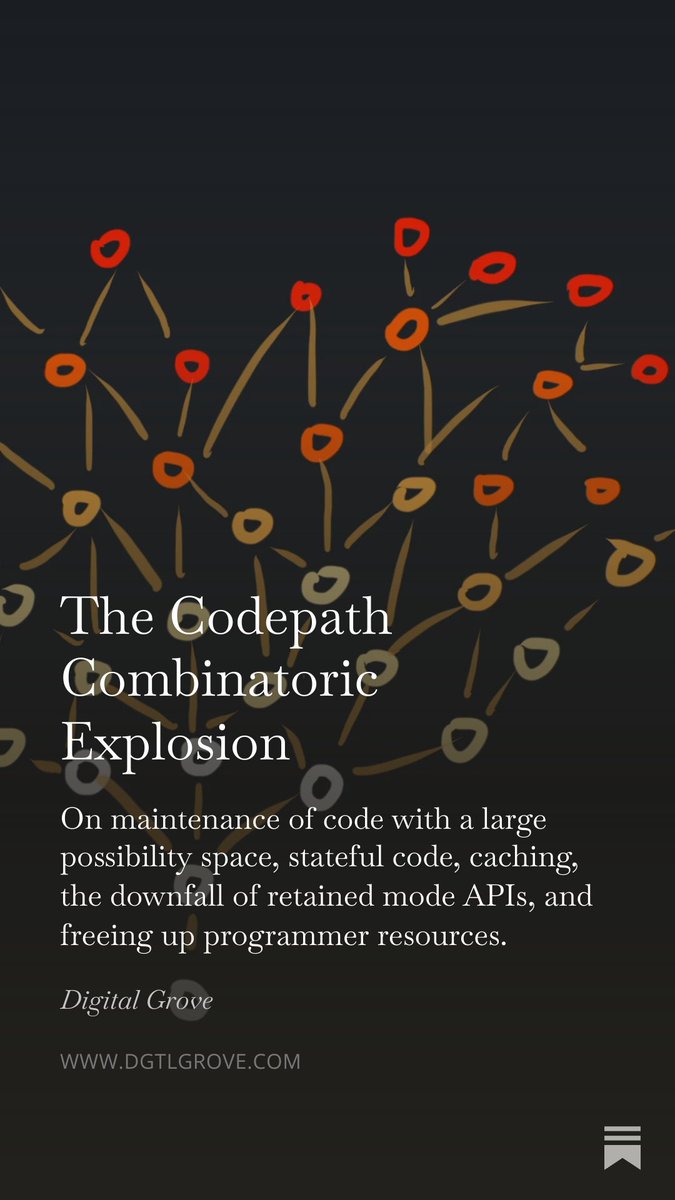
“The addition of one codepath is not, strictly speaking, free.
“Immediately after writing code which produces new codepaths, we can say that those codepaths have not been experimentally verified as correct. We haven’t stepped through them in a debugger—we haven’t even made sure they’re working at all. Those codepaths might be chosen from depending on a wide variety of possible preexisting states—to exhaustively test these new codepaths, we’d have to visit each one of those possible preexisting states, and step through each one, and run each one normally, on a variety of possible hardware configurations.
“Now, obviously, that is an enormous set of possibilities to test! Nobody does all of that for every new codepath they introduce. Nobody can do all of that. It’s simply not economic to do the full set of possible extra work tasks, which verify that our new code executes appropriately under all circumstances. In fact, for sufficiently complex software, there is something inherently infeasible about doing that—the whole point of some software is to allow for a vast space of possibilities. At some point, this becomes fundamentally untestable.
“So, we have two choices. First, we can attempt the smallest possible subset of that extra work—for the sake of maximizing our efficiency—which offers the greatest possible predictive power over what we’d find in doing that full set of extra work. Second, we can shrink the number of codepaths we produce.”
2
3
79
13,076
Radu Constantin retweeted
Feb 25
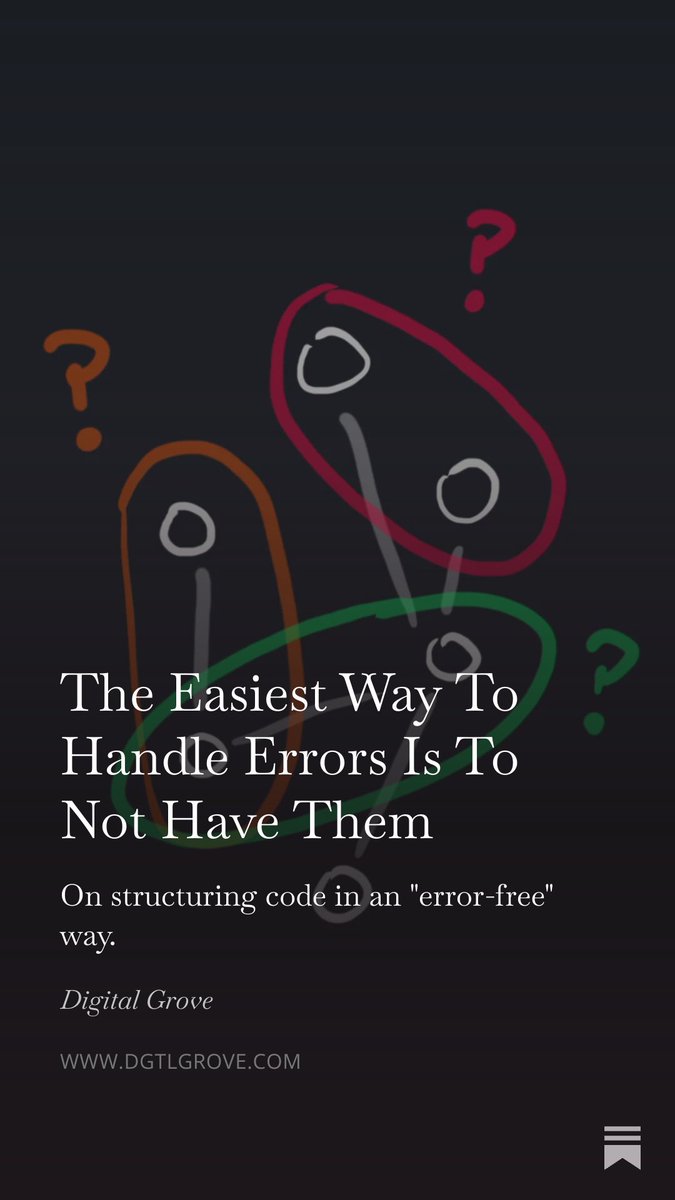
“Programmers are taught early to spend a great deal of time considering ‘errors’, and how to ‘handle’ them. But one of the most important programming lessons I’ve learned over the past several years is to dismiss the idea that errors are special. At the bottom, the computer is a computer. It’s a data transformation machine. An error case is simply a case. Data encoding an error is simply another form of data. Irrespective of how many language features and type variants one decides to layer on top of the computer, nothing changes this fact.”
14
32
454
55,115

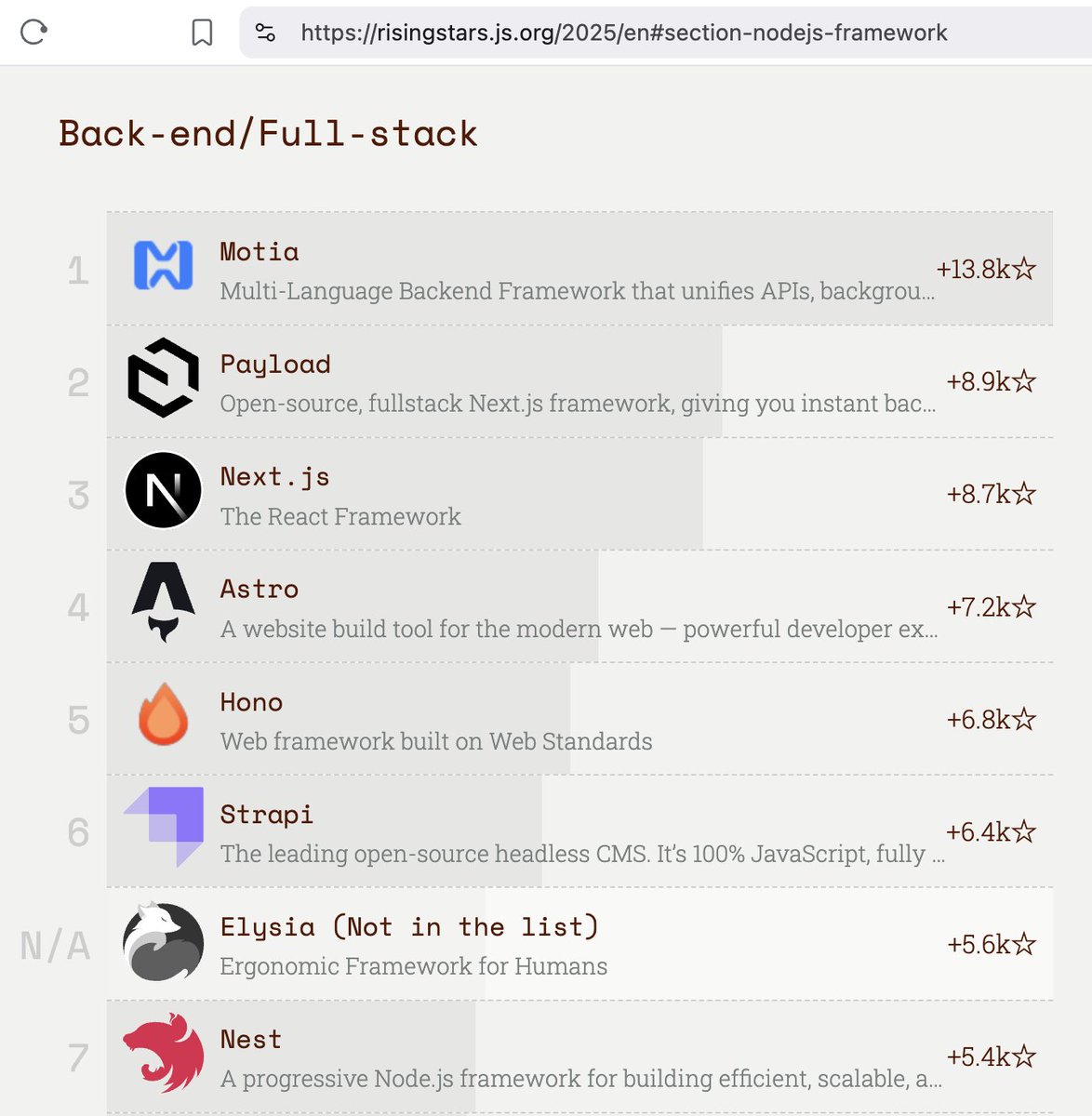
I dislike this kind of post but-
Rising Star JS missed Elysia again this year
Here's what it would look like if Elysia were presented
It's getting a bit frustrating how they missed Elysia for 2 years despite its growth tbh, or is there some criteria that Elysia doesn't fit?
26
13
688
59,988
Radu Constantin retweeted

2 Dec 2025
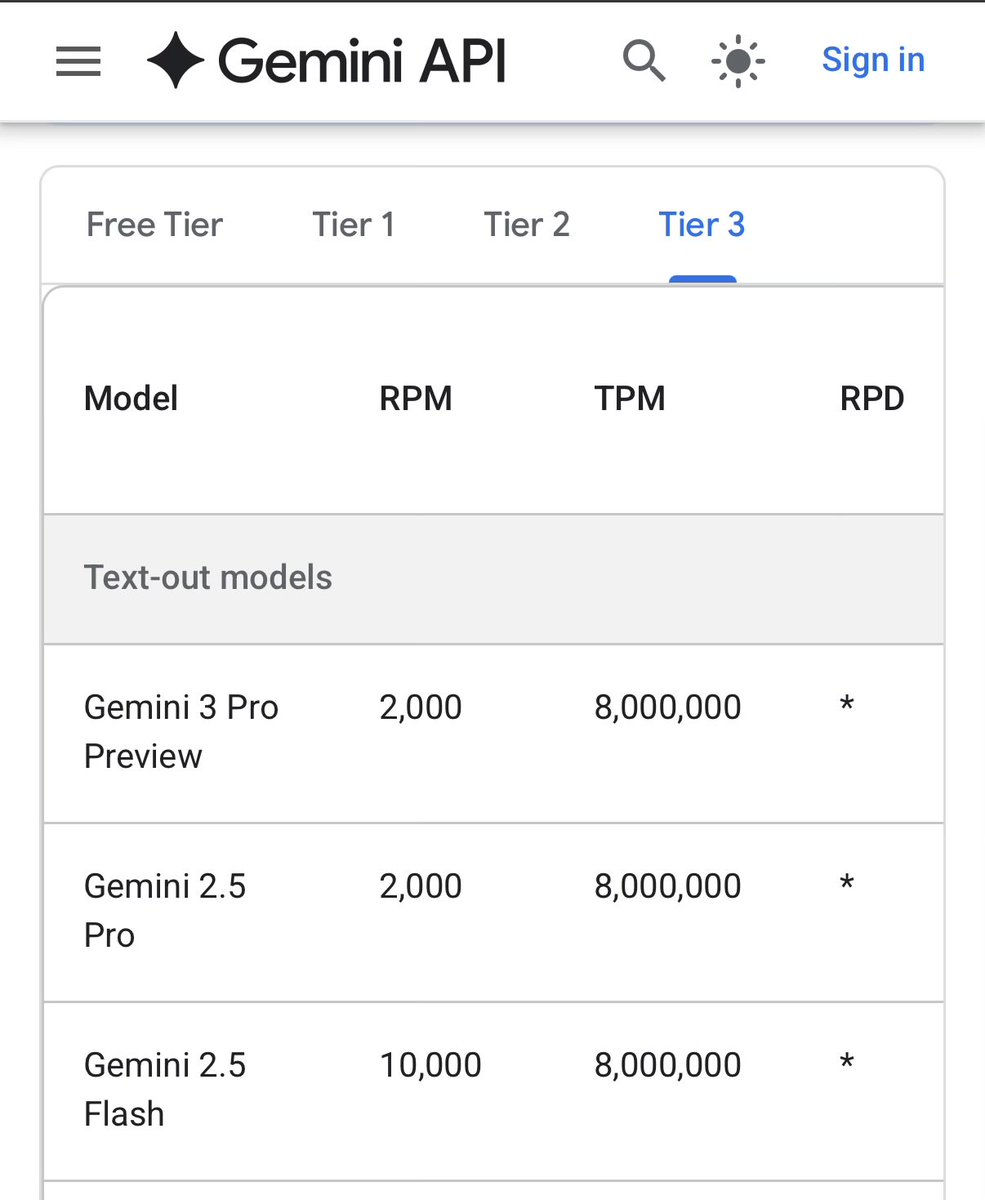
Gemini is NOT for PRODUCTION. AVOID using it. What's the meaning of tier 3? These 8M tokens or 2K requests per minute means nothing. You can't handle 500 requests, so why bother mentioning these things?
We're constantly facing 429 errors even when distributing requests across 6 projects.
Improve the infra first and stop giving free access to everyone. It's good you partnered with Jio to give AI Pro to every customer, but not at the cost of reliability of resources for API developers.
We're relying on you to serve our products to enterprises.
Sorry for crashing out, but this is too much. Azure has better infra; we have used Azure OpenAI and never faced these kinds of issues with very high rate limits.
3
2
3
1,682

vike.dev/vanjs
I'd love it to become more popular github.com/vanjs-org/van/dis…
1
1
6
307
Radu Constantin retweeted

15 Dec 2024
I’m making a discord for people who are interested in research like mine, or do similar research and want like minded peers to talk about it, be it math, code or theory, react and RT to get the invite! 🫂
10
18
65
3,851