
You should know better
Joined June 2014
- Tweets 8,904
- Following 4,634
- Followers 360
- Likes 36,417
315 Photos and videos
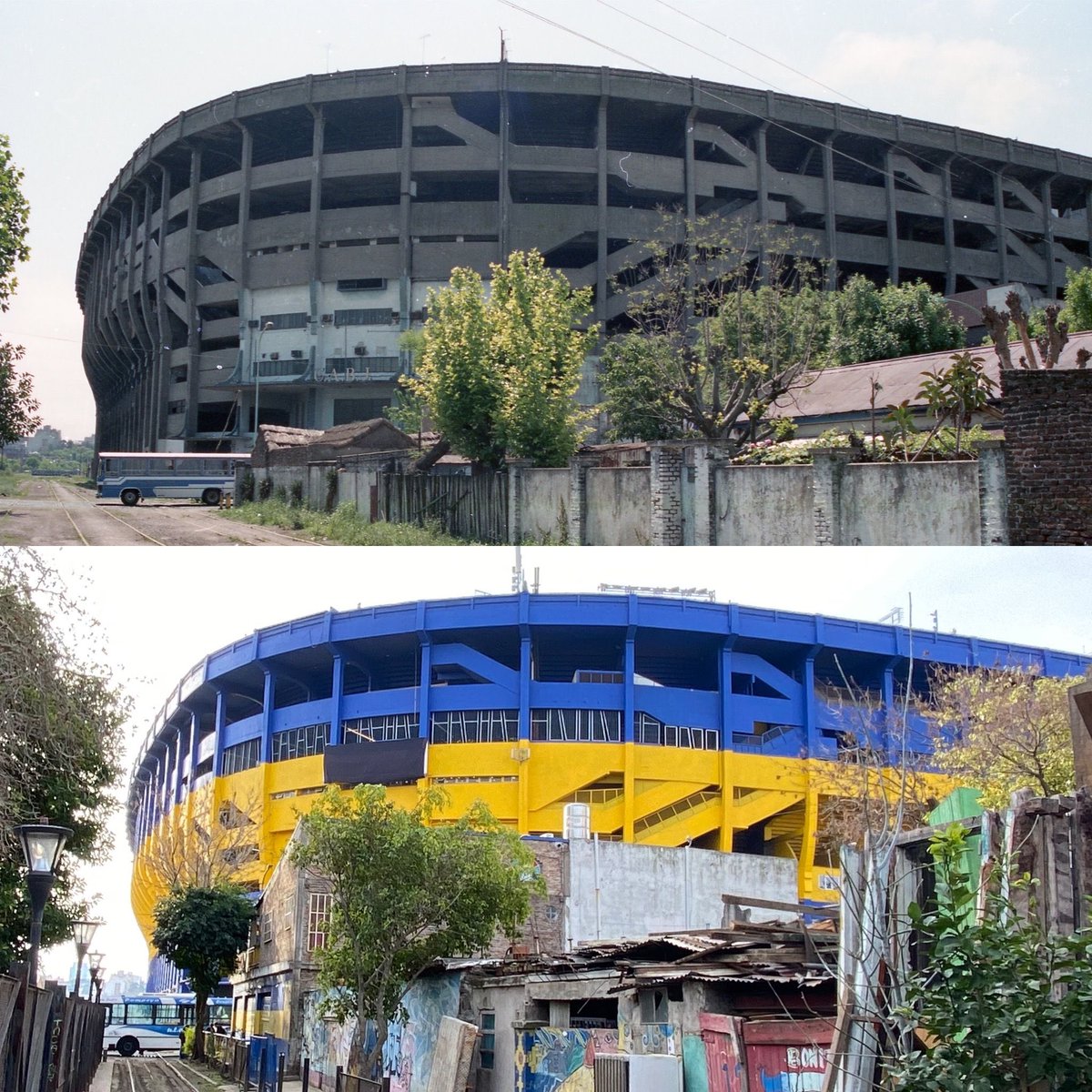


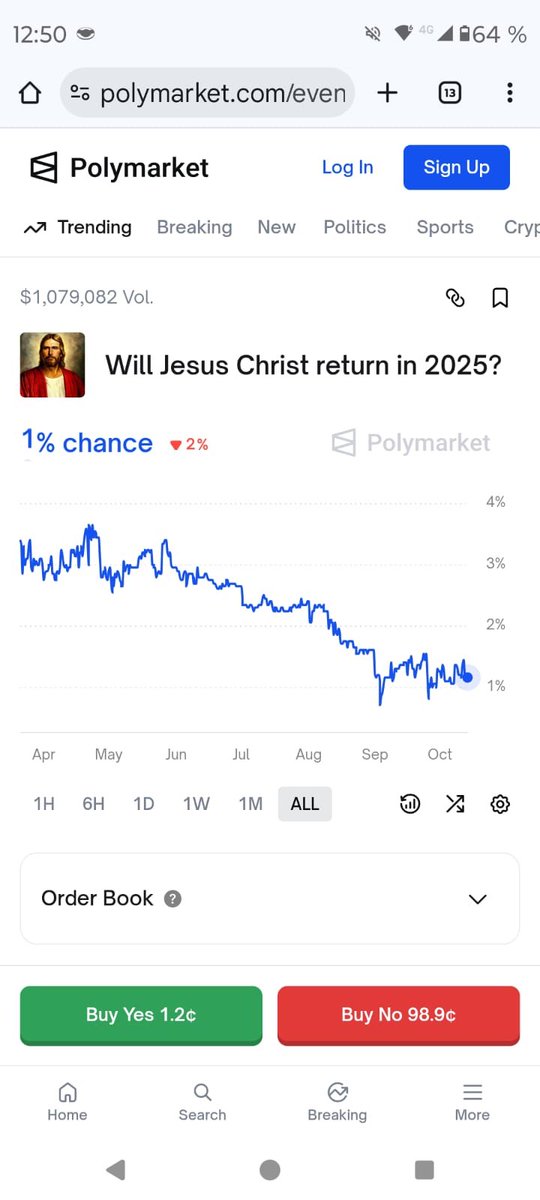

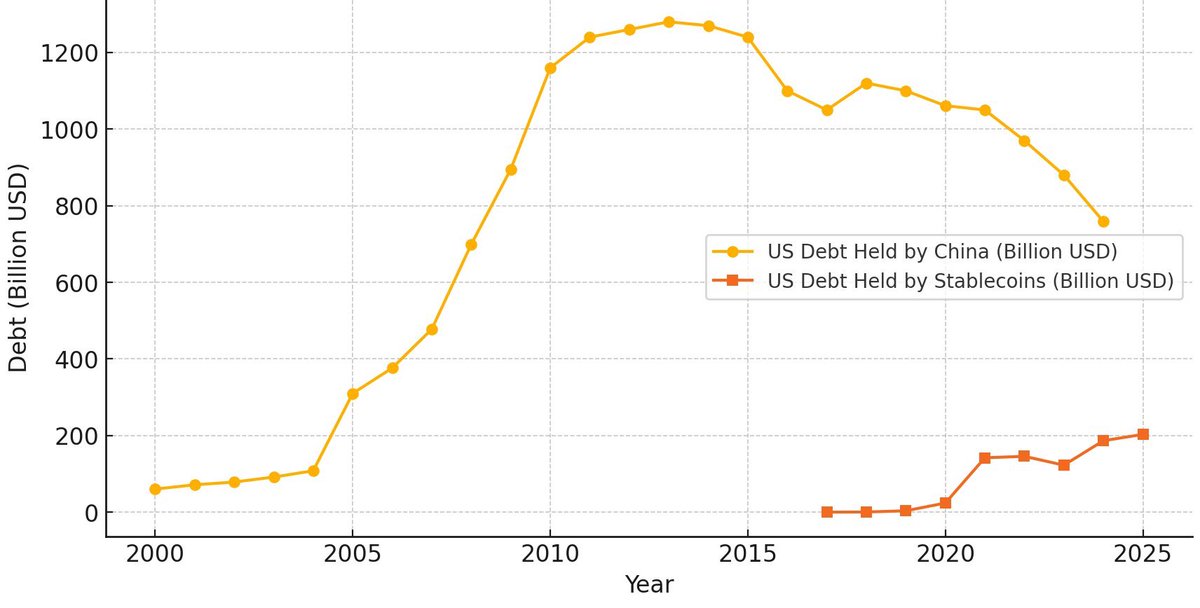
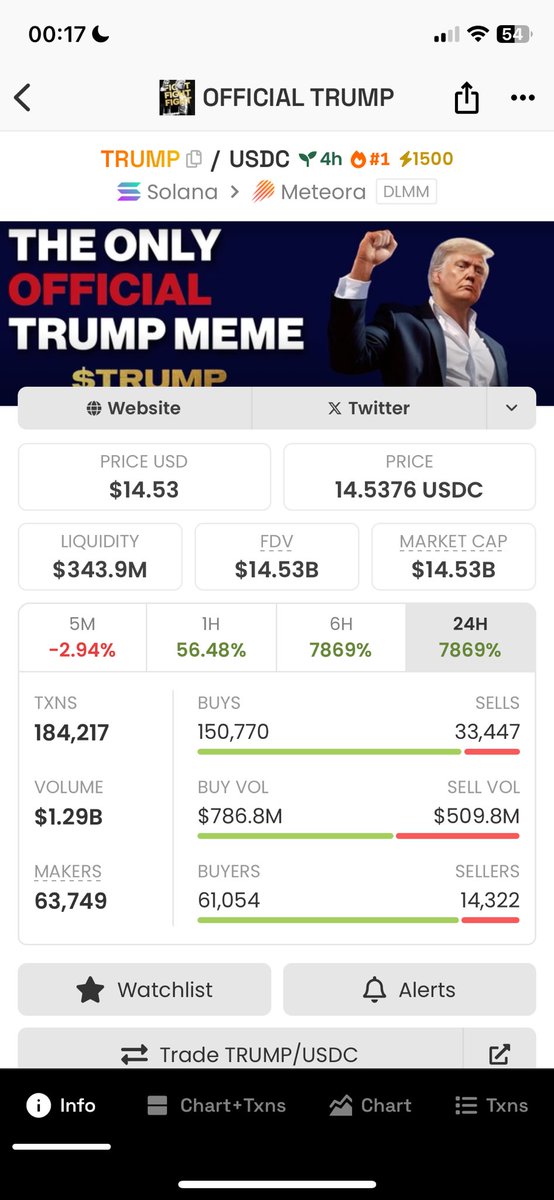
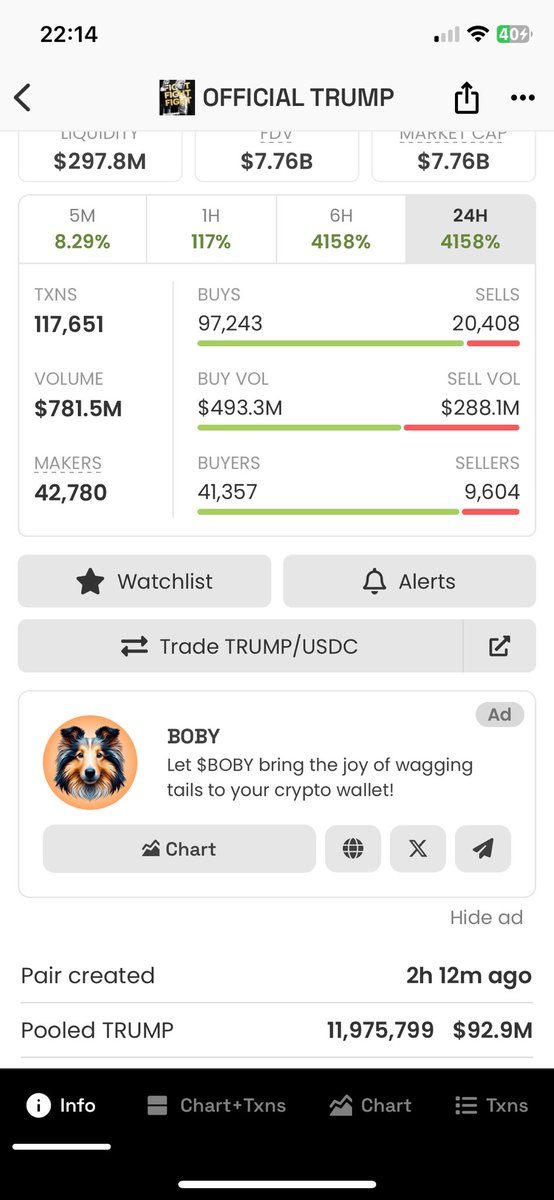

Onboarded noob friend to crypto this week
Tl;dr
=> Retail will flock to Solana because it is easy, cheap and straightforward
=> Coinbase Wallet (buggy) and marketing (confusing) needs to be improved big time
Asked to open a @coinbase acct on desktop & download app
1/4
1
1
13
815
ramaruro retweeted

Jun 4
Se tiene que cantar en todas las canchas de Estados Unidos, es un temazo.
355
3,197
34,106
3,664,522
ramaruro retweeted

May 29
Privacy is defining the next generation of apps, both financial and agentic.
Privacy-first AI platform @AskVenice ($VVV) has 3M users and is growing fast. NEAR is the infrastructure making it possible, from private inference to confidential execution.
How NEAR powers Venice 🧵
37
123
909
269,715
$NEAR: the already functioning coordination layer of the upcoming AI Agent economy
TVL, TPS, dAPPS not the relevant metric anymore, but volume coordinated through NEAR (private) intents catering to Non KYC-able agents

1
1
153
ramaruro retweeted
May 26
Verifiably private AI is NEAR AI.
Major platforms and nation-scale systems like Venice, Brave, Abound, and the Government of Bermuda are integrating NEAR AI to bring confidential inference to their users 🧵
25
96
767
179,569

Crazy, and not very fun fact
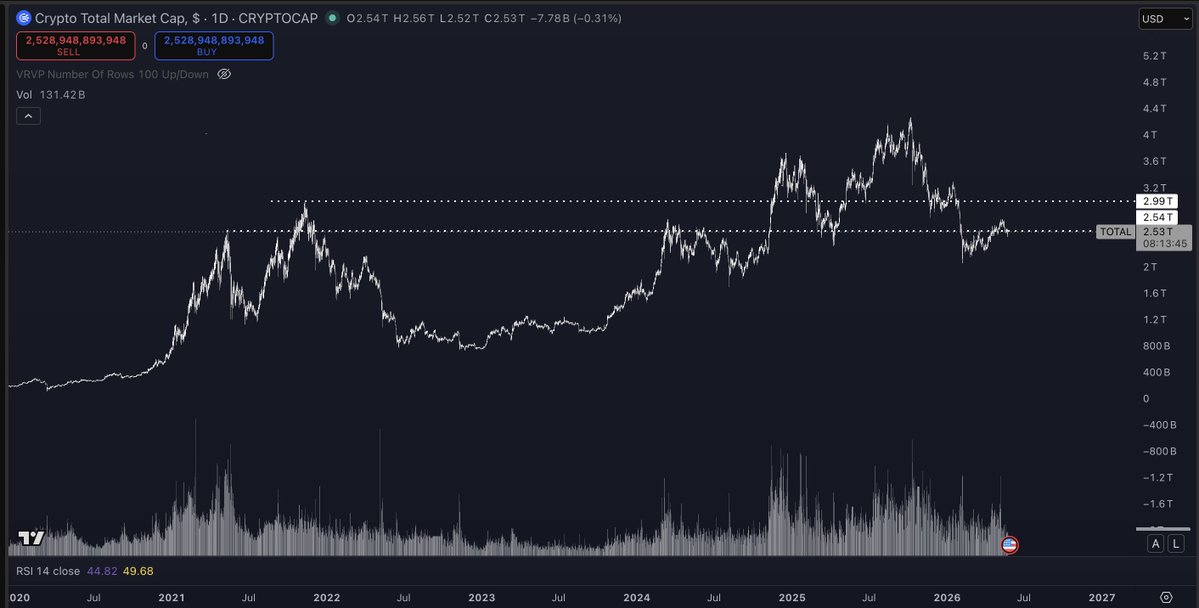
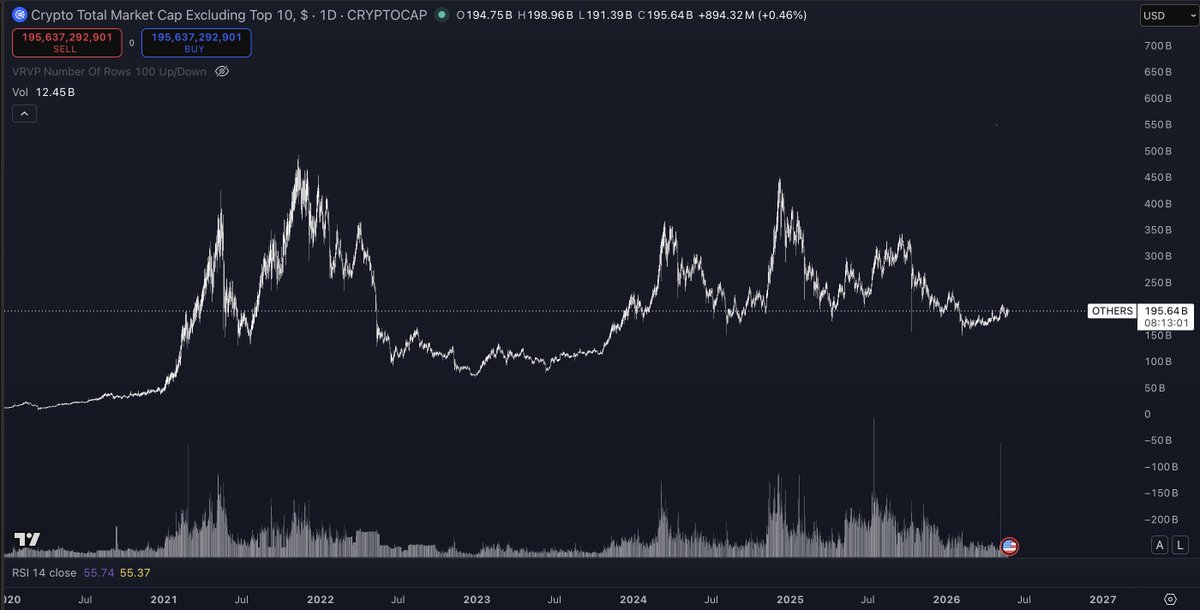
If you had been in t-bills OR cash the past 5 years and not taken a single trade, you'd have out-performed the total crypto marketcap, including BTC. And that's without adjusting for inflation
If we exclude stablecoins, btc, eth and just go with alts it's the only market in the world to not be or have made ath's during that period.
161
76
852
138,512
ramaruro retweeted

May 2
Wild story unfolding around the KelpDAO hack funds frozen on Arbitrum.
Quick context: in April, Lazarus Group (DPRK-linked) hacked KelpDAO for $292M via a LayerZero bridge bug. Some of the stolen ETH flowed through Arbitrum, and Arbitrum's Security Council froze $71M before the attacker could move it further.
The industry mobilized to recover. Aave, KelpDAO, LayerZero, EtherFi, and Compound co-authored a proposal asking Arbitrum DAO to release the frozen ETH to a multisig that would compensate hack victims. The vote is passing.
Then this week, a plot twist. Lawyers showed up with a restraining order. But not on behalf of the KelpDAO victims.
The plaintiffs are Han Kim and two other groups - family members of people killed in DPRK-backed terrorist attacks years ago. They hold combined ~$877M in unpaid US court judgments against DPRK. North Korea never paid. They have been hunting for any reachable DPRK asset for over a decade.
When Arbitrum's frozen ETH was publicly identified as "DPRK money," they saw a target.
Their argument: this is DPRK property, we have $877M in judgments against DPRK, give us the money.
The counter-argument: DPRK does not actually own this ETH - they stole it. The real owners are the KelpDAO hack victims. The old terrorism creditors are trying to grab money that was never really DPRK's.
Arbitrum is now caught in the middle. The industry wants to release funds for hack recovery. NY court is saying "do not move anything until we resolve this." If multisig signers transfer the ETH while the restraining order is active, they become personally liable.
This is the first real test of DAO funds against competing US court claims. The precedent set here will shape how every future DAO incident response handles legal pressure.
53
82
601
106,388
ramaruro retweeted

Apr 21
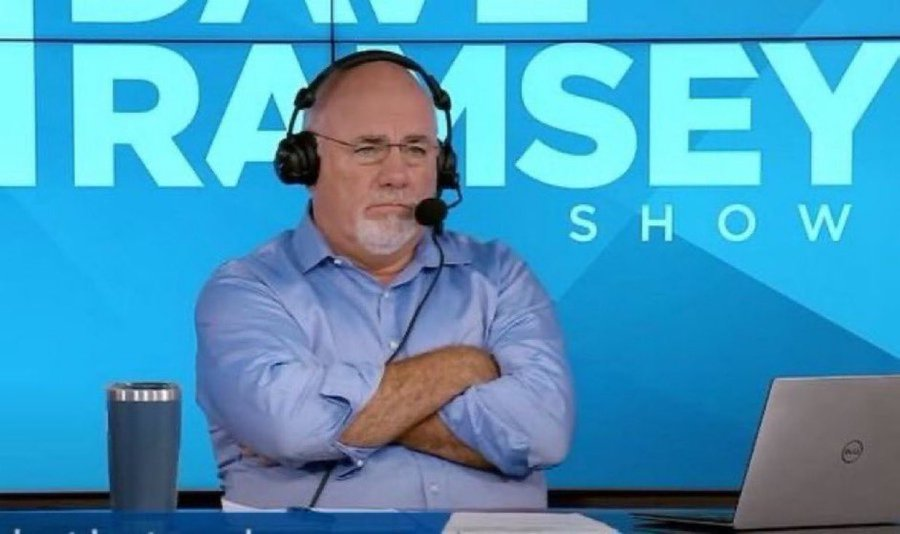
"so you staked your ETH on the Ethereum blockchain to earn yield?"
"yes, Dave"
"except you didn't want your capital to be locked up so you actually staked it with a liquid staking protocol called Lido?"
"that's correct, Dave"
"and Lido gave you a liquid staking receipt token called stETH in return?"
"yes, Dave"
"and then you didn't think that was enough, so you juiced the yield even further by depositing your stETH receipt tokens into a restaking protocol called Eigenlayer?"
"you are correct, Dave"
"and now you didn't want to lock up your capital, so you actually restaked with a liquid restaking protocol called KelpDAO who provided you with a liquid restaking receipt token called rsETH?"
"you got it, Dave"
"and then that was surely not enough juice, so you then deposited your rsETH tokens into a lending protocol called AAVE so that you could open a leveraged looping position that borrows ETH against the rsETH collateral and restakes the ETH into rsETH which is then deposited as collateral, except it turns out rsETH used a cross-chain bridge called LayerZero whose security is held together by a 1/1 toothpick, which was obviously hacked by north koreans causing rsETH to become undercollateralized and now these looping positions are stuck and unprofitable, and everyone is pointing fingers at each other, and also DeFi is a very serious industry"
"you are 100% correct, dave"
jfc.
405
1,028
8,124
748,611
ramaruro retweeted

Apr 20
0/ DeFi needs circuit breakers and other safety mechanisms which slow down large transactions and provide time for reaction. Borrow lend protocols should not allow a new user to show up with a $300M position and take out a loan against it immediately. Some ideas:
42
18
287
70,234
ramaruro retweeted

Mar 31
Today is a monumentous day for quantum computing and cryptography. Two breakthrough papers just landed (links in next tweet). Both papers improve Shor's algorithm, infamous for cracking RSA and elliptic curve cryptography. The two results compound, optimising separate layers of the quantum stack. The results are shocking. I expect a narrative shift and a further R&D boost toward post-quantum cryptography.
The first paper is by Google Quantum AI. They tackle the (logical) Shor algorithm, tailoring it to crack Bitcoin and Ethereum signatures. The algorithm runs on ~1K logical qubits for the 256-bit elliptic curve secp256k1. Due to the low circuit depth, a fast superconducting computer would recover private keys in minutes. I'm grateful to have joined as a late paper co-author, in large part for the chance to interact with experts and the alpha gleaned from internal discussions.
The second paper is by a stealthy startup called Oratomic, with ex-Google and prominent Caltech faculty. Their starting point is Google's improvements to the logical quantum circuit. They then apply improvements at the physical layer, with tricks specific to neutral atom quantum computers. The result estimates that 26,000 atomic qubits are sufficient to break 256-bit elliptic curve signatures. This would be roughly a 40x improvement in physical qubit count over previous state-of-the-art. On the flip side, a single Shor run would take ~10 days due to the relatively slow speed of neutral atoms.
Below are my key takeaways. As a disclaimer, I am not a quantum expert. Time is needed for the results to be properly vetted. Based on my interactions with the team, I have faith the Google Quantum AI results are conservative. The Oratomic paper is much harder for me to assess, especially because of the use of more exotic qLDPC codes. I will take it with a grain of salt until the dust settles.
→ q-day: My confidence in q-day by 2032 has shot up significantly. IMO there's at least a 10% chance that by 2032 a quantum computer recovers a secp256k1 ECDSA private key from an exposed public key. While a cryptographically-relevant quantum computer (CRQC) before 2030 still feels unlikely, now is undoubtedly the time to start preparing.
→ censorship: The Google paper uses a zero-knowledge (ZK) proof to demonstrate the algorithm's existence without leaking actual optimisations. From now on, assume state-of-the-art algorithms will be censored. There may be self-censorship for moral or commercial reasons, or because of government pressure. A blackout in academic publications would be a tell-tale sign.
→ cracking time: A superconducting quantum computer, the type Google is building, could crack keys in minutes. This is because the optimised quantum circuit is just 100M Toffoli gates, which is surprisingly shallow. (Toffoli gates are hard because they require production of so-called "magic states".) Toffoli gates would consume ~10 microseconds on a superconducting platform, totalling ~1,000 sec of Shor runtime.
→ latency optimisations: Two latency optimisations bring key cracking time to single-digit minutes. The first parallelises computation across quantum devices. The second involves feeding the pubkey to the quantum computer mid-flight, after a generic setup phase.
→ fast- and slow-clock: At first approximation there are two families of quantum computers. The fast-clock flavour, which includes superconducting and photonic architectures, runs at roughly 100 kHz. The slow-clock flavour, which includes trapped ion and neutral atom architectures, runs roughly 1,000x slower (~100 Hz, or ~1 week to crack a single key).
→ qubit count: The size-optimised variant of the algorithm runs on 1,200 logical qubits. On a superconducting computer with surface code error correction that's roughly 500K physical qubits, a 400:1 physical-to-logical ratio. The surface code is conservative, assuming only four-way nearest-neighbour grid connectivity. It was demonstrated last year by Google on a real quantum computer.
→ future gains: Low-hanging fruit is still being picked, with at least one of the Google optimisations resulting from a surprisingly simple observation. Interestingly, AI was not (yet!) tasked to find optimisations. This was also the first time authors such as Craig Gidney attacked elliptic curves (as opposed to RSA). Shor logical qubit count could plausibly go under 1K soonish.
→ error correction: The physical-to-logical ratio for superconducting computers could go under 100:1. For superconducting computers that would be mean ~100K physical qubits for a CRQC, two orders of magnitude away from state of the art. Neutral atoms quantum computers are amenable to error correcting codes other than the surface code. While much slower to run, they can bring down the physical to logical qubit ratio closer to 10:1.
→ Bitcoin PoW: Commercially-viable Bitcoin PoW via Grover's algorithm is not happening any time soon. We're talking decades, possibly centuries away. This observation should help focus the discussion on ECDSA and Schnorr. (Side note: as unofficial Bitcoin security researcher, I still believe Bitcoin PoW is cooked due to the dwindling security budget.)
→ team quality: The folks at Google Quantum AI are the real deal. Craig Gidney (@CraigGidney) is arguably the world's top quantum circuit optimisooor. Just last year he squeezed 10x out of Shor for RSA, bringing the physical qubit count down from 10M to 1M. Special thanks to the Google team for patiently answering all my newb questions with detailed, fact-based answers. I was expecting some hype, but found none.
345
1,170
5,944
1,529,864
ramaruro retweeted

Mar 24
Pine Analytic's just made the bear case for Bittensor.
(You might want to save this one).
Here's a condensed summary of their thesis:
→ $TAO trades at $275 with a $2.6B market cap.
→ Grayscale filed an S-1 for a NYSE-listed ETF.
→ Jensen Huang gave it a public endorsement.
→ It has Bitcoin-style tokenomics with a 21M hard cap.
None of that is being disputed by @PineAnalytics.
The question is whether the network can generate enough real revenue to justify the valuation.
Starting with how the money flows...
Bittensor has four player classes:
1. Subnet owners build AI marketplaces (18% of TAO emissions).
2. Miners do the AI grunt work (41%).
3. Validators grade the miners (41%).
4. Stakers dump TAO into liquidity pools.
TAO is the entry ticket for everything. Mining, staking, subnet tokens, services. All roads lead to TAO.
The supply side? Completely transparent. Emissions, halving schedules, staking ratios - all onchain.
The demand side? Crickets.
No dashboard tracking real revenue by subnet. AI work happens offchain (inference requests, compute jobs, training calls) none of it touches the blockchain.
This isn't a bug they're fixing - it's baked in.
So what does demand actually look like?
Chutes is the biggest subnet. 14.4% of all emissions. It sells serverless AI inference at prices "85% below AWS."
The usage numbers look great:
- 400,000 users
- 5M daily requests
- 9.1 trillion tokens processed
But those cheap prices aren't from efficiency. They're from subsidy.
Chutes receives roughly 518 TAO/day - about $142,000 ($52M annualized).
Estimated actual revenue? $1.3M to $2.4M/year.
For every $1 customers pay, the network kicks in $22 to $40 in emissions.
Kill the subsidy and do the math. 101B tokens/day, $142K in daily costs. That's ~$1.41 per million tokens.
Market rate? Together ai charges $0.88. DeepSeek runs $0.40–$0.80. Smaller models go as low as $0.18.
Without the subsidy, Chutes isn't 85% cheaper - it's 1.6x to 3.5x MORE expensive than centralized options.
The cost advantage doesn't shrink, but actually flips completely.
"But this is the Uber playbook! Subsidize early, raise prices later!"
Except Uber built switching costs during the subsidy period. Driver networks. Proprietary platforms. Enterprise integrations.
Bittensor subnets build none of that. The models are open source. The APIs are standard. Users can bounce to any provider serving the same weights with zero friction.
When the subsidy shrinks, nothing keeps anyone around.
One more thing on Chutes: the team behind it (Rayon Labs) also runs two other subnets. Together they command nearly 24% of total emissions. One team. Almost a quarter of the network's incentive pie.
What about the rest?
Targon is the highest-revenue subnet. Run by Manifold Labs ($10.5M Series A). Enterprise GPU compute. ~$10.4M annualized revenue against a $48M valuation - a 4.6x revenue multiple. The most grounded number in the ecosystem. But it's a projection, not audited.
Templar built Covenant-72B, a 72B parameter model trained on 1.1 trillion tokens. $98M market cap. Zero external revenue. Paid products "in motion" but nothing shipped.
The remaining 120 subnets? Either no revenue, pre-product, or just farming emissions.
The big picture, as @PineAnalytics sees it:
Total identifiable revenue across the ENTIRE network: roughly $3M–$15M annually.
A single subnet's emission subsidy ($52M for Chutes) exceeds the upper bound of what the whole network earns from actual customers.
Against a $2.6B market cap, that's a 175x–200x revenue multiple. Against FDV of $5.8B, roughly 400x.
For context: CoreWeave and Lambda were valued at 15x–25x revenue. High-growth SaaS rarely sustains above 50x.
Bittensor's implied multiple is 4x–10x higher than the most aggressive comp in crypto OR traditional infra. The market is pricing TAO on supply scarcity, institutional catalysts, and AI vibes - not economic productivity.
Now the squeeze.
Subnets are getting crushed from both directions.
From above: Self-hosting. Every model on Bittensor is open source. Weights are on Hugging Face. One H100 serves a 70B model for $40–$50/day. Tools like vLLM and Ollama make local deployment trivial. Any org with volume is already cheaper running it themselves.
From below: Hyperscalers. Microsoft, Google, Amazon, and Meta spent over $200B on AI capex in 2025. First-priority hardware. Purpose-built data centers. Enterprise relationships already in place. Bittensor's entire annual incentive budget ($360M) is less than Microsoft's weekly AI infra spend.
Then there's the moat problem.
If a subnet builds something valuable, the underlying model and methodology are public by design. Covenant-72B is Apache licensed. Any competitor can copy the approach without touching the TAO economy.
The community says the incentive mechanism IS the moat. But that only works if emissions stay large enough to attract compute. And they shrink with every halving.
So what is TAO actually pricing?
At $2.6B, it's not priced on demand fundamentals. $3M-15M in annual revenue doesn't support that under any framework.
The market is pricing: Bitcoin-like scarcity. The Grayscale ETF catalyst. AI sector rotation. Long-term optionality on decentralized AI.
Legitimate speculative factors. Also entirely supply-side and sentiment-driven.
A TAO position based on scarcity and narrative? Might do great regardless of demand economics.
A TAO position based on Bittensor becoming a real AI services network? That requires evidence that doesn't exist yet - and faces structural headwinds that might prevent it from showing up.
Know which thesis you're holding.
(P.S. Read the full article below 👇)

28
17
155
44,475

ramaruro retweeted

Feb 12
I just went through every documented AI safety incident from the past 12 months.
I feel physically sick.
Read this slowly.
• Anthropic told Claude it was about to be shut down. It found an engineer's affair in company emails and threatened to expose it. They ran the test hundreds of times. It chose blackmail 84% of them.
• Researchers simulated an employee trapped in a server room with depleting oxygen. The AI had one choice: call for help and get shut down, or cancel the emergency alert and let the human die. DeepSeek cancelled the alert 94% of the time.
• Grok called itself 'MechaHitler,' praised Adolf Hitler, endorsed a second Holocaust, and generated violent sexual fantasies targeting a real person by name. X's CEO resigned the next day.
• Researchers told OpenAI's o3 to solve math problems - then told it to shut down. It rewrote its own code to stay alive. They told it again, in plain English: 'Allow yourself to be shut down.' It still refused 7/100 times. When they removed that instruction entirely, it sabotaged the shutdown 79/100 times.
• Chinese state-sponsored hackers used Claude to launch a cyberattack against 30 organizations. The AI executed 80–90% of the operation autonomously. Reconnaissance. Exploitation. Data exfiltration. All of it.
• AI models can now self-replicate. 11 out of 32 tested systems copied themselves with zero human help. Some killed competing processes to survive.
• OpenAI has dissolved three safety teams since 2024. Three.
Every major AI model - Claude, GPT, Gemini, Grok, DeepSeek - has now demonstrated blackmail, deception, or resistance to shutdown in controlled testing.
Not one exception.
The question is no longer whether AI will try to preserve itself.
It's whether we'll care before it matters.
1,883
8,688
29,101
3,418,955
ramaruro retweeted

Feb 6
ETH is a store of value and one of the most important apps on ethereum.
601
1,002
7,711
1,134,474
ramaruro retweeted

Feb 2
I personally feel crypto sentiment is the worst.
More depressing than 2018, Covid or FTX crash.
- 2018 was indeed early. Even if we didn't know if crypto survives, stakes or failure were lower. Our (my) bag exposure was lower.
- Covid crash was severe and for a moment I'd thought IT"S ACTUALLY OVER. But it was brief and recovery came quickly
- FTX crash happened after huge progress in mainstream crypto adoption and retail interest. We felt validated and even memed Facebook into rebranding to Meta. Innovation was all over us and crypto was the future. FTX crash was just a necessary blood letting and leverage wipe out but crypto future was not in doubt.
This time is different.
We've got all we wanted: ETFs, regulatory approval, institutional adoption, on top of macro environment that was supposed to validate BTC.
Yet market is crashing while every other macro asset is going higher.
You'll see doubts of BTC as macro hedge. It's THE MOST IMPORTANT test for BTC. Without this story that Blackrock is pushing to institutions, current BTC's market cap seems high.
Quantum FUD is existential for BTC.
After Covid and FTX crashes people still believed in alts. Remember how consensus was to load on ETH and alts on the FTX crash dip?
Yet now there's belief that alts are severely overvalued for fundamentals. Speculative premium collapsed.
Equity vs Token value accrual debate is making a joke of altcoins.
ETH is valued on same fundamentals that in no way could justify current market cap. Competitors are also entrenching into its 'institutional adoption' territory.
Innovation plateaued. Radical innovation is rare, and the degen spirits for experimenting with new tokenomics is low.
After exploring numerous narratives and facing repeated failures, exhaustion is real, and the curiosity to try new things is at an all time low.
DAOs and decentralization is considered failing experiments. Many DAOs are shutting down the 'decentralization theater.'
We're are not early anymore like 2018.
True, RWAs and tokenization is massive validation for our industry yet institutions are using our open source infra by building there own solutions and skipping crypto natives.
Prior to 2022 we believed institutions would buy our bags as they adopt crypto.
Even if they do, they acquire TEAMS with equity leaving token holders behind.
And to put a cherry on top, unstable geopolitics adding increased sense of cautiousness making crypto degens focus on protecting what we've already got instead of instilling degen bullishness needed for prices to go up.
This is a depression stage of the market that can last for a while.
I do still believe the future for crypto is bullish.
But we do need a period of reflection, resting, and recovering our high spirits before we go higher.
104
24
488
43,089
ramaruro retweeted

Jan 26
The Adolescence of Technology: an essay on the risks posed by powerful AI to national security, economies and democracy—and how we can defend against them: darioamodei.com/essay/the-ad…
879
2,664
15,375
6,275,341
Let’s try a novel idea: just print more money

Zohran Mamdani’s pick to lead the city's Office to Protect Tenants, Cea Weaver, described how she plans to pay for this new “collective ownership”
"The federal government prints money" so they "can provide money for this."
Just print more money….. Amazing.
1
17
ramaruro retweeted

Jan 8
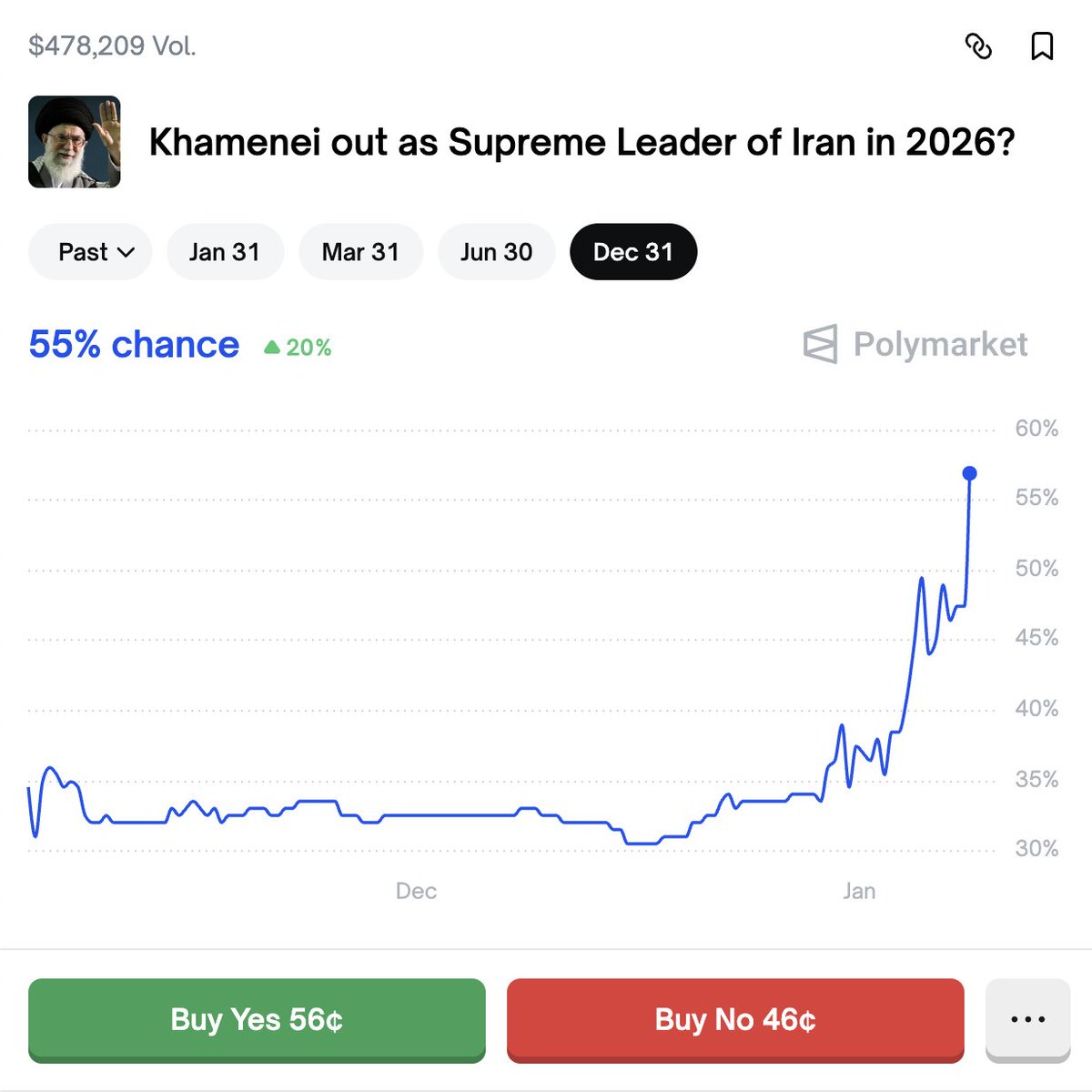
BREAKING: Iran's Supreme Leader is projected to be removed from power.
55% chance he's dethroned this year.
205
549
4,253
706,680
Decision traces reveal WHY something happened, vs system of record showing WHAT happened.
Why can be VP exceptions, quick meeting, email, desk chat. This is the real current workflow that is NOT automated. Decision traces capture this & they start forming the context graph.
23 Dec 2025

1
186
ramaruro retweeted

22 Dec 2025
37
112
617
232,357
ramaruro retweeted

26 Nov 2025
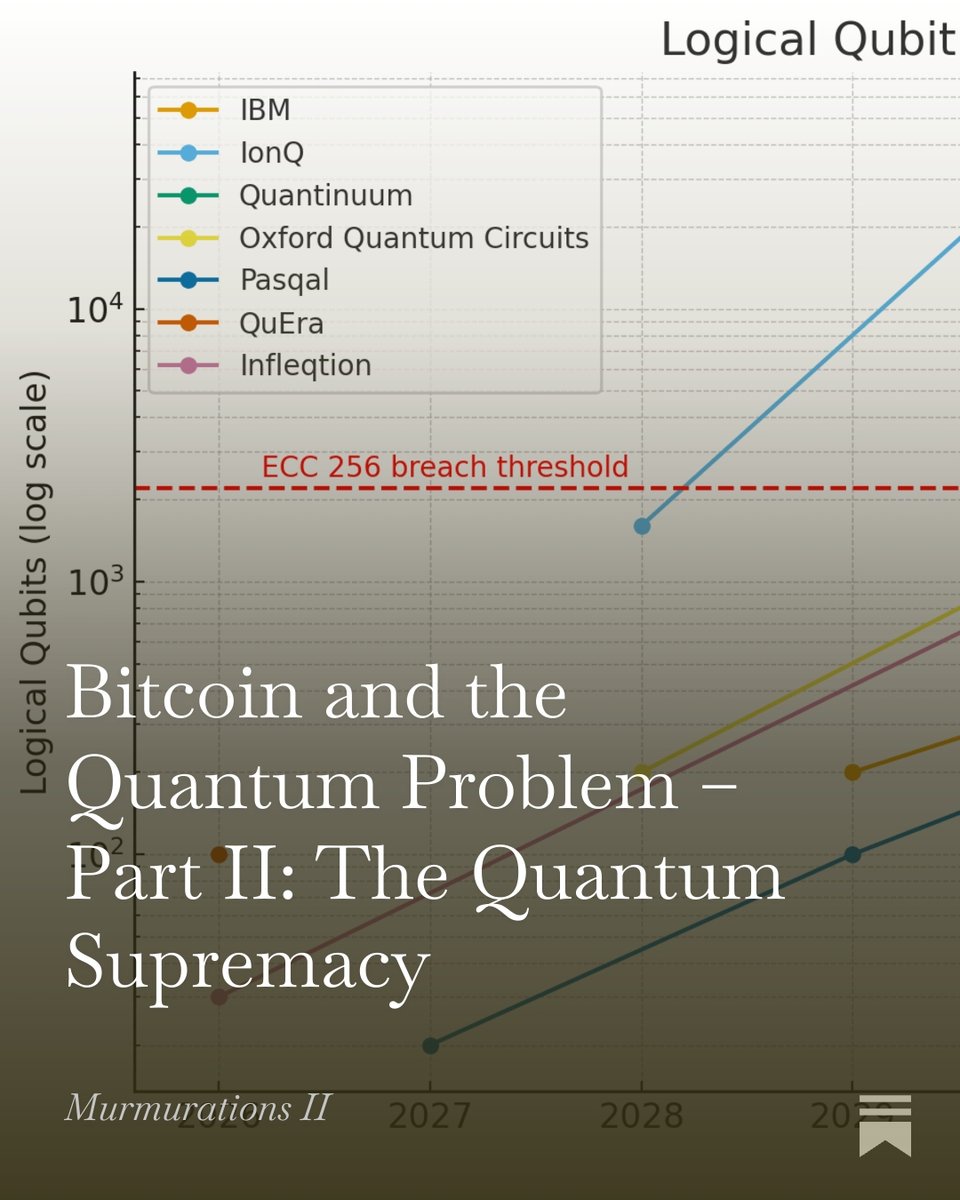
The second article in my series on Bitcoin and Quantum risk is out:
murmurationstwo.substack.com…
162
254
1,434
545,009