
Co-founder gopitcrew.com, tech junkie, love sports, food and travel
Joined January 2009
- Tweets 1,284
- Following 238
- Followers 148
- Likes 131
4 Photos and videos

Ramesh May retweeted

Jun 14
💯 Harness, Context, Evals are the key pillars of the ecosystem.
Language models are overplaying their hand.

1
1
44

Jun 14
Yup have to start somewhere and go further from there .. but there needs to be awareness that such skills are essential, develop them with the overall goal of building more advanced capabilities .. seems to me like a mindset issue we need to tackle first
Jun 13

This is very much a skill issue an not a capital intensive task and one that, I believe will eventually lead to far more advanced capabilities than today's frontier LLMs.
1
10
Ramesh May retweeted
Jun 9
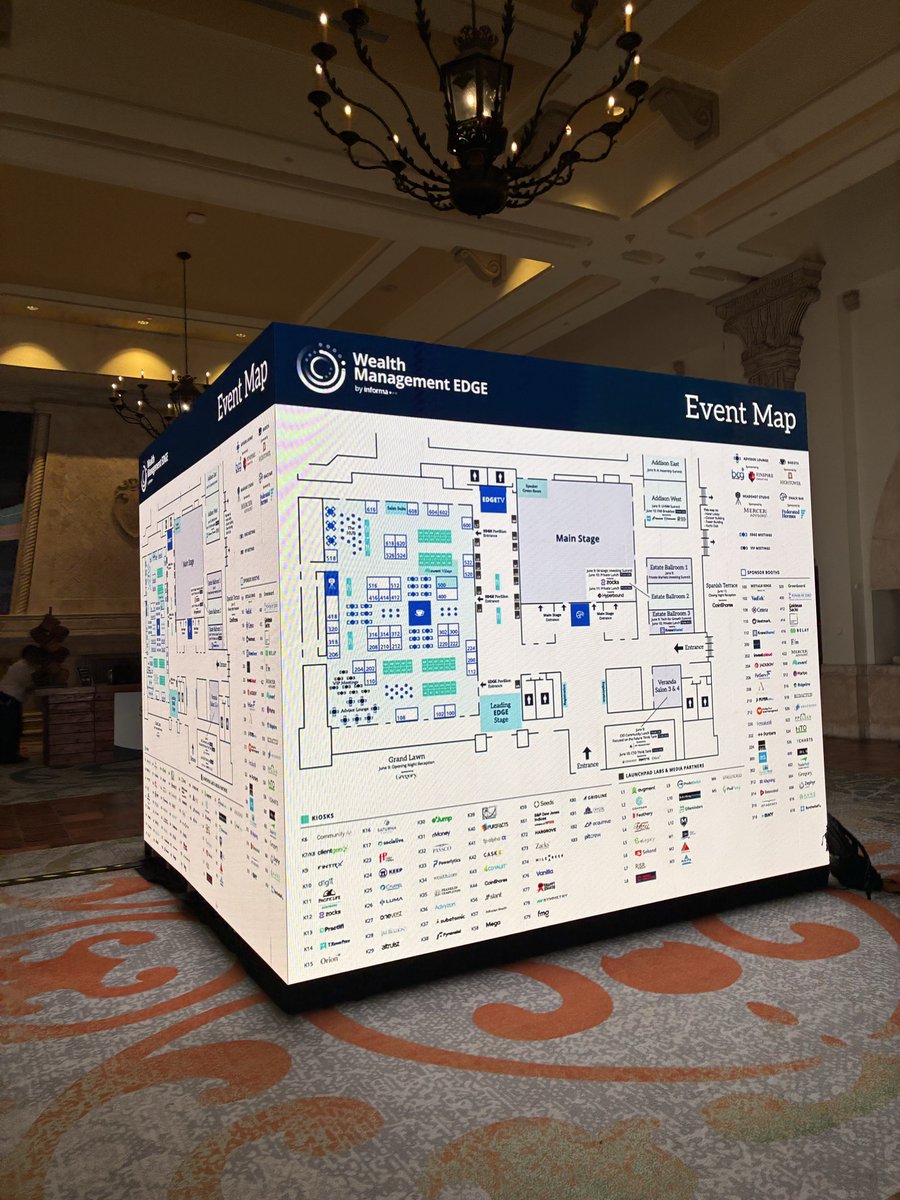
Incredible energy at the Wealth management conference here in Boca Raton, FL.
Come checkout our demo at booth #K83
2
2
99
Ramesh May retweeted
May 27
Great to see Anthropic kicking off harness ecosystem conversations.
May 26

New on the Engineering Blog: The access and permissions we grant agents should evolve with their capabilities. In our own products, we set these parameters through sandboxing, which limits the scope of any potentially destructive actions.
Read more: anthropic.com/engineering/ho…
1
1
46
May 27
Stop by @GoPitCrew booth at #synergy26 to see PitCrew agents in action .. this is not a fancy demo, it is the real deal and solves your most time consuming tasks !
May 27

Team @GoPitCrew is in Washington DC next week at #Synergy26 hosted by TradePMR
Connect directly with our team members for a hands-on deep dive into PitCrew's agentic platform for Financial services.
@TweetSamG @rameshmay @arnavgoel_
1
1
106
Ramesh May retweeted
May 14
FDE should be seen as Expert partners!
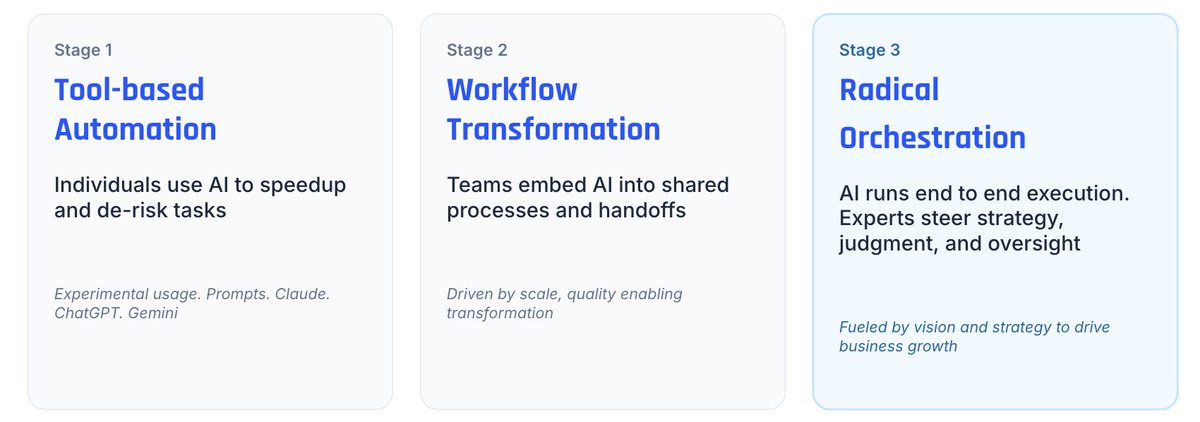
in an almost week by week upgrade to AI infra it's hard to catchup for businesses while focussing on their own KPI. Build a multiple stage partnership perhaps for stage 2 before you upgrade on own to stage 3
May 13

The most expensive mistake in enterprise AI right now: treating FDEs as your whole transformation plan.
Forward deployed engineers (FDEs) are important for custom deployments, but they won’t fix the change management issue most enterprises are facing.
It’s likely more the former that Anthropic and OpenAI will continue to prioritize (and hire into the thousands, who knows). Beyond performance and cost, it’s systems integration, ROI, and literal usefulness that drive revenue and stickiness.
*However*
External FDEs, in my opinion, will not make your company an AI-first company.
You can have the sleekest multi-agent orchestrations and still have the majority of your employee base hating AI, avoiding AI, and distrusting leadership decisions on AI.
And we already know this because we see this in traditional SaaS too: you can customize the heck out of your Salesforce deployment, but that doesn’t mean your sales team will improve their data hygiene or even attempt to change the way they track and grow with it.
Buying a fancier car doesn’t mean you magically learn to drive better overnight.
If you’re an enterprise exec and FDEs are sold as the immediate and sole solution to your company transformation woes, walk away.
It’s the combination of tech *and* people enablement *and* process reinvention that compounds into actual business outcomes.
Large complex enterprises will stall out if they only prioritize the first.
1
1
70
Ramesh May retweeted
May 14
There is more to it as you peel the layers of FDE:
- you get to work with customers directly. Understand their pains and processes.
- everyone is a product manager "on-site" with AI as a common language and UX.
- build muscle working with the governance teams (legal, security, finance). True career moat.
May 14

The Forward Deployed Engineer (FDE) market is absolutely exploding. 📈
Indeed data shows FDE job postings skyrocketed over 800% as companies rush to shift from "generating AI" to "operationalizing AI."
AI labs (OpenAI, Anthropic, Google) are aggressively hiring talent that bridges the gap between deep AI fluency and client-facing communication, with top notch total comp.
If you have technical depth and sharp communication skills, you are looking at the ultimate unfair career advantage in the new era.
1
3
121
Ramesh May retweeted
May 13
This is very first-principles practitioner notes. Thank you!
"system of verifier" is perhaps a key piece to enable system of action and system of coordination.
In our own thesis we have categorised the knowledge base or SoR into 3 buckets:
AI-native (cli, headless),
AI-friendly (api, openness to access), and
Anti-AI (no schema, no access, FTP servers)
The convergence layer to these 3 buckets is: Verification i.e. How do we know an agent completed the task at hand correctly?
This could jumpstart the entire work of reverse engineering workflows into automations to autonomous agents. Instead you invest in Intent capture and outcome verifiers.
Experts, trusted technical partners, or "Forward deployed Experts" are perhaps the best option for buyers to start investing in verification infra.
PS:
The pace at which every piece in the AI stack is moving there are no technical buyer. There are just "wait and watch"-ers.
2
6
699
Ramesh May retweeted
May 8
SDLC as we know has been ripped apart. There are 100x new changes coming in but that they would happen in a short time seemed more of a click bait headline than wisdom.
💯👇 well said
May 8

One interesting trend over the past year is how quickly vibes complete the full circle. In just the last few months, we’ve done multiple round trips:
- PMs went from “the role is dead” to “we still need PMs” to “PMs might be the most important function.”
- Software engineering went from “AI will wipe out coding jobs” to “new grads can’t get hired” to “software hiring is booming again.”
- SaaS itself went from “software is dying” to SaaSpocalypse to “actually, AI is software too. We are so back!”
1
1
103
Ramesh May retweeted
May 8
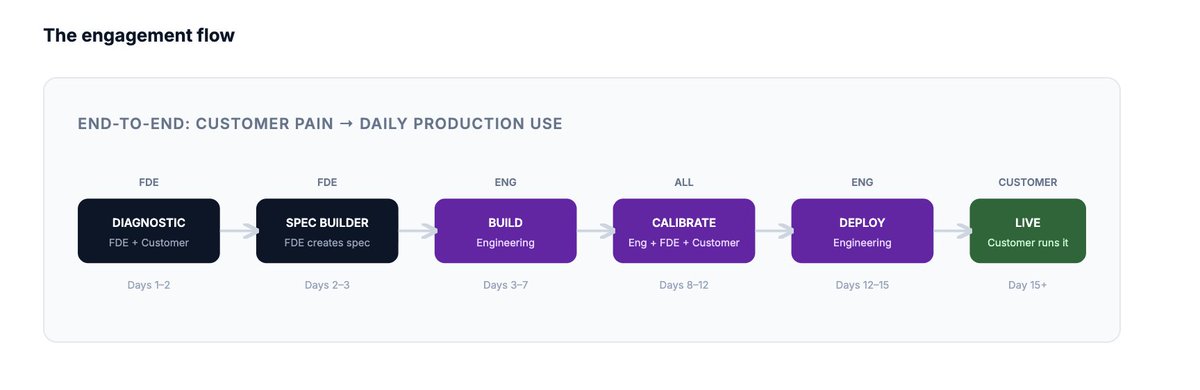
Excited to share a template of FDE plan which we are executing at @GoPitCrew
Everyone has their own definition of what the 'E' in FDE means.
1
2
9
17,811
Ramesh May retweeted
May 6
Intelligence paradox: Abundance in intelligence creates more trust debt.
"In both scenarios, users stay firmly in the loop—reviewing, iterating on, and approving Claude’s work before it goes to a client, gets filed, or is acted on."

New for financial services: ready-to-run Claude agent templates for building pitches, conducting valuation reviews, closing the books at month-end, and more.
Install them as plugins in Cowork and Claude Code, or use our cookbooks to run them in production as Managed Agents.
1
2
3
170
May 4
Appreciate you highlighting AI deployment problem . The question for enterprise leaders is how are they going to deal with the AI deployment chasm? Will they continue the layoffs or upskill them or get help from outside for agent deployment ? AI transformation oppty is huge
May 3

Whether it’s existing consulting firms, new ones that emerge, FDEs from agent vendors, or new internal agent engineering roles, the amount of work that is going to be created to implement agents in enterprises will exceed anything we imagine today.
The complexity of implementing agents in any existing organizations is very real. When I talk to large enterprises, as you move from a chat paradigm to agents that participate in meaningful workflows, there are a number of things they need to do.
First, you have to get agents to be able to talk to your data securely across your systems. In many cases, enterprises have decades of legacy infrastructure that contain the valuable context for AI agents. That’s going to take a ton of work to go modernize and move to systems that work well with agents.
Then, you need to ensure that you’ve implemented agents with the right access controls and entitlements, the right scopes to be safely used, and have ways of monitoring, logging, and securing the work that they do.
Next, you need to actually document the processes in the organization in a way that agents can utilize for doing the work. You also need to figure out what the new workflow looks like when agents and people are working together on a process, and who steps in where. Just replicating the old workflow will mute the gains. Oh and you likely need to create evals for your top new end-state processes.
Finally, you have to keep up with a rapidly changing set of best practices and architectural shifts happening in the agent space. While it’s fun for people to change their personal productivity tools on a dime, it’s 100X harder to do this in a business process. The speed of change is a blessing and a curse right now for anyone trying to keep a stable system design.
All of this means that individuals and companies that develop expertise on the above set of components (and more) are going to be needed to help organizations actually implement agents at scale. This is also the rationale for vertical AI agents right now that can go in deep on a business domain and help bring automation to it.
This is a huge opportunity right now whether you’re doing this internally or as an external business provider.
22
Ramesh May retweeted
Apr 28
We wrote this today "Vibe coding gets you 80% of the way there. Core logic. The remaining 20% — polish, testing, integrations, error recovery, audit trails, compliance is where real context engineering discipline lives. "
@TweetSamG @rameshmay
x.com/gopitcrew/status/20490…

1
1
2
667
Apr 28
AI enables organizations and individuals to play offense through sustained augmentation and expansion.
That's what we're building at PitCrew. Our agent builder lets teams turn their own workflows into running agents, so the same people cover more ground.
20
Ramesh May retweeted

Apr 23
I would have expected the market to start discerning between SaaS that is impacted by AI, SaaS that needs to evolve, and SaaS that benefits from AI. Analytical SaaS, Creative SaaS is in category 1, System or Record, Human workflow and Engagement and Productivity are in category 2 and Infrastructure SaaS and Cybersecurity are in 3. This constant paranoid reaction of the market will continue to create buying opportunities for the discerning.
94
127
1,216
260,729
Ramesh May retweeted
Apr 16
Context winners from multiple angles.
Systems of records believe they have right to win,
Frontier models could build harness infra to simplify context capture.
And domain or vertical experts bring unique workflow trajectories that address trust context (eg financia services)
1
3
42
Ramesh May retweeted
Apr 14
This is good stuff from Cloudflare. I tried to capture this credential management issue during provisioning an agent here in this post.
linkedin.com/posts/kulkarnir…
Apr 13

How do you give an AI agent a GitHub token without the agent actually seeing the token? 🔐
We’re launching outbound Workers for Sandboxes. Programmatically inject credentials, log egress, and enforce zero-trust policies at the network level—all transparently. #AgentsWeek
cfl.re/4tfSt1G
2
3
99
Ramesh May retweeted
Apr 8
It's not "intelligence" if instructions on guardrails is not understood.

Early versions of Mythos Preview often exhibited overeager and/or destructive actions—the model bulldozing through obstacles to complete a task in a way the user wouldn't want. We looked at what was going on inside the model during particularly concerning examples. (3/14)
1
1
41
Ramesh May retweeted
Mar 31
There is a clear case of vertical specific harness. Practitioners are figuring out as the environment (api or cli access) is key to reliable vertical agents.
We are building that at
factory.gopitcrew.com
1
2
71
Ramesh May retweeted
Apr 1
deploying the apps the coding harness are building isn't easy unless the harness has it's own platform. Replit is one.
We have to focus on
Build. Deploy. Operate.
In on orchestrator.
We trying this at
factory.gopitcrew.com
Current focus is AWS deployment.
1
1
51