
R&D. Design @OneProject. Mentor @NEWINC. Visiting Faculty @CalArts. Executive Board @LeonardoISAST
Joined December 2008
- Tweets 3,025
- Following 153
- Followers 1,141
- Likes 12,864
154 Photos and videos








Pinned Tweet

10 Oct 2025
While Trump & Big Tech privatize money creation through stablecoins, we designed an alternative with Yanis. Give that power to the people instead: digital central bank accounts funding a trust fund for everyone without new taxes or debt. See how monetarycommons.com/
10 Oct 2025

A TRUST FUND FOR EVERYONE: How to create a Monetary Commons that socialises money and funds a basic dividend without new taxes or debt
[At a time Donald Trump, Big Tech and Wall Street deploy stablecoins to privatise the dollar, usurping the decentralising power of blockchain to enrich themselves at everyone else’s expense, here is an alternative use of blockchain that harnesses its decentralising powers to benefit everyone equally – to pay everyone a substantial, non-inflationary, basic dividend – without the need to tax or borrow. Read on and/or watch the video]
Here is an idea that can make a real, urgently needed, difference to our awfully divided, exploitative societies.
Imagine a trust fund for everyone paying a personal dividend to each.
Now imagine a common, a public digital platform, let’s call it a Monetary Commons, that harnesses our collective capacity to create the money needed to fund this personal dividend for all.
The idea of a personal or basic income is not new, of course. People have sung its praises for decades. But they were stifled. The majority doesn’t want to pay higher taxes, or the higher interest rates more public debt would bring, to deliver a personal payment to others, including to the already stinking rich.
But what if it is now possible to pay a decent personal dividend without new taxes or new public debt. How? Not by magic or hocus pocus economics but by reclaiming from private bankers our society’s power to create money.
Today, we have the digital tools to take back the power to create money, use that power to create a common trust fund, and pay each a personal dividend. These tools are here already. And if we do not use them for benefitting everyone, the bankers and Big Tech will use them to print more money for themselves.
So, let’s get cracking! Let’s build a new Monetary Commons to pay a personal dividend to each!
How would it work? Technically, it is ever so simple.
You download an app, let’s call it Monetary Commons Pay (or MCPay). MCPay is provided by your central bank (the Fed in the US, the ECB in Europe, the Bank of England in Britain etc.). Essentially, the central bank has opened a digital account for you which you can use to receive and pay money, the way you use your normal bank account app.
How is this MCPay app helpful?
In three fabulous ways, which I shall present in ascending order of importance.
First, because with MCPay you can send and receive money for free, avoiding the terrible, inexcusable, fees charged by private banks – even the ‘fuel fees’ of crypto.
The second, even greater, benefit is that the money you keep in your MCPay grows at the central bank interest rate – which is always higher than the measly rate private banks pay for your savings.
Free transactions and higher interest on your savings would be good enough reasons to have the MCPay app. But, the truly mesmerising, hugely exciting benefit is the third one:
The new app makes it possible for the Central Bank to pay you, and everyone else, a substantial personal dividend.
Pay attention to see where this money will come from, why it is not inflationary, why it requires no new taxes, no new debt and no magic:
You have heard of how private banks create loans from thin air, right? How they can turn, on average, $3 of new deposits into a new $100 loan? [Yes, lest we forget, only 3% of the money in our advanced economies come from the central bank – the rest is conjured up by private banks.]
But this works in reverse as well! If bankers turn $3 into $100, were you to transfer $3 from your normal bank to your MCPay, to take advantage of free transactions and the higher interest rate, you will have annulled your banker’s opportunity to create $100. In other words, as you transfer $3 from your bank to your new MCPay account, the total quantity of money in the economy would fall by, $100 minus $3, $97. Would this not be bad for the economy? It sure would be if nothing was done about it.
But wait. Suppose the central bank were to create $97 for every $3 transferred to someone’s MCPay and credit that extra $97, equally, to everyone’s MCPay account. Bingo! Do you see now how a personal dividend was made possible without new taxes, new debt or potentially inflationary increases in the quantity of money?
Now, please do not think that this a theoretical discussion. Yes, our governments, in the pockets of financiers as they are, are not interested in giving you the option of an MCPay app.
But, with Donald Trump at the helm and his GENIUS Act on the statutes, they are busily handing over this incredible power to create money not to society, not to a Monetary Commons, but to Big Tech and Wall Street. How? By shunning the MCPay app that would benefit you, everyone, equally, and pushing instead for so-called stablecoins issued by privateers, mainly Big Tech and Wall Street, for their benefit.
But how much money could we expect to receive as a personal dividend if we were to create a monetary commons? The answer is: a lot!
The US Treasury recently predicted that around worth $6.6 trillion of US bank deposits will be transferred to stablecoins - the private version of MCPay from which you will benefit not at all. Yes, $6.6 trillion, that is more than six thousand billion dollars.
If such a sum were to be transferred to the monetary commons, to our MCPay accounts, keeping the quantity of money in the US constant would require that the Fed credits $213 trillion to everyone’s MCPay accounts. That’s considerably more than $600 thousand for each woman, man and child resident in the US! And similarly in Britain, Europe, Japan etc. A sizeable trust fund for everyone.
This is a remarkable opportunity for making a difference to our awfully divided societies.
We must seize it. For the benefit of the many, not the few.
Of course, the few – beginning with the bankers – will scream blue murder.
They will do their utmost to stop this from happening.
They will fearmonger like crazy, eager as they are to usurp the lion’s share of the money that society generates collectively.
They will try to terrorise you with tales of calamities that will befall you if this Monetary Commons were to be created.
They will prognosticate cataclysmic inflation – even though the whole point of the personal dividend is to keep the money supply constant.
They will terrorise you with the prospect of new taxation and new public debt – even though they understand that there is no need for new taxes or new public debt to pay you a substantial personal dividend.
To appeal to your social conscience, they will tell you that a Monetary Commons is Elon Musk’s and the libertarians’ way to dismantle social security – even though there is no reason to cut social security in any way to fund everyone’s personal dividend.
They will bombard you with the spectre of Big Brother, likening the Monetary Commons to a Chinese Communist Party ploy to have the central bank follow your every transaction – even though they know that MCPay can easily be built on distributed ledger technology that guarantees privacy to each while preventing the authorities from manipulating the money supply without the public noticing.
As they scream and shout and terrorise you, you will know:
Bankers just hate the idea of going back to the role of intermediaries, of borrowing from Jack to lend to Jill.
They are only interested in maintaining their monopoly over the money system – and to extend it now that digital money enhances society’s capacity to create even more new money, a capacity that they want to privatise when we should want to share equally.
So, let us ignore the shrieks of the moneymen and let us use new tech to share better the benefits from our collective capacity to create money.
Let’s make building a Monetary Commons our common goal.
It won’t cure all of our deeply exploitative society’s ills. But it will go a long way to cure many and, perhaps more importantly, it will give the many a sense of their power.
FOR MORE ON THE MONETARY COMMONS, VISIT monetarycommons.com/ @rarar @hiradsab @DiEM_25
2
6
991

🥹
Jun 6

because of intentionality, commitment, and clarity of vision. not algorithms or hype
1
3
19
2,637
Raphael Arar retweeted

Jun 5
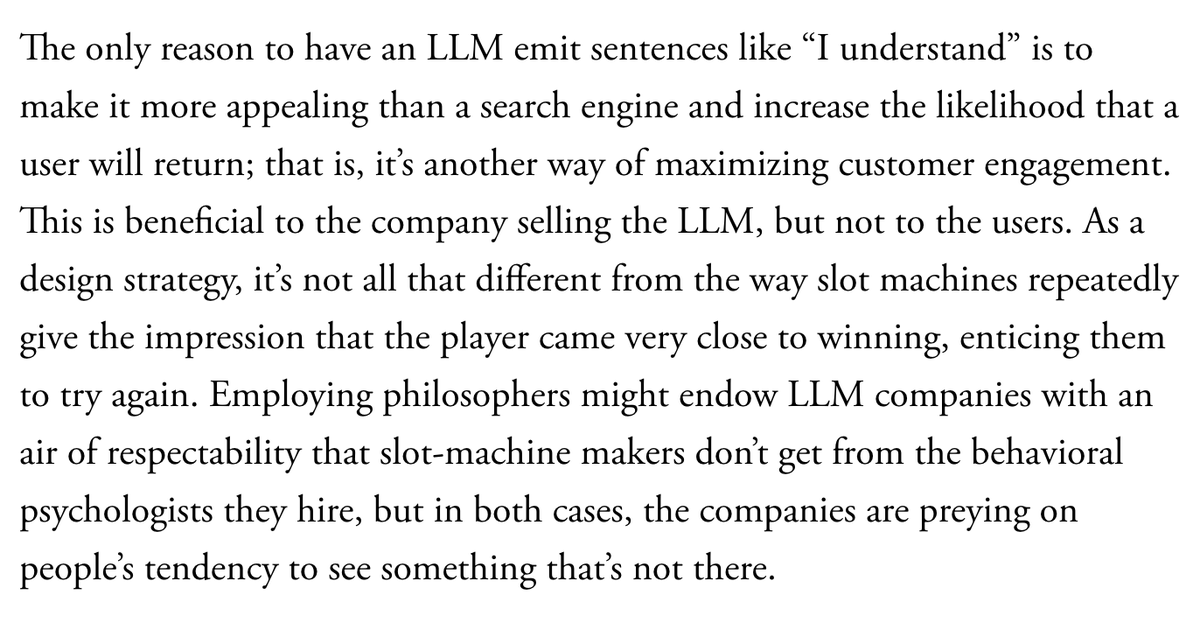
Compelling essay by sci-fi writer Ted Chiang on why LLMs are nowhere near consciousness, but why it serves the interests of LLM companies to constantly suggest that they might be.
I've pulled one quote below, but the whole article is worth reading.
95
1,604
6,311
154,379
Raphael Arar retweeted

May 21
I'm excited to release part 3 of my series on beyond capitalism with @Autonomy_Inst.
The big question people often asked about my recent work is—ok sure, but how do we get there? Please have a look at my first sketch of an answer to that question.
autonomy.work/portfolio/beyo…
2
30
131
9,930
Raphael Arar retweeted

May 15
The Green Planning Commission, an @Cmmonwealth initiative, has published a report by @BrusselerMel arguing that markets can't deliver carbonization or affordable essential provisions and that green democratic economic planning is needed. indep.network/green-planning…
5
7
510
Raphael Arar retweeted

May 15
Vivek Chibber is one of the American Left’s sharpest thinkers, but I disagree in comradely fashion here that technological advance cannot enhance our planning capability.
@michalrozworski and I showed in our book, People’s Republic of Walmart, how the vast internal planning apparatus of firms like Walmart and Amazon, has absolutely benefited from/been enabled by information technology developments.
Another example: one should very easily see how AI is already making planning easier within public healthcare (one of the most complex set of calculations, with multiple objective functions, that society engages in).
Following on from the AI-in-healthcare example, one should also be able to easily imagine how AI might be able to assist with both calculation and approaching the discovery function of markets (I.e., knowing preferences better than markets).
How AI assists with the economic calculation problem—the single greatest technical challenge to socialist development—should really be obvious to socialists. This is one of the key reasons why socialists should be supporting (well-regulated, humanist-oriented) AI development rather than opposing it.
Socialism does not only face political obstacles, but technical ones as well. One of the frustrating things that kept coming up during our book tour for People’s Republic of Walmart was at book readings, some people thought we were saying that planning is easy. No! Hayek and Mises were correct that it is very hard. They were only wrong in confusing hard with impossible.
Just as we do not want society to be governed by unelected kings, bishops or lords, or by unaccountable bureaucrats, technocrats or dictators, we should also not want society to be governed by an amoral, unaligned, unconscious algorithm (ie market incentive). Planning is simply the steadily improving extension of democratic human rationality and sovereignty over ever more of what has dominated us, just as science and medicine steadily extends human rationality and sovereignty over biology and disease. And just like medicine, planning is not something that establishes complete human democratic rational sovereignty all at once. We win gains over time.
Saying tech development assists with planning is not the same as saying tech resolves the economic calculation problem in favour of planning: it means instead that planning is not a binary of feasible/infeasible, but rather, alongside challenges from the political objections of those who have an interest in the economic calculation problem not being solved, planning is *a capacity that expands in concert with the development of the productive forces*.
Economic planning, market socialism and the mixed economy of social democracy are thus not competing approaches to socialism, but complementary, and their roles relate to how developed the productive forces are.
There is a Grand Unified Theory of these various socialisms waiting to be written…

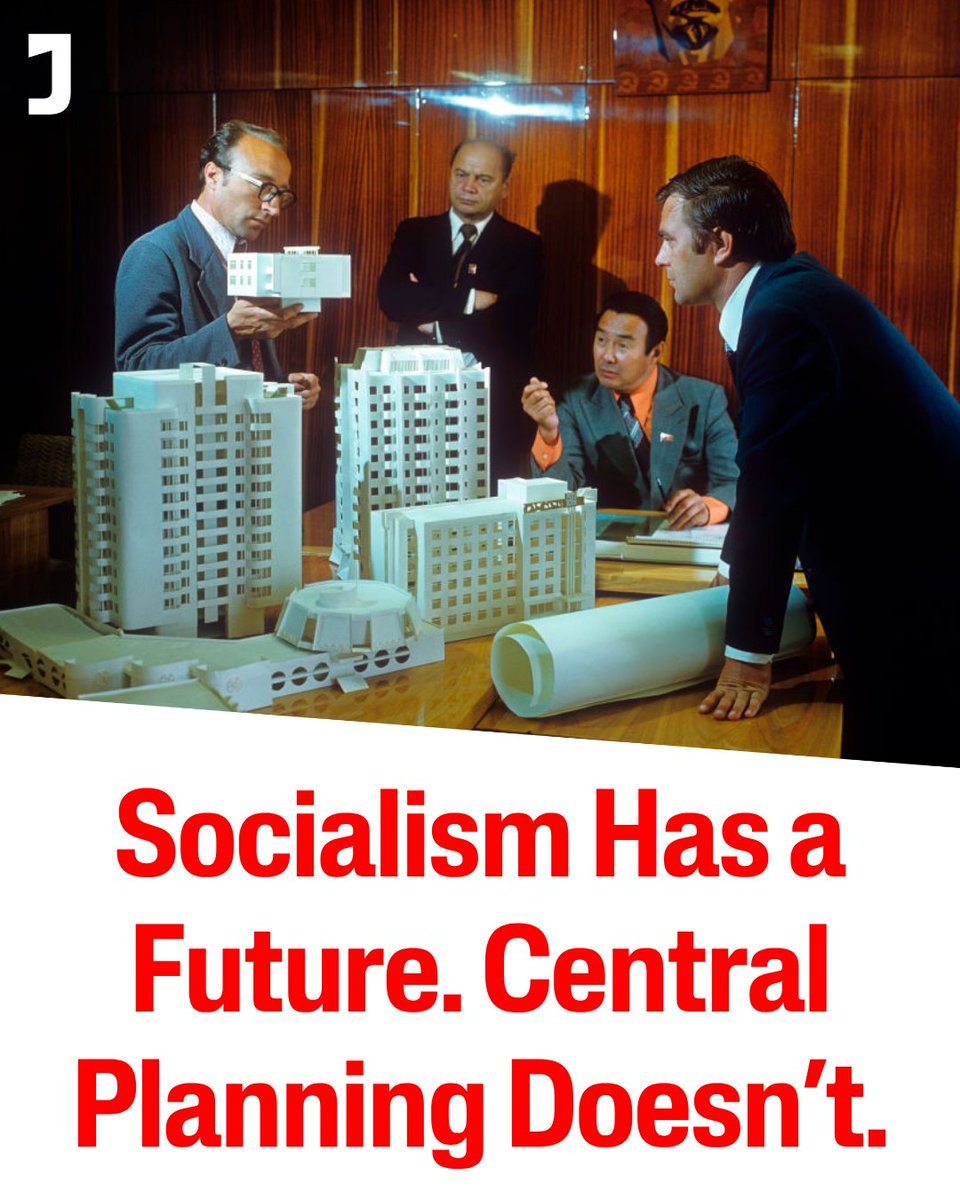
Even supercomputers won’t solve the problems inherent to central planning.
But that doesn’t mean we don’t need to replace capitalism with something better: jacobin.com/2026/05/central-…
15
32
225
24,930
Raphael Arar retweeted
Apr 30
My colleague Ryan Lee and I been working for the past 6 months on a microeconomic theory that could serve as the foundation for a new, multidimensional economics. Our first working paper, "Choice under value pluralism," is below. Please read and share.
papers.ssrn.com/sol3/papers.…
1
7
52
4,980
Raphael Arar retweeted

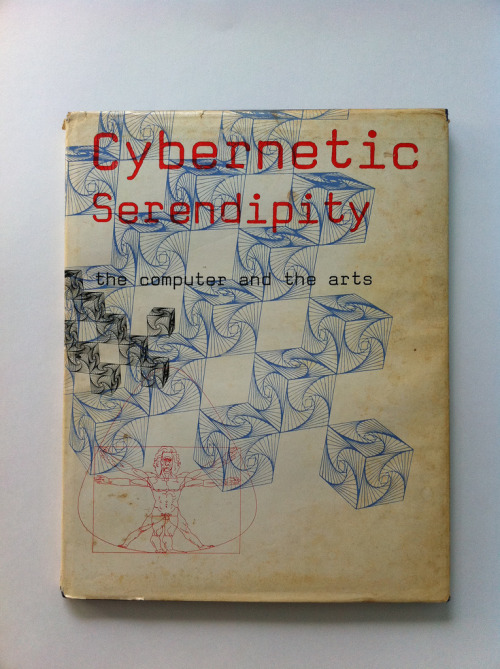
In 1968, when computers were still seen as cold calculating machines, Jasia Reichardt curated an extraordinary exhibition in London called Cybernetic Serendipity. Artists, engineers, poets and scientists came together to explore the creative possibilities at the intersection of art and technology.The result was something remarkably ahead of its time. If you're curious about the early days of the relationship between computers and art, the catalogue is essential reading. The catalogue from Cybernetic Serendipity is filled with ideas, experiments and reflections that feel surprisingly relevant in our current AI era. You can read the full PDF for free here:
monoskop.org/images/2/25/Rei… Highly recommended! Take your time with it. thanks @monalisa for the tip!
26
535
3,464
187,373

Raphael Arar retweeted

Apr 28
A new documentary exploring the origins and evolution of vaporwave is now available to watch in full online. ra.co/news/85081
9
179
1,106
76,880
Raphael Arar retweeted

Apr 24
When even sitting around in a park is haunted by the feeling of being permanently logged on, it falls to art to imagine not only new aesthetics, but new fables, values, and protocols. Everything is interwoven. Everything’s computer.
Get your copy: shop.spikeartmagazine.com/pr…

3
21
497
152,528
Raphael Arar retweeted

Apr 23
Introducing Fuser Teams.
A generative workspace for your whole studio.
Shared context, shared workflows, and creative control at every stage.
20
39
280
4,489,486
Raphael Arar retweeted

and develop frameworks for evaluating whether any given proposal is both democratic and practically viable.
1
1
104
Raphael Arar retweeted
Across two sessions, Participants map the current landscape of planning proposals — from participatory economics to algorithmic coordination models that reimagine digital infrastructure for democratic ends —
1
1
1
115
Raphael Arar retweeted
and have been answered differently across historical experiments ranging from Soviet central planning to Chile's Cybersyn project to contemporary participatory budgeting initiatives.
1
1
1
12
Raphael Arar retweeted
how to gather accurate information about needs and resources, what to measure and in what units, who makes decisions and at what scale, and whether markets retain any role. These are not new questions — they surfaced in the Socialist Calculation Debate of the 1920s and 30s,
1
1
1
32
Raphael Arar retweeted
The Roundtable explores Democratic Economic Planning (DEP) as an alternative to the financialized market economy. With neoliberalism in crisis and authoritarian movements on the rise, it revisits a set of foundational questions that any planning model must confront:
1
1
1
55
Raphael Arar retweeted
In this video, Instructors Raphael Arar and Eric Meier introduce their upcoming Roundtable "What Is Democratic Economic Planning?," which begins this Season on April 30.
thenewcentre.org/roundtables…
1
2
5
426
Raphael Arar retweeted

Apr 15
Greetings family, friends, cooperators and comrades. Here is the link to help me raise some funds to advance this struggle. Thanks for the love and support! chuffed.org/project/177124-s…
54
78
7,103
Raphael Arar retweeted

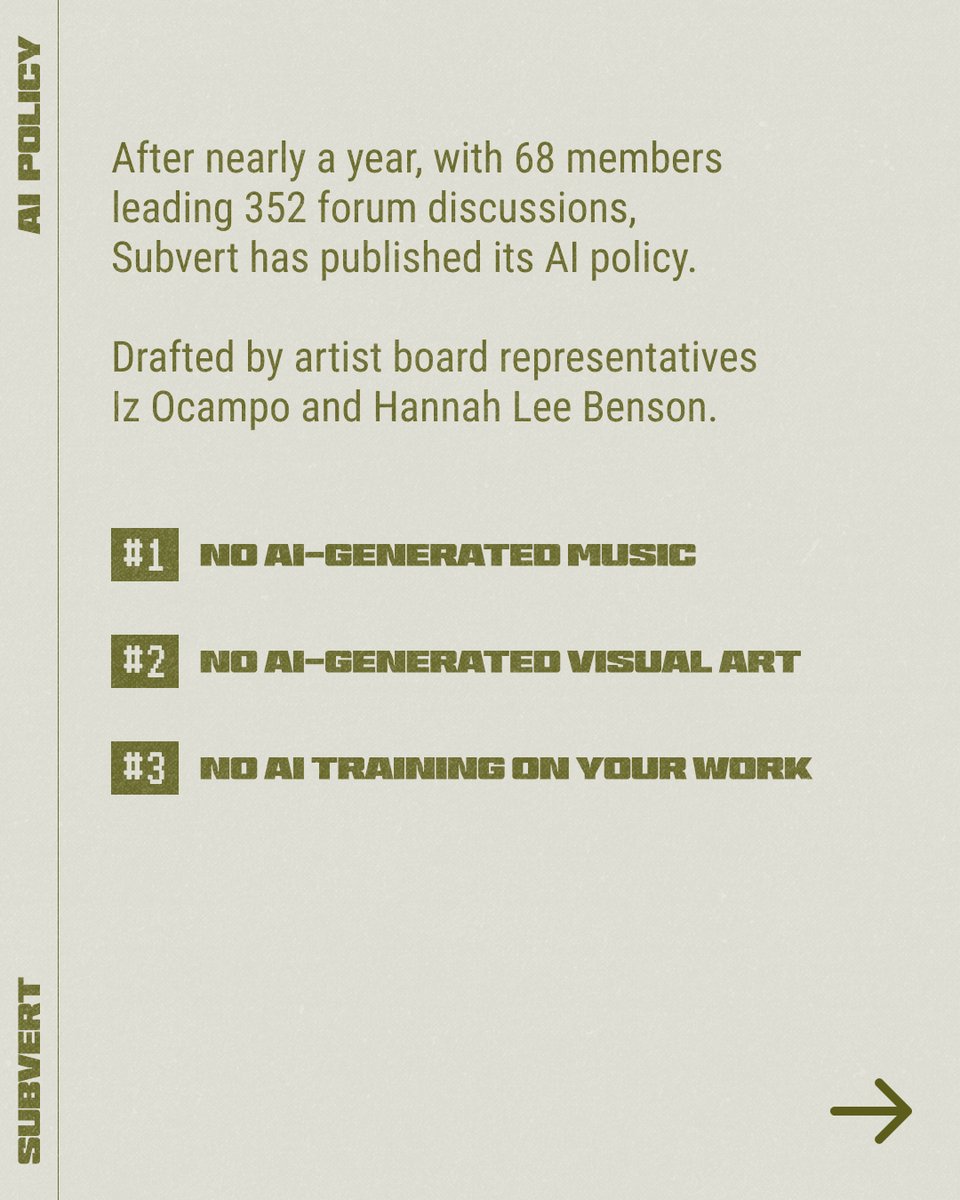
Subvert published the most comprehensive and well-considered AI policy for a music platform. It was written by 68 artists.
If you think that artists aren't capable of self-governance, it's your paternalism and lack of imagination that we are fighting against

2
22
107
25,496